Xeljanz 1 mg/ml oral solution
Spain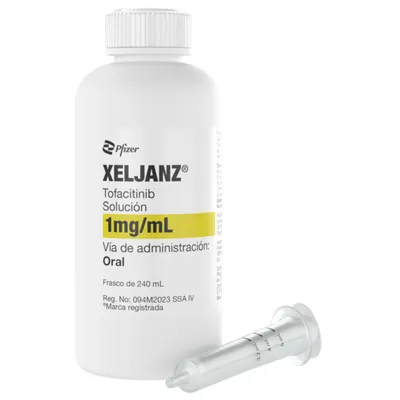
Table of Contents
Package leaflet: Information for the user
Introduction
Package leaflet: information for the patient
XELJANZ 1 mg/ml oral solution
tofacitinib
Read the entire leaflet carefully before you start taking this medicine, because it contains important information for you.
- Keep this leaflet, as you may need to read it again.
- If you have any questions, consult your doctor or pharmacist.
- This medicine has been prescribed for you only, and you should not give it to other people, even if they have the same symptoms as you, because it may harm them.
- If you experience any adverse effects, consult your doctor or pharmacist, even if they are adverse effects not listed in this leaflet. See section 4.
In addition to this leaflet, your doctor will also provide you with a patient information card containing important safety information you need to know before starting and during treatment with XELJANZ. Keep this patient information card with you.
Contents of the leaflet
- What XELJANZ is and what it is used for
- What you need to know before taking XELJANZ
- How to take XELJANZ
- Possible side effects
- How to store XELJANZ
- Contents of the pack and other information
- Instructions for using XELJANZ oral solution
1. What XELJANZ is and what it is used for
XELJANZ 1 mg/ml oral solution is a medicine containing the active substance tofacitinib.
XELJANZ 1 mg/ml oral solution is used to treat active polyarticular juvenile idiopathic arthritis, a long-term disease that mainly causes joint pain and inflammation in patients aged 2 years and older.
XELJANZ 1 mg/ml oral solution is also used to treat juvenile psoriatic arthritis, a condition which is an inflammatory joint disease, often accompanied by psoriasis, in patients aged 2 years and older.
XELJANZ 1 mg/ml oral solution can be used in combination with methotrexate when previous treatment for polyarticular juvenile idiopathic arthritis or juvenile psoriatic arthritis has not been effective or was not well tolerated. XELJANZ 1 mg/ml oral solution can also be taken as monotherapy in cases where treatment with methotrexate is not tolerated or is not recommended.
2. What you need to know before taking XELJANZ
Do not take XELJANZ
- if you are allergic to tofacitinib or to any of the other components of this medicine (listed in section 6)
- if you have a serious infection such as blood infection or active tuberculosis
- if you have been told you have severe liver problems, such as cirrhosis (scarring of the liver)
- if you are pregnant or breastfeeding
Please contact your doctor if you have any doubts about any of the points above.
Warnings and precautions
Consult your doctor or pharmacist before starting XELJANZ:
- if you think you have an infection or have symptoms of an infection such as fever, sweating, chills, muscle aches, cough, difficulty breathing, production of phlegm or changes in phlegm, weight loss, skin that is hot, red or painful, sores on the body, difficulty or pain when swallowing, diarrhea or stomach pain, burning when urinating or urinating more frequently than normal, or feel very tired
- if you have any disease that increases your likelihood of infection (e.g., diabetes, HIV/AIDS, or a weakened immune system)
- if you have any type of infection, are being treated for an infection, or have recurring infections. Inform your doctor immediately if you feel unwell. XELJANZ may reduce the body's ability to respond to infections and may worsen an existing infection or increase the risk of developing a new infection
- if you have or have a history of tuberculosis or have been in close contact with someone who has tuberculosis. Your doctor will perform a tuberculosis test before starting treatment with XELJANZ and may repeat the test during treatment
- if you have any chronic lung disease
- if you have liver problems
- if you have or have had hepatitis B or hepatitis C (viruses that affect the liver). The virus may become reactivated while you are taking XELJANZ. Your doctor may perform blood tests for hepatitis before starting treatment with XELJANZ and while you are taking it
- if you have ever had any type of cancer, and also if you currently smoke or have smoked in the past. XELJANZ may increase the risk of certain types of cancer. Cases of blood cell cancer, lung cancer, and other cancers (such as breast, skin, prostate, and pancreatic cancer) have been reported in patients treated with XELJANZ. If you develop cancer while being treated with XELJANZ, your doctor will assess whether treatment with XELJANZ should be discontinued
- if you have a known risk of fractures, for example, if you are 65 years of age or older, are female, or take corticosteroids (e.g., prednisone)
- cases of non-melanoma skin cancer have been observed in patients taking XELJANZ. Your doctor may recommend regular skin examinations while you are taking XELJANZ. If new skin lesions appear during or after treatment, or if existing lesions change in appearance, inform your doctor
- if you have had diverticulitis (a type of inflammation of the large intestine) or ulcers in the stomach or intestines (see section 4)
- if you have kidney problems
- if you intend to be vaccinated, inform your doctor. Certain types of vaccines should not be administered while taking XELJANZ. Before starting XELJANZ, you should be up to date with all recommended vaccines. Your doctor will decide whether you need vaccination against herpes zoster
- if you have heart problems, high blood pressure, high cholesterol, and also if you currently smoke or have smoked in the past
Cases of blood clots in the lungs or veins have been reported in patients treated with XELJANZ. Your doctor will review your risk of developing blood clots in the lungs or veins and determine whether XELJANZ is appropriate for you. If you have previously had problems with blood clots in the lungs or veins or have a higher risk of developing them [e.g., if you are significantly overweight, have cancer, heart problems, diabetes, have had a heart attack (within the last 3 months), have recently undergone major surgery, use hormonal contraceptives/hormone replacement therapy, have been identified as having a clotting disorder either personally or in close family members], or if you currently smoke or have smoked in the past, your doctor may decide that XELJANZ is not suitable for you.
Contact your doctor immediately:
- if you experience sudden shortness of breath or difficulty breathing, chest pain or upper back pain, swelling in the arms or legs, pain or tenderness upon palpation in the legs, or redness or color change in the arms or legs while taking XELJANZ, as these may be signs of a blood clot in the lungs or veins.
- if you experience severe changes in vision (blurred vision, partial or complete loss of vision), as this may be a sign of blood clots in the eyes.
- if you, your partner, or your caregiver notice the sudden onset of severe headaches, which may be accompanied by nausea and vomiting, fainting, dizziness or lightheadedness, temporary vision problems, weakness on one side of the body, progressive mental deterioration, seizures, or loss of consciousness, as these may be signs of blood clots in the veins around the brain.
- if you experience signs and symptoms of myocardial infarction, such as severe chest pain or tightness (which may radiate to the arms, jaw, neck, back), difficulty breathing, cold sweat, dizziness or sudden lightheadedness. Cases of heart problems, including myocardial infarction, have been reported in patients treated with XELJANZ. Your doctor will evaluate your risk of developing heart problems and determine whether XELJANZ is appropriate for you.
- if you, your partner, or your caregiver notice new or worsening neurological symptoms, including generalized muscle weakness, vision problems, changes in thinking, memory, and orientation leading to confusion and personality changes, contact your doctor immediately, as these could be symptoms of a very rare and serious brain infection called progressive multifocal leukoencephalopathy (PML).
Additional monitoring tests
Your doctor should perform blood tests before you start taking XELJANZ, after 4 to 8 weeks of treatment, and then every 3 months, to determine whether you have a low white blood cell count (neutrophils or lymphocytes) or a low red blood cell count (anemia).
You should not take XELJANZ if your white blood cell count (neutrophils or lymphocytes) or your red blood cell count is too low. If necessary, your doctor may suspend your treatment with XELJANZ to reduce the risk of infection (low white blood cell count) or anemia (low red blood cell count).
Your doctor may also perform other tests, for example, to monitor cholesterol levels in the blood or to monitor your liver function. Your doctor should evaluate your cholesterol levels within 8 weeks after starting treatment with XELJANZ. Your doctor should perform liver function tests periodically.
Elderly patients
The safety and efficacy of tofacitinib 1 mg/ml oral solution in elderly patients have not been established.
Asian patients
A higher number of herpes zoster cases have been observed in Japanese and Korean patients. Inform your doctor if you notice painful blisters on the skin.
You may also have an increased risk of certain lung problems. Inform your doctor if you experience any difficulty breathing.
Children and adolescents
This medicine should not be administered to patients under 2 years of age.
This medicine contains propylene glycol and should be used with caution in patients aged 2 years and older and only if recommended by the doctor (see "XELJANZ contains propylene glycol").
Other medicines and XELJANZ
Inform your doctor or pharmacist if you are taking, have recently taken, or might need to take any other medicines.
Inform your doctor if you have diabetes or are taking medicines to treat diabetes. Your doctor may decide that you need a lower dose of antidiabetic medicine while taking tofacitinib.
Some medicines should not be taken with XELJANZ. If taken with XELJANZ, they may alter the level of XELJANZ in your body, and the dose of XELJANZ may need to be adjusted. Inform your doctor if you are using medicines containing any of the following active substances:
- antibiotics such as rifampicin, used to treat bacterial infections
- fluconazole, ketoconazole, used to treat fungal infections
The use of XELJANZ with medicines that suppress the immune system is not recommended, including so-called targeted biologic therapies (antibodies), such as those that inhibit tumor necrosis factor, interleukin-17, interleukin-12/interleukin-23, integrin antagonists, and strong chemical immunosuppressants, including azathioprine, mercaptopurine, cyclosporine, and tacrolimus. The use of XELJANZ with these medicines may increase the risk of adverse effects, including infection.
Serious infections and fractures may occur more frequently in people who are also taking corticosteroids (e.g., prednisone).
Pregnancy and breastfeeding
If you are a woman of childbearing potential, you should use effective contraception during treatment with XELJANZ and for at least 4 weeks after the last dose.
If you are pregnant or breastfeeding, think you may be pregnant, or plan to become pregnant, consult your doctor before using this medicine. XELJANZ should not be used during pregnancy. Inform your doctor immediately if you become pregnant while taking XELJANZ.
If you are taking XELJANZ and are breastfeeding, stop breastfeeding until you have spoken with your doctor about discontinuing treatment with XELJANZ.
Driving and using machines
XELJANZ has no or a negligible effect on your ability to drive or use machines.
XELJANZ contains propylene glycol
This medicine contains 2.39 mg of propylene glycol per ml of oral solution.
XELJANZ contains sodium benzoate
This medicine contains 0.9 mg of sodium benzoate per ml of oral solution.
XELJANZ contains sodium
This medicine contains less than 1 mmol of sodium (23 mg) per ml; that is, essentially “sodium-free”.
3. How to take XELJANZ
This medicine has been provided and supervised by a specialist doctor who is experienced in the treatment of your condition.
Follow exactly the instructions given by your doctor for taking this medicine. Do not exceed the recommended dose. If in doubt, consult your doctor or pharmacist again.
The recommended dose in patients aged 2 years and older is based on the following weight-based classification (see Table 1):
Table 1: XELJANZ dosage for patients with polyarticular juvenile idiopathic arthritis and juvenile psoriatic arthritis from two years of age:
Body weight (kg) | Dosage regimen |
10 - < 20 | 3.2 mg (3.2 ml oral solution) twice daily |
20 - < 40 | 4 mg (4 ml oral solution) twice daily |
≥ 40 | 5 mg (5 ml oral solution or 5 mg film-coated tablets) twice daily |
Your doctor may reduce the dose if you have liver or kidney problems, or if you are prescribed certain medications. Your doctor may also temporarily or permanently stop treatment if blood tests show low counts of white or red blood cells.
If you have polyarticular juvenile idiopathic arthritis or juvenile psoriatic arthritis, your doctor may switch your treatment from XELJANZ 5 ml oral solution twice daily to XELJANZ 5 mg film-coated tablets twice daily.
XELJANZ is for oral use. You may take XELJANZ with or without food.
Try to take XELJANZ at the same time each day (morning and night).
If you take more XELJANZ than you should
If you take more XELJANZ 1 mg/ml oral solution than you should, inform your doctor or pharmacist immediately.
If you forget to take XELJANZ
Do not take a double dose to make up for forgotten doses. Take the next dose at the usual time and continue as before.
If you stop taking XELJANZ
Do not stop taking XELJANZ without consulting your doctor.
If you have any further questions about the use of this medicine, ask your doctor or pharmacist.
4. Possible adverse effects
Like all medicines, this medicine can cause adverse effects, although not everyone will experience them.
Some may be serious and require medical attention.
Adverse effects in patients with polyarticular juvenile idiopathic arthritis and juvenile psoriatic arthritis were consistent with those observed in adult patients with rheumatoid arthritis, except for certain infections (influenza, pharyngitis, sinusitis, viral infection) and gastrointestinal or general disorders (abdominal pain, nausea, vomiting, fever, headache, cough), which were more frequent in the pediatric population with juvenile idiopathic arthritis.
Possible serious adverse effects
In rare cases, infections may be fatal. Cases of lung cancer, white blood cell cancer (lymphoma), and myocardial infarction have also been reported.
If you notice any of the following serious adverse effects, inform your doctor immediately.
Signs of serious infection (frequent) include
- fever and chills
- cough
- blisters on the skin
- stomach pain
- persistent headache
Signs of ulcers or holes (perforations) in the stomach (uncommon) include
- fever
- stomach or abdominal pain
- blood in stool
- unexplained changes in bowel habits
Stomach or intestinal ulcers occur more frequently in patients also receiving treatment with nonsteroidal anti-inflammatory drugs or corticosteroids (e.g., prednisone).
Signs of allergic reactions (frequency not known) include
- chest tightness
- wheezing
- severe dizziness or vertigo
- swelling of lips, tongue, or throat
- hives (itching and rash)
Signs of blood clots in the lungs, veins, or eyes (uncommon: venous thromboembolism) include
- sudden shortness of breath or difficulty breathing
- chest pain or upper back pain
- swelling of arms or legs
- pain or tenderness upon palpation in the legs
- redness or color change in arms or legs
- severe changes in vision
- sudden onset of severe headaches
- fainting, dizziness, or lightheadedness
- weakness on one side of the body, progressive mental deterioration, seizures, or loss of consciousness
Signs of myocardial infarction (uncommon) include
- chest pain or tightness (which may radiate to arms, jaw, neck, and back)
- difficulty breathing
- cold sweat
- sudden lightheadedness or dizziness
Other adverse effects observed with XELJANZ are listed below.
Frequent (may affect up to 1 in 10 people): lung infections (pneumonia and bronchitis), herpes zoster, infections of the nose, throat, or trachea (nasopharyngitis), influenza, sinusitis, urinary bladder infection (cystitis), sore throat (pharyngitis), increased muscle enzymes in blood (signs of muscle problems), stomach pain (which may be due to inflammation of the stomach lining), vomiting, diarrhea, discomfort (nausea), indigestion, low white blood cell count, low red blood cell count (anemia), swelling of hands and feet, headache, high blood pressure (hypertension), cough, skin rash, acne.
Uncommon (may affect up to 1 in 100 people): lung cancer, tuberculosis, kidney infection, skin infection, simple herpes or mouth ulcers (cold sores), increased creatinine in blood (a possible sign of kidney problems), increased cholesterol (including increased LDL), fever, fatigue (tiredness), weight gain, dehydration, muscle strain, tendinitis, joint swelling, joint sprain, abnormal sensations, insufficient sleep, sinus congestion, shortness of breath or difficulty breathing, skin redness, itching, fatty liver, painful inflammation of small pouches protruding from the inner lining of the intestine (diverticulitis), viral infections, viral infections affecting the intestine, certain types of non-melanoma skin cancer.
Rare (may affect up to 1 in 1,000 people): blood infection (sepsis), lymphoma (cancer of white blood cells), disseminated tuberculosis affecting bones and other organs, other unusual infections, joint infection, increased liver enzymes in blood (sign of liver problems), muscle and joint pain.
Very rare (may affect up to 1 in 10,000 people): tuberculosis affecting the brain and spinal cord, meningitis, infection of soft tissues and fascia.
Overall, in rheumatoid arthritis, fewer adverse effects were observed when XELJANZ was administered alone compared to when used in combination with methotrexate.
Reporting of adverse effects
If you experience any adverse effect, consult your doctor or pharmacist, even if it is a possible adverse effect not listed in this leaflet. You may also report them directly through the national reporting system included in Appendix V. By reporting adverse effects, you can help provide more information on the safety of this medicine.
5. Storage of XELJANZ
Keep this medicine out of the sight and reach of children.
Do not use this medicine after the expiry date stated on the packaging or on the bottle. The expiry date is the last day of the month indicated.
This medicine does not require any special storage temperature conditions.
Store in the original bottle and packaging to protect it from light.
Discard 60 days after first opening.
Do not use this medicine if you notice that the solution shows visible signs of deterioration.
Medicines should not be disposed of via wastewater or household waste. Ask your pharmacist how to dispose of medicines and containers you no longer need. This will help protect the environment.
6. Contents of the pack and other information
Composition of XELJANZ
- The active substance is tofacitinib.
- Each ml contains 1 mg of tofacitinib (as tofacitinib citrate).
- The other components are grape flavour [containing propylene glycol (E1520) (see section 2 “XELJANZ contains propylene glycol”), glycerol (E422) and natural flavours], hydrochloric acid, lactic acid (E270), purified water, sodium benzoate (E211) (see section 2 “XELJANZ contains sodium benzoate” and “XELJANZ contains sodium”), sucralose (E955) and xylitol (E967).
Nature of the product and pack sizes
XELJANZ 1 mg/ml oral solution is a clear, colourless solution.
The 1 mg/ml oral solution is supplied in 250 ml white HDPE bottles containing 240 ml of oral solution. Each pack consists of one HDPE bottle, a press-in bottle adapter, and an oral dosing syringe with graduations at 3.2 ml, 4 ml and 5 ml.
Marketing Authorization Holder
Pfizer Europe MA EEIG
Boulevard de la Plaine 17
1050 Bruxelles
Belgium
Manufacturer
Pfizer Service Company BV
Hermeslaan 11
1932 Zaventem
Belgium
For further information about this medicinal product, please contact the local representative of the Marketing Authorization Holder:
Belgium/Belgium/Belgium Luxembourg/Luxembourg Pfizer S.A./N.V. Tel/Tel: + 32 (0)2 554 62 11 | Lithuania Pfizer Luxembourg SARL branch in Lithuania Tel: +370 52 51 4000 |
| Hungary Pfizer Kft Tel: +36 1 488 3700 |
Czech Republic Pfizer, spol. s r.o. Tel: + 420 283 004 111 | Malta Vivian Corporation Ltd. Tel: + 35621 344610 |
Denmark Pfizer ApS Tlf: + 45 44 201 100 | Netherlands Pfizer BV Tel: +31 (0)800 63 34 636 |
Germany Pfizer Pharma GmbH Tel: + 49 (0)30 550055-51000 | Norway Pfizer AS Tlf: +47 67 52 61 00 |
Estonia Pfizer Luxembourg SARL Estonia branch Tel.: +372 666 7500 | Austria Pfizer Corporation Austria Ges.m.b.H Tel: + 43 (0)1 521 15-0 |
Greece Pfizer Hellas S.A. Tel.: +30 210 6785 800 | Poland Pfizer Polska Sp. z o.o. Tel.: +48 22 335 61 00 |
Spain Pfizer, S.L. Tel: +34 914909900 | Portugal Laboratórios Pfizer, Lda. Tel: (+351) 21 423 55 00 |
France Pfizer Tel: +33 1 58 07 34 40 | Romania Pfizer Romania S.R.L Tel: +40 (0) 21 207 28 00 |
Croatia Pfizer Croatia d.o.o. Tel: + 385 1 3908 777 | Slovenia Pfizer Luxembourg SARL Pfizer, advisory branch for pharmaceutical activities, Ljubljana Tel.: + 386 (0)1 52 11 400 |
Ireland Pfizer Healthcare Ireland Unlimited Company Tel: 1800 633 363 (toll free) +44 (0)1304 616161 | Slovakia Pfizer Luxembourg SARL, organizational unit Tel: + 421 2 3355 5500 |
Iceland Icepharma hf Tel: + 354 540 8000 | Finland Pfizer Oy Puh/Tel: +358 (0)9 430 040 |
Italy Pfizer s.r.l Tel: +39 06 33 18 21 | Sweden Pfizer AB Tel: +46 (0)8 550 520 00 |
Cyprus PFIZER HELLAS S.A. (CYPRUS BRANCH) Tel: +357 22 817690 | |
Latvia Pfizer Luxembourg SARL branch in Latvia Tel.: + 371 670 35 775 |

Date of the most recent review of this leaflet:
Other sources of information
Detailed information on this medicine is available on the European Medicines Agency website: https://www.ema.europa.eu.
For instructions on how to use XELJANZ oral solution, see section 7.
- Instructions for using XELJANZ oral solution
Read these Instructions for Use before starting to take XELJANZ oral solution. There may be new information.
Important information about dosing of XELJANZ oral solution
Always use the oral dosing syringe provided with XELJANZ oral solution to measure and administer the prescribed dose. If you are unsure, ask your healthcare provider or pharmacist to show you how to measure the prescribed dose.
How should XELJANZ be stored?
Keep this medicine out of the sight and reach of children.
Discard any remaining XELJANZ oral solution 60 days after first use.
To help you remember when to discard the XELJANZ bottle, you may write the date of first use on the container as follows:
Date of first use ____/____/____.
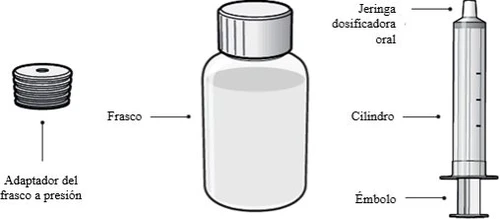
Each XELJANZ oral solution package contains
- 1 bottle adapter
- 1 bottle of XELJANZ oral solution
- 1 oral dosing syringe
Before each use:
Wash your hands with soap and water and place the contents of the package on a clean, flat surface.
Step 1. Remove the bottle from the package
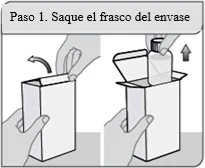
Remove the XELJANZ oral solution bottle from the package.
Step 2. Open the bottle
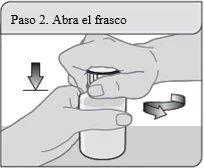
Open the bottle. Remove the sealed closure from the top of the bottle (only the first time).
Do not discard the child-resistant cap.
Note: it is not necessary to shake the bottle before use.
Step 3. Insert the bottle adapter
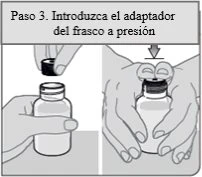
Remove the bottle adapter and the oral dosing syringe from the plastic wrapper. With the bottle on a flat surface, press the ribbed end of the bottle adapter firmly into the neck of the bottle using your thumbs, while holding the bottle securely.
Note: Do not remove the bottle adapter once it has been inserted.
Step 4. Remove air from the oral dosing syringe
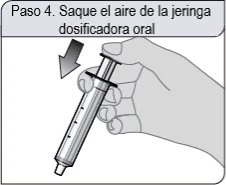
Push the plunger of the oral dosing syringe completely to the end of the syringe barrel to remove excess air.
Step 5. Insert the oral dosing syringe
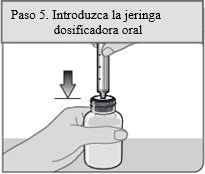
Insert the oral dosing syringe vertically into the bottle through the opening of the bottle adapter until it is firmly in place.
Step 6. Draw the dose from the bottle
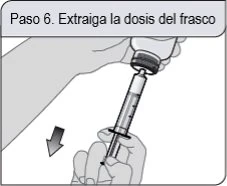
With the oral dosing syringe in place, turn the bottle upside down. Pull the plunger back.
If you see air bubbles in the oral dosing syringe, push the plunger completely to return the oral solution to the bottle. Then, draw the prescribed dose of oral solution again.
Step 7. Remove the oral dosing syringe
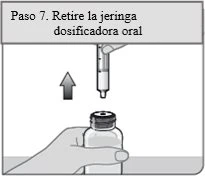
Place the bottle upright on a flat surface. Remove the oral dosing syringe from the adapter by pulling the syringe barrel upward.
Step 8. Check the dose drawn
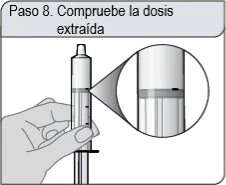
Check that the correct dose has been drawn into the oral dosing syringe.
If the dose is incorrect, firmly reinsert the tip of the oral dosing syringe into the bottle adapter. Push the plunger completely to return the oral solution to the bottle. Repeat steps 6 and 7.
Step 9. Administer the XELJANZ dose
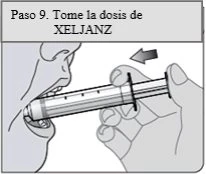
Place the tip of the oral dosing syringe inside the patient's cheek.
Slowly push the plunger to the end to deliver all the medication from the oral dosing syringe. Make sure the patient has enough time to swallow the medication.
Step 10. Close the bottle
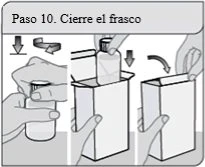
Close the bottle tightly by turning the child-resistant cap clockwise. Leave the bottle adapter in place.
Return the bottle to the package and close it to protect the XELJANZ oral solution from light.
Step 11. Clean the oral dosing syringe
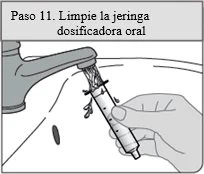
Remove the plunger from the syringe barrel by pulling the plunger and barrel in opposite directions.
Rinse both parts with water after each use.
Allow them to air dry; then return the oral dosing syringe along with the oral solution to the package.
Store the oral dosing syringe with the XELJANZ oral solution.
Do not discard the oral dosing syringe.