Wynzora 50 micrograms/g + 0.5 mg/g cream
Spain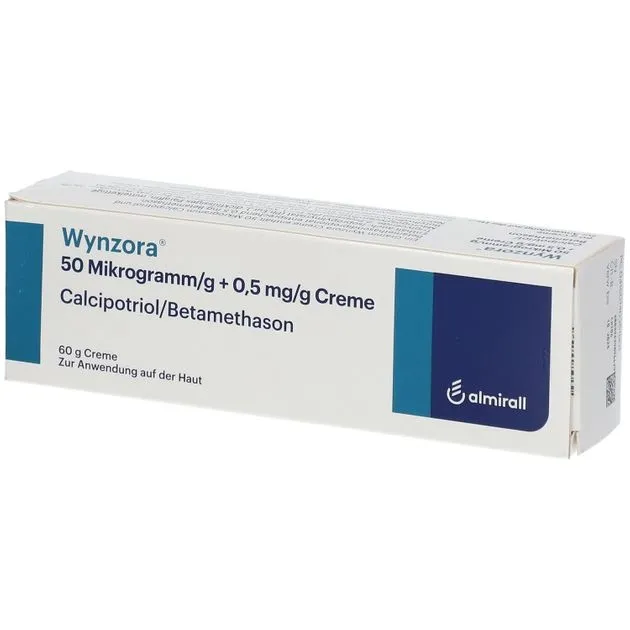
Instructions for Use
Patient Information Leaflet
Introduction
Patient Information Leaflet
Wynzora 50 micrograms/g + 0.5 mg/g cream
calcipotriol/betamethasone
Read this entire leaflet carefully before you start using this medicine, as it contains important information for you.
- Keep this leaflet, as you may need to read it again.
- If you have any questions, ask your doctor, pharmacist, or nurse.
- This medicine has been prescribed for you only and must not be given to others, even if they have the same symptoms as you, because it could harm them.
- If you experience any adverse reactions, consult your doctor, pharmacist, or nurse, even if they are adverse reactions not listed in this leaflet. See section 4.
Leaflet Contents
- What Wynzora is and what it is used for
- What you need to know before using Wynzora
- How to use Wynzora
- Possible adverse effects
- How to store Wynzora
- Contents of the pack and other information
1. What Wynzora is and what it is used for
This medicine is used on the skin to treat mild to moderate plaque psoriasis, including scalp psoriasis, in adults. Psoriasis is caused by skin cells that grow too quickly. This leads to redness, scaling, and thickening of the skin.
This medicine contains calcipotriol and betamethasone. Calcipotriol helps normalize the rate of skin cell growth, and betamethasone works by reducing inflammation.
2. What you need to know before using Wynzora
Do not use Wynzora
- if you are allergic to calcipotriol, betamethasone, or any of the other ingredients of this medicine (listed in section 6)
- if you have problems with calcium levels in your body (consult your doctor)
- if you have other types of psoriasis such as erythrodermic, exfoliative, or pustular psoriasis (consult your doctor).
Since this medicine contains a potent corticosteroid, DO NOT use it on skin affected by:
- skin infections caused by viruses (e.g., cold sores or chickenpox)
- skin infections caused by fungi (e.g., athlete’s foot or ringworm)
- skin infections caused by bacteria
- skin infections caused by parasites (e.g., scabies)
- tuberculosis (TB)
- perioral dermatitis (red rash around the mouth)
- thin skin, fragile blood vessels, stretch marks
- ichthyosis (dry, scaly skin resembling fish scales)
- acne (spots)
- rosacea (intense flushing or redness of the facial skin)
- ulcers or cracked skin.
Warnings and precautions
Consult your doctor, pharmacist, or nurse before starting to use Wynzora:
- if you have diabetes mellitus (diabetes), as blood sugar/glucose levels may be affected by the corticosteroid
- if you are using other medicines containing corticosteroids, as you may experience side effects
- if you have a specific type of psoriasis called guttate psoriasis (psoriasis guttata).
Consult your doctor, pharmacist, or nurse during treatment:
- if you have used this medicine for a long time and plan to stop (as there is a risk that your psoriasis may worsen or rebound if corticosteroids are stopped suddenly)
- if a skin infection develops, as you may need to interrupt treatment
- if your blood calcium levels change (see section 4 for more information)
- if you experience blurred vision or other visual disturbances.
Special precautions
- Avoid use on more than 30% of the body surface or more than 15 grams per day;
- avoid use with bathing caps, bandages, or dressings, as this increases corticosteroid absorption;
- avoid use on large areas of damaged skin, mucous membranes, or skin folds (groin, armpits, under the breasts), as this increases corticosteroid absorption;
- avoid use on the face or genitals (genital organs), as these areas are highly sensitive to corticosteroids;
- avoid excessive sun exposure, excessive use of sunbeds, and other forms of light therapy or light exposure.
Children and adolescents
The use of this medicine is not recommended in children and adolescents under 18 years of age.
Other medicines and Wynzora
Inform your doctor, pharmacist, or nurse if you are taking, have recently taken, or might need to take any other medicines.
Pregnancy and breastfeeding
If you are pregnant or breastfeeding, think you may be pregnant, or are planning to become pregnant, consult your doctor or pharmacist before using this medicine.
Pregnancy
This medicine should only be used during pregnancy if advised by your doctor.
Breastfeeding
If your doctor agrees that you may continue breastfeeding, take care not to apply this medicine to the breast area.
Driving and using machines
This medicine has no or negligible effect on your ability to drive or operate machinery.
Wynzora contains butylhydroxyanisole (E320) and macrogolglycerol hydroxystearate
This medicine may cause local skin reactions (such as contact dermatitis) or irritation of the eyes and mucous membranes because it contains butylhydroxyanisole (E320) and macrogolglycerol hydroxystearate.
3. How to use Wynzora
Follow exactly the administration instructions for this medicine as given by your doctor. If in doubt, consult your doctor or pharmacist again.
This medicine is for cutaneous use (on the skin).
Instructions for proper use
When used on the body
- Apply only to skin affected by psoriasis and not to unaffected skin.
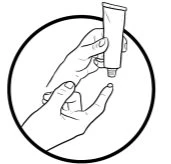
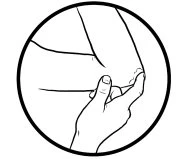
- Apply the cream using a clean fingertip or directly onto the psoriasis-affected area.
- Apply the cream to the affected area using the fingertip and spread it in a thin layer.
- Do not bandage, cover, or wrap the treated skin area.
- Wash your hands thoroughly after using this medicine. This will help prevent accidentally spreading the cream to other parts of the body (especially the face, mouth, and eyes).
- Do not be concerned if a small amount of cream is accidentally applied to normal skin near the psoriasis, but clean it off if it spreads too far.
- To achieve optimal effect, it is recommended not to shower or bathe immediately after applying this medicine. It is advised to wait 8 hours between application and showering to avoid removing the cream.
- After applying the cream, avoid contact with textiles, as they may easily become stained by the oily content (e.g., silk).
When used on the scalp
- Before applying this medicine to the scalp, comb the hair to remove any loose scales.
- It may be helpful to part the hair before applying this medicine.
- There is no need to wash the hair before applying this medicine.
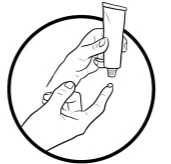
- Apply cream to the fingertip, then apply directly to areas where plaques are visible, and massage in a thin layer thoroughly.
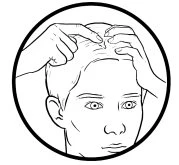
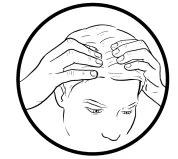
- To achieve optimal effect, it is recommended not to wash the hair after applying this medicine.
- It is advised to wait 8 hours between application and showering to avoid removing the cream.
Duration of treatment
- Use the cream once daily. It may be more convenient to use the cream at night.
- The usual initial treatment period is 8 weeks.
- Your doctor may decide on a different treatment duration.
- Your doctor may decide whether to repeat the treatment.
- Do not use more than 15 grams in one day.
If you are using other medicines containing calcipotriol, the total amount of these should not exceed 15 grams per day, and the treated area should not exceed 30% of the total body surface area.
What should I expect when using Wynzora?
Most patients notice results after 1 week of treatment, even if the psoriasis has not yet lightened at that point.
If you use more Wynzora than you should
Contact your doctor if you have used more than 15 grams in one day.
Excessive use of this medicine may also cause a calcium problem in the blood, which usually resolves when treatment is stopped. Your doctor may need you to have blood tests to check that excessive cream use is not causing blood calcium problems.
Prolonged overuse may also cause the adrenal glands to stop functioning properly (the adrenal glands are located above the kidneys and produce hormones).
If you use more Wynzora than prescribed, consult your doctor immediately or call the Toxicology Information Service at telephone number 915 620 420, indicating the medicine and amount used.
If you forget to use Wynzora
Do not take a double dose to make up for missed doses.
If you stop using Wynzora
You should stop using this medicine as directed by your doctor. You may need to stop using this medicine gradually, especially if you have used it for a long time.
If you have any further questions about the use of this medicine, ask your doctor, pharmacist, or nurse.
4. Possible adverse effects
Like all medicines, this medicine can cause adverse effects, although not everyone will experience them.
Adverse effects observed with Wynzora:
Uncommon (may affect up to 1 in 100 people):
- Inflammation or swelling of the hair root at the application site (folliculitis)
- Sleeplessness (insomnia)
- Itching (pruritus)
- Skin rash (rash)
- Itching
- Skin irritation at the application site
- Pain at the application site
- Eczema at the application site (urticaria)
- Scaling at the application site (exfoliation)
- Spider veins at the application site (telangiectasia)
Frequency not known (cannot be estimated from available data):
- Blurred vision
This medicine contains betamethasone and calcipotriol. Therefore, you may experience the following side effects. These side effects are more likely to occur if this medicine is used for a long time, if it is used under occlusive dressings or in skin folds (e.g., groin, armpits, or under the breasts), or if it is applied to large areas of skin:
- Allergic reactions with swelling of the face or other parts of the body, such as the hands or feet. Swelling of the mouth/throat and breathing difficulties may also occur
- Levels of calcium in blood or urine may increase to the point of causing symptoms. Signs include frequent urination, constipation, muscle weakness, and confusion. When treatment is stopped, calcium levels return to normal
- The adrenal glands may stop functioning properly. Signs include tiredness, depression, and anxiety
- Blurred vision, difficulty seeing at night, sensitivity to light (this could be a sign of cataracts)
- Eye pain, red eye, decreased vision, or blurred vision (could be a sign of increased pressure inside the eye)
- Infections (due to a weakened immune system)
- Pustular psoriasis (a red area of psoriasis with yellowish pustules [pimples])
- You may experience fluctuations in blood sugar levels.
If you experience any of the above side effects, you must contact your doctor immediately.
Less severe side effects known to be caused by calcipotriol or betamethasone include:
- Decreased skin thickness
- Stretch marks
- Blood vessels in the skin may become more visible
- Changes in hair growth
- Red rash around the mouth (perioral dermatitis)
- Worsening of psoriasis
- Skin sensitivity to light causing a rash
- Itchy skin rash (eczema)
- White or gray hair may temporarily turn yellowish at the application site when used on the scalp.
Reporting of adverse effects
If you experience any type of adverse effect, talk to your doctor, pharmacist, or nurse, even if it is a possible adverse effect not listed in this leaflet. You can also report them directly via the Spanish Pharmacovigilance System for Human Medicines: https://www.notificaram.es. By reporting adverse effects, you can help provide more information on the safety of this medicine.
5. Conservation of Wynzora
Keep this medicine out of the sight and reach of children.
Do not use this medicine after the expiry date which is stated on the carton or tube after EXP. The expiry date refers to the last day of the month indicated.
Do not store above 25 °C.
Do not freeze.
Dispose of the tube with any remaining cream 6 months after first opening.
Medicines should not be disposed of via wastewater or household waste. Return empty containers and unused medicines to the SIGRE point at your pharmacy. If you have any doubts, ask your pharmacist how to dispose of containers and medicines you no longer need. This will help protect the environment.
6. Contents of the pack and other information
Composition of Wynzora
- The active substances are: calcipotriol and betamethasone.
One gram of cream contains 50 micrograms of calcipotriol and 0.5 mg of betamethasone (as betamethasone dipropionate).
- The other components are: isopropyl myristate, liquid paraffin, medium-chain triglycerides, isopropyl alcohol, macrogol lauryl ether, poloxamer, macrogol glycerol hydroxystearate, carbomer interpolymer, butylhydroxyanisole (E320), tromethamine, dibasic sodium phosphate heptahydrate, monosodium dihydrogen phosphate monohydrate, all-rac-α-tocopherol and purified water.
Nature of the product and contents of the container
Wynzora is a white cream supplied in an aluminum tube coated with epoxiphenol and fitted with a polyethylene screw cap.
Pack size: A 60 g tube, or multiple pack of 120 g (two 60 g tubes) (2 x 60 g).
Only certain pack sizes may be marketed.
Marketing Authorization Holder and Manufacturer
Marketing Authorization Holder
Almirall, S.A.
Ronda General Mitre, 151
08022 Barcelona
Spain
Manufacturer
Laboratoires Chemineau
93 route de Monnaie
Vouvray, 37210
France
Laboratoris Feltor, S. A.
Polígono Industrial Molí de les Planes
Calle Roques Blanqués, 3-5
08470 Sant Celoni (Barcelona)
Spain
This medicinal product is authorized in the Member States of the European Economic Area under the following names:
Denmark, Czech Republic, Finland, France, Germany, Ireland, Italy, Netherlands, Norway, Poland, Portugal, Spain, Sweden, United Kingdom (Northern Ireland): Wynzora
Austria: Winxory
Date of the most recent review of this leaflet: June 2025
Detailed and up-to-date information on this medicinal product is available on the website of the Spanish Agency of Medicines and Health Products (AEMPS) http://www.aemps.gob.es
This page has been machine-translated and may contain inaccuracies. The original data is available in the manufacturing country's language.
Last data check: May 18, 2026 · Data source: CIMA — AEMPS