Voriconazole Normon 50 mg film-coated tablets EFG
Spain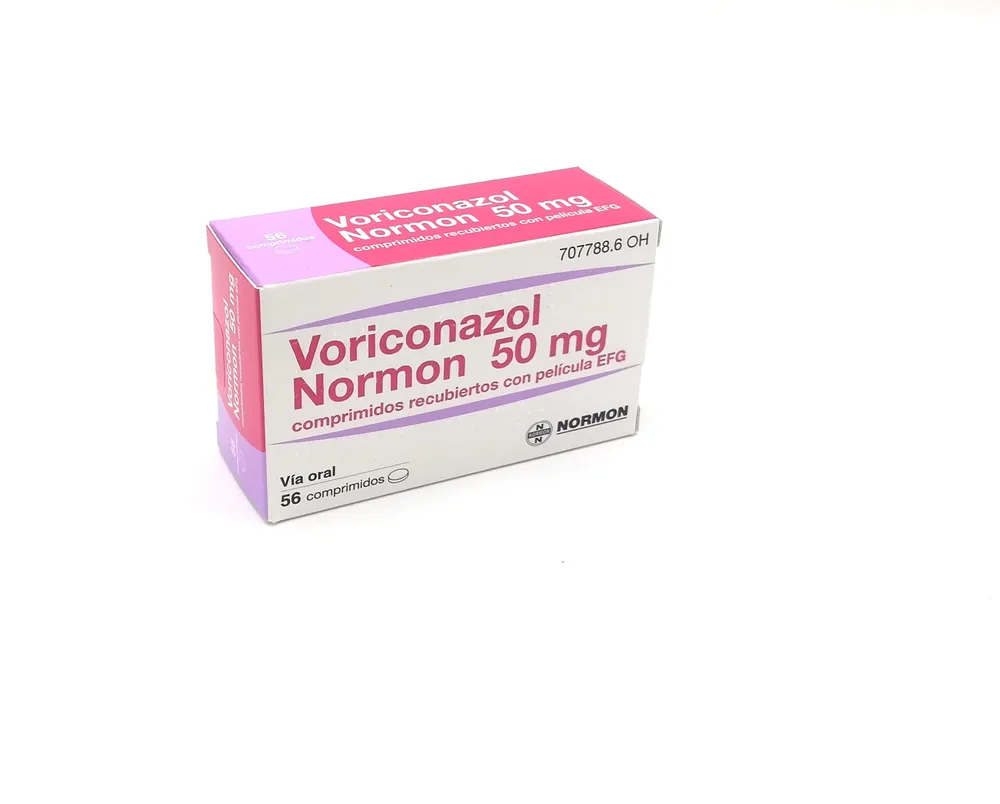
Instructions for Use
Table of Contents
- Introduction
- **Package leaflet contents**
- 1. What Voriconazol Normon is and what it is used for
- 2. What you need to know before starting to take Voriconazole Normon
- **Do not take Voriconazole Normon**
- **Warnings and precautions**
- **Children and adolescents**
- **Other Medicines and Voriconazole Normon**
- **Pregnancy and breastfeeding**
- **Driving and use of machines**
- **Voriconazole Normon contains lactose**
- 3. How to take Voriconazole Normon
- **Use in children and adolescents**
- **If you take more Voriconazol Normon than you should**
- **If you forget to take Voriconazole Normon**
- **If you stop taking Voriconazole Normon**
- 4. Possible adverse effects
- **Serious adverse effects - Stop taking Voriconazole Normon and consult a doctor immediately**
- **Other adverse effects**
- **Reporting of adverse reactions**
- 5. Storage of Voriconazole Normon
- 6. Contents of the pack and other information
- **Composition of Voriconazol Normon**
- **Appearance of the product and contents of the container**
- **Marketing Authorization Holder and Manufacturing Responsible Party**
- **Marketing Authorization Holder**
- **Manufacturer**
Package leaflet: Information for the user
Introduction
Package leaflet: Information for the user
Voriconazole Normon 50 mg film-coated tablets EFG
Voriconazole
Read the entire leaflet carefully before you start taking this medicine, because it contains important information for you.
- Keep this leaflet, as you may need to read it again.
- If you have any questions, ask your doctor, pharmacist or nurse.
- This medicine has been prescribed for you only and must not be given to other people, even if they have the same symptoms as you, since it could harm them.
- If you experience any side effects, talk to your doctor, pharmacist or nurse, even if they are side effects not listed in this leaflet. See section 4.
Package leaflet contents
- What Voriconazole Normon is and what it is used for.
- What you need to know before starting to take Voriconazole Normon.
- How to take Voriconazole Normon.
- Possible side effects.
- Storage of Voriconazole Normon.
- Contents of the pack and other information.
1. What Voriconazol Normon is and what it is used for
This medicine contains the active substance voriconazole. Voriconazole is an antifungal medicine. It works by killing or stopping the growth of fungi that cause infections.
It is used to treat patients (adults and children aged 2 years and older) with:
- invasive aspergillosis (a type of fungal infection caused by Aspergillus sp.),
- candidaemia (another type of fungal infection caused by Candida sp.) in non-neutropenic patients (patients who do not have an abnormally low count of white blood cells),
- serious invasive infections caused by Candida sp., when the fungus is resistant to fluconazole (another antifungal medicine),
- serious fungal infections caused by Scedosporium sp. or Fusarium sp. (two different species of fungi).
Voriconazole is used in patients with serious fungal infections that may be life-threatening.
Prevention of fungal infections in high-risk recipients of allogeneic bone marrow transplant.
This medicine should only be used under medical supervision.
2. What you need to know before starting to take Voriconazole Normon
Do not take Voriconazole Normon
- if you are allergic to voriconazole or to any of the other components of this medicine (listed in section 6).
It is very important that you inform your doctor or pharmacist if you are taking or have recently taken any other medicines, including those obtained without a prescription, or herbal medicines.
During treatment with Voriconazole Normon, you must not take the following medicines:
- Terfenadine (used for allergies).
- Astemizole (used for allergies).
- Cisapride (used for digestive problems).
- Pimozide (used for mental disorders).
- Quinidine (used for heart arrhythmias).
- Ivabradine (used for symptoms of chronic heart failure).
- Rifampicin (used to treat tuberculosis).
- Efavirenz (used to treat HIV) at doses of 400 mg or higher once daily.
- Carbamazepine (used to treat seizures).
- Phenobarbital (used for severe insomnia and seizures).
- Ergot alkaloids (e.g.: ergotamine, dihydroergotamine; used for migraine).
- Sirolimus (used in patients who have received a transplant).
- Ritonavir (used to treat HIV) at doses of 400 mg or higher twice daily.
- St. John’s wort (hypericum, herbal medicine).
- Naloxegol (used to treat constipation specifically caused by painkillers called opioids [e.g., morphine, oxycodone, fentanyl, tramadol, codeine]).
- Tolvaptan (used to treat hyponatremia [low sodium levels in blood] or to slow down the decline in kidney function in patients with polycystic kidney disease).
- Lurasidone (used to treat depression).
- Venetoclax (used to treat patients with chronic lymphocytic leukemia [CLL]).
Warnings and precautions
Consult your doctor, pharmacist, or nurse before starting to take voriconazole if:
- you have had an allergic reaction to other azoles.
- you currently have or have ever had liver disease. If you have liver disease, your doctor may prescribe a lower dose of voriconazole. Your doctor should also monitor your liver function during treatment with voriconazole by performing blood tests.
- you know you have cardiomyopathy, irregular heartbeat, slow heart rate, or an abnormality on electrocardiogram (ECG) known as "prolonged QTc syndrome".
You should avoid any exposure to sunlight and solar radiation during treatment. It is important to cover exposed areas and to use sunscreen with a high sun protection factor (SPF), as the skin may become more sensitive to UV rays from the sun. This sensitivity may be further increased by the use of other medicines that make the skin sensitive to sunlight, such as methotrexate. These precautions also apply to children.
While being treated with voriconazole:
- inform your doctor if you experience:
- sunburn
- severe skin rash or blisters
- bone pain
If you develop skin disorders such as those described above, your doctor may refer you to a dermatologist, who after evaluation may consider it important for you to have regular check-ups. There is a small risk of developing skin cancer with long-term use of voriconazole.
If you develop signs of "adrenal insufficiency," in which the adrenal glands do not produce sufficient amounts of certain steroid hormones, such as cortisol, which may cause symptoms such as: prolonged or chronic fatigue, muscle weakness, loss of appetite, weight loss, abdominal pain, inform your doctor.
If you experience signs of "Cushing's syndrome," in which the body produces too much cortisol hormone, which may cause symptoms such as: weight gain, fatty hump between the shoulders, rounded face, darkening of the skin on the abdomen, thighs, breasts, and arms, thin skin, easy bruising, high blood sugar levels, excessive hair growth, or excessive sweating, inform your doctor.
Your doctor should monitor the function of your liver and kidneys by performing blood tests.
Children and adolescents
Voriconazole Normon must not be administered to children under 2 years of age.
Other Medicines and Voriconazole Normon
Inform your doctor or pharmacist if you are taking, have recently taken, or might need to take any other medicines.
- Some medicines, when used at the same time as voriconazole, may affect the action of voriconazole, or voriconazole may affect the action of other medicines.
Tell your doctor if you are taking the following medicines, as concomitant treatment with voriconazole should be avoided if possible:
- Ritonavir (used for the treatment of HIV) at a dose of 100 mg twice daily.
- Glasdegib (used to treat cancer); if you need to take both medicines, your doctor will frequently monitor your heart rhythm.
Inform your doctor if you are taking any of the following medicines, as concomitant treatment with Voriconazole Normon should be avoided if possible, and a dose adjustment of Voriconazole Normon may be required:
- Rifabutin (used to treat tuberculosis). If you are already being treated with rifabutin, your blood count and rifabutin side effects will need to be monitored.
- Phenytoin (used to treat epilepsy). If you are already being treated with phenytoin, the concentration of phenytoin in your blood will need to be monitored during treatment with Voriconazole Normon, and your dose may need to be adjusted.
Inform your doctor if you are taking any of the following medicines, as you may require a dose adjustment or monitoring to ensure these medicines and/or Voriconazole Normon continue to have the desired effect:
- Warfarin and other anticoagulants (e.g., phenprocoumon, acenocoumarol; used to reduce blood clotting).
- Ciclosporine (used in transplant patients).
- Tacrolimus (used in transplant patients).
- Sulfonylureas (e.g., tolbutamide, glipizide, glyburide) (used for diabetes).
- Statins (e.g., atorvastatin, simvastatin) (used to reduce cholesterol levels).
- Benzodiazepines (e.g., midazolam, triazolam) (used for severe insomnia and stress).
- Omeprazole (used to treat stomach ulcers).
- Oral contraceptives (if you take Voriconazole Normon while using oral contraceptives, you may experience adverse effects such as nausea and menstrual disorders).
- Vinca alkaloids (e.g., vincristine, vinblastine) (used to treat cancer).
- Tyrosine kinase inhibitors (e.g., axitinib, bosutinib, cabozantinib, ceritinib, cobimetinib, dabrafenib, dasatinib, nilotinib, sunitinib, ibrutinib, ribociclib) (used to treat cancer).
- Tretinoin (used to treat leukemia).
- Indinavir and other HIV protease inhibitors (used to treat HIV infection).
- Non-nucleoside reverse transcriptase inhibitors (e.g., efavirenz, delavirdine, nevirapine) (used to treat HIV infection) (some doses of efavirenz must NOT be taken at the same time as Voriconazole Normon).
- Methadone (used to treat heroin addiction).
- Alfentanil, fentanyl, and other short-acting opioids such as sufentanil (analgesics used during surgery).
- Oxycodone and other long-acting opioids such as hydrocodone (used to treat moderate to severe pain).
- Non-steroidal anti-inflammatory drugs (e.g., ibuprofen, diclofenac) (used to treat pain and inflammation).
- Fluconazole (used to treat fungal infections).
- Everolimus (used to treat advanced renal cancer and in transplant patients).
- Letermovir (used to prevent cytomegalovirus (CMV) infection after bone marrow transplant).
- Ivacaftor: used to treat cystic fibrosis.
- Flucloxacillin (an antibiotic used to treat bacterial infections).
Pregnancy and breastfeeding
You should not take this medicine during pregnancy unless instructed by your doctor. Women of childbearing age being treated with voriconazole must use effective contraception. Contact your doctor immediately if you become pregnant during treatment with voriconazole.
If you are pregnant or breastfeeding, think you may be pregnant, or plan to become pregnant, consult your doctor or pharmacist before using this medicine.
Driving and use of machines
Voriconazole Normon may cause blurred vision or discomfort due to increased sensitivity to light. If this occurs, do not drive or operate tools or machinery, and inform your doctor.
Voriconazole Normon contains lactose
This medicine contains lactose. If your doctor has informed you of an intolerance to certain sugars, consult with him before taking this medicine.
Voriconazole Normon contains sodium
This medicine contains less than 1 mmol of sodium (23 mg) per film-coated tablet, i.e., essentially "sodium-free".
3. How to take Voriconazole Normon
Always follow exactly your doctor's instructions for taking this medicine. If you are unsure, consult your doctor or pharmacist again.
Your doctor will determine the dose based on your body weight and the type of infection you have.
The recommended dose in adults (including elderly patients) is as follows:
Tablets | ||
Patients weighing 40 kg or more | Patients weighing less than 40 kg | |
Dose during the first 24 hours (loading dose) | 400 mg every 12 hours during the first 24 hours | 200 mg every 12 hours during the first 24 hours |
Dose after the first 24 hours (maintenance dose) | 200 mg twice daily | 100 mg twice daily |
Depending on your response to treatment, your doctor may increase the daily dose to 300 mg twice daily. For patients weighing less than 40 kg, the oral dose may be increased to 150 mg twice daily.
Your doctor may decide to reduce the dose if you have mild to moderate cirrhosis.
Use in children and adolescents
The recommended dose in children and adolescents is as follows:
Tablets | ||
Children aged 2 to less than 12 years and adolescents aged 12 to 14 years weighing less than 50 kg | Adolescents aged 12 to 14 years weighing 50 kg or more; and all adolescents older than 14 years | |
Dose during the first 24 hours (loading dose) | Your treatment should be initiated with an infusion | 400 mg every 12 hours during the first 24 hours |
Dose after the first 24 hours (maintenance dose) | 9 mg/kg twice daily (a maximum dose of 350 mg twice daily) | 200 mg twice daily |
Depending on your response to treatment, your doctor may increase or decrease the daily dose.
- The tablets should only be administered if the child is able to swallow whole tablets.
Take the tablets at least one hour before or one hour after a meal. Swallow the tablet whole with some water.
If you or your child are taking Voriconazol Normon for the prevention of fungal infections, your doctor may discontinue Voriconazol if you or your child experience adverse effects related to the treatment.
If you take more Voriconazol Normon than you should
If you take more tablets than prescribed (or if someone else takes your tablets), seek medical help immediately or go to the nearest hospital emergency department. Take the Voriconazol Normon tablet pack with you. You may experience abnormal sensitivity to light as a result of taking more Voriconazol Normon than you should.
In case of overdose or accidental ingestion, contact your doctor or pharmacist immediately, or call the Toxicology Information Service at telephone number: 91 562 04 20, indicating the medication and the amount ingested.
If you forget to take Voriconazole Normon
It is important to take Voriconazole tablets regularly at the same time each day. If you miss a dose, take the next one at the usual time. Do not take a double dose to make up for a missed dose.
If you stop taking Voriconazole Normon
It has been shown that correctly following the prescribed dosage regimen, taking each dose at the correct time, can significantly increase the effectiveness of this medicine. Therefore, unless your doctor tells you otherwise, it is important to continue taking Voriconazole Normon exactly as indicated above.
Keep taking Voriconazole Normon until your doctor tells you to stop. Do not stop treatment prematurely, as the infection may not be cured. Patients with weakened immune systems or complicated infections may require longer treatment durations to prevent the infection from returning.
When your doctor stops your treatment with Voriconazole Normon, you should not experience any effects due to discontinuation.
If you have any further questions about the use of this medicine, ask your doctor, pharmacist, or nurse.
4. Possible adverse effects
Like all medicines, this medicine may cause adverse effects, although not everybody gets them.
If any occur, they are most likely to be mild and temporary. However, some may be serious and require medical attention.
Serious adverse effects - Stop taking Voriconazole Normon and consult a doctor immediately
- Skin rash.
- Jaundice, changes in blood tests monitoring liver function.
- Pancreatitis.
Other adverse effects
Very common: may affect more than 1 in 10 people
- Visual disturbance (changes in vision such as blurred vision, disturbances in color vision, abnormal intolerance to visual perception of light, color blindness, eye disorder, visual halos, night blindness, flickering vision, perception of flashes of light, visual aura, decreased visual acuity, reduced visual clarity, partial loss of normal visual field, spots in the visual field).
- Fever.
- Skin rash.
- Nausea, vomiting, and diarrhea.
- Headache.
- Swelling of the limbs.
- Stomach pain.
- Difficulty breathing.
- Elevated liver enzymes.
Common: may affect up to 1 in 10 people
- Sinusitis, gum inflammation, chills, weakness.
- Low blood cell counts, including severe cases, of certain types of red blood cells (sometimes immune-mediated) or white blood cells (sometimes accompanied by fever), low platelet count affecting blood clotting.
- Low blood sugar levels, low blood potassium levels, low blood sodium levels.
- Anxiety, depression, confusion, agitation, insomnia, hallucinations.
- Seizures, tremors or uncontrolled muscle movements, tingling or abnormal sensations in the skin, increased muscle tone, drowsiness, dizziness.
- Ocular hemorrhage.
- Heart rhythm problems including very fast heartbeat, very slow heartbeat, fainting.
- Hypotension, inflammation of veins (which may be associated with blood clot formation).
- Difficulty breathing, chest pain, facial swelling (mouth, lips, and around the eyes), fluid accumulation in the lungs.
- Constipation, indigestion, lip swelling.
- Jaundice (yellowing of the skin), liver inflammation, and liver damage.
- Skin rashes, which may become severe, with blisters and peeling, characterized by flat, red areas covered with small raised spots that merge together, skin redness.
- Itching.
- Alopecia.
- Back pain.
- Kidney failure, presence of blood in urine, abnormalities in kidney function tests.
- Sunburn or severe skin reaction after exposure to light or sun.
- Skin cancer.
Uncommon: may affect up to 1 in 100 people
- Flu-like symptoms, irritation and inflammation of the gastrointestinal tract, gastrointestinal inflammation causing antibiotic-associated diarrhea, inflammation of lymphatic vessels.
- Inflammation of the thin tissue lining the abdominal wall and covering abdominal organs (peritonitis).
- Enlargement (sometimes painful) of lymph nodes, bone marrow failure, increased eosinophils.
- Reduced adrenal gland function, underactive thyroid gland.
- Abnormal brain function, Parkinson's-like symptoms, nerve damage causing numbness, pain, tingling, or burning sensations in hands or feet.
- Problems with balance or coordination.
- Brain swelling.
- Double vision, serious eye disorders such as eye and eyelid pain and inflammation, abnormal eye movements, optic nerve damage leading to vision disturbances, optic disc inflammation.
- Reduced sensitivity to touch.
- Taste disturbances.
- Hearing difficulty, ringing in the ears (tinnitus), vertigo.
- Inflammation of certain internal organs, pancreas and duodenum, swelling and inflammation of the tongue.
- Liver enlargement, liver failure, gallbladder disease, gallstones.
- Joint inflammation, inflammation of veins under the skin (which may be associated with blood clot formation).
- Kidney inflammation, protein in urine, kidney damage.
- Very high heart rate or extrasystoles, sometimes with erratic electrical impulses.
- Abnormal electrocardiogram (ECG).
- Elevated blood cholesterol, elevated blood urea.
- Skin allergic reactions (sometimes severe), such as skin disorders, potentially life-threatening conditions causing blisters and painful sores on the skin and mucous membranes, especially in the mouth, skin inflammation, hives, skin redness and irritation, reddish or purplish skin discoloration possibly due to low platelet count, eczema.
- Reaction at the infusion site.
- Allergic reaction or exaggerated immune response.
- Inflammation of the tissue surrounding the bone (periostitis).
Rare: may affect up to 1 in 1,000 people
- Overactive thyroid gland.
- Impaired brain function as a serious complication of liver disease.
- Loss of most of the optic nerve fibers, corneal opacity, involuntary eye movements.
- Blister formation due to photosensitivity.
- Disorder in which the immune system attacks part of the peripheral nervous system.
- Heart rhythm or conduction problems (sometimes potentially fatal).
- Potentially life-threatening allergic reaction.
- Blood clotting abnormalities.
- Skin allergic reactions (sometimes severe), such as rapid swelling (edema) of the dermis, subcutaneous tissue, mucosa, and submucosal layers, painful and itchy plaques of thickened, red skin with silvery scales, skin and mucous membrane irritation, potentially life-threatening skin disorders causing large areas of the epidermis (the outermost skin layer) to peel off from underlying skin layers.
- Small scaly, dry skin patches, sometimes thick with tips or "horns".
Adverse effects with unknown frequency:
- Freckles and pigmented spots.
Other important adverse effects with unknown frequency, but which must be reported to your doctor immediately:
- Red, scaly plaques or ring-shaped skin lesions, which may be a symptom of an autoimmune disease called cutaneous lupus erythematosus.
Since voriconazole has been observed to affect the liver and kidneys, your doctor should monitor liver and kidney function through blood tests. Inform your doctor if you experience stomach pain or if your stools have an unusual consistency.
Cases of skin cancer have been reported in patients treated with voriconazole for prolonged periods.
The frequency of sunburn or severe skin reactions after exposure to light or sun was higher in children. If you or your child develop skin disorders, your doctor may refer you to a dermatologist who, after evaluation, may determine that regular monitoring is necessary.
Elevated liver enzymes were also observed more frequently in children.
If any of these adverse effects persist or are bothersome, inform your doctor.
Reporting of adverse reactions
If you experience any type of adverse reaction, consult your doctor, pharmacist, or nurse, even if it is a possible adverse reaction not listed in this leaflet. You may also report them directly through the Spanish Pharmacovigilance System for Human Medicinal Products: https://www.notificaram.es. By reporting adverse reactions, you can help provide more information on the safety of this medicine.
5. Storage of Voriconazole Normon
Keep this medicine out of sight and reach of children.
Do not use this medicine after the expiry date stated on the packaging after EXP. The expiry date refers to the last day of the month indicated.
This medicine does not require any special storage conditions.
Medicines must not be disposed of via wastewater drains or household waste. Unused medicines and their containers should be taken to the SIGRE point at your pharmacy. Ask your pharmacist how to dispose of medicines and containers you no longer need. This will help protect the environment.
6. Contents of the pack and other information
Composition of Voriconazol Normon
- The active substance is voriconazole.
Voriconazol Normon 50 mg film-coated tablets: each tablet contains 50 mg of voriconazole.
Voriconazol Normon 200 mg film-coated tablets: each tablet contains 200 mg of voriconazole.
- The other components are:
Tablet core: lactose monohydrate, sodium croscarmellose, povidone, pregelatinized maize starch, and magnesium stearate (E-572).
Tablet coating: hypromellose (E-464), titanium dioxide (E-171), macrogol 6000, and talc.
Appearance of the product and contents of the container
Voriconazol Normon 50 mg tablets are presented as white, round, biconvex film-coated tablets marked with "V50" on one side.
Voriconazol Normon 50 mg film-coated tablets are available in packs of 30, 56 and 100.
Voriconazol Normon 200 mg tablets are presented as white, elongated, biconvex film-coated tablets marked with "V200" on one side.
Voriconazol Normon 200 mg film-coated tablets are available in packs of 30, 56 and 100.
Only some pack sizes may be marketed.
Marketing Authorization Holder and Manufacturing Responsible Party
Marketing Authorization Holder
LABORATORIOS NORMON, S.A.
C/ Ronda de Valdecarrizo, 6
28760 Tres Cantos, Madrid
Spain.
Manufacturer
LABORATORIOS NORMON, S.A.
C/ Ronda de Valdecarrizo, 6
28760 Tres Cantos, Madrid
Spain
This medicinal product is authorized in the Member States of the EEA under the following names:
Spain: Voriconazol Normon 50 mg film-coated tablets EFG
Voriconazol Normon 200 mg film-coated tablets EFG
Portugal: Voriconazol Normon
Date of the most recent review of this leaflet: September 2024
Detailed information on this medicinal product is available on the European Medicines Agency website: http://www.ema.europa.eu, and on the website of the Spanish Agency of Medicines and Medical Devices (AEMPS) (http://www.aemps.gob.es/).
You can access detailed information about this medicine by scanning the QR code included in the package leaflet and outer packaging with your mobile phone (smartphone). You can also access this information at the following internet address: https://cima.aemps.es/cima/dochtml/p/80200/P_80200.html
Similar Medications
-
Vfend 200 mg film-coated tablets
Form: tablets, film-coated
Active substance Dosage VORICONAZOLE 200 mg Manufacturer: Pfizer Europe Ma Eeig
-
Vfend 200 mg film-coated tablets
Form: tablets, film-coated
Active substance Dosage VORICONAZOLE 200 mg Manufacturer: Pfizer Europe Ma Eeig
-
Vfend 50 mg film-coated tablets
Form: tablets, film-coated
Active substance Dosage VORICONAZOLE 50 mg Manufacturer: Pfizer Europe Ma Eeig
-
Voriconazole Accord 200 mg film-coated tablets EFG
Form: tablets, film-coated
Active substance Dosage VORICONAZOLE 200 mg Manufacturer: Accord Healthcare S.L.U.
-
Voriconazole Aurovitas 200 mg film-coated tablets EFG
Form: tablets, film-coated
Active substance Dosage VORICONAZOLE 200,000 mg Manufacturer: Aurovitas Spain, S.A.U.
-
Voriconazole Kern Pharma 200 mg film-coated tablets EFG
Form: tablets, film-coated
Active substance Dosage VORICONAZOLE 200,00 mg Manufacturer: Kern Pharma S.L.
-
Voriconazole Kern Pharma 50 mg film-coated tablets EFG
Form: tablets, film-coated
Active substance Dosage VORICONAZOLE 50,00 mg Manufacturer: Kern Pharma S.L.
-
Voriconazole Normon 200 mg film-coated tablets EFG
Form: tablets, film-coated
Active substance Dosage VORICONAZOLE 200 mg Manufacturer: Laboratorios Normon S.A.
-
Voriconazole Teva 200 mg film-coated tablets EFG
Form: tablets, film-coated
Active substance Dosage VORICONAZOLE 200 mg Manufacturer: Teva Pharma S.L.U.
-
Voriconazole Teva 50 mg film-coated tablets EFG
Form: tablets, film-coated
Active substance Dosage VORICONAZOLE 50 mg Manufacturer: Teva Pharma S.L.U.
This page has been machine-translated and may contain inaccuracies. The original data is available in the manufacturing country's language.
Last data check: May 18, 2026 · Data source: CIMA — AEMPS