Vitamin D3 Farmasierra 50.000 IU tablets
Spain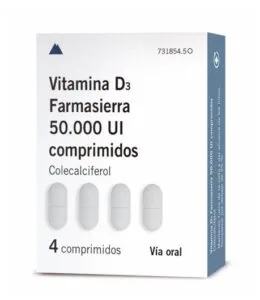
Table of Contents
- Package leaflet: Information for the user
- Introduction
- 1. What is Vitamina D3 Farmasierra and what is it used for
- 2. What you need to know before starting to take Vitamina D3 Farmasierra
- 3. How to take Vitamina D3 Farmasierra
- 4. Possible adverse effects
- 5. Storage of Vitamina D3 Farmasierra
- 6. Contents of the pack and other information
Package leaflet: Information for the user
Introduction
Package leaflet: information for the user
Vitamina D3 Farmasierra 50,000 IU tablets
Colecalciferol (vitamin D3)
Read the entire leaflet carefully before you start taking this medicine, because it contains important information for you.
- Keep this leaflet, as you may need to read it again.
- If you have any questions, ask your doctor or pharmacist.
- This medicine has been prescribed for you only, and you should not give it to other people, even if they have the same symptoms as you, because it may harm them.
- If you experience any adverse effects, consult your doctor or pharmacist, even if they are adverse effects not listed in this leaflet. See section 4.
Leaflet contents:
- What Vitamina D3 Farmasierra is and what it is used for
- What you need to know before taking Vitamina D3 Farmasierra
- How to take Vitamina D3 Farmasierra
- Possible side effects
- How to store Vitamina D3 Farmasierra
- Contents of the pack and other information
1. What is Vitamina D3 Farmasierra and what is it used for
This medicinal product contains vitamin D3, which regulates calcium uptake and metabolism, as well as calcium incorporation into bone tissue.
Vitamina D3 Farmasierra is indicated for the initial treatment of clinically relevant vitamin D deficiency in adults.
2. What you need to know before starting to take Vitamina D3 Farmasierra
Do not take Vitamina D3 Farmasierra
- if you are allergic to colecalciferol (vitamin D3) or to any of the other ingredients of this medicine (listed in section 6)
- if you have hypercalcemia (elevated calcium levels in the blood) or hypercalciuria (elevated calcium levels in the urine)
- if you have hypervitaminosis D (elevated levels of vitamin D in the blood)
- if you have kidney stones
- if you have severe renal insufficiency (severe kidney problems)
If you have any of the conditions listed above, consult your doctor or pharmacist before taking this medicine.
Warnings and precautions
Consult your doctor or pharmacist before starting to take Vitamina D3:
- if you have sarcoidosis (a specific type of connective tissue disease affecting the lungs, skin, and joints)
- if you have kidney problems or have previously had kidney stones
- if you have pseudohypoparathyroidism, a rare condition in which the body does not respond properly to parathyroid hormone produced by the body
- when using other medicines containing vitamin D simultaneously
Taking Vitamina D3 Farmasierra with food and drinks
Take Vitamina D3 preferably with meals.
Children and adolescents
This medicine is not suitable for use in children and adolescents under 18 years of age.
Other medicines and Vitamina D3 Farmasierra
Inform your doctor or pharmacist if you are taking, have recently taken, or might need to take any other medicines, particularly:
- Thiazide diuretics (used to treat high blood pressure)
- Cardiac glycosides (used to treat heart conditions), e.g., digoxin
- Glucocorticoids (used to treat inflammation)
- Cholestyramine or colestipol hydrochloride (used to treat high cholesterol)
- Laxatives containing paraffin oil
- Orlistat (weight loss)
- Magnesium (contained in some antacids)
- Phenytoin or barbiturates (used to treat epilepsy)
- Medicines for treating excess calcium (calcitonin, etidronate, gallium nitrate, pamidronate, or plicamycin)
- Rifampicin (antibiotic)
- Isoniazid (medication for tuberculosis)
- Actinomycin (chemotherapy)
- Imidazole (antifungal)
Pregnancy, breastfeeding, and fertility
If you are pregnant or breastfeeding, think you may be pregnant, or plan to become pregnant, consult your doctor or pharmacist before using this medicine.
Vitamin D3 should only be used during pregnancy if vitamin D deficiency has been clinically diagnosed. During pregnancy, the daily intake of vitamin D should not exceed 400 IU.
Vitamin D3 may be used during breastfeeding. Vitamin D3 passes into breast milk. This should be taken into account when administering additional vitamin D to the infant.
There are no data regarding the effects of vitamin D3 on fertility. However, normal levels of vitamin D are not expected to have adverse effects on fertility.
Driving and using machines
Vitamin D3 has no known effects on the ability to drive or operate machinery.
3. How to take Vitamina D3 Farmasierra
Follow exactly the administration instructions for Vitamina D3 Farmasierra as indicated by your doctor. If in doubt, consult your doctor or pharmacist again.
The dose should be individually established depending on the required level of vitamin D supplementation. Medical supervision is necessary, as dosage requirements may vary depending on the patient's response.
The patient's dietary habits should be carefully evaluated, and the vitamin D content of certain foods should be taken into account.
The tablets can be taken whole with water or crushed. This medicine should preferably be taken with a substantial meal to ensure proper absorption of vitamin D3.
Use in Adults
Recommended dose:
25,000 IU once weekly. After the first month, dose reduction may be considered.
High doses may be considered under medical supervision: 50,000 IU/week (as a single dose) for 6–8 weeks.
This initial treatment may be followed by a maintenance therapy, as directed by your physician.
Alternatively, national dosage recommendations for the treatment of vitamin D deficiency may be followed.
Use in Children
Vitamina D3 Farmasierra is not intended for use in children and adolescents under 18 years of age.
If you take more Vitamina D3 Farmasierra than you should
If you have taken more of this medicine than prescribed, or if a child has accidentally ingested it, contact your doctor or emergency services immediately to assess the potential risk.
Excess vitamin D causes disturbances in calcium metabolism. The following symptoms may occur: weakness, fatigue, headache, nausea, vomiting, diarrhea, excessive urination, urinary calcium, dry mouth, nocturia, proteinuria, intense thirst, loss of appetite, dizziness.
In case of overdose or accidental ingestion, contact the Toxicology Information Service at telephone number 91 562.04.20, indicating the medicine and the amount taken. It is recommended to bring the medicine packaging and leaflet to the healthcare professional.
If you forget to take Vitamina D3 Farmasierra
Do not take a double dose to make up for missed doses.
Take the missed dose as soon as possible, then return to your regular dosing schedule.
If it is almost time for your next dose, do not take the missed dose; simply take the next dose at the usual time.
If you stop taking Vitamina D3 Farmasierra
If you have any further questions about the use of this medicine, ask your doctor or pharmacist.
4. Possible adverse effects
Like all medicines, Vitamin D3 may cause adverse effects, although not everyone experiences them. If you consider any of the side effects you experience to be severe, or if you notice any adverse effects not listed in this leaflet, inform your doctor or pharmacist.
You should immediately stop taking Vitamin D3 and consult your doctor if you experience symptoms of serious allergic reactions, such as:
- Swelling of the face, lips, tongue, or throat
- Difficulty swallowing
- Hives and difficulty breathing.
Uncommon adverse effects (occur in less than 1 in 100 patients): Hypercalcemia (increased levels of calcium in blood) and hypercalciuria (increased levels of calcium in urine).
Rare adverse effects (occur in less than 1 in 1,000 patients): Itching, skin rash, and urticaria.
Reporting of adverse effects
If you experience any type of adverse effect, consult your doctor, pharmacist, or nurse, even if it is a possible adverse effect not listed in this leaflet. You may also report them directly through the Spanish Pharmacovigilance System for Human Medicines: www.notificaRAM.es.
By reporting adverse effects, you can help provide more information on the safety of this medicine.
5. Storage of Vitamina D3 Farmasierra
Keep this medicine out of the sight and reach of children.
Do not use this medicine after the expiry date stated on the carton and on the bottle or blister pack, following the abbreviation EXP. The expiry date refers to the last day of the month indicated.
Store the tablets in their original container to protect them from light.
Keep the bottle tightly closed to protect it from moisture.
Do not store above 25 °C.
Medicines must not be disposed of via wastewater or household waste. Dispose of unused medicines and their containers at the SIGRE collection point at your pharmacy. If you are in doubt, please ask your pharmacist how to properly dispose of unused medicines and their packaging. This will help protect the environment.
6. Contents of the pack and other information
Composition of Vitamina D3 Farmasierra
The active substance is colecalciferol 1250 micrograms, equivalent to 50,000 IU of vitamin D3.
The other components are refined palm oil, hydrogenated palm oil, butylated hydroxytoluene E321, isomaltose, anhydrous colloidal silica, microcrystalline cellulose, sodium croscarmellose, magnesium stearate.
Appearance of Vitamina D3 Farmasierra and contents of the pack
Vitamina D3 Farmasierra – yellowish-white, oblong tablets with a cosmetic groove on one side. The groove is intended solely for ease of splitting and swallowing, but not for dividing into equal doses.
It is presented in PVC/PVDC/PE-Al blisters containing 4 tablets, packed in a cardboard carton.
Not all pack sizes may be marketed.
Marketing Authorization Holder
Farmasierra Laboratorios SL
Ctra de Irún km 26,200
28709 San Sebastián de los Reyes
Madrid
Spain
Manufacturer
Farmasierra Manufacturing SL
Ctra de Irún km 26,200
28709 San Sebastián de los Reyes
Madrid
Spain
Date of the most recent revision of this leaflet: June 2022
Detailed and up-to-date information on this medicinal product is available on the website of the Spanish Agency for Medicines and Health Products (AEMPS).