Vinblastine Stada 10 mg powder for injection solution
Spain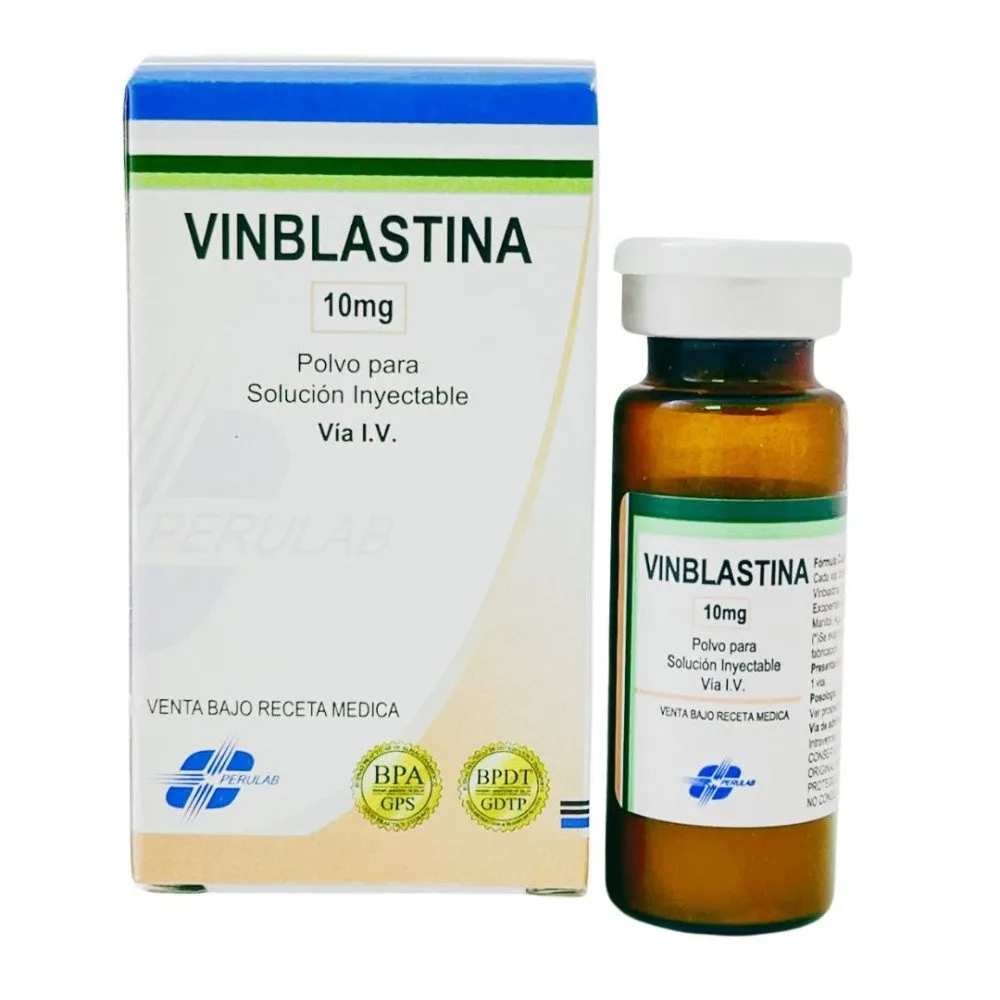
Table of Contents
- Package leaflet: Information for the user
- Introduction
- 1. What Vinblastina Stada is and what it is used for
- 2. What you need to know before using Vinblastina Stada
- 3. How to use Vinblastina Stada
- 4. Possible adverse effects
- 5. Storage of Vinblastina Stada
- 6. Contents of the pack and other information
Package leaflet: Information for the user
Introduction
Package leaflet: information for the user
Vinblastine Stada 10 mg powder for solution for injection
Read all of this leaflet carefully before you start using this medicine, because it contains important information for you.
- Keep this leaflet; you may need to read it again.
- If you have any questions, ask your doctor or pharmacist.
- If you experience any side effects, talk to your doctor or pharmacist, even if they are side effects not listed in this leaflet. See section 4.
Contents of the leaflet
- What Vinblastine Stada is and what it is used for
- What you need to know before you use Vinblastine Stada
- How to use Vinblastine Stada
- Possible side effects
- How to store Vinblastine Stada
- Contents of the pack and other information
1. What Vinblastina Stada is and what it is used for
Vinblastina Stada belongs to the group of cytostatic agents (anti-cancer medicines). Vinblastina Stada works by inhibiting the growth of cancer cells, resulting in their destruction.
Indications
- Generalized Hodgkin's disease (stages III and IV, Ann Arbor modification of the Rye classification system).
- Lymphocytic lymphoma (nodular and diffuse, poorly and well differentiated).
- Histiocytic lymphoma.
- Advanced stages of mycosis fungoides.
- Advanced testicular cancer.
- Kaposi's sarcoma.
- Letterer-Siwe disease (histiocytosis X).
- Choriocarcinoma resistant to other chemotherapeutic agents.
- Breast cancer unresponsive to endocrine surgery and adequate hormonal treatment.
2. What you need to know before using Vinblastina Stada
Do not use Vinblastina Stada powder for injectable solution
- if you have low white blood cell count (leukopenia not related to the disease)
- if you have an uncontrolled infection; the infection must first be treated with antiseptics or antibiotics
- if you are allergic (hypersensitive) to vinblastine, to other drugs in the so-called vinca alkaloids group (e.g., vincristine), or to any of the other components of this medicine (listed in section 6)
- if you are breastfeeding (see section "Pregnancy, breastfeeding and fertility")
Inform your doctor if you have any of the above-mentioned contraindications or have had them in the past.
Warnings and precautions
Talk to your doctor before starting treatment with Vinblastina 10 mg.
Vinblastina Stada must only be administered under the strict supervision of physicians experienced in the use of cytostatic agents (anti-cancer drugs).
Vinblastina Stada must be administered exclusively by intravenous route (into the vein) and under no circumstances by any other route. Administration by other routes may be fatal.
Avoid contact of Vinblastina Stada with the eyes. If Vinblastina Stada comes into contact with the eyes, rinse immediately with abundant water and consult your doctor if irritation persists.
Take special care with Vinblastina Stada:
- If, after receiving a dose of Vinblastina Stada, you develop a decrease in white blood cells (leukopenia); you must be closely monitored until your white blood cell count rises to a safe level, as otherwise you may develop an infection.
- If you have cancer cells in the bone marrow; blood production in the bone marrow may sometimes decrease significantly during treatment with Vinblastina Stada.
- In the case of women of childbearing age, Vinblastina Stada may affect fertility. Both men and women of childbearing age should use effective contraception during treatment and for at least 3 months, but preferably up to 6 months, after treatment with vinblastine.
- If your liver is not functioning properly, elimination of Vinblastina Stada may be delayed. In such cases, your doctor will adjust the dose of Vinblastina Stada.
- When prescribed together with mitomycin C. In these cases, there is an increased risk of dyspnea and sudden apnea (see also “Administration of Vinblastina Stada with other medicines”).
- During treatment with Vinblastina Stada, avoid intense exposure to sunlight.
- If you need to be vaccinated during treatment with Vinblastina Stada, vaccination with a specific type of vaccines (so-called live vaccines) may cause a serious illness. Your doctor will prescribe an inactivated vaccine or delay vaccination.
- Upon standing up after prolonged rest, a sudden drop in blood pressure (orthostatic hypotension) may occur, especially in elderly patients.
- If you have heart diseases such as ischemic heart disease (heart and circulatory problems).
Other medicines and Vinblastina Stada
Inform your doctor or pharmacist if you are currently using, have recently used, or might need to use any other medicines.
The term “interaction” means that a medicine taken concomitantly may influence the effect and/or side effects of another medicine. An interaction may occur when this injectable solution is used together with the following medicines:
- Medicines that prevent blood clots (anticoagulants); in this case, close monitoring may be necessary.
- Medicines known to inhibit drug elimination in the liver; their concomitant use may accelerate the onset of adverse effects and/or increase their severity.
- Phenytoin (a medicine for epilepsy); vinblastine may reduce the effect of phenytoin, leading to an increase in epileptic seizures. If necessary, the dose of phenytoin should be adjusted according to blood levels.
- Mitomycin C (an anti-cancer medicine); there is an increased risk of harmful effects on the lungs. See also section “4. Possible side effects”.
- Cisplatin (an anti-cancer medicine) or interferon (a medicine for cancer, hepatitis C, or autoimmune diseases); the adverse effects of cisplatin or interferon on the nervous system may be more pronounced.
- Bleomycin (an anti-cancer medicine); the combination may lead to vascular manifestations such as Raynaud's phenomenon (see section “4. Possible side effects”).
- Other medicines used for cancer (cytostatics) or those that suppress the immune system; adverse effects may be more pronounced.
- Radiotherapy; adverse effects on the bone marrow may be more pronounced.
- Digoxin (a medicine used to treat various heart conditions); the effect of digoxin may decrease.
- Erythromycin (a specific antibiotic); adverse effects of vinblastine may increase.
- Vaccines; vinblastine suppresses the immune system and may affect the body’s ability to respond to vaccines.
- Itraconazole (a medicine used to treat fungal infections) may increase the risk of neurotoxicity or paralytic ileus (intestinal motility disorder).
Pregnancy, breastfeeding and fertility
If you are pregnant or breastfeeding, think you may be pregnant, or plan to become pregnant, consult your doctor before using this medicine.
Pregnancy
You must not use Vinblastina Stada during pregnancy unless specifically prescribed by your doctor. There is insufficient information on the use of vinblastine during pregnancy to determine its potential toxicity. However, based on the mechanism of action of the drug, Vinblastina Stada may cause harmful effects on the fetus. Adverse effects have been observed in animal studies.
Breastfeeding
Breastfeeding should be avoided during treatment with Vinblastina Stada. Although it is not definitively known whether vinblastine is excreted in breast milk, this possibility cannot be ruled out.
Contraception in men and women
Women of childbearing age should use effective contraception during treatment and for at least three months, preferably up to six months, after completion of treatment. If pregnancy occurs during treatment, inform your doctor immediately. If you are already pregnant or become pregnant during vinblastine treatment, genetic counseling is recommended.
Men should avoid fathering a child during treatment with vinblastine and for at least three months, preferably six months, after treatment ends.
Fertility
There is a risk that vinblastine may cause male and female infertility. Before starting treatment, male patients should be informed about the possibility of sperm preservation.
Driving and use of machines
There are no data on the effect of this medicine on the ability to drive or operate machinery. However, this medicine may occasionally cause dizziness or seizures (see section “4. Possible side effects”). If you experience any of these adverse effects, do not drive or operate machinery requiring high attention.
3. How to use Vinblastina Stada
Dosage
Vinblastina Stada will be injected into your vein by your doctor, either as an injection or an infusion.
Although vinblastine is sometimes administered alone, it is usually used in combination with other anticancer medicines.
Your doctor will determine the dose of Vinblastina Stada and the number of administrations, which may vary from patient to patient. The dose may be increased at weekly intervals until the desired effect on cancer is achieved or until white blood cell count decreases to a certain level (leukopenia). It is recommended that the medicine be administered no more frequently than once every seven days. In general, the highest possible dose is administered once every 7 to 14 days, without causing a dangerous reduction in white blood cell count (leukopenia).
If your liver function is impaired at the beginning of treatment, your doctor may reduce the dose or suspend treatment.
Method of administration
This product is for intravenous use only and must be administered by personnel experienced in the administration of vinblastine.
Vinblastina Stada must only be administered into a vein by injection or infusion.
If during treatment a decrease in white blood cells (leukopenia) or an infection occurs, treatment with vinblastine will be suspended or an anti-infective (antibiotic) medicine will be prescribed.
Direct contact of the medicine with skin, eyes, and mucous membranes must be avoided. In case of accidental contact, the affected area should be immediately rinsed with abundant water.
If you are given more Vinblastina Stada than you should
If an excessive amount of Vinblastina Stada is administered, the side effects described in section “4. Possible side effects,” such as a decrease in white blood cells (leading to increased susceptibility to infections) or symptoms of peripheral neuropathy (e.g., tingling, prickling, numbness of the skin) without physical cause, may become more pronounced.
In case of overdose or accidental ingestion, contact your doctor or pharmacist immediately or call the Toxicology Information Service at telephone number: 91 562 04 20, indicating the medicine and the amount administered.
If you forget to use Vinblastina Stada
If a dose of Vinblastina Stada is missed, it should be administered as soon as possible. Contact your doctor immediately to determine when the missed dose can be given.
If you have any doubts, ask your doctor or pharmacist.
If you stop using Vinblastina Stada
Always consult your doctor before stopping the administration of Vinblastina Stada. If treatment is discontinued, symptoms previously present may reappear.
If you have any further questions about the use of this medicine, ask your doctor or pharmacist.
4. Possible adverse effects
Like all medicines, this medicine can cause adverse effects, although not everyone will experience them.
The following adverse effects may occur, among others:
Very common (may affect more than 1 in 10 people)
- Blood disorders (lack of white blood cells), including increased susceptibility to infections (leucopenia)
- Nausea, vomiting
- Hair loss, which is usually not complete and hair growth may recover during treatment
- Formation of blisters in the mouth and on the skin
Common (may affect up to 1 in 10 people)
- Anaemia, blood disorders (lack of platelets), including bruising and a tendency to bleeding (thrombocytopenia); bone marrow depression, manifested by symptoms such as fatigue and frequent infections due to reduced immunity
- Tingling, itching, and pricking sensations without apparent cause (paraesthesia), reduced reflexes
- Constipation, limited or absent movement in the small intestine (ileus), bleeding from a gastric or duodenal ulcer, severe haemorrhagic inflammation of the mucosa of the small intestine (haemorrhagic enterocolitis), rectal bleeding, loss of appetite (anorexia), diarrhoea. Constipation that may occur responds well to measures such as enemas or laxatives.
Uncommon (may affect up to 1 in 100 people)
- Depression
- Occasionally, inflammation of the throat (pharyngitis) may occur. Shortness of breath and sudden apnoea due to contraction of the muscles of the airways (bronchospasm) may also occur. When mitomycin C is administered simultaneously or previously, shortness of breath, rales (abnormal lung sounds), audible during breathing (ronchi), and disturbances in lung function may appear shortly after treatment or up to two weeks later. In such cases, the doctor must immediately discontinue treatment with vinblastine and mitomycin C; see also section “Other medicines and Vinblastine Stada”
- Pain in the tumour area, feeling of malaise
Rare (may affect up to 1 in 1,000 people)
- Severe condition with fluid retention due to excessive secretion of a specific hormone from the adrenal glands (SIADH: Syndrome of Inappropriate Antidiuretic Hormone Secretion). This may occur with both recommended and higher doses
- Stroke in patients who have received treatment with a combination of bleomycin, cisplatin and vinblastine; sensation of deafness, numbness, neuritis (nerve inflammation), including pain, emotional disturbance, and occasionally inflammation of nerve tissue in the limbs (peripheral neuritis) manifested as pain, tingling, pricking sensations, skin numbness without physical cause, headache, seizures, and sensory weakness
- Partial or total deafness, which may be temporary or permanent (ototoxicity), and may present as balance disturbances, dizziness, or involuntary eye movements
- Increased heart rate (tachycardia), chest pain caused by insufficient blood supply to the heart muscle (angina pectoris), heart rhythm disturbances
Frequency not known (cannot be estimated from available data)
- Anaemia caused by abnormal destruction of red blood cells (haemolytic anaemia)
- Nerve pain in the face and jaw, neuritis including pain, emotional disturbance, and occasionally reduced nerve function in the limbs (peripheral neuropathy), vocal cord paralysis
- Severe mental illness affecting control over behaviour and personal actions (psychosis)
- Following contact of vinblastine with the eyes: severe corneal injury, accompanied by eyelid spasm (blepharospasm), swelling of the eyelids and the lymph nodes in front of the ears (preauricular lymph nodes)
- Ringing in the ears (tinnitus)
- Myocardial infarction in patients treated with a combination of bleomycin, cisplatin and vinblastine
- Reduced blood flow to the extremities (Raynaud's phenomenon) in patients treated with a combination of bleomycin, cisplatin and vinblastine
- Occasionally, high blood pressure (hypertension) or very low blood pressure (hypotension) may occur
- Drop in blood pressure upon rapidly standing up from a sitting or lying position, sometimes including dizziness (orthostatic hypotension)
- Inflammation of the mucous membranes of the mouth and stomach, abdominal pain, painful salivary glands
- Severe liver disease (liver fibrosis), characterised by permanent liver tissue damage
- Skin inflammation (dermatitis), hypersensitivity to light or sunlight (photosensitivity)
- Reduction in the size of skeletal muscle (muscle atrophy)
- Urine retention in the urinary bladder due to impaired bladder emptying (urinary retention), blood vessel disease (thrombotic microangiopathy) with kidney failure
- Reduced fertility (in both men and women), absence of semen (aspermia)
- Weakness, fever, pain, inflammation of veins, subcutaneous tissue and skin, skin necrosis if vinblastine is accidentally injected outside the veins, pain at the injection site
Reporting of adverse effects
If you experience any type of adverse effect, consult your doctor, pharmacist, or nurse, even if it is a possible adverse effect not listed in this leaflet. You can also report them directly via the Spanish Pharmacovigilance System for Human Medicines: https://www.notificaram.es. By reporting adverse effects, you can help provide more information on the safety of this medicine.
5. Storage of Vinblastina Stada
Keep this medicine out of the sight and reach of children.
Do not use this medicine after the expiry date stated on the packaging after EXP. The expiry date refers to the last day of the month indicated.
Vinblastina Stada vials should be stored in a refrigerator (between 2 and 8 °C).
Stability after reconstitution: after reconstituting the powder in the vial, and after a portion of the reconstituted solution has been withdrawn from the vial, the remaining solution may be stored in the refrigerator (between 2°C and 8°C) for 28 days without significant loss of potency.
Medicines must not be disposed of via wastewater or household waste. Ask your pharmacist how to dispose of medicines and packaging you no longer need. This will help protect the environment.
6. Contents of the pack and other information
Composition of Vinblastine Stada
- The active substance is vinblastine sulfate. One vial with a perforated stopper contains 10 mg of lyophilized vinblastine sulfate.
- The other components are sodium hydroxide solution, a mixture of sulfuric acid and water.
Presentation of the product and contents of the pack
Each pack contains 10 mg of vinblastine sulfate as a lyophilized substance in a colorless glass vial (type I) with a bromobutyl rubber stopper and an aluminum-sealed "flip-off" cap made of polypropylene. Each pack contains one vial with a perforated stopper.
Marketing Authorization Holder
Laboratorio STADA, S.L.
Frederic Mompou, 5
08960 Sant Just Desvern
(Barcelona)
Spain
Manufacturer
STADA Arzneimittel AG
Stadastraße 2-18
61118 Bad Vilbel
Germany
Date of the most recent review of this leaflet: October 2017
Detailed and up-to-date information on this medicinal product is available on the website of the Spanish Agency of Medicines and Health Products (AEMPS) http://www.aemps.gob.es/
<-------------------------------------------------------------------------------------------------------------->
This information is intended for healthcare professionals only:
Administration
Vinblastine must be administered exclusively by a qualified physician or under the supervision of a qualified physician experienced in the management of cytotoxic agents.
Preparation
Cytotoxic agents intended for administration must be handled exclusively by trained healthcare personnel experienced in safe preparation procedures. Reconstitution of the powder and transfer into syringes must be performed only in a designated area.
Personnel performing these operations must be adequately protected with protective clothing, gloves, and safety goggles.
Pregnant women should not come into contact with cytotoxic drugs.
To obtain a vinblastine solution at a concentration of 1 mg/ml, add 10 ml of physiological saline solution to the vial containing 10 mg of vinblastine. The substance dissolves immediately into a clear solution. The use of other solvents is not recommended. When further dilution is desired, it should be noted that volumes of solvent exceeding 100 ml or infusion periods longer than 30 minutes increase the risk of venous irritation and extravasation.
Vinblastine Stada must not be mixed with other medicinal products in the same container.
Contamination
In case of contact with skin or eyes, the affected area must be rinsed thoroughly with abundant water or physiological saline. A soothing cream may be used to treat transient burning sensation on the skin. In case of ocular exposure, medical intervention is required.
In case of spillage, personnel must wear protective gloves and absorb the spilled material with a sponge, which should be stored in a designated area for this purpose. Rinse the area twice with water. Place all solutions and sponges into a plastic bag intended for this purpose and seal it.
Faeces and vomit must be cleaned carefully.
Waste disposal
Syringes, containers, absorbent materials, solutions, and any other contaminated materials must be discarded in a thick plastic bag or another type of impermeable container and incinerated.
Unused material, damaged vials, or contaminated waste must be disposed of in accordance with local requirements, using waste containers specifically designed for this purpose.
Compatibility:
0.9% Sodium chloride,
0.9% Benzyl alcohol
Intrathecal administration of vinblastine causes potentially fatal neurotoxicity.
When vinblastine sulfate is accidentally administered intrathecally, the following treatment is recommended. In one case, progressive paralysis in an adult who had received a vinca alkaloid, vincristine sulfate, via intrathecal route was successfully prevented with the following treatment. Treatment must be initiated immediately:
-
Remove as much cerebrospinal fluid as possible via lumbar access, without compromising patient safety.
-
Perform continuous irrigation of the subarachnoid space with Ringer's lactate solution via an infusion catheter inserted into the lateral cerebral ventricle at a rate of 150 ml per hour. The fluid is drained through a lumbar access.
-
After performing step 2, 25 ml of plasma, previously briefly frozen, is diluted in 1 liter of Ringer's lactate solution and infused through a cerebral ventricular catheter at a rate of 75 ml/h. The fluid is again drained through the lumbar access. The infusion rate is adjusted to maintain a protein level of 150 mg/ml in the cerebrospinal fluid. The procedure described in step 3 is repeated with 1 liter of previously briefly frozen diluted plasma.
-
Administer 10 g of glutamic acid intravenously, followed by 500 mg orally three times daily for one month or until neurological dysfunction stabilizes. The role of glutamic acid in this treatment is unclear. Glutamic acid may not be necessary.
-
Administer folic acid intravenously as a 100 mg bolus, followed by a continuous infusion of 25 mg/h for 24 hours. Subsequently, administer 25 mg bolus injections every 6 hours for one week. Administer pyridoxine at a dose of 50 mg every 8 hours via 30-minute intravenous infusion. The effect of these substances in reducing neurotoxicity is not clear.