Vigamox 5 mg/ml eye drops in solution
Spain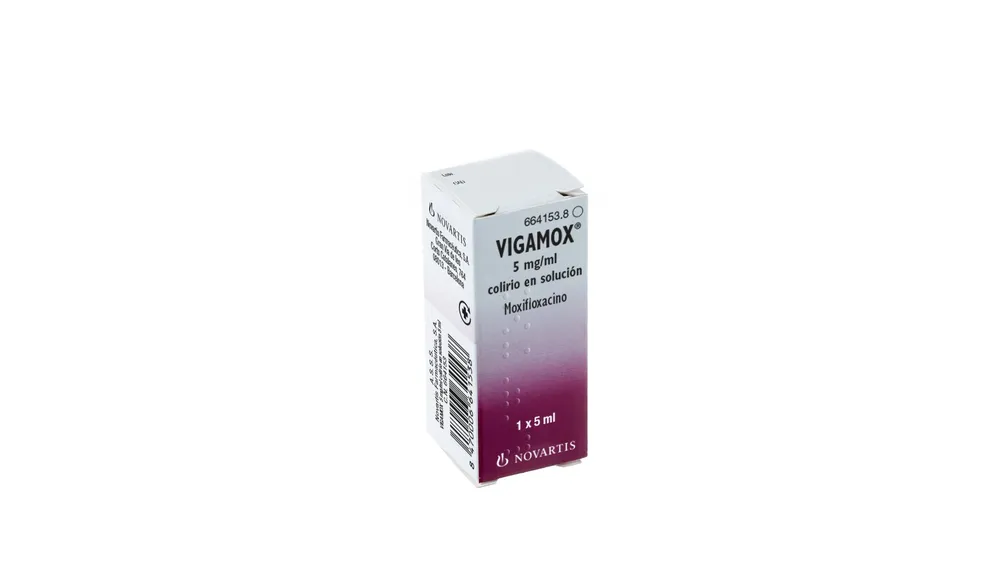
Table of Contents
Patient Information Leaflet
Introduction
Patient Information Leaflet
VIGAMOX 5mg/ml eye drops, solution
Moxifloxacin (as hydrochloride)
Read this entire leaflet carefully before you start using the medicine, because it contains important information for you.
- Keep this leaflet, as you may need to read it again.
- If you have any questions, ask your doctor or pharmacist.
- This medicine has been prescribed for you only, and you should not give it to other people even if they have the same symptoms as you, because it may harm them.
- If you experience any adverse effects, consult your doctor or pharmacist, even if they are adverse effects not listed in this leaflet. See section 4.
Leaflet contents
- What Vigamox is and what it is used for
- What you need to know before using Vigamox
- How to use Vigamox
- Possible adverse effects
- How to store Vigamox
- Contents of the pack and other information
1. What Vigamox is and what it is used for
Vigamox contains the active substance moxifloxacin. Moxifloxacin belongs to a class of antibiotics called fluoroquinolones, which are used to treat bacterial eye infections.
Vigamox eye drops are used to treat eye infections (conjunctivitis) caused by bacteria.
Antibiotics are used to treat bacterial infections and are not effective against viral infections.
It is important to follow your doctor's instructions regarding dose, dosing interval, and duration of treatment.
Do not keep or reuse this medicine. If you have any antibiotic left over after completing the treatment, return it to your pharmacy for proper disposal. Medicines must not be disposed of down the sink or in household waste.
2. What you need to know before using Vigamox
Do not use Vigamox
- if you are allergic (hypersensitive) to moxifloxacin, to other quinolones, or to any of the other components of this medicine (listed in section 6).
Warnings and precautions
Consult your doctor or pharmacist:
- If you experience an allergic reaction to Vigamox. Allergic reactions occur infrequently, and severe reactions are rare. If you experience any allergic reaction (hypersensitivity) or any adverse effect, refer to section 4.
- If you wear contact lenses, if you have signs or symptoms of an eye infection, stop using contact lenses and wear glasses instead. Do not use contact lenses until signs and symptoms of infection have resolved and you have completed treatment with this medicine.
- Tendon inflammation and rupture have been observed in people using oral or intravenous fluoroquinolones, particularly in elderly patients and in those receiving concomitant corticosteroid therapy. Discontinue treatment with Vigamox if you develop tendon pain or inflammation (tendinitis).
As with any antibiotic, prolonged use of Vigamox may lead to other infections.
Other medicines and Vigamox
Tell your doctor or pharmacist if you are taking, have recently taken, or might need to take any other medicines, including those obtained without a prescription.
Pregnancy, breast-feeding and fertility
If you are pregnant or breast-feeding, think you may be pregnant, or are planning to become pregnant, consult your doctor or pharmacist before using this medicine.
Driving and using machines
You may experience blurred vision immediately after using Vigamox. Do not drive or operate machinery until this effect has passed.
3. How to use Vigamox
Follow exactly the instructions for using this medicine as given by your doctor. If in doubt, consult your doctor or pharmacist again.
The recommended dose is:
Adults, including elderly patients and children: 1 drop in the affected eye(s), three times a day (morning, afternoon, and evening).
Vigamox can be used in children, in patients over 65 years of age, and in patients with kidney or liver problems. Information on the use of this medicine in newborns is very limited, and therefore its use is not recommended in these patients.
This medicine should only be applied to both eyes if your doctor has specifically instructed you to do so. Vigamox must only be used as eye drops.
The infection usually improves within 5 days. If you do not see any improvement, consult your doctor. You should continue using the drops for an additional 2–3 days, or for the entire duration specified by your doctor.
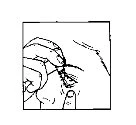
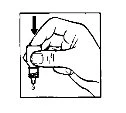

1 2 3
- Take the Vigamox bottle and position yourself in front of a mirror
- Wash your hands
- Unscrew the cap
- After opening the bottle for the first time, remove the loose plastic seal ring if present
- Hold the bottle upside down between your thumb and the other fingers
- Tilt your head backward. Gently pull down the eyelid to form a pouch, into which the drop should fall (Figure 1)
- Bring the tip of the bottle close to the eye. Using a mirror may be helpful
- Do not touch the eye, eyelid, surrounding areas, or any other surfaces with the dropper tip, as the drops could become contaminated
- Gently press the base of the bottle so that one drop of medicine is released at a time (Figure 2)
- After using Vigamox, press with your finger on the inner corner of the eye, near the nose, for 2–3 minutes (Figure 3). This helps prevent the medicine from passing into the rest of the body and is particularly important in young children
- If applying drops to both eyes, wash your hands before repeating the above steps for the other eye to prevent spreading the infection from one eye to the other
- Close the bottle tightly immediately after use
If a drop misses the eye, try again.
If you have used more medicine than you should, remove the excess by rinsing your eyes with lukewarm water. Do not apply further drops until it is time for your next scheduled dose.
If Vigamox is accidentally swallowed, contact your doctor or pharmacist immediately.
If you forget to use the medicine, continue with your next scheduled dose. Do not use a double dose to make up for the missed dose.
If you are using other eye drops, wait at least 5 minutes between applying Vigamox and the other drops.
If you have any further questions about the use of this medicine, ask your doctor or pharmacist.
4. Possible adverse effects
Like all medicines, Vigamox can cause adverse effects, although not everyone experiences them.
Unless the effects are severe or you have a serious allergic reaction, continue treatment as usual.
If you experience a severe allergic reaction and develop any of the following symptoms: swelling of the hands, feet, ankles, face, lips, mouth or throat which may cause difficulty swallowing or breathing, rash or hives, large fluid-filled blisters, sores and ulceration, stop using Vigamox immediately and contact your doctor immediately.
Frequent adverse effects
(may affect up to 1 in 10 people)
Eye effects: eye pain, eye irritation
Uncommon adverse effects
(may affect up to 1 in 100 people)
Eye effects: dry eye, eye itching, eye redness, inflammation or scarring of the eye surface, rupture of a blood vessel in the eye, abnormal sensation in the eye, abnormality, itching, redness or swelling of the eyelid
Other effects: headache, bad taste
Rare adverse effects
(may affect up to 1 in 1,000 people)
Eye effects: disorder of the cornea, blurred or reduced vision, inflammation or infection of the conjunctiva, eye fatigue, eye swelling
Other effects: vomiting, nasal discomfort, sensation of a lump in the throat, decreased iron in blood, abnormal liver function test results, abnormal skin sensation, pain, throat irritation
Frequency not known
(cannot be estimated from available data)
Eye effects: eye infection, clouding of the eye surface, corneal swelling, deposits on the eye surface, increased eye pressure, scratch on the eye surface, eye allergy, eye discharge, increased tear production, light sensitivity
Other effects: shortness of breath, irregular heartbeat, dizziness, worsening of allergic symptoms, itching, rash, skin redness, nausea and hives
Reporting of adverse effects
If you experience any adverse effects, talk to your doctor or pharmacist, even if they are possible adverse effects not listed in this leaflet. You may also report them directly via the Spanish Pharmacovigilance System for Human Medicines: https://www.notificaRAM.es. By reporting adverse effects, you can help provide more information on the safety of this medicine.
5. Storage of Vigamox
Keep out of the sight and reach of children.
Do not use this medicine after the expiry date stated on the bottle and carton after "EXP". The expiry date refers to the last day of the month indicated.
This medicine does not require any special storage conditions.
To prevent infection, discard the bottle 4 weeks after first opening.
Medicines must not be disposed of via wastewater or household waste. Dispose of empty containers and unused medicines at the SIGRE point in your pharmacy. Ask your pharmacist how to properly dispose of containers and medicines you no longer need. This will help protect the environment.
6. Contents of the package and other information
Composition of Vigamox
- The active substance is moxifloxacin. One ml of eye drops contains 5 mg of moxifloxacin (as moxifloxacin hydrochloride, 5.45 mg). One drop of eye drops contains 190 micrograms of moxifloxacin.
- The other components are: sodium chloride, boric acid and purified water. Very small amounts of sodium hydroxide and hydrochloric acid are added to maintain normal acidity levels (pH levels).
Appearance of the medicinal product and contents of the container
This medicine is a liquid (a clear, yellowish-green solution) supplied in a box containing a 5 ml plastic bottle with a screw cap.
Marketing Authorization Holder
Novartis Farmacéutica, S.A.
Gran Vía de les Corts Catalanes, 764
08013 – Barcelona, Spain
Manufacturer
Novartis Farmacéutica S.A.
Gran Via de les Corts Catalanes, 764
08013 Barcelona, Spain
Novartis Manufacturing NV
Rijksweg 14
2870 Puurs-Sint-Amands
Belgium
This medicinal product is authorized in the European Economic Area (EEA) Member States and in the United Kingdom (Northern Ireland) under the following names:
MOXIFLOXACINO ALCON
Germany
KANAVIG
Belgium
Luxembourg
VIGAMOX
Bulgaria
Cyprus
Czech Republic
Denmark
Spain
Estonia
Finland
Greece
Hungary
Iceland
Italy
Latvia
Lithuania
Malta
Netherlands
Poland
Portugal
Romania
Slovakia
Slovenia
Sweden
MOXIVIG
United Kingdom (Northern Ireland)
Date of the most recent revision of this leaflet: August 2023
Detailed information on this medicine is available on the website of the Spanish Agency of Medicines and Medical Devices (AEMPS) http://www.aemps.gob.es