Vibracina 10 mg/ml oral suspension
Spain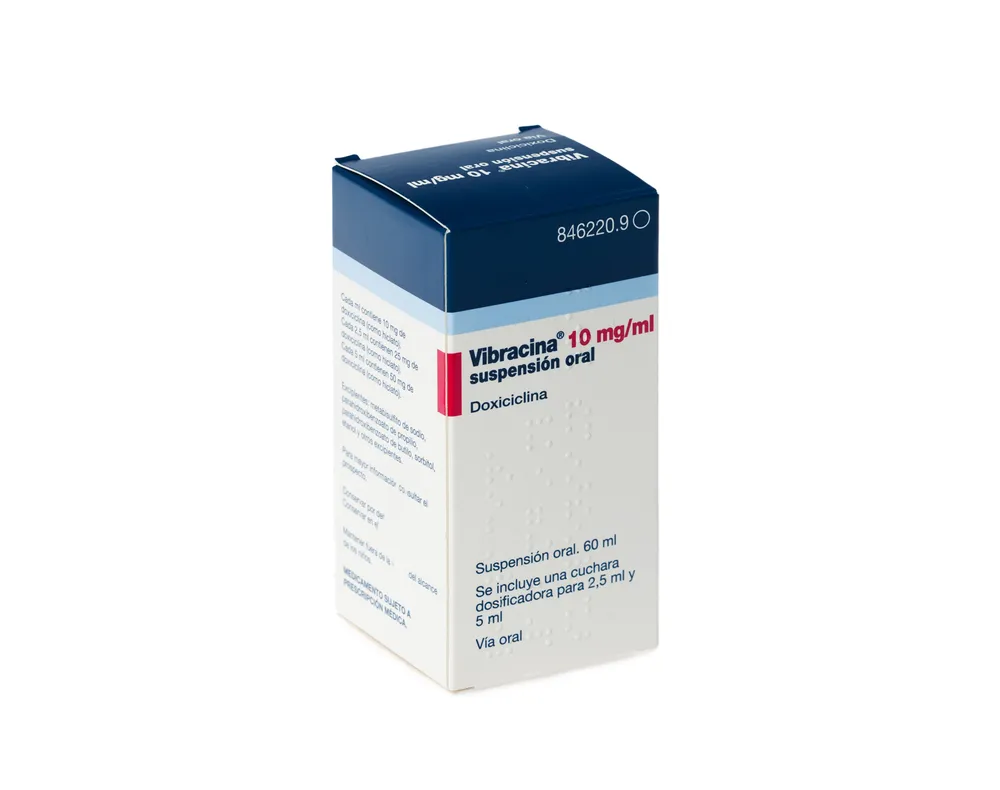
Table of Contents
Patient Information Leaflet
Introduction
Patient Information Leaflet
Vibracina 10 mg/ml oral suspension
Doxycycline
Read the entire leaflet carefully before you start taking this medicine, as it contains important information for you.
- Keep this leaflet, as you may need to read it again.
- If you have any questions, ask your doctor or pharmacist.
- This medicine has been prescribed for you only, and you should not give it to others, even if they have the same symptoms as you, because it could harm them.
- If you experience any adverse reactions, consult your doctor or pharmacist, even if they are adverse reactions not listed in this leaflet. See section 4.
Leaflet Contents
- What Vibracina is and what it is used for
- What you need to know before taking Vibracina
- How to take Vibracina
- Possible side effects
- How to store Vibracina
- Contents of the pack and other information
1. What Vibracina is and what it is used for
Vibracina contains doxycycline, an antibiotic that belongs to a group of medicines called tetracyclines.
Antibiotics are used to treat bacterial infections and are not effective against viral infections. It is important to follow your doctor's instructions regarding dosage, administration interval, and duration of treatment. Do not keep or use this medicine. If you have leftover antibiotic after completing the treatment, return it to the pharmacy for proper disposal. Do not dispose of medicines down the drain or in the trash. |
This medicine is used in adults, adolescents, and children older than 8 years of age for:
-
treatment of the following infections:
- Atypical pneumonia.
- Psittacosis (a disease transmitted by certain birds, presenting as pneumonia accompanied by fever and cough).
- Urethritis (inflammation of the urethra), cervicitis (inflammation of the cervix), proctitis (inflammation of the rectum), lymphogranuloma venereum (an infection characterized initially by genital ulcers followed by lymph node swelling), granuloma inguinale (purulent ulceration of the genitals), pelvic inflammatory disease, acute purulent orchiepididymitis (inflammation of the testicles, purulent, mainly affecting newborns).
- Ocular infections such as: trachoma, inclusion conjunctivitis (eye infection with inflammation and irritation of the conjunctiva).
- Typhus and other infections caused by microorganisms called rickettsiae.
- Q fever.
- Brucellosis (Malta fever).
- Cholera (an infectious disease characterized by severe diarrhea, dehydration, and vomiting).
- Early stages of Lyme disease (transmitted by ticks).
- Relapsing fevers transmitted by lice and ticks.
- Malaria (a febrile infectious disease with chills and sweating, caused by microorganisms that parasitize red blood cells).
- Tularemia (a rodent-borne disease similar to plague).
- Bartonellosis (an infectious disease presenting with severe anemia and fever).
-
alternative treatment of:
- Anthrax (an infectious disease affecting the skin, intestine, or lungs).
- Listeriosis (a serious infectious disease that can affect the fetus during pregnancy, newborns, and adults).
- Actinomycosis (an infectious disease causing inflammation of lymph nodes in the mouth along with other internal complications).
- Syphilis in patients allergic to penicillin.
- Plague.
- Leptospirosis (an infectious disease causing fever, headache, muscle pain, and yellowing of the skin).
-
adjunctive treatment of severe vulgar acne.
-
prevention of malaria (transmitted through the bite of a mosquito).
-
prevention of anthrax following exposure to bacteria causing this disease.
2. What you need to know before taking Vibracina
Do not take Vibracina
-
if you are allergic to doxycycline, to any other tetracycline, or to any of the other ingredients of this medicine (listed in section 6).
-
if you are pregnant or think you may be pregnant.
-
if you are breastfeeding.
-
if used concomitantly with methoxyflurane (a medicine used for anesthesia), as severe kidney toxicity with fatal outcome may occur.
Warnings and precautions
Consult your doctor or pharmacist if:
- you experience severe skin reactions such as: widespread skin inflammation with peeling (exfoliative dermatitis), red raised skin lesions with target-like appearance (erythema multiforme), inflammation of the skin and mucous membranes which may be very serious (Stevens-Johnson syndrome), skin inflammation with blisters (toxic epidermal necrolysis), or drug rash with eosinophilia and systemic symptoms [DRESS, including skin rash, swollen lymph nodes, and elevated eosinophils (a type of white blood cells)]. In such cases, you must consult your doctor immediately, who will decide whether doxycycline treatment should be discontinued.
- during treatment with Vibracina you develop unusual headaches accompanied by dizziness, blurred vision, ringing in the ears, nausea, or vomiting, consult your doctor, as these may be symptoms of benign intracranial hypertension (a condition affecting the brain due to increased pressure inside the skull).
- you experience visual disturbances; seek immediate medical attention from an ophthalmologist.
- you are taking a medicine called isotretinoin, as its concomitant use may cause benign intracranial hypertension.
- you develop severe and persistent diarrhea while on doxycycline treatment, which may indicate a type of antibiotic-associated colitis known as pseudomembranous colitis, which can be serious. In such cases, consult your doctor, who will decide whether to discontinue doxycycline and initiate appropriate treatment.
- you take this medicine while lying down or without sufficient water or milk, as this may cause inflammation and ulcers in the esophagus; therefore, it is important to follow the administration instructions exactly (see section 3).
- you have liver disease, consult your doctor. During prolonged treatment, your doctor may need to perform periodic blood tests.
- you have an autoimmune disease causing joint pain, skin rashes, and fever (systemic lupus erythematosus). This condition may worsen when taking Vibracina.
- you develop skin redness after exposure to sunlight or ultraviolet radiation. The use of total sunblock creams is recommended, and exposure to sunlight or ultraviolet radiation should be avoided.
- you develop any signs of infection. The use of antibiotics may increase the risk of infections caused by microorganisms not sensitive to treatment, including fungi; therefore, your doctor will monitor for any possible signs of infection.
- you need to undergo urine testing, inform healthcare personnel that you are being treated with this medicine, as doxycycline may interfere with test results.
Children and adolescents
In children from birth up to 8 years of age, the use of Vibracina is not recommended because it may cause permanent tooth discoloration and delay in bone development. However, there may be situations (e.g., severe or potentially life-threatening diseases) in which your doctor may decide that the benefits outweigh this risk in children under 8 years of age, and doxycycline may be prescribed.
In children older than 8 years and younger than 12 years (weighing up to 45 kg), see section 3. There is another capsule formulation that may be more suitable depending on the dose and patient.
In children over 12 years of age (weighing more than 45 kg), the same dose as in adults is recommended (see section 3).
Taking Vibracina with other medicines
Inform your doctor or pharmacist if you are taking, have recently taken, or might need to take any other medicines.
Certain medicines may interact with Vibracina. In such cases, it may be necessary to adjust the dose or discontinue treatment with one of the medicines. It is especially important that you inform your doctor if you are taking any of the following medicines:
- Penicillin (an antibiotic), as doxycycline may interfere with its effect.
- Isotretinoin (used to treat severe acne), as its concomitant use with doxycycline may cause benign intracranial hypertension.
- Oral contraceptives, as doxycycline may reduce their effectiveness.
- Anticoagulants (such as warfarin), as doxycycline may alter their effect.
- Antacids (medicines used to relieve stomach acidity) and other medicines containing aluminum, calcium, or magnesium, and medicines containing iron salts or bismuth salts, as they may reduce the effect of doxycycline.
- Antiepileptic drugs and barbiturates (medicines for severe insomnia and seizures), as they may reduce the effect of doxycycline.
- Methoxyflurane (a medicine used to induce anesthesia), as its concomitant use with tetracycline antibiotics such as doxycycline may cause severe kidney toxicity.
Taking Vibracina with food, drinks, and alcohol
You should avoid consuming alcohol during treatment with this medicine, as alcohol reduces the effectiveness of Vibracina.
Pregnancy and breastfeeding
If you are pregnant or breastfeeding, think you may be pregnant, or plan to become pregnant, consult your doctor or pharmacist before using any medicine.
Pregnancy
The use of this medicine during pregnancy is not recommended, as it may cause disturbances in bone development and permanent tooth discoloration in the child. Your doctor will decide whether the use of Vibracina is appropriate in such cases.
It is important to use contraceptive methods during treatment with doxycycline to prevent pregnancy. Oral contraceptives (hormonal) may not be effective, as this medicine reduces contraceptive efficacy; therefore, barrier methods are recommended.
Breastfeeding
The use of this medicine should be avoided during breastfeeding, as it may cause disturbances in bone development and permanent tooth discoloration in the infant.
Driving and using machines
There is no evidence that Vibracina affects the ability to drive or operate machinery.
Important information about some of the ingredients of Vibracina:
Vibracina contains sodium metabisulfite, propyl parahydroxybenzoate, butyl parahydroxybenzoate, sorbitol, sodium, propylene glycol, and ethanol.
This medicine may cause severe allergic reactions and bronchospasm (sudden sensation of suffocation) because it contains sodium metabisulfite.
It may cause allergic reactions (possibly delayed) because it contains propyl parahydroxybenzoate and butyl parahydroxybenzoate.
This medicine contains 7142.86 mg of sorbitol in each 10 ml of oral suspension, equivalent to 714.29 mg/ml.
This medicine contains 28.51 mg of sodium (main component of table/cooking salt) in each 10 ml of oral suspension. This corresponds to 1.43% of the maximum daily sodium intake recommended for an adult.
This medicine contains 4.56 mg of propylene glycol in each ml of suspension, equivalent to 91.20 mg per 200 mg dose.
This medicine contains 0.06% ethanol (alcohol); this small amount corresponds to 5.88 mg per 10 ml of oral suspension.
3. How to take Vibracina
Follow exactly the instructions given by your doctor or pharmacist for taking this medicine. If in doubt, consult your doctor or pharmacist again. Your doctor will determine how long you should take this medicine. Do not stop treatment before your doctor tells you to do so, even if you begin to feel better.
Remember to take your medicine. It is important to take this medicine regularly at the same time each day.
Adults and adolescents (over 12 years of age up to 18 years of age):
The usual dose of doxycycline is 200 mg on the first day of treatment (administered as a single dose or divided into two doses every 12 hours), followed by a maintenance dose of 100 to 200 mg/day depending on the severity of the infection (administered as a single daily dose or divided into two doses every 12 hours). Treatment should continue for at least 24 to 48 hours after symptoms and fever have resolved.
The dose will be determined by your doctor according to your individual characteristics and the type of infection. As a general rule, the usual dose and frequency of administration is as follows:
Indication | Dosage regimen | Duration of treatment |
Uncomplicated non-gonococcal urethritis, cervicitis, and proctitis | 100 mg of doxycycline every 12 hours. An antimicrobial with appropriate spectrum should also be administered, preferably as a single-dose regimen. | For a minimum of 7 days. |
Lymphogranuloma venereum | 100 mg of doxycycline every 12 hours. | For a minimum of 21 days. |
Granuloma inguinale (donovanosis) | ||
Pelvic inflammatory disease | Outpatients: 100 mg of doxycycline orally every 12 hours combined with one of the following:
Hospitalized patients: 100 mg of doxycycline intravenously every 12 hours, combined with one of the following:
Continue with 100 mg of doxycycline orally every 12 hours to complete the treatment course. | For 14 days. |
Syphilis in penicillin-allergic patients, except pregnant women | 100 mg of doxycycline every 12 hours. | For 2 weeks. |
Acute epididymo-orchitis | 100 mg of doxycycline every 12 hours together with a single dose of ceftriaxone 250 mg. | For 10 days. |
Brucellosis | 100 mg of doxycycline every 12 hours. | For 6 weeks. Combined with intramuscular streptomycin for 2–3 weeks. |
Cholera | 300 mg of doxycycline. | Single dose. |
Lyme disease (early stages 1 and 2) | 100 mg of doxycycline orally every 12 hours. | For 10–60 days, depending on clinical signs and symptoms and response. |
Relapsing fevers transmitted by lice and ticks | 100 mg or 200 mg of doxycycline depending on severity. | Single dose. |
Alternatively, for tick-borne relapsing fever, 100 mg of doxycycline every 12 hours may be administered. | For 7 days as an alternative to reduce the risk of persistence or relapse of tick-borne fever. | |
Treatment of chloroquine-resistant malaria | 200 mg of doxycycline daily.(1) | For at least 7 days. |
Treatment of cutaneous, intestinal, or pulmonary anthrax | 100 mg of doxycycline every 12 hours initially administered intravenously, followed by the same dose orally as soon as appropriate. | For 60 days, except in cases of cutaneous anthrax without systemic involvement (i.e., not entering the bloodstream), in which case treatment duration may be reduced to 7–10 days. |
Severe nodular acne (acne vulgaris) | 50–100 mg of doxycycline daily. | For 12 weeks. |
Rocky Mountain spotted fever(2) | 100 mg of doxycycline every 12 hours | Until at least 3 days after fever subsides and clinical improvement is evident. Treatment duration should be at least 5–7 days. |
Malaria prophylaxis | 100 mg of doxycycline daily | Prophylaxis should begin 1–2 days before traveling to endemic areas. |
Anthrax post-exposure prophylaxis | 100 mg of doxycycline every 12 hours | For 60 days. |
(1) Due to the potentially severe nature of the infection, a rapidly acting antimalarial such as quinine should always be administered in combination with doxycycline. Quinine dosing recommendations vary across different geographic regions.
(2) Doxycycline is the treatment of choice.
Various dosage strengths are available for different dosing regimens.
Paediatric population
Children aged 8 years up to but less than 12 years of age
Doxycycline may be used for the treatment of acute infections in children aged 8 years up to but less than 12 years of age, in situations where alternative agents are not available or may not be effective.
In these cases, the usual doses are:
- Children weighing 45 kg or less:
First day: 4.4 mg/kg body weight (administered as a single dose or divided into two equal doses every 12 hours).
From day 2 onwards: 2.2 mg/kg body weight (as a single dose or divided into two equal doses). The duration of treatment will depend on the infection being treated.
In more severe infections, a dose of up to 4.4 mg per kg body weight may be administered throughout the entire course of treatment.
An alternative formulation as an oral suspension may be more suitable for dose adjustment in children weighing ≤ 45 kg.
- Children weighing more than 45 kg:
The same adult dose is recommended: 200 mg on the first day, followed by 100 mg daily. The duration of treatment will depend on the infection being treated.
Neonates, infants, and children under 8 years of age
Doxycycline must not be used in children under 8 years of age due to the risk of tooth discoloration.
Dosage in paediatric patients for the treatment or prophylaxis of specific infections is as follows:
-
Treatment of Rocky Mountain spotted fever: 2.2 mg/kg twice daily. Patients should receive treatment for at least 3 days after defervescence and until there is evidence of clinical improvement. The treatment duration should be a minimum of 5–7 days.
-
Treatment of cutaneous, intestinal, or pulmonary anthrax: 2.2 mg/kg every 12 hours intravenously, followed by the same dose orally twice daily for 60 days. The treatment duration should be 60 days, except in cases of cutaneous anthrax without systemic involvement, where the treatment duration may be reduced to 7–10 days. In cases of pulmonary anthrax, combination therapy with two antibiotics should be considered (see section 4.4).
-
Malaria prophylaxis: 2 mg/kg body weight once daily, without exceeding the adult dose. Prophylaxis may be initiated 1 or 2 days before travel to malaria-endemic areas and continued for up to 4 weeks after leaving such areas.
-
Post-exposure prophylaxis for Bacillus anthracis: 2.2 mg/kg body weight (without exceeding the adult dose), administered orally twice daily for 60 days.
Elderly patients
No dose adjustment is necessary.
Patients with renal impairment
Doxycycline does not require dose adjustment in patients with impaired renal function.
Patients with hepatic impairment
Doxycycline should be administered with caution in patients with impaired hepatic function.
Method of administration
Oral route.
Shake the bottle before each use. A dosing spoon for 2.5 ml and 5 ml is provided to measure the exact dose of suspension to be taken. It should be taken during a meal, accompanied by a glass of water or milk, and waiting at least one hour before lying down to avoid possible esophageal irritation. |
If you take more Vibracina than you should
Information for healthcare professionals: In case of overdose, administration should be discontinued and symptomatic treatment and supportive measures should be initiated.
Peritoneal dialysis does not alter the plasma elimination half-life and therefore would not be beneficial in the treatment of overdose.
In case of overdose or accidental ingestion, contact your doctor or pharmacist immediately or call the Toxicology Information Service at telephone number: 91 562 04 20, indicating the medication and the amount ingested.
If you forget to take Vibracina
If you forget to take a dose, take the next dose at the usual time. Do not take a double dose to make up for missed doses.
4. Possible adverse effects
Like all medicines, this medicine can cause adverse effects, although not everyone will experience them.
If you experience any of the following side effects, speak with your doctor as soon as possible:
- Jarisch-Herxheimer reaction, characterized by fever, chills, headache, muscle pain, and skin rash, which usually resolves spontaneously. This reaction occurs shortly after starting doxycycline treatment for spirochetal infections, such as Lyme disease.
The following adverse effects have been observed in patients taking tetracyclines, including doxycycline, listed according to their frequency of occurrence:
Common adverse effects (may affect up to 1 in 10 people):
Hypersensitivity, allergic reactions (including anaphylactic shock, anaphylactic and anaphylactoid reactions, skin and mucosal swelling (angioedema), exacerbation of systemic lupus erythematosus, inflammation of the tissue surrounding the heart (pericarditis), serum sickness, Schönlein-Henoch purpura, low blood pressure (hypotension), difficulty breathing (dyspnea), rapid heartbeat (tachycardia), fluid retention in the limbs (peripheral edema), red, raised, itchy skin lesions (urticaria), headache, nausea, vomiting, exaggerated skin reaction to sunlight or ultraviolet radiation, skin rash (including erythematous and maculopapular types).
Uncommon adverse effects (may affect up to 1 in 100 people):
Digestive disturbances (heartburn/gastritis).
Rare adverse effects (may affect up to 1 in 1,000 people):
Excessive destruction of red blood cells (hemolytic anemia), reduced number of platelets (thrombocytopenia), changes in white blood cell count: reduced number of neutrophils (neutropenia) or increased number of eosinophils (eosinophilia), drug rash with eosinophilia and systemic symptoms [DRESS, including skin rash, swollen lymph nodes, and elevated eosinophils (a type of white blood cell)], microscopic brown-to-black discoloration of the thyroid gland, loss of appetite, possible symptoms of benign intracranial hypertension (increased pressure inside the skull), including headache, nausea, vomiting, visual disturbances (including blurred vision), and dizziness, bulging fontanelle (transient protrusion of the soft spot on the skull in young children), localized blind spot surrounded by normal vision (scotoma), double vision (diplopia), and possible vision loss, in some cases even permanent, ringing in the ears (tinnitus), facial redness (rubefaction), inflammation of the pancreas (pancreatitis), changes in the volume or consistency of stools (diarrhea, pseudomembranous colitis), esophageal ulcers, inflammation of the esophagus, intestinal inflammation, inflammatory lesions in the anogenital area, difficulty swallowing (dysphagia), abdominal pain, inflammation of the tongue (glossitis), tooth discoloration, impaired liver function, liver inflammation (hepatitis) and liver damage, skin inflammation with blistering (toxic epidermal necrolysis), skin and mucous membrane inflammation that may be severe (Stevens-Johnson syndrome), red, raised skin lesions with target-like appearance (erythema multiforme), widespread skin inflammation with peeling (exfoliative dermatitis), round or oval spots with redness and swelling of the skin, blister formation (urticaria) and itching, which usually recur in the same locations upon re-exposure to the medication (fixed drug eruption), darkening of an area of skin, nail loss (photo-onycholysis), joint pain (arthralgia) and muscle pain (myalgia), increased blood urea levels.
Adverse effects with unknown frequency (cannot be estimated from available data):
Discoloration and/or failure of tooth development.
Reporting of adverse effects
If you experience any type of adverse effect, consult your doctor or pharmacist, even if it is a possible adverse effect not listed in this leaflet. You may also report them directly via the Spanish Pharmacovigilance System for Human Medicines: www.notificaRAM.es. By reporting adverse effects, you can help provide more information on the safety of this medicine.
5. Storage of Vibracina
Keep this medicine out of sight and reach of children.
Store below 30°C. Keep in the original packaging.
After opening: 30 days. No special storage conditions required.
Do not use this medicine after the expiry date stated on the container after EXP. The expiry date refers to the last day of the month indicated.
Medicines should not be disposed of via wastewater or household waste. Dispose of unused medicines and their containers at the SIGRE Point located at your pharmacy. If you have any doubts, ask your pharmacist how to properly dispose of unused medicines and their containers. This will help protect the environment.
6. Contents of the container and additional information
Composition of Vibracina
-
The active substance is doxycycline. Each ml of suspension contains 10 mg of doxycycline (as hyclate).
-
Each 2.5 ml of suspension contains 25 mg of doxycycline (as hyclate).
-
Each 5 ml of suspension contains 50 mg of doxycycline (as hyclate).
-
The other components are: sodium saccharin (E-954ii), sodium hydroxide (E-524), calcium chloride dihydrate (E-509), simethicone emulsion, propyl parahydroxybenzoate (E216), erythrosine (E127), carmine (E120), propylene glycol (E1520), hydrochloric acid (for pH adjustment), sodium metabisulfite (E223), butyl parahydroxybenzoate, povidone, magnesium aluminium silicate, sorbitol (E420), glycerol (E422), raspberry flavour (contains ethanol), apple flavour (contains ethanol), purified water.
Presentation of the product and contents of the container
Vibracina is presented as a homogeneous red-coloured suspension in 60 ml amber glass bottles, packed in a cardboard box.
A 2.5 ml and a 5 ml spoon are included.
Marketing Authorisation Holder and Manufacturer
Marketing Authorisation Holder
Hospira Invicta, S.A.
Avda de Europa, 20 B,
Parque Empresarial La Moraleja,
28108, Alcobendas (Madrid).
Manufacturer
Farmasierra Manufacturing S.L.
Ctra. de Irún, Km 26,200,
28709, San Sebastián de los Reyes, Spain.
For further information on this medicinal product, please contact the local representative of the Marketing Authorisation Holder:
Pfizer, S.L.
Avda. de Europa, 20-B.
Parque Empresarial La Moraleja.
28108, Alcobendas (Madrid).
Date of the most recent revision of this leaflet: 06/2024.
Detailed and up-to-date information on this medicinal product is available on the website of the Spanish Agency of Medicines and Health Products (AEMPS): http://www.aemps.gob.es.