Velsipity 2 mg film-coated tablets
Spain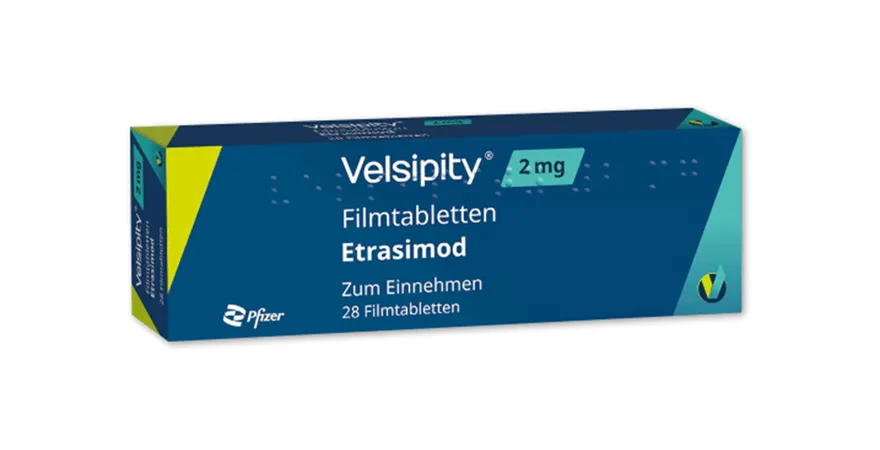
Table of Contents
Package leaflet: Information for the user
Introduction
Package leaflet: information for the patient
Velsipity 2mg film-coated tablets
etrasimod
This medicinal product is subject to additional monitoring, which will allow for rapid identification of new safety information. You can help by reporting any adverse reactions you may experience. Information on how to report adverse reactions is included at the end of section 4.
Read this entire leaflet carefully before you start taking this medicine, because it contains important information for you.
- Keep this leaflet, as you may need to read it again.
- If you have any questions, ask your doctor or pharmacist.
- This medicine has been prescribed for you only. Do not give it to other people, even if they have the same symptoms as you, because it may harm them.
- If you experience any adverse reactions, consult your doctor or pharmacist, even if they are adverse reactions not listed in this leaflet. See section 4.
In addition to this leaflet, your doctor will provide you with a patient card containing important safety information that you should be aware of. Carry this card with you at all times.
Contents of this leaflet
- What Velsipity is and what it is used for
- What you need to know before taking Velsipity
- How to take Velsipity
- Possible side effects
- How to store Velsipity
- Contents of the pack and other information
1. What Velsipity is and what it is used for
Velsipity contains the active substance etrasimod, which belongs to a group of medicines known as sphingosine-1-phosphate receptor modulators.
Velsipity is used in adults and adolescents aged 16 years and older for the treatment of moderately to severely active ulcerative colitis (UC). Ulcerative colitis is an inflammatory disease of the large intestine. If you have ulcerative colitis, you will first be given other medicines. If you do not respond adequately or cannot take those medicines, Velsipity may be prescribed to reduce the signs and symptoms of the disease.
The active substance in Velsipity, etrasimod, prevents lymphocytes (a type of white blood cell) from moving out of the lymph nodes (part of the body's immune system containing lymphocytes) into the bloodstream. These lymphocytes are involved in the inflammation associated with the development of ulcerative colitis. By reducing the number of circulating lymphocytes in the blood surrounding the large intestine, etrasimod helps reduce intestinal inflammation and the symptoms associated with the disease.
2. What you need to know before taking Velsipity
Do not take Velsipity
- if you are allergic to etrasimod or any of the other ingredients of this medicine (listed in section 6);
- if your doctor has told you that you have a severely weakened immune system;
- if you have had a myocardial infarction, unstable angina (chest pain caused by interruptions in blood supply to the heart occurring at rest or without a clear trigger), stroke, transient ischaemic attack (TIA, also known as mini-stroke), or certain types of severe heart failure within the last 6 months;
- if you have certain types of arrhythmia (irregular or abnormal heartbeat); your doctor will check your heart before starting treatment;
- if you have an active serious infection or an active chronic infection, such as hepatitis (inflammation of the liver) or tuberculosis;
- if you have cancer;
- if you have severe liver problems;
- if you are pregnant or are a woman of childbearing potential who is not using effective contraceptive methods.
Warnings and precautions
Talk to your doctor or pharmacist before starting Velsipity if:
- you have a slow heart rate or are taking or have recently taken medicines that reduce heart rate (such as beta-blockers or calcium channel blockers);
- you have ever had a stroke or other conditions related to blood vessels in the brain;
- you have liver problems;
- you have an infection;
- you have a low lymphocyte count (a type of white blood cell);
- you have recently been vaccinated or plan to get vaccinated;
- you have ever had vision problems or other symptoms of fluid accumulation at the back of the eye;
- you have eye inflammation;
- you have diabetes (which may cause eye problems);
- you have hypertension;
- you have severe lung disease, such as pulmonary fibrosis (lung damage with scarring and thickening of tissue), asthma, or chronic obstructive pulmonary disease (COPD, a type of lung disease characterised by permanent damage to lung tissue).
Slow heart rate and irregular heart rhythm
Before starting Velsipity, your doctor will check your heart using an electrocardiogram (ECG; a test of the heart's electrical activity). This is because Velsipity may cause a temporary decrease in heart rate and other heart rhythm disturbances when treatment is initiated. If this occurs, you may feel dizzy or fatigued, become aware of your heartbeat, or experience low blood pressure. If these effects are severe, inform your doctor immediately, as you may require prompt treatment. If you restart treatment after stopping for 7 or more consecutive days, your doctor may repeat the heart monitoring with an ECG.
If you have certain heart conditions, your doctor will also monitor you for at least the first 4 hours after your first dose. You will be asked to remain at the hospital or medical centre for 4 hours, during which your pulse and blood pressure will be measured hourly after taking your first dose of Velsipity. An ECG must be performed before the first dose and again after the 4-hour monitoring period. If, after 4 hours, you have a very slow or decreasing heart rate or your ECG shows abnormalities, you may require extended monitoring until these resolve.
High blood pressure
Since Velsipity may increase blood pressure, your doctor may wish to monitor it regularly.
Infections
Velsipity reduces levels of white blood cells in the blood (particularly lymphocyte count). White blood cells fight infections. While taking Velsipity (and for approximately 2 weeks after stopping), you may be more likely to get infections, and existing infections may worsen. Consult your doctor if you develop an infection. If you suspect you have an infection, have fever, flu-like symptoms, blisters (herpes), or headache with neck stiffness, sensitivity to light, nausea, rash, and/or confusion or seizures (fits) (which may be symptoms of meningitis and/or encephalitis due to fungal or viral herpes infection), contact your doctor immediately, as these could be serious and potentially life-threatening.
Cases of progressive multifocal leukoencephalopathy (PML) have been reported with medicines similar to Velsipity. PML is a rare viral brain infection that may lead to severe disability or death. Symptoms of PML include vision changes, progressive weakness, clumsiness, memory loss, or confusion. If you experience any of these symptoms, contact your doctor immediately. Your doctor will consider further testing to evaluate for this condition and will discontinue Velsipity if PML is confirmed.
Macular oedema
Velsipity may cause a vision problem called macular oedema (swelling of the macula, the central part of the retina at the back of the eye). The risk of macular oedema is higher if you have diabetes, uveitis (inflammation of the uvea, the layer beneath the white part of the eyeball), or certain other eye conditions. If you have any of these conditions, your doctor will examine your vision before starting Velsipity and regularly during treatment. If you do not have any of these conditions, your doctor will check your vision within 3–4 months after starting treatment. Inform your doctor of any changes in vision while taking Velsipity.
Call your doctor immediately if you experience any of the following symptoms:
- blurred vision or shadows in the centre of your vision;
- a blind spot in the centre of your vision;
- light sensitivity;
- unusually coloured vision (tinted vision).
Cancer
Velsipity weakens your immune system. This increases the risk of developing cancer, particularly skin cancer. Cases of skin cancer have been reported with medicines similar to Velsipity. Contact your doctor immediately if you notice any skin lumps (e.g., shiny pearly nodules), spots, or open sores that do not heal within a few weeks. Symptoms of skin cancer may include abnormal growths or changes in skin tissue (e.g., unusual moles) that change in colour, shape, or size over time. Because of the risk of skin cancer, you should limit your exposure to sunlight and UV (ultraviolet) rays by wearing protective clothing and regularly applying sunscreen (with a high sun protection factor).
Posterior reversible encephalopathy syndrome (PRES)
Posterior reversible encephalopathy syndrome (PRES) is a condition in which the brain becomes inflamed. Symptoms of PRES include headache, vision changes, reduced level of consciousness, confusion, and seizures (fits). If you develop any of these symptoms, speak to your doctor immediately.
Vaccines
If you need to receive a vaccine, consult your doctor first. Vaccines may not work as well as they should during your treatment with Velsipity. It is recommended that you ensure your vaccinations are up to date before starting treatment. Live vaccines (those containing live microorganisms) may trigger the infection they are intended to prevent and should therefore be administered at least 4 weeks before starting treatment or at least 2 weeks after stopping Velsipity.
Liver function tests
Velsipity may affect liver function. Inform your doctor immediately if you experience any of the following symptoms: yellowing of the skin or whites of the eyes, abnormally dark (brown-coloured) urine, pain in the right side of the abdomen, fatigue, loss of appetite, or unexplained nausea and vomiting.
Before, during, and after treatment, your doctor will order blood tests to monitor your liver function.
Lung problems
Velsipity may affect lung function. Patients with severe lung disease are more likely to experience these adverse effects.
Other treatments for ulcerative colitis
Your doctor will generally recommend that you stop other treatments for ulcerative colitis, except for corticosteroids (such as cortisone) and mesalazine. Some medicines used for ulcerative colitis may also be used to treat other conditions. Inform your doctor of all medicines you are taking. When switching from previous treatment, the risk of infection may increase temporarily due to the additive immunosuppressive effects. Do not take any other immunosuppressant unless instructed by your doctor.
Women of childbearing potential
Velsipity may harm the unborn baby if used during pregnancy. Before starting Velsipity, your doctor will explain the risks and will ask you to take a pregnancy test to confirm you are not pregnant. Your doctor will give you a patient card explaining why you must not become pregnant while taking Velsipity and what you should do to avoid pregnancy. You must use an effective method of contraception during treatment and for at least 14 days after stopping treatment (see “Pregnancy, contraception and breastfeeding” in section 2).
If any of these situations apply to you, inform your doctor or pharmacist before taking Velsipity.
Children and adolescents
Do not give this medicine to children and adolescents under 16 years of age. This is because Velsipity has not been studied in this age group.
Other medicines and Velsipity
Tell your doctor or pharmacist if you are taking, have recently taken, or might need to take any other medicines. This is because Velsipity may affect how other medicines work, and other medicines may affect how Velsipity works.
In particular, before taking Velsipity, inform your doctor or pharmacist if you are taking or have recently taken any of the following medicines:
- Medicines to control heart rate and blood pressure (beta-blockers and calcium channel blockers); using these medicines may enhance the effect of Velsipity on irregular heartbeats.
- Medicines to control your heart rhythm (antiarrhythmics) or heartbeats.
- Medicines that affect your immune system; using these with Velsipity may further weaken the immune system.
- Vaccines; if you need to receive a vaccine, consult your doctor. You should not take Velsipity for at least 2 weeks before vaccination. You should not take Velsipity for at least 4 weeks after receiving a live vaccine.
- Fluconazole (an antifungal treatment) and other medicines may increase Velsipity levels in the blood, increasing the risk of adverse effects with Velsipity. It is recommended not to take these while on Velsipity, and your doctor will advise you accordingly.
- Rifampicin, enzalutamide, and other medicines may decrease Velsipity levels in the blood, reducing its effectiveness. It is recommended not to take these while on Velsipity, and your doctor will advise you accordingly.
Velsipity may slightly increase levels of hormones released by some oral contraceptives. You will still be protected against pregnancy, but the likelihood of experiencing side effects from oral contraceptives may be higher. If you experience adverse effects, consult your doctor or pharmacist.
Pregnancy, contraception and breastfeeding
If you are pregnant or breastfeeding, think you may be pregnant, or plan to become pregnant, consult your doctor before using this medicine.
Pregnancy and contraception
Do not use Velsipity during pregnancy, if you are trying to become pregnant, or if you are a woman who could become pregnant and are not using effective contraceptive methods. Velsipity may harm the unborn baby if used during pregnancy. If you are a woman who could become pregnant, your doctor will inform you of this risk before starting Velsipity and will ask you to take a pregnancy test to confirm you are not pregnant. You must use an effective method of contraception while taking Velsipity and for at least 14 days after stopping it. Ask your doctor about reliable contraceptive methods.
Your doctor will give you a patient card explaining why you must not become pregnant while taking Velsipity.
If you become pregnant while taking Velsipity, inform your doctor immediately. Your doctor will likely discontinue treatment (see “If you stop taking Velsipity” in section 3), and prenatal monitoring will be performed to assess the health of the fetus.
Breastfeeding
You must not breastfeed while taking Velsipity. This is to avoid the risk of adverse effects in the baby, as Velsipity may pass into breast milk.
Driving and using machines
Velsipity is not expected to affect your ability to drive or use machines. However, you may feel dizzy after taking Velsipity. If this occurs, do not drive or operate machinery.
Velsipity contains tartrazine (E102)
The colouring agent in Velsipity contains tartrazine (E102), which may cause allergic-type reactions.
Velsipity contains sodium
This medicine contains less than 1 mmol of sodium (23 mg) per tablet; essentially “sodium-free”.
3. How to take Velsipity
Treatment with Velsipity will be initiated under the supervision of a physician experienced in the treatment of ulcerative colitis. Always follow your doctor's instructions for taking this medicine exactly. If you are unsure, consult your doctor or pharmacist again.
How to take it
- The recommended dose of Velsipity is one 2 mg tablet once daily.
- Take Velsipity with food for the first 3 days. After that, you may take Velsipity daily with or without food.
- Swallow the tablet whole with water. Do not split, crush, or chew the tablet before swallowing, as this may alter the amount of medicine you receive.
If you take more Velsipity than you should
If you have taken more Velsipity than prescribed, contact your doctor or go to a hospital immediately. Take the medicine package and this leaflet with you.
If you forget to take Velsipity
If you forget to take a dose of Velsipity, take the next dose at your usual time. Do not take a double dose.
If you stop taking Velsipity
Do not stop taking Velsipity or change the dose without first consulting your doctor. If your doctor decides to interrupt your treatment for 7 consecutive days or longer, the medicine should be taken with food during the first 3 days after restarting Velsipity treatment. After that, you may take Velsipity with or without food.
If you restart Velsipity after stopping treatment for 7 consecutive days or longer, the effect on heart rate that may occur when starting treatment for the first time could reappear, and you may need to be monitored in a hospital or medical center. Do not restart treatment with Velsipity after an interruption of more than 7 days without consulting your doctor.
Velsipity will remain in your body for up to 14 days after you stop taking it. The white blood cell count (lymphocyte count) may remain low for up to about 2 weeks, and adverse effects described in this leaflet may continue to occur (see “Possible side effects” in section 4) during this period.
If you have any further questions about the use of this medicine, ask your doctor or pharmacist.
4. Possible adverse effects
Like all medicines, this medicine can cause adverse effects, although not everyone will experience them.
Serious adverse effects
Inform your doctor or pharmacist immediately if you notice any of the following adverse effects, which could become serious:
Frequent (may affect up to 1 in 10 people)
- bradycardia (slow heart rate)
- hypertension (high blood pressure)
- urinary tract infection (infection of the parts of the body that store and expel urine)
- lower respiratory tract infection (infection of the lower airways or lungs)
Uncommon (may affect up to 1 in 100 people)
- atrioventricular block (a type of heart rhythm disorder)
- macular edema (swelling in the macula, the central part of the retina at the back of the eye)
Other adverse effects
Inform your doctor or pharmacist immediately if you notice any of the following adverse effects:
Very common (may affect more than 1 in 10 people)
- lymphopenia (low levels of lymphocytes, a type of white blood cell)
Frequent (may affect up to 1 in 10 people)
- hypercholesterolemia (elevated cholesterol levels in the blood)
- headache
- dizziness
- increased concentration of liver enzymes in blood tests, which may be a sign of liver function problems
- neutropenia (low levels of neutrophils, a type of white blood cell)
- visual impairment
Reporting of adverse effects
If you experience any type of adverse effect, consult your doctor or pharmacist, even if it is a possible adverse effect not listed in this leaflet. You may also report them directly through the national reporting system listed in Appendix V. By reporting adverse effects, you can help provide more information on the safety of this medicine.
5. Storage of Velsipity
- Keep this medicine out of the sight and reach of children.
- Do not use this medicine after the expiry date stated on the bottle, blister pack, and carton after EXP. The expiry date refers to the last day of the month indicated.
- This medicine does not require any special storage temperature.
- Store in the original container to protect it from moisture.
- Do not use this medicine if you notice damage or signs of tampering on the packaging.
- Medicines must not be disposed of via wastewater or household waste. Ask your pharmacist how to dispose of medicines and containers you no longer need. This will help protect the environment.
6. Contents of the pack and other information
Composition of Velsipity
- The active substance is etrasimod. Each film-coated tablet contains etrasimod arginine equivalent to 2 mg of etrasimod.
- The other components are:
Tablet core
Magnesium stearate (E470b), mannitol (E421), microcrystalline cellulose (E460i), sodium starch glycolate (type A).
Tablet coating
Aluminium lake of brilliant blue FCF (E133), aluminium lake of indigo carmine (E132), aluminium lake of tartrazine (E102), macrogol 400 (E1521), poly(vinyl alcohol) (E1203), talc (E553b) and titanium dioxide (E171).
Appearance of Velsipity and contents of the pack
Velsipity 2 mg are green, round, film-coated tablets, approximately 6 mm in diameter, marked with "ETR" on one side and "2" on the other.
Pack sizes:
- Bottle containing 30 film-coated tablets
- Blister packs containing 28 film-coated tablets
- Blister packs containing 98 film-coated tablets
Only certain pack sizes may be marketed.
Marketing Authorisation Holder
Pfizer Europe MA EEIG
Boulevard de la Plaine 17
1050 Brussels
Belgium
Manufacturers
Almac Pharma Services (Ireland) Limited
Finnabair Industrial Estate
Dundalk, A91 P9KD
Ireland
Almac Pharma Services Limited
Seagoe Industrial Estate
Portadown, Craigavon, BT63 5UA
United Kingdom
For further information regarding this medicinal product, please contact the local representative of the Marketing Authorisation Holder:
Belgium/Belgium/Belgium Luxembourg/Luxembourg Pfizer NV/SA Tel/Tel: +32 (0)2 554 62 11 | Lithuania Pfizer Luxembourg SARL branch in Lithuania Tel: +370 5 251 4000 |
| Hungary Pfizer Ltd. Tel.: +36 1 488 37 00 |
Czech Republic Pfizer, spol. s r.o. Tel: +420 283 004 111 | Malta Vivian Corporation Ltd. Tel: +356 21344610 |
Denmark Pfizer ApS Tlf.: +45 44 20 11 00 | Netherlands Pfizer bv Tel: +31 (0)800 63 34 636 |
Germany PFIZER PHARMA GmbH Tel: +49 (0)30 550055‑51000 | Norway Pfizer AS Tlf: +47 67 52 61 00 |
Estonia Pfizer Luxembourg SARL Estonia branch Tel: +372 666 7500 | Austria Pfizer Corporation Austria Ges.m.b.H. Tel: +43 (0)1 521 15-0 |
Greece Pfizer Hellas S.A. Tel: +30 210 6785800 | Poland Pfizer Polska Sp. z o.o. Tel.: +48 22 335 61 00 |
Spain Pfizer, S.L. Tel: +34 91 490 99 00 | Portugal Laboratórios Pfizer, Lda. Tel: +351 21 423 5500 |
France Pfizer Tél: +33 (0)1 58 07 34 40 | Romania Pfizer Romania S.R.L. Tel: +40 (0) 21 207 28 00 |
Croatia Pfizer Croatia d.o.o. Tel: +385 1 3908 777 | Slovenia Pfizer Luxembourg SARL Pfizer, branch for consulting in pharmaceutical activities, Ljubljana Tel: +386 (0)1 52 11 400 |
Ireland Pfizer Healthcare Ireland Unlimited Company Tel: 1800 633 363 (toll free) +44 (0)1304 616161 | Slovak Republic Pfizer Luxembourg SARL, organizational unit Tel: +421 2 3355 5500 |
Iceland Icepharma hf. Sími: +354 540 8000 | Finland Pfizer Oy Puh/Tel: +358 (0)9 430 040 |
Italy Pfizer S.r.l. Tel: +39 06 33 18 21 | Sweden Pfizer AB Tel: +46 (0)8 550 520 00 |
Cyprus Pfizer Hellas S.A. (Cyprus Branch) Tel: +357 22817690 | |
Latvia Pfizer Luxembourg SARL branch in Latvia Tel: +371 670 35 775 |

Date of the most recent review of this leaflet:
Other sources of information
Detailed information on this medicine is available on the European Medicines Agency website: https://www.ema.europa.eu.