Vejicur powder and solvent for intravesical suspension
Spain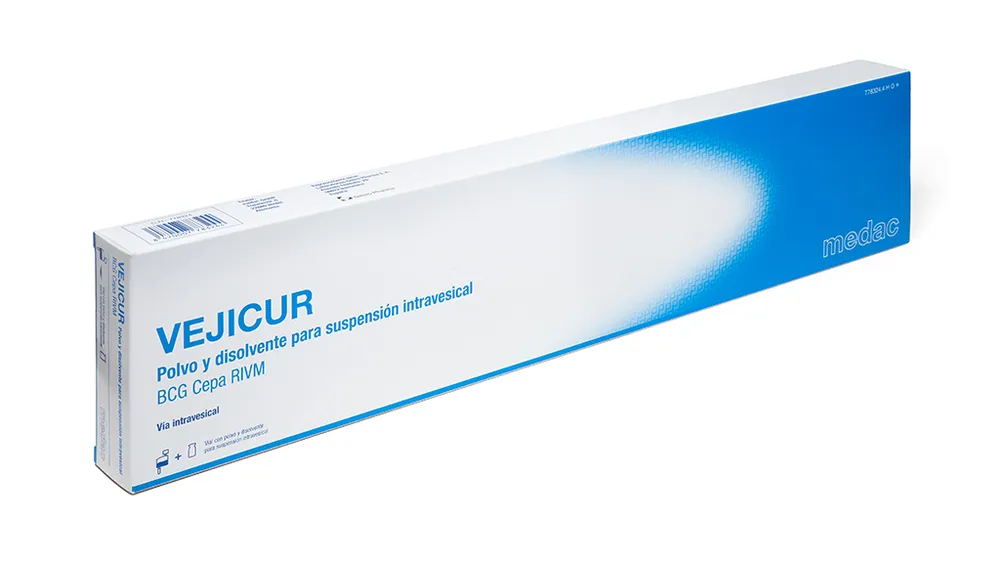
Table of Contents
Package leaflet: Information for the user
Introduction
Package leaflet: information for the user
Vejicur powder and solvent for intravesical suspension
Bacillus Calmette-Guérin
Read the entire leaflet carefully before you start using this medicine, because it contains important information for you.
- Keep this leaflet; you may need to read it again.
- If you have any questions, ask your doctor or pharmacist.
- If you experience any adverse reactions, consult your doctor or pharmacist, even if they are not listed in this leaflet. See section 4.
Contents of the leaflet
- What Vejicur is and what it is used for
- What you need to know before using Vejicur
- How to use Vejicur
- Possible adverse effects
- How to store Vejicur
- Contents of the pack and other information
1. What Vejicur is and what it is used for
The full name of this medicine is Vejicur powder and solvent for intravesical suspension. It will be referred to as Vejicur throughout this leaflet.
Vejicur contains weakened (attenuated) bacteria of the species Mycobacterium bovis with low infectious potential.
Vejicur stimulates the immune system and is used for the treatment of various types of bladder cancer. It is effective when the cancer is confined to the cells lining the inside of the bladder (urothelium) and has not invaded the internal tissues of the bladder.
Vejicur is administered directly into the bladder via instillation.
For the flat lesion form of bladder cancer (localized carcinoma), Vejicur is used to treat disease confined to the bladder lining. There are different grades of cancer affecting the bladder lining and the layers of cells adjacent to the lining (lamina propria).
Vejicur is also used to prevent the recurrence of cancer (prophylactic treatment).
2. What you need to know before using Vejicur
Do not use Vejicur
- if you are allergic to live BCG (Bacillus Calmette-Guérin) or to any of the other components of this medicine (listed in section 6)
- if your immune system activity is reduced or if you have immunodeficiencies, whether due to a concurrent illness (e.g., positive HIV serology, leukemia, lymphoma), cancer treatment (e.g., cytostatic drugs, radiation), or immunosuppressive therapy (e.g., corticosteroids)
- if you have active tuberculosis
- if you have previously received radiotherapy to the bladder or adjacent areas
- if you are breastfeeding
- if you have undergone transurethral surgery (TUR, transurethral resection), had a tissue sample taken from your bladder (bladder biopsy), or experienced catheter-related trauma (traumatic catheterization) within the previous 2 to 3 weeks.
- if you have bladder perforation
- if you have visible blood in your urine (macrohematuria)
- if you have an acute urinary tract infection.
Vejicur must not be used for subcutaneous, intradermal, intramuscular, or intravenous administration, nor for vaccination. It must be administered directly into the bladder via instillation.
Warnings and precautions
Your doctor will provide you with a patient alert card, which you must always carry with you (see also section 4).
Talk to your doctor or pharmacist before using Vejicur
- if you have a fever or blood in your urine. In such cases, treatment with Vejicur should be postponed
- if you have a low bladder capacity, as this may decrease further after treatment
- if you are HLA-B27 (human leukocyte antigen B27) positive, as you may be at increased risk of joint inflammation (reactive arthritis)
- if you have arthritis with inflammation of the skin, eyes, and urinary tract (Reiter's syndrome)
- if you have a localized dilation of a blood vessel (aneurysm) or prostheses. Implants or grafts may become infected.
- if you have liver problems or are taking medications that may affect the liver. This is particularly important if triple antibiotic therapy with antituberculosis drugs is being considered.
General hygiene
After instillation, sit down when urinating to prevent urine splashing and avoid contaminating the surrounding area with BCG bacteria.
It is recommended to wash your hands and genitals after urination. This is especially important after the first urination following BCG treatment. If skin lesions become contaminated, an appropriate disinfectant should be used (consult your doctor or pharmacist).
Detection of Bacillus Calmette-Guérin
Detecting BCG bacteria is generally difficult. A negative test result does not rule out BCG infection outside the bladder.
Urinary tract infection
Your doctor will check that you do not have an acute urinary tract infection before each bladder treatment with BCG. If an acute urinary tract infection is diagnosed during BCG treatment, treatment must be interrupted until urine test results are normal and antibiotic treatment has been completed.
Patients in contact with immunocompromised individuals
If you are receiving treatment with Vejicur, you must follow the general hygiene measures listed above. This is especially important if you are in contact with immunocompromised individuals, as BCG bacteria may be harmful to patients with weakened immune systems. However, no person-to-person transmission of the bacteria has been reported to date.
Sexual transmission
A condom must be used during sexual intercourse for one week following BCG treatment to ensure that transmission of BCG bacteria does not occur.
Other medicines and Vejicur
Inform your doctor or pharmacist if you are taking, have recently taken, or might need to take any other medicines.
This is particularly important with the following medicines, as BCG bacteria are sensitive to:
- antituberculosis drugs (e.g.: ethambutol, streptomycin, p-aminosalicylic acid (PAS), isoniazid (INH), and rifampicin);
- antibiotics (fluoroquinolones, doxycycline, or gentamicin);
- antiseptics;
- lubricants.
BCG bacteria are resistant to pyrazinamide and cycloserine.
Pregnancy, breastfeeding, and fertility
Pregnancy
Do not use Vejicur if you are pregnant or think you might be pregnant.
Breastfeeding
Vejicur is contraindicated during breastfeeding.
Fertility
BCG has been shown to have a negative effect on sperm production and may cause low sperm count or absence of sperm in semen. This effect was reversible in animals. However, men should seek advice on the possibility of sperm preservation before starting treatment.
Driving and using machines
This medicine may affect your ability to drive or operate machinery. Do not drive or use machines until you know how Vejicur affects you.
Consult your doctor, nurse, or pharmacist if you have any questions.
3. How to use Vejicur
Dosage
A healthcare professional with experience will always prepare and administer Vejicur to you. The contents of one vial are required for one bladder treatment.
Administration
Vejicur is instilled into the bladder under low pressure using a catheter.
The medicine must remain in the bladder for a period of 2 hours. For this reason, you must not drink fluids for 4 hours before treatment or during the 2 hours following treatment.
While the suspension remains in the bladder, it must maintain adequate contact with the entire mucosal surface; moving from side to side helps achieve this. After 2 hours, you should urinate while sitting down to avoid splashing.
Unless you are on a low-fluid diet, it is advisable to drink plenty of fluids during the 48 hours following each treatment.
Use in children
The safety and efficacy of the medicine in children has not been established.
Use in elderly people
There are no special instructions for use in elderly individuals. However, liver function should be considered before administering BCG.
Duration of treatment
As a standard treatment regimen (induction therapy), you will receive weekly intravesical instillations of Vejicur for 6 consecutive weeks. After a 4-week treatment-free period, you may receive additional intravesical administrations, known as maintenance therapy, for at least one year as described below. Your doctor will discuss this with you.
Induction therapy
- BCG treatment should begin approximately 2–3 weeks after transurethral surgery (TUR, transurethral resection) or after a bladder tissue sample has been taken (bladder biopsy), and in the absence of catheter-related trauma (traumatic catheterization). It should be repeated at weekly intervals for 6 weeks.
- Afterwards, many patients receive maintenance therapy, during which additional doses may be administered.
Maintenance therapy
- Maintenance therapy consists of 3 weekly treatments administered over a minimum of 1 year up to a maximum of 3 years, at months 3, 6, 12, 18, 24, 30, and 36. With this schedule, you will receive a total of 15 to 27 treatments over a period of one to three years.
Your doctor will review with you the need for maintenance therapy every 6 months after the first year of treatment, if necessary.
Although maintenance therapy reduces the likelihood of cancer recurrence and may reduce its progression, the adverse effects and discomfort associated with treatment may outweigh the benefits in some patients. Therefore, it is important that your doctor discusses with you the potential disadvantages of the treatment and your personal preferences before starting or continuing maintenance therapy.
If you use more Vejicur than you should
Overdose is unlikely since one vial of Vejicur corresponds to a single dose instilled into the bladder. There are no data indicating that an overdose would cause any symptoms other than those adverse effects described (see section 4).
4. Possible adverse effects
Like all medicines, this medicine can cause adverse effects, although not everyone experiences them.
Adverse reactions to BCG treatment are common, although they are usually mild and temporary. Adverse reactions typically increase with the number of BCG treatments.
However, the most serious adverse reaction is a severe systemic infection. Inform your doctor immediately if you experience any of the following symptoms, which may occur at any time and are often delayed, appearing weeks, months, or even years after the last dose.
Show your patient alert card to any healthcare professionals treating you.
-
Fever above 39.5°C for at least 12 hours, or fever above 38°C lasting for weeks; night sweats
-
Unexplained weight loss
-
Increasing malaise
-
Signs of inflammation may be delayed and may present as:
- Difficulty breathing or a cough not resembling a common cold (miliary pneumonia),
- Liver problems: sensation of pressure in the upper right abdomen or abnormalities in liver function tests (especially of an enzyme called alkaline phosphatase), or
- Eye redness and pain, vision problems or blurred vision; conjunctivitis
-
Granulomatous inflammation identified in a biopsy.
BCG systemic reaction/infection
Accidental injury to the bladder during BCG treatment or inadvertent injection of BCG into a muscle or a vein may lead to a severe generalized BCG infection. A severe systemic BCG infection can cause BCG sepsis. BCG sepsis is a potentially life-threatening condition. Contact your doctor immediately if you experience any concerning symptom or sign, or contact an infectious disease specialist. However, the infection is not contagious. Your doctor will prescribe medications to manage your adverse reactions, and BCG treatment may be discontinued.
In contrast to a BCG infection, a BCG reaction often presents with low-grade fever, flu-like symptoms, and general malaise lasting 24–48 hours as the onset of an immune response. Your doctor may prescribe medication to treat these symptoms. Speak with your doctor if your symptoms worsen.
Delayed BCG infection
In individual cases, the BCG bacteria may remain in the body for years. This infection could manifest at any time, and sometimes symptoms and signs of infection appear later—even years after the last BCG dose. Signs of inflammation may resemble those of a severe BCG infection/reaction as described above. Other adverse effects related to your BCG treatment may include infections in implants or grafts, requiring urgent treatment.
Therefore, it is of the utmost importance that you carry your personal alert card with you and provide it to every physician treating you, to ensure appropriate management should a delayed BCG infection occur. The physician will also be able to assess whether symptoms are an adverse reaction to your BCG treatment or not.
Below is a complete list of possible adverse reactions:
Very common: may affect more than 1 in 10 people
- Nausea (feeling sick)
- Bladder inflammation (cystitis), inflammatory reactions (granulomas) in the bladder. These adverse effects may be an essential part of the antitumoral activity.
- Frequent urination with discomfort and pain; may affect up to 90% of patients.
- Inflammatory reactions of the prostate (asymptomatic granulomatous prostatitis)
- Systemic and transient reactions to BCG, such as fever below 38.5°C, flu-like symptoms (malaise, fever, chills), and general discomfort
- Fatigue
Common: may affect up to 1 in 10 people
- Fever above 38.5°C
- Muscle pain (myalgia)
- Diarrhea
- Abdominal pain
- Loss of bladder control (urinary incontinence)
Uncommon: may affect up to 1 in 100 people
- Systemic and severe reaction/infection due to BCG, BCG septicemia (see detailed information below)
- Blood cell deficiency (cytopenia)
- Anemia (reduction in blood hemoglobin)
- Reiter’s syndrome (arthritis with skin, eye, and urinary tract inflammation)
- Lung inflammation (miliary pneumonia)
- Inflammatory reactions in the lungs (pulmonary granuloma)
- Liver inflammation (hepatitis)
- Skin abscess
- Skin rash, joint inflammation (arthritis), joint pain (arthralgia). In most cases, these adverse effects are signs of an allergic reaction (hypersensitivity) to BCG. In some cases, treatment may need to be discontinued.
- Urinary tract infection, presence of blood in urine (macroscopic hematuria)
- Abnormally small bladder (vesical retraction), abnormally low urine flow (urinary obstruction), bladder contracture
- Testicular inflammation (orchitis)
- Epididymis inflammation (epididymitis)
- Inflammatory reaction of the prostate (symptomatic granulomatous prostatitis)
- Low blood pressure (hypotension)
- Abnormal liver function test
Rare: may affect up to 1 in 1,000 people
- Vascular infection (e.g., infected localized blood vessel dilation)
- Kidney abscess
Very rare: may affect up to 1 in 10,000 people
- BCG infection of implants and surrounding tissues (e.g., aortic graft infection, cardiac defibrillator, hip or knee arthroplasty)
- Neck lymph node inflammation (cervical lymphadenitis), regional lymph node infection
- Allergic reaction (hypersensitivity) (e.g., eyelid swelling, cough)
- Inflammation inside the eye (chorioretinitis)
- Conjunctivitis (red eyes), uveitis (inflammation of the uvea of the eye)
- Vascular fistula
- Vomiting, intestinal fistula, peritoneal inflammation (peritonitis)
- Bone and bone marrow infection by bacteria (osteomyelitis)
- Bone marrow infection
- Psoas abscess (abscess in the groin muscle)
- Testicular (orchitis) or epididymal (epididymitis) inflammation resistant to antituberculosis treatment
- Glans infection
- Swelling in arms and legs
Frequency not known: cannot be estimated from available data
- Inflammation of blood vessels (may occur in the brain)
- Genital disorders (e.g., vaginal pain)
- Painful sexual intercourse (dyspareunia)
- Severe immune reaction with fever, enlarged liver, spleen and lymph nodes, jaundice, and skin rash (hemophagocytic syndrome)
- Kidney failure, inflammation of kidney tissue, calyces, and pelvis (pyelonephritis, nephritis [including tubulointerstitial nephritis, interstitial nephritis, and glomerulonephritis])
- Absence or low levels of sperm in semen (azoospermia, oligozoospermia)
- Elevated prostate-specific antigen (PSA, a clinical test for prostate health)
Reporting of adverse effects
If you experience any adverse effect, consult your doctor or pharmacist, even if it is a possible adverse effect not listed in this leaflet. You may also report them directly via the Spanish Pharmacovigilance System for Human Medicines: www.notificaRAM.es. By reporting adverse effects, you help provide more information on the safety of this medicine.
5. Storage of Vejicur
Keep this medicine out of the sight and reach of children.
Do not use this medicine after the expiry date stated on the label and on the carton after EXP.
Store in a refrigerator (between 2 °C and 8 °C).
Do not freeze.
Keep in the original packaging to protect from light.
Physical and chemical in-use stability has been demonstrated for 24 hours when the medicine is stored protected from light at room temperature (between 20 °C and 25 °C) or refrigerated (between 2 °C and 8 °C).
From a microbiological standpoint, the medicine should be used immediately.
If not used immediately, the storage times and conditions prior to use are the responsibility of the user and normally should not exceed 24 hours between 2 °C and 8 °C, unless reconstitution has been carried out under controlled and validated aseptic conditions.
6. Contents of the pack and other information
Composition of Vejicur
The active substance is viable BCG (Bacillus Calmette-Guérin) bacteria (RIVM strain derived from strain 1173-P2).
After reconstitution, one vial contains:
RIVM strain of BCG derived from strain 1173-P2
2 x 10⁸ to 3 x 10⁹ viable units
The other components of the powder are: polygeline, anhydrous glucose, and polysorbate 80.
The other components of the solvent are: sodium chloride and water for injections.
Appearance of the product and contents of the container
Vejicur consists of a white or almost white powder, or a porous mass with yellowish and greyish hues, and a colourless, clear solution used as the solvent. It is supplied in packs of 1, 3, 5 or 6 vials with or without catheter(s) and conical Luer-Lock connector(s). Only certain pack sizes may be commercially available.
Marketing Authorisation Holder and Manufacturer
medac
Gesellschaft für
klinische Spezialpräparate mbH
Theaterstr. 6
22880 Wedel
Germany
For further information about this medicinal product, contact the local representative of the Marketing Authorisation Holder:
Laboratorios Gebro Pharma, S.A.
Av. Tibidabo, 29
08022 Barcelona
Spain
Date of the most recent revision of this leaflet: 03/2025
Detailed and up-to-date information on this medicinal product is available on the website of the Spanish Agency for Medicines and Health Products (AEMPS) http://www.aemps.gob.es/
This information is intended for healthcare professionals only:
Treatment of symptoms, signs and syndrome
Symptoms, signs or syndrome | Treatment |
| Symptomatic treatment |
| Discontinue treatment with Vejicur and initiate quinolone therapy. If complete resolution has not been observed after 10 days, administer isoniazid (INH)* for 3 months. In case of antitubercular treatment, therapy with Vejicur must be permanently discontinued |
| Postpone treatment with Vejicur until urinalysis is normal and antibiotic treatment has been completed |
| Discontinue treatment with Vejicur. Consider referral to an infectious disease specialist. Administer isoniazid (INH)* and rifampicin* for 3–6 months depending on severity. In case of antitubercular treatment, therapy with Vejicur must be permanently discontinued |
| Symptomatic treatment with paracetamol |
| Discontinue treatment with Vejicur. Consider referral to an infectious disease specialist. Administer antihistamines or non-steroidal anti-inflammatory drugs. Cortisone therapy should be considered in case of an immune-mediated reaction. If no response, administer isoniazid* for 3 months. In case of antitubercular treatment, therapy with Vejicur must be permanently discontinued. |
| Permanently discontinue treatment with Vejicur. Consider consultation with an infectious disease specialist. Administer antitubercular treatment with three drugs* for 6 months, and low-dose corticosteroid therapy. |
| Permanently discontinue treatment with Vejicur. Immediately administer antitubercular treatment* with three drugs combined with high-dose rapid-acting corticosteroids. Consult an infectious disease specialist. |
- Precaution: BCG bacteria are sensitive to all currently used antituberculosis drugs, except pyrazinamide. If antituberculosis treatment with three drugs is required, the combination generally recommended is isoniazid (INH), rifampicin, and ethambutol.
** see previous definition
Important information about the use of Vejicur
Vejicur should only be used by healthcare professionals with experience.
Ensure appropriate storage conditions (see section 5) and confirm the integrity of the packaging.
Vejicur must be administered under the conditions required for intravesical endoscopy.
Vejicur must not be administered subcutaneously, intradermally, intramuscularly, or intravenously, nor for vaccination against tuberculosis.
! The Luer-Lock catheter connector on the solvent bag must only be used for intravesical instillation!
Basic principles and protective measures for the use of Vejicur
Direct contact with Vejicur should generally be avoided. Vejicur is a medicinal product that can cause infection in humans and poses a risk to healthcare professionals. Risk may exist if the medicinal product enters the body through damaged skin, if aerosols are inhaled, if droplets enter the eyes or come into contact with mucous membranes, or if ingested. Do not eat, drink, or smoke in work areas, and do not store food, beverages, or tobacco products in these areas. Vejicur must not be handled in a room where cytotoxic drugs for intravenous use are prepared, nor should it be handled by personnel who prepare cytotoxic drugs for intravenous use.
The medicinal product must not be handled by individuals with known immunodeficiency.
It is recommended to wear a closed, splash-proof protective gown, disposable gloves, an FFP2 respiratory mask, and safety goggles with side shields as personal protective equipment during handling. Vejicur must only be transported in closed containers (for storage conditions after reconstitution, see section 5).
After completion of work, clean work surfaces with an appropriate disinfectant solution. After work and in case of skin contact, disinfect hands with a hand disinfectant, allow them to dry, then wash and use skin care products.
Tuberculin skin tests
Intravesical treatment with Vejicur may induce sensitivity to tuberculin and complicate the subsequent interpretation of the tuberculin skin test for the diagnosis of mycobacterial infections. Therefore, tuberculin reactivity should be measured before administration of Vejicur.
Preparation of the reconstituted intravesical suspension
Prior to use, the medicinal product must be resuspended under aseptic conditions with sterile 0.9% sodium chloride solution (9 mg/mL) (see instructions for use, step 7). The catheter must be inserted with special care to avoid injury to the urethral and bladder epithelium, which could lead to systemic BCG infection. Use of a lubricant is recommended to minimize the risk of traumatic catheterization and to make the procedure more comfortable. Women may require less lubricant than men. No evidence has been observed that a potential antiseptic effect of the lubricant could influence the efficacy of the medicinal product. Empty the bladder after catheterization to reduce the amount of lubricant that may have been introduced prior to administration of Vejicur. The suspension should be mixed by gently agitating before use. Macroscopically visible particles do not affect the efficacy and safety of the medicinal product.
The contents of the vial are intended for single use/one dose only. Any remaining suspension must be discarded.
Disposal of unused medicinal product and of all materials that have come into contact with it must be carried out in accordance with local regulations.
Emergency procedures and spill management for Vejicur
Wear protective clothing and avoid generating dust.
Cover spilled Vejicur suspension with cellulose and moisten it with a disinfectant proven effective against mycobacteria. After cleaning up the spilled Vejicur suspension, clean the surface again with a disinfectant solution and allow it to dry. Spills on the skin should be treated with an appropriate disinfectant.
First aid
Always consult a physician in case of contamination.
In case of skin contact: remove contaminated clothing. Disinfect and clean the skin and check for wound contamination.
In case of eye contact: rinse the affected eye with a sufficient amount of eye wash solution or, alternatively, with water. Remove contact lenses, if applicable.
In case of ingestion: rinse mouth thoroughly with plenty of water.
In case of inhalation: ensure adequate supply of fresh air.
For further information on the catheter, refer to the corresponding instructions for use.
Instructions for users of Vejicur
Components and application of the instillation kit |<with catheter, without Luer-Lock to conical connector>
Main components of the instillation kit
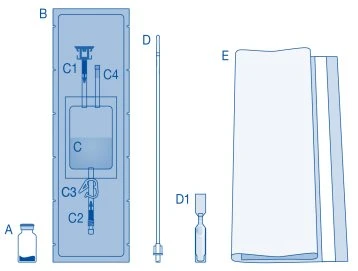
Active Component | Description |
A | Vial with powder |
B | Protective sleeve |
C | Solvent bag with 0.9% (9 mg/ml) sodium chloride solution |
C1 | Vial connector with protective cap and break seal |
C2 | Luer-Lock catheter connector with protective cap and break seal |
C3 | Pressure clamp |
C4 | Filling port without administration function |
D | Luer-Lock catheter |
D1 | Lubricant |
E | Waste disposal bag |
Connecting the vial to the solvent bag
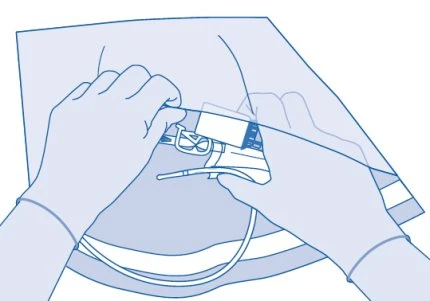
- Prepare the disposal bag (E) for direct disposal of the kit after instillation to avoid contamination.
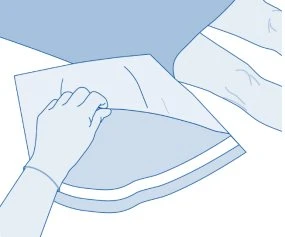
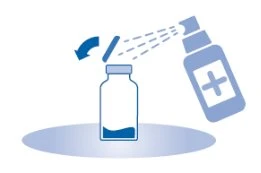
- Remove the removable closure cap from the vial (A) and disinfect the stopper according to local regulations.
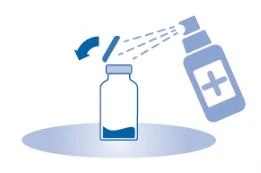
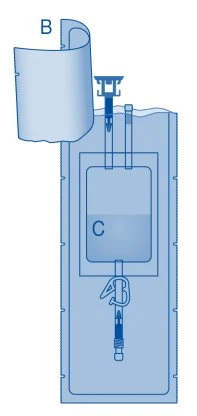
- Open the protective sleeve (B) of the solvent bag (C) and completely remove the protective sleeve.
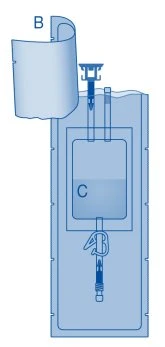
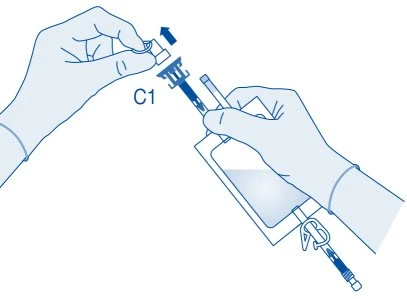
- Remove the protective cap from the vial connector (C1).
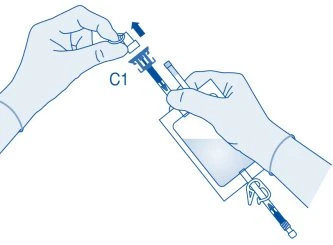
- Press the connector onto the vial until fully seated.
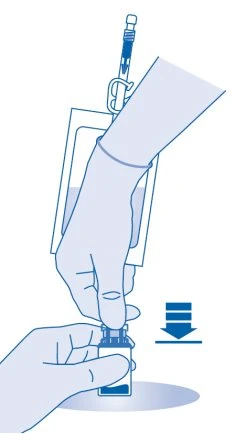
Mixing the powder with the solvent
- Bend the break seal inside the tube of the vial connector (C1) upwards and downwards several times to break the seal.
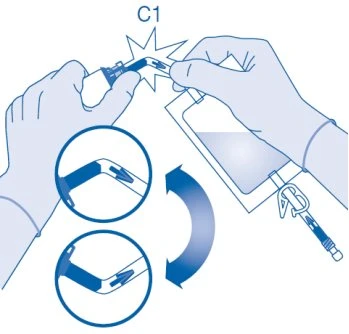
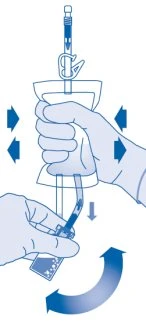
- Hold the solvent bag so that the vial is positioned below it.
Compress the solvent bag several times to transfer sufficient solvent into the vial.
Ensure not to completely fill the vial to allow for subsequent transfer of the suspension back to the solvent bag. Some solvent may remain inside the bag.
Gently swirl the vial slowly to minimize excessive foam formation when mixing the medication with the solvent. If excessive foam occurs, allow the vial to stand briefly (for several minutes).
The contents of the vial should form a homogeneous suspension. This may take several minutes.
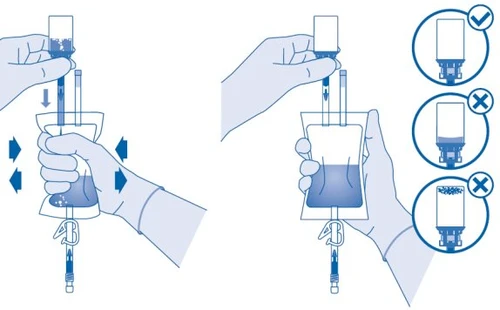
- Invert the solvent bag and hold it so that the vial is positioned above it.
Hold the vial.
Compress the solvent bag several times until the vial is completely empty.
If any powder remains inside the vial, repeat steps 7 and 8.
From a microbiological standpoint, the medication should be used immediately. If not used immediately, refer to section 5 “Storage of Vejicur”.
The suspension must not be instilled refrigerated to avoid inducing urgency to urinate in the patient, which would shorten the exposure time.
Catheterization
- Catheterize the patient according to local regulations and instructions for use, using the included Luer-Lock catheter (D) and lubricant (D1), or other suitable catheter and/or lubricant.
Empty the urinary bladder using the catheter.
Connecting the catheter to the solvent bag
- To resuspend any sediment, gently rotate and shake the bag before connecting it.
Do not administer the suspension refrigerated.
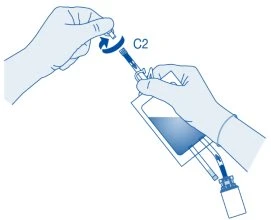
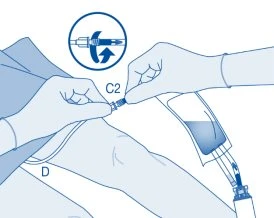
Remove the protective cap from the catheter connector (C2).
Connect the patient’s Luer-Lock catheter (D) to the catheter connector (C2) on the solvent bag.
Instillation
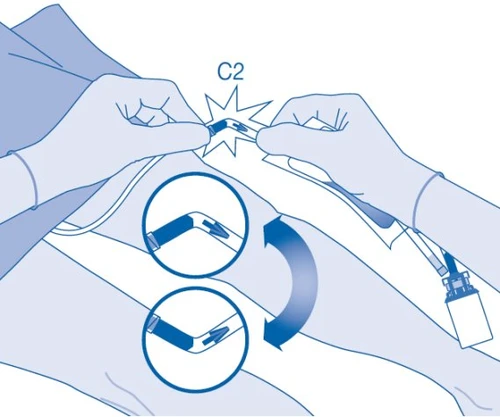
- Bend the break seal inside the catheter connector tube (C2) upwards and downwards several times to break the seal.
Firmly hold the patient’s catheter while doing so.
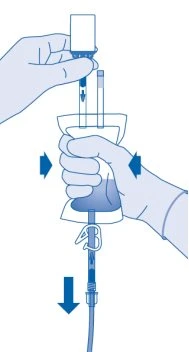
- Hold the solvent bag with the vial inverted above the bag.
Gently compress the solvent bag with the other hand to slowly instill the medication into the patient’s urinary bladder.
Continue compressing the solvent bag until both the bag and the vial are empty.
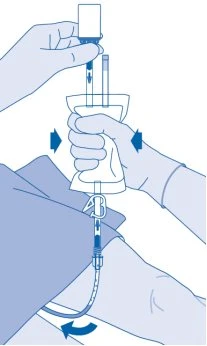
- Compress the solvent bag to expel any remaining air and to empty the catheter as completely as possible.
After instillation
- Clamping the pressure clamp (C3) prevents backflow of liquid into the catheter and minimizes the risk of contamination. Alternatively, you may keep the solvent bag compressed while performing steps 15 and 16.
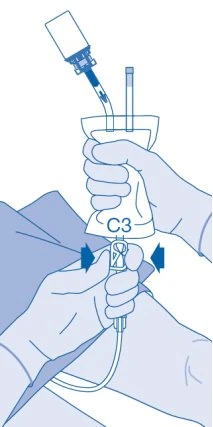
- Carefully remove the catheter from the bladder without disconnecting the solvent bag from the catheter. Avoid contamination from splashing droplets.
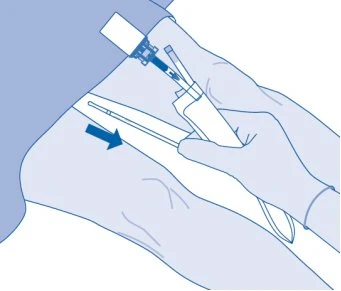
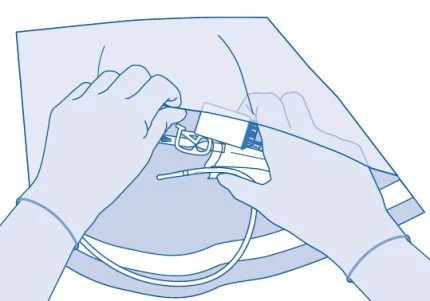
- Dispose of the product according to national regulations using the disposal bag.
The vial contents are intended for single use/single dose only. Any remaining suspension must be discarded.
Instructions for users of Vejicur
Components and application of the instillation kit |
Main components of the instillation kit
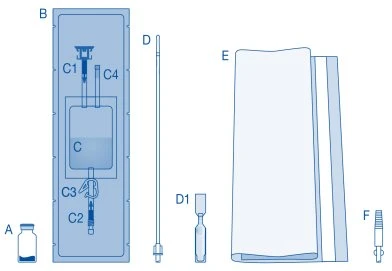
Main component | Description |
A | Vial with powder |
B | Protective sleeve |
C | Solvent bag with 0.9% (9 mg/ml) sodium chloride solution |
C1 | Vial connector with protective cap and breakaway seal |
C2 | Luer-Lock catheter connector with protective cap and breakaway seal |
C3 | Pressure clamp |
C4 | Filling port without administration function |
D | Luer-Lock catheter |
D1 | Lubricant |
E | Waste disposal bag |
F | Luer-Lock to conical connector |
Vial Connection to the Solvent Bag
- Prepare the disposal bag (E) for direct disposal of the kit after instillation to avoid contamination.
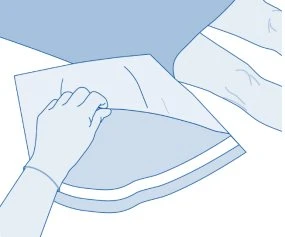
- Remove the removable closure cap from the vial (A) and disinfect the stopper according to local regulations.
- Open the protective sleeve (B) of the solvent bag (C) and completely remove the protective sleeve.
- Remove the protective cap from the vial connector (C1).
- Press the connector firmly onto the vial until fully seated.
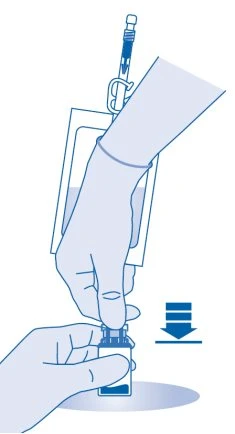
Mixing the Powder with the Solvent
- Bend the break seal inside the vial connector tube (C1) upwards and downwards several times to break the seal.
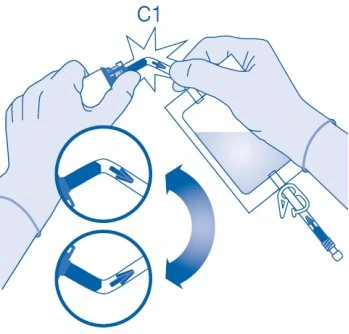
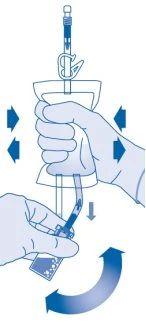
- Hold the solvent bag so that the vial is positioned below it.
Squeeze the solvent bag several times to transfer sufficient solvent into the vial.
Make sure not to completely fill the vial to allow for subsequent transfer of the suspension back into the solvent bag. A small amount of solvent may remain inside the bag.
Shake the vial slowly to minimize excessive foam formation when mixing the medication with the solvent. If excessive foam forms, allow the vial to stand briefly (several minutes).
The contents of the vial must form a homogeneous suspension. This may take several minutes.
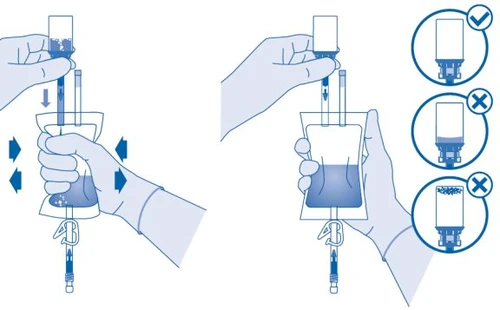
- Invert the solvent bag and hold it so that the vial is positioned above it.
Hold the vial securely.
Squeeze the solvent bag several times until the vial is completely empty.
If any powder remains inside the vial, repeat steps 7 and 8.
From a microbiological standpoint, the medication should be used immediately.
If the medication is not used immediately, refer to section 5 “Storage of Vejicur”.
The suspension must not be instilled refrigerated, as this may cause the patient to feel an urgent need to urinate, thereby shortening the exposure time.
Catheterization
- Catheterize the patient according to local guidelines and instructions for use, using the included Luer-Lock catheter (D) and lubricant (D1), or another suitable catheter and/or lubricant.
Empty the urinary bladder using the catheter.
Note for use with a self-selected catheter with conical connector:
The included Luer-Lock to conical connector (F) must be used to connect the bag to the self-selected catheter (not shown).
To do this, perform the following additional steps:
- Remove the protective cap from the catheter connector (C2, see step 10).
- Rotate and shake the bag before connecting to resuspend any sediment.
- Attach the Luer-Lock to conical connector (F) to the catheter connector (C2) on the bag.
- Carefully connect the bag with connector (F) to the patient’s catheter.
- Then proceed to step 11.
Connecting the Catheter to the Solvent Bag
- To resuspend any sediment, rotate and shake the bag before connecting.
Do not administer the suspension refrigerated.
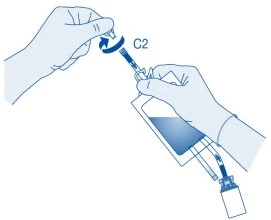
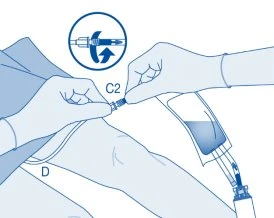
Remove the protective cap from the catheter connector (C2).
Connect the patient’s Luer-Lock catheter (D) to the catheter connector (C2) on the solvent bag.
Instillation
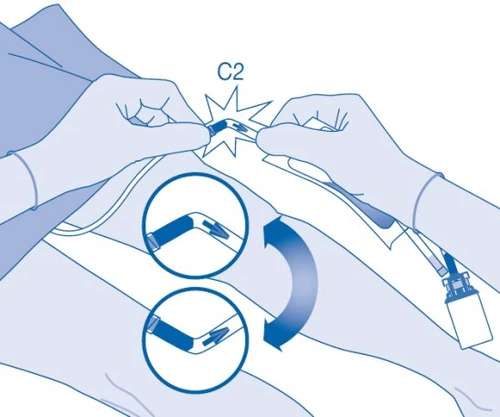
- Bend the break seal inside the catheter connector tube (C2) upwards and downwards several times to break the seal.
Hold the patient’s catheter securely while doing so.
- Hold the solvent bag with the inverted vial positioned above the bag.
Gently squeeze the solvent bag with the other hand to slowly instill the medication into the patient’s urinary bladder.
Continue squeezing the solvent bag until both the bag and the vial are empty.
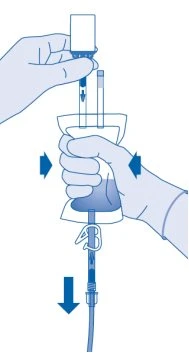
- Squeeze the solvent bag to expel any remaining air and empty the catheter as completely as possible.
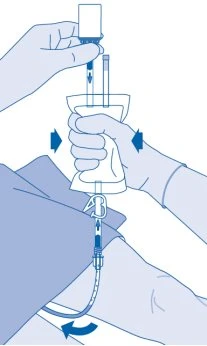
After Instillation
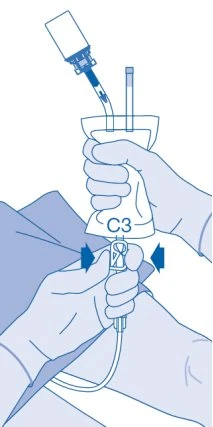
- Closing the pressure clamp (C3) prevents liquid reflux into the catheter and minimizes the risk of contamination. Alternatively, the solvent bag may be kept compressed while performing steps 15 and 16.
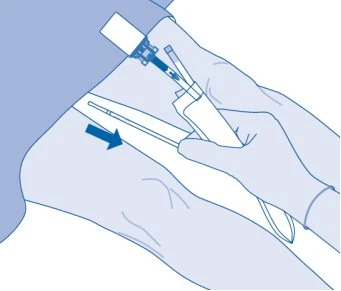
- Carefully remove the catheter from the bladder without disconnecting the solvent bag from the catheter. Avoid contamination from splashing droplets.
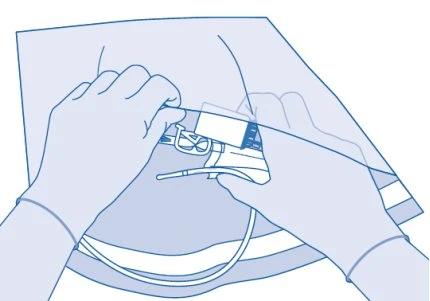
- Dispose of the product according to national regulations using the disposal bag.
The vial contents are intended for single use/single dose only. Any remaining suspension must be discarded.
Instructions for Users of Vejicur
Components and Application of the Instillation Kit |<without catheter, without Luer-Lock to conical connector>
Main Components of the Instillation Kit
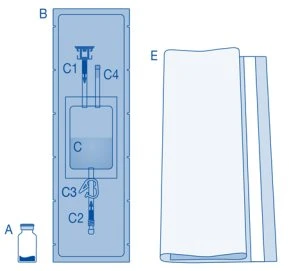
Active component | Description |
A | Vial with powder |
B | Protective sleeve |
C | Solvent bag containing 0.9% (9 mg/ml) sodium chloride solution |
C1 | Vial connector with protective cap and breakaway seal |
C2 | Luer-Lock catheter connector with protective cap and breakaway seal |
C3 | Clamp |
C4 | Filling port without application function |
E | Waste bag |
Connecting the vial to the solvent bag
- Prepare the disposal bag (E) for direct disposal of the kit after instillation to avoid contamination.
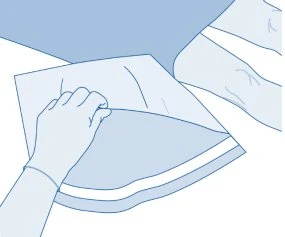
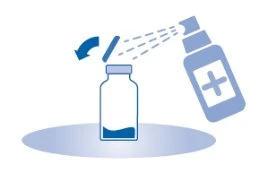
- Remove the removable closure cap from the vial (A) and disinfect the stopper according to local regulations.
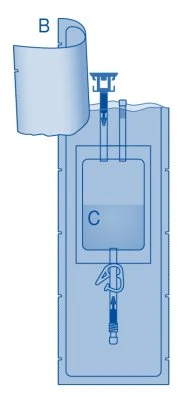
- Open the protective sleeve (B) of the solvent bag (C) and completely remove the protective sleeve.
- Remove the protective cap from the vial connector (C1).
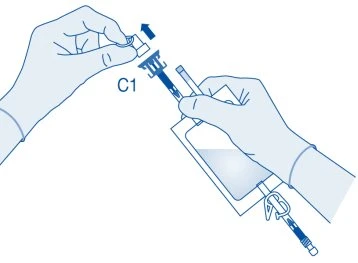
- Press the connector onto the vial until fully seated.
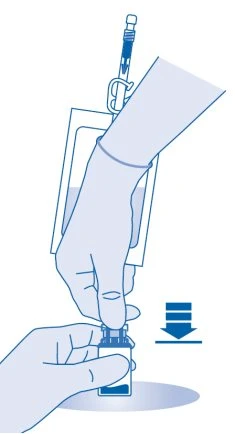
Mixing the powder with the solvent
- Bend the break seal inside the vial connector tube (C1) upwards and downwards several times to break the seal.
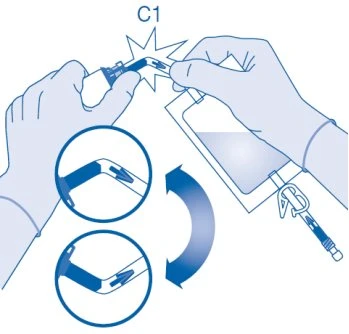
- Hold the solvent bag so that the vial is positioned below it.
Squeeze the solvent bag several times to transfer a sufficient amount of solvent into the vial.
Ensure not to completely fill the vial to allow for subsequent transfer of the suspension back to the solvent bag. Some solvent may remain in the bag.
Gently shake the vial to minimize excessive foam formation when mixing the medication with the solvent. If excessive foam occurs, allow the vial to stand briefly (several minutes).
The contents of the vial must form a homogeneous suspension. This may take several minutes.
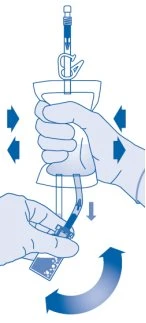
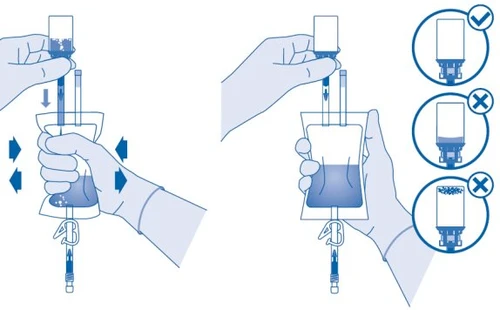
- Invert the solvent bag and hold it so that the vial is positioned above it.
Hold the vial.
Squeeze the solvent bag several times until the vial is completely empty.
If any powder remains inside the vial, repeat steps 7 and 8.
From a microbiological standpoint, the medication should be used immediately.
If the medication is not used immediately, refer to section 5 “Storage of Vejicur”.
The suspension must not be instilled refrigerated, to avoid inducing the patient’s urge to urinate, which would shorten the exposure time.
Catheterization
- Catheterize the patient according to local regulations and instructions for use, using an appropriate catheter and lubricant.
Empty the urinary bladder via the catheter.
Connecting the catheter to the solvent bag
- Before connecting, rotate and gently shake the bag to mix any sediment.
Do not administer the suspension refrigerated.
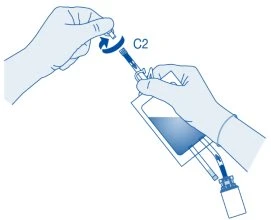
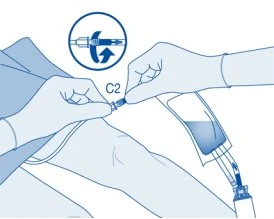
Remove the protective cap from the catheter connector (C2).
Connect the patient’s catheter to the catheter connector (C2) on the solvent bag.
Instillation
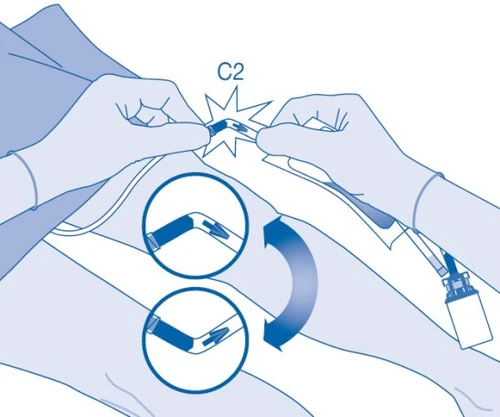
- Bend the break seal inside the catheter connector tube (C2) upwards and downwards several times to break the seal.
Hold the patient’s catheter firmly during this step.
- Hold the solvent bag with the vial inverted above the bag.
Gently squeeze the solvent bag with the other hand to instill the medication slowly into the patient’s urinary bladder.
Continue squeezing the solvent bag until both the bag and the vial are empty.
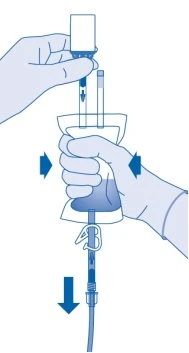
- Squeeze the solvent bag to expel any remaining air and to empty the catheter as completely as possible.
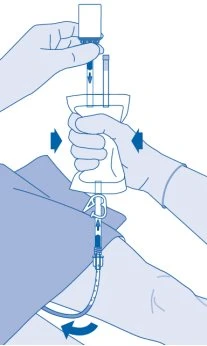
After instillation
- Clamping the pressure clamp (C3) prevents backflow of liquid into the catheter and minimizes the risk of contamination. Alternatively, the solvent bag may be kept compressed during steps 15 and 16.
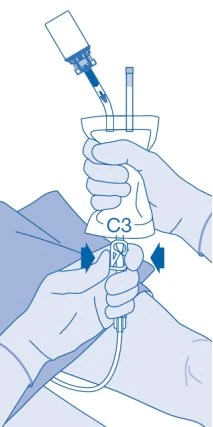
- Carefully remove the catheter from the bladder without disconnecting the solvent bag from the catheter. Avoid contamination from splashing droplets.
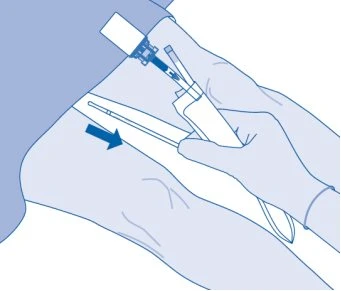
- Dispose of the product according to national regulations using the disposal bag.
The vial contents are intended for single use/single dose only. Any remaining suspension must be discarded.
Instructions for users of Vejicur
Components and application of the instillation kit |<without catheter, with Luer-Lock to conical connector>
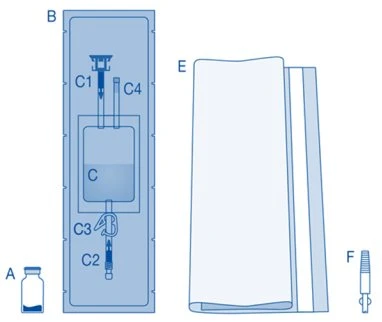
Main components of the instillation kit
Main component | Description |
A | Vial with powder |
B | Protective sleeve |
C | Solvent bag with 0.9% sodium chloride solution (9 mg/ml) |
C1 | Vial connector with protective cap and breakable seal |
C2 | Luer-Lock catheter connector with protective cap and breakable seal |
C3 | Pressure clamp |
C4 | Filling port without application function |
E | Waste bag |
F | Luer-Lock to conical connector |
Connecting the vial to the solvent bag
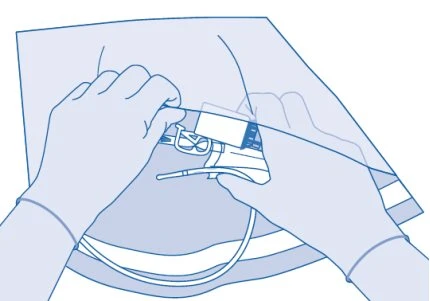
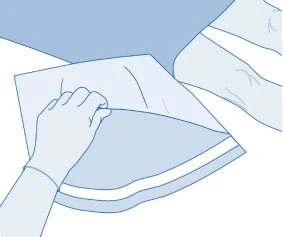
- Prepare the disposal bag (E) for direct disposal of the kit after instillation to avoid contamination.
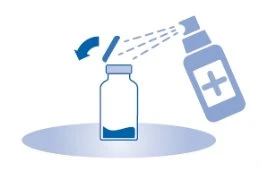
- Remove the removable closure cap from the vial (A) and disinfect the stopper according to local regulations.
- Open the protective sleeve (B) of the solvent bag (C) and completely remove the protective sleeve.
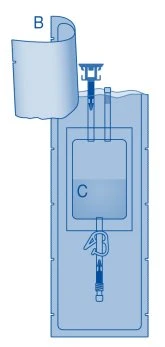
- Remove the protective cap from the vial connector (C1).
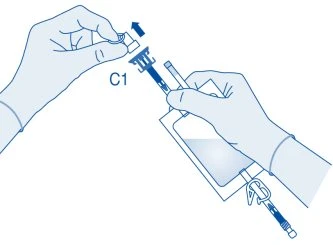
- Press the connector firmly onto the vial until fully seated.
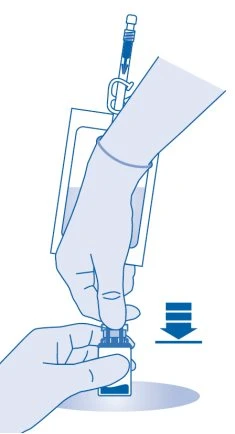
Mixing the powder with the solvent
- Bend the break seal inside the vial connector tube (C1) up and down several times to break the seal.
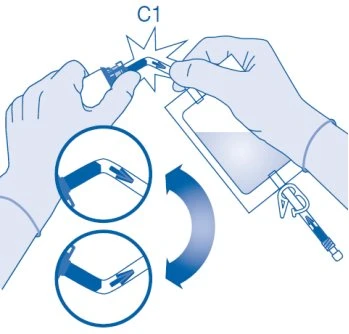
- Hold the solvent bag so that the vial is positioned below it.
Squeeze the solvent bag several times to transfer sufficient solvent into the vial.
Ensure that the vial is not completely filled to allow for subsequent transfer of the suspension back into the solvent bag. Some solvent may remain in the bag.
Shake the vial gently to minimize excessive foam formation when mixing the medication with the solvent. If excessive foam forms, allow the vial to stand briefly (several minutes).
The contents of the vial must form a homogeneous suspension. This may take several minutes.
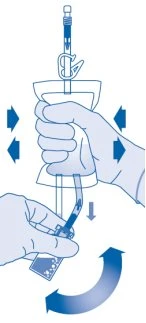
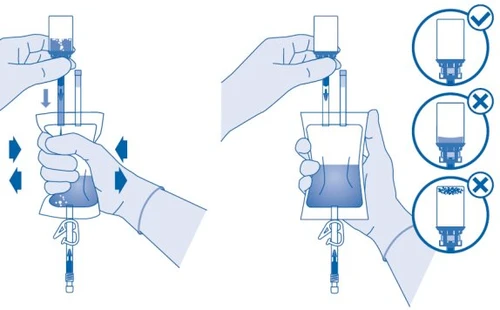
- Invert the solvent bag and hold it so that the vial is positioned above it.
Hold the vial securely.
Squeeze the solvent bag several times until the vial is completely empty.
If any powder remains inside the vial, repeat steps 7 and 8.
From a microbiological standpoint, the medicinal product should be used immediately.
If the product is not used immediately, refer to section 5 “Storage of Vejicur”.
The suspension must not be instilled refrigerated, to avoid inducing the patient’s urge to urinate, which would shorten the exposure time.
Catheterization
- Catheterize the patient according to local regulations and instructions for use, using an appropriate catheter and lubricant.
Empty the urinary bladder through the catheter.
This package does not contain a catheter. Use the connector (F) provided to connect the bag to the patient’s catheter via a conical connector (not shown).
To do this, perform the following additional steps:
- Remove the protective cap from the catheter connector (C2, see step 10).
- Connect the connector (F) to the catheter connector (C2) on the bag.
- Carefully connect the bag with connector (F) to the patient’s catheter.
- Then proceed to step 11.
Connecting the catheter to the solvent bag
- Before connecting, rotate and gently agitate the bag to resuspend any sediments.
Do not administer the suspension refrigerated.
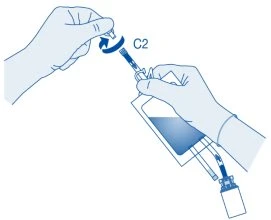
Remove the protective cap from the catheter connector (C2).
Connect the patient’s catheter to the catheter connector (C2) on the solvent bag.
Instillation
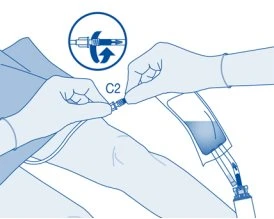
- Bend the break seal inside the catheter connector tube (C2) up and down several times to break the seal.
Hold the patient’s catheter securely while doing so.
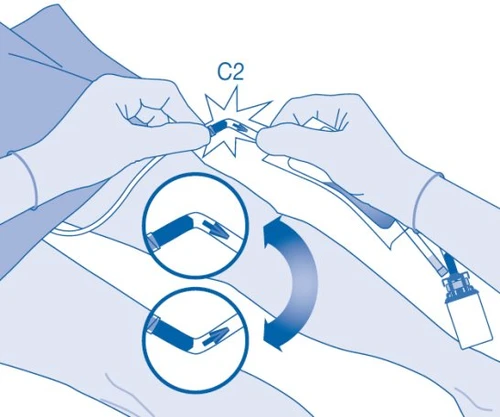
- Hold the solvent bag with the inverted vial positioned above the bag.
Gently squeeze the solvent bag with the other hand to instill the medication slowly into the patient’s urinary bladder.
Continue squeezing the solvent bag until both the bag and the vial are empty.
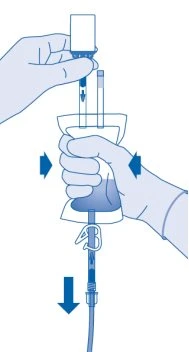
- Squeeze the solvent bag to expel any remaining air and ensure the catheter is emptied as completely as possible.
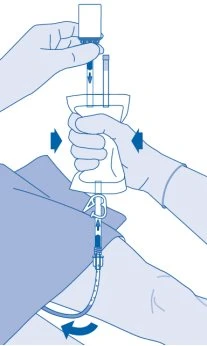
After instillation
- Closing the pressure clamp (C3) prevents fluid reflux into the catheter and minimizes the risk of contamination. Alternatively, the solvent bag may be kept compressed while performing steps 15 and 16.
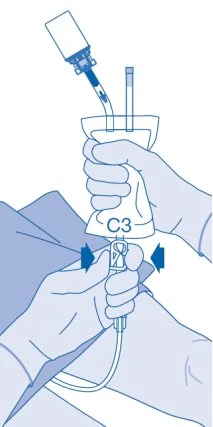
- Carefully remove the catheter from the bladder without disconnecting the solvent bag from the catheter. Avoid contamination from splashing droplets.
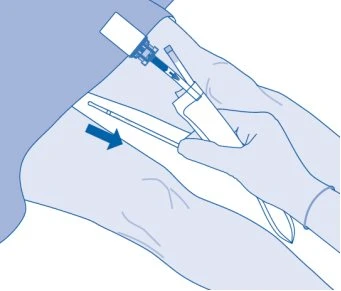
- Dispose of the product according to national regulations using the disposal bag.
The vial contents are intended for single use/single dose only. Any remaining suspension must be discarded.