Vaxneuvance injectable suspension in pre-filled syringe
Spain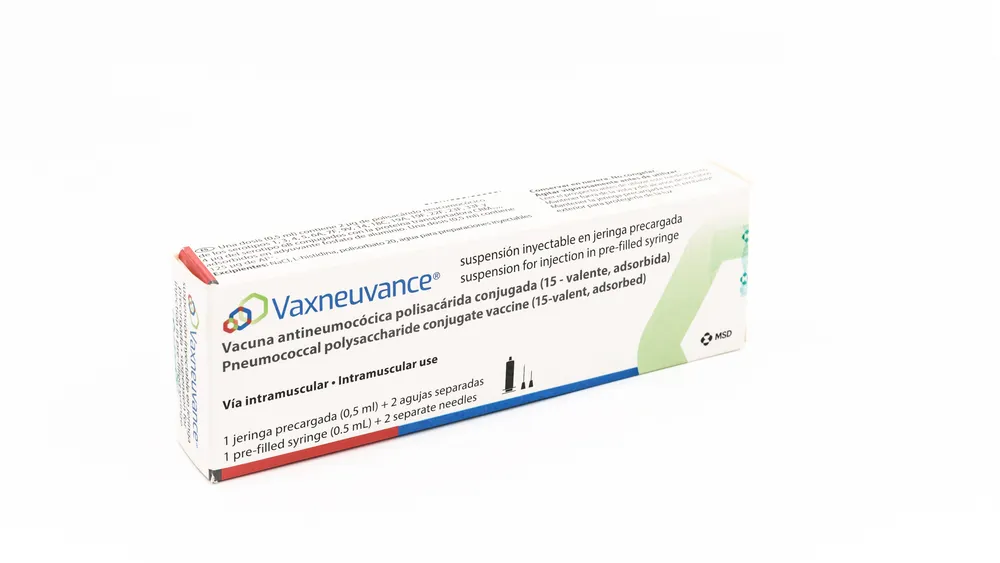
Table of Contents
- Package leaflet: Information for the user
- Introduction
- 1. What Vaxneuvance is and what it is used for
- 2. What you need to know before you or your child receive Vaxneuvance
- 3. How Vaxneuvance is administered
- 4. Possible side effects
- 5. Storage of Vaxneuvance
- 6. Contents of the pack and other information
Package leaflet: Information for the user
Introduction
Package leaflet: information for the user
Vaxneuvance 15-valent pneumococcal conjugate vaccine (adsorbed) suspension for injection in pre-filled syringe
This medicinal product is subject to additional monitoring, which will allow quicker identification of new safety information. You can help by reporting any side effects that you or your child may experience. Information on how to report side effects is included at the end of section 4.
Read all of this leaflet carefully before you or your child receives this vaccine, because it contains important information for you.
- Keep this leaflet, as you may need to read it again.
- If you have any questions, ask your doctor, pharmacist, or nurse.
- This vaccine has been prescribed only for you or your child and must not be given to other people.
- If you experience any side effects, consult your doctor, pharmacist, or nurse, even if they are side effects not listed in this leaflet. See section 4.
Contents of the leaflet
- What Vaxneuvance is and what it is used for
- What you need to know before you or your child receives Vaxneuvance
- How Vaxneuvance is administered
- Possible side effects
- How to store Vaxneuvance
- Contents of the pack and other information
1. What Vaxneuvance is and what it is used for
Vaxneuvance is a pneumococcal vaccine intended for
- children from 6 weeks to 18 years of age to help protect them against diseases such as lung infection (pneumonia), inflammation of the membranes covering the brain and spinal cord (meningitis), a serious blood infection (bacteremia), and ear infections (acute otitis media),
- individuals 18 years of age and older to help protect them against diseases such as lung infection (pneumonia), inflammation of the membranes covering the brain and spinal cord (meningitis), and a serious blood infection (bacteremia), caused by 15 types of a bacterium called Streptococcus pneumoniae or pneumococcus.
2. What you need to know before you or your child receive Vaxneuvance
Do not receive Vaxneuvance if:
- you or your child are allergic to the active substances or to any of the other components of this vaccine (listed in section 6) or to any other vaccine containing diphtheria toxoid.
Warnings and precautions
Talk to your doctor, pharmacist, or nurse before you or your child receive Vaxneuvance if:
- you or your child have a weakened immune system (meaning the body is less able to fight infections), or if you or your child are taking certain medicines that may weaken the immune system (for example, immunosuppressants or steroids).
- you or your child have a high fever or a serious infection. In these cases, vaccination may need to be postponed until you or your child have recovered. However, a mild fever or infection (for example, a cold) does not justify delaying vaccination.
- you or your child have any bleeding problems, bruise easily, or are taking medicines to prevent blood clots.
If your child is an infant, inform your doctor if your child was born prematurely (too early).
Like any vaccine, Vaxneuvance may not fully protect all vaccinated individuals.
Other medicines/vaccines and Vaxneuvance
Your child may receive Vaxneuvance at the same time as other routine childhood vaccines.
In adults, Vaxneuvance may be administered simultaneously with the influenza vaccine (inactivated influenza vaccine).
Tell your doctor, pharmacist, or nurse if:
- you or your child are taking, have recently taken, or might need to take any other prescription medicines (for example, immunosuppressants or steroids that may weaken the immune system) or any medicines obtained without a prescription.
- you or your child have recently received or are scheduled to receive any other vaccine.
Pregnancy and breastfeeding
If you are pregnant or breastfeeding, think you might be pregnant, or are planning to become pregnant, consult your doctor, pharmacist, or nurse before receiving this vaccine.
Driving and using machines
The influence of Vaxneuvance on the ability to drive and use machines is none or negligible. However, some of the adverse effects mentioned in section 4 "Possible side effects" may temporarily affect the ability to drive or use machines.
Vaxneuvance contains sodium and polysorbate 20
This medicine contains less than 1 mmol of sodium (23 mg) per dose; this is essentially "sodium-free".
This medicine contains 1 mg of polysorbate 20 in each 0.5 ml dose. Polysorbates may cause allergic reactions. Inform your doctor if you or your child have any known allergies.
3. How Vaxneuvance is administered
Inform your doctor, pharmacist, or nurse if you or your child has previously received a pneumococcal vaccine.
Your doctor or nurse will administer the vaccine into the muscle of the arm or into the muscle of the arm or leg of your child.
Infants and children from 6 weeks to 2 years of age
Your child should receive a primary schedule of 2 vaccine injections followed by a booster dose.
- The first injection can be given from 6 weeks of age.
- A second injection is given 2 months later.
- A third injection (booster) will be administered between 11 and 15 months of age.
You will be advised when your child should return for each injection.
Depending on official recommendations in your country, an alternative schedule of 3 injections followed by a booster dose may be used. Speak with your doctor, pharmacist, or nurse for further information.
Preterm infants (born before 37 weeks of gestation)
Your child should receive a primary schedule of 3 vaccine injections followed by a booster dose.
- The first injection can be given from 6 weeks of age.
- The second and third injections are administered later, with an interval of 4 to 8 weeks between doses.
- A fourth injection (booster) will be administered between 11 and 15 months of age.
Infants, children, and adolescents starting vaccination from 7 months of age
Children between 7 and 12 months of age should receive a total of 3 injections. The first two injections will be given at least 1 month apart. The third injection (booster) will be administered from 12 months of age and at least 2 months after the second injection.
Children between 12 months and 2 years of age should receive a total of 2 injections. The two injections will be given at least 2 months apart.
Children and adolescents between 2 and 18 years of age should receive 1 injection.
Adults
Adults should receive 1 injection.
Special populations
One or more doses of Vaxneuvance may be administered to individuals with one or more underlying medical conditions that increase the risk of pneumococcal disease (such as individuals with sickle cell anemia, human immunodeficiency virus [HIV] infection, or hematopoietic stem cell transplant recipients).
If you have any further questions about the use of Vaxneuvance, ask your doctor, pharmacist, or nurse.
4. Possible side effects
Like all vaccines, Vaxneuvance may cause side effects, although not everybody gets them.
Seek immediate medical attention if you or your child experience symptoms of an allergic reaction, which may include:
- Wheezing or difficulty breathing
- Swelling of the face, lips, or tongue
- Hives
- Rash
The following side effects may be observed after use of Vaxneuvance in infants, children, and adolescents:
Very common (may affect more than 1 in 10 people):
- Fever (temperature of 38 °C or higher in infants and children aged 6 weeks to 2 years)
- Irritability (in infants and children aged 6 weeks to 2 years)
- Sleepiness (in infants and children aged 6 weeks to 2 years)
- Pain, redness, or swelling at the injection site
- Loss of appetite (in infants and children aged 6 weeks to 2 years)
- Hardening at the injection site (in infants and children aged 6 weeks to 2 years)
- Muscle pain (in children and adolescents aged 2 to 18 years)
- Tiredness (in children and adolescents aged 2 to 18 years)
- Headache (in children and adolescents aged 2 to 18 years)
Common (may affect up to 1 in 10 people):
- Hardening at the injection site (in children and adolescents aged 2 to 18 years)
- Hives
- Fever (temperature of 38 °C or higher in children and adolescents aged 2 to 18 years)
- Vomiting (in infants and children aged 6 weeks to 2 years)
- Rash (in infants and children aged 6 weeks to 2 years)
- Irritability (in children and adolescents aged 2 to 18 years)
- Sleepiness (in children and adolescents aged 2 to 18 years)
- Loss of appetite (in children and adolescents aged 2 to 18 years)
- Bruising at the injection site
- Nausea (in children and adolescents aged 2 to 18 years)
Uncommon (may affect up to 1 in 100 people):
- Vomiting (in children and adolescents aged 2 to 18 years)
Frequency not known (cannot be estimated from available data):
- Rash (in children and adolescents aged 2 to 18 years)
The following side effects may be observed after use of Vaxneuvance in adults:
Very common (may affect more than 1 in 10 people):
- Pain, swelling, or redness at the injection site
- Tiredness
- Muscle pain
- Headache
- Joint pain (in adults aged 18 to 49 years)
Common (may affect up to 1 in 10 people):
- Joint pain (in adults aged 50 years or older)
- Nausea (in adults aged 18 to 49 years)
- Fever (in adults aged 18 to 49 years)
- Itching at the injection site
- Dizziness (in adults aged 18 to 49 years)
- Chills (in adults aged 18 to 49 years)
Uncommon (may affect up to 1 in 100 people):
- Fever (in adults aged 50 years or older)
- Warmth at the injection site
- Bruising at the injection site
- Dizziness (in adults aged 50 years or older)
- Nausea (in adults aged 50 years or older)
- Vomiting
- Chills (in adults aged 50 years or older)
- Rash
Rare (may affect up to 1 in 1,000 people):
- Allergic reactions such as hives, swelling of the tongue, redness, and throat tightness
These side effects are generally mild and short-lived.
Reporting of side effects
If you or your child experience any type of side effect, talk to your doctor, pharmacist, or nurse, even if it is a possible side effect not listed in this leaflet. You may also report them directly through the national reporting system included in Appendix V. By reporting side effects, you can help provide more information on the safety of this medicine.
5. Storage of Vaxneuvance
Keep this vaccine out of the sight and reach of children.
Do not use this vaccine after the expiry date stated on the carton and on the label of the pre-filled syringe following CAD or EXP. The expiry date refers to the last day of the month indicated.
Store in a refrigerator (between 2 °C and 8 °C). Do not freeze. Keep the pre-filled syringe in the outer packaging to protect it from light.
Vaxneuvance should be administered as soon as possible once it has been removed from the refrigerator. However, under circumstances where Vaxneuvance is temporarily kept outside the refrigerator, stability data indicate that the vaccine remains stable at temperatures up to 25 °C for 48 hours.
6. Contents of the pack and other information
Composition of Vaxneuvance
The active substances are:
- bacterial polysaccharides from pneumococcal serotypes 1, 3, 4, 5, 6A, 7F, 9V, 14, 18C, 19A, 19F, 22F, 23F and 33F (2.0 micrograms of each serotype);
- bacterial polysaccharide from pneumococcal serotype 6B (4.0 micrograms).
Each bacterial polysaccharide is conjugated to a carrier protein (CRM197). The bacterial polysaccharides and carrier protein are non-living and do not cause disease.
Each 0.5 ml dose contains approximately 30 micrograms of carrier protein, adsorbed onto aluminium phosphate (125 micrograms of aluminium [Al3+]). Aluminium phosphate is included in the vaccine as an adjuvant. Adjuvants are included to enhance immune responses to vaccines.
The other components are sodium chloride (NaCl), L-histidine, polysorbate 20, and water for injections.
Appearance of Vaxneuvance and contents of the pack
Vaxneuvance is an opalescent injectable suspension in a single-dose pre-filled syringe (0.5 ml). Vaxneuvance is available in pack sizes of 1 or 10 pre-filled syringes without needles, with 1 separate needle or with 2 separate needles.
Vaxneuvance is also available in multiple packs containing 5 packs, each with 10 pre-filled syringes without needles.
Only certain pack sizes may be marketed.
Marketing Authorisation Holder and Manufacturer Responsible
Merck Sharp & Dohme B.V.
Waarderweg 39
2031 BN Haarlem
The Netherlands
For more information about this medicinal product, please contact the local representative of the Marketing Authorisation Holder:
Belgium/Belgium/Belgium MSD Belgium Tel/Tel: +32(0)27766211 | Lithuania UAB Merck Sharp & Dohme Tel. +370 5 2780 247 |
| Luxembourg/Luxembourg MSD Belgium Tel/Tel: +32(0)27766211 |
Czech Republic Merck Sharp & Dohme s.r.o. Tel.: +420 277 050 000 | Hungary MSD Pharma Hungary Kft. Tel.: +36 1 888 5300 |
Denmark MSD Danmark ApS Tlf.: +45 4482 4000 | Malta Merck Sharp & Dohme Cyprus Limited Tel: 8007 4433 (+356 99917558) |
Germany MSD Sharp & Dohme GmbH Tel.: +49 (0) 89 20 300 4500 | Netherlands Merck Sharp & Dohme B.V. Tel: 0800 9999000 (+31 23 5153153) |
Estonia Merck Sharp & Dohme OÜ Tel: +372 614 4200 | Norway MSD (Norge) AS Tlf: +47 32 20 73 00 |
Greece MSD Α.Φ.Ε.Ε. Tel: +30 210 98 97 300 | Austria Merck Sharp & Dohme Ges.m.b.H. Tel: +43 (0) 1 26 044 |
Spain Merck Sharp & Dohme de España, S.A. Tel: +34 91 321 06 00 | Poland MSD Polska Sp. z o.o. Tel.: +48 22 549 51 00 |
France MSD France Tél: +33 (0)1 80 46 40 40 | Portugal Merck Sharp & Dohme, Lda Tel.: +351 21 4465700 |
Croatia Merck Sharp & Dohme d.o.o. Tel: +385 1 6611 333 | Romania Merck Sharp & Dohme Romania S.R.L. Tel.: +40 21 529 29 00 |
Ireland Merck Sharp & Dohme Ireland (Human Health) Limited Tel: +353 (0)1 2998700 | Slovenia Merck Sharp & Dohme, inovativna zdravila d.o.o. Tel: +386 1 520 4201 |
Iceland Vistor ehf. Tel: +354 535 7000 | Slovakia Merck Sharp & Dohme, s. r. o. Tel.: +421 2 58282010 |
Italy MSD Italia S.r.l. Tel: 800 23 99 89 (+39 06 361911) | Finland/Finland MSD Finland Oy Puh/Tel: +358 (0)9 804 650 |
Cyprus Merck Sharp & Dohme Cyprus Limited Tel: 800 00 673 (+357 22866700) | Sweden Merck Sharp & Dohme (Sweden) AB Tel: +46 77 5700488 |
Latvia SIA Merck Sharp & Dohme Latvija Tel.: +371 67025300 |
Date of last review of this leaflet: {MM/YYYY}.
Other sources of information
Detailed information on this medicine is available on the European Medicines Agency website: http://www.ema.europa.eu.
<------------------------------------------------------------------------------------------->
This information is intended for healthcare professionals only:
Vaxneuvance must not be administered intravenously.
- Vaxneuvance may appear as a clear liquid with a precipitate before shaking.
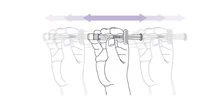
- Immediately before use and before inserting the needle and expelling air from the syringe, hold the prefilled syringe horizontally and shake vigorously to obtain an opalescent suspension. Multiple attempts may be necessary to achieve complete resuspension. Do not use the vaccine if it cannot be resuspended.
-
Visually inspect the suspension for particles and discoloration prior to administration. Discard the vaccine if particles are present after vigorous shaking and/or if discoloration is observed.
-
Attach the Luer Lock needle by turning it clockwise until the needle is securely fastened to the syringe.
-
Administer immediately by intramuscular (IM) injection, preferably into the anterolateral thigh in infants or into the deltoid area of the upper arm in children and adults.
-
Take care to avoid accidental needlestick injury.
There are no data available on intradermal administration.
Vaxneuvance must not be mixed with any other vaccine in the same syringe.
Vaxneuvance may be administered concomitantly with other routine childhood vaccines.
Vaxneuvance may be administered concomitantly with the seasonal quadrivalent influenza vaccine (split virion, inactivated) in adults.
Different injectable vaccines should always be administered at separate injection sites.
Store in a refrigerator (between 2 °C and 8 °C). Do not freeze.
Keep the prefilled syringe in the outer packaging to protect from light.
Vaxneuvance should be administered as soon as possible once removed from the refrigerator.
In case of temporary temperature excursions, stability data indicate that Vaxneuvance is stable at temperatures up to 25 °C for 48 hours.
Disposal of unused medicine and all materials that have come into contact with it should be carried out in accordance with local regulations.