Varivax powder and solvent for injectable suspension in pre-filled syringe
Spain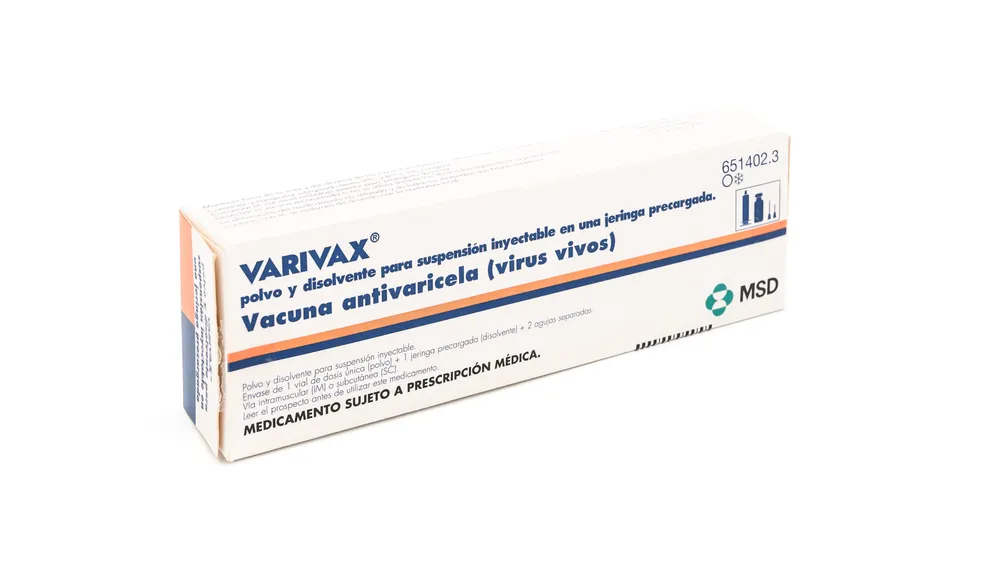
Table of Contents
Package leaflet: Information for the user
Introduction
Package leaflet: information for the user
VARIVAX powder and solvent for injectable suspension in pre-filled syringe
varicella vaccine (live virus)
Read the entire leaflet carefully before you or your child are vaccinated, as it contains important information for you.
- Keep this leaflet, as you may need to read it again.
- If you have any questions, consult your doctor or pharmacist.
- This vaccine has been prescribed for you or your child and must not be given to other people.
- If you experience any adverse reactions, consult your doctor or pharmacist, even if they are adverse reactions not listed in this leaflet. See section 4.
Leaflet contents:
- What VARIVAX is and what it is used for
- What you need to know before you or your child receive VARIVAX
- How VARIVAX is administered
- Possible adverse effects
- How to store VARIVAX
- Contents of the pack and other information
1. What VARIVAX is and what it is used for
VARIVAX is a vaccine that helps protect children and adults against chickenpox. Vaccines are used to protect you or your child against infectious diseases.
VARIVAX can be given to individuals aged 12 months and older.
VARIVAX may be administered to children from 9 months of age under special circumstances, such as to comply with national vaccination schedules or during epidemic outbreaks.
It can also be given to individuals who have no history of chickenpox but who have been exposed to someone with the disease.
Vaccination within 3 days after exposure may help prevent chickenpox or reduce the severity of the disease, resulting in fewer skin lesions and a shorter duration of illness. Additionally, limited data suggest that vaccination up to 5 days after exposure may reduce the severity of the disease.
As with other vaccines, VARIVAX does not fully protect all individuals against naturally acquired chickenpox.
2. What you need to know before you or your child receive VARIVAX
Do not use VARIVAX if:
- you or your child is allergic to any chickenpox vaccine, or to any of the other components of this vaccine (listed in section 6), or to neomycin (which may be present as a trace residue).
- you or your child has any blood disorder or any type of malignant cancer, including leukemia and lymphomas affecting the immune system.
- you or your child is receiving immunosuppressive therapy (including high-dose corticosteroids).
- you or your child has a disease (such as Human Immunodeficiency Virus (HIV) or Acquired Immunodeficiency Syndrome (AIDS)) or is taking any medication that may weaken the immune system. Whether you or your child should receive the vaccine will depend on the level of your immune defenses.
- you or your child has a family history of congenital immunodeficiency or a family history of immunodeficiency.
- you or your child has untreated active tuberculosis.
- you or your child has a fever >38.5°C; however, a lower fever is not in itself a reason to avoid vaccination.
- you are pregnant. In addition, pregnancy should be avoided for 1 month after vaccination.
Warnings and precautions:
In rare circumstances, it is possible to contract chickenpox, including severe chickenpox, from a person who has been vaccinated with VARIVAX. This may occur in individuals who have not previously been vaccinated or who have never had chickenpox, as well as in individuals in any of the following categories:
- individuals with a weakened immune system.
- pregnant women who have never had chickenpox.
- newborns whose mothers have never had chickenpox.
Whenever possible, individuals who have been vaccinated with VARIVAX should try to avoid close contact for up to 6 weeks after vaccination with anyone who falls into any of the above categories. Inform your doctor if someone falls into any of the above categories and is expected to have close contact with the vaccinated person.
Consult your doctor or pharmacist before you or your child are vaccinated with VARIVAX:
- if you or your child has a weakened immune system (e.g., HIV infection). You or your child should be closely monitored, as the response to vaccination may not be sufficient to ensure protection against the disease (see section 2 “Do not use VARIVAX if”).
Use of VARIVAX with other medicines (or other vaccines):
Inform your doctor or pharmacist if you or your child is using or has recently used any other medicines (or other vaccines).
If any vaccine is to be administered at the same time as VARIVAX, your doctor or healthcare professional may advise you whether it can be given. VARIVAX may be administered simultaneously with the following routine childhood vaccines: measles, mumps, and rubella (MMR) vaccine, Haemophilus influenzae type b vaccines, hepatitis B, diphtheria, tetanus, pertussis (whooping cough), and oral polio vaccine.
VARIVAX may be administered at the same time as a conjugated pneumococcal vaccine, using different injection sites.
Vaccination should be delayed by at least 5 months after blood or plasma transfusions or administration of normal human immunoglobulin (a sterile solution of naturally produced antibodies from human donor blood) or varicella-zoster immunoglobulin (VZIG).
After vaccination with VARIVAX, you or your child should not receive any immunoglobulin, including VZIG, during the following month unless your doctor decides it is necessary.
Vaccine recipients should avoid products containing aspirin (salicylates) for the 6 weeks following VARIVAX vaccination, as this may cause a serious condition called Reye's syndrome, which can affect all organs of the body.
Pregnancy and breastfeeding
VARIVAX must not be given to pregnant women.
If you are pregnant or breastfeeding, think you may be pregnant, or are planning to become pregnant, consult your doctor or pharmacist before receiving the vaccine. It is also important that you do not become pregnant during the month following vaccination. During this time, an effective contraceptive method should be used to prevent pregnancy.
Inform your doctor if you are breastfeeding or planning to breastfeed. Your doctor will decide whether you should receive VARIVAX.
Driving and use of machines
There is no information suggesting that VARIVAX may affect your ability to drive or use machines.
VARIVAX contains sodium
This medicine contains less than 1 mmol of sodium (23 mg) per dose; i.e., essentially "sodium-free".
VARIVAX contains potassium
This medicine contains potassium, less than 1 mmol (39 mg) per dose; i.e., essentially "potassium-free".
3. How to administer VARIVAX
VARIVAX must be administered by your doctor or healthcare professional.
VARIVAX should be given by injection as described below:
- Infants from 9 to 12 months of age:
Under special circumstances (to comply with national vaccination schedules or during varicella outbreak situations), VARIVAX may be administered between 9 and 12 months of age. To ensure optimal protection against varicella, two doses of VARIVAX are required, administered with a minimum interval of 3 months between doses.
- Children from 12 months to 12 years of age:
To ensure optimal protection against varicella, two doses of VARIVAX should be administered with a minimum interval of 1 month between doses.
- Children from 12 months to 12 years of age with asymptomatic HIV:
VARIVAX should be administered as two doses by injection, with an interval of 12 weeks between doses. Consult your doctor for further information.
- Adolescents from 13 years of age and adults:
VARIVAX is administered as two doses by injection. The second dose should be given 4 to 8 weeks after the first dose.
The number of doses and timing of administration will be determined by your doctor according to official recommendations.
VARIVAX must not be given to children under 9 months of age.
VARIVAX should be injected into the muscle or under the skin, either in the outer region of the thigh or in the upper arm. For intramuscular injections, the thigh is usually preferred in young children, whereas in older individuals the upper arm is the preferred injection site.
If you have a blood coagulation disorder or low platelet levels in the blood, the injection will be administered under the skin.
Your doctor or healthcare professional must ensure that VARIVAX is not injected into the bloodstream.
If you are given more VARIVAX than you should
Overdose is highly unlikely because the vaccine is supplied in single-dose vials and is administered by a doctor or healthcare professional.
If you think you have missed a dose of VARIVAX
Contact your doctor, who will decide whether a dose is needed and when it should be administered.
4. Possible adverse effects
Like all vaccines and medicines, this vaccine may cause adverse effects, although not everyone experiences them.
Very rarely (reported in fewer than 1 in 10,000 individuals), a severe allergic reaction may occur, which could include facial swelling, low blood pressure, and difficulty breathing, with or without a rash. These reactions usually occur very soon after the injection. If you notice any of these symptoms or other serious symptoms after vaccination, seek immediate medical attention.
Inform your doctor if you notice any of the following rare or very rare adverse effects:
- bruising or unusual tendency to bleed; pinpoint red or purple spots under the skin; severe paleness
- severe skin rash (ulcers and blisters that may affect the eyes, mouth and/or genitals; red spots that often itch, starting on the limbs and sometimes appearing on the face and rest of the body) (Stevens-Johnson syndrome; erythema multiforme)
- muscle weakness, abnormal sensations, tingling in the arms, legs, and upper body (Guillain-Barré syndrome)
- fever, dizziness, vomiting, headache, neck stiffness, and sensitivity to light (meningitis)
- stroke
- seizures (convulsions) with or without fever
The following adverse effects have been observed:
Very common adverse effects (reported in more than 1 in 10 individuals):
- fever
- redness at the injection site, pain/tenderness/discomfort and swelling
Common adverse effects (reported in less than 1 in 10 but more than 1 in 100 individuals):
- upper respiratory tract infection (nose, throat, and airways)
- irritability
- rash, flat red spots on the skin with merging small bumps, chickenpox-like rash
- rash at the injection site, itching at the injection site
Uncommon adverse effects (reported in less than 1 in 100 but more than 1 in 1,000 individuals):
- headache, drowsiness
- eye discharge and itching with crusts on the eyelids (conjunctivitis)
- cough, nasal congestion, chest congestion, runny nose, loss of appetite
- stomach pain with vomiting, cramps, virus-caused diarrhea
- diarrhea, vomiting (gastroenteritis)
- ear infection, sore throat
- crying, inability to sleep, sleep disturbances
- virus-caused chickenpox-like rash (chickenpox), virus-caused illness, skin inflammation, skin redness, hives
- weakness/fatigue, general feeling of discomfort, reaction at the injection site including numbness, bleeding, bruising, hardening of a small area of skin, sensation of warmth, warmth to the touch
Rare adverse effects (reported in less than 1 in 1,000 but more than 1 in 10,000 individuals):
- swollen glands, bruising or unusual tendency to bleed
- restlessness, increased sleep duration, walking disturbances, fever-related seizures, tremors
- eyelid swelling, eye irritation
- ear pain
- nasal congestion sometimes with sharp pain and facial pressure or pain (sinusitis), sneezing, lung congestion, runny nose (rhinitis), wheezing, bronchial swelling (bronchitis), lung infection, severe lung infection with fever, chills, cough, congestion, and shortness of breath (pneumonia)
- flu-like illness
- stomach pain, stomach discomfort and feeling unwell, blood in stools, mouth ulcers
- flushing, blisters, skin disorders (including bruising and hives)
- osteomuscular pain, muscle pain, stiffness
- reactions at the injection site including skin discoloration and hives-like rash
Adverse effects reported during the post-marketing use of VARIVAX include:
- encephalitis (infection or inflammation of the brain) has been observed after vaccination with live attenuated varicella virus vaccines. In some cases, this disease has been fatal, especially in individuals with weakened immune systems (as noted in section 2, VARIVAX must not be used in patients with weakened immune systems). Seek immediate medical attention if you or your child experience loss or reduction in consciousness, seizures, or loss of motor control, accompanied by fever and headache, as these may be signs of brain infection or inflammation. Inform your doctor or pharmacist that you or your child have received a live attenuated varicella virus vaccine
- nervous system disorders (brain and/or spinal cord) such as facial muscle weakness and drooping eyelid on one side of the face (Bell’s palsy), walking disturbances, dizziness, tingling or numbness in hands and feet, inflammation of the membranes covering the brain and spinal cord not caused by bacterial infection (aseptic meningitis), fainting
- herpes zoster, sore throat (pharyngitis), purple or reddish-brown spots visible along the skin (Henoch-Schönlein purpura), secondary bacterial infections of the skin and soft tissues (including cellulitis), chickenpox, aplastic anemia, which may include bruising or bleeding more easily than normal; pinpoint red or purple spots under the skin; severe paleness
Reporting of adverse effects
If you experience any adverse effect, consult your doctor or pharmacist, even if it is a possible adverse effect not listed in this leaflet. You may also report them directly via the Spanish Pharmacovigilance System for Human Medicines: https://www.notificaram.es. By reporting adverse effects, you can help provide more information on the safety of this medicine.
5. Storage of VARIVAX
Keep this vaccine out of the sight and reach of children.
Do not use this vaccine after the expiry date stated on the packaging after EXP.
The expiry date refers to the last day of the month indicated.
Store and transport refrigerated (between 2 °C and 8 °C). Do not freeze. Keep the vial in the outer packaging to protect it from light.
After reconstitution, the vaccine should be used immediately. However, stability of the preparation has been demonstrated for 30 minutes between +20 °C and +25 °C.
Medicines should not be disposed of via wastewater or household waste. Ask your pharmacist how to dispose of medicines and packaging you no longer need. This will help protect the environment.
6. Package contents and other information
Composition of VARIVAX
Active substance:
Live attenuated varicella virus (Oka/Merck strain) (produced on human diploid cells MRC-5).
Each 0.5 ml dose of reconstituted vaccine contains: a minimum of 1,350 PFU (plaque-forming units) of varicella virus (Oka/Merck strain).
Other excipients:
Powder:
Sucrose, hydrolysed gelatine, urea, sodium chloride, monosodium L-glutamate, anhydrous disodium phosphate, potassium dihydrogen phosphate, and potassium chloride.
Trace amounts of residual components: neomycin.
Solvent:
Water for injections.
Appearance of the product and contents of the container
Pharmaceutical form: powder and solvent for injectable suspension.
The vaccine consists of a white to off-white powder in a vial and a clear, colourless liquid solvent in a pre-filled syringe. The product is available in pack sizes of 1 or 10 doses.
The solvent is supplied as a pre-filled syringe containing water for injections. The secondary packaging may also contain 2 separate needles.
Not all pack sizes may be marketed.
Marketing Authorisation Holder and Manufacturer
Marketing Authorisation Holder
Schering-Plough, S.A.
Josefa Valcárcel, 42
28027 Madrid
Tel.: 91 3210600
Manufacturer
Merck Sharp & Dohme BV
Waarderweg 39
2031 BN Haarlem
The Netherlands
Local representative:
Merck Sharp & Dohme de España, S.A.
Josefa Valcárcel, 42
28027 Madrid
Tel.: 91 3210600
This medicinal product is authorised in the Member States of the European Economic Area under the following names:
VARIVAX
Belgium; Bulgaria; Czech Republic; Denmark; Germany; Estonia; Greece; Spain; France; Croatia; Ireland; Iceland; Italy; Cyprus; Latvia; Lithuania; Luxembourg; Hungary; Malta; Norway; Austria; Poland; Portugal; Romania; Slovenia; Slovakia; Finland; Sweden
PROVARIVAX
The Netherlands
Date of the most recent revision of this leaflet: 10/2025.
Detailed and up-to-date information on this medicinal product is available on the website of the Spanish Agency of Medicines and Health Products (AEMPS): http://www.aemps.gob.es/
This information is intended for healthcare professionals only:
Instructions
Prior to reconstitution, the vial contains a white to off-white powder and the pre-filled syringe contains a clear, colourless liquid solvent. The reconstituted vaccine is a clear liquid, colourless to pale yellow.
Avoid contact with disinfectants.
To reconstitute the vaccine, use only the solvent provided in the pre-filled syringe.
It is essential to use a new sterile syringe and a new sterile needle for each individual to prevent transmission of infectious agents from one person to another.
A separate needle should be used for reconstitution and for injection.
Instructions for vaccine preparation
To attach the needle, firmly place it on the end of the syringe and secure by twisting.
Inject the entire contents of the pre-filled syringe into the vial containing the powder. Gently shake to ensure complete mixing.
The reconstituted vaccine should be inspected visually for foreign particles and/or physical changes. The vaccine must not be used if any foreign particles are observed or if the appearance is not a clear liquid, colourless to pale yellow, after reconstitution.
It is recommended that the vaccine be administered immediately after reconstitution to minimise loss of potency. Discard the reconstituted vaccine if not used within 30 minutes of preparation.
Do not freeze the reconstituted vaccine.
Withdraw the entire contents of the vial into a syringe, change the needle, and administer the vaccine subcutaneously or intramuscularly.
Disposal of unused medicine and of all materials that have come into contact with it must be carried out in accordance with local regulations.
See also section 3 How to administer VARIVAX