Varidasa tablets
Spain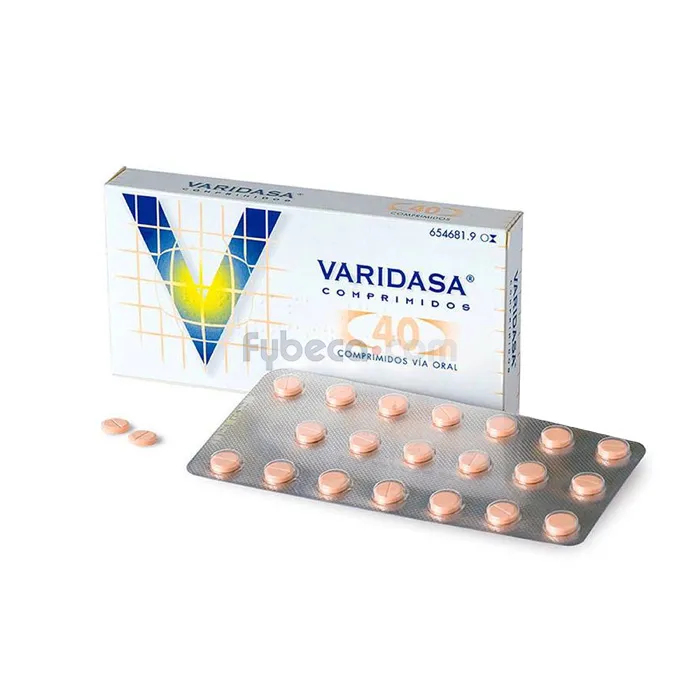
Table of Contents
Package leaflet: Information for the user
Introduction
PACKAGE LEAFLET: INFORMATION FOR THE USER
VARIDASA Tablets
Streptokinase and Streptodornase
Read the entire leaflet carefully before you start taking this medicine.
- Keep this leaflet as you may need to read it again.
- If you have any questions, ask your doctor or pharmacist.
- This medicine has been prescribed for you and should not be given to others, even if they have the same symptoms as you, since it could harm them.
- If you consider any of the side effects you experience to be severe, or if you notice any side effects not listed in this leaflet, inform your doctor or pharmacist.
Leaflet contents :
- What VARIDASA Tablets are and what they are used for
- Before taking VARIDASA Tablets
- How to take VARIDASA Tablets
- Possible side effects
- How to store VARIDASA Tablets
- Further information
1. What VARIDASA Tablets are and what they are used for
Varidasa belongs to a group of medicines called antithrombotics.
Varidasa is indicated in the treatment of acute or chronic inflammation, infectious (in combination with antibiotics) or traumatic (with edema and/or hematoma).
2. BEFORE TAKING VARIDASA Tablets
Do not take Varidasa
- If you are allergic (hypersensitive) to streptokinase, streptodornase, or any of the other components of this medicine.
- If you have blood clotting disorders (known hemorrhagic diathesis).
- If you have severe uncontrolled hypertension.
- If you have low levels of fibrinogen.
- If you have low platelet counts in the blood (thrombocytopenia).
Take special care with Varidasa
If an allergic reaction occurs, including anaphylactic shock, dyspnea (difficulty breathing), or urticaria, treatment with Varidasa must be discontinued.
Special caution is required when administering Varidasa to patients with any of the following conditions:
- Recent severe gastrointestinal bleeding.
- Recent major surgery (6th to 10th postoperative day, depending on the severity of the surgery).
- Recent trauma and cardiopulmonary resuscitation.
- Recent organ biopsy, punctures in non-compressible vessels, intramuscular injections, or intubation.
- Recent childbirth or abortion.
- Patients receiving concomitant treatment with oral anticoagulants (INR>1.3).
- Severe hepatic or renal impairment.
- Organ lesions prone to bleeding (e.g., active peptic ulcer).
- Acute pericarditis and/or subacute bacterial endocarditis.
- Active, existing, or recent internal bleeding.
- Recent stroke; intracranial or intraspinal surgery.
- Intracranial neoplasm.
- Recent head trauma.
- Known neoplasm with risk of bleeding.
- Acute pancreatitis.
- Grade III/IV hypertensive retinopathy.
Varidasa should be used with caution in patients with a history of impaired liver function.
Use of other medicines
Inform your doctor or pharmacist if you are taking, or have recently taken, any other medicines, including those obtained without a prescription.
Prior or concomitant treatment with anticoagulants or substances affecting platelet formation or function (e.g. platelet aggregation inhibitors, dextrans, antifibrinolytics such as aminocaproic acid, aprotinin, and tranexamic acid, non-steroidal anti-inflammatory analgesics, especially acetylsalicylic acid, indomethacin, phenylbutazone, and other platelet aggregation inhibitors such as sulfinpyrazone) may increase the risk of bleeding.
Pregnancy and breastfeeding
Consult your doctor or pharmacist before using any medicine.
The safety and efficacy of Varidasa during pregnancy and breastfeeding have not been demonstrated; therefore, its use is not recommended in these situations.
Use in children
The use of Varidasa is not recommended in patients under 18 years of age, as safety and efficacy have not been established in this population.
Driving and using machines
No effects on the ability to drive or operate machinery have been reported.
Important information about some components of Varidasa:
Varidasa contains the yellow-orange dye S (E-110), which may cause allergic-type reactions.
3. HOW TO TAKE VARIDASA Tablets
Follow exactly the instructions for using Varidasa given by your doctor. If you have any doubts, consult your doctor or pharmacist.
Your doctor will determine the duration of your treatment with Varidasa. Do not stop the treatment earlier, as it may not produce the desired effect.
Varidasa tablets are for oral use.
The recommended average dose is one tablet, four times a day, for 4–6 days.
In acute conditions, higher doses may be used as an initial therapeutic measure, consisting of two tablets three times a day; if necessary, the dose may be increased up to two tablets four times a day.
If you take more Varidasa than you should
In case of overdose or accidental ingestion, contact your doctor or pharmacist immediately, or call the Toxicology Information Service at telephone number 91 562 04 20 (indicating the medication and the amount ingested).
If you forget to take Varidasa
If you miss a dose of the medication, take the next dose at the scheduled time. Do not take a double dose to make up for missed doses.
4. Possible adverse effects
Like all medicines, Varidasa may have adverse effects, although not everyone experiences them.
The following adverse effects have been reported, according to the frequency categories indicated below:
Very common: at least 1 in 10 patients
Common: at least 1 in 100 patients
Uncommon: at least 1 in 1,000 patients
Rare: at least 1 in 10,000 patients
Very rare: less than 1 in 10,000 patients
Immune system disorders
Common: Development of anti-streptokinase antibodies.
Uncommon: Hypersensitivity and allergic reactions including anaphylactic shock, dyspnea (difficulty breathing), and urticaria.
Gastrointestinal disorders
Uncommon: Nausea, diarrhea, epigastric pain, vomiting.
Skin and subcutaneous tissue disorders
Very rare: Erythematous rash (inflammatory lesion at the site of administration), dermatitis, pruritus.
Hepatobiliary disorders
Uncommon: Transient increase in liver enzymes (transaminases) and bilirubin.
General disorders
Uncommon: Headache, back pain (dorsalgia), muscle pain (myalgia), chills and/or increase in body temperature, feeling of weakness (asthenia), general malaise.
If you consider any of the adverse effects you experience to be severe, or if you notice any adverse effects not listed in this leaflet, inform your doctor or pharmacist.
5. Storage of VARIDASA Tablets
Keep Varidasa out of the reach and sight of children.
Store in the original packaging to protect from light and moisture.
Do not store above 30°C.
Do not use Varidasa after the expiry date stated on the carton. The expiry date refers to the last day of the month indicated.
Medicines must not be disposed of via wastewater drains or household waste. Ask your pharmacist how to dispose of medicines and packaging you no longer need. This will help protect the environment.
6. ADDITIONAL INFORMATION
Composition of Varidasa Tablets
- The active substances are streptokinase and streptodornase. Each tablet contains 10,000 International Units of streptokinase and 2,500 Units of streptodornase.
- The other components are dibasic calcium phosphate dihydrate, corn starch, acacia, magnesium stearate and orange-yellow S dye (E-110).
Appearance of the medicinal product and contents of the pack
Varidasa are light orange, scored tablets. They are available in packs of 20 or 40 tablets.
Marketing Authorization Holder
INDUSTRIAL FARMACEUTICA CANTABRIA, S.A.
Barrio Solía 30
La Concha de Villaescusa
39690 Cantabria (Spain)
Manufacturer
Toll Manufacturing Services S.L.
Aragoneses, 2
28108 – Alcobendas (Madrid)
This leaflet was approved in: May 2007