Vargatef 100 mg soft capsules
Spain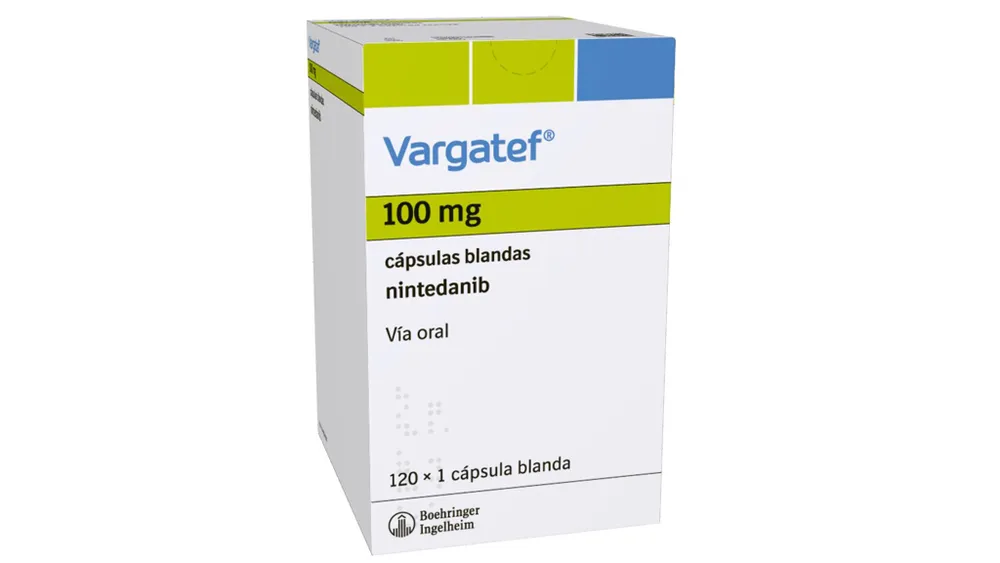
Table of Contents
Patient Information Leaflet
Introduction
Package Leaflet: Information for the Patient
Vargatef 100 mg soft capsules
nintedanib
Read the entire leaflet carefully before you start taking this medicine, as it contains important information for you.
- Keep this leaflet, as you may need to read it again.
- If you have any questions, consult your doctor or pharmacist.
- This medicine has been prescribed for you only, and you should not give it to other people, even if they have the same symptoms as you, because it may harm them.
- If you experience any adverse effects, consult your doctor or pharmacist, even if they are adverse effects not listed in this leaflet. See section 4.
Leaflet Contents
- What Vargatef is and what it is used for
- What you need to know before taking Vargatef
- How to take Vargatef
- Possible side effects
- How to store Vargatef
- Contents of the pack and other information
1. What Vargatef is and what it is used for
Vargatef capsules contain the active substance nintedanib. Nintedanib blocks the activity of a group of proteins involved in the development of new blood vessels that cancer cells need to supply themselves with nutrients and oxygen. By blocking the activity of these proteins, nintedanib may help stop the growth and spread of cancer.
This medicine is used in combination with another anticancer medicine (docetaxel) to treat a type of lung cancer called non-small cell lung cancer (NSCLC). It is intended for adult patients with a specific type of NSCLC (“adenocarcinoma”) who have already received prior treatment with another medicine for this cancer, but in whom the tumour has started to grow again.
2. What you need to know before taking Vargatef
Do not take Vargatef
- if you are allergic to nintedanib, peanuts, soya, or any of the other ingredients of this medicine (listed in section 6).
Warnings and precautions
Talk to your doctor or pharmacist before starting this medicine
-
if you have or have had liver problems or if you have or have had bleeding problems, particularly recent bleeding in the lung
-
if you have or have had kidney problems or if you have been found to have an increased amount of protein in your urine
-
if you are taking medicines to thin the blood (such as warfarin, phenprocoumon, heparin, or acetylsalicylic acid) to prevent blood clots. Treatment with Vargatef may increase the risk of bleeding
-
if you have recently undergone surgery or have a planned surgical procedure. Nintedanib may affect how wounds heal. Therefore, treatment with Vargatef is generally interrupted if you undergo surgery. Your doctor will decide when to restart treatment with this medicine
-
if you have cancer that has spread to the brain
-
if you have high blood pressure
-
if you have or have had an aneurysm (a bulge and weakening of a blood vessel wall) or a tear in the wall of a blood vessel
Based on this information, your doctor may carry out some blood tests, for example, to check your liver function and to determine how quickly your blood can clot. Your doctor will discuss the results of these tests with you to decide whether you can receive Vargatef.
Tell your doctor immediately while you are taking this medicine
-
if you have diarrhoea. It is important to treat diarrhoea as soon as the first symptoms appear (see section 4)
-
if you have vomiting or feel sick (nausea)
-
if you experience unexplained symptoms such as yellowing of the skin or the whites of the eyes (jaundice), dark or brown-coloured urine (like tea), pain in the upper right side of the stomach (abdomen), bleeding or bruising more easily than normal, or feel tired. These could be signs of serious liver problems
-
if you develop fever, chills, rapid breathing, or a fast heartbeat, which could be signs of infection or blood infection (sepsis) (see section 4)
-
if you experience sudden severe stomach pain, fever, chills, dizziness, vomiting, or abdominal stiffness or swelling, as these could be symptoms of a hole in the wall of the intestines (“gastrointestinal perforation”)
-
if you experience a combination of some or all of the following symptoms: sudden severe abdominal pain or cramps, red blood in the stools, diarrhoea or constipation, nausea and vomiting, as these could be symptoms of intestinal inflammation due to reduced blood flow (“ischaemic colitis”)
-
if you experience pain, swelling, redness, or warmth in a limb or if you have chest pain and difficulty breathing, as these could be symptoms of a blood clot in one of your veins
-
if you have a major bleeding episode
-
if you experience pressure or pain in the chest, usually on the left side of the body, pain in the neck, jaw, shoulder, or arm, a rapid heartbeat, difficulty breathing, nausea or vomiting, as these could be symptoms of a heart attack
-
if you experience symptoms such as headache, changes in vision, confusion, seizures, or other neurological disturbances such as weakness in an arm or leg, with or without high blood pressure, which could be symptoms of a brain disorder called reversible posterior encephalopathy syndrome (RPES)
-
if any of the side effects you may experience (see section 4) worsen
Children and adolescents
This medicine has not been studied in children or adolescents for the treatment of non-small cell lung cancer (NSCLC), and therefore children and adolescents under 18 years of age should not take it.
Other medicines and Vargatef
Tell your doctor or pharmacist if you are taking, have recently taken, or might need to take any other medicines, including herbal medicines and medicines obtained without a prescription.
This medicine may interact with other medicines. The following medicines may increase blood levels of nintedanib, the active substance in Vargatef, and therefore increase the risk of side effects (see section 4):
- Ketoconazole (used to treat fungal infections)
- Erythromycin (used to treat bacterial infections)
The following medicines may decrease blood levels of nintedanib and thus reduce the effectiveness of Vargatef:
- Rifampicin (an antibiotic used to treat tuberculosis)
- Carbamazepine, phenytoin (used to treat seizures)
- St. John’s wort (a herbal medicine used to treat depression)
Pregnancy and breastfeeding
If you are pregnant or breastfeeding, think you may be pregnant, or are planning to become pregnant, consult your doctor or pharmacist before using this medicine.
Pregnancy
Do not take this medicine during pregnancy, as it may harm the unborn baby and cause birth defects.
Contraception
- Women who can become pregnant must use a highly effective method of contraception to prevent pregnancy when starting Vargatef, while taking Vargatef, and for at least three months after stopping treatment.
- Consult your doctor to determine which contraceptive methods are most appropriate.
- Vomiting and/or diarrhoea or other gastrointestinal disorders may affect the absorption of oral hormonal contraceptives, such as birth control pills, and may reduce their effectiveness. Therefore, if you experience any of these conditions, consult your doctor to consider an alternative, more appropriate method of contraception.
- Inform your doctor or pharmacist immediately if you become pregnant or think you may be pregnant during treatment with Vargatef.
Breastfeeding
It is unknown whether this medicine passes into breast milk and may harm the breastfed infant. Therefore, women must not breastfeed during treatment with Vargatef.
Fertility
The effect of this medicine on human fertility has not been studied.
Driving and using machines
Vargatef has minor influence on the ability to drive and use machines. You should not drive or operate machinery if you feel dizzy.
Vargatef contains soya
The capsules contain soya lecithin. If you are allergic to peanuts or soya, do not take this medicine.
3. How to take Vargatef
Follow exactly the instructions for use of this medicine given by your doctor or pharmacist. If you are unsure, consult your doctor or pharmacist again.
Do not take Vargatef on the same day you receive chemotherapy treatment with docetaxel.
Swallow the capsules whole with water, without chewing them. It is recommended to take the capsules with food, that is, during meals or immediately before or after meals.
Do not open or break the capsule (see section 5).
The recommended dose is four capsules per day (which gives a total of 400 mg of nintedanib per day). Do not take a higher dose than this.
This daily dose should be divided into two doses of two capsules taken approximately 12 hours apart, for example, two capsules in the morning and two capsules at night. These two doses should be taken at approximately the same time each day. By taking the medicine this way, you will ensure a constant level of nintedanib in the body.
Dose reduction
If you cannot tolerate the recommended dose of 400 mg per day due to the occurrence of adverse effects (see section 4), your doctor may reduce your daily dose of Vargatef. Do not reduce the dose or stop treatment on your own without first consulting your doctor.
Your doctor may reduce the recommended dose to 300 mg per day (two capsules of 150 mg). In this case, your doctor will prescribe Vargatef 150 mg soft capsules for your treatment.
If necessary, your doctor may further reduce your daily dose to 200 mg per day (two capsules of 100 mg). If this occurs, your doctor will prescribe the appropriate capsule strength.
In both cases, you should take one capsule of the appropriate strength twice daily with food, approximately 12 hours apart (for example, in the morning and at night), and at approximately the same time each day.
If your doctor has discontinued your chemotherapy with docetaxel, you should continue taking Vargatef twice daily.
If you take more Vargatef than you should
Contact your doctor or pharmacist immediately.
If you forget to take Vargatef
Do not take a double dose to make up for missed doses. Take your next dose of Vargatef at the next scheduled time and at the dose recommended by your doctor or pharmacist.
If you stop taking Vargatef
Do not stop taking Vargatef without first consulting your doctor. It is important to take this medicine every day as long as your doctor prescribes it. If you do not take this medicine as prescribed by your doctor, this cancer treatment may not work properly.
If you have any further questions about the use of this medicine, ask your doctor or pharmacist.
4. Possible adverse effects
Like all medicines, this medicine can cause adverse effects, although not everyone experiences them.
You should pay special attention if you experience the following adverse effects during treatment with Vargatef:
- Diarrhea*(very common, may affect more than 1 in 10 people)*
Diarrhea may lead to loss of important body fluids and salts (electrolytes, such as sodium or potassium). At the first signs of diarrhea, drink plenty of fluids and contact your doctor immediately. Start appropriate antidiarrheal treatment as soon as possible, for example, by taking loperamide, after consulting with your doctor.
- Febrile neutropenia**andsepsis**(common, may affect up to 1 in 10 people)
Treatment with Vargatef may cause a reduction in the number of a type of white blood cells (neutropenia), which are important for the body to respond properly to bacterial or fungal infections. As a consequence of neutropenia, fever (febrile neutropenia) and blood infection (sepsis) may occur. Inform your doctor immediately if you have fever, chills, rapid breathing, or a fast heart rate.
During treatment with Vargatef, your doctor will perform periodic blood cell tests and check for signs of infection, such as inflammation, fever, or fatigue.
The following adverse effects have been observed during treatment with this medicine:
Very common adverse effects (may affect more than 1 in 10 people)
- Diarrhea; see above
- Sensation of pain, numbness, and/or tingling in the fingers or toes (peripheral neuropathy)
- Feeling of nausea (nausea)
- Vomiting
- Abdominal pain
- Bleeding
- Reduction in the number of white blood cells (neutropenia)
- Inflammation of the mucous membranes lining the digestive tract, including mouth sores and ulcers (mucositis, including stomatitis)
- Rash
- Decreased appetite
- Electrolyte imbalance
- Increased levels of liver enzymes (alanine aminotransferase, aspartate aminotransferase, alkaline phosphatase in blood), detected in blood tests
- Hair loss (alopecia)
Common adverse effects (may affect up to 1 in 10 people)
- Blood poisoning (sepsis); see above
- Reduction in the number of white blood cells accompanied by fever (febrile neutropenia)
- Blood clots in the veins (venous thromboembolism), especially in the legs (symptoms include pain, redness, swelling, and warmth in a limb), which may travel through blood vessels to the lungs and cause chest pain and difficulty breathing (if you experience any of these symptoms, seek immediate medical attention)
- High blood pressure (hypertension)
- Fluid loss (dehydration)
- Abscesses
- Low platelet count (thrombocytopenia)
- Jaundice (hyperbilirubinemia)
- Increased levels of liver enzymes (gamma-glutamyltransferase) in the blood, detected in blood tests
- Weight loss
- Itching
- Headache
- Increased amount of protein in the urine (proteinuria)
Uncommon adverse effects (may affect up to 1 in 100 people)
- Development of holes in the intestinal wall (gastrointestinal perforation)
- Severe liver problems
- Inflammation of the pancreas (pancreatitis)
- Myocardial infarction
- Renal failure
Frequency not known (cannot be estimated from available data)
- Inflammation of the large intestine
- Expansion and weakening of a blood vessel wall or tearing of a blood vessel wall (aneurysms and arterial dissections)
- Brain disorder with symptoms such as headache, vision changes, confusion, seizures, or other neurological disturbances such as weakness in an arm or leg, with or without high blood pressure (posterior reversible encephalopathy syndrome)
Reporting of adverse effects
If you experience any adverse effects, talk to your doctor or pharmacist, even if they are possible adverse effects not listed in this leaflet. You can also report them directly through the national reporting system listed in Appendix V. By reporting adverse effects, you can help provide more information on the safety of this medicine.
5. Storage of Vargatef
Keep this medicine out of the sight and reach of children.
Do not use this medicine after the expiry date stated on the carton, packaging, and blisters. The expiry date refers to the last day of the month indicated.
Do not store above 25 °C.
Store in the original packaging to protect from moisture.
Do not use this medicine if you notice that the blister pack containing the capsules is open or if a capsule is broken.
If you come into contact with the capsule contents, wash your hands immediately with plenty of water (see section 3).
Medicines must not be disposed of via wastewater or household waste. Ask your pharmacist how to dispose of medicines and packaging that you no longer need. This will help protect the environment.
6. Contents of the pack and other information
Composition of Vargatef
The active substance is nintedanib. Each soft capsule contains 100 mg of nintedanib (as esilate).
The excipients are:
Capsule contents: Medium-chain triglycerides, hard fat, soya lecithin (E322)
Capsule shell: Gelatin, glycerol (85%), titanium dioxide (E171), iron oxide red (E172), iron oxide yellow (E172)
Nature of the product and contents of the container
Vargatef 100 mg soft capsules (capsules) are oblong, opaque, peach-coloured capsules (approximately 16 x 6 mm), marked on one side with the Boehringer Ingelheim company logo and "100".
There are three pack sizes available for Vargatef 100 mg soft capsules:
- A box containing 60 capsules (6 aluminium blisters with 10 capsules each).
- A box containing 120 capsules (12 aluminium blisters with 10 capsules each).
- A multiple pack containing 120 capsules (2 boxes of 60 capsules each joined by a wrapper).
Only certain pack sizes of Vargatef 100 mg soft capsules may be marketed.
Marketing Authorization Holder
Boehringer Ingelheim International GmbH
Binger Strasse 173
55216 Ingelheim am Rhein
Germany
Manufacturer
Boehringer Ingelheim Pharma GmbH & Co. KG
Binger Strasse 173
55216 Ingelheim am Rhein
Germany
Boehringer Ingelheim France
100-104 Avenue de France
75013 Paris
France
For further information about this medicinal product, please contact the local representative of the Marketing Authorization Holder:
Belgium/Belgium/Belgium Boehringer Ingelheim SComm Tel/Tel: +32 2 773 33 11 | Lithuania Boehringer Ingelheim RCV GmbH & Co KG Lithuanian branch Tel: +370 5 2595942 |
| Luxembourg/Luxembourg Boehringer Ingelheim SComm Tel/Tel: +32 2 773 33 11 |
Czech Republic Boehringer Ingelheim spol. s r.o. Tel: +420 234 655 111 | Hungary Boehringer Ingelheim RCV GmbH & Co KG Hungarian Branch Office Tel: +36 1 299 89 00 |
Denmark Boehringer Ingelheim Danmark A/S Tlf: +45 39 15 88 88 | Malta Boehringer Ingelheim Ireland Ltd. Tel: +353 1 295 9620 |
Germany Boehringer Ingelheim Pharma GmbH & Co. KG Tel: +49 (0) 800 77 90 900 | Netherlands Boehringer Ingelheim B.V. Tel: +31 (0) 800 22 55 889 |
Estonia Boehringer Ingelheim RCV GmbH & Co KG Estonian branch Tel: +372 612 8000 | Norway Boehringer Ingelheim Danmark Norwegian branch Tlf: +47 66 76 13 00 |
Greece Boehringer Ingelheim Hellas Monoprosopiki E.P.E. Tel: +30 2 10 89 06 300 | Austria Boehringer Ingelheim RCV GmbH & Co KG Tel: +43 1 80 105-7870 |
Spain Boehringer Ingelheim España, S.A. Tel: +34 93 404 51 00 | Poland Boehringer Ingelheim Sp. z o.o. Tel: +48 22 699 0 699 |
France Boehringer Ingelheim France S.A.S. Tél: +33 3 26 50 45 33 | Portugal Boehringer Ingelheim Portugal, Lda. Tel: +351 21 313 53 00 |
Croatia Boehringer Ingelheim Zagreb d.o.o. Tel: +385 1 2444 600 | Romania Boehringer Ingelheim RCV GmbH & Co KG Vienna – Bucharest Branch Tel: +40 21 302 2800 |
Ireland Boehringer Ingelheim Ireland Ltd. Tel: +353 1 295 9620 | Slovenia Boehringer Ingelheim RCV GmbH & Co KG Ljubljana Branch Tel: +386 1 586 40 00 |
Iceland Vistor ehf. Tel: +354 535 7000 | Slovakia Boehringer Ingelheim RCV GmbH & Co KG Organizational unit Tel: +421 2 5810 1211 |
Italy Boehringer Ingelheim Italia S.p.A. Tel: +39 02 5355 1 | Finland Boehringer Ingelheim Finland Ky Tel: +358 10 3102 800 |
Cyprus Boehringer Ingelheim Hellas Monoprosopiki E.P.E. Tel: +30 2 10 89 06 300 | Sweden Boehringer Ingelheim AB Tel: +46 8 721 21 00 |
Latvia Boehringer Ingelheim RCV GmbH & Co KG Latvian Branch Tel: +371 67 240 011 | United Kingdom (Northern Ireland) Boehringer Ingelheim Ireland Ltd. Tel: +353 1 295 9620 |
Date of the most recent review of this leaflet:
Detailed information on this medicine is available on the website of the European Medicines Agency: http://www.ema.europa.eu.