Valaciclovir Almus 1000 mg film-coated tablets EFG
Spain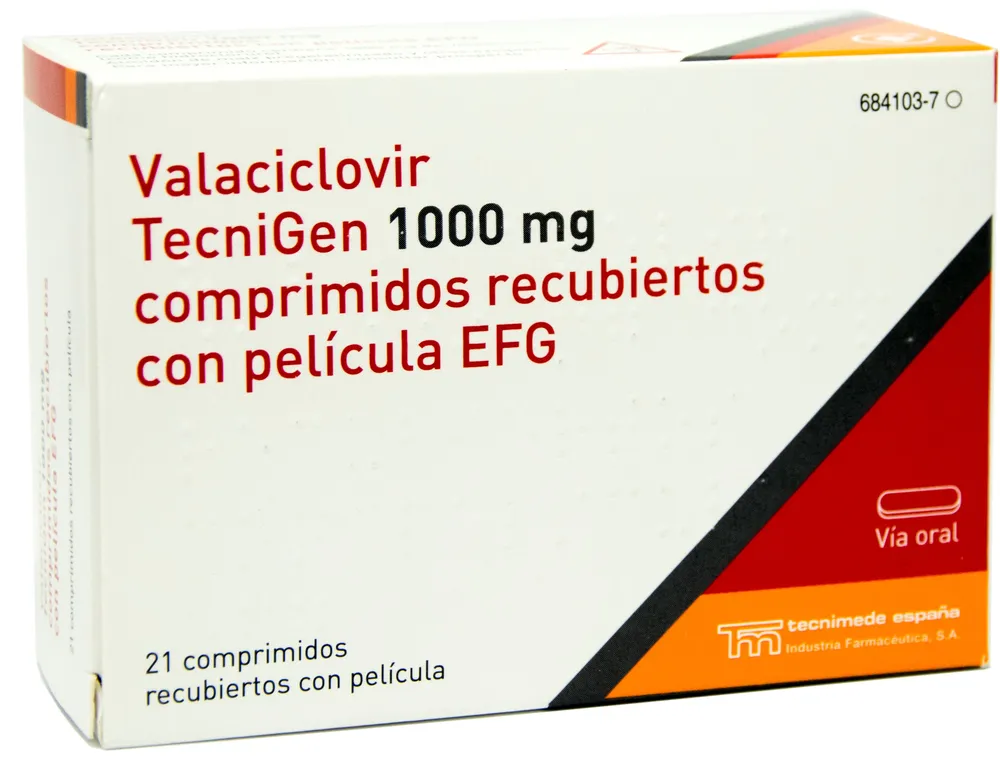
Table of Contents
- Package leaflet: Information for the user
- Introduction
- 1. What Valaciclovir Almus is and what it is used for
- 2. What you need to know before starting to take Valaciclovir Almus
- 3. How to take Valaciclovir
- 4. Possible adverse effects
- 5. Storage of Valaciclovir Almus
- 6. Contents of the pack and other information
Package leaflet: Information for the user
Introduction
PACKAGE LEAFLET: INFORMATION FOR THE USER
Valaciclovir Almus 1000 mg film-coated tablets EFG
Read all of this leaflet carefully before you start taking this medicine because it contains important information for you:
-
Keep this leaflet. You may need to read it again.
-
If you have any questions, ask your doctor or pharmacist.
-
This medicine has been prescribed for you only. Do not pass it on to other people, even if they have the same symptoms as you, because it may harm them.
-
If you get any side effects, talk to your doctor or pharmacist, even if they are side effects not listed in this leaflet. See section 4.
Contents of the leaflet:
- What Valaciclovir Almus is and what it is used for
- What you need to know before taking Valaciclovir Almus
- How to take Valaciclovir Almus
- Possible side effects
- How to store Valaciclovir Almus
- Contents of the pack and other information
- l
1. What Valaciclovir Almus is and what it is used for
Valaciclovir Almus belongs to a group of medicines called antivirals. It works by eliminating or stopping the growth of viruses known as herpes simplex virus (HSV), varicella zoster virus (VZV), and cytomegalovirus (CMV).
Valaciclovir can be used for:
- Treating shingles (in adults).
- Treating HSV skin infections and genital herpes (in adults and adolescents over 12 years of age). It is also used to prevent recurrences of these infections.
- Treating cold sores (in adults and adolescents over 12 years of age).
- Preventing CMV infection after organ transplantation (in adults and adolescents over 12 years of age).
- Eye infections.
2. What you need to know before starting to take Valaciclovir Almus
Do not take Valaciclovir
- If you are allergic (hypersensitive) to valaciclovir, aciclovir, or to any of the other ingredients of the medicine (see section 6).
- Do not take Valaciclovir Almus if the above applies to you. If you are unsure, speak with your doctor or pharmacist before taking Valaciclovir Almus. If you have ever developed a prolonged skin rash associated with fever, swollen lymph nodes, elevated liver enzymes, and/or eosinophilia (drug reaction with eosinophilia and systemic symptoms syndrome).
Warnings and precautions
Talk to your doctor or pharmacist before starting to take Valaciclovir Almus if:
- You have kidney problems
- You have liver problems
- You are over 65 years of age
- Your immune system is weakened
If you are unsure whether any of the above apply to you, consult your doctor or pharmacist before taking Valaciclovir Almus.
If you have kidney disease or are elderly, your doctor may use a lower dose. Also, you should drink sufficient amounts of fluid during treatment to maintain adequate hydration.
Drug Reaction with Eosinophilia and Systemic Symptoms (DRESS) has been reported with the use of valaciclovir. DRESS initially presents with flu-like symptoms, facial rash that later spreads to other areas, high fever, elevated liver enzymes in blood tests, increased levels of a type of white blood cells (eosinophilia), and swollen lymph nodes.
If you develop a skin rash associated with fever and swollen lymph nodes, stop taking valaciclovir and contact your doctor or seek medical attention immediately.
Preventing the spread of genital herpes to others
If you are taking Valaciclovir Almus to treat or prevent genital herpes, or have had genital herpes in the past, you should practice safe sex, including using condoms. This is important to avoid spreading the infection to others. You should not have sexual intercourse if you have genital ulcers or blisters.
Taking valaciclovir with other medicines
Inform your doctor or pharmacist if you are taking, have recently taken, or might need to take any other medicines, including those obtained without a prescription or herbal medicines.
Inform your doctor or pharmacist if you are taking any medicine that affects the kidneys.
These include: aminoglycosides, platinum-containing compounds, iodinated contrast agents, methotrexate, pentamidine, foscarnet, ciclosporin, tacrolimus, cimetidine, and probenecid. Always inform your doctor or pharmacist about any other medicines you are taking if you are being treated with Valaciclovir Almus for herpes zoster or following an organ transplant.
Taking valaciclovir with food and drinks
Valaciclovir Almus may be taken with or without food.
Pregnancy and breastfeeding
Valaciclovir Almus is generally not recommended for use during pregnancy. If you are pregnant, think you may be pregnant, or are planning to become pregnant, do not take Valaciclovir Almus without consulting your doctor. Your doctor will weigh the benefits to you against the risks to the baby if you take Valaciclovir Almus during pregnancy or while breastfeeding.
Consult your doctor or pharmacist before taking any medicine.
Driving and using machines
Valaciclovir Almus may cause adverse effects that affect your ability to drive. Do not drive or operate machinery unless you are certain that it does not affect you.
3. How to take Valaciclovir
Follow exactly the instructions given by your doctor for taking this medicine. If in doubt, consult your doctor or pharmacist again.
The dose you should take depends on why your doctor has prescribed Valaciclovir Almus for you. Your doctor will tell you the appropriate dosage.
Treatment of herpes zoster
- The usual dose is 1,000 mg (one 1,000 mg tablet or two 500 mg tablets) three times a day.
- You should take Valaciclovir Almus for seven days.
Treatment of cold sores
- The usual dose is 2,000 mg (two 1,000 mg tablets or four 500 mg tablets) twice a day.
- The second dose should be taken 12 hours after the first dose (not earlier than 6 hours).
You should take Valaciclovir Almus for only one day (two doses).
Treatment of skin VHS infections and genital herpes
- The usual dose is 500 mg (one 500 mg tablet or two 250 mg tablets) twice a day.
- For the first infection, you should take Valaciclovir Almus for 5 days or up to 10 days, if your doctor instructs you to do so. For recurrent infections, the treatment duration is usually 3–5 days.
Prevention of recurrent VHS infections once you have had them
- The usual dose is one 500 mg tablet once daily.
- Some people with frequent recurrences may benefit from taking one 250 mg tablet twice daily.
- You should continue taking Valaciclovir Almus until your doctor tells you to stop treatment.
To prevent CMV (cytomegalovirus) infection
- The usual dose is 2,000 mg (two 1,000 mg tablets or four 500 mg tablets) four times a day.
- Doses should be spaced every 6 hours.
- You will usually start taking Valaciclovir Almus as soon as possible after surgery.
- You should take Valaciclovir Almus for approximately 90 days after surgery, or until your doctor tells you to stop treatment.
Your doctor may adjust the dose of Valaciclovir Almus if:
- you are over 65 years of age
- you have a weakened immune system
- you have kidney problems
Talk to your doctor before taking Valaciclovir Almus if any of the above apply to you.
Method of administration and/or route of administration
- Take this medicine by mouth.
- Swallow the tablets whole with a glass of water.
- Take Valaciclovir Almus at the same time each day.
- Take Valaciclovir Almus exactly as instructed by your doctor or pharmacist.
Patients aged 65 years or older or with kidney problems
It is very important that you drink water regularly throughout the day while taking Valaciclovir Almus. This will help reduce adverse effects that may affect the kidneys or the nervous system. Your doctor will monitor you for signs of such effects. Nervous system side effects may include confusion, agitation, or feeling abnormally sleepy or drowsy.
If you take more Valaciclovir than you should
Valaciclovir Almus is generally not harmful unless taken in excess over several days. If you take too many tablets, you may experience nausea, vomiting, confusion, agitation, or feel abnormally drowsy. Speak to your doctor or pharmacist if you take too much Valaciclovir Almus. Take the packaging with you.
In case of overdose or accidental ingestion, contact your doctor, pharmacist, or call the Toxicology Information Service at telephone number 91 562 04 20, indicating the medicine and the amount ingested.
If you forget to take Valaciclovir
- If you forget to take Valaciclovir Almus, take it as soon as you remember. However, if it is almost time for your next dose, skip the missed dose.
- Do not take a double dose to make up for a forgotten dose.
4. Possible adverse effects
Like all medicines, this medicine may cause adverse effects, although not everyone experiences them.
Symptoms to be aware of
- Severe adverse reactions (anaphylaxis). These are rare in people taking Valaciclovir Almus.
Rapid onset of symptoms, including:
- Skin rash with redness, itching
- Swelling of the lips, face, neck, and throat, causing difficulty breathing (angioedema)
- Drop in blood pressure leading to collapse
- If you experience an allergic reaction, stop taking Valaciclovir Almus and see your doctor immediately.
Very common (may affect more than 1 in 10 people):
- Headache
Common (may affect between 1 and 10 in 100 people):
- Nausea
- Dizziness
- Vomiting
- Diarrhea
- Skin reactions after sun exposure (photosensitivity)
- Rash
Uncommon (may affect between 1 and 10 in 1,000 people):
- Difficulty breathing (dyspnea)
- Stomach pain
- Rash, sometimes with itching, hives (urticaria)
- Lower back pain (kidney pain)
Uncommon blood test abnormalities may occur:
- Decrease in the number of white blood cells (leucopenia)
- Decrease in the number of platelets, which are cells that help blood to clot (thrombocytopenia)
- Increase in substances produced by the liver
Rare (may affect between 1 and 10 in 10,000 people):
- Kidney problems causing reduced or no urine production.
Very rare (affects fewer than 1 in 10,000 people):
Nervous system disorders
- Agitation
- Confusion
- Tremor
- Difficulty with movement
- Difficulty speaking
- Confusion or hallucinations (seeing or hearing things)
- Seizures
- Drowsiness
- Encephalopathy (brain dysfunction)
- Coma
These effects are generally reversible and usually occurred in patients with renal impairment or predisposing factors.
These nervous system adverse effects usually occur in patients with kidney problems, elderly patients, or transplant patients taking high doses of 8 grams or more of Valaciclovir Almus per day. They usually improve when treatment with Valaciclovir Almus is stopped or the dose is reduced.
Frequency not known (cannot be estimated from available data):
- Drug Reaction with Eosinophilia and Systemic Symptoms, also known as DRESS or drug hypersensitivity syndrome, characterized by widespread rash, high fever, elevated liver enzymes, abnormal blood test results (eosinophilia), swollen lymph nodes, and possibly involvement of other organs. See also section 2.
- Inflammation of the kidneys (tubulointerstitial nephritis).
If you consider any of the adverse effects you experience to be severe, or if you notice any adverse effect not mentioned in this leaflet, inform your doctor or pharmacist.
Reporting of adverse effects
If you experience any type of adverse effect, consult your doctor or pharmacist, even if it is a possible adverse effect not listed in this leaflet. You may also report them directly via the Spanish Pharmacovigilance System for Human Medicines: https://www.notificaram.es. By reporting adverse effects, you can help provide more information on the safety of this medicine.
5. Storage of Valaciclovir Almus
Do not store above 30 °C. Keep in the original packaging.
Keep out of the reach and sight of children.
Do not use this medicine after the expiry date stated on the container. The expiry date (EXP) refers to the last day of the month indicated.
Do not use this medicine if there are visible signs of deterioration.
Medicines must not be disposed of via wastewater or household waste. Return unused medicines and their containers to the SIGRE Point at your pharmacy. If you are in doubt, ask your pharmacist how to dispose of medicines and containers you no longer need. This will help protect the environment.
6. Contents of the pack and other information
Composition of Valaciclovir Almus
The active substance is valaciclovir. Each coated tablet contains 1112.40 mg of valaciclovir hydrochloride, equivalent to 1000 mg of valaciclovir.
The other components are Tablet core: Povidone K90, pregelatinized corn starch, crospovidone, anhydrous colloidal silica, magnesium stearate. Coating: Titanium dioxide (E171), hypromellose 6cP, hypromellose 3cP, polyethylene glycol 400, polysorbate 80.
Appearance of the product and contents of the pack
White, oval-shaped tablets.
Valaciclovir Almus 1000 mg film-coated tablets EFG are supplied in blister packs containing 21 tablets.
Other presentations:
Valaciclovir Almus 500 mg film-coated tablets EFG: packs of 10 or 42 tablets.
Marketing Authorisation Holder and Manufacturer
Marketing Authorisation Holder:
Almus Farmacéutica, S.A.U.
Marie Curie, 54
08840 Viladecans (Barcelona), Spain
Telephone: 93 739 71 80
Email: [email protected]
Manufacturer:
Atlantic Pharma-Produções Farmacêuticas, S.A.
Rua da Tapada Grande, nº 2 – Abrunheira
2710-089, Sintra (Portugal)
Date of the most recent revision of this leaflet: December 2022
Detailed and up-to-date information on this medicine is available on the website of the Spanish Agency for Medicines and Health Products (AEMPS) http://www.aemps.gob.es/.