Vagirux 10 micrograms vaginal tablets
Spain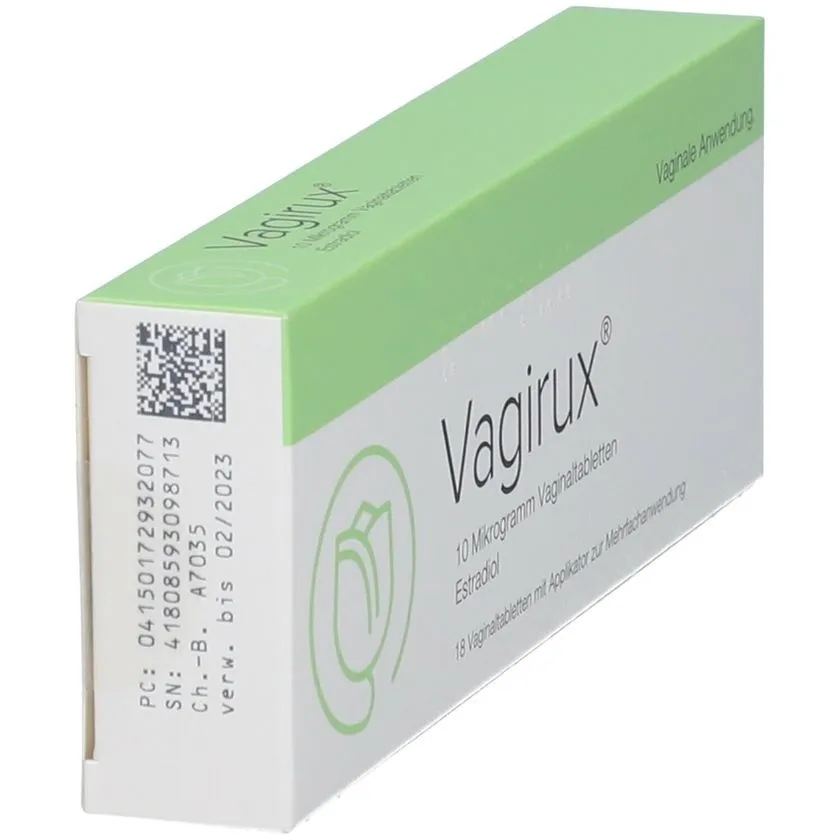
Table of Contents
Package leaflet: Information for the user
Introduction
Package leaflet: information for the user
Vagirux 10 micrograms vaginal tablets
estradiol
Read all of this leaflet carefully before you start using this medicine, because it contains important information for you.
- Keep this leaflet, as you may need to read it again. If you have any questions, ask your doctor or pharmacist.
- This medicine has been prescribed for you only, and you should not give it to other people, even if they have the same symptoms as you, since it may harm them.
- If you experience any adverse effects, consult your doctor or pharmacist, even if these effects are not listed in this leaflet. See section 4.
Leaflet contents
- What Vagirux is and what it is used for
- What you need to know before using Vagirux
- How to use Vagirux
- Possible side effects
- How to store Vagirux
Pack contents and other information
1. What Vagirux is and what it is used for
Vagirux contains estradiol.
- Estradiol is a female sex hormone.
- It belongs to the group of hormones known as estrogens.
- It is identical to the estradiol produced in women's ovaries.
Vagirux belongs to the group of medicines called vaginal Hormone Replacement Therapy (HRT).
Vagirux is used to relieve menopausal vaginal symptoms such as dryness or irritation. Medically, this condition is known as "vaginal atrophy". It is caused by a decrease in estrogen levels in your body. This occurs naturally during menopause.
Vagirux works by replacing the estrogen normally produced in women's ovaries. It is inserted into the vagina so that the hormone is released where it is needed. This may relieve vaginal discomfort.
2. What you need to know before starting to use Vagirux
Medical history and regular check-ups
HRT carries risks that should be considered when deciding whether to start or continue treatment.
Experience in treating women with premature menopause (due to ovarian failure or surgery) is limited. If you have premature menopause, the risks of using HRT may differ. Please consult your doctor.
Before starting (or restarting) HRT, your doctor will ask about your personal and family medical history. Your doctor may decide to perform a physical examination, which may include a breast and/or internal examination, if necessary.
Once you have started using Vagirux, you should visit your doctor for regular check-ups at least once a year. During these visits, discuss with your doctor the benefits and risks of continuing Vagirux.
Attend regular breast examinations as recommended by your doctor.
Do not use Vagirux
If you are in any of the following situations. If you are unsure about any of these conditions, consult your doctor before using Vagirux.
Do not use Vagirux:
- if you have or have had breast cancer, or suspect you may have it
- if you have or have had estrogen-dependent cancer, such as cancer of the cells lining the uterus (endometrium), or suspect you may have it
- if you have abnormal vaginal bleeding
- if you have excessive growth of the cells lining the uterus (endometrial hyperplasia) that is not being treated
- if you have or have had blood clots in a vein (venous thrombosis) in your legs (deep vein thrombosis) or in your lungs (pulmonary embolism)
- if you have a blood clotting disorder (such as protein C, protein S or antithrombin deficiency)
- if you have or have previously had a disease caused by blood clots in the arteries, such as heart attack, stroke, or angina
- if you have liver disease and your liver function tests have not returned to normal
- if you have a rare inherited blood disorder called "porphyria"
- if you are allergic (hypersensitive) to estradiol or any of the other ingredients of Vagirux (listed in section 6 "Contents of the pack and other information")
If any of the above conditions occur for the first time while using Vagirux, stop treatment immediately and consult your doctor.
Warnings and precautions
Consult your doctor if you currently have or have previously had any of the following conditions, as they may recur or worsen during treatment with Vagirux. If so, you should see your doctor more frequently for medical examinations.
- Uterine fibroids (myomas)
- Thickening of the cells lining the uterus (endometriosis) or history of excessive thickening of the uterine lining (endometrial hyperplasia)
- Increased risk of developing blood clots (see “Blood clots in veins (thrombosis)”)
- Increased risk of estrogen-dependent cancer (e.g., if your mother, sister, or grandmother had breast cancer)
- High blood pressure
- Liver disorders such as benign liver tumors
- Diabetes
- Gallstones (biliary calculi)
- Migraine or severe headaches
- An autoimmune disease affecting multiple organs (systemic lupus erythematosus, SLE)
- Epilepsy
- Asthma
- A condition affecting the eardrum and ear (otosclerosis)
- High levels of fat in the blood (triglycerides)
- Fluid retention due to heart or kidney problems
- Hereditary or acquired angioedema
Stop treatment with Vagirux and see your doctor immediately
If you experience any of the following while using HRT:
-
any of the conditions listed in the section above “Do not use Vagirux”
-
yellowing of the skin or whites of the eyes (jaundice), which may indicate liver disease
-
swelling of the face, tongue, or throat, difficulty swallowing, or hives accompanied by breathing difficulties, suggesting angioedema
-
a significant increase in blood pressure (symptoms may include headache, fatigue, and dizziness)
-
first occurrence of migraine-type headache
-
if you become pregnant
-
if you notice signs of a blood clot, such as:
-
swelling, pain, and redness in the legs
-
sudden chest pain
-
difficulty breathing
For more information, see “Blood clots in veins (thrombosis)”
Note: Vagirux is not a contraceptive. If less than 12 months have passed since your last menstrual period or if you are under 50 years of age, you may still need to use additional contraceptive methods to prevent pregnancy. Consult your doctor for advice.
HRT and cancer
Excessive thickening of the uterine lining (endometrial hyperplasia) and cancer of the uterine lining (endometrial cancer)
Long-term use of oral HRT containing estrogens alone may increase the risk of developing cancer of the uterine lining (endometrium).
It is unclear whether a similar risk exists with Vagirux when used repeatedly or long-term (more than one year). However, Vagirux has been shown to have very low systemic absorption, and therefore, adding a progestogen is not necessary.
While bleeding or spotting is not necessarily concerning, you should still consult your doctor, as it could be a sign of endometrial thickening.
The following risks apply to systemic hormone replacement therapies (HRT) that circulate in the bloodstream. However, Vagirux is intended for local vaginal treatment and has very low systemic absorption. It is less likely that the conditions listed below will worsen or reappear during treatment with Vagirux, but you should consult your doctor if you are concerned.
Breast cancer
Evidence suggests that using Vagirux does not increase the risk of breast cancer in women who have not previously had breast cancer. It is unknown whether Vagirux can be used safely in women who have had breast cancer in the past.
Examine your breasts regularly. See your doctor if you notice any changes such as:
- Dimples or indentations in the skin
- Changes in the nipple
- Any lump you can see or feel
In addition, it is advisable to participate in breast screening programs when offered.
Ovarian cancer
Ovarian cancer is rare, much rarer than breast cancer. The use of estrogen-only HRT has been associated with a slightly increased risk of ovarian cancer.
Comparison
The risk of ovarian cancer varies with age. For example, among women aged 50 to 54 who do not use HRT, about 2 out of 2,000 will be diagnosed with ovarian cancer over a 5-year period. Among women who have used HRT for 5 years, there will be approximately 3 cases per 2,000 users (i.e., about 1 additional case).
Effect of HRT on the heart and circulation
Blood clots in a vein (thrombosis)
The risk of venous blood clots is approximately 1.3 to 3 times higher in women using HRT compared to non-users, especially during the first year of treatment.
Blood clots can be serious; if a clot travels to the lungs, it may cause chest pain, difficulty breathing, fainting, or even death.
Your risk of developing blood clots increases with age and if any of the following apply to you. Inform your doctor if you have any of the following:
- inability to walk for long periods due to major surgery, injury, or illness (see also section 3 if you are undergoing surgery)
- significant overweight (BMI >30 kg/m²)
- a blood clotting disorder requiring long-term anticoagulant treatment
- a close family history of blood clots in legs, lungs, or other organs
- systemic lupus erythematosus (SLE)
- cancer
If you suspect a blood clot, see “Stop treatment with Vagirux and see your doctor immediately.”
Comparison
Among women in their fifties not using HRT, an average of 4 to 7 out of 1,000 will develop a venous blood clot over a 5-year period.
Among women in their fifties who have used estrogen-only HRT for more than 5 years, the number increases to 5 to 8 per 1,000 users (i.e., one additional case).
Heart disease (heart attack)
In women using estrogen-only therapy, there is no increased risk of heart disease.
Stroke
The risk of stroke is approximately 1.5 times higher in women using HRT compared to non-users. The number of additional stroke cases due to HRT use increases with age.
Comparison
Among women in their fifties not using HRT, an average of 8 out of 1,000 will have a stroke over a 5-year period.
Among women in their fifties using HRT, there will be 11 cases per 1,000 users over 5 years (up to 3 additional cases).
Other conditions
HRT does not prevent memory loss. The risk of possible memory loss may be slightly higher in women who start using HRT after age 65. Consult your doctor.
Using Vagirux with other medicines
Inform your doctor or pharmacist if you are currently using, have recently used, or might use any other medicines, including over-the-counter medicines, herbal remedies, or other natural products. However, Vagirux is used for local vaginal treatment and is unlikely to affect other medicines. Vagirux may affect other treatments applied vaginally.
Fertility, pregnancy, and breastfeeding
Vagirux is intended for use in postmenopausal women. If you become pregnant, stop using Vagirux immediately and contact your doctor.
Driving and using machines
Not known.
3. How to use Vagirux
Follow exactly the instructions for administering the medicine as given by your doctor. Consult your doctor or pharmacist if you have any doubts.
Use of the medicine
- You may start using Vagirux on any day that suits you best.
- For vaginal use only. Do not take the tablet orally.
- Insert the vaginal tablet into your vagina using the applicator.
Instructions on how to do this are provided in the "INSTRUCTIONS FOR USE" section at the end of this leaflet. Read the instructions carefully before using Vagirux.
The applicator is designed for multiple uses, up to 24 times by a single patient (one vaginal tablet per application). After this, dispose of the applicator in household waste. Do not use applicators showing clear signs of damage.
Frequency of use
- Apply one vaginal tablet daily for the first two weeks.
- Afterwards, apply one vaginal tablet twice a week. Allow 3 or 4 days between each application.
General information about treatment of menopausal symptoms
- Your doctor should prescribe the lowest effective dose of Vagirux needed to treat your symptoms for the necessary duration. Consult your doctor if you think the dose is too strong or not strong enough.
- Treatment should only be continued if the benefit outweighs the risk. Discuss this with your doctor.
If you use more Vagirux than you should
- If you have used more Vagirux than you should have, consult your doctor or pharmacist.
- Vagirux is intended for local treatment inside the vagina. The dose of estradiol is so low that a considerable number of tablets would need to be used to achieve the dose normally used for oral treatment.
In case of overdose or accidental ingestion, consult your doctor or pharmacist or call the Toxicology Information Service at telephone number 915 620 420, indicating the medicine and the amount used.
If you forget to use Vagirux
- If you miss a dose, use the medicine as soon as you remember.
- Do not use a double dose to make up for missed doses.
If you stop using Vagirux
Do not stop treatment with Vagirux without consulting your doctor. Your doctor will explain the effects of stopping treatment and will discuss with you other possible treatment options.
If you are undergoing surgery
If you are scheduled for surgery, inform your surgeon that you are using Vagirux. You may need to stop using Vagirux 4 to 6 weeks before the operation to reduce the risk of blood clots (see section 2, "Blood clots in a vein"). Ask your doctor when you can start using Vagirux again.
If you have any further questions about the use of this medicine, ask your doctor or pharmacist.
4. Possible adverse effects
Like all medicines, this medicine may cause adverse effects, although not everyone will experience them.
The following disorders have been more frequently reported in women using systemic hormone replacement therapy (HRT) that circulates in the blood, compared to women not using HRT. These risks are lower with treatments administered vaginally, such as Vagirux:
- ovarian cancer;
- blood clots in the veins of the legs or lungs (venous thromboembolism);
- stroke;
- possible memory loss if HRT is started after the age of 65.
For more information about these side effects, see section 2, “What you need to know before using Vagirux”.
Common: may affect up to 1 in 10 people
- Headache
- Stomach pain
- Vaginal bleeding, discharge, or vaginal discomfort
Uncommon: may affect up to 1 in 100 people
- Genital fungal infection
- Dizziness (nausea)
- Skin rash
- Weight gain
- Hot flushes
- High blood pressure
Very rare: may affect up to 1 in 10,000 people
- Diarrhea
- Fluid retention
- Worsening of migraine
- Generalized hypersensitivity (e.g. allergic reaction or anaphylactic shock)
The following adverse effects have been reported with systemic estrogen therapy:
-
Gallbladder disease
-
Various skin disorders
-
Skin discoloration, especially on the face or neck, known as "pregnancy mask" (chloasma)
-
Painful red nodules on the skin (erythema nodosum)
-
Skin rashes with red swellings or sores (erythema multiforme)
Reporting of adverse effects
If you experience any type of adverse effect, consult your doctor, pharmacist, or nurse, even if it is a possible adverse effect not listed in this leaflet. You may also report them directly via the Spanish Pharmacovigilance System for Human Medicines: https://www.notificaram.es. By reporting adverse effects, you can help provide more information on the safety of this medicine.
5. Storage of Vagirux
Keep this medicine out of the sight and reach of children.
Store the blister pack in the outer packaging to protect it from light.
Do not use this medicine after the expiry date stated on the packaging after EXP. The expiry date is the last day of the month indicated.
Medicines must not be disposed of via wastewater drains or household waste. Dispose of unused medicines and their packaging at the SIGRE collection point located at your pharmacy. Ask your pharmacist how to dispose of medicines and containers you no longer need. This will help protect the environment.
6. Contents of the pack and other information
What Vagirux contains
- The active substance is estradiol. Each vaginal tablet contains estradiol hemihydrate equivalent to 10 micrograms of estradiol.
- The other components are: hypromellose, lactose monohydrate, corn starch, and magnesium stearate.
- The coating contains: hypromellose and macrogol.
Appearance of the product and contents of the pack
The vaginal tablets are white, coated, biconvex, and marked with an "E" on one side. The tablet diameter is approximately 6 mm.
Pack sizes:
18 vaginal tablets with applicator
24 vaginal tablets with applicator
Not all pack sizes may be marketed.
Marketing Authorization Holder:
Gedeon Richter Plc.
Gyömroi út 19-21
1103 Budapest
Hungary
Manufacturer:
Gedeon Richter Plc.
Gyömroi út 19-21
1103 Budapest
Hungary
Haupt Pharma Münster GmbH (Member of the Aenova Group)
Schleebrüggenkamp 15
48159 Münster
Germany
For further information about this medicine, please contact the local representative of the Marketing Authorization Holder:
Gedeon Richter Ibérica, S.A.
Sabino Arana, 28 - 4º 2ª
08028 Barcelona
Spain
This medicine is authorized in the European Economic Area member states under the following names:
Austria: Rewellfem 10 Mikrogramm Vaginaltabletten
Croatia: Vagirux 10 mikrograma tablete za rodnicu
Denmark, Iceland, Liechtenstein: Rewellfem
Slovakia: Vagirux 10 mikrogramov vaginálne tablety
Slovenia: VAGIRUX 10 mikrogramov vaginalne tablete
Spain: Vagirux 10 microgramos comprimidos vaginales
Estonia, Finland, Ireland, Italy, Norway, Poland, Sweden, Czech Republic: Vagirux
Hungary: VAGIRUX 10 mikrogramm hüvelytabletta
Latvia: Vagirux 10 mikrogrami vaginalas tabletes
Lithuania: VAGIRUX 10 mikrogramu makšties tabletes
Malta: Vagirux 10 microgram vaginal tablets
Portugal: Formyra
Romania: ESTRADIOL RICHTER 10 micrograme comprimate vaginale
Date of the most recent review of this leaflet: April 2022
Other sources of information
Detailed information on this medicine is available on the website of the {Spanish Agency of Medicines and Health Products (AEMPS): http://www.aemps.gob.es/
INSTRUCTIONS FOR USE
How to use Vagirux
- Remove the applicator from its blister pack.
Open from the end as shown in the image.
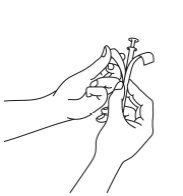
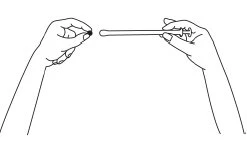
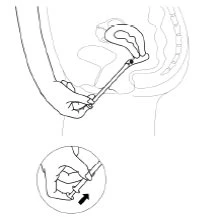
- Hold the tube and pull the plunger of the applicator until it stops. Place a vaginal tablet onto the holder (the wider end) of the applicator tube.
- The applicator should be carefully inserted into the vagina until resistance is felt (8-10 cm).
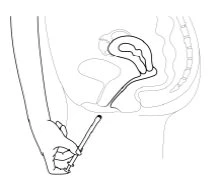
- To release the vaginal tablet, press the plunger until it stops. The tablet will immediately adhere to the vaginal wall. It will not fall out if the patient stands up or walks.
-
Clean the applicator after each use, and before the next application, as follows:
- remove the plunger from the applicator;
- clean both the tube and the plunger with mild soap and rinse thoroughly with lukewarm tap water. Rinse both the inside and outside of the tube.
- if necessary, remove any remaining water from both the tube and the plunger by gently shaking them.
- allow the tube and plunger to air-dry on a clean surface (e.g., a paper towel).
- reinsert the plunger into the tube and store both inside the applicator.
-
The applicator should be used until the pack is finished (18 or 24 times). After that, dispose of it in household waste.