Vabysmo 120 mg/ml solution for injection
Spain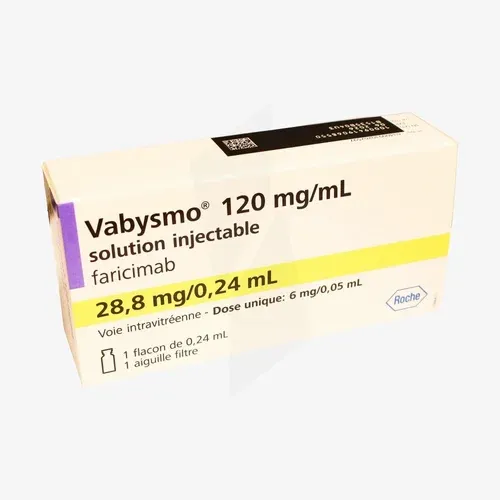
Table of Contents
Package leaflet: Information for the user
Introduction
Package leaflet: information for the patient
Vabysmo 120 mg/ml solution for injection
faricimab
This medicine is subject to additional monitoring, which will allow quicker detection of new information on its safety. You can help by reporting any side effects you may experience. The end of section 4 includes information on how to report side effects.
Read this entire leaflet carefully before you start using this medicine, because it contains important information for you.
- Keep this leaflet, as you may need to read it again.
- If you have any questions, ask your doctor.
- If you experience any side effects, consult your doctor, even if they are side effects not listed in this leaflet. See section 4.
In addition to this leaflet, your doctor will provide you with a patient guide containing important safety information to help you understand the benefits and risks associated with Vabysmo, and the actions you should take if you experience certain symptoms.
Contents of this leaflet
- What Vabysmo is and what it is used for
- What you need to know before using Vabysmo
- How to use Vabysmo
- Possible side effects
- How to store Vabysmo
- Contents of the pack and other information
1. What Vabysmo is and what it is used for
Vabysmo contains the active substance faricimab, which belongs to a group of medicines called anti-angiogenesis agents.
Vabysmo is injected into the eye by your doctor to treat eye disorders in adults called:
- neovascular (exudative) age-related macular degeneration (nAMD),
- vision impairment due to diabetic macular edema (DME),
- vision impairment due to macular edema caused by blockage of retinal veins (retinal vein branch occlusion (BRVO) or central retinal vein occlusion (CRVO)).
These disorders affect the macula, the central part of the retina (the light-sensitive layer at the back of the eye) which is responsible for sharp, central vision. nAMD occurs due to the growth of abnormal blood vessels that leak blood and fluid into the macula. DME occurs due to leaky blood vessels causing swelling of the macula. CRVO is the blockage of the main blood vessel (vein) that carries blood away from the retina, and BRVO is the blockage of one of the smaller branches of this main vein. Due to increased pressure within the veins, fluid leaks into the retina, causing swelling of the macula (macular edema).
How Vabysmo works
Vabysmo specifically recognizes and blocks the activity of proteins known as angiopoietin-2 and vascular endothelial growth factor A. When these proteins are present at higher than normal levels, they can cause the growth of abnormal blood vessels and/or damage to normal vessels, leading to leakage into the macula, resulting in swelling or damage that can negatively affect a person's vision. By binding to these proteins, Vabysmo blocks their actions and prevents abnormal blood vessel growth, leakage, and swelling. Vabysmo can improve the disease and/or slow down its progression, thereby helping to maintain, or even improve, your vision.
2. What you need to know before using Vabysmo
Do not use Vabysmo:
- if you are allergic to faricimab or to any of the other components of this medicine (listed in section 6).
- if you have an active infection or suspected infection in or around the eye.
- if you have eye pain or redness (ocular inflammation).
If you are in any of these situations, inform your doctor. You should not be given Vabysmo.
Warnings and precautions
Talk to your doctor before starting to use Vabysmo:
- if you have glaucoma (an eye disease usually caused by high pressure inside the eye).
- if you have a history of seeing flashes, lights, or floating particles (black floaters), or if you experience a sudden increase in the size or number of floaters.
- if you have had eye surgery within the last 4 weeks or if eye surgery is planned within the next 4 weeks.
- if you have ever had any eye disease or eye treatment.
Contact your doctor immediately if:
- you experience sudden vision loss.
- you develop signs of a possible eye infection or inflammation, such as worsening eye redness, eye pain, increased eye discomfort, blurred or decreased vision, an increase in the number of small particles seen in your vision, or increased sensitivity to light.
In addition, it is important to know that:
- the safety and efficacy of Vabysmo when administered in both eyes simultaneously has not been studied, and using it this way may increase the risk of experiencing adverse effects.
- Vabysmo injections may cause a temporary increase in eye pressure (intraocular pressure) in some patients within 60 minutes after the injection. Your doctor will monitor this after each injection.
- Your doctor will check whether you have other risk factors that may increase the likelihood of a tear or detachment in one of the layers at the back of the eye (retinal tear or detachment, or retinal pigment epithelial detachment), in which case Vabysmo will be administered with caution.
When certain medicines that work similarly to Vabysmo are used, there is a known risk of blood clots blocking blood vessels (arterial thromboembolic events), which may lead to heart attack or stroke. Since a small amount of the medicine enters the bloodstream, there is a theoretical risk of such events after injection of Vabysmo into the eye.
Experience is limited in treating:
- patients with active infections.
- patients with nAMD and patients with retinal vein occlusion (RVO) aged 85 years and older.
- patients with DME due to type I diabetes.
- diabetic patients with high average blood sugar levels (glycated hemoglobin above 10%).
- diabetic patients with diabetes-related eye disease known as proliferative diabetic retinopathy.
- diabetic patients with high blood pressure above 140/90 mmHg and blood vessel disease.
- patients with DME receiving injections at intervals shorter than 8 weeks over a prolonged period.
Experience is limited in treating patients receiving injections at intervals shorter than 8 weeks over a long period, and these patients may have a higher risk of adverse effects.
There is no experience in treating:
- diabetic patients or patients with RVO with uncontrolled high blood pressure.
If any of the above apply to you, your doctor will take this lack of information into account when deciding to treat you with Vabysmo.
Children and adolescents
The use of Vabysmo has not been studied in children and adolescents, as nAMD, DME, and RVO occur primarily in adults.
Other medicines and Vabysmo
Tell your doctor if you are taking, have recently taken, or might need to take any other medicines.
Pregnancy and breastfeeding
Vabysmo has not been studied in pregnant women. Vabysmo should not be used during pregnancy unless the potential benefit to the patient outweighs the potential risk to the unborn child.
If you are pregnant or breastfeeding, think you may be pregnant, or plan to become pregnant, consult your doctor before using this medicine.
Breastfeeding is not recommended during treatment with Vabysmo because it is unknown whether Vabysmo is excreted in human milk.
Women of childbearing potential should use an effective method of contraception during treatment and for at least three months after completing treatment with Vabysmo. If you become pregnant or think you are pregnant during treatment, inform your doctor immediately.
Driving and use of machines
After receiving a Vabysmo injection, you may experience temporary vision problems (e.g., blurred vision). Do not drive or operate machinery while these symptoms last.
Vabysmo contains sodium
This medicine contains less than 1 mmol of sodium (23 mg) per dose, i.e., essentially “sodium-free”.
Vabysmo contains polysorbate
This medicine contains 0.02 mg of polysorbate in each 0.05 ml dose. Polysorbates may cause allergic reactions. Consult your doctor if you have any known allergies.
3. How to use Vabysmo
How Vabysmo is administered
The recommended dose is 6 mg of faricimab.
Neovascular (exudative) age-related macular degeneration (nAMD)
- You will receive an injection every month for the first 3 months.
- Afterwards, you may receive injections up to every 4 months. Your doctor will determine the frequency of injections based on the condition of your eye.
Diabetic macular edema (DME) and macular edema secondary to retinal vein occlusion (branch retinal vein occlusion (BRVO) or central retinal vein occlusion (CRVO))
- You will receive an injection every month for at least 3 months.
- Afterwards, you may receive injections less frequently. Your doctor will determine the frequency of injections based on the condition of your eye.
Method of administration
Vabysmo is injected into the eye (intravitreal injection) by a physician experienced in administering ocular injections.
Prior to the injection, your doctor will use an ocular disinfectant to carefully clean your eye to prevent infection. Your doctor will give you an eye drop (local anesthetic) to numb the eye and reduce or prevent injection pain.
How long Vabysmo treatment lasts
This is a long-term treatment and may continue for months or years. Your doctor will monitor your condition regularly to ensure the treatment is having the desired effect. Depending on your response to Vabysmo treatment, your doctor may adjust the dosing frequency, either increasing or decreasing it.
If you miss a dose of Vabysmo
If you miss a dose, schedule a new appointment with your doctor as soon as possible.
If you interrupt treatment with Vabysmo
Talk to your doctor before interrupting treatment. Interrupting treatment may increase the risk of vision loss, and your vision may worsen.
If you have any further questions about the use of this medicine, ask your doctor.
4. Possible adverse effects
Like all medicines, this medicine can cause adverse effects, although not everyone gets them.
The adverse effects of Vabysmo injections are due to both the medicine and the injection procedure, and may mainly affect the eye.
Some adverse effects may be serious
Contact your doctor immediately if you experience any of the following symptoms, which are signs of allergic reactions, inflammation, or infections:
- eye pain, increased discomfort, worsening of eye redness, blurred or decreased vision, increase in the number of small particles in your vision, increased sensitivity to light – these are signs of a possible eye infection, inflammation, or allergic reaction.
- sudden decrease or change in vision.
Other possible adverse effects
Other adverse effects that may occur after treatment with Vabysmo include those listed below.
Many of these adverse effects are mild or moderate and usually resolve within one week after each injection.
Contact your doctor if any of the following adverse effects become severe.
Very common (may affect more than 1 in 10 people):
- None
Common (may affect up to 1 in 10 people):
- Clouding of the lens in the eye (cataract)
- Tear in one of the layers at the back of the eye (retinal pigment epithelial tear, only in nAMD)
- Detachment of the gel-like substance inside the eye (vitreous detachment)
- Increased pressure inside the eye (increased intraocular pressure)
- Bleeding from small blood vessels in the outer layer of the eye (conjunctival haemorrhage)
- Specks that move or dark shadows in your vision (floaters in the vitreous)
- Eye pain
Uncommon (may affect up to 1 in 100 people):
- Severe inflammation or infection inside the eye (endophthalmitis)
- Inflammation of the gel-like substance inside the eye/red eye (vitritis)
- Inflammation of the iris and its adjacent tissue in the eye (iritis, iridocyclitis, uveitis)
- Bleeding inside the eye (vitreous haemorrhage)
- Eye discomfort
- Itching (ocular pruritus)
- Tear in the retina (back part of the eye that senses light)
- Red eye (ocular/conjunctival hyperaemia)
- Sensation of having something in the eye
- Blurred vision
- Decreased sharpness of vision (reduced visual acuity)
- Pain during the procedure
- Retinal detachment
- Increased tear production (increased lacrimation)
- Scratch on the cornea, damage to the transparent part of the eyeball covering the iris (corneal abrasion)
- Eye irritation
Rare (may affect up to 1 in 1,000 people):
- Temporary decrease in sharpness of vision (transiently reduced visual acuity)
- Clouding of the lens due to injury (traumatic cataract)
Frequency not known
- Retinal vasculitis (inflammation of the blood vessels at the back of the eye)
- Occlusive retinal vasculitis (blockage of the blood vessels at the back of the eye, usually in the presence of inflammation)
When certain medicines that work similarly to Vabysmo are administered, there is a known risk of blood clots blocking blood vessels (arterial thromboembolic events), which may lead to heart attack or stroke. Since a small amount of the medicine enters the bloodstream, there is a theoretical risk of such events following injection of Vabysmo into the eye.
Reporting of adverse effects
If you experience any type of adverse effect, consult your doctor, even if it is a possible adverse effect not listed in this leaflet. You can also report them directly through the national reporting system included in Appendix V*. By reporting adverse effects, you can help provide more information on the safety of this medicine.
5. Storage of Vabysmo
Your doctor, pharmacist, or nurse is responsible for storing this medicine and properly disposing of any unused product. The following information is intended for healthcare professionals.
Keep this medicine out of the sight and reach of children.
Do not use this medicine after the expiry date stated on the label and packaging after EXP. The expiry date refers to the last day of the month indicated.
Store in a refrigerator (2 °C - 8 °C).
Do not freeze.
Keep the tray sealed in the original packaging to protect the pre-filled syringe from light.
The pre-filled syringe may be stored at room temperature, between 20 °C and 25 °C, in the original packaging for up to 24 hours.
6. Contents of the pack and other information
Composition of Vabysmo
- The active substance is faricimab. One ml of solution contains 120 mg of faricimab. Each vial contains 28.8 mg of faricimab in 0.24 ml of solution. This provides a usable dose to deliver a single dose of 0.05 ml of solution containing 6 mg of faricimab.
- The other components are: L-histidine, acetic acid 30% (E 260), L-methionine, sodium chloride, sucrose, polysorbate 20 (E 432), water for injections (see Section 2 "Vabysmo contains sodium and polysorbate").
Appearance of the product and contents of the pack
Vabysmo is a solution ranging from clear to opalescent, and from transparent to yellowish-brown.
The pack contains one glass vial and one single-use sterile transfer needle with filter (18 gauge x 1½ inches, 1.2 mm x 40 mm, 5 µm).
Marketing Authorization Holder and Responsible Manufacturer
Roche Registration GmbH
Emil-Barell-Strasse 1
79639
Grenzach-Wyhlen
Germany
Manufacturer
Roche Pharma AG
Emil-Barell-Strasse 1
79639
Grenzach-Wyhlen
Germany
For further information about this medicinal product, please contact the local representative of the Marketing Authorization Holder:
Belgium/Belgium/Belgium Luxembourg/Luxembourg N.V. Roche S.A. Belgium/Belgium/Belgium Tel/Tel: +32 (0) 2 525 82 11 | Lithuania UAB “Roche Lietuva” Tel: +370 5 2546799 |
| |
Czech Republic Roche s. r. o. Tel: +420 - 2 20382111 | Hungary Roche (Hungary) Kft. Tel: +36 - 1 279 4500 |
Denmark Roche Pharmaceuticals A/S Tlf: +45 - 36 39 99 99 | |
Germany Roche Pharma AG Tel: +49 (0) 7624 140 | Netherlands Roche Nederland B.V. Tel: +31 (0) 348 438050 |
Estonia Roche Eesti OÜ Tel: + 372 - 6 177 380 | Norway Roche Norge AS Tlf: +47 - 22 78 90 00 |
Greece, Cyprus Roche (Hellas) A.E. Greece Tel: +30 210 61 66 100 | Austria Roche Austria GmbH Tel: +43 (0) 1 27739 |
Spain Roche Farma S.A. Tel: +34 - 91 324 81 00 | Poland Roche Polska Sp.z o.o. Tel: +48 - 22 345 18 88 |
France Roche Tél: +33 (0) 1 47 61 40 00 | Portugal Roche Farmacêutica Química, Lda Tel: +351 - 21 425 70 00 |
Croatia Roche d.o.o Tel: +385 1 4722 333 | Romania Roche România S.R.L. Tel: +40 21 206 47 01 |
Ireland/Malta Roche Products (Ireland) Ltd. Ireland/Ireland Tel: +353 (0) 1 469 0700 | Slovenia Roche farmacevtska družba d.o.o. Tel: +386 - 1 360 26 00 |
Iceland Roche Pharmaceuticals A/S c/o Icepharma hf Sími: +354 540 8000 | Slovakia Roche Slovensko, s.r.o. Tel: +421 - 2 52638201 |
Italy Roche S.p.A. Tel: +39 - 039 2471 | Finland/Finland Roche Oy Puh/Tel: +358 (0) 10 554 500 |
Latvia Roche Latvija SIA Tel: +371 - 6 7039831 | Sweden Roche AB Tel: +46 (0) 8 726 1200 |
Date of the most recent review of this leaflet:
Other sources of information
Detailed information on this medicine is available on the website of the European Medicines Agency: https://www.ema.europa.eu.
This information is intended for healthcare professionals only:
Instructions for the use of the vial:
Before starting: | |
Read all instructions carefully before using Vabysmo. | |
The Vabysmo package contains a glass vial and a filter transfer needle. The glass vial is for single use only. The filter needle is for single use only. | |
Vabysmo must be stored in a refrigerator at temperatures between 2 °C and 8 °C. Do not freeze. Do not shake. | |
Allow Vabysmo to reach room temperature, between 20 °C and 25 °C, before administration. Keep the vial in its original packaging to protect it from light. | |
The Vabysmo vial may be kept at room temperature for up to 24 hours. | |
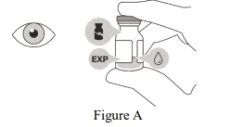
The Vabysmo vial should be inspected visually before administration. Vabysmo is a liquid solution ranging from clear to opalescent, and from transparent to yellowish-brown. | |
Do not use if particles are visible, if the solution appears cloudy, or if it is discolored. | |
Do not use if the packaging, vial, and/or filter transfer needle are expired, damaged, or have been tampered with (see Figure A). | |
Use an aseptic technique when preparing the intravitreal injection. |
Gather the elements:
|
|
|
|
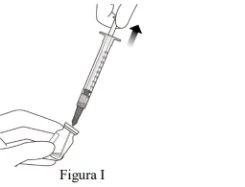
Transfer the medication from the vial to the syringe |
|
|
|
|
|
|
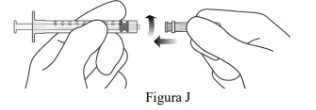
Attach the injection needle |
|
Do not use the transfer needle with filter for intravitreal injection. |
|
|
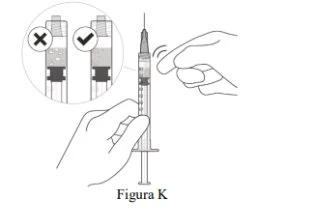
Remove air bubbles and adjust medication dose |
|
|
|
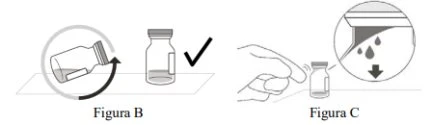
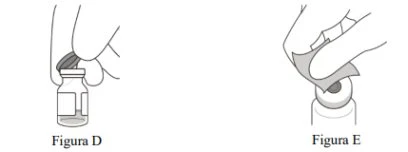
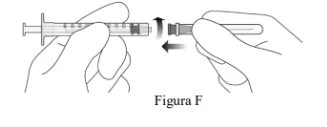
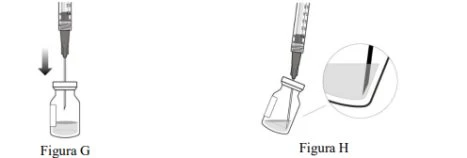
|
|
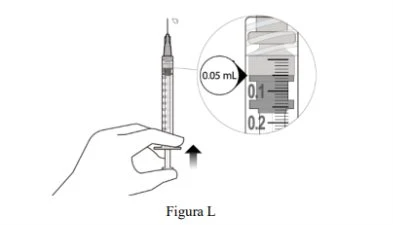
Any excess volume must be expelled prior to injection. The injection dose must be set at the 0.05 ml dose mark to avoid overdose. Disposal of unused medicinal product and of all materials that have come into contact with it must be carried out in accordance with local regulations. |