Utrogestan 300 mg soft capsules for vaginal use
Spain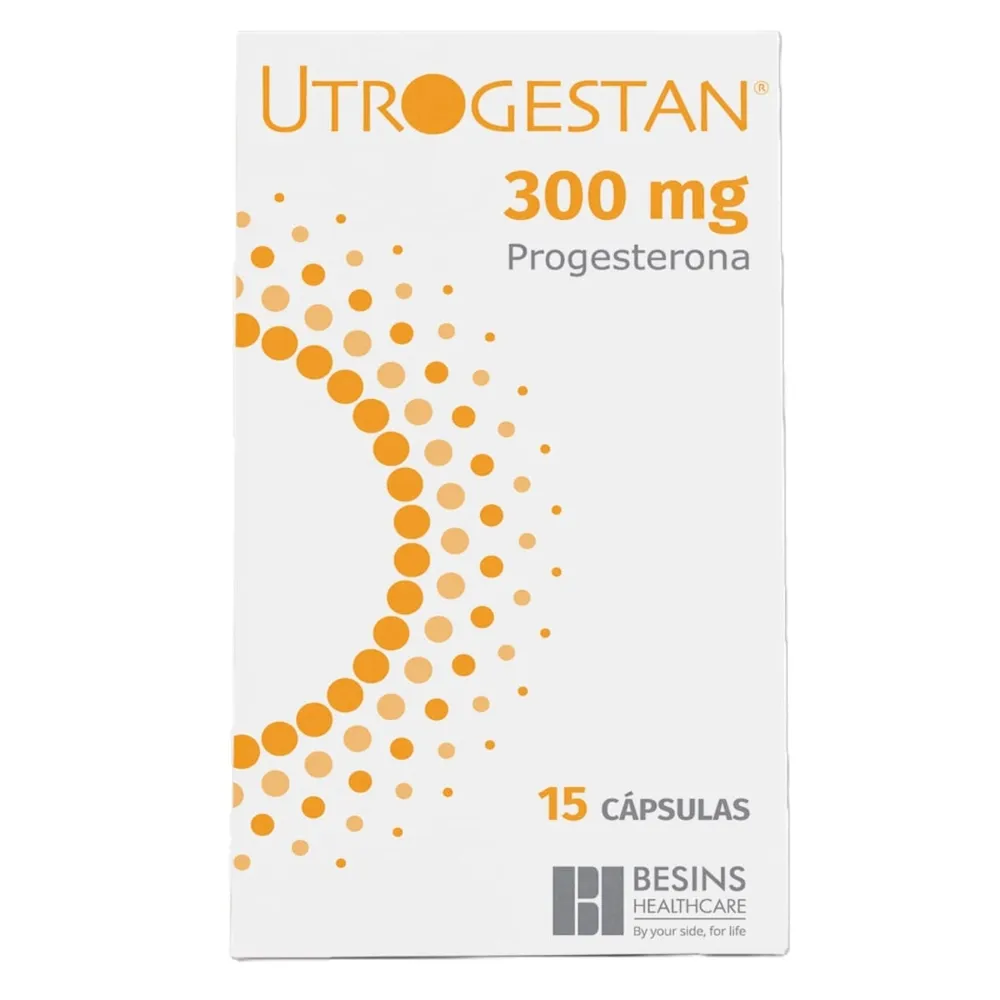
Table of Contents
Package leaflet: Information for the user
Introduction
Package leaflet: information for the user
Utrogestan 300 mg soft vaginal capsules
progesterone
Read this entire leaflet carefully before you start using this medicine, because it contains important information for you.
- Keep this leaflet, as you may need to read it again.
- If you have any questions, ask your doctor or pharmacist.
- This medicine has been prescribed for you only, and you should not give it to others, even if they have the same symptoms as you, because it may harm them.
- If you experience any adverse effects, consult your doctor or pharmacist, even if these adverse effects are not listed in this leaflet. See section 4.
Leaflet contents
- What Utrogestan is and what it is used for
- What you need to know before using Utrogestan
- How to use Utrogestan
- Possible side effects
- How to store Utrogestan
- Contents of the pack and other information
1. What Utrogestan is and what it is used for
The name of your medicine is Utrogestan. Utrogestan contains a hormone called progesterone.
What Utrogestan is used for
Progesterone can be used as support during pregnancy in in vitro fertilization (IVF) cycles.
As pregnancy support
Utrogestan is indicated in women who require additional progesterone while undergoing treatment as part of an assisted reproductive technology (ART) programme.
2. What you need to know before using Utrogestan
Do not use Utrogestan
- If you are allergic to progesterone, soy, peanut, or any of the other ingredients of this medicine (listed in section 6)
- If you have liver problems
- If you have yellowing of the skin or eyes (jaundice)
- If you have unexplained vaginal bleeding
- If you have breast or genital tract carcinoma
- If you have thrombophlebitis
- If you have or have had blood clots in a vein (thrombosis), such as in the legs (deep vein thrombosis) or in the lungs (pulmonary embolism)
- If you have had a cerebral haemorrhage
- If you have a rare inherited blood disorder called "porphyria"
- If you are pregnant but your baby has died inside you (missed miscarriage)
Warnings and precautions
Utrogestan should only be used during the first three months of pregnancy. Consult your doctor or pharmacist before starting to use this medicine.
This medicine is not a contraceptive.
If you have diabetes and use insulin to control your blood sugar levels, treatment with progesterone may affect your response to insulin and an adjustment of your antidiabetic medication may be necessary.
If you experience vaginal bleeding, speak with your doctor.
If you think you may have had a spontaneous abortion, you should speak with your doctor, as you should stop using this medicine.
You should contact your doctor if you feel unwell within a few days of taking the medicine.
Children and adolescents
This medicine should not be used in children and adolescents.
Other medicines and Utrogestan
Tell your doctor or pharmacist if you are taking, have recently taken, or might need to take any other medicines. This includes medicines without a prescription and herbal medicines. This medicine may affect how other medicines work. In addition, some medicines may affect how this medicine works.
In particular, inform your doctor or pharmacist if you are taking any of the following medicines:
- Medicines used to help you relax or sleep (e.g., phenobarbital, pentobarbital)
- Medicines used to control seizures or epilepsy (e.g., phenytoin or carbamazepine)
- Medicines used to treat tuberculosis, particularly rifampicin
- Herbal remedies for low mood or anxiety containing St. John’s wort
- Medicines used to treat fungal infections (e.g., ketoconazole)
Use of Utrogestan with food and drink
This medicine should be inserted vaginally. Food and drink do not affect treatment.
Pregnancy, breastfeeding and fertility
- This medicine will help you maintain pregnancy if you are undergoing fertility treatment. See section 3 for instructions on how to use Utrogestan.
- This medicine should not be used during breastfeeding.
Driving and using machines
Utrogestan should not affect your ability to drive or operate machinery. However, in some people it may cause dizziness and fatigue. If you experience these effects, caution is advised when driving or operating machinery.
Utrogestan contains soy lecithin
If you are allergic to peanut or soy, do not use this medicine.
Utrogestan contains highly refined sunflower oil, which very rarely causes allergic reactions in adults allergic to refined oils.
3. How to use Utrogestan
Follow exactly the instructions for using this medicine as given by your doctor or pharmacist. If in doubt, consult your doctor or pharmacist again.
This medicine is used to help you become pregnant
- Do not use orally. If you accidentally take this medicine by mouth, it will not harm you, but your chances of becoming pregnant will be reduced.
Recommended dose
- Treatment should start no later than the third day after egg retrieval.
- Every day, use 600 mg of this medicine as directed by your doctor. Insert one capsule deeply into the vagina in the morning and again before bedtime.
- If laboratory tests confirm that you are pregnant, continue with the same dose until at least week 7 of pregnancy, but no longer than week 12 of pregnancy, as instructed by your doctor.
If you use more Utrogestan than you should
If you use too much Utrogestan, you should consult your doctor or go to a hospital. Take the medicine with you.
In case of overdose or accidental ingestion, contact your doctor or pharmacist immediately or call the Toxicology Information Service at 91 562 04 20, indicating the medicine and the amount ingested.
The following effects may occur: feeling dizzy or feeling tired.
If you forget to use Utrogestan
- If you forget a dose, insert it as soon as you remember. However, if it is almost time for the next dose, skip the missed dose.
- Do not use a double dose to make up for forgotten doses.
If you stop using Utrogestan
Talk to your doctor, pharmacist, or nurse before stopping this medicine. If you stop using the medicine, it will not help you become pregnant.
If you have any further questions about the use of this medicine, ask your doctor, pharmacist, or nurse.
4. Possible adverse effects
Like all medicines, this medicine can cause adverse effects, although not everyone will experience them.
The following adverse effects may occur with this medicine:
Frequency not known (cannot be estimated from available data):
- itching
- oily vaginal discharge
- vaginal bleeding
- burning sensation
- dizziness
- feeling very tired (fatigue)
You may experience fatigue or dizziness for a short time within 1 to 3 hours after taking the medicine.
Reporting of adverse effects
If you experience any adverse effect, consult your doctor, pharmacist, or nurse, even if it is a possible adverse effect not listed in this leaflet. You may also report them directly through the Spanish Pharmacovigilance System for Human Medicinal Products: www.notificaRAM.es By reporting adverse effects, you can help provide more information on the safety of this medicine.
5. Storage of Utrogestan
- Keep this medicine out of the sight and reach of children.
- Do not use this medicine after the expiry date stated on the carton and on the label of the bottle after EXP. The expiry date refers to the last day of the month indicated.
- Once the bottle has been opened, use the capsules within 15 days.
- Store in the original packaging.
- Store below 30°C.
- Do not use this medicine if you notice any visible changes in its appearance.
- Medicines must not be disposed of via wastewater or household waste. Dispose of unused medicines and their containers at a SIGRE point in your pharmacy. If you have any doubts, ask your pharmacist how to properly dispose of medicines and containers you no longer need. This will help protect the environment.
6. Contents of the container and other information
Composition of Utrogestan
- The active substance is progesterone. Each soft vaginal capsule contains 300 mg of progesterone.
- The other components of the capsule are sunflower oil, soya lecithin (E322), gelatine (E441), glycerol (E422), titanium dioxide (E171) and purified water.
Appearance of Utrogestan and contents of the container
Yellowish, oblong soft gelatine capsules (approximately 2.5 cm x 0.8 cm), containing a white oily suspension.
Available in:
- Bottles containing 15 soft vaginal capsules.
or
- PVC/Aluminium blisters of 15, 30 or 45 capsules in a cardboard box.
Some pack sizes may not be marketed.
Marketing Authorisation Holder:
Besins Healthcare Ireland Limited
Plaza 4, Level 4 Custom House Plaza,
Harbourmaster Place, International Financial Services Centre
Dublin 1, D01 A9N3
Ireland
Manufacturer:
Cyndea Pharma, S.L.
Emiliano Revilla Sanz Industrial Estate
Avenida de Ágreda, 31, Olvega
42110 Soria
Spain
or
BESINS MANUFACTURING ESPAÑA S.L.
El Pitarco Industrial Estate, Plot 4
Muel, 50450 Zaragoza, Spain
Local representative:
Laboratorios Rubió, S.A.
Comte de Sert Industrial Park
C/Industria 29
08755 Castellbisbal-Barcelona
Spain
This medicinal product is authorised in the Member States of the European Economic Area under the following names:
Bulgaria, Estonia, Croatia, Cyprus, France, Italy, Malta, Netherlands, Norway, Poland, Portugal, Sweden, Slovakia, Spain: Utrogestan
Belgium, Ireland, Luxembourg: Utrogestan Vaginal
Finland: Lugesteron
Latvia, Lithuania: Progesterone Besins
Czech Republic: Progesteron Besins
Denmark, Iceland: Progestan
Date of the most recent revision of the leaflet: February 2026
Detailed information on this medicinal product is available on the website of the Spanish Agency of Medicines and Health Products (AEMPS) (http://www.aemps.gob.es/)