Urokinase Teofarma 100,000 IU powder and solvent for solution for infusion
Spain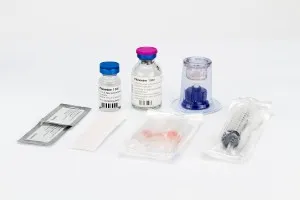
Table of Contents
- Package leaflet: Information for the user
- Introduction
- 1. What Urokinase Teofarma 100,000 IU is and what it is used for
- 2. Before using Urokinase Teofarma 100,000 IU
- 3. How to use Urokinase Teofarma 100,000 IU
- 4. Possible adverse effects
- 5. Storage of Urokinase Teofarma 100,000 IU
- 6. Contents of the pack and other information
Package leaflet: Information for the user
Introduction
Package leaflet: information for the user
Urokinase Teofarma 100,000 IU powder and solvent for solution for infusion
Urokinase
Read the entire leaflet carefully before you start using this medicine, because it contains important information for you.
Keep this leaflet, as you may need to read it again. If you have any questions, consult your doctor or pharmacist.
This medicine has been prescribed for you only, and you should not give it to other people, even if they have the same symptoms as you, because it may harm them.
If you experience any adverse reactions, consult your doctor, even if they are adverse reactions not listed in this leaflet. See section 4.
Contents of this leaflet
- What Urokinase Teofarma 100,000 IU is and what it is used for
- What you need to know before using Urokinase Teofarma 100,000 IU
- How to use Urokinase Teofarma 100,000 IU
- Possible side effects
- How to store Urokinase Teofarma 100,000 IU
- Contents of the pack and other information
1. What Urokinase Teofarma 100,000 IU is and what it is used for
Urokinase Teofarma belongs to a group of medicines called antithrombotics.
Urokinase is an enzyme extracted from human urine and is used to lyse thrombi (dissolve blood clots) and prevent obstruction of blood vessels.
Urokinase Teofarma is indicated for:
- Thromboembolic treatment of: peripheral arterial thromboembolism and deep venous thrombosis.
- Massive acute pulmonary embolism or pulmonary embolism with hemodynamic instability.
- Thrombosis of arteriovenous shunts.
- Intraocular hemorrhages.
- Coronary thrombosis: Urokinase has been used for the destruction of acute thrombi obstructing the coronary arteries associated with transmural myocardial infarction. Most patients who receive urokinase via intracoronary infusion within 6 hours of symptom onset show recanalization of the affected vessel.
It has not been demonstrated that intracoronary administration of urokinase during transmural myocardial infarction leads to recovery of the affected myocardial tissue or reduces mortality. The characteristics of patients who might benefit from this therapy have not been clearly defined.
- Paramnemonic pleural effusions and complicated empyemas.
2. Before using Urokinase Teofarma 100,000 IU
Treatment with urokinase must always be carried out in a specialized institution and under strict medical supervision.
Do not use Urokinase Teofarma if you are in any of the following situations:
- Active major bleeding at present or within the last 6 months.
- Treatment with oral anticoagulants resulting in an INR > 1.3 (laboratory parameter).
- History of central nervous system injury (e.g., neoplasm or tumoral process, aneurysm or vascular dilation, intracranial or spinal surgery).
- Known predisposition to bleeding.
- Severe uncontrolled hypertension.
- Major surgical procedures, biopsy, organ sampling, or significant trauma within the last 2 months (including any trauma associated with the current acute myocardial infarction).
- Recent head or skull trauma.
- Prolonged cardiopulmonary resuscitation (> 2 minutes) within the last 2 weeks.
- Acute pericarditis or inflammation of the pericardium, and/or infectious bacterial endocarditis or inflammation of the cardiac endocardium.
- Acute pancreatitis or inflammation of the pancreas.
- Severe liver disorders, including liver failure, cirrhosis, portal hypertension (esophageal varices), and active hepatitis.
- Active peptic ulcer.
- Known arterial aneurysm or arterial/venous malformation.
- Tumoral process with increased risk of bleeding.
- Known history of stroke or cerebrovascular accident, transient ischemic attacks, or dementia.
- If you are allergic (hypersensitive) to the active substance or to any of the other components of Urokinase Teofarma.
Take special care with Urokinase Teofarma
If you are in any of the following situations:
- Systolic blood pressure value above 160 mmHg.
- Cerebrovascular disease.
- Recent bleeding (within the last 10 days) of gastrointestinal or genitourinary origin.
- High probability of left cardiac chamber thrombi, e.g., in mitral valve occlusion or stenosis with cardiac rhythm disturbances or atrial fibrillation.
- Any known recent intramuscular injection (within the last 2 days).
- Advanced age, e.g., over 75 years.
- If you are being treated with Urokinase Teofarma for pulmonary embolism, bear in mind that your doctor should perform a series of tests at least every four hours.
Intramuscular and intraarterial injections must be avoided during treatment.
Use with other medicines
If administered concomitantly with antiplatelet agents (acetylsalicylic acid, indomethacin, phenylbutazone, etc.), oral anticoagulants, or heparin, blood coagulation parameters should be monitored frequently, as the risk of bleeding is increased.
Inform your doctor or pharmacist if you are using or have recently used any other medicines, including those obtained without a prescription.
Pregnancy and breastfeeding
The safety of urokinase during pregnancy and breastfeeding has not been established; therefore, it should be used with caution.
If you are pregnant or think you might be pregnant, inform your doctor before starting treatment.
If you are breastfeeding or planning to breastfeed, inform your doctor.
It is unknown whether Urokinase Teofarma is excreted in human milk. Breast milk should be discarded during the first 24 hours after treatment.
Driving and using machines
Urokinase Teofarma does not interfere with the ability to drive or operate machinery.
Important information about some of the components of Urokinase Teofarma
This medicine contains less than 23 mg (1 mmol) of sodium per dose and is therefore considered essentially “sodium-free.”
3. How to use Urokinase Teofarma 100,000 IU
Follow exactly the administration instructions for Urokinase Teofarma provided by your doctor. Consult your doctor or pharmacist if you have any doubts.
The usual route of administration is by continuous intravenous infusion, dissolved in isotonic saline solution.
Urokinase must not be mixed with other medications in the same solution.
Acute massive pulmonary embolism or pulmonary embolism with instability
The recommended regimen for pulmonary embolism is: 4,400 IU/kg over 10 minutes as an initial dose, followed by continuous infusion of 4,400 IU/kg/hour for 12 hours.
Anticoagulant therapy
In the treatment of pulmonary embolism, ongoing anticoagulation with continuous heparin infusion is usually indicated to prevent thrombus recurrence. If heparin therapy is initiated, it should not begin until thrombin time values are less than twice the normal control value (approximately 3–4 hours after discontinuation of urokinase infusion).
Arteriovenous shunt occlusions
Use 5,000 – 10,000 IU dissolved in 0.5–1 ml of isotonic saline solution.
Intraocular hemorrhages
5,000 to 25,000 IU, administered by direct intraocular instillation.
Parapneumonic pleural effusions and complicated empyemas
The usual dose is 100,000 IU three times daily for approximately 2 to 6 days.
Once the catheter is in place, aspirate as much pleural fluid as possible. Then instill 100,000 IU of Urokinase Teofarma dissolved in 10 ml of physiological saline, and close the catheter stopcock for 2 hours. After this period, perform a new aspiration of pleural fluid and a new instillation of urokinase. Repeat this procedure three times daily until complete resolution of the pleural effusion, or when fluid output becomes minimal over the last 24 hours (< 20 ml), and/or when the biological marker of fibrinolytic activity (D-dimer) indicates treatment inefficacy.
Use in children
The safety and efficacy of Urokinase Teofarma in children have not been established.
Elderly patients
In patients over 75 years of age, the benefit should be carefully weighed against the potential risk of acute cerebrovascular events. Special care is recommended in patient selection and monitoring.
If you use more Urokinase Teofarma than you should:
This may cause bleeding, which usually resolves upon discontinuation of treatment. If necessary, in cases where bleeding persists, it is advisable to administer agents that neutralize the effect of urokinase, such as aprotinin, aminocaproic acid, or tranexamic acid. In other cases, administration of human blood plasma components, fresh frozen plasma, or whole blood may be required.
A characteristic of urokinase to bear in mind is that it remains in the body for only a short time and is rapidly eliminated.
In case of overdose or accidental ingestion, contact the Toxicology Information Service at telephone number 915 620 420.
4. Possible adverse effects
Like all medicines, Urokinase Teofarma may cause adverse effects, although not everyone will experience them.
Bleeding at the injection site may occur, and in isolated cases, generalized bleeding.
Treatment with urokinase may rarely cause mild allergic reactions, bronchospasm (contraction of the bronchial muscles causing breathing difficulty), skin reactions, and fever.
If an allergic-type reaction occurs, the infusion should be discontinued.
As with other thrombolytic (antithrombotic) agents, some possible cardiovascular effects have been reported, such as hypotension (decrease in blood pressure), disturbances in heart rhythm and heart rate, recurrent myocardial ischemia, or pulmonary embolism.
If you consider any of the adverse effects you experience to be severe, or if you notice any adverse effects not listed in this leaflet, inform your doctor or pharmacist.
5. Storage of Urokinase Teofarma 100,000 IU
Keep out of the sight and reach of children.
Reconstituted Urokinase Teofarma must be stored at a temperature not exceeding 25°C.
Stability period of reconstituted solutions:
Room temperature (not above 25°C): 24 hours.
Refrigerated (2°C – 6°C): 48 hours.
Do not use Urokinase Teofarma after the expiry date stated on the packaging after EXP. The expiry date refers to the last day of the month indicated.
Medicines must not be disposed of via wastewater or household waste. Ask your pharmacist how to dispose of medicines and packaging you no longer need. This will help protect the environment.
6. Contents of the pack and other information
Composition of Urokinase Teofarma
- The active substance is urokinase. Each vial of lyophilized powder contains 100,000 IU of urokinase.
- The other components are: mannitol, edetate disodium 2 mg and disodium phosphate 2.4 mg.
Each solvent ampoule contains: sodium chloride and water for injection.
After reconstitution of the vial with 2 ml of solvent, each vial contains 50,000 IU of urokinase/ml.
Appearance of the medicinal product and contents of the pack
One vial containing lyophilized powder containing 100,000 IU of urokinase and one 2 ml ampoule with solvent.
Hospital pack containing 25 vials of lyophilized powder and 25 solvent ampoules.
Other presentations
Urokinase Teofarma 250,000 IU: Hospital pack containing 10 vials of lyophilized powder and 10 solvent ampoules.
Marketing Authorization Holder and Manufacturer
Marketing Authorization Holder:
Teofarma S.r.l.
Via F.lli Cervi, 8
27010 Valle Salimbene (PV)
Italy
Fax 0039/0382/525845
e-mail: [email protected]
Manufacturer:
Sirton Pharmaceuticals S.P.A., Villa Guardia (Como), Italy.
Or
Teofarma S.r.l., Viale Certosa, 8/A, 27100 Pavia, Italy.
Date of the most recent revision of this leaflet: April 2023
Detailed information on this medicine is available on the website of the Spanish Agency of Medicines and Health Products (AEMPS) (http://www.aemps.gob.es/)