Urografin 370 mg iodine/ml solution for injection and infusion
Spain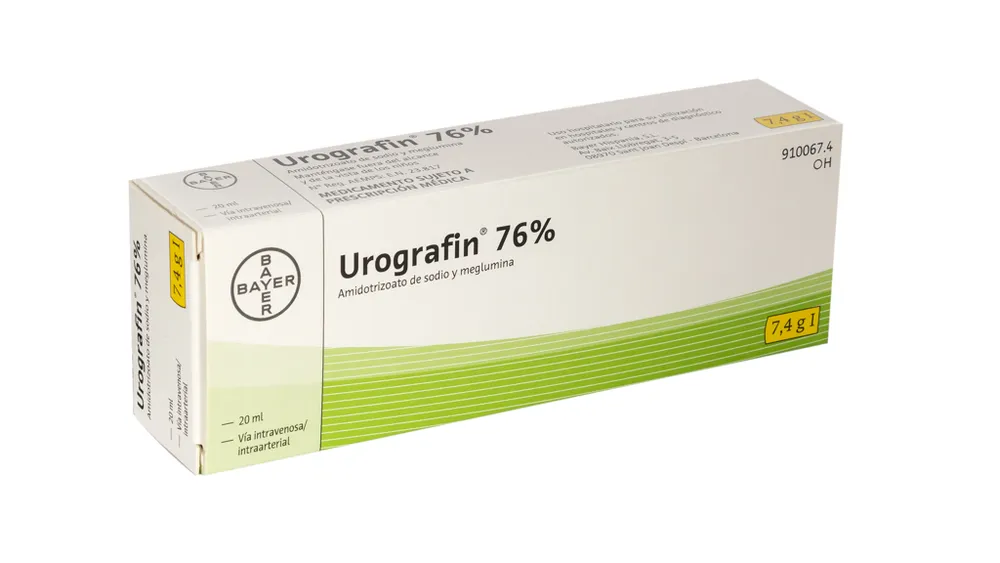
Table of Contents
Patient Information Leaflet
Introduction
Package Leaflet: Information for the Patient
Urografin 370 mg Iodine/ml Injection and Infusion Solution
Meglumine amidotrizoate and sodium amidotrizoate (INN)
Read this entire leaflet carefully before you start using this medicine, as it contains important information for you.
- Keep this leaflet, as you may need to read it again.
- If you have any questions, consult your doctor, the person administering Urografin (the radiologist), or the staff at the hospital or center where the examination will take place.
- If you experience any side effects, talk to your doctor or radiologist, even if they are side effects not listed in this leaflet. See section 4.
Leaflet Contents:
-
What Urografin is and what it is used for
-
What you need to know before using Urografin
-
How to use Urografin
-
Possible side effects
-
How to store Urografin
-
Contents of the pack and other information
1. What Urografin is and what it is used for
This medicine is for diagnostic use only.
It belongs to a group of medicines called iodinated, high-osmolar, water-soluble, nephrotropic X-ray contrast agents.
Urografin is an ionic iodinated radiological contrast medium used for:
- intravenous urography (a radiological technique for visualizing the urinary tract by injecting a contrast medium intravenously),
- angiographic examinations (of blood vessels) such as aortography, angiocardiography, and coronary arteriography,
- arthrography (a radiological technique for visualizing joints),
- intraoperative cholangiography (a radiological technique for visualizing the gallbladder and bile ducts),
- endoscopic retrograde cholangiopancreatography (ERCP; a radiological technique for visualizing the gallbladder, bile ducts, and pancreatic ducts),
- sialography (a radiological technique for visualizing the ducts of the salivary glands),
- fistulography (a radiological technique for visualizing fistulas [an abnormal pathological tract connecting two organs or an organ to the outside]),
- hysterosalpingography (a radiological technique for visualizing the uterus and fallopian tubes),
- galactography (a radiological technique for visualizing the galactophorous ducts in mammography).
2. What you need to know before using Urografin
Do not use Urografin
- If you are allergic to the active substances or to any of the other components of this medicine (listed in section 6).
- If you have manifest hyperthyroidism.
- If you have decompensated heart failure.
- For hysterosalpingography, if you are pregnant or have an acute inflammatory condition of the pelvic cavity.
- For endoscopic retrograde cholangiopancreatography, if you have acute pancreatitis.
- For myelography (a radiological technique for visualizing the spinal cord and subarachnoid spaces), ventriculography, or cisternography (a radiological technique for visualizing cerebral cisterns), as it may cause neurotoxic symptoms (pain, seizures, and coma, frequently with fatal outcome) during these procedures.
Warnings and precautions
Talk to your doctor before using Urografin.
For all indications
The following warnings and precautions apply to any use of contrast media, although the risks mentioned are greater with intravascular administration:
- If you have previously experienced an allergic-type hypersensitivity reaction after using radiological contrast agents. These reactions usually present as mild respiratory or skin symptoms such as mild shortness of breath, skin redness (erythema), urticaria (skin condition characterized by wheals, papules, and pruritus [itching], among other signs and symptoms), itching, or facial edema. Severe reactions such as angioedema (anaphylactic/allergic reaction characterized by subcutaneous edematous areas without pruritus and normal-appearing skin), subglottic edema (a region inside the throat), bronchospasm, and allergic shock are possible. These reactions usually occur within the first hour after contrast administration. However, in rare cases, delayed reactions (after hours or days) may occur.
If you have a history of reactions to contrast agents, iodine sensitivity, allergies (e.g., seafood allergy, allergic rhinitis, urticaria), or bronchial asthma, you have a higher incidence of adverse reactions to contrast media and an increased risk of severe reactions. Premedication with antihistamines and/or glucocorticoids may be considered.
Hypersensitivity reactions may be worsened if you are taking beta-blockers, especially if you have bronchial asthma. In addition, you may not respond to standard treatment of hypersensitivity reactions with beta-agonists.
- If you have or are suspected of having hyperthyroidism (overactive thyroid gland) or goiter (enlargement of the thyroid gland), as iodinated contrast media may interfere with thyroid function, worsen or induce hyperthyroidism, or trigger a thyrotoxic crisis (a serious complication of an overactive thyroid).
If you have hyperthyroidism or subclinical hyperthyroidism, thyroid function should be evaluated before administering Urografin and/or preventive antithyroid medications may be considered.
Thyroid function should be monitored in newborns, especially premature infants, who were exposed to Urografin during pregnancy or at birth, as they may require treatment due to excessive iodine exposure.
-
If you have cardiovascular disease, as this increases the risk of severe adverse reactions, particularly in patients with heart failure or coronary artery disease.
-
If you are elderly, as vascular and neurological disorders commonly seen in these patients increase the risk of adverse reactions.
-
If you are in a significantly compromised general health condition.
In these cases, your doctor will carefully assess the necessity of the procedure.
-
Adequate hydration must be ensured before and after contrast administration. This is especially important if you have multiple myeloma (a type of blood cell cancer), diabetes mellitus affecting the kidneys, polyuria (increased urine volume), oliguria (decreased urine volume), or hyperuricemia (elevated blood uric acid levels), as well as in newborns, infants, young children, and elderly patients. Any disturbances in hydration or electrolyte balance should be corrected before the procedure.
-
Newborns (< 1 month) and children (1 month to 2 years)
Children under 1 year of age, especially newborns, are susceptible to disturbances in both hemodynamics and electrolyte balance. Caution must be exercised regarding the dose of contrast agent administered, the technical performance of the radiological procedure, and the patient's general condition.
- States of excitement, anxiety, and severe pain may increase the risk or severity of adverse reactions associated with contrast media. In such cases, your doctor may recommend taking a sedative.
Sensitivity testing using small doses of contrast media is not recommended, as such tests have no predictive value. Moreover, sensitivity tests have occasionally caused severe, even fatal, hypersensitivity reactions themselves.
Before receiving Urografin, inform your doctor if any of the above conditions apply to you. Your doctor will decide whether the planned diagnostic test is feasible.
Your thyroid function may be evaluated before receiving Urografin, and you may be given an antithyroid medication (a drug to reduce thyroid gland activity).
The doctor should monitor thyroid function in newborns, especially premature infants, who have been exposed to Urografin, either during pregnancy or after birth, because excess iodine may cause hypothyroidism (underactive thyroid gland), which may require treatment.
For intravascular administration
-
If you are at high risk of transient renal failure, e.g., patients with: history of kidney disease, pre-existing renal insufficiency, previous contrast-induced renal failure, diabetes mellitus with nephropathy (kidney disease), reduced body fluid volume, multiple myeloma (cancer of blood cells in the bone marrow), age over 60 years, advanced vascular disease, paraproteinemia (a condition with excessive production of certain proteins), chronic and severe hypertension, gout, or patients receiving high or repeated doses.
-
If you are taking metformin (a biguanide: a drug used to treat certain forms of diabetes mellitus), contrast administration may cause lactic acidosis due to impaired renal function. Treatment with biguanides (metformin) should be discontinued 48 hours before contrast administration and not resumed until 48 hours after, and only after normal renal function has been confirmed.
-
If you have cardiovascular disease.
If you are elderly and have pre-existing heart disease, ECG (electrocardiogram) changes indicating ischemia (lack of oxygen) and significant arrhythmias (abnormal heart rhythms) are more frequent.
If you have valvular heart disease or pulmonary hypertension, contrast administration may cause significant changes in hemodynamics.
If you have heart failure, intravascular injection of contrast media may precipitate pulmonary edema.
- If you have central nervous system (CNS) disorders.
Your doctor will pay special attention to contrast administration if you have cerebrovascular events (acute cerebral infarction, acute intracranial hemorrhage) or other conditions involving disruption of the blood-brain barrier (a histophysiological structure separating brain tissue from blood), cerebral edema, or acute demyelination (loss of myelin: a substance in the CNS that facilitates and increases the speed of nerve impulse transmission).
If you have intracranial tumors or metastases or a history of epilepsy, you are at higher risk of neurological complications (e.g., seizures).
If you have symptomatic cerebrovascular disease, recent or frequent transient ischemic attacks, you are at higher risk of neurological complications.
Neurological symptoms due to cerebrovascular disease, tumors or intracranial metastases, or degenerative or inflammatory conditions may be exacerbated by contrast administration.
Intra-arterial injection of contrast media may cause vasoconstriction (reduction in blood vessel diameter), leading to cerebral ischemic events (lack of oxygen).
-
If you have severe hepatic dysfunction. The coexistence of severe liver dysfunction and renal failure may delay contrast excretion and may require hemodialysis.
-
If you have been diagnosed with multiple myeloma (a cancer of blood cells in the bone marrow) or paraproteinemia (a condition with excessive production of certain proteins), as these conditions predispose to worsening renal function.
-
If you have been diagnosed with pheochromocytoma (a type of tumor), as you may develop a severe hypertensive crisis (occasionally uncontrollable).
-
If you have an autoimmune disease (immune system disorders that attack the body's own tissues), as severe vasculitis (inflammation of blood vessels) and Stevens-Johnson-like syndrome (a condition characterized by polymorphic erythema and cutaneous, mucosal, and ocular manifestations) have been reported.
-
If you have myasthenia gravis (a disease causing muscle weakness and fatigue), as symptoms may worsen.
-
If you suffer from alcoholism, acute or chronic, as it may increase the permeability of the blood-brain barrier (a histophysiological structure separating brain tissue from blood). This facilitates the passage of contrast media into brain tissue, possibly causing CNS reactions. Alcoholics and drug users should be cautious due to the potential lowering of the seizure threshold.
-
If you have homocystinuria (a disorder of protein metabolism), due to the risk of inducing thrombosis and embolism.
For administration into body cavities
-
For endoscopic retrograde cholangiopancreatography or cholangiography, if you have inflammation of the bile ducts.
-
For hysterosalpingography, if you have inflammation of the fallopian tubes. Also, remember that pregnancy must be ruled out before performing hysterosalpingography.
Using Urografin with other medicines
Inform your doctor if you are taking, have recently taken, or might need to take any other medicines.
If you are receiving interleukin therapy, be aware that the incidence of delayed reactions to contrast media (e.g., fever, rash, flu-like symptoms, joint pain, and itching) is higher.
If you are undergoing tests for thyroid disease diagnosis, note that after administration of iodinated contrast media, the thyroid tissue's ability to take up radioisotopes for thyroid disease diagnosis is reduced for up to 2 weeks, and even longer in individual cases.
Using Urografin with food and drink
Dietary recommendations
For certain urinary tract examinations (urography), better images are obtained when the intestine is free of residues and gas. Therefore, during the two days before the examination, avoid foods that cause gas, especially peas, beans, lentils, salads, fruits, bread, and all types of raw vegetables. On the day before the examination, do not eat after 6 p.m. A laxative at night may also be appropriate. However, prolonged fasting and laxative administration before the examination are contraindicated in newborns, infants, and young children.
Pregnancy and breastfeeding
If you are pregnant or breastfeeding, think you may be pregnant, or plan to become pregnant, consult your doctor before using this medicine.
- Pregnancy
There is insufficient evidence to confirm the safety of contrast media in pregnant patients. Since radiation exposure should be avoided during pregnancy whenever possible, the benefits of any radiological examination, with or without contrast media, must be carefully weighed against potential risks.
- Breastfeeding
Renal-excreted contrast media, such as Urografin, are excreted into breast milk only in very small amounts.
Available data suggest that the risk to the infant is low if Urografin is administered to the mother. Breastfeeding is likely safe.
Driving and using machines
Delayed reactions may occur. In such cases, avoid driving, as Urografin may impair your ability to drive safely, and your ability to operate tools or machinery may be affected. You may not be able to react quickly and deliberately in case of unexpected or sudden events. Do not drive a car or any other vehicle.
Urografin contains sodium
This medicine contains 72.40–181.00 mg of sodium (the main component of table/cooking salt) per dose (20–50 ml). This corresponds to 3.62–9.05% of the maximum daily sodium intake recommended for an adult.
This medicine contains 362.00 mg of sodium (the main component of table/cooking salt) per dose (100 ml). This corresponds to 18.1% of the maximum daily sodium intake recommended for an adult.
3. How to use Urografin
Follow exactly the administration instructions for this medicine as indicated by your doctor. If in doubt, consult your doctor again.
Urografin is a contrast medium used to perform a diagnostic test, which must be carried out in the presence of qualified personnel, preferably under the supervision of a physician, who will give you specific instructions at each stage.
For intravenous and intra-arterial administration routes, the dose may vary depending on age, body weight, cardiac output, and the patient's general condition.
Dosage in adults:
Indication | Recommended dose | Route of administration |
Intravenous urography by injection | 20 - 50 ml The dose is 20 ml of Urografin. Diagnostic performance increases significantly by increasing the Urografin dose to 50 ml. For special indications, the dose may be further increased if considered necessary. | Intravenous |
Intravenous urography by infusion | 100 ml | Intravenous |
Aortography | 50 - 70 ml Angiographic examinations require a particularly high iodine concentration. Dosage depends on the clinical situation, the diagnostic technique to be used, and the nature and volume of the vascular region to be studied. | Intraarterial |
Angiocardiography | 0.7 - 3.5 ml/kg body weight Angiographic examinations require a particularly high iodine concentration. Dosage depends on the clinical situation, the diagnostic technique to be used, and the nature and volume of the vascular region to be studied. | Intraarterial |
Coronary arteriography | 4 - 8 ml Angiographic examinations require a particularly high iodine concentration. Dosage depends on the clinical situation, the diagnostic technique to be used, and the nature and volume of the vascular region to be studied. | Intraarterial |
Arthrography | 5 - 20 mL | Intraarticular |
Intraoperative cholangiography | 10 - 20 ml Dose generally depends on the clinical situation and the size of the structure to be studied. | Intracolangiopancreatic |
Endoscopic retrograde cholangiopancreatography (ERCP) | Dose generally depends on the clinical situation and the size of the structure to be studied. | Intracolangiopancreatic |
Sialography | 0.5 - 2 mL | Intraglandular |
Fistulography | Dose generally depends on the clinical situation and the size of the structure to be studied. | Not applicable |
Hysterosalpingography | 10 - 20 mL | Intrauterine |
Galactography | 0.5 - 2 mL | Intramammary |
Pediatric dosage:
Indication | Recommended dose | Route of administration |
Intravenous urography by injection | Up to 1 year: 7-10 ml 1 to 2 years: 10-12 ml 2 to 6 years: 12-15 ml 6 to 12 years: 15-20 ml Over 12 years: adult dose The reduced physiological concentrating capacity of the still immature nephron in children's kidneys necessitates the administration of relatively high doses of Urografin. | Intravenous |
Intravenous urography by infusion | Over 12 years: adult dose | Intravenous |
At the end of the leaflet, additional information on the administration and handling of Urografin is included.
Dosage in special populations
Renal insufficiency / Cardiac insufficiency
If you have severe cardiovascular or renal insufficiency, or are in poor general condition, you should be given the lowest possible dose of contrast medium. In addition, your renal function should be monitored for at least 3 days after the examination.
Elderly patients (population over 65 years of age):
Dose adjustment is not recommended compared to younger adults, since iodine concentrations required for diagnostic imaging are independent of age, as with other iodinated contrast agents.
Patients with hepatic insufficiency:
Additional dose adjustment is not considered necessary.
If you think that the effect of Urografin is too strong or too weak, inform your doctor or pharmacist.
Your doctor will inform you about all characteristics related to the administration of Urografin.
If you use more Urografin than you should
Losses of water and electrolytes should be compensated by infusion. Renal function must be monitored for at least the following three days. If necessary, hemodialysis may be used to remove most of the contrast medium.
In case of overdose or accidental ingestion, contact the Toxicology Information Service, telephone: 91 562 04 20, stating the medication and the amount ingested.
If you have any further questions about the use of this medicine, ask your doctor or radiologist.
4. Possible adverse effects
Like all medicines, this medicine can cause adverse effects, although not everyone experiences them.
Adverse effects associated with intravascular administration of iodinated contrast media are usually mild to moderate in severity and transient in nature. However, severe, life-threatening reactions have also been reported, including fatalities. The prevalence of pharmacological adverse reactions in patients receiving ionic contrast media is greater than 12%, compared to more than 3% in patients receiving non-ionic contrast media. The most frequently reported adverse effects are nausea, vomiting, pain sensation, and a generalized sensation of warmth.
Adverse effects following administration into body cavities are rare. Most occur several hours after administration due to slow absorption from the site of administration and subsequent distribution throughout the body, primarily via controlled diffusion processes. With regard to hysterosalpingography, vasovagal reactions (sudden, transient loss of consciousness followed by rapid recovery) are uncommon.
Listed below are possible adverse effects reported in patients treated with Urografin during intravascular and body cavity administration, categorized by their frequency:
Frequent adverse effects (may affect up to 1 in 10 people):
- Anaphylactoid/hypersensitivity reactions (angioedema, conjunctivitis, cough, pruritus, rhinitis, sneezing, and urticaria)
- Sensation of warmth, local pain2,3,5, edema3,5
- Nausea, vomiting
- Headache
- Transient alterations in respiratory rate, dyspnea, breathing difficulty, cough
- Erythema
- Flushing with vasodilation
Uncommon adverse effects (may affect up to 1 in 100 people):
- Hypotension1, bronchospasm1, laryngeal spasm1, laryngeal edema1
- Malaise, chills, sweating
- Transient alteration in heart rate, transient alteration in blood pressure, cardiac rhythm or cardiac function disturbances, cardiac arrest
- Hearing disorder4
- Transient blindness4, photophobia4, visual disturbance4
- Abdominal pain
- Vasovagal reactions7, dizziness4, agitation4, confusion4, amnesia4, speech disorders4, seizures4, tremor4, paresis/paralysis4, coma4, somnolence4
Rare adverse effects (may affect up to 1 in 1,000 people):
- Type IV hypersensitivity reaction (delayed reactions to contrast medium)
- Myocardial infarction
- Swelling of salivary glands, pancreatitis8,9, necrotizing pancreatitis8,9
- Fluctuation in body temperature, increased amylase (pancreatic enzyme)8,9
- Cerebrovascular accident6
- Renal function disturbances, renal failure
- Respiratory arrest, pulmonary edema
- Mucocutaneous syndrome (e.g., Stevens-Johnson syndrome or toxic epidermal necrolysis / Lyell’s syndrome)
- Thrombophlebitis5, venous thrombosis5, embolism
Very rare adverse effects (may affect up to 1 in 10,000 people):
- Inflammation5, tissue necrosis5
1 In the context of anaphylactoid/hypersensitivity reactions.
2 Mainly in association with peripheral angiography.
3 Associated with contrast medium extravasation, usually resolving without sequelae.
4 Transient neurological symptoms and/or complications associated with procedures in which the contrast medium reaches the brain at high concentrations.
5 Associated with the injection site.
6 In isolated cases, fatal.
7 In relation to hysterosalpingography.
8 Rarely observed in association with use in body cavities.
9 Post endoscopic retrograde cholangiopancreatography (ERCP)
Description of selected adverse reactions
Intravascular administration
Anaphylactoid/hypersensitivity reactions (e.g., mild angioedema, conjunctivitis, cough, pruritus, rhinitis, sneezing, and urticaria) may occur regardless of the dose administered or the route of administration, and may be the first signs of an impending shock state. Administration of the contrast medium must be stopped immediately, and specific intravenous treatment initiated if necessary.
Severe anaphylactoid/hypersensitivity reactions or cardiac disturbances requiring emergency treatment may present as circulatory reactions accompanied by peripheral vasodilation and consequent hypotension, reflex tachycardia, dyspnea, agitation, confusion, and cyanosis, potentially leading to loss of consciousness.
In rare cases, severe thromboembolic events have been reported, leading to cerebrovascular accidents (in isolated cases, fatal) and myocardial infarction.
Administration into body cavities
Systemic hypersensitivity is rare, mostly mild, and usually manifests as cutaneous reactions. However, the possibility of a severe hypersensitivity reaction cannot be entirely ruled out.
A certain elevation in amylase levels is common after endoscopic retrograde cholangiopancreatography (ERCP). Acinar opacification (visualization of contrast in pancreatic acinar ducts) following ERCP has been shown to be associated with an increased risk of post-ERCP pancreatitis. In rare cases, necrotizing pancreatitis has been reported.
Reporting of adverse effects
If you experience any type of adverse effect, consult your doctor or radiologist, even if it is a possible adverse effect not listed in this leaflet. You may also report them directly via the Spanish Pharmacovigilance System for Human Medicines: https://www.notificaram.es. By reporting adverse effects, you can help provide more information on the safety of this medicine.
5. Storage of Urografin
Keep this medicine out of the sight and reach of children.
Do not store above 25 °C. Store in the original packaging to protect from light and ionizing radiation (X-rays).
Do not use this medicine after the expiry date stated on the label and packaging after EXP. The expiry date refers to the last day of the month indicated.
This medicine is a clear, colourless to pale yellow ready-to-use solution. Do not use this medicine if you notice significant changes in colour, the presence of particles, or if the container appears damaged.
Any unused contrast medium remaining after an imaging session must be discarded.
Medicines must not be disposed of via wastewater or household waste. Healthcare professionals will dispose of any containers and medicines no longer required. This helps protect the environment.
6. Package contents and other information
Composition of Urografin
The active substances are sodium amidotrizoate and meglumine amidotrizoate.
1 ml of Urografin contains 0.1 g of sodium amidotrizoate and 0.66 g of meglumine amidotrizoate (sodium diatrizoate and meglumine diatrizoate) in aqueous solution.
The other components are: calcium disodium edetate and water for injections.
Appearance of the product and contents of the container
Urografin is a clear, colourless to pale yellow solution, ready for use.
Presentations of Urografin:
- 20 ml ampoules
- 50 ml and 100 ml vials
Only certain pack sizes may be marketed.
Marketing Authorisation Holder and Manufacturer
Marketing Authorisation Holder
Bayer Hispania, S.L.
Av. Baix Llobregat, 3-5
08970 Sant Joan Despí (Barcelona)
Spain
Manufacturer
BERLIMED, S.A.
C/ Francisco Alonso, 7 - Polígono Industrial Sta. Rosa
28806 Alcalá de Henares (Madrid)
Spain
Date of the most recent revision of this leaflet: October 2021
Detailed information on this medicinal product is available on the website of the Spanish Agency of Medicines and Health Products (AEMPS): http://www.aemps.gob.es
This information is intended for healthcare professionals only:
Before administration of Urografin
Contrast media warmed to body temperature prior to administration are better tolerated and can be administered more easily due to reduced viscosity. If a heater is used, only the estimated number of vials required for the day's examination should be warmed to 37°C. If Urografin is protected from direct sunlight, it may be stored at this temperature for prolonged periods without changes in the chemical purity of the product. However, this period should not exceed 3 months.
Urografin is supplied ready for use as a clear, colourless to pale yellow solution. Contrast media must not be used if there are significant changes in colour, appearance of particles in suspension, or if the container is damaged.
Handling
The contrast solution must not be drawn into a syringe, nor must the vial be connected to an infusion set, until immediately before the examination.
The rubber stopper should not be punctured more than once to avoid introducing large quantities of microparticles from the stopper into the solution. Long-tip cannulae with a maximum diameter of 18 G are recommended for puncturing the stopper and withdrawing the contrast medium (specially designed extraction cannulae with a lateral opening are particularly suitable).
For single use only. Do not use the same container for more than one patient. Unused contrast medium from an examination must be discarded.
Disposal of unused medicine and all materials that have been in contact with it must be carried out in accordance with local regulations.
Incompatibilities
This medicinal product must not be mixed with other medicinal products to avoid the risk of incompatibilities.
Special warnings and precautions for use (see also section 2: What you need to know before using Urografin)
Hypersensitivity reactions
Occasionally, hypersensitivity reactions of an allergic type have been observed in patients after administration of radiological contrast media such as Urografin.
Patients with hypersensitivity or previous reactions to iodinated contrast media have an increased risk of experiencing a severe reaction.
Before injecting any contrast medium, the patient should be questioned about possible allergic history, e.g., allergy to seafood, allergic rhinitis (hay fever), urticaria, iodine sensitivity, or previous reactions to radiographic contrast media, and bronchial asthma, as the incidence of adverse effects with contrast media is higher in patients with these conditions. Pre-treatment with antihistamines and/or glucocorticoids may be considered.
Patients with bronchial asthma are at particular risk of bronchospasm or hypersensitivity reactions.
Hypersensitivity reactions may be exacerbated in patients receiving beta-blockers, especially those with bronchial asthma. In addition, it should be noted that patients receiving beta-blockers may be unresponsive to standard treatment of hypersensitivity reactions with beta-receptor agonists.
If hypersensitivity reactions occur, administration of the contrast medium must be stopped immediately and, if necessary, specific intravenous treatment initiated. Therefore, it is advisable to use a permanent flexible cannula for intravenous administration of the contrast medium. To allow immediate action in case of emergency, appropriate drugs, an endotracheal tube, and an artificial respirator should be readily available.
Pre-administration testing
Pre-administration sensitivity testing using small doses of contrast medium is not recommended, as such tests have no predictive value. Moreover, sensitivity tests themselves have occasionally caused severe, even fatal, hypersensitivity reactions.
For intravascular administration
Renal insufficiency
Transient renal insufficiency may rarely occur. Preventive measures against acute renal failure following contrast medium administration include:
Identification of high-risk patients (e.g., patients with a history of renal disease, pre-existing renal insufficiency, previous contrast medium-induced renal failure, diabetic nephropathy, reduced blood volume, multiple myeloma, age over 60 years, advanced vascular disease, paraproteinaemia, chronic and severe hypertension, gout, or patients receiving high or repeated doses).
Ensuring adequate hydration in at-risk patients before contrast medium administration, preferably via intravenous infusion before and after the procedure and until the contrast medium has been eliminated by the kidneys.
Avoiding additional renal burden from nephrotoxic drugs, oral cholecystographic agents, arterial clamping, renal arterial angioplasty, major surgery, etc., until the contrast medium has been eliminated.
Delaying any further contrast medium examination until renal function has fully returned to pre-examination levels.
Iodinated contrast media may be administered to patients undergoing dialysis, as these agents are eliminated during dialysis.
Phaeochromocytoma
Patients with phaeochromocytoma may develop severe (sometimes uncontrollable) hypertensive crisis following intravascular administration of contrast media. Pre-treatment with alpha-adrenergic receptor blockers (antagonists) is recommended.
Coagulation
Ionic iodinated contrast media inhibit blood coagulation in vitro more than non-ionic contrast media. However, healthcare professionals performing vascular catheterisation procedures should consider that, in addition to the contrast medium, numerous other factors may contribute to thromboembolic events, such as the duration of the procedure, number of injections, type of catheter and syringe material, underlying patient pathology, and concomitant medication.
Therefore, all these factors must be taken into account during vascular catheterisation procedures, with special attention paid to the angiographic technique used, frequent irrigation of the catheter with physiological saline (with heparin added whenever possible), and minimisation of procedure duration, in order to minimise the risk of procedure-related thromboembolic events.
It has been reported that using plastic syringes instead of glass syringes reduces, but does not eliminate, the possibility of in vitro coagulation phenomena.
Dosage (see also section 3: How to use Urografin)
Sufficient time should elapse between separate injections to allow intravascular redistribution or movement of interstitial fluid to normalise the increase in serum osmolality. In adequately hydrated patients, a period of 10–15 minutes is required for this. In special adult cases where a total dose exceeding 300–350 ml is necessary, fluid and possibly electrolyte replacement should be performed.
Intravenous urography
- Intravenous urography by injection
In general, the injection rate is 20 ml/min. When administering 100 ml or more to patients with heart failure, an injection time of at least 20–30 minutes is recommended.
- Intravenous urography by infusion
Adults and adolescents
In general, the infusion time should not be less than 5 minutes nor much longer than 10 minutes. In patients with heart failure, an infusion time of 20–30 minutes is required.
Compression is contraindicated in newborns and children up to 2 years of age, and is also not advisable during the infusion of large volumes of contrast medium in children, adolescents, and adults, as, if drainage is obstructed, increased diuresis may result in fornix rupture due to increased pressure. However, compression may be applied approximately 10 minutes after completion of the infusion to differentiate organic filling defects from functional ones.
Angiographic examinations
The 76% solution is suitable for angiographic examinations requiring particularly high iodine concentration, e.g., aortography, angiocardiography, and coronary arteriography. Dosage depends on the clinical situation, the diagnostic technique used, and the nature and volume of the vascular region under study.
Image acquisition
Intravenous urography by injection
The renal parenchyma is best visualised on radiographs taken immediately after completion of contrast medium administration.
For visualisation of the renal pelvis and urinary tract, the first radiograph should be taken at 3–5 minutes and the second at 10–12 minutes after contrast medium administration. Within these intervals, the earlier time point should be chosen for younger patients and the later time point for older patients.
In newborns, infants, and young children, the first radiograph is recommended approximately 2 minutes after contrast medium administration.
Insufficient contrast volume may require additional radiographs.
Intravenous urography by infusion
The first radiograph should be taken towards the end of the infusion. Additional radiographs may be taken within the following 20 minutes, or later if excretory abnormalities are present.
Non-intravenous urography indications
Details of the image acquisition technique depend on the imaging technology used. Users should follow the specifications of the respective imaging equipment.