Ultravist 300 mg/ml solution for injection and infusion
Spain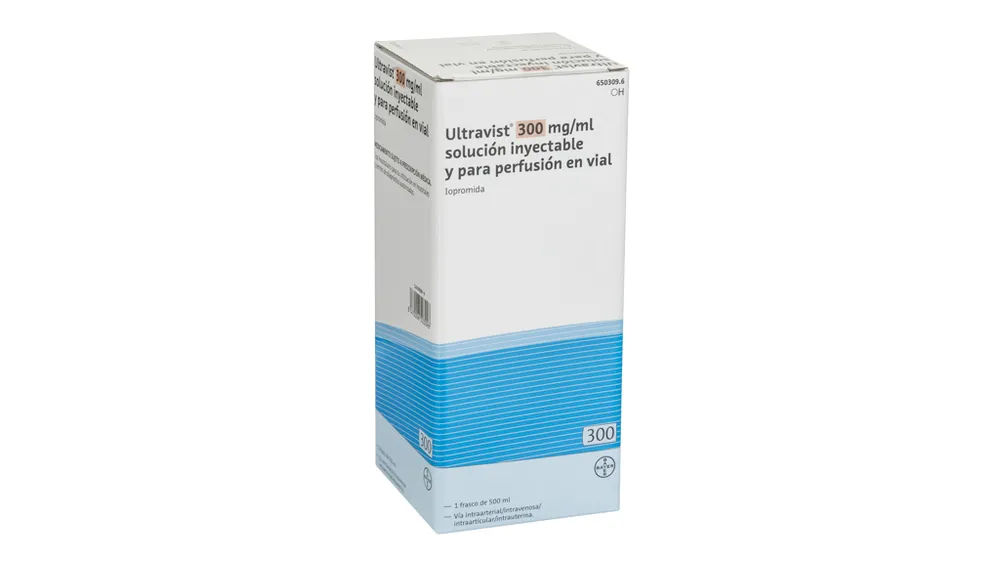
Table of Contents
Patient Information Leaflet
Introduction
Patient Information Leaflet
Ultravist 300 mg/ml solution for injection and infusion
Iopromide
Read the entire package leaflet carefully before you start using this medicine, because it contains important information for you.
|
Package leaflet:
-
What Ultravist is and what it is used for
-
What you need to know before using Ultravist
-
How to use Ultravist
-
Possible side effects
-
Storage of Ultravist
-
Contents of the pack and other information
1. What Ultravist is and what it is used for
This medicinal product is for diagnostic use only.
Ultravist belongs to a group of medicines known as low-osmolar, water-soluble, nephrotropic X-ray contrast media.
Ultravist is used to enhance contrast during imaging of various body areas using certain radiological techniques:
- computed tomography (CT, imaging cross-sectional slices or sections of a specific region of the body)
- conventional arteriography (for visualizing arteries)
- conventional extremity venography (for visualizing veins in the extremities) in adults and venography in children
- intra-arterial/intravenous digital subtraction angiography (DSA)
- intravenous urography (for visualizing the urinary tract)
- contrast-enhanced mammography (CEM) in adult women to evaluate and detect known or suspected breast lesions, as a complement to mammography (with or without ultrasound) or as an alternative to magnetic resonance imaging (MRI) when MRI is contraindicated or unavailable
- arthrography (visualization of joints) and hysterosalpingography (visualization of the uterus and fallopian tubes)
2. What you need to know before using Ultravist
Do not use Ultravist:
- if you are allergic (hypersensitive) to the active substance or to any of the other components of this medicine (listed in section 6)
- if you have clinical hyperthyroidism (your thyroid gland produces too much thyroid hormone)
- if you are pregnant or have acute inflammation in the pelvic cavity and are scheduled for hysterosalpingography (imaging of the uterus and fallopian tubes)
Warnings and precautions
Talk to your doctor or pharmacist before using Ultravist:
- If you have ever experienced a severe skin rash, skin peeling, blistering and/or oral ulcers after using Ultravist
Take special care with Ultravist
For all indications
- If you have previously experienced an allergic reaction to another iodinated contrast medium, as there is an increased risk of hypersensitivity (allergic) reactions.
The risk of allergic reactions is also higher in patients with a history of bronchial asthma or other allergic disorders, and in patients with known hypersensitivity to Ultravist or any of its excipients.
Your doctor may consider premedication with corticosteroids to minimize allergic reactions.
Patients experiencing such reactions while on beta-blocker therapy may be resistant to treatment with beta-agonists (see section on concomitant use of other medicines).
In the event of a severe hypersensitivity reaction, patients with cardiovascular diseases (heart conditions) are more susceptible to severe, even fatal, reactions.
Due to the possibility of severe hypersensitivity reactions occurring after administration, patients should be monitored after completion of the diagnostic procedure.
-
Severe skin reactions such as Stevens-Johnson syndrome (SJS), toxic epidermal necrolysis (TEN), drug reaction with eosinophilia and systemic symptoms (DRESS), and acute generalized exanthematous pustulosis (AGEP) have been reported with the use of Ultravist. Seek immediate medical attention if you notice any of the signs described in section 4.
-
If you have thyroid dysfunction (abnormal thyroid function). Inform your doctor if you have hyperthyroidism (overactive thyroid) or goiter (enlargement of the thyroid gland), as iodine-containing contrast media may induce hyperthyroidism and thyrotoxic crisis (a serious complication of overactive thyroid). A blood test for thyroid function may be performed and appropriate medication prescribed. Your doctor will consider whether thyroid function tests are needed before administering Ultravist.
Inform your doctor if you have a history of thyroid disease, including hypothyroidism (underactive thyroid gland). Abnormal thyroid function test results have been reported after imaging with iodine-containing contrast agents, which may suggest possible hypothyroidism or a transient (temporary) reduction in thyroid function, potentially requiring treatment.
Newborns may also be exposed to Ultravist via the mother during pregnancy.
If your child is under 3 years of age:
Your doctor may monitor and check thyroid function, especially in newborns.
- If you have central nervous system (CNS) disorders:
Patients with central nervous system disorders may have an increased risk of neurological complications related to the administration of Ultravist. Neurological complications are more common during or after cerebral angiography (X-ray imaging of brain vessels) and related procedures.
During or shortly after the imaging procedure, you may experience a short-term brain disorder called encephalopathy. Inform your doctor immediately if you notice any of the signs and symptoms related to this condition described in section 4.
Caution should be exercised in situations where the seizure threshold is lowered, such as a history of previous seizures or concomitant use of certain medications.
- Ultravist must not be administered if you are dehydrated (have not taken in enough fluids). To prevent this, your doctor will ensure you are adequately hydrated before your examination (see section "Take special care with Ultravist"). Adequate hydration must be ensured in all patients before intraarterial or intravenous administration of Ultravist.
This is especially important if you have multiple myeloma (a type of blood cell cancer), diabetes mellitus, excessive urine output (polyuria), reduced urine production (oliguria), hyperuricemia (elevated blood uric acid levels), as well as in newborns, infants, young children, and elderly patients.
Inform your doctor if you have kidney problems. Your doctor will ensure you are well hydrated before your examination. However, intravenous fluid administration (fluids into the veins) is not recommended if you have kidney problems.
Inform your doctor if you have severe kidney problems accompanied by heart disease. Intravenous fluid administration (fluids into the veins) may be dangerous for the heart.
- If you suffer from anxiety:
States of excitement, anxiety, and severe pain may increase the risk or severity of adverse reactions associated with contrast media. In such cases, inform your doctor, who will attempt to minimize your anxiety.
-
If you are elderly, as vascular pathology and neurological disorders commonly seen in these patients increase the risk of adverse reactions.
-
If you have a significantly impaired general health status, your doctor will assess whether the examination is necessary.
Additionally, in the case of intraarterial or intravenous injection of Ultravist, special care should also be taken in the following situations:
-
There is a risk that you may develop acute kidney injury after injection (Post-Contrast Acute Kidney Injury (PC-AKI)) following administration of Ultravist. As a result, your kidneys may not function properly for a short period. Some patients may develop renal failure. This is particularly relevant if you have any of the following conditions:
-
pre-existing renal impairment (kidneys not functioning properly). For further information, see section 3: "How to use Ultravist", sub-section “Patients with renal impairment”,
-
diabetes mellitus,
-
dehydration,
-
multiple myeloma (cancer of bone marrow blood cells),
-
paraproteinemia (a condition characterized by excessive production of certain proteins),
-
patients receiving high or repeated doses of Ultravist.
-
If you have severe kidney or liver dysfunction, combined kidney and liver disorders, or are scheduled for liver transplantation. Ultravist will only be administered if absolutely necessary. In such cases, adequate hydration before contrast administration is essential.
-
If you have diabetes mellitus, as administration of iodinated contrast media in diabetic patients with pre-existing kidney damage predisposes to renal dysfunction.
-
If you have cardiovascular disease.
There is an increased risk of clinically relevant cardiovascular changes and arrhythmias (abnormal heart rhythms) in patients with significant cardiac disease or severe coronary artery disease.
Intraarterial or intravenous injection of contrast medium may precipitate pulmonary edema in patients with heart failure. (See section 3: "How to use Ultravist", sub-section “Patients with renal impairment”).
-
If you have been diagnosed with pheochromocytoma (a type of tumor), as you may be at increased risk of developing a hypertensive crisis.
-
If you have an autoimmune disease (conditions in which the immune system attacks the body's own tissues), as severe cases of vasculitis (inflammation of blood vessels) and Stevens-Johnson-like syndrome (a condition characterized by polymorphic erythema and cutaneous, mucosal, and ocular manifestations) have been reported.
-
If you have myasthenia gravis (a disease causing muscle weakness and rapid fatigue), as symptoms may worsen.
-
Caution is required if you have homocystinuria (a disorder of protein metabolism) due to the risk of thrombosis and embolism.
-
If you have multiple myeloma (a type of blood cell cancer) or Waldenström’s paraproteinemia (a condition involving excessive production of certain proteins), as you may be more prone to transient renal dysfunction after contrast medium administration.
-
Contrast-enhanced mammography exposes you to higher levels of ionizing radiation than traditional mammography, although still within the limits defined by international mammography guidelines. Radiation dose depends on breast thickness and the type of mammographic device used.
Additionally, when using Ultravist for hysterosalpingography, the following considerations should be taken into account:
-
Pregnancy must be ruled out.
-
Inflammation of the fallopian tubes may increase the risk of reactions following hysterosalpingography.
Consult your doctor, even if any of the above circumstances occurred in the past.
Use of Ultravist with other medicines
Inform your doctor or pharmacist if you are taking, have recently taken, or might need to take any other medicines, including those obtained without a prescription.
Certain medicines may interact, and in such cases it may be necessary to adjust the dose or discontinue treatment with one of the medicines. It is especially important that you inform your doctor if you are taking any of the following medicines:
-
Metformin (biguanide: a drug used in the treatment of certain forms of diabetes mellitus): in patients with renal impairment, the elimination of biguanides may be reduced, leading to accumulation and development of lactic acidosis (accumulation of lactic acid in the body). Since the use of Ultravist may result in renal impairment or worsening of existing renal function, patients treated with metformin may have an increased risk of developing lactic acidosis, particularly those with pre-existing renal impairment. Based on measurements of renal function, the need to discontinue metformin administration should be considered.
-
Neuroleptics (medicines commonly used to treat psychosis), analgesics (medicines that relieve or eliminate pain), antiemetics (drugs that prevent vomiting or nausea), antihistamines (medicines used to treat allergic rhinitis or dermatitis), and sedatives (tranquilizers). With the use of these medicines, your susceptibility to seizures may be reduced and, therefore, you may have an increased risk of contrast medium-related reactions. Therapy with these drugs should be discontinued 48 hours before contrast administration and not resumed until at least 12 hours after the procedure.
-
Beta-blockers, as hypersensitivity reactions may be exacerbated, especially in cases of allergic predisposition, bronchial asthma, or history of allergy to other contrast media. In addition, the patient may not respond adequately to standard treatment with beta-agonists.
-
Interleukin-2, since previous treatments (up to several weeks) with interleukin-2 have been associated with an increased risk of delayed reactions to Ultravist.
-
Oral cholecystographic contrast media: There is no evidence of interaction with contrast media eliminated via the kidneys.
-
Diuretics: Due to the risk of dehydration caused by diuretics, before administering iodinated contrast medium, your doctor should administer rehydration salts to minimize the risk of acute renal failure.
-
Interference with laboratory tests: Iodinated contrast media may interfere with thyroid function tests, as the thyroid's ability to bind iodine may be reduced for several weeks.
-
Radiopharmaceuticals: If you are scheduled to undergo diagnostic or therapeutic procedures for thyroid disorders using radioisotopes, these should be postponed until several weeks after administration of Ultravist, due to reduced radioisotope uptake.
Use of Ultravist with food and drink
You may maintain a normal diet up to two hours before the examination. During the two hours prior to the procedure, you should refrain from eating.
Pregnancy and Lactation
If you are pregnant or breastfeeding, think you may be pregnant, or are planning to become pregnant, consult your doctor or pharmacist before using this medicine.
Well-controlled studies in pregnant women have not been conducted.
Following diagnostic administration of Ultravist in humans, animal studies do not indicate harmful effects on pregnancy, embryonal/fetal development, parturition, or postnatal development.
The risk-benefit ratio should be carefully evaluated before administering an iodinated contrast agent, taking into account the fetal thyroid sensitivity to iodine, since acute iodine overload following administration of an iodinated contrast agent to the mother may cause fetal thyroid dysfunction.
The safety of Ultravist in women who are breastfeeding has not been investigated. Contrast agents are excreted in breast milk in minimal amounts. Harm to the infant is not expected.
Driving and Use of Machines
No studies have been conducted on the effects on the ability to drive and operate machinery.
Ultravist contains Sodium
This medicine contains less than 23 mg of sodium (1 mmol) per dose (based on the average amount administered to a 70 kg individual), which means it is essentially "sodium-free".
3. How to use Ultravist
Follow exactly the administration instructions for this medicine as given by your doctor. If in doubt, consult your doctor or pharmacist again.
Ultravist is a contrast medium used for a diagnostic test, which must be carried out in the presence of qualified personnel, preferably under the supervision of a physician, who will provide you with specific instructions throughout the procedure.
Before administering the contrast medium via intra-arterial or intravenous route, your doctor should rule out possible renal dysfunction based on clinical history and/or laboratory tests.
Contrast-enhanced mammography (CEM): Ultravist will be injected intravenously (a large amount into the vein), preferably using an automatic injector if possible.
Dosage in adults
The recommended doses in adults are as follows:
Indication | Recommended Dose (single injection) | Maximum Total Dose | |
Conventional Arteriography | |||
| 50 – 80 ml | 1.5 g I per kg body weight | |
| 6 – 15 ml | 1.5 g I per kg body weight | |
| 30 – 40 ml | 1.5 g I per kg body weight | |
Conventional Aortography | Administration via intraarterial or intravenous route. | ||
| 50 – 80 ml | 1.5 g I per kg body weight | |
| 40 – 60 ml | 1.5 g I per kg body weight | |
Limb Arteriography | |||
| 6 – 12 ml | 1.5 g I per kg body weight | |
| 20 – 30 ml | 1.5 g I per kg body weight | |
Limb Venography | |||
| 14 – 30 ml | 1.5 g I per kg body weight | |
| 30 – 60 ml | 1.5 g I per kg body weight | |
Digital Subtraction Angiography (DSA) | |||
| 30 – 60 ml | 1.5 g I per kg body weight | |
Flow rate: 8–12 ml/sec in the cubital vein; 10–20 ml/sec via catheter in the vena cava, only for visualization of major trunk vessels. The amount of contrast medium in the veins can be reduced while maintaining diagnostic quality by immediately administering a bolus of isotonic sodium chloride solution. | |||
| 2 – 25 ml | 1.5 g I per kg body weight | |
In intraarterial DSA, smaller volumes and lower iodine concentrations are sufficient compared to intravenous technique. The more selective the angiography, the lower the contrast dose required. Therefore, this method is recommended in patients with impaired renal function. | |||
Computed Tomography (CT) | |||
| 1.0 – 2.0 ml/kg body weight | 1.5 g I per kg body weight | |
| 1.0 – 2.0 ml/kg body weight | 1.5 g I per kg body weight | |
The required contrast medium doses and their administration rates depend on the organ studied, the diagnostic question, and especially on the scanning and image reconstruction times of the equipment used. | |||
Intravenous Urography | 0.3 g I/kg body weight = 1.0 ml/kg body weight | 1.5 g I per kg body weight | |
The recommended dose may be increased in obese patients or in those with impaired renal function, if considered necessary. | |||
Contrast-Enhanced Mammography (CEM) | 1.5 ml/kg body weight | 1.5 g I per kg body weight | Administration via intravenous route. |
Arthrography | 3 – 15 ml | 15 ml | Administration via intraarticular route. |
Hysterosalpingography | 10 – 25 ml | 25 ml | Administration via intrauterine route. |
Dosage in special populations
Elderly patients (population over 65 years of age):
Dose adjustment is not required.
Pediatric population (under 18 years of age):
The recommended doses in children are shown in the table below.
Immature pediatric kidneys require relatively higher doses of the contrast medium for intravenous urography compared to other indications, as indicated in the table below:
Indication | Pediatric population | Recommended dose (single injection) | Route of administration |
Intravenous Urography | Neonates (less than 1 month) | 1.2 g I/kg = 4.0 ml/kg | Intravenous administration |
Infants (between 1 month and 2 years) | 1.0 g I/kg = 3.3 ml/kg | ||
Young children (between 2 and 11 years) | 0.5 g I/kg = 1.7 ml/kg | ||
Pediatric population from 11 to 18 years | 0.3 g I/kg = 1.0 ml/kg | ||
Computed Tomography (CT) | From 0 to 18 years | Depending on age, weight, and pathology. Recommended dose: 1–3 ml/kg. In extreme cases, a maximum volume of 125 ml may be administered. | Intravenous administration |
Digital Subtraction Angiography (DSA) | From 0 to 18 years | Depending on age, weight, and pathology. Children 28 days and younger: maximum volume: 4 ml/kg. Children 29 days and older: maximum volume: 5 ml/kg. | Intraarterial and intravenous administration |
Flebography | From 0 to 18 years | Depending on age, weight, and pathology. Maximum volume: 3 ml/kg. | Intravenous administration |
Conventional Arteriography | From 0 to 18 years | Depending on age, weight, and pathology. Children 28 days and younger: maximum volume: 4 ml/kg. Children 29 days and older: maximum volume: 5 ml/kg. | Intraarterial administration |
Children under 1 year of age, and especially newborns, are susceptible to disturbances in both blood dynamics and the body's electrolyte balance. Caution must be exercised regarding the dose of contrast medium administered, the technical conduct of the radiological procedure, and the patient's general condition.
Recommended doses in neonates, infants, young children, and pediatric patients aged 11 to 18 years must not be exceeded.
Patients with hepatic impairment:
Dose adjustment is not necessary (see section 2).
Patients with renal impairment:
Since Ultravist is almost exclusively excreted unaltered by the kidneys, elimination of Ultravist is prolonged in patients with renal impairment. To reduce the risk of contrast medium-induced renal injury, the lowest possible diagnostic dose should be used in patients with pre-existing renal impairment (see section 2).
If you think that the effect of Ultravist is too strong or too weak, inform your doctor or pharmacist.
Your doctor will inform you about all aspects related to the administration of Ultravist.
If you use more Ultravist than you should
Symptoms may include hydroelectrolytic imbalance (increase or decrease in total body water and electrolyte levels), renal failure, and cardiovascular and pulmonary complications.
In case of accidental intra-arterial or intravenous overdose, monitoring of hydroelectrolytic balance and renal function is recommended. Treatment of overdose should focus on supporting vital functions. Loss of water and electrolytes should be compensated by infusion. Renal function should be monitored for at least 3 days following the procedure. If necessary, hemodialysis may be used to remove most of the contrast medium from the body.
Ultravist is dialyzable.
In case of overdose or accidental ingestion, contact the Toxicology Information Service; Telephone 91 562 04 20.
If you have any further questions about the use of this product, ask your doctor or pharmacist.
4. Possible adverse effects
Like all medicines, this medicine can cause adverse effects, although not everyone experiences them.
The overall safety profile of Ultravist is based on data from pre-marketing studies involving more than 3,900 patients and post-authorization studies in over 74,000 patients, as well as spontaneous reporting data and published literature.
The most frequently observed adverse reactions in patients receiving Ultravist are headache, nausea, and dilation of blood vessels.
The most serious adverse reactions observed in patients receiving Ultravist are anaphylactic shock, respiratory arrest, narrowing or obstruction of the bronchi, fluid accumulation in the larynx and pharynx, asthma, coma, cerebral infarction, stroke, fluid accumulation in the brain, convulsions, abnormal heart rhythms, cardiac arrest, myocardial ischemia, myocardial infarction, heart failure, decreased heart rate, bluish discoloration of the skin and mucous membranes, low blood pressure, shock, difficulty breathing, fluid accumulation in the lung, respiratory failure, and aspiration.
All indications
Frequent adverse effects (may affect between 1 and 10 out of every 100 patients):
- dizziness, headache, altered taste
- blurred vision, visual disturbances
- chest pain or discomfort
- high blood pressure, dilation of blood vessels
- vomiting, nausea
- pain, reactions at the injection site (e.g., pain, and with unknown frequency: sensation of heat, fluid accumulation, swelling, and injury) and sensation of warmth.
Uncommon adverse effects (may affect between 1 and 10 out of every 1,000 patients):
- allergic reactions (hypersensitivity/anaphylactoid reactions, e.g., fluid accumulation in the face, sneezing, cough, fluid accumulation in mucous membranes, hives, itching, rapid swelling of the skin and mucous membranes); with unknown frequency and *: anaphylactic shock, respiratory arrest, and asthma; *: narrowing or obstruction of the bronchi, fluid accumulation in larynx or pharynx; with unknown frequency: fluid accumulation in the tongue, pharyngeal or laryngeal spasm, conjunctivitis, tearing, rhinitis, hoarseness, and throat irritation)
- fainting, confusion, nervousness, sensory disturbances, decreased sensitivity, drowsiness
- abnormal heart rhythms (arrhythmias, *)
- low blood pressure (*)
- difficulty breathing (*)
- abdominal pain
- fluid accumulation (edema)
Rare adverse effects (may affect between 1 and 10 out of every 10,000 patients):
- anxiety
- cardiac arrest (*), myocardial ischemia (*), palpitations
Adverse effects of unknown frequency (frequency cannot be estimated from available data)
- thyrotoxic crisis (acute worsening of thyroid gland function), thyroid disorder
- coma (*), cerebral ischemia or cerebral infarction (*), stroke (*), fluid accumulation in the brain (*, only with intra-arterial or intravenous administration), convulsion (*), total or partial loss of vision in one eye (only with intra-arterial or intravenous administration), loss of consciousness, agitation, memory loss, tremor, speech disorders, paresis/paralysis, contrast-induced encephalopathy
- hearing disorders
- myocardial infarction (*), heart failure (*), decreased heart rate (*), increased heart rate, bluish discoloration of the skin and mucous membranes (*)
- shock (*), reduced perfusion due to arterial obstruction (only with intra-arterial or intravenous administration), arterial constriction (only with intra-arterial or intravenous administration)
- fluid accumulation in the lungs (*), respiratory failure (*), aspiration (*)
- difficulty breathing, enlargement of the salivary glands, diarrhea
- bullous skin reactions (e.g., Stevens-Johnson syndrome or Lyell syndrome), skin color and appearance changes, skin rash, excessive sweating, acute generalized exanthematous pustulosis, drug reaction with eosinophilia and systemic symptoms (DRESS)
- compartment syndrome in case of extravasation (only with intra-arterial or intravenous administration)
- renal failure (only with intra-arterial or intravenous administration), acute kidney failure (only with intra-arterial or intravenous administration)
- general malaise, chills, pallor
- fluctuations in body temperature
* Cases have been reported that were life-threatening.
If you consider any of the adverse effects you experience to be severe, or if you notice any adverse effects not mentioned in this leaflet, inform your doctor or pharmacist.
Seek immediate medical attention if you experience any of the following signs and symptoms (frequency is unknown):
- Reddish patches on the trunk, appearing as target-shaped or circular macules, often with central blisters, skin peeling, and mouth, throat, nose, genital, or eye ulcers. These severe skin rashes may be preceded by fever and flu-like symptoms (Stevens-Johnson syndrome, toxic epidermal necrolysis).
- Widespread rash, high body temperature, and enlarged lymph nodes (DRESS syndrome or drug hypersensitivity syndrome).
- Generalized red, scaly rash with bumps under the skin and blisters accompanied by fever after the imaging procedure (acute generalized exanthematous pustulosis).
A short-term brain disorder (encephalopathy) that may cause memory loss, confusion, hallucinations, vision problems, loss of vision, seizures, loss of coordination, loss of movement on one side of the body, speech difficulties, and fainting.
Class effects
Contrast medium imaging is performed under general anesthesia in some selected patients. However, a high incidence of adverse reactions has been reported in these patients, attributed to the patient's inability to distinguish between actual adverse reactions and the effects of low-dose anesthesia, which prolongs circulation time and increases the duration of exposure to the contrast medium.
Reporting of adverse effects
If you experience any type of adverse effect, consult your doctor or radiologist, even if it is an effect not listed in this leaflet. You may also report them directly via the Spanish Pharmacovigilance System for Human Medicinal Products: https://www.notificaram.es. By reporting adverse effects, you can help provide more information on the safety of this medicine.
5. Storage of Ultravist
Keep this medicine out of the sight and reach of children.
Store in the original packaging to protect from light and X-rays.
Do not store above 30°C.
Do not use this medicine after the expiry date stated on the container after EXP.
Ultravist is supplied as a clear, colourless to pale yellow solution for immediate use. Do not use Ultravist if you notice significant changes in colour, the appearance of particles in suspension, or if the container is damaged.
Medicines should not be disposed of via wastewater or household waste. Ask your pharmacist how to dispose of medicines and containers you no longer need. This will help protect the environment.
6. Contents of the pack and other information
Composition of Ultravist 300
The active substance is iopromide. 1 ml of injectable solution contains 623 mg of iopromide, equivalent to 300 mg of iodine.
- 1 vial containing 50 ml of injectable solution contains 31.15 g of iopromide, equivalent to 15 g of iodine.
- 1 vial containing 75 ml of injectable solution contains 46.73 g of iopromide, equivalent to 22.5 g of iodine.
- 1 vial containing 100 ml of injectable solution contains 62.3 g of iopromide, equivalent to 30 g of iodine.
- 1 vial containing 500 ml of injectable solution contains 311.5 g of iopromide, equivalent to 150 g of iodine.
The other components are: calcium edetate and sodium, trometamol, hydrochloric acid (10% diluted) (to adjust pH), sodium hydroxide (to adjust pH), and water for injections.
Presentation of the product and pack contents
Ultravist 300 is supplied as a ready-to-use, clear, colourless to pale yellow injectable and infusion solution. Each container contains: 50 ml, 75 ml, 100 ml (single-dose) or 500 ml (multi-dose) vials.
Pack sizes:
1 vial of 50 ml, 75 ml, 100 ml (single-dose) or 500 ml (multi-dose).
8 vials of 500 ml (multi-dose).
Only certain pack sizes may be marketed.
Marketing Authorization Holder and Manufacturer
Marketing Authorization Holder
Bayer Hispania, S.L.
Avda. Baix Llobregat 3-5
08970 Sant Joan Despí (Barcelona)
Spain
Manufacturer
The manufacturer can be identified by the batch number printed on the carton and on the label of each vial:
-
If the first and second characters are MA, the manufacturer is:
Berlimed S.A.
Polígono Industrial Santa Rosa
C/ Francisco Alonso, s/n
28806 Alcalá de Henares (Madrid) – Spain -
If the first and second characters are KT, the manufacturer is:
Bayer AG
Müllerstrasse 178
13353 Berlin, Germany
Date of most recent revision of this leaflet: September 2023
Detailed information on this medicinal product is available on the website of the Spanish Agency of Medicines and Health Products (AEMPS) http://www.aemps.gob.es/.
This information is intended for healthcare professionals only (see also section 3: How to use Ultravist)
Indications
This medicinal product is for diagnostic use only.
Ultravist 300 mg/ml is indicated in adults for contrast enhancement in computed tomography (CT), conventional angiography, conventional venography of extremities, digital subtraction angiography (DSA), intravenous urography, arthrography, hysterosalpingography, and contrast-enhanced mammography in adult women for the evaluation and detection of known or suspected breast lesions, as a complement to mammography (with or without ultrasound) or as an alternative to magnetic resonance imaging (MRI) when MRI is contraindicated or unavailable.
Ultravist 300 mg/ml is indicated in the paediatric population aged 0–18 years for contrast enhancement in computed tomography (CT), digital subtraction angiography (DSA), intravenous urography, conventional angiography, and venography.
Before injection
Ultravist must be warmed to body temperature before administration.
The contrast medium should be inspected visually before use and must not be administered if there is any change in colour, visible particles in suspension (including crystals), or if the container is damaged.
Handling
- Vials (≤ 100 ml)
The contrast medium solution should not be drawn into a syringe, nor should the vial be connected to an infusion set, until immediately before the procedure.
The rubber stopper should not be punctured more than once to avoid introducing large amounts of microparticles from the stopper into the solution. It is recommended to use long-tip cannulae with a maximum diameter of 18 G to pierce the stopper and withdraw the contrast medium (special extraction cannulae with a side opening are particularly suitable).
Any unused contrast medium remaining after administration to a patient must be discarded. Disposal of unused medicinal product and all materials that have come into contact with it must be carried out in accordance with local regulations.
- Large-volume containers (500 ml, for intra-arterial or intravenous administration only)
Multiple withdrawals of contrast medium must be performed using equipment authorized for multiple administration. Auto-injectors/pumps must not be used in small children.
The rubber stopper of the vial must not be punctured more than once to prevent large amounts of microparticles from the stopper entering the solution.
The contrast medium must be administered using an automated injector or another approved method that ensures sterility of the contrast medium.
The patient tubing (from the injector to the patient) must be replaced for each patient to prevent possible contamination.
Connecting tubes and all disposable parts of the injection system must be discarded when the infusion vial is empty.
Any remaining contrast medium solution in the vial, connecting tubes, or any other part of the disposable injection system components must be discarded 10 hours after the first opening of the container.
It is essential to follow the supplementary instructions provided by the manufacturers of the respective materials used.
Any contrast medium remaining in an opened Ultravist container must be discarded 10 hours after the container has been opened. Disposal of unused medicinal product and all materials that have come into contact with it must be carried out in accordance with local regulations.