Tyenne 20 mg/ml concentrate for solution for infusion
Spain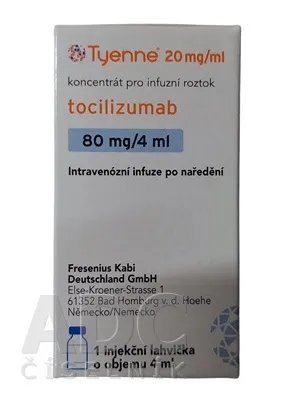
Table of Contents
Package leaflet: Information for the user
Introduction
Package leaflet: information for the user
Tyenne 20 mg/ml concentrate for solution for infusion
tocilizumab
This medicinal product is subject to additional monitoring, which will allow rapid identification of new safety information. You can help by reporting any side effects you may experience. Section 4 at the end of this leaflet includes information on how to report side effects.
Read all of this leaflet carefully before you start using this medicine, because it contains important information for you.
- Keep this leaflet, as you may need to read it again.
- If you have any questions, ask your doctor or nurse.
- If you experience any side effects, talk to your doctor or nurse, even if they are side effects not listed in this leaflet. See section 4.
In addition to this leaflet, you will be given a Patient Information Card containing important safety information you should know before receiving Tyenne and during treatment with Tyenne.
Contents of this leaflet
- What Tyenne is and what it is used for
- What you need to know before using Tyenne
- How to use Tyenne
- Possible side effects
- How to store Tyenne
- Contents of the pack and other information
1. What Tyenne is and what it is used for
Tyenne contains an active substance called tocilizumab, which is a protein derived from specific immune cells (monoclonal antibody) that blocks the action of a specific type of protein (cytokine) called interleukin-6. This protein is involved in inflammatory processes in the body, and by blocking it, inflammation can be reduced. Tyenne helps reduce symptoms such as joint pain and swelling and may also improve your ability to perform daily tasks. Tyenne has been shown to reduce the progression of cartilage and bone damage in the joints caused by the disease and to improve your ability to carry out daily activities.
-
Tyenne is used to treat adults with moderate to severe active rheumatoid arthritis (RA), which is an autoimmune disease, when previous treatments have not worked well. Tyenne is usually used in combination with methotrexate. However, Tyenne may be given alone if your doctor determines that methotrexate is not suitable.
-
Tyenne may also be used to treat adults who have not previously been treated with methotrexate if they have severe, active, and progressive rheumatoid arthritis.
-
Tyenne is used to treat children with sJIA. Tyenne is used in children from 2 years of age onwards who have active systemic juvenile idiopathic arthritis (sJIA), an inflammatory disease that causes pain and swelling in one or more joints, as well as fever and rash. Tyenne is used to improve the symptoms of sJIA and may be given either in combination with methotrexate or alone.
-
Tyenne is used to treat children with pJIA. Tyenne is used in children from 2 years of age onwards with active polyarticular juvenile idiopathic arthritis (pJIA), an inflammatory disease that causes pain and swelling in one or more joints. Tyenne is used to improve the symptoms of pJIA and may be administered in combination with methotrexate or alone.
-
Tyenne is used to treat adults and children from 2 years of age onwards with severe or potentially life-threatening cytokine release syndrome (CRS), an adverse reaction in patients treated with chimeric antigen receptor (CAR) T-cell therapy used to treat certain types of cancer.
-
Tyenne is used to treat adults with coronavirus disease 2019 (COVID-19) who are receiving systemic corticosteroids and require supplemental oxygen or mechanical ventilation.
2. What you need to know before using Tyenne
Do not receive Tyenne
- If you are allergic to tocilizumab or to any of the other ingredients of this medicine (listed in section 6).
- If you have an active serious infection.
If any of these apply to you, consult the doctor or nurse administering the infusion.
Warnings and precautions
Talk to your doctor or nurse before starting treatment with Tyenne.
-
If you experience allergic reactions such as chest tightness, wheezing, severe dizziness or lightheadedness, swelling of the lips, or skin rash during or after the infusion, inform your doctor immediately.
-
If you have any type of infection, whether short- or long-term, or if you frequently get infections. Inform your doctor immediately if you feel unwell. Tyenne may reduce your body's ability to respond to infections and could worsen an existing infection or increase the risk of acquiring a new infection.
-
If you have had tuberculosis, inform your doctor. Your doctor will check for signs and symptoms of tuberculosis before starting treatment with Tyenne. Inform your doctor immediately if symptoms of tuberculosis (persistent cough, weight loss, general malaise, low-grade fever) or any other infection appear during or after treatment.
-
If you have had intestinal ulcer or diverticulitis, inform your doctor. Symptoms may include abdominal pain and unexplained changes in bowel habits accompanied by fever.
-
If you have liver disease, inform your doctor. Before using Tyenne, your doctor will perform a blood test to assess your liver function.
-
If any patient has recently been vaccinated (adult or child) or is scheduled to be vaccinated, inform your doctor. All patients, especially children, should be up to date with their vaccination schedule before starting treatment with Tyenne, unless urgent treatment is required. Certain types of vaccines should not be administered while receiving Tyenne.
-
If you have cancer, inform your doctor. Your doctor will need to decide whether you can continue receiving Tyenne treatment.
-
If you have cardiovascular risk factors, such as high blood pressure or elevated cholesterol levels, inform your doctor. These factors need to be managed while you are receiving Tyenne treatment.
-
If you have moderate to severe kidney problems, your doctor will monitor you.
-
If you have persistent headaches.
Your doctor will perform blood tests before you receive Tyenne and during treatment to determine whether you have low white blood cell counts, low platelet counts, or elevated liver enzymes.
Children and adolescents
Use of Tyenne is not recommended in children under 2 years of age.
Inform your doctor if the child has a history of macrophage activation syndrome (uncontrolled activation and proliferation of specific blood cells). Your doctor will decide whether treatment with Tyenne can continue.
Other medicines and Tyenne
Inform your doctor if you are taking, have recently taken, or might need to take any other medicines (or if your child, if they are the patient, is taking them). This includes medicines obtained without a prescription. Tyenne may affect how some medicines work, and dose adjustments may be needed. Inform your doctor if you are taking medicines containing any of the following active substances:
- methylprednisolone, dexamethasone, used to reduce inflammation,
- simvastatin or atorvastatin, used to lower cholesterol levels,
- calcium channel blockers such as amlodipine, used to treat high blood pressure,
- theophylline, used in the treatment of asthma,
- warfarin or phenprocoumon, used as anticoagulants,
- phenytoin, used to treat seizures,
- cyclosporine, used as an immunosuppressant in organ transplantation,
- benzodiazepines such as temazepam, used to relieve anxiety.
Regarding vaccines, refer to the previous warning section.
Because of lack of clinical experience, the use of Tyenne with other biological medicines used to treat RA, JIA, or pJIA is not recommended.
Pregnancy and breastfeeding
Tyenne must not be used during pregnancy unless clearly necessary. Speak with your doctor if you are pregnant, think you may be pregnant, or plan to become pregnant.
Women of childbearing potential should use effective contraception during treatment and for at least 3 months after stopping treatment.
Interrupt breastfeeding if you start treatment with Tyenne, and consult your doctor. Breastfeeding should not be resumed until at least 3 months have passed since your last dose of Tyenne. It is unknown whether Tyenne passes into breast milk.
Available data to date do not suggest that this treatment has any effect on fertility.
Driving and using machines
This medicine may cause dizziness. If you feel dizzy, do not drive or operate machinery.
Tyenne contains sodium
This medicine contains 0.24 mg of sodium (a main component of table/cooking salt) per ml. This corresponds to 0.012% of the maximum daily recommended sodium intake for an adult. However, Tyenne is diluted in sodium chloride infusion solution 9 mg/ml (0.9%) or 4.5 mg/ml (0.45%). This should be considered in patients on a sodium-restricted diet.
Tyenne contains polysorbate 80
This medicine contains 0.8 mg of polysorbate 80 in each 80 mg/4 ml vial, 2 mg of polysorbate 80 in each 200 mg/10 ml vial, and 4 mg of polysorbate 80 in each 400 mg/20 ml vial, equivalent to 0.2 mg/ml. Polysorbates may cause allergic reactions. Inform your doctor if you or your child has any known allergies.
3. How to use Tyenne
This medicine is subject to restricted medical prescription by your doctor.
Tyenne will be administered by intravenous infusion, by a doctor or nurse. They will dilute the solution, prepare the intravenous infusion, and monitor you during and after treatment.
Adult patients with RA
The usual dose of Tyenne is 8 milligrams (mg) per kilogram (kg) of body weight. Depending on your response, your doctor may decide to reduce the dose to 4 mg/kg, and then increase it again to 8 mg/kg when appropriate.
Adults will receive Tyenne once every 4 weeks via intravenous infusion over a period of one hour.
Children with JIA (from 2 years of age onwards)
The usual dose of Tyenne depends on body weight.
- If you weigh less than 30 kg: the dose is 12 mg per kilogram of body weight.
- If you weigh 30 kg or more: the dose is 8 mg per kilogram of body weight.
The dose is calculated based on body weight at each administration.
Children with JIA will receive Tyenne once every 2 weeks via intravenous infusion over a period of one hour.
Children with pJIA (from 2 years of age onwards)
The usual dose of Tyenne is calculated based on body weight.
- If you weigh less than 30 kg: the dose is 10 mg per kilogram of body weight.
- If you weigh 30 kg or more: the dose is 8 mg per kilogram of body weight.
The dose is calculated based on body weight at each administration.
Children with pJIA will receive Tyenne once every 4 weeks via intravenous infusion over a period of one hour.
SLE patients
The usual dose of Tyenne is 8 mg per kg of body weight if you weigh 30 kg or more.
The dose is 12 mg per kg of body weight if you weigh less than 30 kg.
Tyenne may be administered alone or in combination with corticosteroids.
Patients with COVID-19
The usual dose of Tyenne is 8 mg per kg of body weight. A second dose may be required.
If you are given more Tyenne than you should
As Tyenne is administered by a doctor or nurse, it is unlikely that you will receive too much.
However, if you are concerned, speak to your doctor.
If a dose of Tyenne is missed
As Tyenne is administered by a doctor or nurse, it is unlikely that a dose will be missed. However, if you are concerned, speak to your doctor or nurse.
If you stop treatment with Tyenne
You must not stop treatment with Tyenne without first consulting your doctor.
If you have any further questions about the use of this medicine, ask your doctor or nurse.
4. Possible adverse effects
Like all medicines, this medicine can cause adverse effects, although not everyone experiences them. Adverse effects may occur up to at least 3 months after your last dose of Tyenne.
Possible serious adverse effects: consult your doctor immediately.
These are common: may affect up to 1 in 10 people
Allergic reactions during or after infusion:
- difficulty breathing, chest tightness or dizziness,
- skin rash, itching, hives, swelling of the lips, tongue or face.
If you experience any of these symptoms, consult your doctor immediately.
Signs of serious infections
- fever and chills,
- mouth or skin blisters,
- stomach pain.
Signs and symptoms of liver toxicity
May affect up to 1 in 1,000 people
- fatigue,
- abdominal pain,
- jaundice (yellowing of the skin or eyes).
If you notice any of these symptoms, inform your doctor as soon as possible.
Very common adverse effects:
May affect more than 1 in 10 people
- upper respiratory tract infections, with typical symptoms such as cough, nasal congestion, runny nose, sore throat and headache,
- high levels of fat in the blood (cholesterol).
Common adverse effects:
May affect up to 1 in 10 people
- lung infection (pneumonia),
- herpes (herpes zoster),
- cold sores (oral herpes simplex), blisters,
- skin infections (cellulitis), sometimes with fever and chills,
- rash and itching, urticaria,
- allergic reactions (hypersensitivity),
- eye infection (conjunctivitis),
- headache, dizziness, hypertension,
- mouth ulcers, stomach pain,
- fluid retention (edema) in the lower legs, weight gain,
- cough, shortness of breath,
- low white blood cell counts in blood tests (neutropenia, leucopenia),
- abnormal liver function tests (elevated transaminases),
- increased bilirubin measured by blood test,
- low levels of fibrinogen in the blood (a protein involved in blood clotting).
Uncommon adverse effects:
May affect up to 1 in 100 people
- diverticulitis (fever, nausea, diarrhea, constipation, stomach pain),
- swollen and red areas in the mouth,
- elevated blood fats (triglycerides),
- stomach ulcers,
- kidney stones,
- hypothyroidism.
Rare adverse effects:
May affect up to 1 in 1,000 people
- Stevens-Johnson syndrome (skin rash, which may lead to blistering and severe skin peeling),
- life-threatening allergic reactions (anaphylaxis [fatal]),
- inflammation of the liver (hepatitis), jaundice.
Very rare adverse effects:
May affect up to 1 in 10,000 people
- low counts of white blood cells, red blood cells, and platelets,
- liver failure.
Children with JIA
In general, adverse effects in patients with JIA were of a similar type to those in adults with RA. Some adverse effects were observed more frequently: inflammation of nose and throat, diarrhea, decreased white blood cell count and increased liver enzymes.
Children with pJIA
In general, adverse effects in patients with pJIA were of a similar type to those in adults with RA. Some adverse effects were observed more frequently: inflammation of nose and throat, headache, feeling unwell (nausea), and decreased white blood cell count.
Reporting of adverse effects
If you experience any type of adverse effect, talk to your doctor, pharmacist or nurse, even if it is a possible adverse effect not listed in this leaflet. You can also report them directly through the national reporting system listed in Appendix V. By reporting adverse effects, you can help provide more information on the safety of this medicine.
5. Storage and additional information
Keep this medicine out of sight and reach of children.
Do not use this medicine after the expiry date stated on the container.
Store in a refrigerator (between 2 °C and 8 °C). Do not freeze.
Keep the vials in the outer packaging to protect them from light.
6. Package contents and other information
Composition of Tyenne
- The active substance is tocilizumab.
Each 4 ml vial contains 80 mg of tocilizumab (20 mg/ml).
Each 10 ml vial contains 200 mg of tocilizumab (20 mg/ml).
Each 20 ml vial contains 400 mg of tocilizumab (20 mg/ml).
- The other components are L-arginine, L-histidine, L-lactic acid, sodium chloride, polysorbate 80 (E 433), hydrochloric acid (E507) and/or sodium hydroxide (E524), and water for injections.
For information on sodium and polysorbate 80, see section 2 "Tyenne contains sodium" and "Tyenne contains polysorbate 80" above.
Appearance of the product and contents of the pack
Tyenne is a concentrate for solution for infusion. The concentrate is a clear, colourless to pale yellow liquid.
Tyenne is supplied in vials containing 4 ml, 10 ml, and 20 ml of concentrate for solution for infusion. Each pack contains 1 vial or 4 vials. Not all pack sizes may be marketed.
Marketing Authorisation Holder and Manufacturer
Fresenius Kabi Deutschland GmbH
Else-Kroener-Strasse 1
61352 Bad Homburg v.d.Hoehe
Germany
Manufacturer
Fresenius Kabi Austria GmbH
Hafnerstrasse 36
8055 Graz
Austria
Date of the latest revision of this summary:
Other sources of information
Detailed information on this medicine is available on the European Medicines Agency website: http://www.ema.europa.eu/.
This information is intended for healthcare professionals only:
Instructions for dilution prior to administration
Parenteral medicines should be inspected visually for particulate matter or discoloration before administration. Only solutions that are clear, colourless to pale yellow, and free from visible particles should be diluted. Use a sterile needle and syringe to prepare Tyenne.
Adult patients with RA, COVID-19, and GCA (≥ 30 kg)
Under aseptic conditions, remove from a 100 ml infusion bag a volume of sterile, pyrogen-free sodium chloride 9 mg/ml (0.9%) or 4.5 mg/ml (0.45%) injection solution equal to the volume of Tyenne concentrate required for the patient's dose. The required amount of Tyenne concentrate (0.4 ml/kg) should be withdrawn from the vial and added to the 100 ml infusion bag. The final volume should be 100 ml. To mix the solution, gently invert the infusion bag to avoid foaming.
Use in paediatric population
Patients with sJIA, pJIA, and GCA with weight ≥ 30 kg
Under aseptic conditions, remove from a 100 ml infusion bag a volume of sterile, pyrogen-free sodium chloride 9 mg/ml (0.9%) or 4.5 mg/ml (0.45%) injection solution equal to the volume of Tyenne concentrate required for the patient's dose. The required amount of Tyenne concentrate (0.4 ml/kg) should be withdrawn from the vial and added to the 100 ml infusion bag. The final volume should be 100 ml. To mix the solution, gently invert the infusion bag to avoid foaming.
Patients with sJIA and GCA with weight < 30 kg
Under aseptic conditions, remove from a 50 ml infusion bag a volume of sterile, pyrogen-free sodium chloride 9 mg/ml (0.9%) or 4.5 mg/ml (0.45%) injection solution equal to the volume of Tyenne concentrate required for the patient's dose. The required amount of Tyenne concentrate (0.6 ml/kg) should be withdrawn from the vial and added to the 50 ml infusion bag. The final volume should be 50 ml. To mix the solution, gently invert the infusion bag to avoid foaming.
Patients with pJIA with weight < 30 kg
Under aseptic conditions, remove from a 50 ml infusion bag a volume of sterile, pyrogen-free sodium chloride 9 mg/ml (0.9%) or 4.5 mg/ml (0.45%) injection solution equal to the volume of Tyenne concentrate required for the patient's dose. The required amount of Tyenne concentrate (0.5 ml/kg) should be withdrawn from the vial and added to the 50 ml infusion bag. The final volume should be 50 ml. To mix the solution, gently invert the infusion bag to avoid foaming.
Tyenne is for single use only.
Any unused product or waste material should be disposed of in accordance with local requirements.