Tybost 150 mg film-coated tablets
Spain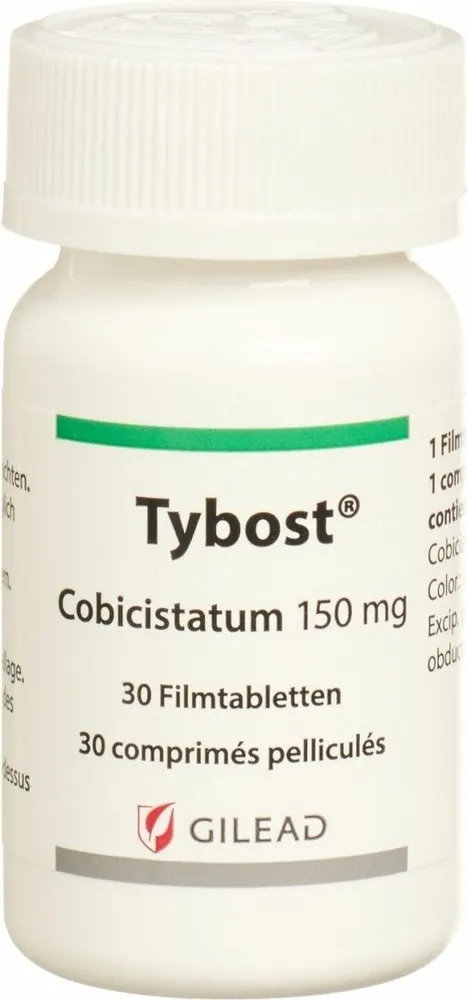
Table of Contents
Patient Information Leaflet
Introduction
Package Leaflet: Information for the Patient
Tybost 150 mg film-coated tablets
cobicistat
Read the entire leaflet carefully before you start taking this medicine, because it contains important information for you.
- Keep this leaflet as you may need to read it again.
- If you have any questions, ask your doctor or pharmacist.
- This medicine has been prescribed for you only, and you should not give it to other people, even if they have the same symptoms as you, since it could harm them.
- If you experience any adverse reactions, consult your doctor or pharmacist, even if they are adverse reactions not listed in this leaflet. See section 4.
Leaflet Contents
- What Tybost is and what it is used for
- What you need to know before taking Tybost
- How to take Tybost
- Possible side effects
- How to store Tybost
- Contents of the pack and other information
1. What Tybost is and what it is used for
Tybost contains the active substance cobicistat.
Tybost is used for the treatment of human immunodeficiency virus type 1 (HIV-1) infection, the virus that causes acquired immunodeficiency syndrome (AIDS). It is used in adults and adolescents aged 12 years and older infected with HIV:
- weighing at least 35 kg (when administered concomitantly with atazanavir 300 mg), or
- weighing at least 40 kg (when administered concomitantly with darunavir 800 mg).
Tybost acts as a booster (enhancer) of atazanavir or darunavir (both protease inhibitors) to help improve their effect (see section 3 of this leaflet).
Tybost does not treat HIV infection directly, but instead boosts the levels of atazanavir and darunavir in the blood. It does this by delaying the breakdown of atazanavir and darunavir, thereby allowing them to remain in the body for a longer period of time.
2. What you need to know before taking Tybost
Do not take Tybost
-
If you are allergic to cobicistat or to any of the other ingredients of this medicine (listed in section 6 of this leaflet).
-
If you are taking medicines containing any of the following active substances:
-
- alfuzosin, used to treat enlarged prostate
-
- amiodarone, quinidine, used to correct irregular heartbeats
-
- dabigatran, used to prevent and treat blood clots
-
- carbamazepine, phenobarbital, phenytoin, used to prevent seizures
-
- rifampicin, used to prevent and treat tuberculosis and other infections
-
- dihydroergotamine, ergometrine, ergotamine, used to treat migraines
-
- St. John’s wort, Hypericum perforatum, a herbal remedy used for depression and anxiety
-
-
lovastatin, simvastatin, used to lower blood cholesterol
-
pimozide, lurasidone, used to treat abnormal thoughts or feelings
-
sildenafil, used to treat pulmonary arterial hypertension, a lung disease that makes breathing difficult
-
midazolam, administered orally**, triazolam,** used to help sleep and/or relieve anxiety
-
If you are in any of these situations, do not take Tybost and consult your doctor immediately.
Warnings and precautions
You must remain under medical supervision while taking Tybost.
You can still transmit HIV while taking this medicine, although effective antiretroviral treatment reduces the risk. Consult your doctor about which precautions are necessary to avoid infecting others. This medicine is not a cure for HIV infection. You may develop infections or other diseases associated with HIV infection. You should maintain regular contact with your doctor.
Talk to your doctor before starting Tybost:
-
If you are taking another protease inhibitor. Tybost, when taken with atazanavir or darunavir, must not be used with another antiviral requiring boosting.
-
Talk to your doctor or pharmacist if you have or have had kidney disease or if blood tests have shown kidney problems. Your doctor will carefully consider whether Tybost treatment is appropriate for you.
-
Talk to your doctor or pharmacist if you have or have had severe liver disease or if blood tests have shown liver problems. Your doctor will carefully consider whether Tybost treatment is appropriate for you.
-
If you are in any of these situations, consult your doctor before starting Tybost.
Children and adolescents
Do not give this medicine to children under 12 years of age or weighing less than 35 kg (or 40 kg), as explained in section 3 of this leaflet. The use of Tybost has not yet been studied in children under 12 years of age or weighing less than 35 kg.
Other medicines and Tybost
Tell your doctor or pharmacist if you are taking, have recently taken, or might take any other medicines. Tybost can interact with other substances. As a result, blood levels of Tybost or other medicines may be affected. This may prevent your medicines from working properly or worsen their possible side effects. In some cases, your doctor may need to adjust the dose or monitor blood concentrations of the medicine.
There are medicines that must never be taken with Tybost.
These medicines are specified in the section “Do not take Tybost – If you are taking medicines containing any of the following active substances”.
Medicines used to treat HIV infection:
Do not take Tybost with other medicines containing:
- ritonavir
- cobicistat
Inform your doctor if you are taking:
-
another protease inhibitor
-
efavirenz
-
etravirine
-
nevirapine
-
maraviroc
-
Tell your doctor if you are taking any of these HIV medicines.
Other types of medicines:
-
ketoconazole, itraconazole, voriconazole, posaconazole, and fluconazole, medicines used to treat fungal infections
-
clarithromycin and rifabutin, medicines used to treat bacterial infections, including tuberculosis
-
dasatinib, nilotinib, vinblastine, and vincristine, medicines used to treat cancer
-
corticosteroids, including betamethasone, budesonide, fluticasone, mometasone, prednisone, triamcinolone. These medicines are used to treat allergies, asthma, inflammatory bowel diseases, inflammatory eye, joint, and muscle conditions, and other inflammatory disorders. If alternatives cannot be used, they should only be used after clinical evaluation and with close monitoring by your doctor to assess corticosteroid side effects.
-
metformin, a medicine used to treat type 2 diabetes
-
oral or implanted hormonal contraceptives used to prevent pregnancy
-
amlodipine, digoxin, diltiazem, disopyramide, felodipine, flecainide, lidocaine, metoprolol, mexiletine, nicardipine, nifedipine, propafenone, timolol, and verapamil, medicines used to treat heart problems
-
bosentan, a medicine used to treat pulmonary arterial hypertension
-
apixaban, edoxaban, rivaroxaban, and warfarin, medicines used to prevent and treat blood clots
-
salmeterol, a medicine used to treat asthma
-
atorvastatin, fluvastatin, pitavastatin, pravastatin, and rosuvastatin, medicines used to lower cholesterol
-
sildenafil and vardenafil, medicines used to treat erectile dysfunction, and tadalafil, a medicine used to treat erectile dysfunction and pulmonary hypertension
-
trazodone, a medicine used to treat depression
-
cyclosporine, sirolimus, and tacrolimus, medicines used to control the body's immune response after transplantation
-
buspirone, clorazepate, diazepam, estazolam, flurazepam, perphenazine, risperidone, thioridazine, zolpidem, medicines used to treat disorders of the nervous system
-
colchicine, a medicine used to treat gout
-
Tell your doctor if you are taking any of these medicines.
-
Tell your doctor if you are taking these or any other medicines. Do not stop your treatment without contacting your doctor.
Pregnancy and breastfeeding
If you are pregnant or breastfeeding, think you may be pregnant, or plan to become pregnant, consult your doctor or pharmacist before using this medicine.
-
Tell your doctor immediately if you are pregnant, think you may be pregnant, or plan to become pregnant. Pregnant women should not take Tybost with atazanavir or darunavir. Blood levels of these medicines may decrease during pregnancy, which could cause them to stop working properly.
-
Do not breastfeed while taking Tybost. It is not known whether the active ingredient of this medicine passes into breast milk. If you have HIV infection, you are advised not to breastfeed to avoid transmitting the virus to your child through breast milk.
Driving and using machines
Some patients have reported dizziness when taking Tybost with atazanavir or darunavir. If you experience dizziness while taking Tybost, do not drive or operate tools or machinery.
Tybost contains Orange Yellow aluminium lake FCF (E110).
Tell your doctor if you are allergic to Orange Yellow aluminium lake FCF (E110). Tybost contains Orange Yellow aluminium lake FCF, which may cause allergic reactions.
3. How to take Tybost
Follow exactly the administration instructions for this medicine as indicated by your doctor.
If in doubt, consult your doctor or pharmacist again.
Recommended dose for adults:
- One tablet daily by mouth, with food. Do not chew, crush, or split the tablet.
- Tybost must be taken with atazanavir (300 mg) or darunavir (800 mg).
Recommended dose for adolescents aged 12 to less than 18 years:
- One tablet daily by mouth, with food. Do not chew, crush, or split the tablet.
- Adolescents taking Tybost with atazanavir (300 mg) must weigh at least 35 kg.
- Adolescents taking Tybost with darunavir (800 mg) must weigh at least 40 kg.
Always take the dose prescribed by your doctor. This is to ensure that your medicine remains fully effective. Do not change the dose unless your doctor tells you to do so.
If you take more Tybost than you should
If you accidentally take more than the recommended dose of Tybost, you may be at increased risk of experiencing adverse effects with this medicine (see section 4 of this leaflet).
Contact your doctor or go to the nearest emergency room immediately. Bring the medicine container with you so you can clearly describe what you have taken.
If you forget to take Tybost
It is important not to miss a dose of Tybost.
If you forget to take a dose and you realize:
-
Within 12 hours of the time you usually take Tybost, take the tablet as soon as possible. Always take the tablet with food. Then take your next dose at the usual time, in combination with atazanavir or darunavir.
-
12 hours or more after the time you usually take Tybost, do not take the missed dose. Wait and take the next dose with food at your usual time.
Do not stop treatment with Tybost
Do not stop treatment with Tybost without first speaking to your doctor. Stopping Tybost and atazanavir or darunavir may reduce the effectiveness of future treatments prescribed by your doctor.
Always keep an adequate supply of Tybost so that you do not run out. When you notice that you are running low on Tybost, contact your doctor or pharmacist to obtain more.
If you have any further questions about the use of this medicine, ask your doctor or pharmacist.
4. Possible adverse effects
Like all medicines, this medicine may cause adverse effects, although not everyone experiences them. When treating HIV infection, it is not always possible to determine whether some of the unwanted effects are due to Tybost, to other medicines being taken at the same time, or to the HIV disease itself. The following adverse effects may occur when taking Tybost with atazanavir.
Very common adverse effects
(may affect more than 1 in 10 people)
- nausea
- yellowing of the skin, eyes, and/or both (jaundice)
Common adverse effects
(may affect up to 1 in 10 people)
- high blood sugar levels (hyperglycaemia)
- increased appetite, altered sense of taste, dry mouth
- headache, dizziness
- vomiting, diarrhoea, stomach pain, digestive problems causing pain after meals (dyspepsia), feeling bloated, gas (flatulence)
- increased concentration of bilirubin in the blood (hyperbilirubinaemia)
- skin rash
- difficulty sleeping, abnormal dreams, drowsiness, tiredness (fatigue)
Uncommon adverse effects
(may affect up to 1 in 100 people)
- blood in the urine (haematuria)
- protein in the urine (proteinuria)
- feeling depressed
- itching
- muscle pain, weakness
- kidney stones
- fever
- sleep disorder
Reporting of adverse effects
If you experience any type of adverse effect, consult your doctor or pharmacist, even if it is a possible adverse effect not listed in this leaflet. You can also report them directly through the national reporting system included in Appendix V. By reporting adverse effects, you can help provide more information on the safety of this medicine.
For more information on the adverse effects of atazanavir or darunavir, please refer to the package leaflets of these medicines.
5. Storage of Tybost
Keep this medicinal product in its original packaging in order to protect it from moisture.
Keep out of the reach and sight of children.
Do not use this medicine after the expiry date which is stated on the carton and on the blister after EXP. The expiry date refers to the last day of that month.
No special storage precautions are required for this medicine.
Do not throw away medicines via wastewater or household waste. Ask your pharmacist how to dispose of medicines you no longer use. These measures will help protect the environment.
Keep this medicine out of the sight and reach of children.
Do not use this medicine after the expiry date stated on the bottle and outer packaging following {EXP}. The expiry date is the last day of the month indicated.
No special storage conditions are required.
Medicines should not be disposed of via wastewater or household waste. Ask your pharmacist how to dispose of containers and medicines you no longer need. This will help protect the environment.
6. Contents of the pack and other information
Composition of Tybost
The active substance is cobicistat. Each film-coated tablet contains 150 mg of cobicistat.
The other components are
Tablet core:
Croscarmellose sodium, magnesium stearate, microcrystalline cellulose, colloidal anhydrous silica.
Film coating:
Aluminium orange-yellow FCF lake (E110), macrogol 3350 (E1521), polyvinyl alcohol (partially hydrolysed) (E1203), talc (E553B), titanium dioxide (E171), iron oxide yellow (E172) (see section 2 of this leaflet).
What the medicine looks like and contents of the pack
Tybost film-coated tablets are orange, round, biconvex tablets, marked on one side with “GSI” and smooth on the other side.
Tybost is supplied in bottles of 30 tablets (with a sachet or container of silica gel which should be kept in the bottle to help protect the tablets). The silica gel desiccant is in a separate sachet or container and must not be ingested.
This medicine is available in packs containing 1 bottle of 30 film-coated tablets and packs containing 90 tablets (3 bottles of 30) film-coated tablets. Only some pack sizes may be marketed.
Marketing Authorisation Holder
Gilead Sciences Ireland UC
Carrigtohill
County Cork, T45 DP77
Ireland
Manufacturer
Gilead Sciences Ireland UC
IDA Business & Technology Park
Carrigtohill
County Cork
Ireland
Further information on this medicine is available by contacting the local representative of the Marketing Authorisation Holder:
Belgium/Belgium/Belgium Gilead Sciences Belgium SPRL-BVBA Tel/Tel: + 32 (0) 24 01 35 50 | Lithuania Gilead Sciences Poland Sp. z o.o. Tel: + 48 22 262 8702 |
Ireland Gilead Sciences Ireland UC Tel: + 353 (0) 1 686 1888 | Luxembourg/Luxembourg Gilead Sciences Belgium SPRL-BVBA Tel/Tel: + 32 (0) 24 01 35 50 |
Czech Republic Gilead Sciences s.r.o. Tel: + 420 910 871 986 | Hungary Gilead Sciences Ireland UC Tel.: + 353 (0) 1 686 1888 |
Denmark Gilead Sciences Sweden AB Tlf: + 46 (0) 8 5057 1849 | Malta Gilead Sciences Ireland UC Tel: + 353 (0) 1 686 1888 |
Germany Gilead Sciences GmbH Tel: + 49 (0) 89 899890-0 | Netherlands Gilead Sciences Netherlands B.V. Tel: + 31 (0) 20 718 36 98 |
Estonia Gilead Sciences Poland Sp. z o.o. Tel: + 48 22 262 8702 | Norway Gilead Sciences Sweden AB Tlf: + 46 (0) 8 5057 1849 |
Greece Gilead Sciences Hellas M.E.P.E. Tel: + 30 210 8930 100 | Austria Gilead Sciences GesmbH Tel: + 43 1 260 830 |
Spain Gilead Sciences, S.L. Tel: + 34 91 378 98 30 | Poland Gilead Sciences Poland Sp. z o.o. Tel.: + 48 22 262 8702 |
France Gilead Sciences Tel: + 33 (0) 1 46 09 41 00 | Portugal Gilead Sciences, Lda. Tel: + 351 21 7928790 |
Croatia Gilead Sciences Ireland UC Tel: + 353 (0) 1 686 1888 | Romania Gilead Sciences Ireland UC Tel: + 353 (0) 1 686 1888 |
Ireland Gilead Sciences Ireland UC Tel: + 353 (0) 214 825 999 | Slovenia Gilead Sciences Ireland UC Tel: + 353 (0) 1 686 1888 |
Iceland Gilead Sciences Sweden AB Sími: + 46 (0) 8 5057 1849 | Slovakia Gilead Sciences Slovakia s.r.o. Tel: + 421 232 121 210 |
Italy Gilead Sciences S.r.l. Tel: + 39 02 439201 | Finland/Finland Gilead Sciences Sweden AB Puh/Tel: + 46 (0) 8 5057 1849 |
Cyprus Gilead Sciences Hellas M.E.P.E. Tel: + 30 210 8930 100 | Sweden Gilead Sciences Sweden AB Tel: + 46 (0) 8 5057 1849 |
Latvia Gilead Sciences Poland Sp. z o.o. Tel: + 48 22 262 8702 | United Kingdom Gilead Sciences Ltd. Tel: + 44 (0) 8000 113 700 |
Date of the most recent review of this summary: {MM/YYYY}.
Detailed information on this medicine is available on the European Medicines Agency website: http://www.ema.europa.eu