Twynsta 80 mg/10 mg tablets
Spain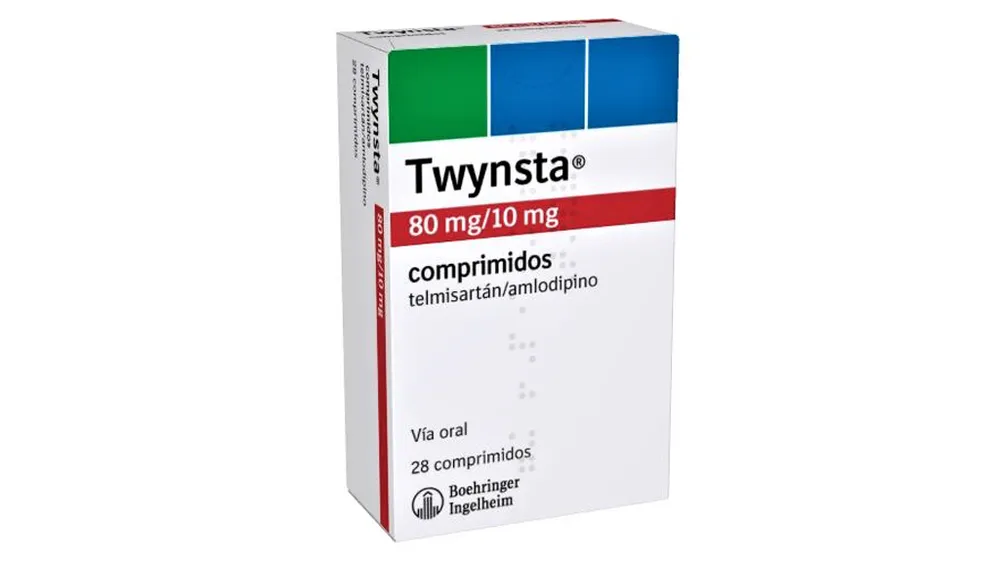
Table of Contents
Package leaflet: Information for the user
Introduction
Package leaflet: information for the user
Twynsta 80mg/10mg tablets
telmisartan/amlodipine
Read the entire leaflet carefully before you start taking this medicine, because it contains important information for you.
- Keep this leaflet, as you may need to read it again.
- If you have any questions, ask your doctor or pharmacist.
- This medicine has been prescribed for you only, and you should not give it to others, even if they have the same symptoms as you, because it could harm them.
- If you experience any adverse effects, consult your doctor or pharmacist, even if they are adverse effects not listed in this leaflet. See section 4.
Leaflet contents
- What Twynsta is and what it is used for
- What you need to know before taking Twynsta
- How to take Twynsta
- Possible side effects
- How to store Twynsta
- Contents of the pack and other information
1. What Twynsta is and what it is used for
Twynsta tablets contain two active substances, telmisartan and amlodipine. Both active substances help control your high blood pressure:
- Telmisartan belongs to a group of medicines known as “angiotensin II receptor blockers”. Angiotensin II is a substance produced in the body that causes your blood vessels to narrow, thereby increasing your blood pressure. Telmisartan blocks the effect of angiotensin II.
- Amlodipine belongs to a group of medicines known as “calcium channel blockers”. Amlodipine prevents calcium from entering the wall of your blood vessels, helping to avoid stiffness in your blood vessels.
This means that both active substances work together to prevent your blood vessels from becoming stiff. As a result, the blood vessels relax and blood pressure is reduced.
Twynsta is used for the treatment of high blood pressure
- in adult patients whose blood pressure is not adequately controlled with amlodipine alone.
- in adult patients who are already receiving telmisartan and amlodipine in separate tablets and who, for convenience, wish to switch to taking the same doses in a single tablet.
If left untreated, high blood pressure can damage the blood vessels of various organs, putting patients at risk of serious events such as heart attack, heart or kidney failure, stroke, or blindness. Usually, there are no symptoms of high blood pressure before damage occurs. Therefore, it is important to monitor your blood pressure regularly to ensure it remains within the normal range.
2. What you need to know before taking Twynsta
Do not take Twynsta
- if you are allergic to telmisartan or amlodipine or any of the other ingredients of this medicine (listed in section 6).
- if you are allergic to other medicines of the dihydropyridine type (a type of calcium channel blocker).
- if you are more than 3 months pregnant. (It is best to avoid taking Twynsta also at the beginning of your pregnancy – see section “Pregnancy”).
- if you have severe liver problems or biliary obstruction (problems with bile drainage from the liver and gallbladder).
- if you have narrowing of the heart’s aortic valve (aortic stenosis) or cardiogenic shock (a condition in which the heart cannot supply enough blood to the body).
- if you have heart failure following a heart attack.
- if you have diabetes or kidney failure and are being treated with a blood pressure-lowering medicine containing aliskiren.
If any of the above apply to you, tell your doctor or pharmacist before taking Twynsta.
Warnings and precautions
Talk to your doctor before starting to take Twynsta if you have or have had any of the following conditions or diseases:
- Kidney disease or kidney transplant.
- Narrowing of the blood vessels to one or both kidneys (renal artery stenosis).
- Liver disease.
- Heart problems.
- High levels of aldosterone (which lead to fluid and salt retention in the body along with imbalance of several blood minerals).
- Low blood pressure (hypotension), which may occur if you are dehydrated (excessive loss of body water) or have salt deficiency due to diuretic treatment, a low-salt diet, diarrhoea, or vomiting.
- High levels of potassium in the blood.
- Diabetes.
- Narrowing of the aorta (aortic stenosis).
- Chest pain related to the heart at rest or with minimal exertion (unstable angina).
- A heart attack that occurred within the last four weeks.
Talk to your doctor before starting to take Twynsta:
-
if you are taking any of the following medicines used to treat high blood pressure (hypertension):
-
an angiotensin-converting enzyme (ACE) inhibitor (e.g., enalapril, lisinopril, ramipril), particularly if you have kidney problems related to diabetes.
-
aliskiren.
Your doctor may monitor your kidney function, blood pressure, and blood electrolyte levels (e.g., potassium) at regular intervals. See also “Do not take Twynsta”.
- if you are elderly and a dose increase is needed.
Talk to your doctor if you experience abdominal pain, nausea, vomiting, or diarrhoea after taking Twynsta. Your doctor will decide whether to continue treatment. Do not stop taking Twynsta on your own.
If you are undergoing surgery or anaesthesia, you must inform your doctor that you are taking Twynsta.
Children and adolescents
Twynsta is not recommended for children and adolescents under 18 years of age.
Other medicines and Twynsta
Tell your doctor or pharmacist if you are taking, have recently taken, or might need to take any other medicines. Your doctor may need to adjust the dose of these other medicines or take other precautions. In some cases, you may need to stop taking one of these medicines, especially if you are using any of the following:
- Medicines containing lithium used to treat certain types of depression.
- Medicines that may increase blood potassium levels such as potassium-containing salt substitutes, potassium-sparing diuretics (certain diuretics).
- Angiotensin II receptor blockers.
- Angiotensin-converting enzyme (ACE) inhibitors or aliskiren (see also information under the headings “Do not take Twynsta” and “Warnings and precautions”).
- NSAIDs (non-steroidal anti-inflammatory drugs, e.g., acetylsalicylic acid or ibuprofen), heparin, immunosuppressants (e.g., cyclosporine or tacrolimus), and the antibiotic trimethoprim.
- Rifampicin, erythromycin, clarithromycin (antibiotics).
- St. John’s wort.
- Dantrolene (infusion for severe disturbances in body temperature).
- Medicines used to alter the function of the immune system (e.g., sirolimus, temsirolimus, and everolimus).
- Medicines used for HIV/AIDS (e.g., ritonavir) or for treating fungal infections (e.g., ketoconazole).
- Diltiazem (a heart medicine).
- Simvastatin for treating high cholesterol levels.
- Digoxin.
As with other medicines that lower blood pressure, the effect of Twynsta may be reduced when used with NSAIDs (non-steroidal anti-inflammatory drugs, e.g., acetylsalicylic acid or ibuprofen) or corticosteroids.
Twynsta may increase the blood pressure-lowering effect of other medicines used to treat high blood pressure or medicines that may potentially lower blood pressure (e.g., baclofen, amifostine, neuroleptics, or antidepressants).
Taking Twynsta with food and drink
Alcohol may worsen the blood pressure-lowering effect. You may notice this effect as dizziness when standing up.
You should not consume grapefruit or grapefruit juice while taking Twynsta. This is because grapefruit and grapefruit juice may increase blood levels of the active substance amlodipine in some patients and may enhance the blood pressure-lowering effect of Twynsta.
Pregnancy and breastfeeding
Pregnancy
Inform your doctor if you think you may be pregnant or plan to become pregnant. Your doctor will usually advise you to stop taking Twynsta before becoming pregnant or as soon as you know you are pregnant, and will recommend an alternative medicine. Twynsta is not recommended during early pregnancy and must not be used from the third month of pregnancy onwards, as it may cause serious harm to your baby when used from that time.
Breastfeeding
It has been shown that amlodipine passes into breast milk in small amounts.
Inform your doctor if you are planning to breastfeed or are currently breastfeeding. Twynsta is not recommended for women during this period, and your doctor may decide to prescribe an alternative treatment if you wish to breastfeed, especially if your baby is a newborn or premature.
Consult your doctor or pharmacist before taking any medicine.
Driving and using machines
Some people may experience adverse effects such as fainting, drowsiness, dizziness, or vertigo when being treated for high blood pressure. If you experience any of these adverse effects, do not drive or operate machinery.
Twynsta contains sorbitol
This medicine contains 337.28 mg of sorbitol per tablet.
Sorbitol is a source of fructose. If your doctor has told you that you have an intolerance to certain sugars, or if you have been diagnosed with hereditary fructose intolerance (HFI), a rare genetic disease in which patients cannot break down fructose, consult your doctor before taking this medicine.
Twynsta contains sodium
This medicine contains less than 1 mmol of sodium (23 mg) per tablet; this is essentially “sodium-free”.
3. How to take Twynsta
Follow exactly the instructions for use of this medicine given by your doctor. If in doubt, consult your doctor or pharmacist again.
The recommended dose is one tablet daily. Try to take one tablet at the same time each day.
Remove your Twynsta tablet from the blister pack just before taking it.
Twynsta may be taken with or without food. The tablets should be swallowed with a little water or other non-alcoholic drink.
If your liver is not functioning properly, the usual dose should not exceed one tablet of 40 mg/5 mg or one tablet of 40 mg/10 mg per day.
If you take more Twynsta than you should
If you accidentally take too many tablets, contact your doctor or pharmacist or go to the nearest hospital emergency department immediately. You may experience a drop in blood pressure and rapid heartbeat. Cases of slow heart rate, dizziness, reduced kidney function including kidney failure, markedly and persistently low blood pressure including shock and death have also been reported.
Excess fluid may accumulate in the lungs (pulmonary edema), causing difficulty in breathing, which may occur up to 24–48 hours after administration.
If you forget to take Twynsta
If you forget to take a dose, take it as soon as you remember, and then continue as before. If you miss a day, take your normal dose the next day. Do not take a double dose to make up for missed individual doses.
If you stop taking Twynsta
It is important that you take Twynsta every day until your doctor tells you otherwise. If you feel that the effect of Twynsta is too strong or too weak, consult your doctor or pharmacist.
If you have any further questions about the use of this medicine, ask your doctor or pharmacist.
4. Possible adverse effects
Like all medicines, this medicine can cause adverse effects, although not everyone will experience them.
Some adverse effects may be serious and require immediate medical attention
If you experience any of the following symptoms, you must see your doctor immediately:
Sepsis (commonly called "blood poisoning", a severe systemic infection with high fever and feeling seriously unwell), rapid swelling of the skin and mucous membranes (angioedema); these adverse effects are rare (may affect up to 1 in 1,000 people) but are extremely serious, and patients must stop taking the medicine and see their doctor immediately. If these effects are not treated, they may be fatal. An increased incidence of sepsis has been observed with telmisartan alone; however, this cannot be ruled out for Twynsta.
Common adverse effects (may affect up to 1 in 10 people)
Dizziness, swelling of the ankles (edema).
Uncommon adverse effects (may affect up to 1 in 100 people)
Drowsiness, migraine, headache, tingling or numbness in the hands or feet, vertigo, slow heart rate, palpitations (awareness of your heartbeat), low blood pressure (hypotension), dizziness upon standing (orthostatic hypotension), flushing, cough, stomach pain (abdominal pain), diarrhea, nausea, itching, joint pain, muscle spasms, muscle pain, inability to achieve an erection, weakness, chest pain, fatigue, swelling (edema), increased levels of liver enzymes.
Rare adverse effects (may affect up to 1 in 1,000 people)
Urinary bladder infection, feeling of sadness (depression), anxiety, difficulty sleeping, dizziness, nerve damage in the hands or feet, reduced sense of touch, taste disturbances, tremors, vomiting, swollen gums, abdominal discomfort, dry mouth, eczema (a skin condition), redness of the skin, rash, back pain, leg pain, need to urinate at night, malaise, increased levels of uric acid in the blood.
Very rare adverse effects (may affect up to 1 in 10,000 people)
Progressive scarring of lung tissue (interstitial lung disease [mainly interstitial pneumonia and eosinophilic pneumonia]).
The following adverse effects have been observed with the components telmisartan or amlodipine and may also occur with Twynsta:
Telmisartan
The following additional adverse effects have been reported in patients taking telmisartan alone:
Uncommon adverse effects (may affect up to 1 in 100 people)
Urinary tract infections, upper respiratory tract infections (e.g., sore throat, sinusitis, common cold), deficiency of red blood cells (anemia), elevated blood potassium levels, shortness of breath, abdominal distension, increased sweating, kidney damage including sudden kidney failure, elevated creatinine levels.
Rare adverse effects (may affect up to 1 in 1,000 people)
Increase in certain white blood cells (eosinophilia), low platelet count (thrombocytopenia), allergic reaction (e.g., rash, itching, difficulty breathing, wheezing, facial swelling or low blood pressure), low blood sugar levels (in diabetic patients), visual disturbances, rapid heart rate, stomach discomfort, altered liver function, urticaria, drug rash, tendon inflammation, flu-like illness (e.g., muscle pain, general malaise), decreased hemoglobin (a blood protein), increased levels of creatine phosphokinase in blood, low sodium levels.
Most cases of abnormal liver function and liver disorders reported during post-marketing experience with telmisartan occurred in Japanese patients. Japanese patients are more likely to experience this adverse effect.
Frequency not known (cannot be estimated from available data)
Intestinal angioedema: swelling in the intestine with symptoms such as abdominal pain, nausea, vomiting, and diarrhea has been reported with use of similar products.
Amlodipine
The following additional adverse effects have been reported in patients taking amlodipine alone:
Common adverse effects (may affect up to 1 in 10 people)
Changes in bowel habits, diarrhea, constipation, visual disturbances, double vision, swelling in the ankles.
Uncommon adverse effects (may affect up to 1 in 100 people)
Mood changes, visual disturbances, tinnitus (ringing in the ears), shortness of breath, sneezing/rhinitis, hair loss, unusual bruising and bleeding (damage to red blood cells), skin discoloration, increased sweating, difficulty urinating, increased need to urinate, especially at night, breast enlargement in men, pain, weight gain, weight loss.
Rare adverse effects (may affect up to 1 in 1,000 people)
Confusion.
Very rare adverse effects (may affect up to 1 in 10,000 people)
Decrease in white blood cell count (leucopenia), low platelet count (thrombocytopenia), allergic reaction (e.g., rash, itching, difficulty breathing, wheezing, facial swelling or low blood pressure), high blood sugar, uncontrollable tics or jerky movements, heart attack, irregular heartbeat, inflammation of blood vessels, inflammation of the pancreas, inflammation of the stomach's mucous lining (gastritis), liver inflammation, jaundice, increased levels of liver enzymes accompanied by jaundice, rapid swelling of the skin and mucous membranes (angioedema), severe skin reactions, urticaria, severe allergic reactions with blistering rash on the skin and mucous membranes (exfoliative dermatitis, Stevens-Johnson syndrome), increased skin sensitivity to sunlight, increased muscle tension.
Frequency not known (cannot be estimated from available data)
Severe allergic reactions with blistering rash on the skin and mucous membranes (toxic epidermal necrolysis).
Reporting of adverse effects
If you experience any adverse effect, consult your doctor or pharmacist, even if it is a possible adverse effect not listed in this leaflet. You may also report them directly through the national reporting system detailed in Appendix V. By reporting adverse effects, you can help provide more information on the safety of this medicine.
5. Storage of Twynsta
Keep this medicine out of the sight and reach of children.
Do not use this medicine after the expiry date stated on the carton and blister after "EXP". The expiry date refers to the last day of the month indicated.
This medicine does not require any special storage temperature. Store in the original packaging to protect it from light and moisture. Remove your Twynsta tablet from the blister pack immediately before taking it.
Medicines must not be disposed of via wastewater or household waste. Ask your pharmacist how to dispose of medicines and packaging that you no longer need. This will help protect the environment.
6. Contents of the pack and other information
Composition of Twynsta
- The active substances are telmisartan and amlodipine.
Each tablet contains 80 mg of telmisartan and 10 mg of amlodipine (as amlodipine besilate).
- The other components are anhydrous colloidal silica, brilliant blue FCF (E133), black iron oxide (E172), yellow iron oxide (E172), magnesium stearate, corn starch, meglumine, microcrystalline cellulose, povidone K25, pregelatinized starch prepared from corn starch, sodium hydroxide (see section 2), sorbitol (E420) (see section 2).
Appearance of the product and contents of the pack
Twynsta 80 mg/10 mg tablets are two-layered, oval-shaped, blue and white tablets, approximately 16 mm in length, with the code A4 and the company logo imprinted on the white layer.
Twynsta is available in a carton containing 14, 28, 56, or 98 tablets in aluminum/aluminum blisters, or containing 30 x 1, 90 x 1, 360 (4 x 90 x 1) tablets in single-dose precut aluminum/aluminum blisters.
Only certain pack sizes may be marketed.
Marketing Authorization Holder Boehringer Ingelheim International GmbH Binger Str. 173 55216 Ingelheim am Rhein Germany | Manufacturer Responsible Boehringer Ingelheim Pharma GmbH & Co. KG Binger Str. 173 55216 Ingelheim am Rhein Germany Rottendorf Pharma GmbH Ostenfelder Straße 51 - 61 59320 Ennigerloh Germany Boehringer Ingelheim France 100-104 Avenue de France 75013 Paris France |
You can request further information about this medicinal product by contacting the local representative of the marketing authorization holder:
Belgium/Belgium/Belgium Boehringer Ingelheim SComm | Lithuania Boehringer Ingelheim RCV GmbH & Co KG Lithuania Branch Tel.: +370 5 2595942 |
Bulgaria Boehringer Ingelheim Bulgaria EOOD Tel: +359 2 958 79 98 | Luxembourg/Luxembourg Boehringer Ingelheim SComm |
Czech Republic Boehringer Ingelheim spol. s r.o. Tel: +420 234 655 111 | Hungary Boehringer Ingelheim RCV GmbH & Co KG |
Denmark Boehringer Ingelheim Danmark A/S Tlf.: +45 39 15 88 88 | Malta Boehringer Ingelheim Ireland Ltd. Tel: +353 1 295 9620 |
Germany Boehringer Ingelheim Pharma GmbH & Co. KG Tel: +49 (0) 800 77 90 900 | Netherlands Boehringer Ingelheim B.V. Tel: +31 (0) 800 22 55 889 |
Estonia Boehringer Ingelheim RCV GmbH & Co KG Tel: +372 612 8000 | Norway Boehringer Ingelheim Danmark Tlf: +47 66 76 13 00 |
Greece Boehringer Ingelheim Hellas Monoprosopos E.E. Tel: +30 2 10 89 06 300 | Austria Boehringer Ingelheim RCV GmbH & Co KG Tel: +43 1 80 105-7870 |
Spain Boehringer Ingelheim España, S.A. Tel: +34 93 404 51 00 | Poland Boehringer Ingelheim Sp. z o.o. Tel.: +48 22 699 0 699 |
France Boehringer Ingelheim France S.A.S. Tél: +33 3 26 50 45 33 | Portugal Boehringer Ingelheim Portugal, Lda. Tel: +351 21 313 53 00 |
Croatia Boehringer Ingelheim Zagreb d.o.o. Tel: +385 1 2444 600 | Romania Boehringer Ingelheim RCV GmbH & Co KG Tel: +40 21 302 28 00 |
Ireland Boehringer Ingelheim Ireland Ltd. Tel: +353 1 295 9620 | Slovenia Boehringer Ingelheim RCV GmbH & Co KG Tel: +386 1 586 40 00 |
Iceland Vistor ehf. Tel: +354 535 7000 | Slovakia Boehringer Ingelheim RCV GmbH & Co KG Tel: +421 2 5810 1211 |
Italy Boehringer Ingelheim Italia S.p.A. Tel: +39 02 5355 1 | Finland Boehringer Ingelheim Finland Ky |
Cyprus Boehringer Ingelheim Hellas Monoprosopos E.E. Tel: +30 2 10 89 06 300 | Sweden Boehringer Ingelheim AB Tel: +46 8 721 21 00 |
Latvia Boehringer Ingelheim RCV GmbH & Co KG Tel: +371 67 240 011 |
Date of the most recent review of this leaflet:
Other sources of information
Detailed information on this medicine is available on the website of the European Medicines Agency: https://www.ema.europa.eu.