Twinrix Adults, injectable suspension in pre-filled syringe
Spain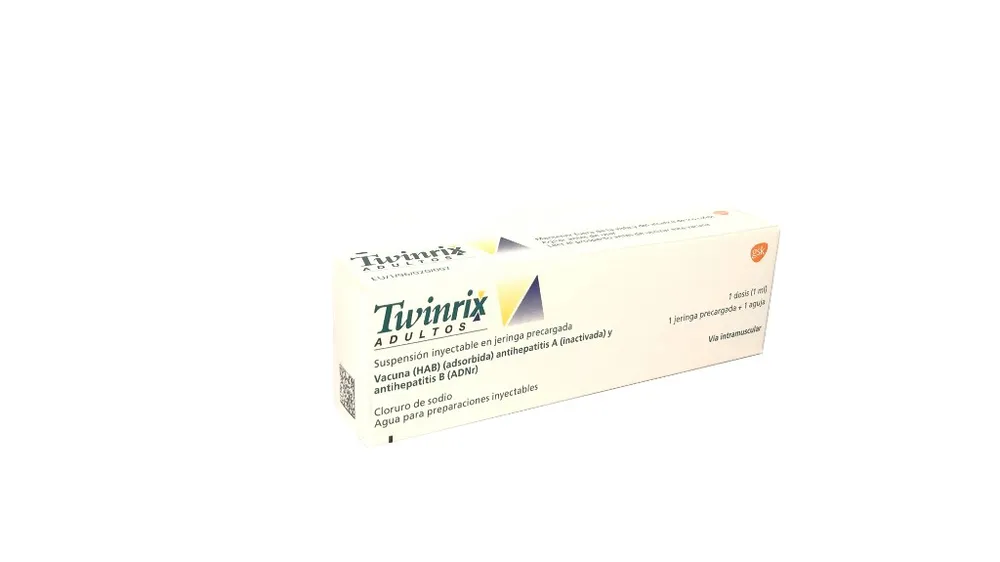
Table of Contents
Package leaflet: Information for the user
Introduction
Package leaflet: information for the user
Twinrix Adults, Injectable suspension in pre-filled syringe
Vaccine (HAB) (adsorbed) against hepatitis A (inactivated) and against hepatitis B (rDNA)
Read all of this leaflet carefully before you start receiving this vaccine, because it contains important information for you.
-
Keep this leaflet, as you may need to read it again.
-
If you have any questions, ask your doctor or pharmacist.
-
This vaccine has been prescribed for you only, and you should not give it to other people.
-
If you experience any adverse reactions, consult your doctor or pharmacist, even if they are not listed in this leaflet. See section 4.
Contents of the leaflet
- What Twinrix Adults is and what it is used for
- What you need to know before receiving Twinrix Adults
- How Twinrix Adults is administered
- Possible side effects
- How to store Twinrix Adults
- Contents of the pack and other information
1. What Twinrix Adult is and what it is used for
Twinrix Adult is a vaccine used in adults and adolescents aged 16 years and older to prevent two diseases: hepatitis A and hepatitis B. The vaccine works by causing the body to produce its own protection (antibodies) against these diseases.
-
Hepatitis A: Hepatitis A is an infectious disease that can affect the liver. It is caused by the hepatitis A virus. Hepatitis A can be transmitted from person to person through food and drinks, or by swimming in water contaminated with sewage. Symptoms of hepatitis A begin 3 to 6 weeks after exposure to the virus. These include nausea (feeling unwell), fever, and aches. After several days, the whites of the eyes and the skin may turn yellow (jaundice). The severity and type of symptoms may vary. Young children may not develop jaundice. Most people recover completely, but the illness is usually severe enough to keep patients unwell for about a month.
-
Hepatitis B: Hepatitis B is caused by the hepatitis B virus. It causes inflammation of the liver. The virus is present in body fluids such as blood, semen, vaginal secretions, or saliva (sputum) of infected individuals.
Vaccination is the best way to protect against these diseases. None of the components of the vaccine are infectious.
2. What you need to know before receiving Twinrix Adult
Twinrix Adult must not be given if:
-
you are allergic to:
-
the active substances or to any of the other components of this vaccine (listed in section 6)
-
neomycin.
Signs of an allergic reaction may include itchy skin rash, difficulty breathing, or swelling of the face or tongue.
- you have previously had an allergic reaction to any hepatitis A or hepatitis B vaccine
- you have a serious infection with fever (over 38°C). A minor illness, such as a cold, should not be a problem for vaccination, but tell your doctor first.
Warnings and precautions
Talk to your doctor or pharmacist before receiving Twinrix Adult if:
- you have experienced any health problems after previous vaccination
- you have a weakened immune system due to illness or medical treatment
- you have a bleeding disorder or bruise easily.
Fainting (especially in adolescents) may occur before or after any injection. Inform your doctor or nurse if you have previously fainted following an injection.
A reduced response to the vaccine has been observed in obese individuals, possibly resulting in inadequate protection against hepatitis A. A reduced response to the vaccine, possibly leading to insufficient protection against hepatitis B, has also been observed in elderly subjects, in men compared to women, in smokers, in obese individuals, and in persons with chronic diseases or receiving certain medical treatments. Your doctor may recommend a blood test after completing the vaccination course to check whether you have developed an adequate immune response. If not, your doctor will advise whether additional doses may be needed.
Other medicines and Twinrix Adult
Tell your doctor or pharmacist if you are taking, have recently taken, or might need to take any other medicines.
Pregnancy and breastfeeding
If you are pregnant or breastfeeding, think you may be pregnant, or are planning to become pregnant, consult your doctor or pharmacist before receiving this vaccine.
It is unknown whether Twinrix Adult passes into breast milk; however, the vaccine is not expected to cause problems in breastfed infants.
Twinrix Adult contains neomycin and sodium
Inform your doctor if you have had an allergic reaction to neomycin (an antibiotic).
This vaccine contains less than 1 mmol of sodium (23 mg) per dose, i.e., essentially “sodium-free”.
3. How to administer Twinrix Adult
You will receive a total of three injections over a 6-month period. Each injection will be given during a separate visit. The first dose will be administered on the chosen date. The other two doses will be given one month and six months after the first dose, respectively.
- First dose: on the chosen date
- Second dose: 1 month later
- Third dose: 6 months after the first dose
Alternatively, a total of three doses of Twinrix Adult may be administered within 1 month. This vaccination schedule may only be used in adults who require rapid protection (e.g. travelers). The first dose will be administered on the chosen date. The other two doses will be given 7 and 21 days after the first dose. A fourth dose at 12 months is recommended.
- First dose: on the chosen date
- Second dose: 7 days later
- Third dose: 21 days after the first dose
- Fourth dose: 12 months after the first dose
Your doctor will inform you if additional doses or future booster doses are needed.
As stated in section 2, a reduced response to the vaccine is more common, possibly without achieving protection against hepatitis B, in elderly individuals, in men compared to women, in smokers, in obese individuals, and in those with chronic diseases or receiving certain pharmacological treatments. Your doctor may recommend that you have a blood test after completing the vaccination course to check whether you have developed an adequate immune response. If not, your doctor will advise you on whether additional doses may be required.
If you miss a scheduled injection, speak with your doctor to arrange another appointment.
Make sure you complete the full three-dose vaccination course. Otherwise, you may not be fully protected against the diseases.
Your doctor will administer the Twinrix Adult injection into the upper arm muscle.
The vaccine must not be injected subcutaneously (deep) or intramuscularly into the buttock, as protection may be reduced.
The vaccine must never be injected into a blood vessel.
If you have any further questions about the use of this vaccine, ask your doctor or pharmacist.
4. Possible adverse effects
Like all medicines, this vaccine may cause adverse effects, although not everyone will experience them.
The possible adverse effects are listed below:
Very common (may occur in more than 1 in 10 doses of the vaccine): headache, pain and redness at the injection site, fatigue.
Common (may occur in up to 1 in 10 doses of the vaccine): diarrhoea, nausea, swelling, bruising or itching at the injection site, general malaise.
Uncommon (may occur in up to 1 in 100 doses of the vaccine): dizziness, vomiting, stomach pain, muscle pain, upper respiratory tract infection, fever equal to or greater than 37.5°C.
Rare (may occur in up to 1 in 1,000 doses of the vaccine): swelling of the glands in the neck, armpit or groin (lymphadenopathy), loss of skin sensitivity to pain or touch (hypoesthesia), tingling sensation (paraesthesia), skin rash, itching, joint pain, loss of appetite, low blood pressure, flu-like symptoms such as fever, sore throat, runny nose, cough and chills.
Very rare (may occur in up to 1 in 10,000 doses of the vaccine):
Among the adverse effects that occurred very rarely during clinical trials, routine use of the vaccine, or with individual hepatitis A and hepatitis B vaccines, are: reduction in platelets, which increases the risk of bleeding or bruising (thrombocytopenia), purple or reddish-brown spots visible through the skin (thrombocytopenic purpura), inflammation or infection of the brain (encephalitis), degenerative brain disease (encephalopathy), inflammation of the nerves (neuritis), numbness or weakness in arms and legs (neuropathy), paralysis, seizures or fits, swelling of the face, mouth or throat (angioneurotic oedema), purple or reddish-purple swelling of the skin (lichen planus), severe skin rashes (erythema multiforme), urticarial wheals, joint inflammation, muscle weakness, infection around the brain that may cause severe headache with neck stiffness and light sensitivity (meningitis), inflammation of certain blood vessels (vasculitis), abnormal results in laboratory liver function tests, multiple sclerosis, inflammation of the spinal cord (myelitis), drooping eyelids and sinking of the muscles on one side of the face (facial paralysis), temporary inflammation of the nerves causing pain, weakness and paralysis of the limbs, often progressing to the chest and face (Guillain-Barré syndrome), eye nerve disease (optic neuritis), immediate pain at the injection site, stinging and burning sensation.
Severe allergic reactions (anaphylaxis, anaphylactoid reactions and serum sickness-like reactions) may also occur very rarely (up to 1 in 10,000 doses of the vaccine). Some signs of severe allergic reactions may include itchy or blistering skin rash, swelling of the eyes and face, difficulty breathing or swallowing, sudden drop in blood pressure and loss of consciousness. These reactions may occur before leaving the doctor's office. In any case, if any of these symptoms occur, you should seek medical attention immediately.
Reporting of adverse effects
If you experience any adverse effects, consult your doctor or pharmacist, even if they are possible adverse effects not listed in this leaflet. You may also report them directly via the Spanish Pharmacovigilance System for Human Medicines, https://www.notificaram.es. By reporting adverse effects, you can help provide more information on the safety of this medicine.
5. Storage of Twinrix Adult
Keep this medicine out of the sight and reach of children.
Do not use this medicine after the expiry date stated on the packaging. The expiry date refers to the last day of the month indicated.
Store in a refrigerator (between 2ºC and 8ºC).
Keep in the original packaging to protect from light.
Do not freeze. Freezing destroys the vaccine.
Medicines should not be disposed of via wastewater or household waste. Ask your pharmacist how to dispose of medicines and packaging that you no longer need. This will help protect the environment.
6. Package contents and other information
Composition of Twinrix Adult
The active substances are:
Hepatitis A virus (inactivated)1,2 720 ELISA Units
Hepatitis B surface antigen3,4 20 micrograms
1Produced on human diploid cells (MRC-5)
2Adsorbed on aluminium hydroxide 0.05 milligrams Al3+
3Produced by recombinant DNA technology in yeast cells (Saccharomyces cerevisiae)
4Adsorbed on aluminium phosphate 0.4 milligrams Al3+
The other components of Twinrix Adult are: sodium chloride and water for injections.
Appearance of Twinrix Adult and contents of the pack
Injectable suspension in a pre-filled syringe.
Twinrix Adult is a white, slightly milky liquid.
Twinrix Adult is available in 1-dose pre-filled syringes with or without separate needles, pack sizes of 1, 10 and 25.
Only some pack sizes may be commercially available.
Marketing Authorization Holder and Manufacturer
GlaxoSmithKline Biologicals s.a.
Rue de l’Institut 89
B-1330 Rixensart
Belgium
Further information on this medicinal product is available upon request to the local representative of the Marketing Authorization Holder:
Belgium/Belgium/Belgium GlaxoSmithKline Pharmaceuticals SA/NV Tel/Tel: + 32 10 85 52 00 | Lithuania GlaxoSmithKline Biologicals SA Tel. +370 80000334 |
Bulgaria GlaxoSmithKline Biologicals SA Tel. + 359 80018205 | Luxembourg/Luxembourg GlaxoSmithKline Pharmaceuticals SA/NV Tel/Tel: + 32 10 85 52 00 |
Czech Republic GlaxoSmithKline s.r.o. Tel: + 420 2 22 00 11 11 | Hungary GlaxoSmithKline Biologicals SA Tel.: + 36 80088309 |
Denmark GlaxoSmithKline Pharma A/S Tlf: + 45 36 35 91 00 | Malta GlaxoSmithKline Biologicals SA Tel: + 356 80065004 |
Germany GlaxoSmithKline GmbH & Co. KG Tel: + 49 (0)89 360448701 | Netherlands GlaxoSmithKline BV Tel: + 31 (0)33 2081100 |
Estonia GlaxoSmithKline Biologicals SA Tel: +372 8002640 | Norway GlaxoSmithKline AS Tlf: + 47 22 70 20 00 |
Greece GlaxoSmithKline Μονοπρόσωπη A.E.B.E. Tel: + 30 210 68 82 100 | Austria GlaxoSmithKline Pharma GmbH. Tel: + 43 (0)1 970750 |
Spain GlaxoSmithKline, S.A. Tel: + 34 900 202 700 | Poland GSK Services Sp. z o.o. Tel.: + 48 (22) 576 9000 |
France Laboratoire GlaxoSmithKline Tél: + 33 (0) 1 39 17 84 44 Croatia GlaxoSmithKline Biologicals SA Tel.: + 385 800787089 | Portugal Smith Kline & French Portuguesa - Produtos Farmacêuticos, Lda. Tel: + 351 21 412 95 00 Romania GlaxoSmithKline Biologicals SA Tel: +40 800672524 |
Ireland GlaxoSmithKline (Ireland) Ltd Tel: + 353 (0)1 495 5000 | Slovenia GlaxoSmithKline Biologicals SA Tel: + 386 80688869 |
Iceland Vistor hf. Tel: +354 535 7000 | Slovakia GlaxoSmithKline Biologicals SA Tel.: + 421 800500589 |
Italy GlaxoSmithKline S.p.A. Tel: + 39 (0)45 774 1111 | Finland GlaxoSmithKline Oy Puh/Tel: + 358 10 30 30 30 |
Cyprus GlaxoSmithKline Biologicals SA Tel: + 357 80070017 | Sweden GlaxoSmithKline AB Tel: + 46 (0)8 638 93 00 |
Latvia GlaxoSmithKline Biologicals SA Tel: + 371 80205045 | United Kingdom (Northern Ireland) GlaxoSmithKline Biologicals SA Tel: +44 (0)800 221 441 |
Date of the most recent review of this leaflet: 04/2023
Other sources of information
Detailed information on this medicinal product is available on the website of the European Medicines Agency http://www.ema.europa.eu, and on the website of the Spanish Agency of Medicines and Medical Devices (AEMPS) (http://www.aemps.gob.es/).
This information is intended for healthcare professionals only:
During storage, a fine white deposit may be observed with a translucent, colourless layer above it.
The vaccine must be resuspended before use. Once resuspended, the vaccine will have a white, cloudy, and uniform appearance.
Resuspension of the vaccine to obtain a white, cloudy, and uniform suspension
The vaccine should be resuspended by following the steps outlined below.
- Hold the syringe upright with the hand closed around it.
- Shake the syringe by inverting it upside down and then returning it to the upright position.
- Repeat this action vigorously for at least 15 seconds.
- Inspect the vaccine again:
- If the vaccine appears as a white, cloudy, and uniform suspension, it is ready for use (it should not appear translucent).
- If the vaccine does not yet appear as a white, cloudy, and uniform suspension, invert it upside down and back again for at least another 15 seconds, then inspect again.
Before administration, the vaccine should be visually inspected for the presence of any foreign particles and/or abnormal physical appearance. If either of these conditions is observed, do not administer the vaccine.
Instructions for the pre-filled syringe after resuspension
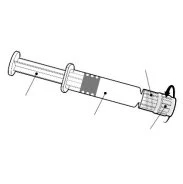
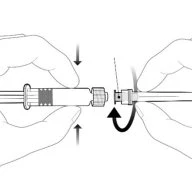
| Hold the syringe by the barrel, not by the plunger. Unscrew the syringe cap by turning it counterclockwise. | |
| To attach the needle, connect the base to the luer-lock adapter and turn it a quarter turn clockwise until you feel it lock into place. Do not remove the plunger from the syringe barrel. If this happens, do not administer the vaccine. |





Waste disposal
Disposal of unused medication and all materials that have come into contact with it must be carried out in accordance with local regulations.