Trixeo Aerosphere 5 micrograms/7.2 micrograms/160 micrograms pressurised inhalation suspension in pressurised container
Spain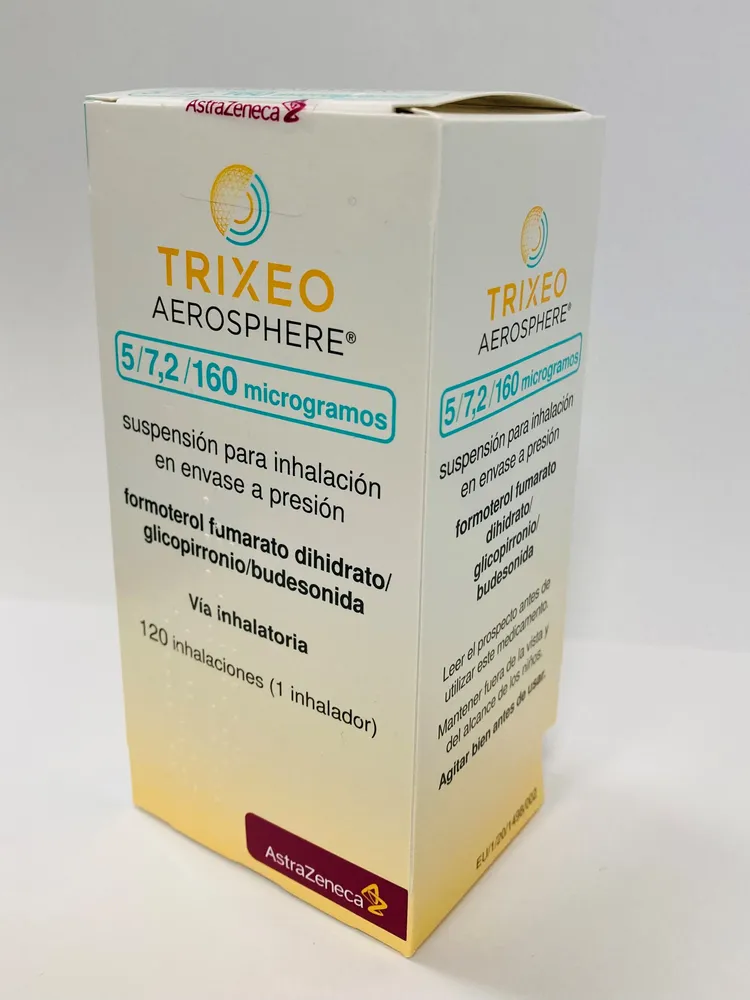
Table of Contents
- Package Leaflet: Information for the User
- Introduction
- 1. What Trixeo Aerosphere is and what it is used for
- 2. What you need to know before using Trixeo Aerosphere
- 3. How to use Trixeo Aerosphere
- 4. Possible adverse effects
- 5. Storage of Trixeo Aerosphere
- 6. Contents of the pack and other information
Package Leaflet: Information for the User
Introduction
Package leaflet: information for the patient
Trixeo Aerosphere 5 micrograms/7.2 micrograms/160 micrograms suspension for inhalation in pressurised container
formoterol fumarate dihydrate/glycopyrronium/budesonide
Read the entire leaflet carefully before you start using this medicine, as it contains important information for you.
- Keep this leaflet, as you may need to read it again.
- If you have any questions, ask your doctor or pharmacist.
- This medicine has been prescribed for you only and must not be given to other people, even if they have the same symptoms as you, as it may harm them.
- If you experience any adverse effects, consult your doctor or pharmacist, even if they are adverse effects not listed in this leaflet. See section 4.
Leaflet Contents
- What Trixeo Aerosphere is and what it is used for
- What you need to know before using Trixeo Aerosphere
- How to use Trixeo Aerosphere
- Possible side effects
- How to store Trixeo Aerosphere
- Contents of the pack and other information
Instructions for use
1. What Trixeo Aerosphere is and what it is used for
Trixeo Aerosphere contains three active substances called formoterol fumarate dihydrate, glycopyrronium, and budesonide.
- Formoterol fumarate dihydrate and glycopyrronium belong to a group of medicines called "bronchodilators". They work by preventing the tightening of the muscles in the airways, allowing air to flow in and out of the lungs more easily.
- Budesonide belongs to a group of medicines called "corticosteroids", which work by reducing inflammation in the lungs.
Trixeo Aerosphere is an inhaler used in adults with a lung disease called "chronic obstructive pulmonary disease" (or "COPD"), a chronic condition affecting the airways of the lungs.
Trixeo Aerosphere is used to make breathing easier and to improve COPD symptoms such as shortness of breath, wheezing, and cough. Trixeo Aerosphere may also help prevent flare-ups (exacerbations) of COPD.
When inhaled, Trixeo Aerosphere delivers the active substances directly into the lungs. If used regularly twice daily, this medicine will help reduce the impact of COPD on your daily life.
2. What you need to know before using Trixeo Aerosphere
Do not use Trixeo Aerosphere
- if you are allergic to formoterol fumarate dihydrate, glycopyrronium, budesonide, or any of the other components of this medicine (listed in section 6).
Warnings and precautions
Trixeo Aerosphere is used as long-term maintenance treatment for COPD. Do not use it to treat a sudden attack of breathing difficulty or wheezing.
Immediate breathing difficulty
If you experience chest tightness, cough, wheezing, or difficulty breathing immediately after using Trixeo Aerosphere, stop using it and inform your doctor immediately (see "Serious adverse reactions" at the beginning of section 4 for more information).
If breathing difficulty, chest tightness, wheezing, or cough worsen during treatment with Trixeo Aerosphere, you should continue using Trixeo Aerosphere but contact your doctor as soon as possible, as you may require additional treatment.
Talk to your doctor before using Trixeo Aerosphere if:
- you have high blood pressure or heart problems
- you have diabetes
- you have a lung infection
- you have thyroid gland problems
- you have low blood potassium levels
- you have prostate problems or any difficulty urinating
- you have an eye condition called "closed-angle glaucoma"
- you have kidney or liver problems
Talk to your doctor if you think any of these may apply to you.
Children and adolescents
Trixeo Aerosphere has not been studied in children and adolescents. Do not give this medicine to children or adolescents under 18 years of age.
Other medicines and Trixeo Aerosphere
Tell your doctor or pharmacist if you are taking, have recently taken, or might need to take any other medicines. This includes medicines purchased without a prescription and herbal products. This is because Trixeo Aerosphere may affect how other medicines work. In addition, some medicines may affect how Trixeo Aerosphere works or increase the likelihood of you experiencing side effects.
Tell your doctor or pharmacist if you are taking any of the following medicines:
-
medicines in the beta-blocker group (such as atenolol or propranolol), which may be used to treat high blood pressure or heart problems, or to treat glaucoma (such as timolol)
-
medicines used to treat fungal infections, such as ketoconazole or itraconazole
-
medicines used to treat HIV infection, such as ritonavir or cobicistat
-
medicines that reduce blood potassium levels, such as:
-
oral corticosteroids (such as prednisolone)
-
diuretics – medicines that increase urine production (such as furosemide or hydrochlorothiazide), which may be used to treat high blood pressure
-
some medicines used to treat breathing problems (such as theophylline), known as "methylxanthines"
-
any medicine that works in the same way as Trixeo Aerosphere, such as tiotropium, ipratropium, aclidinium, umeclidinium, or salmeterol, arformoterol, vilanterol, olodaterol, or indacaterol. Do not use Trixeo Aerosphere if you are already taking these medicines.
-
medicines used to treat heart rhythm problems, such as amiodarone
-
medicines that may partly alter the heart's electrical activity (known as "QT interval"), such as medicines used for:
-
depression (such as monoamine oxidase inhibitors or tricyclic antidepressants),
-
bacterial infections (such as erythromycin, clarithromycin, or telithromycin),
-
allergic reactions (antihistamines).
If you are in any of the above situations, or if you have any doubts, consult your doctor or pharmacist before using Trixeo Aerosphere.
Pregnancy and breastfeeding
If you are pregnant or breastfeeding, think you may be pregnant, or are planning to become pregnant, consult your doctor or pharmacist before using this medicine.
Do not use Trixeo Aerosphere if you are pregnant unless your doctor tells you that you may do so.
Do not use this medicine while breastfeeding unless your doctor tells you that you may do so.
Driving and using machines
It is unlikely that this medicine will affect your ability to drive or operate machinery. However, dizziness is an uncommon adverse effect that should be taken into account when driving or operating machinery.
3. How to use Trixeo Aerosphere
Follow exactly the instructions for using this medicine as given by your doctor.
If in doubt, consult your doctor or pharmacist again.
What dose to use
The recommended dose is two inhalations twice a day – two inhalations in the morning and two inhalations at night.
It is important that you use Trixeo Aerosphere every day, even if you do not have COPD symptoms at that time.
Remember: Always rinse your mouth with water after inhaling Trixeo Aerosphere. This helps remove any medicine residue remaining in the mouth. After rinsing, spit out the water; do not swallow it.
How to use
Trixeo Aerosphere is for inhalation use only.
Read the “Instructions for use” at the end of this leaflet. If you are unsure how to use Trixeo Aerosphere, consult your doctor or pharmacist.
Using Trixeo Aerosphere with a spacer chamber
You may find it difficult to breathe and press the inhaler at the same time. If this happens, ask your doctor or pharmacist for advice. It may be helpful to use a “spacer chamber” with the inhaler.
If you use more Trixeo Aerosphere than you should
If you have used more Trixeo Aerosphere than you should, consult your doctor or pharmacist immediately. You may require medical attention. You may notice your heart beating faster than normal, tremors, visual disturbances, dry mouth, headache, or nausea.
If you forget to use Trixeo Aerosphere
Do not take a double dose to make up for a missed dose. Use it as soon as you remember.
However, if it is almost time for your next dose, skip the missed dose. Do not use more than two inhalations twice a day on the same day.
If you stop using Trixeo Aerosphere
This medicine is for long-term use. Use this medicine for as long as your doctor has instructed. It will only be effective while you are using it.
Do not stop using it unless your doctor tells you to, even if you feel better, as your symptoms may worsen. If you wish to stop treatment, speak to your doctor first.
If you have any further questions about the use of this medicine, ask your doctor or pharmacist.
4. Possible adverse effects
Like all medicines, this medicine can cause adverse effects, although not everyone experiences them. The following adverse effects may occur with this medicine:
Serious adverse effects
Uncommon (may affect up to 1 in 100 people)
Immediate breathing difficulty:
- If you experience difficulty breathing immediately after using Trixeo Aerosphere, such as chest tightness, cough, wheezing, or shortness of breath, stop using this medicine and contact your doctor immediately.
Allergic reactions:
- swelling of the face, especially around the mouth (swelling of the tongue or throat may cause difficulty swallowing)
- skin rash or hives together with difficulty breathing
- sudden feeling that you are going to faint
These symptoms may be signs of an allergic reaction, which could become severe. Stop using this medicine and seek immediate medical assistance if you notice any of the serious adverse effects listed above.
Other adverse effects
Inform your doctor or pharmacist if you notice any of the following adverse effects:
Common (may affect up to 1 in 10 people)
- oral candidiasis (a fungal infection). This can be prevented by rinsing your mouth immediately after inhaling Trixeo Aerosphere.
- anxiety
- difficulty sleeping
- nausea
- headache
- cough or hoarseness
- muscle cramps
- awareness of your heartbeat (palpitations)
- high blood sugar levels (detected by blood tests)
- pain when urinating and increased frequency of urination (may be signs of a urinary tract infection)
- pneumonia (lung infection)
Inform your doctor if you experience any of the following symptoms while being treated with Trixeo Aerosphere, as they could indicate a lung infection:
- fever or chills,
- increased mucus production, change in mucus color,
- increased coughing or greater difficulty breathing.
Uncommon (may affect up to 1 in 100 people)
- tremors or dizziness
- dry mouth or mild throat irritation
- appearance of bruises on the skin
- feeling restless, nervous, or agitated
- depression
- rapid or irregular heartbeat
- chest pain or tightness in the chest (angina)
- difficulty urinating
Very rare (may affect up to 1 in 10,000 people)
- changes in behaviour
- effects on the adrenal glands
Frequency not known (frequency cannot be estimated from available data):
- blurred vision
- loss of transparency of the eye's lens (signs of cataract)
- increased eye pressure (glaucoma)
- swelling of the face, especially around the mouth (swelling of the tongue or throat may cause difficulty swallowing)
Reporting of adverse effects
If you experience any type of adverse effect, consult your doctor or pharmacist, even if it is a possible adverse effect not listed in this leaflet. You can also report them directly through the national reporting system included in Appendix V. By reporting adverse effects, you can help provide more information on the safety of this medicine.
5. Storage of Trixeo Aerosphere
Keep this medicine out of the sight and reach of children.
Do not use Trixeo Aerosphere after the expiry date which is stated on the carton, the bag, and the pressurised container after CAD/EXP. The expiry date refers to the last day of the month indicated.
Once the bag has been opened, the inhaler should be used within 3 months.
Store the inhaler inside the sealed bag; only open the bag to remove the inhaler immediately before first use. On the day the bag is opened, record the date on the label of the inhaler, in the space provided for this purpose.
Do not store above 30 °C. Keep in a dry place.
For best results, the inhaler should be at room temperature before use.
Do not break, pierce, or burn the pressurised container, even if it appears to be empty. Do not use or store near heat sources or open flames.
Medicines must not be disposed of via wastewater or household waste. Ask your pharmacist how to dispose of medicines and containers you no longer need. This will help protect the environment.
6. Contents of the pack and other information
Composition of Trixeo Aerosphere
The active substances are formoterol fumarate dihydrate, glycopyrronium and budesonide.
Each individual inhalation provides a delivered dose (the dose leaving the mouthpiece) of 5 micrograms of formoterol fumarate dihydrate, 9 micrograms of glycopyrronium bromide equivalent to 7.2 micrograms of glycopyrronium, and 160 micrograms of budesonide.
This corresponds to a metered dose (i.e. the dose leaving the valve) of 5.3 micrograms of formoterol fumarate dihydrate, 9.6 micrograms of glycopyrronium bromide, equivalent to 7.7 micrograms of glycopyrronium, and 170 micrograms of budesonide.
The other components are HFO‑1234ze(E), 1,2-distearoyl-sn-glycero-3-phosphocholine and calcium chloride.
This medicine contains fluorinated greenhouse gases. Each inhaler contains 9.5 g of HFO‑1234ze(E), equivalent to 0.000013 tonnes of CO2 (global warming potential GWP = 1.37). HFO‑1234ze(E) is a propellant which carries the inhalations of this medicine into your lungs.
Nature and contents of the container
Trixeo Aerosphere is a pressurised inhalation suspension.
Trixeo Aerosphere is supplied in a cartridge with a dose indicator, fitted with a yellow plastic adapter and a mouthpiece. The mouthpiece is covered by a removable grey protective cap.
Trixeo Aerosphere is supplied in an aluminium pouch containing a desiccant sachet, and packaged in a cardboard box.
Trixeo Aerosphere is available in packs containing 1 inhaler with 120 actuations, and in multiple packs composed of 3 cartons, each containing 1 pressurised inhaler with 120 inhalations. Not all pack sizes may be marketed.
Marketing Authorisation Holder
AstraZeneca AB
SE-151 85 Södertälje
Sweden
Manufacturer
AstraZeneca Dunkerque Production
224 Avenue de la Dordogne
59640 Dunkerque
France
For more information about this medicine, you may contact the local representative of the Marketing Authorisation Holder:
Belgium/Belgium/Belgium AstraZeneca S.A./N.V. Tel: +32 2 370 48 11 | Lithuania UAB AstraZeneca Lietuva Tel: +370 5 2660550 |
| Luxembourg/Luxembourg AstraZeneca S.A./N.V. Tél/Tel: +32 2 370 48 11 |
Czech Republic AstraZeneca Czech Republic s.r.o. Tel: +420 222 807 111 | Hungary AstraZeneca Kft. Tel.: +36 1 883 6500 |
Denmark AstraZeneca A/S Tlf: +45 43 66 64 62 | Malta Associated Drug Co. Ltd Tel: +356 2277 8000 |
Germany AstraZeneca GmbH Tel: +49 40 809034100 | Netherlands AstraZeneca BV Tel: +31 85 808 9900 |
Estonia AstraZeneca Tel: +372 6549 600 | Norway AstraZeneca AS Tlf: +47 21 00 64 00 |
Greece AstraZeneca A.E. Tel: +30 210 6871500 | Austria AstraZeneca Österreich GmbH Tel: +43 1 711 31 0 |
Spain AstraZeneca Farmacéutica Spain, S.A. Tel: +34 91 301 91 00 | Poland AstraZeneca Pharma Poland Sp. z o.o. Tel.: +48 22 245 73 00 |
France AstraZeneca Tél: +33 1 41 29 40 00 | Portugal AstraZeneca Produtos Farmacêuticos, Lda. Tel: +351 21 434 61 00 |
Croatia AstraZeneca d.o.o. Tel: +385 1 4628 000 | Romania AstraZeneca Pharma SRL Tel: +40 21 317 60 41 |
Ireland AstraZeneca Pharmaceuticals (Ireland) DAC Tel: +353 1609 7100 | Slovenia AstraZeneca UK Limited Tel: +386 1 51 35 600 |
Iceland Vistor hf. Sími: +354 535 7000 | Slovakia AstraZeneca AB, o.z. Tel: +421 2 5737 7777 |
Italy AstraZeneca S.p.A. Tel: +39 02 00704500 | Finland AstraZeneca Oy Puh/Tel: +358 10 23 010 |
Cyprus Alktor Pharma Ltd Tel: +357 22490305 | Sweden AstraZeneca AB Tel: +46 8 553 26 000 |
Latvia SIA AstraZeneca Latvija Tel: +371 67377100 |
Date of latest review of this leaflet:
Detailed information on this medicine is available on the European Medicines Agency website: https://www.ema.europa.eu.
Read before using the inhaler
INSTRUCTIONS FOR USE
TRIXEO AEROSPHERE
formoterol fumarate dihydrate/glycopyrronium/budesonide
Pressurised inhalation suspension
For inhalation
Please read these instructions carefully.
Trixeo Aerosphere (referred to as "inhaler" in this leaflet) may be different from other inhalers you have used before.
Important information
- For oral inhalation use only.
- Prime your inhaler before first use.
- Rinse the yellow adapter weekly.
- Take 2 inhalations of the medication in the morning and 2 inhalations of the medication in the evening.
Storage of your inhaler
- Do not store above 30 °C. Store in a dry place.
- Do not store in a humid environment, such as a bathroom.
- Keep your inhaler and all medicines out of the sight and reach of children.
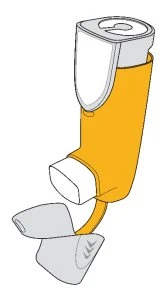
Parts of your inhaler
| Dose indicator Built into the top of the pressurized cartridge. |
Pressurized cartridge (inside) Contains the medicine. | |
Adapter Holds the pressurized cartridge. | |
Mouthpiece Sprays the medicine. | |
Protective cap Protects the mouthpiece when the inhaler is not in use. |

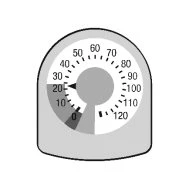
Reading the dose indicator
Each time the medication is inhaled, the dose indicator will decrease the number of indicated doses by one unit. | |
Arrow Indicates the number of doses remaining |
|
Yellow zone Order a new inhaler when the arrow is in the yellow zone | |
Red zone Discard your inhaler when the arrow reaches 0 in the red zone | |
Do not attempt to inhale when the arrow indicates 0, as you will not receive a complete dose. |


Order a new inhaler
- Order a new inhaler when the dose indicator arrow is in the yellow zone.
Dispose of your inhaler
Dispose of your inhaler according to local guidelines when:
- the dose indicator shows 0
or
- 3 months have passed since removing the inhaler from the aluminium foil pouch
Do not reuse the adapter or use it with medication cartridges from other inhalers.
Do not pierce the cartridge or dispose of it in fire or an incinerator.
BEFORE FIRST USE – Prime your inhaler 4 times before first use
- Before using your inhaler for the first time, prepare it to ensure the correct amount of medication is delivered when used.
Priming. Step 1 |
Remove the protective cap from the mouthpiece. |
|
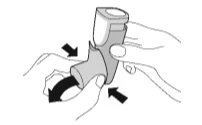
Priming. Step 2 | |||
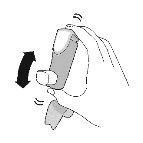
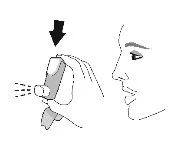
Shake the inhaler well and release 1 priming spray into the air, away from yourself. Repeat until a total of 4 priming sprays have been released, shaking before each priming spray. | |||
|
|
| |
Extra doses are provided for priming. Do not skip the priming. |
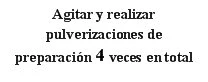

Re-prime your inhaler:
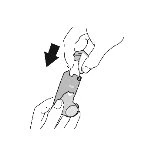
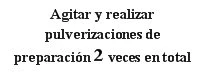
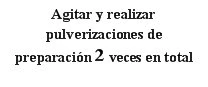
| To re-prime, perform 2 preparatory sprays, shaking before each preparatory spray.
|

DAILY USE, morning&night – Inhale your medication
- Daily dose: 2 inhalations in the morning and 2 inhalations at night.
- Rinse your mouth with water after the 2 inhalations to prevent fungal infections.
Use. Step 1 |
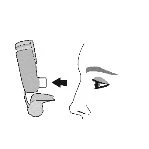
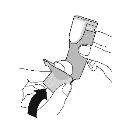
Remove the protective cap from the mouthpiece. Check that there are no foreign objects in the mouthpiece and remove any object before use. |
|
Usage. Step 2 | |||||
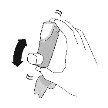
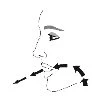
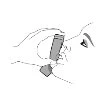
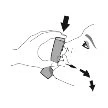
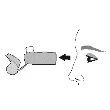
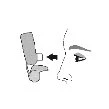
Shake the inhaler well before each puff. | Breathe out fully through your mouth. | Place the mouthpiece in your mouth and close your lips around it. Tilt your head back slightly, keeping your tongue under the mouthpiece. | Begin to take a slow, deep breath while releasing 1 dose. Continue inhaling until your lungs are full. | Hold your breath for as long as you can, up to 10 seconds. | |
|
|
|
|
|
|


Use. Step 3 | Use. Step 4 | Use. Step 5 |
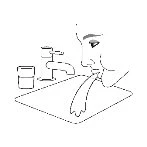
| Replace the protective cap on the mouthpiece. | Rinse your mouth with water. Spit out the water. Do not swallow. |
|
|

WEEKLY CLEANING – Rinse your adapter once a week
- Rinse the yellow adapter weekly to prevent medication buildup that could block spraying through the nozzle.
- Do not let the cartridge get wet.
- Re-prime after cleaning.
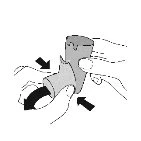
Cleaning. Step 1 | Cleaning. Step 2 |
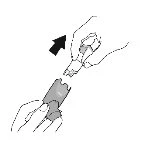
Remove the cartridge and set it aside. Do not allow the cartridge to get wet. | Remove the protective cap from the nozzle. |
|
|
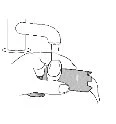
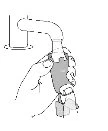
Cleaning. Step 3 | Cleaning. Step 4 | ||||
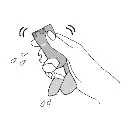
Run lukewarm water through the nozzle for 30 seconds, then through the top part of the adapter for 30 seconds. Rinse for 60 seconds in total. | Shake off as much water as possible. | ||||
|
|
|
|
|
|
Do not dry with a towel or cloth. |




Cleaning. Step 5 | Cleaning. Step 6 | |
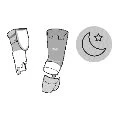
Inspect the inside of the adapter and the nozzle for any medication buildup. If there is any accumulation, repeat Cleaning Steps 3 through 5. | Allow to air dry, preferably overnight. Do not reinsert the cartridge into the adapter if the adapter is still wet. | |
|
|
|
Cleaning. Step 7 | Cleaning. Step 8 |
When it has dried, first place the mouthpiece cover, then gently press the cartridge down into the adapter. | Re-prime the inhaler by performing 2 priming sprays, shaking before each priming spray. |
|
|