Trinomia 100 mg/40 mg/5 mg hard capsules
Spain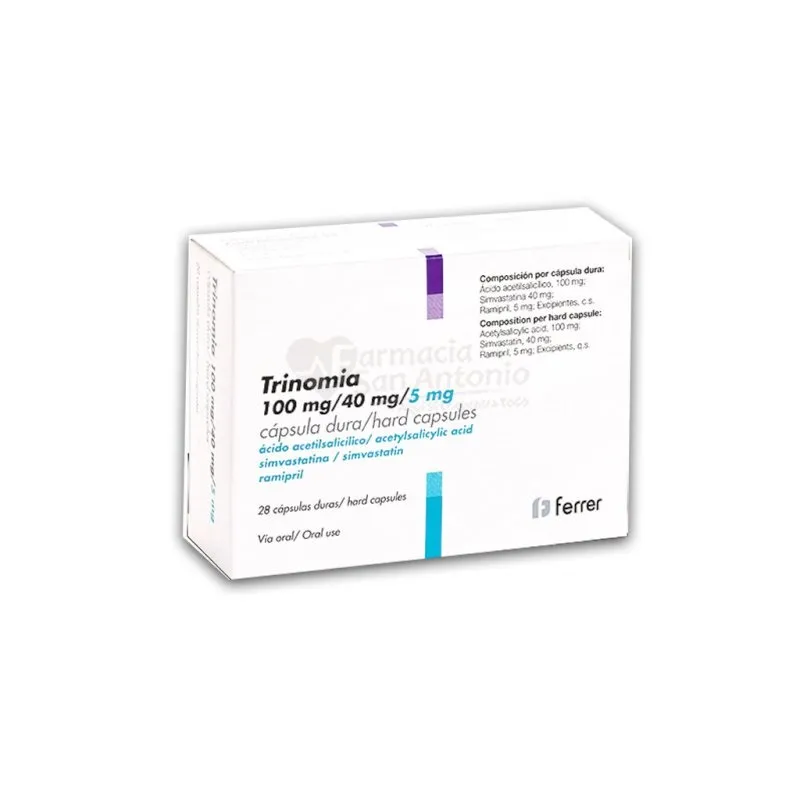
Table of Contents
Patient Information Leaflet
Introduction
Patient Information Leaflet
Trinomia 100 mg/40 mg/5 mg hard capsules
acetylsalicylic acid/atorvastatin/ramipril
Read the entire leaflet carefully before you start taking this medicine, as it contains important information for you.
- Keep this leaflet, as you may need to read it again.
- If you have any questions, ask your doctor or pharmacist.
- This medicine has been prescribed for you only, and you should not give it to other people, even if they have the same symptoms as you, because it may harm them.
- If you experience any adverse effects, consult your doctor or pharmacist, even if they are adverse effects not listed in this leaflet. See section 4.
Leaflet Contents
- What Trinomia is and what it is used for
- What you need to know before taking Trinomia
- How to take Trinomia
- Possible side effects
- How to store Trinomia
- Contents of the pack and other information
1. What Trinomia is and what it is used for
Trinomia capsules contain three substances: acetylsalicylic acid, atorvastatin, and ramipril.
- Acetylsalicylic acid belongs to a group of substances known as antiplatelet agents, which help prevent blood cells from sticking together and forming a clot.
- Atorvastatin belongs to a group of substances called statins, which are lipid-regulating (fat-lowering) medicines used to reduce blood cholesterol and triglyceride levels when diet low in fat and appropriate lifestyle changes have not been sufficient. If you are at increased risk of heart disease, atorvastatin may also be used to reduce this risk, even when your cholesterol levels are normal. You should continue to follow a standard low-cholesterol diet during treatment.
- Ramipril belongs to a group of substances known as ACE inhibitors (angiotensin-converting enzyme inhibitors), which work by reducing the production of substances in the body that could raise blood pressure. It causes blood vessels to relax and widen, making it easier for the heart to pump blood throughout the body.
Trinomia is used as a replacement treatment in adult patients who are already adequately controlled with the three components (acetylsalicylic acid, atorvastatin, and ramipril) taken simultaneously at equivalent doses, to reduce the risk of cardiovascular events in patients who have already experienced a prior cardiovascular event.
2. What you need to know before starting to take Trinomia
Section empty
Do not take Trinomia:
-
if you are allergic to acetylsalicylic acid, other salicylates, or tartrazine (a colouring agent). Signs of an allergic reaction include, among others, rash, difficulty swallowing or breathing, swelling of the lips, face, throat, or tongue.
-
if you are allergic to ramipril or any other ACE inhibitor medicine.
-
if you are allergic to atorvastatin, to other similar compounds used to lower blood lipids, or to any of the other components of the medicine (listed in Section 6).
-
if you are allergic to soya or peanuts.
-
if you have previously experienced asthma attacks or other hypersensitivity reactions to certain medicines used to treat pain, fever, or inflammation (salicylates or other non-steroidal anti-inflammatory drugs).
-
if you have active recurrent peptic ulcer and/or gastric/intestinal bleeding, or other types of bleeding such as cerebrovascular haemorrhage.
-
if you have a high risk of bleeding (e.g. haemophilia).
-
if you have a heart condition that is not adequately controlled (severe heart failure).
-
if you are taking 15 mg or more of methotrexate per week.
-
if you have diabetes or renal impairment and are being treated with an antihypertensive medicine containing aliskiren.
-
if you have nasal polyps (inflamed nodules inside the nose) associated with asthma.
-
if you have severe liver or kidney disease.
-
if blood tests have shown unexplained abnormal results for liver function.
-
if you are a woman of childbearing age and do not use a reliable method of contraception.
-
if you are pregnant or trying to become pregnant.
-
if you are breastfeeding.
-
if you are taking:
- HIV protease inhibitors such as tipranavir or ritonavir (medicines used to treat HIV).
- cyclosporine (a medicine frequently used in organ transplant patients).
-
if you have ever had a serious allergic reaction called "angioedema". Symptoms include itching, hives, red patches on hands, feet, and throat, swelling of the throat and tongue, swelling around the eyes and lips, difficulty breathing and swallowing.
-
if you are undergoing dialysis or any other type of blood filtration procedure. Depending on the equipment used, Trinomia may not be suitable for you.
-
if you have kidney problems involving reduced blood supply to the kidneys (renal artery stenosis).
-
if you have abnormally low or unstable blood pressure. Your doctor should perform appropriate evaluation.
-
if the patient is under 18 years of age. In children under 16 years with fever, flu, or chickenpox, there is a risk of Reye's syndrome.
-
if you are using the combination of glecaprevir/pibrentasvir for the treatment of hepatitis C.
-
if you have taken or are currently taking sacubitril/valsartan, a medicine used to treat chronic heart failure in adults, as the risk of angioedema (rapid swelling beneath the skin, e.g. in the throat) is high.
-
if you are taking any of the following medicines, the risk of developing angioedema may increase:
-
Racecadotril, a medicine used to treat diarrhoea.
-
Medicines used to prevent organ transplant rejection and for cancer (e.g., temsirolimus, sirolimus, everolimus).
-
Vildagliptin, a medicine used to treat diabetes.
In particular, speak with your doctor or pharmacist if you are taking, have recently taken, or might need to take any of the following medicines:
Potassium supplements (including salt substitutes), potassium-sparing diuretics, and other medicines that may increase blood potassium levels (e.g., trimethoprim and cotrimoxazole for bacterial infections; cyclosporine, an immunosuppressive medicine used to prevent organ transplant rejection; and heparin, a medicine used to thin the blood to prevent clots).
Warnings and precautions
Talk to your doctor or pharmacist before starting to take Trinomia:
- if you are allergic to other pain medicines or anti-inflammatory medicines, to other medicines for fever or rheumatism different from acetylsalicylic acid, or to other substances that cause allergies.
- if you suffer from any other type of allergy (e.g., skin reactions, itching, hives).
- if you have bronchial asthma, hay fever, nasal mucosa inflammation, or chronic lung diseases.
- before undergoing surgery or minor procedures such as tooth extractions, as there may be an increased tendency to bleed. You may need to stop taking Trinomia for a short period.
- if you have previously had intestinal or stomach ulcers or bleeding.
- if you are receiving concomitant treatment with medicines to prevent blood clotting, pain, fever, or inflammation (other than non-steroidal anti-inflammatory drugs such as ibuprofen), corticosteroids (to treat allergy or inflammation), or antidepressants such as selective serotonin reuptake inhibitors (SSRIs).
- if you are taking or have taken within the last 7 days an oral or injectable medicine containing fusidic acid (used to treat bacterial infection). The combination of fusidic acid and Trinomia may cause serious muscle problems (rhabdomyolysis).
- if you are taking any of the following medicines used to treat high blood pressure (hypertension):
- an angiotensin II receptor antagonist (ARA) (also known as "sartans" – e.g., valsartan, telmisartan, irbesartan), particularly if you have kidney problems related to diabetes.
- Aliskiren
- Your doctor may monitor your kidney function, blood pressure, and blood electrolyte levels (e.g., potassium) at regular intervals. See also the information under the heading “Do not take Trinomia”.
- if you have or have had heart, liver, or kidney problems, Trinomia may not be suitable for you.
- if you have a deficiency of the enzyme glucose-6-phosphate dehydrogenase.
- if you are at risk of gout, as acetylsalicylic acid may reduce uric acid excretion. Under certain circumstances, this could trigger a gout attack.
- your doctor will perform a blood test before you start taking Trinomia and then at regular intervals during treatment to monitor your liver function.
- if you drink large amounts of alcohol.
- if you have severe respiratory insufficiency.
- if you have lost a large amount of salts or fluids from your body (due to vomiting, diarrhoea, excessive sweating, low-salt diet, long-term diuretic use, or dialysis treatment).
- if you are undergoing treatment to reduce allergic reactions to bee or wasp stings (desensitisation).
- if you have high levels of potassium in your blood (detected in blood tests).
- if you have a collagen vascular disease such as scleroderma or systemic lupus erythematosus.
- if you have or have had myasthenia (a disease causing generalized muscle weakness, which in some cases affects the muscles used for breathing) or ocular myasthenia (a disease causing weakness of the eye muscles), as statins may sometimes worsen the condition or cause myasthenia to appear (see Section 4).
Contact your doctor immediately if you experience unexplained muscle pain, tenderness, or weakness. This is because, in rare cases, muscle disorders can be serious, such as muscle breakdown leading to kidney damage; in very rare cases, death has occurred.
Also inform your doctor or pharmacist if you experience persistent muscle weakness. Additional tests and treatments may be needed to diagnose and manage this condition.
The risk of muscle breakdown is higher in certain patients. Consult your doctor if you fall into any of the following categories:
- if you have previously had a stroke with bleeding in the brain, or have small fluid-filled sacs in the brain due to previous strokes.
- you have kidney problems.
- you have thyroid problems.
- you have previously experienced muscle problems while taking other lipid-lowering medicines (e.g., other statins or fibrates).
- you or a close relative have inherited muscle disorders.
- you regularly consume large amounts of alcohol.
- you are over 70 years old.
If so, your doctor may request blood tests before and possibly during treatment to assess your risk of developing muscle-related adverse effects.
It is known that the risk of muscle-related adverse effects, e.g., rhabdomyolysis, increases when certain medicines are taken concurrently (see Section 2. Taking Trinomia with other medicines).
While taking this medicine, your doctor will closely monitor you if you are diabetic or at risk of developing diabetes. You are at risk of developing diabetes if you have high levels of sugar and fats in your blood, are overweight, or have high blood pressure.
Generally, it is recommended to correct dehydration, hypovolemia, or reduced mineral salts before starting treatment (in patients with heart failure, however, such correction must be carefully evaluated against the risk of volume overload).
Taking Trinomia with other medicines
Talk to your doctor or pharmacist if you are taking, have recently taken, or might need to take any other medicine. This is because Trinomia may affect how other medicines work. In addition, some medicines may affect how Trinomia works.
Trinomia contains acetylsalicylic acid, a substance that may affect how other medicines work. In addition, some medicines may affect how acetylsalicylic acid works. Consult your doctor if you are taking any of the following medicines, which could increase the risk of adverse effects:
- Anticoagulants (e.g., warfarin and heparin) and medicines to dissolve blood clots, as they may increase the risk of bleeding. Pay close attention to signs of internal and external bleeding (e.g., bruising) before starting treatment with these medicines.
- Other platelet aggregation inhibitors (medicines that inhibit platelet adhesion or aggregation) such as ticlopidine and clopidogrel, as they may increase the risk of bleeding.
- Medicines containing cortisone or cortisone-like substances, such as prednisolone (except for topical skin products or cortisone treatment for Addison's disease), as they increase the risk of adverse gastrointestinal effects.
- Other medicines for pain or inflammation (non-steroidal analgesics such as ibuprofen or indomethacin) and for rheumatism, as they generally increase the risk of bleeding and gastrointestinal ulcers.
- Medicines to lower blood glucose levels (antidiabetics), as they may cause low blood sugar.
- Digoxin (a medicine to strengthen the heart).
- Methotrexate (used to treat cancer and certain rheumatic diseases).
- Valproic acid (used to treat seizures/epilepsy).
- Selective serotonin reuptake inhibitors (used to treat depression), as they may increase the risk of gastrointestinal bleeding.
- Cyclosporine (a medicine frequently used in organ transplant patients).
- Vancomycin (an antibiotic), as it may cause hearing problems.
Consult your doctor if you are taking any of the following medicines, which may reduce the effectiveness of acetylsalicylic acid:
- Medicines that increase urine excretion (diuretics; aldosterone antagonists such as spironolactone and canrenoate; loop diuretics such as furosemide).
- Medicines that enhance uric acid excretion (e.g., probenecid and benzbromarone).
- Ibuprofen: may reduce the antiplatelet effect of acetylsalicylic acid.
- If administered together, metamizole (a substance to reduce pain and fever) may reduce the effect of acetylsalicylic acid on platelet aggregation (blood cells clumping to form a clot). Therefore, this combination should be used with caution in patients taking low-dose acetylsalicylic acid for cardioprotection.
Consult your doctor if you are taking any of the following medicines. They may be affected by acetylsalicylic acid:
- Interferon α: acetylsalicylic acid may reduce the effect of interferon α.
- Medicines to treat manic-depressive disorders (lithium).
- Antacids (to treat indigestion).
- Barbiturates (to treat seizure disorders).
- Zidovudine (to treat HIV).
- Phenytoin (to treat epilepsy).
- Acetylsalicylic acid may alter the results of blood and urine tests.
Trinomia contains atorvastatin, a substance that may affect how other medicines work. In addition, some medicines may affect how Trinomia works. Furthermore, it could increase the risk or severity of side effects, including the serious muscle-wasting disorder described in the previous section “Warnings and precautions”. Consult your doctor if you are taking any of the following medicines:
- Cyclosporine (a medicine frequently used in organ transplant patients).
- Certain antibiotics or antifungals, such as erythromycin, clarithromycin, telithromycin, ketoconazole, itraconazole, voriconazole, fluconazole, posaconazole, rifampicin.
- If you need to take oral fusidic acid to treat a bacterial infection, you must stop using this medicine. Your doctor will advise you when you can restart Trinomia. Using Trinomia with fusidic acid may cause muscle weakness, tenderness, or pain (rhabdomyolysis). For more information on rhabdomyolysis, see Section 4.
- Medicines to treat HIV, such as ritonavir, lopinavir, atazanavir, indinavir, darunavir, saquinavir, efavirenz, the combination of tipranavir/ritonavir, etc.
- Other medicines to regulate lipid levels, such as gemfibrozil, other fibrates, or colestipol.
- Some medicines used to treat hepatitis C, e.g., telaprevir, boceprevir, and the combination of elbasvir/grazoprevir.
- Some calcium channel blockers used to treat angina or hypertension, such as amlodipine, diltiazem; medicines to regulate heart rhythm, such as digoxin, verapamil, or amiodarone.
- Other medicines known to interact with atorvastatin include ezetimibe (cholesterol-lowering), warfarin (to reduce blood clots), oral contraceptives, stiripentol (an anticonvulsant for epilepsy), phenazone (an analgesic), cimetidine (an H2 receptor antagonist), colchicine (used to treat gout), and antacids (indigestion remedies containing aluminium or magnesium).
- Over-the-counter medicines: St. John’s wort (Hypericum perforatum)
Trinomia contains ramipril, a substance that may affect how other medicines work. In addition, some medicines may affect how ramipril works. Consult your doctor if you are taking any of the following medicines, which could increase the risk of adverse effects:
- Medicines for cancer (chemotherapy).
- Medicines to prevent organ rejection after transplant, such as cyclosporine.
- Diuretics such as furosemide.
- Medicines that may increase blood potassium levels, such as spironolactone, triamterene, amiloride, potassium salts, and heparin (to prevent clots).
- Steroid medicines for inflammation, such as prednisolone.
- Allopurinol (to reduce uric acid levels in the blood).
- Procainamide (for heart rhythm problems).
Consult your doctor if you are taking any of the following medicines, which may reduce the effectiveness of ramipril:
- Medicines to treat hypotension, shock, heart failure, asthma, or allergies, such as ephedrine, noradrenaline, or adrenaline. Your doctor should monitor your blood pressure.
Consult your doctor if you are taking any of the following medicines. They may be affected by ramipril:
- Medicines for diabetes, such as oral glucose-lowering medicines and insulin. Ramipril may lower your blood sugar levels. Monitor your blood sugar levels closely when taking Trinomia.
- Lithium (for mental health conditions). Ramipril may increase lithium levels in the blood. Your doctor should closely monitor your blood lithium levels.
Your doctor may need to adjust your dose and/or take other precautions:
If you are taking an angiotensin II receptor antagonist (ARA) or aliskiren (see also the information under the headings “Do not take Trinomia” and “Warnings and precautions”).
If you are in any of the above situations (or are unsure), consult your doctor before taking Trinomia.
Taking Trinomia with food, drinks, and alcohol
Alcohol increases the risk of gastrointestinal bleeding and ulcers. In addition, alcohol may have additive effects with medicines used to lower blood pressure. Therefore, drinking alcohol is not recommended while taking Trinomia.
Grapefruit juice contains one or more compounds that alter how the body processes medicines, including Trinomia. Consumption of grapefruit juice should be avoided.
Trinomia should preferably be taken after a meal (see Section 3).
Pregnancy, breastfeeding, and fertility
Do not take Trinomia if you are pregnant, think you may be pregnant, or plan to become pregnant.
If you become pregnant while taking Trinomia, stop taking it immediately and contact your doctor.
Before planning a pregnancy, you should switch to an appropriate alternative treatment.
Do not take Trinomia if you are breastfeeding.
Women of childbearing age must use an effective method of contraception during treatment.
Ask your doctor or pharmacist for advice before starting any medicine.
Driving and using machines
You may feel dizzy while taking Trinomia. This is more likely to occur when switching from other medicines to Trinomia or when taking a higher dose. If so, do not drive or operate tools or machinery.
Trinomia contains lactose, sodium, and soya lecithin
Trinomia contains a sugar called lactose. If you have intolerance to certain sugars, consult your doctor before taking this medicine.
This medicine contains less than 1 mmol of sodium (23 mg) per hard capsule; i.e., it is essentially "sodium-free".
Trinomia contains soya oil. It should not be used if you are allergic to peanuts or soya.
3. How to take Trinomia
Follow exactly the instructions given by your doctor for taking this medicine. If in doubt, consult your doctor or pharmacist again.
How to take this medicine
- Take this medicine orally, after a meal.
- Swallow the capsules whole with liquid.
- Do not open, crush, or chew the capsules.
Dosage
The usual dose is one capsule once daily.
Your doctor will determine the appropriate dose for you, based on your health condition, current treatment, and individual risk factors.
If you take more Trinomia than you should
Dizziness and ringing in the ears, especially in elderly patients, may be symptoms of severe poisoning.
Call your doctor or go immediately to the nearest hospital emergency department. Do not drive to the hospital; ask someone to take you or call an ambulance. Bring the medicine packaging with you so that the doctor can see what you have taken.
In case of overdose or accidental ingestion, contact your doctor or pharmacist immediately, or call the Toxicology Information Service at telephone number: 91 562 04 20, indicating the medicine and the amount ingested.
If you forget to take Trinomia
- If you forget a dose, take your usual dose at the next scheduled time.
- Do not take a double dose to make up for forgotten doses.
If you stop treatment with Trinomia
Do not stop treatment with Trinomia without first talking to your doctor.
If you have any further questions about the use of this medicine, ask your doctor or pharmacist.
4. Possible adverse effects
Like all medicines, this medicine may cause adverse effects, although not everyone will experience them.
The assessment of adverse effects is based on the following frequency table:
Very common May affect more than 1 in 10 people |
Common May affect up to 1 in 10 people |
Uncommon May affect up to 1 in 100 people |
Rare May affect up to 1 in 1,000 people |
Very rare May affect up to 1 in 10,000 people |
Frequency not known Cannot be estimated from the available data |
Stop taking Trinomia and seek immediate medical attention if you experience any of the following serious adverse effects or symptoms (you may require urgent medical treatment); immediately inform your doctor or go to the nearest hospital emergency department:
- Very rarely, tarry stools or vomiting blood have been reported (signs of severe gastrointestinal bleeding).
- Rarely, allergic reactions affecting the skin, respiratory tract, gastrointestinal tract, and cardiovascular system have been reported, especially in asthmatic patients. The following symptoms may occur: low blood pressure, difficulty breathing, rhinitis, nasal congestion, anaphylactic shock, swelling of the face, tongue, and larynx (Quincke's edema).
- Rarely or very rarely, severe bleeding events such as cerebral hemorrhage have been reported, which may be life-threatening, particularly in patients with uncontrolled blood pressure and/or concomitant treatment with anticoagulants (medications that inhibit blood clotting).
- Muscle pain, tenderness, weakness, muscle rupture, muscle cramps, or change in urine color to red-brown. If muscle weakness, tenderness, pain, or red-brown urine occurs together with malaise or high temperature, this may indicate abnormal muscle breakdown (rhabdomyolysis), which can be potentially fatal and lead to kidney problems. In very rare cases, patient death has occurred.
- Rarely, hypersensitivity (allergic) reactions have been reported, such as: swelling of the face, tongue, and throat, causing difficulty breathing or swallowing, as well as itching and skin rashes.
- Severe illness with extensive skin peeling and intense inflammation, skin blisters, mouth sores, eye and genital lesions, and fever. Skin rash with pink or reddish spots, especially on the palms of the hands or soles of the feet, which may progress to blisters.
- Rarely, liver inflammation has been reported, with yellowing of the skin and eyes (jaundice), itching, dark urine, or pale stools, and liver failure (very rare).
- Rarely, pancreatitis (inflammation of the pancreas), often accompanied by severe abdominal pain, has been reported.
- Lupus-like syndrome (including rash, joint disorders, and effects on blood cells).
Contact your doctor immediately if you experience:
- Rapid or irregular heartbeat (palpitations), chest pain or tightness, or more serious problems such as myocardial infarction or stroke.
- Feeling of suffocation or coughing. These could be symptoms of lung problems.
- Easy bruising, prolonged bleeding, any sign of bleeding (e.g., from gums), purple spots or patches on the skin, or increased susceptibility to infections, sore throat, fever, fatigue, weakness, dizziness, or paleness. These may indicate blood or bone marrow disorders.
- Severe stomach pain that may radiate to the back. This could be a symptom of pancreatitis (pancreatic inflammation).
- Fever, chills, fatigue, loss of appetite, stomach pain, nausea, or yellowing of the skin or eyes (jaundice). These may be symptoms of liver problems such as hepatitis (liver inflammation) or liver damage.
Adverse effects of acetylsalicylic acid, atorvastatin, or ramipril alone:
Consult your doctor if any of the following symptoms worsen or persist for more than a few days.
Acetylsalicylic acid
Very common (may affect up to 1 in 10 people):
- Gastrointestinal discomfort such as heartburn, nausea, vomiting, stomach pain, and diarrhea.
- Minor gastrointestinal bleeding (microbleeding).
Uncommon (may affect up to 1 in 100 people):
- Gastrointestinal bleeding and ulcers.
- With long-term use of Trinomia, iron-deficiency anemia may occur due to occult gastrointestinal bleeding from the gastrointestinal tract.
- Gastrointestinal ulcers may occur, but very rarely perforate the lining.
- Gastrointestinal inflammation.
- Skin reactions.
Rare to very rare (may affect up to 1 in 1,000 people):
- Nosebleeds, bleeding from gums, skin, urinary tract, or reproductive organs, with prolonged bleeding time. This effect may persist for 4 to 8 days after treatment.
Very rare (may affect up to 1 in 10,000 people):
- Increased liver function test values.
- Renal function disorders.
- Decreased blood glucose (hypoglycemia).
- At low doses, acetylsalicylic acid reduces uric acid excretion. In at-risk patients, this may trigger a gout attack under certain circumstances.
- Skin rashes with fever affecting mucous membranes (erythema multiforme).
Frequency not known (cannot be estimated from available data):
Headache, dizziness, mental confusion, hearing disturbances, or ringing in the ears (tinnitus), especially in elderly patients, may be symptoms of overdose (see section "If you take more Trinomia than you should").
Atorvastatin
Possible side effects of some statins (medications of the same type):
- Sexual difficulties
- Depression
- Respiratory problems such as persistent cough and/or difficulty breathing or fever
- Diabetes. This is more likely if you have high levels of sugar and fats in the blood, are overweight, and have high blood pressure. Your doctor will monitor you while you are taking this medicine.
Common (may affect up to 1 in 10 people):
- Nasal cavity inflammation, sore throat, nosebleeds.
- Allergic reactions.
- Increased blood sugar levels (if you have diabetes, carefully monitor your blood sugar levels), increased blood creatine kinase levels.
- Headache.
- Nausea, constipation, flatulence, indigestion, diarrhea.
- Joint pain, muscle pain, and back pain.
- Blood test results indicating abnormal liver function.
Uncommon (may affect up to 1 in 100 people):
-
Anorexia (loss of appetite), weight gain, decreased blood sugar levels (if you have diabetes, carefully monitor your blood sugar levels).
-
Nightmares, insomnia.
-
Dizziness, numbness or tingling in fingers and toes, reduced pain or tactile sensation, changes in taste, memory loss.
-
Blurred vision.
-
Ringing in the ears and/or head.
-
Vomiting, belching, upper and lower abdominal pain, pancreatitis (pancreatic inflammation causing stomach pain).
-
Hepatitis (liver inflammation).
-
Skin rash and itching, hives, hair loss.
-
Neck pain, muscle fatigue.
-
Fatigue, malaise, weakness, chest pain, swelling, especially of the ankles (edema), increased body temperature.
-
Presence of leukocytes in urine.
Rare (may affect up to 1 in 1,000 people):
- Vision disturbances.
- Numbness or tingling in fingers of hands and feet.
- Unexpected bleeding or bruising.
- Cholestasis (yellowing of the skin and whites of the eyes).
- Tendon injuries.
Very rare (may affect up to 1 in 10,000 people):
- Allergic reaction, with symptoms including sudden wheezing, chest pain or tightness, swelling of the eyelids, face, lips, mouth, tongue, or throat, difficulty breathing, and collapse.
- Loss of hearing acuity.
- Gynecomastia (enlargement of breast tissue in men and women).
- Serious liver problems.
Frequency not known (cannot be estimated from available data):
- Persistent muscle weakness.
- Myasthenia gravis (a disease causing generalized muscle weakness, which in some cases affects breathing muscles).
- Ocular myasthenia (a disease causing weakness of the eye muscles).
Consult your doctor if you experience arm or leg weakness that worsens with activity, double vision, drooping eyelids, difficulty swallowing, or difficulty breathing.
Ramipril
Common (may affect up to 1 in 10 people):
- Headache and feeling of fatigue.
- Dizziness. This is more likely when starting treatment with Trinomia or when starting a high dose.
- Fainting, hypotension (abnormally low blood pressure), especially when standing up or sitting down quickly.
- Dry cough, nasal sinus inflammation (sinusitis), or bronchitis, feeling of breathlessness.
- Stomach or intestinal pain, diarrhea, indigestion, nausea.
- Skin rash with or without lumps.
- Chest pain.
- Muscle cramps or pain.
- Blood potassium levels higher than normal.
Uncommon (may affect up to 1 in 100 people):
- Balance problems (vertigo).
- Itching and abnormal skin sensations such as numbness, tingling, pricking, burning, or numbness (paresthesia).
- Loss or changes in taste sensation.
- Sleep disturbances.
- Feeling of depression, anxiety, nervousness, or restlessness.
- Nasal congestion, difficulty breathing, or worsening of asthma.
- Intestinal angioedema (a type of intestinal inflammation) presenting with symptoms such as abdominal pain, vomiting, and diarrhea.
- Heartburn, constipation, or dry mouth.
- Increased frequency of urination.
- Increased sweating.
- Loss of appetite (anorexia).
- Increased heart rate or irregular heartbeat.
- Swelling of arms and legs. This may indicate fluid retention.
- Flushing.
- Blurred vision.
- Joint pain.
- Fever.
- Erectile dysfunction in men, reduced sexual desire in both men and women.
- Increased number of a certain type of white blood cells in blood (eosinophilia).
- Changes in liver, pancreas, or kidney function detected in blood tests.
Rare (may affect up to 1 in 1,000 people):
- Feeling of instability or confusion.
- Red and swollen tongue.
- Severe skin peeling, itching, skin rash.
- Nail problems (e.g., nail loss or separation from the nail bed).
- Skin rash or bruising.
- Skin spots and cold extremities.
- Tearing, redness, itching, or swelling of the eyes.
- Hearing disorders and tinnitus.
- Feeling of weakness.
- Decreased number of red blood cells, white blood cells, or platelets, or hemoglobin levels.
Very rare (may affect up to 1 in 10,000 people):
- Increased sensitivity to sunlight.
Frequency not known (cannot be estimated from available data):
- Attention disorders.
- Mouth swelling.
- Low blood cell count.
- Blood sodium levels lower than normal.
- Color change in fingers of hands and feet triggered by cold, followed by tingling or painful sensation upon warming (Raynaud's phenomenon).
- Enlargement of breasts in men.
- Slowed or altered reactions.
- Burning sensation.
- Changes in sense of smell.
- Hair loss.
Adverse effects of Trinomia (acetylsalicylic acid, atorvastatin, ramipril)
Very common (may affect more than 1 in 10 people):
- Gastrointestinal discomfort such as heartburn, nausea, vomiting, stomach pain, and diarrhea.
- Minor gastrointestinal bleeding (microbleeding).
Common (may affect up to 1 in 10 people):
- Nasal cavity inflammation, sore throat, nosebleeds.
- Dry cough, nasal sinus inflammation (sinusitis), or bronchitis, feeling of breathlessness.
- Chest pain.
- Constipation, flatulence, indigestion.
- Stomach or intestinal pain, nausea.
- Headache and feeling of fatigue.
- Dizziness. This is more likely when starting treatment with Trinomia or when starting a high dose.
- Fainting, hypotension (abnormally low blood pressure), especially when standing or sitting quickly.
- Allergic reactions.
- Skin rash with or without lumps.
- Muscle cramps or pain.
- Joint pain and back pain.
- Blood test results indicating abnormal liver function.
- Increased blood sugar levels (if you have diabetes, carefully monitor your blood sugar levels), increased blood creatine kinase levels.
- Blood potassium levels higher than normal.
Uncommon (may affect up to 1 in 100 people):
- Gastrointestinal bleeding and ulcers, but very rarely perforation of the lining.
- Gastrointestinal inflammation.
- Anorexia (loss of appetite), weight gain, decreased blood sugar levels (if you have diabetes, carefully monitor your blood sugar levels).
- Belching, upper and lower abdominal pain, pancreatitis (pancreatic inflammation causing stomach pain).
- Intestinal angioedema (a type of intestinal inflammation) presenting with symptoms such as abdominal pain, vomiting, and diarrhea.
- With long-term use of Trinomia, iron-deficiency anemia may occur due to occult gastrointestinal bleeding from the gastrointestinal tract.
- Skin reactions.
- Skin rash and itching, hives, hair loss.
- Nightmares, insomnia.
- Sleep problems.
- Dizziness, numbness or tingling in fingers of hands and feet, reduced pain or tactile sensation, changes in taste, memory loss.
- Balance problems (vertigo).
- Blurred vision.
- Ringing in the ears and/or head.
- Loss or changes in taste sensation.
- Itching and abnormal skin sensations such as numbness, tingling, pricking, burning, or numbness (paresthesia).
- Feeling of depression, anxiety, unusual nervousness, or restlessness.
- Hepatitis (liver inflammation).
- Neck pain, muscle fatigue.
- Fatigue, malaise, weakness, chest pain, swelling, especially of the ankles (edema), increased body temperature.
- Nasal congestion, difficulty breathing, or worsening of asthma.
- Dry mouth.
- Increased sweating.
- Increased frequency of urination.
- Swelling of arms and legs. This may indicate fluid retention.
- Flushing.
- Fever.
- Increased heart rate or irregular heartbeat.
- Erectile dysfunction in men, reduced sexual desire in both men and women.
- Presence of leukocytes in urine.
- Increased number of a certain type of white blood cells in blood (eosinophilia).
- Changes in liver, pancreas, or kidney function detected in blood tests.
Rare to very rare (may affect up to 1 in 1,000 people):
- Nosebleeds, gum bleeding, skin bleeding, urinary tract or reproductive organ bleeding, with prolonged bleeding time. This effect may last 4 to 8 days after treatment.
Rare (may affect up to 1 in 1,000 people):
- Numbness or tingling in fingers of hands and feet.
- Unexpected bleeding or bruising.
- Cholestasis (yellowing of the skin and whites of the eyes).
- Tendon injuries.
- Feeling of instability or confusion.
- Red and swollen tongue.
- Severe skin peeling, itching, skin rash.
- Nail problems (e.g., nail loss or separation from the nail bed).
- Skin spots and cold extremities.
- Tearing, redness, itching, or swelling of the eyes.
- Hearing disorders.
- Decreased number of red blood cells, white blood cells, or platelets, or hemoglobin levels.
Very rare (may affect up to 1 in 10,000 people):
- Increased liver function test values.
- Serious liver problems.
- At low doses, acetylsalicylic acid reduces uric acid excretion. In at-risk patients, this may trigger a gout attack under certain circumstances.
- Allergic reaction, with symptoms including sudden wheezing, chest pain or tightness, swelling of the eyelids, face, lips, mouth, tongue, or throat.
- Increased sensitivity to sunlight.
- Loss of hearing acuity.
- Gynecomastia (enlargement of breast tissue in men and women).
Frequency not known (cannot be estimated from available data):
- Attention disorders.
- Mouth swelling.
- Color change in fingers of hands and feet triggered by cold, followed by tingling or painful sensation upon warming (Raynaud's phenomenon).
- Slowed or altered reactions.
- Burning sensation.
- Changes in sense of smell.
- Low blood cell count.
- Blood sodium levels lower than normal.
Possible side effects of some statins:
- Sexual difficulties
- Depression
- Respiratory problems such as persistent cough and/or difficulty breathing or fever
Reporting of adverse effects
If you experience any adverse effect, consult your doctor or pharmacist, even if it is an effect not listed in this leaflet. You may also report them directly via the Spanish Pharmacovigilance System for Human Medicines, Website: www.notificaRAM.es. By reporting adverse effects, you can help provide more information on the safety of this medicine.
5. Storage of Trinomia
Keep this medicine out of sight and reach of children.
Store below 25ºC.
Do not use Trinomia after the expiry date stated on the carton and blister pack. The expiry date refers to the last day of the month indicated.
Medicines must not be disposed of via wastewater or household waste. Dispose of unused medicines and their packaging at the SIGRE Point at your pharmacy. If you have any doubts, ask your pharmacist how to properly dispose of unused medicines and their packaging. This will help protect the environment.
6. Contents of the pack and other information
Composition of Trinomia 100 mg/40 mg/5 mg hard capsules
-
The active substances are acetylsalicylic acid, atorvastatin and ramipril. Each capsule contains 100 mg of acetylsalicylic acid, 40 mg of atorvastatin (as atorvastatine calcium trihydrate) and 5 mg of ramipril.
-
The other components (excipients) are:
Core: microcrystalline cellulose (E460); talc (E553); sodium carboxymethyl starch (type A) (potato starch); lactose monohydrate; pregelatinized starch (corn starch); calcium carbonate (E170); hydroxypropylcellulose (E463); polysorbate 80 (E433); crospovidone (type A); colloidal anhydrous silica; magnesium stearate; hypromellose (E464); stearic fumarate and sodium.
Coating: polyvinyl alcohol; titanium dioxide (E171); talc (E553); soya lecithin (E322); xanthan gum (E415); hypromellose (E464); triethyl citrate (E1505); povidone; yellow iron oxide (E172); red iron oxide (E172).
Capsule shell: gelatin (E441); titanium dioxide (E171); yellow iron oxide (E172); red iron oxide (E172); shellac; black iron oxide (E172).
Appearance of Trinomia and contents of the pack
Trinomia 100 mg/40 mg/5 mg hard capsules consist of size 0 hard gelatin capsules (approximately 21.7 mm long) with an opaque orange cap and an opaque white body, printed with the mark "AAR 100/40/5", containing: 2 film-coated tablets, white or almost white, containing 50 mg of acetylsalicylic acid, marked with "AS"; 2 film-coated tablets, pink, containing 20 mg of atorvastatin, marked with "AT"; 1 film-coated tablet, pale yellow, containing 5 mg of ramipril, marked with "R5".
Trinomia 100 mg/40 mg/5 mg hard capsules are packaged in blisters, in boxes containing 7, 14, 28, 56, 84 or 98 capsules.
Only certain pack sizes may be marketed.
Marketing Authorization Holder and Manufacturer
Marketing Authorization Holder: Ferrer Internacional, S.A. Gran Vía Carlos III, 94 08028 Barcelona (Spain) | Manufacturer: Ferrer Internacional, S.A. Joan Buscallá, 1-9 08173 Sant Cugat del Vallès (Barcelona), Spain |
You can request further information regarding this medicinal product by contacting the marketing authorization holder.
This medicinal product has been authorized in the following EEA Member States, under the following names:
Belgium: Trinomia 100 mg/40 mg/5 mg gélule
Bulgaria: Trinomia 100 mg/40 mg/5 mg ?????? ???????
Germany: Iltria 100 mg/40 mg/5 mg hartkapseln
Finland: Trinomia 100 mg/40 mg/5 mg kapseli, kova
France: Iltria 100 mg/40 mg/5 mg gélules
Greece: Trinomia 100 mg/40 mg/5 mg καψ?κια σκληρ?
Ireland: Trinomia 100 mg/40 mg/5 mg hard capsules
Italy: Trinomia 100 mg/40 mg/5 mg capsule rigide
Austria: Trinomia 100 mg/40 mg/5 mg hartkapseln
Poland: Trinomia 100 mg/40 mg/5 mg kapsulki twarde
Portugal: Trinomia 100 mg/40 mg/5 mg cápsulas
Romania: Trinomia 100 mg/40 mg/5 mg capsule
Spain: Trinomia 100 mg/40 mg/5 mg cápsulas duras
Sweden: Trinomia 100 mg/40 mg/5 mg kapslar, hårda
Czech Republic: Trinomia 100 mg/40 mg/5 mg tvrdé tobolky
Date of the most recent review of this leaflet: March 2023
Detailed and up-to-date information on this medicinal product is available on the website of the Spanish Agency of Medicines and Medical Devices (AEMPS): http://www.aemps.gob.es/