Trimetazidine Cinfa 20 mg film-coated tablets EFG
Spain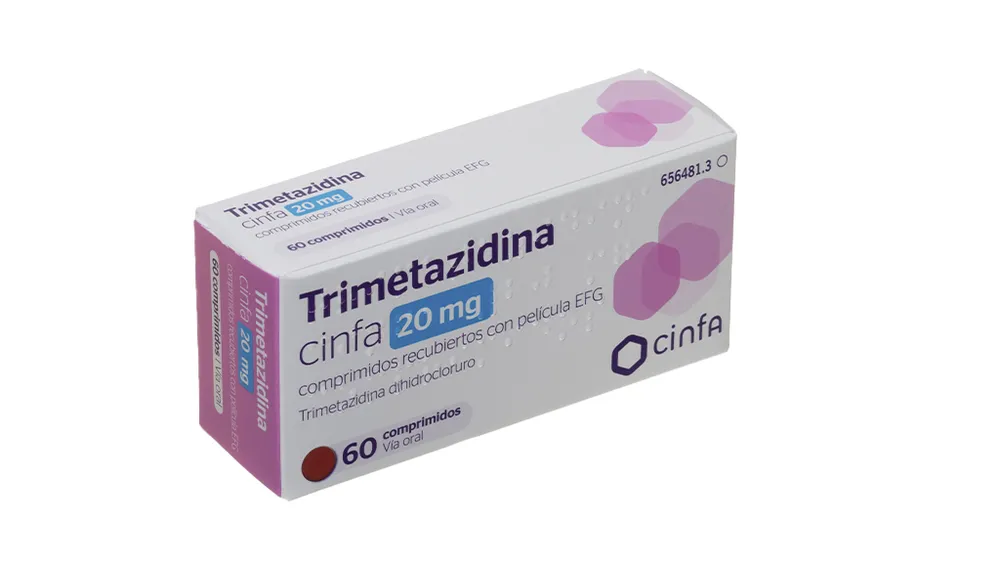
Table of Contents
- Package leaflet: Information for the user
- Introduction
- 1. What trimetazidine cinfa is and what it is used for
- 2. What you need to know before taking trimetazidine cinfa
- 3. How to take trimetazidine cinfa
- 4. Possible adverse effects
- 5. Storage of trimetazidine cinfa
- 6. Contents of the pack and other information
Package leaflet: Information for the user
Introduction
Package leaflet: information for the user
trimetazidina cinfa 20 mg film-coated tablets EFG
trimetazidine dihydrochloride
Read the entire leaflet carefully before you start taking this medicine, because it contains important information for you.
- Keep this leaflet, as you may need to read it again.
- If you have any questions, ask your doctor or pharmacist.
- This medicine has been prescribed for you only, and you should not give it to others, even if they have the same symptoms as you, because it could harm them.
- If you experience any adverse effects, consult your doctor or pharmacist, even if they are effects not listed in this leaflet. See section 4.
Leaflet contents
- What trimetazidina cinfa is and what it is used for
- What you need to know before taking trimetazidina cinfa
- How to take trimetazidina cinfa
- Possible side effects
- How to store trimetazidina cinfa
Pack contents and additional information
1. What trimetazidine cinfa is and what it is used for
This medicine is indicated in adult patients, in combination with other medications for the treatment of angina pectoris (chest pain caused by coronary artery disease).
2. What you need to know before taking trimetazidine cinfa
Do not take trimetazidine cinfa
- If you are allergic to trimetazidine or to any of the other ingredients of this medicine (listed in section 6).
- If you have Parkinson's disease: a brain disorder affecting movement (tremors, rigid posture, slow movements, shuffling gait, gait instability).
- If you have severe kidney problems.
Warnings and precautions
Talk to your doctor or pharmacist before starting treatment with trimetazidine cinfa.
This medicine is not a curative treatment for angina attacks, nor is it indicated as initial treatment for unstable angina. It is not a treatment for heart attack.
If you experience an angina attack, inform your doctor. You may need further tests and your treatment may need to be adjusted.
This medicine may cause or worsen symptoms such as tremors, rigid posture, slow movements, shuffling gait, and gait instability, particularly in elderly patients. These symptoms should be investigated and reported to your doctor, who may reconsider your treatment.
Falls may occur following a drop in blood pressure or loss of balance (see description under adverse effects).
Serious skin reactions, including drug reaction with eosinophilia and systemic symptoms (DRESS) and acute generalized exanthematous pustulosis (AGEP), have been reported in association with trimetazidine. Discontinue use of trimetazidine and seek immediate medical attention if you notice any symptoms related to these serious skin reactions described in section 4.
Children and adolescents
Trimetazidine is not recommended for use in children and adolescents under 18 years of age.
Other medicines and trimetazidine cinfa
Inform your doctor or pharmacist if you are taking, have recently taken, or might need to take any other medicines.
No interactions with other medicines have been identified.
Taking trimetazidine cinfa with food and drink
Trimetazidine may be taken with food and drink.
Pregnancy and breastfeeding
If you are pregnant or breastfeeding, think you may be pregnant, or are planning to become pregnant, consult your doctor or pharmacist before using this medicine.
Pregnancy
It is preferable not to take this medicine during pregnancy. If you become pregnant while taking this medicine, consult your doctor, as only they can assess whether continuing treatment is necessary.
Breastfeeding
Due to lack of data on excretion in breast milk, trimetazidine should not be taken during breastfeeding.
Driving and using machines
This medicine may cause dizziness and drowsiness, which could impair your ability to drive or operate machinery.
trimetazidine cinfa contains sodium
This medicine contains less than 1 mmol of sodium (23 mg) per tablet; i.e., essentially "sodium-free".
trimetazidine cinfa contains Allura Red AC (E-129)
This medicine may cause allergic reactions because it contains Allura Red AC (E-129). It may provoke asthma, especially in patients allergic to acetylsalicylic acid.
3. How to take trimetazidine cinfa
Follow exactly the instructions for use of this medicine as indicated by your doctor or pharmacist. If in doubt, consult your doctor or pharmacist again.
The recommended dose is 1 tablet three times a day with meals.
If you have kidney problems or are over 75 years old, your doctor may adjust the recommended dose.
The tablets should be swallowed with a glass of water and taken with meals.
Your doctor will determine how long your treatment with trimetazidine should last.
If you take more trimetazidine cinfa than you should
In case of overdose or accidental ingestion, contact your doctor or pharmacist immediately or call the Toxicology Information Service at telephone number 91 562 04 20, indicating the medicine and the amount ingested.
If you forget to take trimetazidine cinfa
Do not take a double dose to make up for missed doses.
If you have any further questions about the use of this medicine, ask your doctor or pharmacist.
4. Possible adverse effects
Like all medicines, this medicine can cause adverse effects, although not everyone will experience them.
Common (may affect up to 1 in 10 patients)
Dizziness, headache, abdominal pain, diarrhoea, indigestion, feeling of dizziness, vomiting, skin rash, itching, urticaria, and feeling of weakness.
Uncommon (may affect up to 1 in 100 people)
Unusual sensation in the skin, such as tingling or prickling (paraesthesia).
Rare (may affect up to 1 in 1,000 patients)
Rapid or irregular heartbeat (also known as palpitations), extra heartbeats, fast heartbeat, drop in blood pressure upon standing causing dizziness, fainting or collapse, general malaise (generally feeling unwell), falls, flushing.
Frequency not known (cannot be estimated from available data)
-
Extrapyramidal symptoms (unusual movements, including trembling hands and fingers, twisting movements of the body, shuffling gait, and stiffness of arms and legs), usually reversible after discontinuation of treatment.
-
Generalised skin rash, elevated body temperature, increased liver enzyme levels, blood abnormalities (eosinophilia), swollen lymph nodes, and involvement of other body organs (Drug Reaction with Eosinophilia and Systemic Symptoms, also known as DRESS). See also section 2.
-
Severe generalised red skin rash with blister formation.
-
Sleep disorders (difficulty sleeping, drowsiness), constipation, swelling of the face, lips, mouth, tongue or throat, which may cause difficulty swallowing or breathing.
-
Severe reduction in the number of white blood cells, increasing the likelihood of infections; decrease in blood platelets, increasing the risk of bleeding or bruising.
-
Liver disease (nausea, vomiting, loss of appetite, general malaise, fever, itching, yellowing of the skin and eyes, pale stools, dark urine).
-
Spinning sensation (vertigo).
Reporting of adverse effects
If you experience any adverse effect, consult your doctor or pharmacist, even if it is a possible adverse effect not listed in this leaflet. You can also report them directly via the Spanish Pharmacovigilance System for Human Medicines: https://www.notificaram.es. By reporting adverse effects, you can help provide more information on the safety of this medicine.
5. Storage of trimetazidine cinfa
Keep this medicine out of the sight and reach of children.
This medicine does not require any special storage conditions.
Do not use this medicine after the expiry date stated on the packaging after EXP. The expiry date refers to the last day of the month indicated.
Medicines must not be disposed of via wastewater or household waste. Dispose of empty containers and unused medicines at the SIGRE Point at your pharmacy. If in doubt, ask your pharmacist how to dispose of containers and medicines you no longer need. This will help protect the environment.
6. Contents of the pack and other information
Composition of trimetazidinacinfa
- The active substance is trimetazidine dihydrochloride. Each film-coated tablet contains 20 mg of trimetazidine dihydrochloride.
- The other components are:
Tablet core: maize starch, sodium carboxymethyl starch (type A) (from potato), microcrystalline cellulose (E-460), magnesium stearate, povidone (E-1201), and colloidal anhydrous silica.
- Tablet coating: hypromellose (E-464), microcrystalline cellulose (E-460), acetylated esters of mono- and diglycerides of fatty acids (E-472 a), titanium dioxide (E-171), and Allura Red AC (E-129).
Appearance of the product and contents of the pack
Red, cylindrical, biconvex, film-coated tablets with the code “T” on one side.
Packaged in PVC/PVDC-Aluminum blisters. Each package contains 60 or 500 tablets (clinical pack).
Only certain pack sizes may be commercially available.
Marketing Authorization Holder and Manufacturer:
Laboratorios Cinfa, S.A.
Carretera Olaz-Chipi, 10. Polígono Industrial Areta
31620 Huarte (Navarra) - Spain
Date of the most recent review of this leaflet: July 2024
Detailed information on this medicinal product is available on the website of the Spanish Agency of Medicines and Health Products (AEMPS): http://www.aemps.gob.es/
You can access detailed and up-to-date information about this medicine by scanning with your mobile phone (smartphone) the QR code included in the package leaflet and outer packaging. You can also access this information at the following web address: https://cima.aemps.es/cima/dochtml/p/68228/P_68228.html
QR code to: https://cima.aemps.es/cima/dochtml/p/68228/P_68228.html