Triflusal Abamed 300 mg capsules EFG
Spain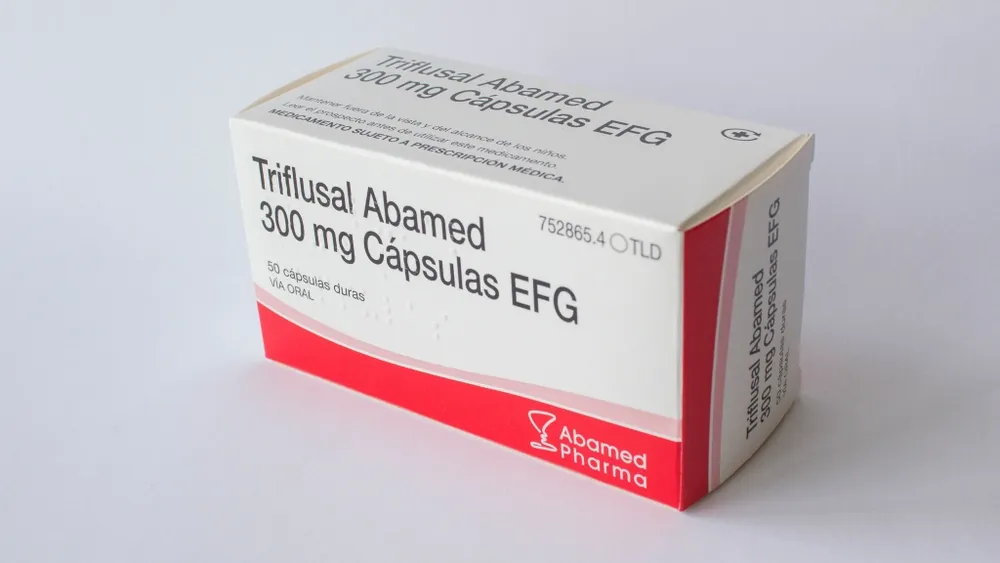
Table of Contents
- Package Leaflet: Information for the User
- Introduction
- 1. What Triflusal Abamed 300 mg Capsules EFG is and what it is used for
- 2. What you need to know before starting to take Triflusal Abamed 300 mg Capsules EFG
- 3. How to take Triflusal Abamed 300 mg Capsules
- 4. Possible adverse effects
- 5. Storage of Triflusal Abamed 300 mg Capsules
- 6. Contents of the pack and other information
Package Leaflet: Information for the User
Introduction
Package Leaflet: Information for the Patient
Triflusal Abamed 300 mg Capsules EFG
Read the entire leaflet carefully before starting to take this medicine, because it contains important information for you.
- Keep this leaflet, as you may need to read it again.
- If you have any questions, consult your doctor or pharmacist.
- This medicine has been prescribed for you only, and you should not give it to other people, even if they have the same symptoms as you, because it could harm them.
- If you experience any adverse effects, consult your doctor or pharmacist, even if they are adverse effects not listed in this leaflet. See section 4.
Contents of the Leaflet
- What Triflusal Abamed 300 mg Capsules EFG is and what it is used for
- What you need to know before taking Triflusal Abamed 300 mg Capsules EFG
- How to take Triflusal Abamed 300 mg Capsules EFG
- Possible side effects
- How to store Triflusal Abamed 300 mg Capsules EFG
- Contents of the pack and other information
1. What Triflusal Abamed 300 mg Capsules EFG is and what it is used for
Triflusal belongs to a group of medicines known as antiplatelet agents, which work by preventing the formation of blood clots (thrombi) that may block blood vessels.
This medicine is indicated in adults to reduce the risk of recurrence of myocardial infarction, stable or unstable angina, or cerebral infarction in patients who have previously experienced any of these conditions. It is also indicated in patients who have undergone coronary bypass surgery.
2. What you need to know before starting to take Triflusal Abamed 300 mg Capsules EFG
Do not take Triflusal Abamed 300 mg Capsules EFG:
- If you are allergic to the active substance (triflusal), to other salicylates, or to any of the other components of this medicine (listed in section 6).
- If you have a stomach ulcer or a history of complicated stomach ulcer.
- If you have any other disorder causing bleeding.
Warnings and precautions:
Talk to your doctor or pharmacist before starting to take Triflusal Abamed 300 mg Capsules EFG.
Take special care with Triflusal Abamed:
- If you have renal or hepatic impairment.
- If you are at risk of bleeding, whether due to trauma, other pathological conditions, or because you are taking non-steroidal anti-inflammatory drugs (medicines used to treat pain and/or inflammation of muscles or joints) for prolonged periods.
- If you are going to undergo any surgical procedure. In this case, bleeding risk must be assessed and, if necessary, you will have to stop taking Triflusal Abamed seven days before the procedure.
Consult your doctor, even if any of the above-mentioned circumstances occurred in the past.
Children and adolescents
The safety and efficacy in individuals under 18 years of age have not been established; therefore, administration is not recommended.
Taking Triflusal Abamed with other medicines
Inform your doctor or pharmacist if you are taking, have recently taken, or might need to take any other medicines.
Certain medicines may interact with Triflusal Abamed. In such cases, it may be necessary to adjust the dose or discontinue treatment. It is important that you inform your doctor if you are taking any of the following medicines: non-steroidal anti-inflammatory drugs, oral antidiabetics, or oral anticoagulants, as the effects of these medicines, including those of Triflusal Abamed, may be enhanced.
Taking Triflusal Abamed with food, drinks, and alcohol
Taking Triflusal Abamed with food reduces the likelihood of gastrointestinal adverse effects.
Pregnancy and breastfeeding
If you are pregnant or breastfeeding, think you may be pregnant, or are planning to become pregnant, consult your doctor or pharmacist before using this medicine.
Driving and using machines
No effects on the ability to drive or operate machinery have been reported.
3. How to take Triflusal Abamed 300 mg Capsules
Follow exactly the administration instructions given by your doctor or pharmacist. If in doubt, consult your doctor or pharmacist again. If in doubt, consult your doctor or pharmacist again.
Triflusal Abamed is administered orally.
The recommended dose is two capsules (600 mg of triflusal) daily, taken either as a single dose or divided into two doses, or three capsules (900 mg of triflusal) daily divided into three doses.
Swallow the capsule with a sufficient amount of liquid and, preferably, with meals.
Remember to take your medicine every day. Your doctor will inform you about the duration of your treatment with Triflusal Abamed. Do not stop the treatment without consulting your doctor.
If you take more Triflusal Abamed than you should
If very high doses are ingested, symptoms of salicylate poisoning may occur (headache, tinnitus, dizziness, nausea, vomiting, rapid breathing).
In case of overdose or accidental ingestion, immediately contact your doctor, pharmacist, nearest emergency service, or the Toxicology Information Service at telephone number 915 620 420, indicating the medication and the amount ingested.
If you forget to take Triflusal Abamed
Do not take a double dose to make up for the missed dose; instead, continue with your usual dose.
4. Possible adverse effects
Like all medicines, this medicine may cause adverse effects, although not everyone experiences them.
Very common adverse effects (in more than 1 in every 10 people):
Dyspepsia (indigestion)
Common adverse effects (in more than or equal to 1 in every 100 people and less than 1 in every 10 people):
Headache, abdominal pain, nausea, constipation, vomiting, flatulence, anorexia.
These symptoms are usually mild and disappear after a few days, even without stopping treatment.
Uncommon adverse effects (in more than or equal to 1 in every 1,000 people and less than 1 in every 100 people):
Pruritus (itching), skin rash, confusion, vertigo, dizziness, seizures, taste disturbances, tinnitus (ringing in the ears), hypoacusis (hearing loss), diarrhea, gastrointestinal bleeding, melaena (blood in stools), rectal bleeding, hypertension, transient ischaemic attack, cerebral haemorrhage, dyspnoea (difficulty breathing), upper respiratory tract infection, anaemia, epistaxis (nosebleeds), bruising, purpura (purple spots on the skin or mucous membranes), gingival haemorrhage (bleeding gums), haematuria (blood in urine), urinary tract infection, abdominal distension, fever, influenza-like symptoms.
Isolated cases of allergic skin reactions following exposure to sunlight have also been reported.
If you notice any of the mentioned adverse effects intensely or for a prolonged period, discontinue treatment and consult your doctor as soon as possible.
Reporting of adverse effects
If you experience any type of adverse effect, consult your doctor or pharmacist, even if they are possible adverse effects not listed in this leaflet. You can also report them directly via the Spanish Pharmacovigilance System for Human Medicines: https://www.notificaram.es. By reporting adverse effects, you can help provide more information on the safety of this medicine.
5. Storage of Triflusal Abamed 300 mg Capsules
Keep this medicine out of the sight and reach of children.
Do not store above 30°C.
Keep in the original packaging to protect it from moisture.
Do not use this medicine after the expiry date stated on the packaging (after EXP.). The expiry date refers to the last day of the month indicated.
Medicines must not be disposed of via wastewater or household waste. Dispose of unused medicines and their containers at the SIGRE collection point at your pharmacy. If you have any doubts, ask your pharmacist how to dispose of unused medicines and their containers.
This way, you will help protect the environment.
6. Contents of the pack and other information
Composition of Triflusal Abamed:
- The active substance is triflusal. Each capsule contains 300 mg of triflusal.
- The other components are the capsule gelatin and its colorants: erythrosine (E-127), iron oxides (E-172), and titanium dioxide (E-171).
Appearance of the product and contents of the pack
Hard gelatin capsules with a pink body and a cream-colored cap, containing white powder.
This medicine is available in packs of 30 or 50 capsules.
Marketing Authorization Holder
Qualix Pharma, S.L.
c/ Botánica, 137-139
08908 L'Hospitalet de Llobregat
(Barcelona)
Spain
Manufacturer
Toll Manufacturing Services, S.L.
C/ Aragoneses, 2
28108 Alcobendas
(Madrid)
Spain
Date of the most recent review of the package leaflet: September 2014
Detailed and up-to-date information on this medicine is available on the website of the Spanish Agency for Medicines and Health Products (AEMPS) http://www.aemps.gob.es