Triclor film-coated tablets
Spain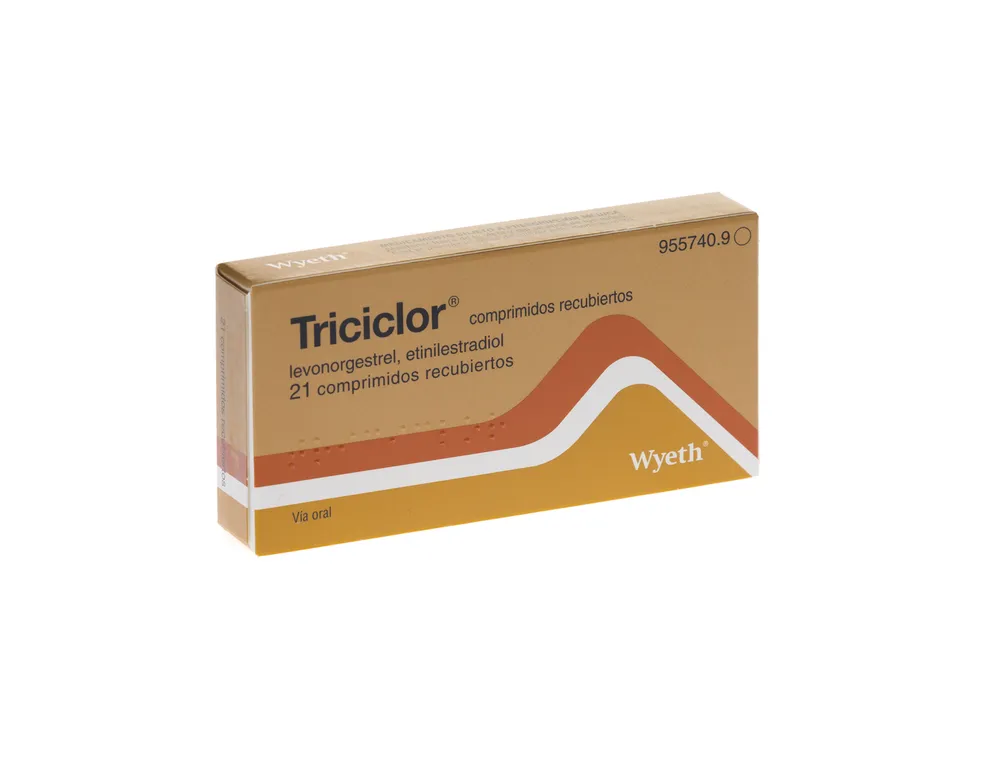
Table of Contents
- Package leaflet: Information for the user
- Introduction
- **Triciclor coated tablets**
- 1. What Triciclor is and what it is used for
- 2. What you need to know before starting to take Triciclor
- 3. How to take Triciclor
- 4. Possible adverse effects
- 5. Storage of Triciclor
- 6. Contents of the pack and other information
Package leaflet: Information for the user
Introduction
Package leaflet: information for the user
Triciclor coated tablets
Levonorgestrel/Ethinylestradiol
Read the entire leaflet carefully before starting to take this medicine, as it contains important information for you.
- Keep this leaflet, as you may need to read it again.
- If you have any questions, consult your doctor or pharmacist.
- This medicine has been prescribed for you only, and you should not give it to others, even if they have the same symptoms as you, because it could harm them.
- If you experience any adverse effects, consult your doctor or pharmacist, even if they are adverse effects not listed in this leaflet. See section 4.
Leaflet contents
- What Triciclor is and what it is used for
- What you need to know before taking Triciclor
- How to take Triciclor
- Possible adverse effects
- Storage of Triciclor
- Contents of the pack and other information
1. What Triciclor is and what it is used for
Triciclor is an oral contraceptive medication.
Triciclor is prescribed for the following indications: oral hormonal contraception, menstrual cycle disorders, and ovarian rest.
Additionally, the use of oral contraceptives may have beneficial effects on conditions such as dysmenorrhea (menstrual pain) and in reducing the incidence of certain breast and reproductive organ disorders.
2. What you need to know before starting to take Triciclor
Before you start taking Triciclor, your doctor will ask you some questions about your medical history and your personal relationships. Your doctor will also measure your blood pressure and may carry out additional tests. This leaflet describes certain situations in which you should stop taking Triciclor or where the effectiveness of Triciclor may be reduced, increasing the risk of pregnancy. In these situations, you should avoid sexual intercourse or use additional non-hormonal contraceptive precautions (for example, condoms or another barrier method). Do not use the rhythm or temperature method. These methods may not be reliable, as Triciclor alters the monthly changes in body temperature and cervical mucus. Triciclor, like other oral contraceptives, does not protect against HIV infection (AIDS) or against other sexually transmitted diseases. |
Do not take Triciclor:
- If you are allergic to the active substances (levonorgestrel, ethinylestradiol) or to any of the other components of this medicine (listed in section 6).
- If you are pregnant or think you might be pregnant.
- If you have or have had serious liver function disorders, with or without yellowing of the skin (jaundice) or persistent itching of the skin during pregnancy.
- If you have or have had heart problems or blood vessel disorders, particularly:
- heart attack (myocardial infarction), irregular heartbeat, or heart valve disorders
- blood clots in the legs (deep vein thrombosis), in the lungs (pulmonary embolism), or rupture of blood vessels in the brain (stroke), mini-stroke, or a general tendency to form blood clots (venous or arterial thrombosis)
- chest pain caused by angina pectoris.
- If you have or have had breast, cervical, uterine, or vaginal tumors, or a type of cancer sensitive to female hormones.
- If you have or have had liver tumors.
- If you have diabetes mellitus associated with blood vessel problems.
- If you have disorders of the arteries in the brain or heart.
- If you have heart valve disorders (valvulopathies).
- If you have heart rhythm disorders (arrhythmias) with a risk of blood clot formation.
- If you have inherited or acquired disorders that predispose to blood clotting (thrombophilias).
- If you suffer from migraines associated with symptoms such as loss of strength or sensation in part of the body, or vision disturbances (aura).
- If you have uncontrolled high blood pressure despite treatment.
- If you have unexplained vaginal bleeding.
- Untreated endometrial hyperplasia (enlargement of the uterus).
- If you have hepatitis C and are taking medications containing ombitasvir/paritaprevir/ritonavir and dasabuvir, glecaprevir/pibrentasvir, or sofosbuvir/velpatasvir/voxilaprevir (see also section “Other medicines and Triciclor”).
Warnings and precautions
Consult your doctor before starting to take Triciclor. You will need to visit your doctor for a physical examination. It is important that you inform your doctor if you currently have or have previously had any of the following conditions. If so, your doctor may need to monitor you more frequently.
- Heart disease (chest pain, certain types of heart rhythm disorders, heart conditions).
- Personal or family history of high levels of fat (triglycerides) in the blood.
- You or a close relative (parents, siblings) have had a condition that increases the tendency to form blood clots (in the legs, lungs, or elsewhere in the body), or have a history of heart attacks or strokes.
- You have varicose veins or have had inflammation in the superficial leg veins (superficial thrombophlebitis).
- High blood pressure, particularly if it worsens or does not improve with antihypertensive medication.
- You develop migraines for the first time, or experience worsening of existing migraines (more intense and frequent), especially if associated with vision disturbances (aura).
- Diabetes.
- Obesity.
- Depression or a history of depression, as it may worsen or reappear when using hormonal contraceptives. If severe depression occurs, treatment should be discontinued and an alternative contraceptive method used. Women with a history of depression should be closely monitored.
- Epilepsy.
- Inflammatory bowel disease (Crohn’s disease or ulcerative colitis).
- Jaundice (yellowing of the whites of the eyes and skin) or disorders of liver, pancreas, or kidney function.
- Gallstones, gallbladder disorders, or problems caused by blockage of bile ducts (cholestasis) – may cause severe itching.
- Itching, red spots, or blisters (herpes gestationis), especially if these occurred during a previous pregnancy or while taking another contraceptive pill.
- Permanent brown patches on the face (chloasma), particularly if they occurred during a previous pregnancy. In such cases, avoid sunlight and ultraviolet radiation (e.g., tanning beds).
- You have a disorder affecting your immune system (systemic lupus erythematosus).
- You have a condition known as Sydenham's chorea. Symptoms include irregular, sudden, involuntary movements.
- You have ever had a blood disorder associated with kidney disease (hemolytic uremic syndrome).
- You have ever had a blood disorder called porphyria.
- If you experience symptoms of angioedema such as swelling of the face, tongue, and/or throat, and/or difficulty swallowing, or hives with possible breathing difficulties, contact a doctor immediately. Products containing estrogens may cause or worsen symptoms of hereditary or acquired angioedema.
Psychiatric disorders:
Some women using hormonal contraceptives such as Triciclor have reported depression or depressed mood. Depression can be severe and may sometimes lead to suicidal thoughts. If you experience mood changes or depressive symptoms, contact your doctor for medical advice as soon as possible.
Smoking increases the risk of serious adverse effects on the heart and blood vessels associated with the use of oral contraceptives. This risk increases with age and the amount smoked, and is particularly significant in women over 35 years of age.
You should also contact your doctor if you think you might be pregnant.
Potentially serious conditions:
Thrombosis (blood clots)
The use of combined hormonal contraceptives, including Triciclor, may increase the risk of women developing thrombosis (blood clot formation). This risk is higher during the first year of using oral contraceptives. Blood clots can block or obstruct major blood vessels and may lead to: pulmonary embolism, myocardial infarction, angina pectoris, cerebral thrombosis, etc.
If you notice any of the following symptoms, inform your doctor immediately or go to the nearest hospital emergency department, as they may indicate thrombosis:
- Pain and swelling in one leg.
- Severe chest pain that sometimes spreads to the left arm.
- Difficulty breathing or sudden shortness of breath.
- Sudden cough without apparent cause.
- Severe, unusual, persistent, or prolonged headache, or more frequent or severe migraine attacks.
- Vision problems (partial or complete vision loss, double vision).
- Difficulty speaking clearly.
- Dizziness or fainting.
- Seizures.
- Vertigo.
- Weakness, unusual sensations, or numbness affecting one side of the body.
- Difficulty walking or holding objects.
- Severe abdominal pain.
- Sudden changes in hearing, sense of smell, or taste.
- Increased blood pressure.
The following conditions may increase the risk of blood clot formation, so you must inform your doctor if you have any of them:
- If you are overweight or obese.
- If you are a smoker and over 35 years old. It is strongly recommended that you stop smoking while taking Triciclor, especially if you are over 35.
- If you have recently given birth or had a second-trimester abortion. Women have an increased risk of blood clots, so consult your doctor about when you can start taking the oral contraceptive after childbirth or abortion.
- If you have been prescribed prolonged immobilization (e.g., with one or both legs in casts or splints), are about to undergo or have undergone major surgery, leg surgery, or major trauma. In these situations, it is advisable to stop taking Triciclor (if surgery is planned, stop at least four weeks beforehand) and not restart until two weeks after you can walk again.
- If you have elevated fat levels in the blood (cholesterol or triglycerides).
- If a close relative had a heart attack or stroke at a young age.
- If you have high blood pressure.
- If you have migraines.
- If you have heart problems (valve disorders, heart rhythm disturbances).
Genital bleeding
You may not have your "period" during the rest week. If the contraceptive pill has been taken correctly, it is very unlikely that you are pregnant. However, if you miss two periods, consult your doctor, as pregnancy must be ruled out before starting the next pack.
If you have not taken the contraceptive pill according to the instructions in section 3 of this leaflet, “How to take Triciclor,” and you miss a period, you should stop treatment and use a non-hormonal contraceptive method until pregnancy has been ruled out.
During the first few months of taking this medicine, you may experience unexpected vaginal bleeding or spotting outside the 7 days when no tablets are taken. If this occurs, continue treatment, but if bleeding continues beyond the first three cycles, consult your doctor immediately, as the cause must be investigated. Mistakes in taking the pill can also cause spotting and light bleeding.
When you stop using this medicine, you may experience irregular, scanty, or no bleeding, especially during the first 3 months and particularly if your periods were already irregular before starting hormonal treatment.
Taking Triciclor with other medicines
Inform your doctor or pharmacist if you are using, have recently used, or might need to use any other medicines, including those obtained without a prescription.
Never take another medicine on your own initiative without your doctor's recommendation, as medicines can interact with each other.
If you are receiving treatment from another doctor, nurse, or qualified healthcare professional, ensure they are aware that you are taking Triciclor as a contraceptive. They may advise you to take additional precautions (e.g., use condoms or other barrier contraceptives) while taking other medicines with Triciclor.
Keep in mind that these instructions may also apply to medicines you have used previously or may need to use in the future.
The following medicines may reduce the effectiveness of Triciclor in preventing pregnancy or may cause unexpected bleeding. They include medicines used to treat:
- Viral infections and HIV (ritonavir, nevirapine).
- Infections (rifampicin, rifabutin, griseofulvin, and troleandomycin).
- Epilepsy (topiramate, barbiturates (phenobarbital), phenytoin, carbamazepine, primidone, oxcarbazepine, felbamate).
- Gout (phenylbutazone) or inflammation (dexamethasone).
- Stomach acidity (antacids).
- Constipation (purgatives or laxatives).
- Sleep disorders (modafinil).
- The herbal remedy St. John's wort (Hypericum perforatum), used to treat certain types of depression.
It is advisable to use another reliable contraceptive method if you are taking any of the medicines that may reduce the effectiveness of oral contraceptives. Generally, women undergoing treatment with the medicines listed above should use a non-hormonal contraceptive method during antibiotic treatment and for at least 7 days after stopping them. If you need to continue taking these medicines after finishing your current pack, do not take the tablet-free week and start a new pack immediately.
If you are being treated with rifampicin, griseofulvin, or medicines for epilepsy (antiepileptics), you should continue using non-hormonal contraceptives for at least 28 days after stopping treatment with these medicines.
Triciclor may also interfere with the following medicines. Some of these medicines increase Triciclor levels, while in other cases Triciclor may increase or decrease the effect of these medicines:
- Medicines that reduce triglyceride and/or cholesterol levels (atorvastatin).
- Antifungals (fluconazole).
- Vitamin C.
- Analgesics (paracetamol and salicylates).
- Anti-retrovirals (indinavir).
- Antibiotics (troleandomycin). Taking this medicine with Triciclor may increase the risk of intrahepatic cholestasis (bile retention in the liver) during treatment.
- Oral anticoagulants (acenocoumarol).
- Oral antidiabetics and insulin.
- Lamotrigine (used to treat epilepsy and certain psychiatric disorders).
- β-blockers such as metoprolol (used to treat high blood pressure).
- Theophylline (for asthma treatment).
- Corticosteroids (such as prednisolone).
- Cyclosporine (immunosuppressant), increasing the risk of liver toxicity.
- Flunarizine (for migraine prevention). Taking this medicine with Triciclor may increase the risk of galactorrhea, a condition in which the breasts secrete milk spontaneously without breastfeeding or recent childbirth.
Do not take TRICICLOR if you have hepatitis C and are taking medications containing ombitasvir/paritaprevir/ritonavir and dasabuvir, glecaprevir/pibrentasvir, or sofosbuvir/velpatasvir/voxilaprevir, as these medications may cause increases in liver function test results (elevated liver enzyme ALT).
Your doctor will prescribe another type of contraceptive before starting treatment with these medications.
TRICICLOR can be restarted approximately 2 weeks after completing this treatment. See section “Do not take TRICICLOR.”
Laboratory tests
The use of oral contraceptives may affect the results of certain laboratory tests. If you are scheduled for any laboratory test, inform your doctor that you are using oral contraceptives.
Pregnancy and breastfeeding
Consult your doctor or pharmacist before using any medicine.
If you are pregnant or breastfeeding, think you might be pregnant, or plan to become pregnant, do not use this medicine and consult your doctor.
If you think you might have become pregnant while being treated with Triciclor, you must stop taking the medicine immediately and consult your doctor.
This medicine should not be used until breastfeeding has ended.
Use in children
The efficacy and safety of oral contraceptives have been established in women of reproductive age.
Its use is not indicated before the first menarche (menstruation).
Elderly
Not indicated in postmenopausal women.
Driving and use of machines
No effects on the ability to drive or use machines have been observed with Triciclor.
Triciclor contains lactose and sucrose
This medicine contains lactose. If your doctor has informed you that you have an intolerance to certain sugars, consult him before taking this medicine.
This medicine contains sucrose. If your doctor has informed you that you have an intolerance to certain sugars, consult him before taking this medicine.
3. How to take Triciclor
Follow exactly the instructions for taking this medicine as given by your doctor. If in doubt, consult your doctor again.
This medicine is for oral use. You should take one tablet every day, with a little liquid if necessary, and at approximately the same time each day, until the pack is finished. After that, you must stop taking tablets for 7 days (these 7 days are also known as the “rest period”). During these 7 days without tablets, you will have a bleed similar to your period (menstruation). This bleeding usually starts after two or three days and may not have finished before you start the next pack of tablets.
After these 7 days without tablets, you must start the next pack.
It is very important that you remember to take the tablets in the order and numbering indicated on the blister pack.
If this is the first time you are taking this medicine or you did not use any hormonal contraceptive in the previous month
Treatment should start on the first day of your menstrual cycle (i.e., the first day of bleeding).
Contraceptive protection begins on the first day of treatment and continues during the 7 days when you are not taking tablets.
If you start between days 2 and 7 of your cycle, you must additionally use a barrier method of contraception (e.g., condoms) for the first 7 days.
If you are switching from another contraceptive to Triciclor
If your previous contraceptive was a 21-tablet pack:
You may start taking Triciclor the day after finishing your current contraceptive, without observing the 7-day “rest period” (days without tablets).
If your previous contraceptive was a 28-tablet pack:
If your current contraceptive contains inactive (placebo) tablets, do not take these tablets. Start taking Triciclor the day after taking the last active tablet of your current contraceptive.
If switching from a progestogen-only contraceptive method (minipill, implant, intrauterine device (IUD), or injection) to Triciclor
Progestogen-only pill (minipill)
You may stop taking the progestogen-only pill (minipill) at any time during your menstrual cycle and start taking Triciclor the next day at the same time.
Injectable contraceptive
Start using this medicine when your next injection would normally be due.
Implant or intrauterine device (IUD)
Start using this medicine the day after removal of your implant or intrauterine device (IUD).
In all the situations described above, you should also use an additional barrier method when having sexual intercourse (e.g., condoms) during the first 7 days of taking Triciclor.
Taking Triciclor after a first-trimester abortion
You may start taking the tablets immediately. If you do so, no additional contraceptive measures are necessary.
Taking Triciclor after childbirth or after a second-trimester abortion
If you are breastfeeding, you must not take this medicine until you have stopped breastfeeding. See section “Pregnancy and breastfeeding”.
Triciclor should not be taken until 28 days after childbirth (provided the woman is not breastfeeding) or after a second-trimester abortion.
If you start later, you must use an additional barrier method for the first 7 days of treatment with Triciclor.
However, if you have already had sexual intercourse within these 28 days, pregnancy must be ruled out before starting the contraceptive, or you must wait until your next menstrual period.
What to do if bleeding occurs during the 21 days of taking coated tablets
Bleeding during the 3 weeks of taking the coated tablets is not a reason to stop treatment. Light bleeding usually resolves on its own. If bleeding becomes as heavy as a normal menstruation and persists for more than 3 cycles, you should consult your doctor.
Absence of bleeding
If you have not taken Triciclor regularly, or if you have had vomiting or diarrhoea during the cycle and no vaginal bleeding occurs during the rest period, you should consult your doctor and rule out pregnancy. See the sections below “If you forget to take Triciclor” and “Advice in case of vomiting and/or diarrhoea”.
If you forget to take Triciclor
Contraceptive protection may be reduced if you miss tablets. In particular, if you miss tablets in the first week of treatment and had sexual intercourse in the previous week, there may be a risk of pregnancy.
? If you are less than 12 hours late in taking a tablet, the effectiveness of Triciclor is maintained. Take the missed tablet as soon as you remember and take the following tablets at your usual time.
? If you are more than 12 hours late in taking a tablet, the effectiveness of Triciclor may be reduced. Always take the last missed tablet as soon as you remember, even if this means taking two tablets in one day. Continue taking the following tablets at your usual time, but remember that you must use an additional barrier method (e.g., condoms) for the next 7 days.
If you finish the pack before the 7 days of using an additional contraceptive method are completed, start a new pack immediately without a break between packs. You will not have your period until you finish the new pack, although you may experience spotting or bleeding during the days you take the tablets.
If you do not have your period after finishing the new pack, contact your doctor, as pregnancy must be ruled out before starting the next pack.
Advice in case of vomiting and/or diarrhoea
If vomiting or diarrhoea occurs within 4 hours of taking a tablet, follow the advice for missed tablets. If you do not wish to change your usual tablet-taking schedule, take the necessary additional tablets from another pack, which must always be of the same colour as the tablet you are due to take.
If possible, take it within the next 12 hours or at your usual tablet-taking time. If this is not possible or more than 12 hours have passed, follow the guidelines described for these cases in the section “If you forget to take Triciclor”.
If episodes of vomiting or severe diarrhoea recur over several days, you should use a barrier contraceptive method (e.g., condoms) until the start of the next pack. Consult your doctor if in doubt.
How to delay a period
To delay a period, start a new pack immediately after finishing the current pack, i.e., without observing the 7-day tablet-free interval (“rest period”). You may experience some spotting or bleeding while taking the second pack, but this is not a cause for concern. You should have a normal bleed after finishing the second pack, and then observe the usual 7-day break without tablets before starting a new pack.
If you take more Triciclor than you should
You may experience nausea, vomiting, numbness, drowsiness, breast tenderness, dizziness, and vaginal bleeding. Treatment is symptomatic. However, these symptoms will naturally subside as your body processes the excess hormones.
In case of overdose or accidental ingestion, consult your doctor or pharmacist or call the Toxicology Information Service. Telephone 915 620 420, stating the medicine and the quantity taken.
4. Possible adverse effects
Serious adverse effects
Contact a doctor immediately if you experience any of the following symptoms of angioedema: swelling of the face, tongue and/or throat, and/or difficulty swallowing or hives with possible difficulty breathing (see also section “Warnings and precautions”).
Like all medicines, this medicine may cause adverse effects, although not everyone will experience them. If you experience adverse effects, consult your doctor or pharmacist, even if these are adverse effects not listed in this leaflet.
The adverse effects are listed below, classified according to their frequency.
Very common adverse effects (may affect more than 1 in 10 people) are:
- unexpected vaginal bleeding or spotting
- headache, including migraines
Common adverse effects (may affect up to 1 in 10 people) are:
- vaginitis (inflammation of the vagina), including candidiasis (fungal infection in the vagina)
- mood changes, including depression; changes in libido (sexual desire)
- nervousness, dizziness
- nausea, vomiting, abdominal pain
- acne
- breast pain, breast tenderness on palpation, breast enlargement, breast discharge, dysmenorrhea (painful menstruation), changes in menstrual flow, changes in vaginal discharge and cervical mucosa (cervical ectopia), amenorrhea (absence of menstruation)
- fluid retention, edema (swelling)
- changes in weight (increase or decrease)
Uncommon adverse effects (may affect up to 1 in 100 people) are:
- changes in appetite, increase or decrease
- cramps, sensation of bloating, diarrhea
- rash, chloasma (skin discoloration) which may persist, hirsutism (excessive hair growth), alopecia (hair loss)
- increased blood pressure; changes in blood lipid levels, including hypertriglyceridemia (high levels of fatty acids in the blood)
Rare adverse effects (may affect up to 1 in 1,000 people) are:
- intolerance to contact lenses
- allergic-type reactions such as urticaria (itching), accompanied by angioedema (swelling of the face, lips, mouth, and in very rare cases accompanied by difficulty breathing, dizziness and even loss of consciousness) and severe respiratory and circulatory reactions
- glucose intolerance
- venous thrombotic episodes (formation of blood clots in veins)
- cholestatic jaundice (yellowing of the whites of the eyes and skin due to bile retention)
- erythema nodosum (a type of skin inflammation causing nodules on the legs), erythema multiforme (a type of red skin lesions due to a drug reaction)
- vaginal discharge
- decreased levels of folates in the blood
Very rare adverse effects (may affect up to 1 in 10,000 people) are:
- hepatocellular carcinomas (malignant liver tumors)
- worsening of systemic lupus erythematosus (autoimmune disease)
- worsening of porphyria (blood disorder)
- worsening of chorea (involuntary movements)
- eye abnormalities and visual disturbances
- worsening of varicose veins
- pancreatitis (inflammation of the pancreas); ischemic colitis (certain types of inflammation of the colon)
- cholecystopathy (gallbladder disorders), including gallstones
- hemolytic uremic syndrome (kidney disease with blood abnormalities)
Adverse effects of unknown frequency are:
- inflammatory bowel disease (Crohn's disease, ulcerative colitis) (certain types of intestinal inflammation)
- liver injury such as hepatitis (liver inflammation) or impaired liver function
Reporting of adverse effects
If you experience any type of adverse effect, consult your doctor or pharmacist, even if these are possible adverse effects not listed in this leaflet. You may also report them directly through the Spanish Pharmacovigilance System for Human Medicines: http://www.notificaram.es. By reporting adverse effects, you can help provide more information on the safety of this medicine.
5. Storage of Triciclor
No special storage conditions are required.
Keep out of the sight and reach of children.
Do not use Triciclor after the expiry date stated on the container. The expiry date is the last day of the month indicated.
Medicines must not be disposed of via wastewater or household waste. Dispose of containers and unused medicines at the SIGRE collection point at the pharmacy. If you are unsure, ask your pharmacist how to dispose of containers and unused medicines. This will help protect the environment.
6. Contents of the pack and other information
Composition of Triciclor
Each brown-coated tablet contains 50 micrograms of levonorgestrel and 30 micrograms of ethinylestradiol. The other components (excipients) are: Sucrose, lactose monohydrate, corn starch, povidone K-25, magnesium stearate, talc, macrogol 6000, calcium carbonate, povidone K-90, glycerol 85%, red iron oxide (E-172), yellow iron oxide (E-172), titanium dioxide (E-171), E wax, and purified water.
Each white-coated tablet contains 75 micrograms of levonorgestrel and 40 micrograms of ethinylestradiol. The other components (excipients) are: Sucrose, lactose monohydrate, corn starch, povidone K-25, magnesium stearate, talc, macrogol 6000, calcium carbonate, povidone K-90, E wax, and purified water.
Each yellow-coated tablet contains 125 micrograms of levonorgestrel and 30 micrograms of ethinylestradiol. The other components (excipients) are: Sucrose, lactose monohydrate, corn starch, povidone K-25, magnesium stearate, talc, macrogol 6000, calcium carbonate, povidone K-90, glycerol 85%, titanium dioxide (E-171), yellow iron oxide (E-172), E wax, and purified water.
Appearance of the product and pack contents
Each pack contains 21 coated tablets in a blister (PVC/Aluminum). Each blister is contained in an aluminum pouch with a sachet of desiccant (silica gel).
The desiccant is not part of the medicine and must not be ingested.
Marketing Authorization Holder
WYETH FARMA, S.A.
Ctra. Burgos, Km 23. Desvío Algete, Km 1.
San Sebastián de los Reyes – Madrid
Spain
Manufacturer
Pfizer Ireland Pharmaceuticals Unlimited Company
Little Connell
Newbridge
Co. Kildare
W12 HX57
Ireland
Local Representative
Pfizer, S.L.
Avda. de Europa, 20-B
Parque Empresarial La Moraleja
28108 Alcobendas (Madrid)
Date of the most recent review of this leaflet: November 2022
Detailed and up-to-date information on this medicine is available on the website of the Spanish Agency for Medicines and Health Products (AEMPS) http://www.aemps.gob.es/