Triapin 5 mg/5 mg prolonged-release tablets
Spain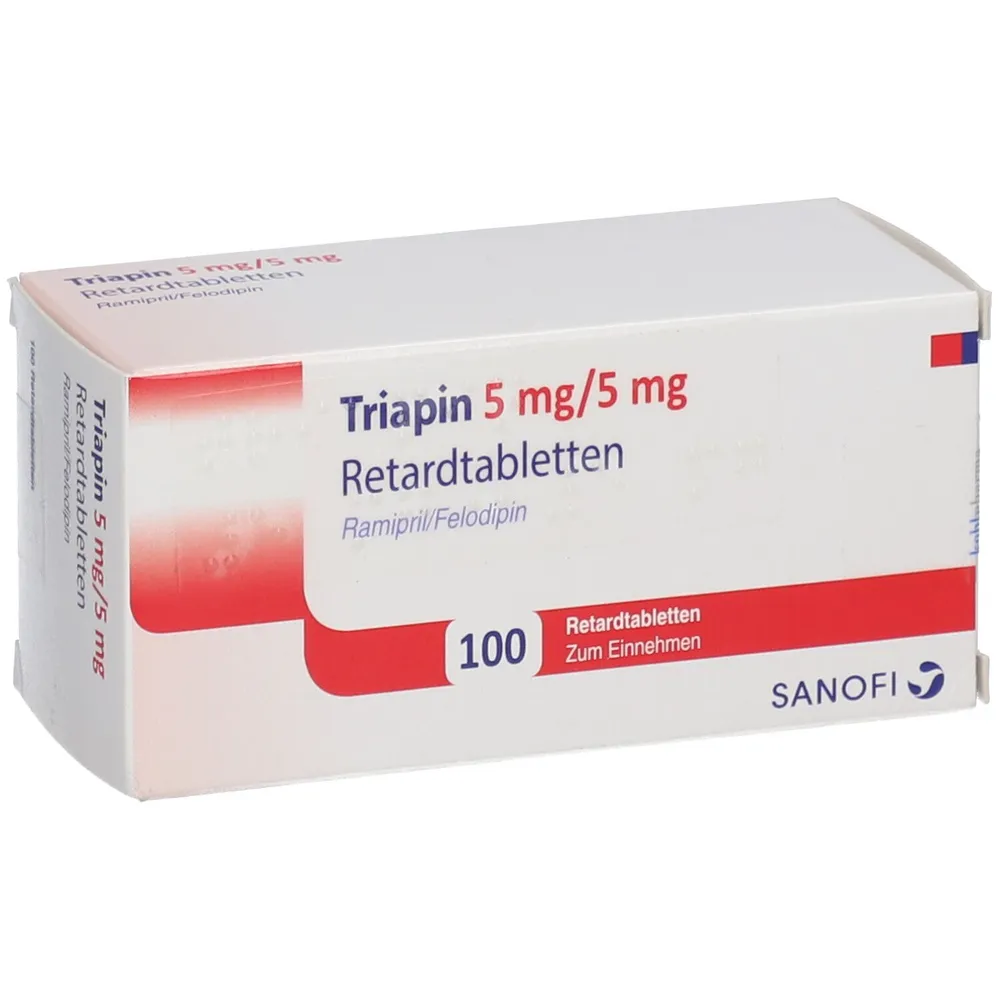
Table of Contents
- Package leaflet: Information for the user
- Introduction
- **Triapin 5 mg/5 mg**
- **prolonged-release tablets**
- 1. What Triapin is and what it is used for
- 2. What you need to know before taking Triapin
- **Warnings and precautions**
- Consult your doctor or pharmacist before starting to take Triapin tablets if:
- **Use of Triapin tablets with other medicines**
- **Taking Triapin tablets with food and drink**
- **Pregnancy and lactation**
- **Triapin tablets contain lactose, macroglycerol hydroxystearate (polyoxylated hydrogenated castor oil), and sodium**
- 3. How to take Triapin
- 4. Possible adverse effects
- 5. Storage of Triapin
- 6. Contents of the pack and other information
- **Marketing Authorization Holder**
- **Manufacturer**
Package leaflet: Information for the user
Introduction
Package leaflet: information for the user
Triapin 5 mg/5 mg
prolonged-release tablets
ramipril/felodipine
Read the entire package leaflet carefully before starting to take this medicine, as it contains important information for you.
- Keep this leaflet, as you may need to read it again.
- If you have any questions, consult your doctor or pharmacist.
- This medicine has been prescribed for you only, and you should not give it to others, even if they have the same symptoms as you, since it could harm them.
- If you experience any adverse effects, consult your doctor or pharmacist, even if they are effects not listed in this leaflet. See section 4.
Contents of the package leaflet:
- What Triapin is and what it is used for
- What you need to know before taking Triapin
- How to take Triapin
- Possible adverse effects
- Storage of Triapin
- Contents of the pack and other information
1. What Triapin is and what it is used for
Triapin is a medicine that contains the active substances acetylsalicylic acid, paracetamol and caffeine. It belongs to a group of medicines called analgesics (painkillers) and antipyretics (fever reducers).
Triapin is used for the short-term treatment of mild to moderate pain such as headache, including migraine, toothache, sore throat pain, menstrual pain, back pain, as well as fever and flu-like symptoms.
Acetylsalicylic acid has an analgesic, antipyretic and anti-inflammatory effect. Paracetamol has an analgesic and antipyretic effect. Caffeine enhances the pain-relieving effect of acetylsalicylic acid and paracetamol.
Triapin 5 mg/5 mg prolonged-release tablets (also referred to as Triapin tablets in this leaflet) contains two medicines called ramipril and felodipine.
- Ramipril belongs to a group of medicines known as “angiotensin-converting enzyme inhibitors” (ACE inhibitors). It works by inhibiting the production of substances that increase blood pressure and by relaxing and dilating blood vessels.
- Felodipine belongs to a group of medicines known as “calcium antagonists”. It works by relaxing and dilating blood vessels. This helps lower blood pressure.
Triapin tablets are used to treat high blood pressure (hypertension). High blood pressure may indicate that you are more likely to develop problems such as heart disease, kidney disease, and stroke. This medicine lowers your blood pressure and reduces the risk of developing these problems.
2. What you need to know before taking Triapin
Do not take Triapin tablets if:
-
You are allergic to:
- ramipril or any other ACE inhibitor
- felodipine or any other calcium antagonist
- any of the other components of this medicine (listed in section 6).
-
You have ever had a serious allergic reaction called "angioedema". Symptoms include itching, allergic rash (urticaria), red marks on the hands, feet and throat, swelling of the throat and tongue, swelling around the eyes and lips, difficulty breathing and swallowing. Taking this medicine may increase your risk of having a more severe episode of this type.
-
You have taken or are currently taking sacubitril/valsartan, a medicine used to treat a type of long-term (chronic) heart failure in adults.
-
You have heart problems such as heart failure, obstruction in your heart, unstable angina, a heart condition called second- or third-degree atrioventricular block, a heart attack (acute myocardial infarction), or a stroke (disruption of blood flow to the brain).
-
You have severe kidney problems.
-
You are undergoing dialysis.
-
You have severe liver problems.
-
You are pregnant, trying to become pregnant, or breastfeeding (see "Pregnancy and breastfeeding").
-
You have diabetes or renal insufficiency and are being treated with a blood pressure-lowering medicine containing aliskiren.
Do not take this medicine if you are in any of the above situations. If you are unsure, consult your doctor or pharmacist before taking Triapin tablets.
Warnings and precautions
Consult your doctor or pharmacist before starting to take Triapin tablets if:
- You have kidney problems, diabetes mellitus, or are taking medicines that increase potassium levels.
Your doctor may advise you to have regular blood tests, particularly to monitor the levels of potassium in your blood.
-
You are taking medicines or have conditions that may reduce sodium levels in your blood. Your doctor may advise you to have regular blood tests, particularly to monitor sodium levels in your blood, especially if you are elderly.
-
You are taking medicines that may increase the risk of angioedema, a serious allergic reaction, such as mTOR inhibitors (e.g. temsirolimus, everolimus, sirolimus), vildagliptin, or neprilysin (NEP) inhibitors (such as racecadotril) or sacubitril/valsartan. For sacubitril/valsartan, see section 2 "Do not take Triapin tablets."
-
You have renal artery problems.
-
You have narrowing of the main blood vessel leaving the heart (aortic stenosis) or a disease of the heart muscle (hypertrophic cardiomyopathy).
-
You have any other heart problems.
-
You suffer from systemic lupus erythematosus or scleroderma.
-
You have liver problems.
-
You are about to undergo anesthesia or surgery.
-
You are taking medicines that reduce the number of certain blood cells.
-
You are of Black race, as the medicine may have a lower effect on your blood pressure and a higher risk of adverse effects.
-
You are undergoing treatment to reduce the effects of allergy to bee or wasp stings (desensitization).
-
You are undergoing any procedure in which blood is treated outside the body, such as "low-density lipoprotein apheresis."
-
You have inflammation of your gums, which may be a sign of gingivitis or periodontitis. Careful dental hygiene may be necessary to prevent further gum problems, such as a condition that increases the size of your gums.
-
You are taking any of the following medicines used to treat high blood pressure (hypertension):
-
an angiotensin II receptor antagonist (ARA) (also known as "sartans" – e.g. valsartan, telmisartan, irbesartan), particularly if you have kidney problems related to diabetes.
-
aliskiren.
Your doctor may monitor your kidney function, blood pressure, and blood electrolyte levels (e.g. potassium) at regular intervals.
See also the information under the heading "Do not take Triapin tablets."
Use of Triapin tablets with other medicines
Inform your doctor or pharmacist if you are taking, have recently taken, or might need to take any other medicines. This includes medicines obtained without a prescription, including herbal medicines. This is because Triapin tablets may affect how other medicines work. Also, some medicines may affect how Triapin tablets work.
In particular, inform your doctor if you are taking or are being treated with any of the following medicines:
- Sacubitril/valsartan – used to treat a type of long-term (chronic) heart failure in adults (see section 2, “Do not take Triapin tablets”)
- Medicines that lower high blood pressure (antihypertensives), including those containing aliskiren, and other medicines that lower blood pressure (nitrates, antipsychotics, narcotics, and anesthetics)
- Medicines to treat HIV infection
- Procainamide – used to treat heart rhythm disorders
- Substances that promote water elimination (diuretics), which may increase potassium levels in the blood, such as amiloride, spironolactone, triamterene
- Heparin – used to prevent blood clotting
- Lithium preparations – used to treat mania, depression, and bipolar disorder
- Phenytoin, carbamazepine, and barbiturates. These medicines are usually used to treat epilepsy, seizures, and convulsions. Barbiturates are also used to treat sleep problems
- Theophylline – used to treat asthma
- Sympathomimetic medicines such as adrenaline, noradrenaline, or ephedrine (medicines that act on the heart and blood vessels)
- Erythromycin, itraconazole, ketoconazole – used to treat infections
- Rifampicin – used to treat tuberculosis
- Allopurinol – used to treat gout
- Non-steroidal anti-inflammatory drugs (NSAIDs) – used to relieve pain and inflammation
- Immunosuppressants – used for rheumatoid arthritis or after organ transplants
- Tacrolimus, a medicine used to prevent organ transplant rejection, such as kidney or liver transplant
- Sirolimus, everolimus (to prevent graft rejection)
- Racecadotril – used for diarrhoea
- Temsirolimus (for cancer)
- Cytostatic medicines – used to treat cancer
- Insulin, glibenclamide, metformin, vildagliptin, and other medicines used for diabetes mellitus
- Glucocorticoids (“steroids”)
- Potassium salts
- Trimethoprim alone or in combination with sulfamethoxazole, used for infections
- St. John’s wort
Your doctor may need to adjust your dose and/or take other precautions:
- If you are taking an angiotensin II receptor antagonist (ARA) or aliskiren (see also the information under the headings “Do not take Triapin tablets” and “Warnings and precautions”).
If you are unsure whether you are in any of the above situations, consult your doctor or pharmacist before taking Triapin tablets.
Taking Triapin tablets with food and drink
- Taking your tablet with alcohol may increase the effect of your medicine
- It is not recommended to take this medicine with grapefruit juice
- Increasing the amount of salt in your diet may reduce the effect of this medicine
- Take this medicine on an empty stomach or after a light meal.
Pregnancy and lactation
Do not take Triapin tablets if:
- You are pregnant, could become pregnant, or think you might be pregnant. This is because this medicine could harm your baby.
- You are breastfeeding or plan to breastfeed. This is because small amounts of the medicine may pass into breast milk.
If you suspect you have become pregnant while taking Triapin tablets, you should consult your doctor immediately.
Driving and use of machines
After taking this medicine, you may feel dizzy or lightheaded. If this occurs, do not drive or operate machinery or tools.
Triapin tablets contain lactose, macroglycerol hydroxystearate (polyoxylated hydrogenated castor oil), and sodium
This medicine contains lactose. Lactose is a type of sugar. If your doctor has informed you of an intolerance to certain sugars, consult him before taking this medicine.
This medicine may cause stomach discomfort and diarrhoea because it contains macroglycerol hydroxystearate (polyoxylated hydrogenated castor oil).
This medicine contains less than 23 mg of sodium (1 mmol) per tablet, which means it is essentially "sodium-free".
3. How to take Triapin
Follow exactly the instructions for using this medicine as given by your doctor. If in doubt, consult your doctor or pharmacist again.
Triapin tablets are for adults only. It must not be given to children.
Taking this medicine
- Take this medicine by mouth.
- Take the tablets on an empty stomach or after a light meal.
- Swallow the tablets whole with half a glass of water or another drink. Do not split, crush, or chew the tablets.
- Do not take your tablets with grapefruit juice or alcohol.
How much to take
- The usual dose is 1 tablet of Triapin 5 mg/5 mg once daily.
- Your doctor may start your treatment with Triapin 2.5 mg/2.5 mg and then switch to Triapin 5 mg/5 mg to increase the dose.
- The maximum dose is 1 tablet of Triapin 5 mg/5 mg once daily.
- If you are taking diuretics (medicines that increase water elimination), your doctor may stop or reduce the dose of your diuretic before starting treatment with Triapin tablets.
Use in children
Triapin must not be given to children.
If you take more Triapin than you should
If you take more Triapin than you should, contact your doctor or go to the nearest hospital emergency department. Take the medicine packaging with you, even if your doctor knows what you are taking. You may feel dizzy and lightheaded due to low blood pressure.
In case of overdose or accidental ingestion, contact your doctor or pharmacist immediately or call the Toxicology Information Service at telephone number 91 562 04 20, indicating the medicine and the amount ingested.
If you forget to take Triapin
If you forget to take a dose and remember on the same day:
- Take it as soon as you remember.
- The next day, take your usual dose of Triapin.
If you forget to take your dose of Triapin and only remember the next day:
- Take only your usual dose of Triapin.
- Do not take a double dose to make up for forgotten doses.
If you stop taking Triapin
Continue treatment until your doctor tells you to stop. Do not stop taking this medicine just because you feel better. If you stop treatment, your blood pressure may rise again.
If you have any further questions about the use of this medicine, ask your doctor or pharmacist.
4. Possible adverse effects
Like all medicines, this medicine can cause adverse effects, although not everyone experiences them.
Stop treatment with Triapin tablets and consult a doctor immediately if you notice any of the following serious adverse effects – you may require urgent medical treatment:
- Swelling of the face, lips, or throat, which may make swallowing or breathing difficult, together with itching and rashes. These could be symptoms of a severe allergic reaction to Triapin.
- Severe skin reactions including rash, mouth ulcers, worsening of a pre-existing skin disorder, redness, blisters, or skin peeling (such as Stevens-Johnson syndrome, toxic epidermal necrolysis, or erythema multiforme).
Contact your doctor immediately if you experience:
- Faster heartbeat, irregular or forceful heartbeats (palpitations), chest pain, chest tightness, or more serious problems including heart attack and stroke.
- Difficulty breathing or cough. These may be signs of lung problems.
- Easy bruising, prolonged bleeding, any sign of bleeding (e.g., bleeding gums), appearance of red spots, skin rashes, or increased susceptibility to infections, sore throat and fever, feeling tired, fainting, dizziness, or pale skin. These may be symptoms of blood or bone marrow problems.
- Severe stomach pain that may radiate to your back. This could be a symptom of pancreatitis (inflammation of the pancreas).
- Fever, chills, fatigue, loss of appetite, stomach pain, nausea or vomiting, yellowing of the skin or eyes (jaundice). These may indicate liver problems such as hepatitis (liver inflammation) or liver damage.
Other adverse effects include:
Inform your doctor if any of the following adverse effects worsen or last for more than a few days:
Very common (may affect more than 1 in 10 people)
- Swelling of arms and legs. This may be a sign that your body is retaining more fluid than usual.
Common (may affect up to 1 in 10 people)
- Headache or fatigue.
- Dizziness. This usually occurs when you first start taking Triapin tablets or when you begin a higher dose.
- Fainting, hypotension (abnormally low blood pressure), especially when standing up or getting up quickly.
- Flushing.
- Irritative dry cough, nasal sinus inflammation (sinusitis), or bronchitis, difficulty breathing.
- Stomach or intestinal pain, diarrhea, indigestion, nausea, or vomiting.
- Skin rash with or without lumps.
- Chest pain.
- Muscle cramps or muscle pain.
- Blood tests showing higher potassium levels than usual in your blood.
Uncommon (may affect up to 1 in 100 people)
- Balance problems (dizziness).
- Itching and abnormal skin sensations such as numbness, tingling, prickling, burning, or skin numbness (paresthesia).
- Loss or changes in taste.
- Sleep disturbances.
- Feeling depressed, anxious, more nervous than usual, or restless.
- Nasal congestion, difficulty breathing, or worsening of asthma.
- Intestinal swelling known as “intestinal angioedema,” presenting symptoms such as abdominal pain, vomiting, and diarrhea.
- Heartburn, constipation, or dry mouth.
- Increased fluid elimination (urine) throughout the day.
- Sweating more than normal.
- Loss or decrease in appetite (anorexia).
- Increased or irregular heartbeats.
- Blurred vision.
- Joint pain.
- Fever.
- Erectile dysfunction in men, reduced sexual desire in men or women.
- An increase in certain white blood cells (eosinophilia) is observed in blood tests.
- Blood tests may show changes in liver, pancreas, or kidney function.
Rare (may affect up to 1 in 1,000 people)
- Feeling of instability or confusion.
- Red and swollen tongue.
- Severe skin peeling or exfoliation, itching, blistering rash.
- Nail problems (e.g., partial or complete nail detachment from the nail bed).
- Skin rash or bruising.
- Spots on the skin and cold extremities.
- Red, inflamed, watery eyes and eye itching.
- Hearing problems and ringing in the ears.
- Feeling of weakness.
- Blood tests show a decrease in red blood cells, white blood cells, platelets, or hemoglobin levels.
- Reduced sexual function in men or women.
Very rare (may affect up to 1 in 10,000 patients)
- Increased sensitivity to sunlight.
- Mild swelling of the gums or gum bleeding.
- Blood tests show higher blood sugar levels than normal.
Other adverse effects have been reported:
Inform your doctor if any of the following adverse effects worsen or last for more than a few days.
- Difficulty concentrating.
- Mouth inflammation.
- Blood tests show very low numbers of blood cells.
- Blood tests show lower than normal sodium levels in your blood.
- Concentrated urine (dark color), nausea or vomiting, muscle cramps, confusion, and seizures, which may be due to inappropriate ADH (antidiuretic hormone) secretion. If you experience these symptoms, contact your doctor as soon as possible.
- Color change in fingers and toes due to cold, followed by tingling or painful sensation when warming up (Raynaud's phenomenon).
- Breast enlargement in men.
- Diminished or altered reactions.
- Burning sensation.
- Smell disorders.
- Hair loss.
Reporting of adverse effects
If you experience any adverse effect, consult your doctor or pharmacist, even if it is a possible adverse effect not listed in this leaflet. You may also report them directly via the Spanish Pharmacovigilance System for Human Medicines: https://www.notificaram.es. By reporting adverse effects, you can help provide more information on the safety of this medicine.
5. Storage of Triapin
Keep out of the sight and reach of children.
Do not use this medicine after the expiry date stated on the packaging after EXP. The expiry date is the last day of the month indicated.
Store the tablets in their container below 25°C.
Medicines must not be disposed of via wastewater or household waste. Instead, dispose of unused medicines and their containers at the SIGRE Point at your pharmacy. If you are unsure, ask your pharmacist how to dispose of medicines and containers you no longer need. This will help protect the environment.
6. Contents of the pack and other information
Composition of Triapin
- The active substances in Triapin tablets are: ramipril and felodipine.
Triapin 5 mg/5 mg tablets contain 5 mg of ramipril and 5 mg of felodipine.
- The other components are: hydroxypropyl cellulose, hydroxypropyl methylcellulose, anhydrous lactose, corn starch, microcrystalline cellulose, polyethylene glycol, macrogol glycerol hydroxystearate (hydrogenated and polyoxyethylated castor oil), propyl gallate, sodium aluminosilicate, sodium stearyl fumarate, iron oxides (E172), titanium dioxide (E171), and paraffin.
Appearance of the product and contents of the pack
- Triapin 5 mg/5 mg are reddish-brown tablets, marked on one side with “H/OE” and on the other side with “5”.
- Triapin is available in blisters containing 10, 14, 15, 21, 28, 30, 50, 98, and 100 tablets.
Only certain pack sizes may be marketed.
Marketing Authorization Holder
sanofi-aventis, S.A.
C/ Rosselló i Porcel, 21
08016 Barcelona
Spain
Manufacturer
Opella Healthcare Hungary Limited Liability Company
(Opella Healthcare Hungary Ltd.)
Levai u.5., Veresegyhaz, 2112
Hungary
or
Sanofi -Aventis Deutschland GmbH
Industriepark Höchst
65926 Frankfurt
Germany
or
Sanofi Winthrop Industrie
30-36 Avenue Gustave Eiffel
37100 Tours
France
This medicinal product is authorized in the EEA member states under the following names:
Ireland, Italy, Portugal, Spain, United Kingdom: Triapin
Portugal: Triapin Mite
Belgium, Luxembourg: Tazko
Greece: Triacor
Germany: Delmuno
Date of the most recent review of this package leaflet: June 2021
Detailed and up-to-date information on this medicinal product is available on the website of the Spanish Agency of Medicines and Medical Devices (AEMPS) http://www.aemps.gob.es/