Tranxilium 20 mg powder and solvent for injection solution
Spain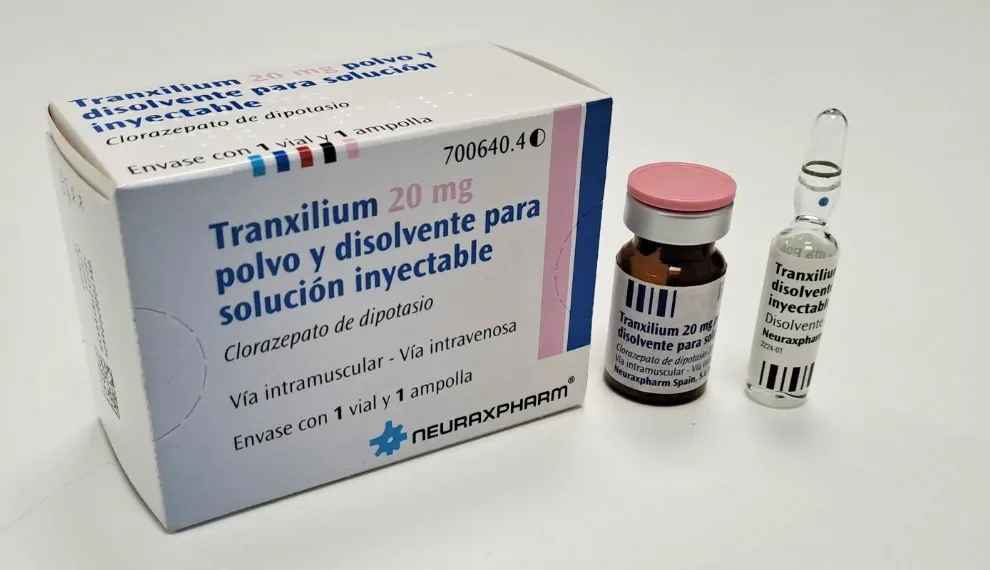
Table of Contents
Package leaflet: Information for the user
Introduction
Package leaflet: information for the user
Tranxilium 20 mg powder and solvent for injectable solution
Potassium diazepate
Read all of this leaflet carefully before you start using this medicine, because it contains important information for you.
|
Package leaflet:
- What Tranxilium is and what it is used for
- What you need to know before taking Tranxilium
- How to take Tranxilium
- Possible side effects
- How to store Tranxilium
- Contents of the pack and other information
1. What Tranxilium is and what it is used for
Tranxilium is a medicine belonging to the group of tranquilizers, anxiolytics, and derivatives of benzodiazepines.
It is indicated in situations requiring a reduction of agitation, restlessness, or apprehension (anxiolysis) and/or urgent sedation:
- Acute states of anxiety and anguish, neuroses and psychoneuroses (psychiatric disorders characterized by anxiety).
- Alcoholism and detoxification treatments for alcohol or other drugs.
- Anesthesia and medical-surgical resuscitation.
- Preparation for endoscopies, paraclinical examinations, and all types of surgical procedures.
- As an adjunctive treatment in tetanus, at high doses.
- Myocardial infarction, asthmatic attacks.
- During preparation for and progression of childbirth.
2. What you need to know before using Tranxilium
Before using this medicine, you must ensure that you will be able to sleep uninterrupted for 7–8 hours.
If you get up during the night after taking a hypnotic (a medicine that induces sleep), you may experience a delayed response to stimuli, increasing the risk of falls and dizziness.
Do not use Tranxilium
- if you are allergic to the active substance (dipotassium clorazepate) or to any of the other ingredients of this medicine (listed in section 6),
- if you are allergic to a group of medicines called benzodiazepines,
- if you have myasthenia gravis (a muscle disorder characterized by abnormal weakness of voluntary muscles),
- if you have severe hepatic insufficiency (serious liver impairment),
- if you have severe respiratory insufficiency (difficulty breathing),
- if you have decompensated respiratory insufficiency (worsening of your usual breathing difficulty),
- if you have sleep apnea syndrome (a disorder characterized by episodes of breathing cessation during sleep),
- administration to children: this medicine must not be administered to children.
Warnings and precautions
Talk to your doctor or pharmacist before starting to use Tranxilium.
Using this type of medicine may lead to physical and psychological dependence. The risk of dependence increases with higher doses, longer treatment duration, concomitant use of alcohol or certain medicines (anxiolytics, hypnotics, psychotropic drugs), or if you have a history of substance dependence (to medicines or other substances).
If physical dependence develops, abruptly stopping treatment may cause a withdrawal syndrome characterized by headache or muscle pain, marked anxiety, muscle tension, restlessness, agitation, confusion, insomnia, and irritability. In severe cases, the following symptoms have been reported: depersonalization, hyperacusis, tingling and cramps in the limbs, intolerance to light, sounds, and physical contact, tremor, hallucinations, or seizures.
Contact your doctor or pharmacist if you experience any of these symptoms. Your doctor will advise you on the duration of your treatment (which should not exceed 4 to 12 weeks) and how to gradually reduce the dose before stopping treatment.
Tolerance may develop with prolonged use of this medicine.
This medicine may cause anterograde amnesia, especially if taken at bedtime and when sleep duration is short. To reduce this risk, ensure you can sleep uninterrupted for 7–8 hours.
When treatment is stopped, the symptoms that led to treatment (rebound insomnia and anxiety) may return. This is a temporary phenomenon that may be accompanied by mood changes, anxiety, restlessness, or sleep disturbances. This is more likely to occur if treatment is stopped abruptly; therefore, treatment should be gradually tapered.
Elderly patients are more susceptible to adverse reactions such as drowsiness, dizziness, and muscle weakness, which may lead to falls and potentially serious injuries (see section “4. Possible side effects”). In such cases, dose reduction is recommended.
Psychiatric and paradoxical reactions may occur, such as restlessness, agitation, irritability, aggressiveness, delirium, rage attacks, nightmares, hallucinations, psychosis, inappropriate behavior, and other adverse behavioral effects. In such cases, consult your doctor about discontinuing treatment. These reactions are more common in children and elderly patients.
Concomitant use of this medicine with sodium oxybate should be avoided due to the risk of respiratory problems (respiratory depression).
Do not take Tranxilium together with opioids (medicines used to relieve severe pain, such as morphine or codeine) unless prescribed by your doctor, due to the possible risk of sedation, respiratory depression, coma, or even death (see “Use of Tranxilium with other medicines”).
If you have suicidal tendencies or depression, use this medicine with extreme caution. Consult your doctor before using this medicine, as it may unmask pre-existing depression. Some studies have shown an increased risk of suicidal thoughts, suicide attempts, and suicide in patients taking certain sedatives and hypnotics, including this medicine. However, it is not established whether this is caused by the medicine or if other factors may be involved. If you have suicidal thoughts, contact your doctor as soon as possible for further medical advice.
Also consult your doctor if you have any of the following conditions:
- depression or anxiety associated with depression (suicide may be precipitated in these patients),
- psychotic disorders,
- respiratory problems,
- liver disease, as benzodiazepines may cause encephalopathy,
- history of alcohol or drug abuse, since alcohol consumption is not advised during treatment,
- kidney problems, as dose reduction may be necessary,
- muscle weakness.
Use of Tranxilium with other medicines
Inform your doctor or pharmacist if you are currently taking, have recently taken, or might need to take any other medicines.
Exercise special caution with medicines that act on the central nervous system, as they may increase central depression, which could affect your ability to drive or operate machinery.
Be especially careful if you are taking any of the following medicines:
- alcohol: avoid medicines containing alcohol, as the sedative effect may be enhanced, affecting your ability to drive or operate machinery,
- hypnotics: medicines used to induce sleep,
- anxiolytics/sedatives: medicines used to treat anxiety,
- non-benzodiazepine tranquilizers,
- antidepressants: medicines used to treat depression,
- antipsychotics: medicines used to treat psychosis,
- narcotic analgesics: medicines used to treat pain,
- antiepileptics: medicines used to treat epilepsy,
- anesthetics,
- sedating H1 antihistamines: medicines used to treat allergies,
- morphine derivatives: used to treat pain and cough,
- barbiturates: medicines that cause central nervous system sedation,
- clonidine and related substances: medicines that lower blood pressure,
- cisapride: a medicine used to treat gastroesophageal reflux,
- clozapine: a medicine used to treat psychosis,
- medicines that inhibit certain liver enzymes (cytochrome P450),
- opioid medicines: using Tranxilium together with opioids (medicines used to relieve severe pain, such as morphine or codeine) may increase the risk of sedation, respiratory depression, coma, and even death. Your doctor will decide whether you can use them together (see section “Warnings and precautions”),
- neuromuscular blockers such as muscle relaxants, curare derivatives.
The risk of developing a withdrawal syndrome increases when Tranxilium is combined with benzodiazepines prescribed as anxiolytics or hypnotics.
Use of Tranxilium with food, drinks, and alcohol
Alcohol intake must be avoided while using this medicine. See section “Use of Tranxilium with other medicines: alcohol”.
Pregnancy, breastfeeding, and fertility
If you are pregnant or breastfeeding, think you may be pregnant, or plan to become pregnant, consult your doctor or pharmacist before using this medicine.
Pregnancy
There is limited data on the use of Tranxilium in pregnant women. Therefore, use of this medicine during pregnancy and in women of childbearing age who are not using contraception is not recommended.
If you discover you are pregnant or are planning to have a baby, consult your doctor immediately to reassess the need for treatment.
If you take Tranxilium during the last three months of pregnancy or during childbirth at high doses, the newborn may experience drowsiness (sedation), breathing problems (respiratory depression), muscle weakness (hypotonia), reduced body temperature (hypothermia), and feeding difficulties (breastfeeding problems leading to poor weight gain).
If taken regularly near the end of pregnancy, your baby may experience withdrawal symptoms.
In such cases, the newborn should be closely monitored during the postnatal period.
Breastfeeding
This medicine must not be used during breastfeeding, as it passes into breast milk.
Driving and use of machines
Dipotassium clorazepate may impair your ability to drive or operate machinery, as it may cause drowsiness, reduced attention, or decreased reaction capacity. These effects are more likely at the beginning of treatment or when the dose is increased. Do not drive or operate machinery if you experience any of these effects.
Exercise particular caution when driving or operating machinery due to the risk of drowsiness, amnesia, impaired concentration, and impaired muscle function associated with this medicine. The combination with other medicines may enhance its sedative effect.
In addition, insufficient sleep periods may further impair alertness (see section “Use of Tranxilium with other medicines”).
Tranxilium 20 mg powder and solvent for injectable solution contains potassium
Patients with renal insufficiency or those on low-potassium diets should be aware that this medicine contains 16.94 mg (0.43 mmol) of potassium per container (vial plus solvent).
3. How to use Tranxilium
Follow exactly the administration instructions for this medicine as given by your doctor. If in doubt, please consult your doctor or pharmacist again.
The duration of this treatment is limited. Your doctor will determine the length of your treatment with Tranxilium. Do not stop the treatment earlier or interrupt it abruptly, in order to avoid the possibility of withdrawal syndrome or rebound insomnia (see section “Warnings and precautions”).
The routes of administration for Tranxilium are intramuscular and intravenous infusion.
Intramuscular injections must be deep.
For direct intravenous administration, the injection must be slow and into a large vein. A respiratory resuscitation kit must be available.
Avoid mixing in the same syringe.
Use the specific solvent for each presentation.
- Adults:
In cases of psychomotor agitation, confusion, or aggressiveness: 1 to 10 vials (20 to 200 mg of clorazepate dipotassium) per day, using either intramuscular or intravenous route, followed by oral therapy.
Premedication: 1 to 2.5 vials (20 to 50 mg of clorazepate dipotassium) per day, using the intramuscular or intravenous route:
- IV: from a quarter of an hour to half an hour before the procedure.
- IM: from half an hour to one hour before the procedure.
Alcoholism (pre-delirium, delirium tremens): 2.5 to 5 vials (50 to 100 mg of clorazepate dipotassium) every 3 or 4 hours. The dose should be reduced by half after 2 or 3 days.
After 5 days of treatment, Tranxilium should be administered orally (150 to 300 mg daily).
- In elderly patients and in patients with kidney problems, a dose reduction is recommended; usually half the standard recommended dose is sufficient.
If you use more Tranxilium than you should
Overdose usually manifests as varying degrees of central nervous system depression, ranging from drowsiness (feeling of sleepiness) to coma.
Deep sleep is the main sign of overdose, which may even progress to coma depending on the dose administered.
In moderate cases, symptoms include drowsiness, confusion, and lethargy; in more severe cases, ataxia (loss of coordination of movements), hypotonia, hypotension (decrease in blood pressure), respiratory depression, rarely coma, and very rarely death may occur.
The prognosis is favorable; overdose does not represent a life-threatening condition, at least in the absence of combination with other central depressants (psychotropic agents, alcohol), provided the patient receives appropriate treatment.
In case of overdose, the patient should be transferred to a specialized center and standard precautionary measures should be taken: monitoring of respiratory and cardiovascular parameters.
Flumazenil may be used for diagnosis and/or treatment of overdose as an antidote.
If you have used more Tranxilium than you should, contact your doctor, pharmacist, or call the Toxicology Information Service immediately at telephone: 91 562 04 20, indicating the medicine and the amount used.
If you forget to use Tranxilium
Do not use a double dose to make up for forgotten doses.
If you stop Tranxilium treatment
Abrupt discontinuation of treatment may cause withdrawal syndrome, which manifests as headache or muscle pain, anxiety, muscle tension, restlessness, confusion, insomnia, and irritability (see section “Warnings and precautions”).
If you have any further questions about the use of this medicine, ask your doctor or pharmacist.
4. Possible adverse effects
Like all medicines, this medicine may cause adverse effects, although not everyone experiences them.
Adverse effects are grouped according to organ system classification and frequency as follows:
Very common: may affect more than 1 in 10 people
Common: may affect up to 1 in 10 people
Uncommon: may affect up to 1 in 100 people
Rare: may affect up to 1 in 1,000 people
Very rare: may affect up to 1 in 10,000 people
Frequency not known: cannot be estimated from available data.
Adverse effects are related to dose and individual patient sensitivity.
Immune system disorders:
- Uncommon: hypersensitivity reactions.
Psychiatric disorders:
- Frequency not known: slowed thinking, reduced mental reflexes (bradypsychia).
- Paradoxical reactions may occur in some patients (particularly children and elderly patients) (see also section “Warnings and precautions”):
Uncommon: irritability, agitation, confusion.
Frequency not known: aggression, hallucination.
- Frequency not known: rebound syndrome may occur, with worsening of the anxiety that led to this treatment.
- Frequency not known: prolonged use (especially at high doses) may lead to physical dependence, and discontinuation of treatment may result in withdrawal syndrome (see section “Warnings and precautions”). This occurs more rapidly with short-acting benzodiazepines than with long-acting benzodiazepines (several days half-life).
Nervous system disorders:
- Very common: drowsiness (particularly in elderly patients and especially during daytime if used as a hypnotic).
- Common: dizziness.
- Uncommon: decreased muscle tone (muscle hypotonia).
- Frequency not known: cognitive disorders such as memory impairment (anterograde amnesia). Anterograde amnesia may occur with therapeutic doses, with increased risk at higher doses. Amnesic effects may be associated with inappropriate behaviors (see section “Warnings and precautions”), attention disturbances, and speech disorders.
Eye disorders:
- Frequency not known: double vision (diplopia).
Skin and subcutaneous tissue disorders:
- Uncommon: itchy rash with spots and papules (pruritic maculopapular rash).
General disorders and administration site conditions:
- Common: asthenia.
- Frequency not known: falls (see section “Warnings and precautions”).
Additionally, the following adverse effects have been reported with benzodiazepines: emotional blunting, reduced alertness, headache, loss of motor coordination (ataxia), gastrointestinal disturbances, changes in sexual appetite (changes in libido), and amnesic effects which may be associated with inappropriate behaviors.
Paradoxical or psychiatric reactions including restlessness, delirium, rage attacks, nightmares, psychosis, inappropriate behaviors, and other adverse behavioral effects.
Depression: the use of benzodiazepines may unmask pre-existing depression.
Dependence: administration of this product (even at therapeutic doses) may lead to physical dependence; discontinuation of treatment may lead to withdrawal or rebound phenomena (see section “Warnings and precautions”).
Psychological dependence may occur. Cases of benzodiazepine abuse have been reported.
Reporting of adverse effects
If you experience any type of adverse effect, consult your doctor or pharmacist, even if it is a possible adverse effect not listed in this leaflet. You may also report them directly via the Spanish Pharmacovigilance System for Human Medicines: https://www.notificaram.es. By reporting adverse effects, you can help provide more information on the safety of this medicine.
5. Storage of Tranxilium
Keep out of sight and reach of children.
Store below 25°C.
Store in the original packaging to protect from light and moisture.
Do not use Tranxilium after the expiry date stated on the packaging after EXP. The expiry date refers to the last day of the month indicated.
Medicines must not be disposed of via wastewater drains or household waste. Dispose of unused medicines and their containers at a pharmacy’s SIGRE collection point. If you are in doubt, ask your pharmacist how to properly dispose of unused medicines and their containers. This will help protect the environment.
6. Contents of the pack and other information
Composition of Tranxilium 20 mg powder and solvent for injectable solution
-
The active substance is clorazepate dipotassium. Each vial contains 20 mg of lyophilized clorazepate dipotassium.
-
The other components are:
-
Vial: mannitol and potassium carbonate.
-
Solvent ampoule: potassium dihydrogen phosphate, dipotassium hydrogen phosphate, and water for injections.
Appearance of the product and contents of the pack
Each pack contains 1 vial and 1 solvent ampoule (2 ml).
The amber glass vial contains a white to yellowish-white powder.
The solvent ampoule contains a colourless and clear solution.
Other presentations:
- Tranxilium 5 mg hard capsules, pack containing 30 capsules.
- Tranxilium 10 mg hard capsules, pack containing 30 capsules.
- Tranxilium 15 mg hard capsules, pack containing 20 capsules.
- Tranxilium 50 mg film-coated tablets, pack containing 20 film-coated tablets.
Marketing Authorization Holder and Manufacturer
Holder:
Neuraxpharm Spain, S.L.U.
Avda. Barcelona, 69,
08970 Sant Joan Despí (Barcelona)
Spain
Manufacturer:
Sanofi S.r.l.
Via Valcanello, 4
03012 Anagni (FR)
Italy
Famar Health Care Services Madrid, S.A.U.
Avda. de Leganés, 62
28923 - Alcorcón (Madrid)
Spain
Neuraxpharm Pharmaceuticals S.L.
Avinguda. de Barcelona 69,
Sant Joan Despí, 08970, Barcelona, Spain
Date of the most recent revision of this leaflet: October 2025
Detailed and up-to-date information on this medicinal product is available on the website of the Spanish Agency of Medicines and Health Products (AEMPS) http://www.aemps.gob.es/