Tramadol retard Aurovitas Spain 100 mg prolonged-release tablets EFG
Spain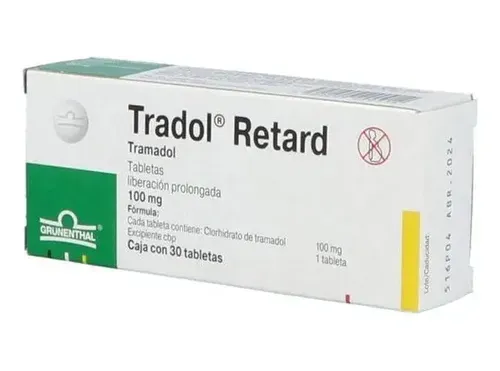
Table of Contents
- Package leaflet: Information for the user
- Introduction
- 1. What Tramadol Retard Aurovitas Spain is and what it is used for
- 2. What you need to know before starting to take Tramadol Retard Aurovitas Spain
- 3. How to take Tramadol Retard Aurovitas Spain
- 4. Possible adverse effects
- 5. Storage of Tramadol Retard Aurovitas Spain
- 6. Contents of the pack and other information
Package leaflet: Information for the user
Introduction
Package leaflet: information for the user
Tramadol Retard Aurovitas Spain 100 mg prolonged-release tablets EFG
tramadol hydrochloride
Read the entire leaflet carefully before you start taking this medicine, because it contains important information for you.
- Keep this leaflet, as you may need to read it again.
- If you have any questions, ask your doctor or pharmacist.
- This medicine has been prescribed for you only; do not pass it on to other people, even if they have the same symptoms as you, because it may harm them.
- If you experience any side effects, talk to your doctor or pharmacist, even if they are side effects not listed in this leaflet. See section 4.
Contents of the leaflet
- What Tramadol Retard Aurovitas Spain is and what it is used for
- What you need to know before taking Tramadol Retard Aurovitas Spain
- How to take Tramadol Retard Aurovitas Spain
- Possible side effects
- How to store Tramadol Retard Aurovitas Spain
- Contents of the pack and other information
1. What Tramadol Retard Aurovitas Spain is and what it is used for
Tramadol – the active substance in Tramadol Retard Aurovitas Spain – is an analgesic belonging to the opioid group that acts on the central nervous system. It relieves pain by acting on specific nerve cells in the spinal cord and brain.
Tramadol retard is indicated for the treatment of moderate to severe pain.
2. What you need to know before starting to take Tramadol Retard Aurovitas Spain
Do not take Tramadol Retard Aurovitas Spain
- If you are allergic to tramadol hydrochloride or to any of the other ingredients of this medicine (listed in section 6).
- In cases of acute intoxication caused by alcohol, medications used to facilitate or induce sleep, analgesics, or psychotropic medicines (medicines that affect mood and emotions).
- If you are taking monoamine oxidase inhibitors (MAOIs) (a certain type of medicine used to treat depression) or have taken them within the last 14 days prior to treatment with tramadol retard (see “Other medicines and Tramadol Retard Aurovitas Spain”).
- If you have epilepsy and your seizures are not adequately controlled by treatment.
- As a substitute in cases of withdrawal syndrome.
Warnings and precautions
Consult your doctor or pharmacist before starting to take Tramadol Retard Aurovitas Spain:
- If you have disturbances of consciousness (if you feel you might faint).
- If you are in shock (a sign of this condition may be cold sweating).
- If you have increased intracranial pressure (for example, after head trauma or brain disease).
- If you have liver or kidney disease.
- If you have difficulty breathing.
- If you have epilepsy or suffer from seizures, as the risk of seizures may increase.
Seizures have been reported in patients taking tramadol at the recommended dose. The risk may increase when the tramadol dose exceeds the recommended daily limit (400 mg).
- If you suffer from depression and are taking antidepressants, as some of them may interact with tramadol (see “Other medicines and Tramadol Retard Aurovitas Spain”).
There is a weak risk that you may experience a serotonin syndrome, which may occur after taking tramadol in combination with certain antidepressants or tramadol as monotherapy. Contact a doctor immediately if you experience any of the symptoms associated with this serious syndrome (see section 4 “Possible side effects”).
Inform your doctor or pharmacist if you experience any of the following symptoms while taking tramadol:
Extreme fatigue, loss of appetite, severe abdominal pain, nausea, vomiting, or low blood pressure. These may indicate adrenal insufficiency (low cortisol levels). If you experience any of these symptoms, inform your doctor, who will decide whether you need hormonal supplementation.
Tramadol is metabolized in the liver by an enzyme. Some people have a variation of this enzyme, which may affect individuals differently. In some people, sufficient pain relief may not be achieved, while others may be more likely to experience serious adverse effects. If you notice any of the following adverse effects, you must stop taking this medicine and consult a doctor immediately: slow or shallow breathing, confusion, drowsiness, constricted pupils, general malaise or vomiting, constipation, loss of appetite.
Tolerance, dependence, and addiction
This medicine contains tramadol, which is an opioid medicine. Repeated use of opioids may make the medicine less effective (the body becomes accustomed to it, known as pharmacological tolerance). Repeated use of tramadol may also lead to dependence, abuse, and addiction, which could result in a potentially fatal overdose. The risk of these adverse effects may be higher with higher doses and prolonged use.
Dependence or addiction may cause a feeling of lack of control over the amount of medicine you need to take or how often you need to take it.
The risk of dependence or addiction varies from person to person. The risk of becoming dependent on or addicted to tramadol may be higher if:
- You or any member of your family have abused or been dependent on alcohol, prescription medicines, or illegal drugs (“addiction”).
- You are a smoker.
- You have ever had mood disorders (depression, anxiety, or a personality disorder) or have been treated by a psychiatrist for other mental illnesses.
If you notice any of the following symptoms while using tramadol, it could be a sign of dependence or addiction:
- You need to use the medicine for longer than prescribed by your doctor.
- You need to use a higher dose than recommended.
- You are using the medicine for reasons other than those prescribed, for example, “to feel calm” or “to help you sleep.”
- You have made repeated, unsuccessful attempts to stop using the medicine or control its use.
- You feel unwell when you stop taking the medicine, and feel better once you take it again (“withdrawal effects”).
If you notice any of these signs, consult your doctor to determine the best treatment approach for you, when it is appropriate to discontinue the medicine, and how to do so safely (see section 3, If you stop taking Tramadol Retard Aurovitas Spain).
Sleep-related breathing disorders
Tramadol may cause sleep-related breathing disorders, such as central sleep apnea (pauses in breathing during sleep) and sleep-related hypoxemia (low blood oxygen levels). These symptoms may include pauses in breathing during sleep, waking up at night due to difficulty breathing, difficulty maintaining sleep, or excessive daytime sleepiness. If you or someone else notices these symptoms, consult your doctor. Your doctor may consider reducing the dose.
Children and adolescents
Use in children with breathing problems:
The use of tramadol is not recommended in children with breathing problems, as symptoms of tramadol toxicity may worsen in these children.
Other medicines and Tramadol Retard Aurovitas Spain
Inform your doctor or pharmacist if you are taking, have recently taken, or might need to take any other medicines.
Concomitant treatment with tramadol retard and monoamine oxidase inhibitors (MAOIs) (medicines used to treat depression) should be avoided.
The concomitant use of tramadol and sedative medicines, such as benzodiazepines or related medicines, increases the risk of drowsiness, difficulty breathing (respiratory depression), coma, and may be potentially fatal. For this reason, concomitant use should only be considered when no other treatment options are possible.
However, if your doctor prescribes tramadol retard together with sedative medicines, they should limit the dose and duration of concomitant treatment.
Inform your doctor about all sedative medicines you are taking and follow the recommended dose carefully. It may be advisable to ask friends or family members to watch for the signs and symptoms mentioned above. Contact your doctor if you experience such symptoms.
The analgesic effect of tramadol retard, as well as its duration, may be reduced if you are taking medicines containing:
- carbamazepine (for epileptic seizures).
- pentazocine, nalbuphine, or buprenorphine (analgesics).
- ondansetron (a medicine to prevent nausea).
Your doctor will advise you whether you should take tramadol retard and what dose to use.
The risk of adverse effects increases:
- If you are taking medicines that may trigger or facilitate seizures, such as certain antidepressants or antipsychotics. The risk of seizures increases if you take tramadol retard simultaneously with these medicines. Your doctor will tell you whether tramadol retard is suitable for you.
- If you are taking gabapentin or pregabalin to treat epilepsy or nerve-related pain (neuropathic pain).
- If you are taking medicines for depression, tramadol retard may interact with these medicines and you may experience serotonin syndrome (see section 4 “Possible side effects”).
- If you take coumarin anticoagulants (blood-thinning medicines) such as warfarin, together with tramadol retard. The effect of these medicines on blood clotting may be affected, potentially leading to bleeding.
- If you take tranquilizers, sleeping pills, other analgesics such as morphine and codeine (also used to treat cough) or alcohol while taking tramadol retard. You may feel dizzy or faint. If you experience these adverse effects, inform your doctor.
Taking Tramadol Retard Aurovitas Spain with food and alcohol
Do not consume alcohol during treatment with tramadol retard, as its effect may be intensified. Food does not affect the action of tramadol retard.
Pregnancy, breastfeeding, and fertility
If you are pregnant, breastfeeding, think you may be pregnant, or plan to become pregnant, consult your doctor or pharmacist before using this medicine.
Pregnancy
There is very limited information regarding the safety of tramadol during human pregnancy. Therefore, you should not take tramadol retard if you are pregnant. Chronic use during pregnancy may lead to withdrawal syndrome in newborns.
Breastfeeding
Tramadol is excreted in breast milk. For this reason, you should not take tramadol retard more than once during breastfeeding. If you take tramadol retard more than once, you must stop breastfeeding.
Driving and using machines
Tramadol retard may cause drowsiness, dizziness, and blurred vision and may therefore impair your reaction ability. If you notice that your reaction ability is impaired, do not drive cars or other vehicles, or operate electric tools or heavy machinery.
3. How to take Tramadol Retard Aurovitas Spain
Follow exactly the instructions for administering this medicine as given by your doctor or pharmacist. In case of doubt, consult your doctor or pharmacist again.
Before starting treatment and regularly during treatment, your doctor will also explain to you what you can expect from the use of tramadol retard, when and for how long you should use it, when you should contact your doctor, and when you should stop using it (see also section 2).
The dose should be adjusted according to the intensity of pain and your individual sensitivity. Normally, the lowest possible dose that provides pain relief should be taken.
Unless your doctor has given you different instructions, the recommended dose is:
Adults and adolescents aged 12 years and older
One 100 mg tramadol retard tablet twice daily (equivalent to 200 mg of tramadol hydrochloride per day), preferably in the morning and at night.
If necessary, your doctor may prescribe a different and more appropriate formulation of this medicine.
Do not take more than 400 mg of tramadol hydrochloride per day, unless your doctor has instructed you otherwise.
Use in children
Tramadol retard is not suitable for children under 12 years of age.
Elderly patients
In elderly patients (over 75 years of age), the elimination of tramadol may be slower. If this applies to you, your doctor may recommend prolonging the dosing intervals.
Patients with hepatic or renal impairment/patients on dialysis
If you have severe liver or kidney disease, treatment with tramadol retard is not recommended. If you have moderate liver or kidney disorders, your doctor may extend the dosing intervals.
How and when to take Tramadol Retard Aurovitas Spain
This medicine is administered orally.
Tramadol retard tablets must always be swallowed whole, without dividing or chewing, with sufficient liquid, preferably in the morning and at night. You may take the tablet on an empty stomach or with food.
How long should you take Tramadol Retard Aurovitas Spain?
Tramadol retard should not be administered for longer than strictly necessary.
If prolonged treatment is required, your doctor will monitor regularly and at short intervals (if necessary, with treatment interruptions) whether you should continue treatment with tramadol retard and at what dose.
If you feel that the effect of this medicine is too strong or too weak, inform your doctor or pharmacist.
If you take more Tramadol Retard Aurovitas Spain than you should
If you have taken an extra dose by mistake, you will generally not experience negative effects. You should take the next dose as prescribed.
After taking very high doses, symptoms such as pupillary constriction, vomiting, decreased blood pressure, increased heart rate, collapse, unconsciousness up to coma (deep unconsciousness), epileptic seizures, breathing difficulties, or respiratory arrest may occur. In such cases, contact your doctor immediately.
In case of overdose or accidental ingestion, contact your doctor or pharmacist immediately, or call the Toxicology Information Service at 91 562 04 20, indicating the medicine and the amount ingested.
If you forget to take Tramadol Retard Aurovitas Spain
If you forget to take the tablets, your pain may return.
Do not take a double dose to make up for missed doses. Simply continue taking the tablets as previously directed.
If you stop taking Tramadol Retard Aurovitas Spain
You should not stop taking this medicine suddenly unless instructed by your doctor. If you wish to discontinue the medicine, speak to your doctor first, especially if you have been taking it for a long time. Your doctor will advise you on when and how to stop, which may involve gradually reducing the dose to minimize the likelihood of experiencing unnecessary adverse effects (withdrawal symptoms).
Generally, no undesirable effects occur when stopping treatment with tramadol. However, in rare cases, when some individuals who have been taking tramadol tablets for some time stop suddenly, they may feel unwell. They may feel agitated, anxious, nervous, or shaky. They may feel confused, hyperactive, have difficulty sleeping, or experience gastrointestinal or intestinal disturbances. Very few people may experience panic attacks, hallucinations, delusions, paranoia, or a sense of loss of identity. They may experience unusual sensations such as itching, tingling, numbness, and ringing in the ears (tinnitus). Additionally, very rare unusual CNS symptoms have been observed, for example, confusion, delusions, changes in the perception of one's own personality (depersonalization), and altered perception of reality and persecutory delusions (paranoia). If you experience any of these symptoms after stopping this medicine, consult your doctor.
If you have any further questions about the use of this medicine, ask your doctor or pharmacist.
4. Possible adverse effects
Like all medicines, this medicine can cause adverse effects, although not everyone experiences them.
The frequency of adverse effects is usually classified as follows:
- Very common (may affect more than 1 in 10 people)
- Common (may affect up to 1 in 10 people)
- Uncommon (may affect up to 1 in 100 people)
- Rare (may affect up to 1 in 1,000 people)
- Very rare (may affect up to 1 in 10,000 people)
- Frequency not known (cannot be estimated from available data)
You should see a doctor immediately if you experience symptoms of an allergic reaction such as swelling of the face, tongue and/or throat and/or difficulty swallowing or rash together with difficulty breathing.
The most common adverse effects during treatment with tramadol retard are nausea and dizziness, which occur in more than 1 in 10 patients.
Cardiac and blood disorders:
Uncommon: effects on the heart and blood circulation (strong and rapid heartbeat, fainting or collapse). These adverse effects may occur especially in patients who are standing up or engaging in physical exertion.
Rare: slow heartbeat, increased blood pressure.
Metabolism and nutrition disorders:
Frequency not known: decrease in blood sugar levels.
Nervous system disorders:
Very common: dizziness.
Common: headache, drowsiness.
Rare: changes in appetite, abnormal sensations (such as itching, tingling, and numbness), tremor, slow breathing, epileptic seizures, muscle jerks, uncoordinated movements, temporary loss of consciousness (syncope).
If recommended doses are exceeded, or if other medicines that depress brain function are taken at the same time, breathing may slow down.
Epileptic seizures may occur mainly after taking high doses of tramadol or when taking medicines that may provoke seizures.
Frequency not known: speech disorders. Serotonin syndrome, which may present as changes in mental status (e.g., agitation, hallucinations, coma) and other effects such as fever, increased heart rate, unstable blood pressure, involuntary muscle contractions, muscle rigidity, lack of coordination and/or gastrointestinal symptoms (e.g., nausea, vomiting, diarrhea) (see section 2 “What you need to know before starting to take Tramadol Retard Aurovitas Spain”).
Psychiatric disorders:
Rare: hallucinations, confusion, sleep disturbances, delirium, anxiety, and nightmares.
Psychological problems may occur after treatment with tramadol retard. Their severity and nature may vary (depending on the patient's personality and duration of treatment). These problems may manifest as changes in mood (usually excessive good mood, occasionally irritable mood), changes in activity (usually suppression, occasionally increase), and decreased cognitive and sensory perception (changes in senses and recognition, which may lead to impaired judgment).
Dependence may occur.
Eye disorders:
Rare: blurred vision, constriction of the pupils (miosis).
Frequency not known: excessive dilation of the pupils (mydriasis).
Respiratory disorders:
Rare: shortness of breath (dyspnea).
Worsening of asthma has been reported; however, a causal relationship with tramadol has not been established.
Frequency not known: hiccups.
Gastrointestinal disorders:
Very common: nausea.
Common: dizziness, constipation, dry mouth.
Uncommon: vomiting, stomach problems (e.g., feeling of pressure in the stomach, bloating), diarrhea.
Skin disorders:
Common: sweating.
Uncommon: skin reactions (e.g., itching, rash).
Musculoskeletal disorders:
Rare: muscle weakness.
Liver and biliary disorders:
Very rare: increased liver enzyme values.
Urinary disorders:
Rare: difficulty or pain when urinating, reduced urine output.
General disorders:
Common: fatigue.
Rare: in very rare cases, allergic reactions (e.g., difficulty breathing, wheezing, skin swelling) and shock (sudden circulatory failure) have been reported.
When treatment is abruptly discontinued, withdrawal symptoms may occur (see “If you stop taking Tramadol Retard Aurovitas Spain”).
Reporting of adverse effects
If you experience any adverse effect, talk to your doctor or pharmacist, even if it is a possible adverse effect not listed in this leaflet. You can also report them directly via the Spanish Pharmacovigilance System for Human Medicinal Products: www.notificaram.es. By reporting adverse effects, you can help provide more information on the safety of this medicine.
5. Storage of Tramadol Retard Aurovitas Spain
Keep this medicine out of sight and reach of children.
Store this medicine in a safe and secure place, inaccessible to other people. This medicine may cause serious harm or even be fatal to individuals for whom it has not been prescribed.
Do not use this medicine after the expiry date stated on the carton and blister pack after "EXP". The expiry date refers to the last day of the month indicated.
This medicine requires no special storage conditions.
Medicines must not be disposed of via wastewater or household waste. Dispose of unused medicines and their containers at the SIGRE Point in your pharmacy. If in doubt, ask your pharmacist how to properly dispose of medicines and containers you no longer need. This will help protect the environment.
6. Contents of the pack and other information
Composition of Tramadol Retard Aurovitas Spain
- The active substance is tramadol hydrochloride. Each tablet contains 100 mg of tramadol hydrochloride.
- The other components are: calcium hydrogen phosphate dihydrate (E341), hydroxypropylcellulose (E463), colloidal anhydrous silica (E551), and magnesium stearate (E470b).
Appearance of the product and contents of the pack
Tramadol Retard Aurovitas Spain 100 mg are prolonged-release tablets, white to off-white in colour, round and biconvex.
Tramadol Retard Aurovitas Spain 100 mg is available in blister packs or plastic bottles containing 10, 20, 30, 50, 60, 90, 100, 120, 180 or 500 tablets.
Only certain pack sizes may be marketed.
Marketing Authorization Holder and Manufacturer
Marketing Authorization Holder
Aurovitas Spain, S.A.U.
Avda. de Burgos 16-D
28036 Madrid
Spain
Manufacturer
Medochemie Ltd.
Facility A-Z, Ayios Athanassios Industrial St.
Limassol
Cyprus
or
Farmaceutisch Analytisch Laboratorium Duiven BV
Dijkgraaf 30
6921 RL Duiven
The Netherlands
This medicinal product is authorized in the Member States of the European Economic Area under the following names:
The Netherlands: Tramadol HCl Duiven Retard 100 mg tabletten met gereguleerde afgifte
Spain: Tramadol Retard Aurovitas Spain 100 mg comprimidos de liberación prolongada EFG
Date of the most recent review of this leaflet: October 2024
Detailed and up-to-date information on this medicinal product is available on the website of the Spanish Agency of Medicines and Health Products (AEMPS) (http://www.aemps.gob.es/).