Topiramate Pensa Pharma 100 mg film-coated tablets EFG
Spain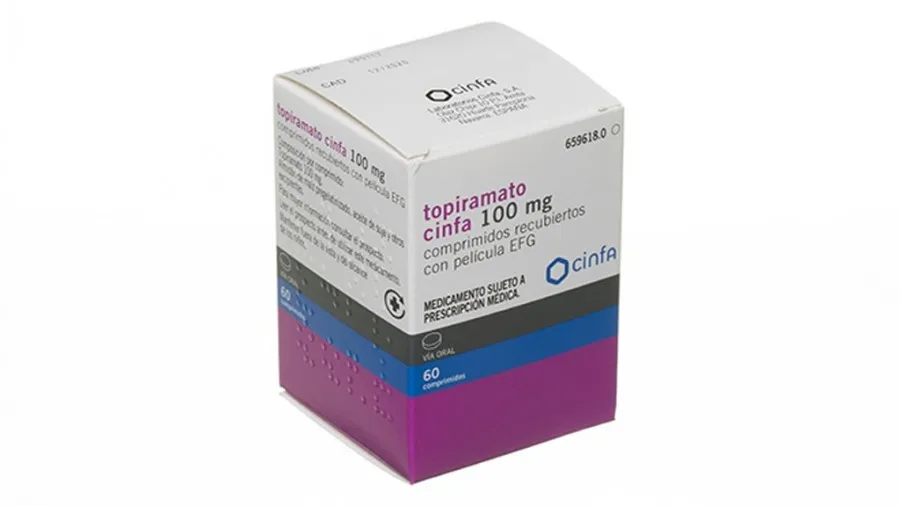
Instructions for Use
Table of Contents
Package Leaflet: Information for the User
Introduction
Package leaflet: information for the user
Topiramate Pensa Pharma 100 mg film-coated tablets EFG
This medicinal product is subject to additional monitoring, which will allow rapid identification of new safety information. You can help by reporting any side effects you may experience. Section 4 at the end of this leaflet includes information on how to report side effects.
Read the entire leaflet carefully before you start taking this medicine, because it contains important information for you.
- Keep this leaflet as you may need to read it again.
- If you have any questions, ask your doctor or pharmacist.
- This medicine has been prescribed for you only and must not be given to other people, even if they have the same symptoms as you, since it may harm them.
- If you experience any side effects, talk to your doctor or pharmacist, even if they are side effects not listed in this leaflet. See section 4.
Leaflet contents:
- What Topiramate Pensa Pharma is and what it is used for
- What you need to know before taking Topiramate Pensa Pharma
- How to take Topiramate Pensa Pharma
- Possible side effects
- How to store Topiramate Pensa Pharma
- Contents of the pack and other information
1. What Topiramato Pensa Pharma is and what it is used for
Topiramato Pensa Pharma belongs to a group of medicines called "antiepileptic drugs". It is used for:
- treating seizures in adults and children over 6 years of age when given as monotherapy
- treating seizures in adults and children aged 2 years and older when given in combination with other medicines
- preventing migraine in adults.
2. What you need to know before taking Topiramato Pensa Pharma
Do not take Topiramato Pensa Pharma
-
If you are allergic (hypersensitive) to topiramate or to any of the other ingredients of this medicine (listed in section 6).
-
For migraine prevention:
- You must not take Topiramato Pensa Pharma if you are pregnant.
-
If you are a woman of childbearing potential, you must not take Topiramato Pensa Pharma unless you are using a highly effective method of contraception during treatment. See below under "Pregnancy, breastfeeding and fertility – Important advice for women".
-
Epilepsy treatment:
- Do not use Topiramato Pensa Pharma if you are pregnant, unless no other treatment provides sufficient seizure control.
- If you are a woman of childbearing potential, you must not take Topiramato Pensa Pharma unless you are using a highly effective method of contraception during treatment. The only exception is if Topiramato Pensa Pharma is the only treatment that provides sufficient seizure control and you are planning to become pregnant. You must consult your doctor to ensure you have received information about the risks of taking Topiramato Pensa Pharma during pregnancy and about the risks of seizures during pregnancy. See below under "Pregnancy, breastfeeding and fertility – Important advice for women".
Make sure to read the patient guide you will receive from your doctor.
A patient card is provided with the Topiramato Pensa Pharma packaging to remind you of the risks during pregnancy.
If you are unsure whether any of the above applies to you, consult your doctor or pharmacist before using Topiramato Pensa Pharma.
Warnings and precautions
Talk to your doctor before starting Topiramato Pensa Pharma if you:
- have kidney problems, especially kidney stones, or are undergoing dialysis
- have a history of blood or body fluid disorders (metabolic acidosis)
- have liver problems
- have eye problems, especially glaucoma
- have growth problems
- are on a high-fat diet (ketogenic diet)
- are taking Topiramato Pensa Pharma for epilepsy and are pregnant or are a woman of childbearing age (for more information, see section "Pregnancy and breastfeeding").
- are a woman who could become pregnant. Topiramato Pensa Pharma may harm a baby during pregnancy when taken while pregnant. Highly effective contraceptive methods must be used during treatment and for at least 4 weeks after the last dose of Topiramato Pensa Pharma. See section "Pregnancy and breastfeeding" for more information.
- are pregnant. Topiramato Pensa Pharma may harm a baby during pregnancy when taken while pregnant.
If you are unsure whether the above applies to you, consult your doctor or pharmacist before using Topiramato Pensa Pharma.
If you have epilepsy, it is important not to stop taking your medication without first consulting your doctor.
It is important not to stop taking your medication without first consulting your doctor.
You should consult your doctor before taking any other medicine containing topiramate that may be prescribed as an alternative to Topiramato Pensa Pharma.
You may lose weight while taking Topiramato Pensa Pharma, so your weight should be monitored regularly during treatment. If you lose too much weight, or if a child taking this medicine does not gain sufficient weight, consult your doctor.
A small number of people treated with antiepileptic medicines such as Topiramato Pensa Pharma have had thoughts of harming themselves or committing suicide. If you experience such thoughts at any time, contact your doctor immediately.
Topiramato Pensa Pharma may rarely cause high levels of ammonia in the blood (seen in blood tests), which may lead to changes in brain function, especially if you are also taking a medicine called valproic acid or sodium valproate. Since this may be a serious condition, contact your doctor immediately if you experience any of the following symptoms (see also section 4 "Possible side effects"):
- difficulty thinking, remembering information, or solving problems
- reduced level of alertness or consciousness
- feeling drowsy with low energy
The risk of developing these symptoms may increase at higher doses of Topiramato Pensa Pharma.
Other medicines and Topiramato Pensa Pharma
Inform your doctor or pharmacist if you are currently using, have recently used, or might need to use any other medicines. Topiramato Pensa Pharma and certain medicines may interact with each other. Sometimes, the dose of one or more medicines may need to be adjusted.
In particular, inform your doctor or pharmacist if you are taking:
- other medicines that impair or reduce your thinking, concentration, or muscle coordination (e.g. central nervous system depressants such as muscle relaxants and sedatives).
- hormonal contraceptives. Topiramato Pensa Pharma may reduce the effectiveness of hormonal contraceptives. An additional barrier contraceptive method such as a condom or diaphragm should be used. Consult your doctor about the best contraceptive method to use while taking Topiramato Pensa Pharma.
Tell your doctor if your menstrual bleeding changes while taking hormonal contraceptives and Topiramato Pensa Pharma. Irregular bleeding may occur. In this case, continue taking the hormonal contraceptives and inform your doctor.
Keep a list of all the medicines you take. Show this list to your doctor and pharmacist before starting any new medicine.
Other medicines you should discuss with your doctor or pharmacist include other antiepileptic medicines, risperidone, lithium, hydrochlorothiazide, metformin, pioglitazone, gliburide, amitriptyline, propranolol, diltiazem, venlafaxine, flunarizine, and St. John's wort (Hypericum perforatum) (a herbal preparation used to treat depression).
If you are unsure whether any of the above applies to you, consult your doctor or pharmacist before taking Topiramato Pensa Pharma.
Taking Topiramato Pensa Pharma with food and drinks:
You may take Topiramato Pensa Pharma with or without food. Drink plenty of fluids throughout the day to help prevent kidney stone formation while taking Topiramato Pensa Pharma. You should avoid drinking alcohol while taking Topiramato Pensa Pharma.
Pregnancy and breastfeeding
Important advice for women of childbearing potential:
Topiramato Pensa Pharma may harm a baby during pregnancy. If you are a woman of childbearing potential, consult your doctor about other possible treatments. Visit your doctor to review your treatment and discuss risks at least once a year.
Migraine prevention:
- For migraine, you must not take Topiramato Pensa Pharma if you are pregnant.
- For migraine, you must not use Topiramato Pensa Pharma if you are a woman of childbearing potential unless you are using a highly effective method of contraception.
- Before starting treatment with Topiramato Pensa Pharma, a pregnancy test should be performed in women of childbearing potential.
Epilepsy treatment:
- For epilepsy, you must not take Topiramato Pensa Pharma if you are pregnant, unless no other treatment provides sufficient seizure control.
- For epilepsy, you must not use Topiramato Pensa Pharma if you are a woman of childbearing potential unless you are using a highly effective method of contraception. The only exception is if Topiramato Pensa Pharma is the only treatment that provides sufficient seizure control and you are planning to become pregnant. You must consult your doctor to ensure you have received information about the risks of taking Topiramato Pensa Pharma during pregnancy and about the risks of seizures during pregnancy, which may put you or your unborn baby at risk.
- Before starting treatment with Topiramato Pensa Pharma, a pregnancy test should be performed in women of childbearing potential.
Risks of taking topiramate during pregnancy (regardless of the condition for which topiramate is used) include:
There is a risk of harm to the unborn baby if Topiramato Pensa Pharma is used during pregnancy.
- If you take Topiramato Pensa Pharma during pregnancy, your baby has a higher chance of having congenital malformations. In women taking topiramate, about 4 to 9 out of every 100 babies will have congenital malformations. This compares with 1–3 out of every 100 babies born to women without epilepsy who are not taking antiepileptic treatment. In particular, cleft lip (a split in the upper lip) and cleft palate (a split in the roof of the mouth) have been observed. Newborn boys may also have a penile malformation (hypospadias). These defects may develop early in pregnancy, even before you know you are pregnant.
- If you take Topiramato Pensa Pharma during pregnancy, your child may have a 2 to 3 times higher risk of developing autism spectrum disorders, intellectual disabilities, or attention deficit hyperactivity disorder (ADHD), compared to children born to women with epilepsy who are not taking antiepileptic medicines.
- If you take Topiramato Pensa Pharma during pregnancy, your baby may be smaller and weigh less than expected at birth. In one study, 18% of babies born to mothers taking topiramate during pregnancy were smaller and weighed less than expected at birth, compared with 5% of babies born to mothers without epilepsy who were not taking antiepileptic medicines.
- Consult your doctor if you have questions about these risks during pregnancy.
- There may be other medicines available to treat your condition with a lower risk of congenital malformations.
Need for contraception in women of childbearing potential:
- If you are a woman of childbearing potential, consult your doctor about other possible treatments instead of taking Topiramato Pensa Pharma. If the decision is made to use Topiramato Pensa Pharma, highly effective contraceptive methods must be used during treatment and for at least 4 weeks after the last dose of Topiramato Pensa Pharma.
- A highly effective contraceptive method (such as an intrauterine device) or two complementary contraceptive methods (such as a contraceptive pill together with a barrier method such as a condom or diaphragm) should be used. Consult your doctor about the most appropriate contraceptive methods for you.
- If you are taking hormonal contraceptives, there is a possibility of reduced effectiveness of the hormonal contraceptive due to topiramate. Therefore, an additional barrier contraceptive method (such as a condom or diaphragm) should be used.
- Inform your doctor if you experience irregular menstrual bleeding.
Use of Topiramato Pensa Pharma in girls:
If you are a parent or caregiver of a girl being treated with Topiramato Pensa Pharma, consult your doctor immediately once she experiences her first menstrual period (menarche). The doctor will inform you about the risks to an unborn baby due to exposure to topiramate during pregnancy and the need to use highly effective contraceptive methods.
If you wish to become pregnant while taking Topiramato Pensa Pharma:
- Schedule an appointment with your doctor.
- Do not stop using your contraceptive method until you have discussed this with your doctor.
- If you are taking Topiramato Pensa Pharma for epilepsy, do not stop taking it until you have discussed this with your doctor, as your condition may worsen.
- Your doctor will re-evaluate your treatment and consider alternative treatment options. The doctor will advise you about the risks of Topiramato Pensa Pharma during pregnancy. The doctor may also refer you to another specialist.
If you become pregnant or think you may be pregnant while taking Topiramato Pensa Pharma:
- Schedule an urgent appointment with your doctor.
- If you are taking Topiramato Pensa Pharma for migraine prevention, stop taking the medicine immediately and consult your doctor to evaluate whether you need an alternative treatment.
- If you are taking Topiramato Pensa Pharma for epilepsy, do not stop taking it until you have discussed this with your doctor, as your condition may worsen. Worsening epilepsy may put you or your unborn baby at risk.
- Your doctor will re-evaluate your treatment and consider alternative treatment options. The doctor will advise you about the risks of Topiramato Pensa Pharma during pregnancy. The doctor may also refer you to another specialist.
- If Topiramato Pensa Pharma is used during pregnancy, you will be monitored closely to check your baby's development during pregnancy.
Make sure to read the patient guide you will receive from your doctor. A patient card is provided with the Topiramato Pensa Pharma packaging to remind you of the risks of topiramate during pregnancy.
Breastfeeding
The active substance in Topiramato Pensa Pharma (topiramate) passes into breast milk. Effects have been observed in breastfed infants of treated mothers, including diarrhea, drowsiness, irritability, and poor weight gain. Therefore, your doctor will discuss with you whether to discontinue breastfeeding or to discontinue treatment with Topiramato Pensa Pharma. Your doctor will consider the importance of the benefits for the mother and the risk to the infant.
Breastfeeding mothers taking Topiramato Pensa Pharma should inform their doctor as soon as possible if the baby experiences anything unusual.
Driving and using machines
Dizziness, fatigue, and visual disturbances may occur during treatment with Topiramato Pensa Pharma. Do not drive or operate tools or machinery without first talking to your doctor.
Topiramato Pensa Pharma contains soya lecithin
Topiramato Pensa Pharma contains lecithin derived from soya oil. It must not be used if you are allergic to peanuts or soya.
3. How to take Topiramate Pensa Pharma
Follow exactly the instructions given by your doctor for taking this medicine. If you are unsure, consult your doctor or pharmacist again.
-
Your doctor will usually start you on a low dose of Topiramate Pensa Pharma and slowly increase your dose until the best dose for you is found.
-
The tablets of Topiramate Pensa Pharma should be swallowed whole. Avoid chewing the tablets, as they may leave a bitter taste.
-
You may take Topiramate Pensa Pharma before, during, or after a meal. Drink plenty of fluids throughout the day to help prevent kidney stone formation while taking Topiramate Pensa Pharma.
Girls and women of childbearing potential:
Treatment with Topiramate Pensa Pharma should be initiated and continued under the supervision of a physician experienced in the treatment of epilepsy or migraine. Visit your doctor to review your treatment at least once a year.
If you take more Topiramate Pensa Pharma than you should:
Contact your doctor immediately. Take the medicine with you.
You may feel drowsy, tired, or less alert; experience lack of coordination; have difficulty speaking or concentrating; have double or blurred vision; feel dizzy due to a drop in blood pressure; feel depressed or restless; or have abdominal pain or seizures (attacks).
An overdose may occur if you are taking another medicine together with Topiramate Pensa Pharma.
In case of overdose or accidental ingestion, you may also contact the Toxicology Information Service, Telephone: 91 562 04 20.
If you forget to take Topiramate Pensa Pharma
- If you forget to take a dose, take it as soon as you remember. However, if it is almost time for your next dose, skip the missed dose and continue with your regular schedule. Consult your doctor if you forget two or more doses.
- Do not take a double dose (two doses at the same time) to make up for a missed dose.
If you stop taking Topiramate Pensa Pharma
Do not stop treatment unless your doctor tells you to. Symptoms of your condition may return. If your doctor decides that you should stop taking this medicine, your dose will be gradually reduced over several days.
If you have any further questions about the use of this product, ask your doctor or pharmacist.
4. Possible adverse effects
Like all medicines, Topiramate Pensa Pharma can have adverse effects, although not everyone experiences them.
Consult your doctor or seek immediate medical attention if you experience any of the following adverse effects:
Very common (may affect more than 1 in 10 people)
- Depression (new or worsened)
Common (may affect up to 1 in 10 people)
- Seizures (attacks)
- Anxiety, irritability, mood changes, confusion, disorientation
- Difficulty concentrating, slowed thinking, memory loss, memory problems (initial, sudden onset, or increased severity)
- Kidney stones, frequent or painful urination
Uncommon (may affect up to 1 in 100 people)
- Increased levels of acid in the blood (which may cause breathing problems including shortness of breath, loss of appetite, nausea, vomiting, excessive tiredness, and rapid or irregular heartbeat)
- Decreased or absent sweating (especially in young children exposed to high temperatures)
- Thoughts of self-harm, attempting to cause serious injury to oneself
- Loss of part of the visual field
Rare (may affect up to 1 in 1,000 people)
- Glaucoma: blockage of fluid in the eye causing increased pressure in the eye, eye pain or vision loss
- Difficulty thinking, remembering information, or solving problems, decreased level of alertness or consciousness, feeling drowsy with low energy – these symptoms may indicate high levels of ammonia in the blood (hyperammonemia), which can lead to changes in brain function (hyperammonemic encephalopathy).
Other adverse effects include the following. If they are severe, please consult your doctor or pharmacist:
Very common (may affect more than 1 in 10 people)
- Nasal congestion, runny nose, or sore throat
- Tingling, pain, and/or numbness in various parts of the body
- Drowsiness, fatigue
- Dizziness
- Nausea, diarrhea
- Weight loss
Common (may affect up to 1 in 10 people)
- Anaemia (low blood count)
- Allergic reaction (such as skin rash, redness, itching, facial swelling, hives)
- Loss of appetite, decreased appetite
- Aggression, agitation, anger, abnormal behaviour
- Difficulty falling or staying asleep
- Problems with speech or speech disorders, poor pronunciation
- Clumsiness or lack of coordination, feeling unsteady when walking
- Reduced ability to complete routine tasks
- Decreased, lost, or absent sense of taste
- Tremors or involuntary shaking; rapid, uncontrollable eye movements
- Vision disturbances, such as double vision, blurred vision, reduced vision, difficulty focusing
- Sensation of spinning (vertigo), ringing in the ears, ear pain
- Shortness of breath
- Cough
- Nosebleeds
- Fever, general malaise, weakness
- Vomiting, constipation, abdominal pain or discomfort, indigestion, stomach or intestinal infection
- Dry mouth
- Hair loss
- Itching
- Joint pain or swelling, muscle spasms or twitches, muscle pain or weakness, chest pain
- Weight gain
Uncommon (may affect up to 1 in 100 people)
- Decreased platelets (blood cells that help prevent bleeding), decreased white blood cells that help protect against infections, decreased blood potassium levels
- Increased liver enzymes, increased eosinophils (a type of white blood cell) in blood
- Swelling of lymph nodes in the neck, armpit, or groin
- Increased appetite
- Euphoric mood
- Hearing, seeing, or feeling things that are not there, severe mental disorder (psychosis)
- Lack of emotional expression and/or feeling, unusual distrust, panic attack
- Reading difficulties, speech disorder, handwriting problems
- Restlessness, hyperactivity
- Slowed thinking, decreased level of wakefulness or alertness
- Slowed or reduced body movements, abnormal or repetitive involuntary muscle movements
- Fainting
- Abnormal sense of touch; altered touch sensation
- Impaired, distorted, or absent sense of smell
- Unusual feeling or sensation that may precede a migraine or certain types of seizures
- Dry eyes, sensitivity of eyes to light, eyelid twitching, watery eyes
- Hearing loss, decreased hearing, hearing loss in one ear
- Slow or irregular heartbeat, awareness of heartbeat in the chest
- Decreased blood pressure, decreased blood pressure upon standing (as a result, some people taking topiramate may faint, feel dizzy, or lose consciousness when standing up or sitting down suddenly)
- Flushing or feeling hot
- Pancreatitis (inflammation of the pancreas)
- Excess gas or flatulence, stomach acidity, feeling full or bloated
- Bleeding gums, increased saliva, drooling, bad breath
- Excessive fluid intake, thirst
- Skin discoloration
- Muscle stiffness, side pain
- Blood in urine, incontinence (lack of control) when urinating, urgency to urinate, side or kidney pain
- Difficulty achieving or maintaining an erection, sexual dysfunction
- Flu-like symptoms
- Cold hands and feet
- Feeling of drunkenness
- Learning difficulties
Rare (may affect up to 1 in 1,000 people)
- Abnormally elevated mood
- Loss of consciousness
- Blindness in one eye, temporary blindness, night blindness
- Lazy eye (amblyopia)
- Swelling of the eyes and around the eyes
- Numbness, tingling, and color changes (white, blue then red) in fingers and toes when exposed to cold (Raynaud's phenomenon)
- Liver inflammation, liver failure
- Stevens-Johnson syndrome, a potentially life-threatening condition that may present with mucosal ulcers (such as in the mouth, nose, and eyes), skin rash, and blisters
- Abnormal odour of the skin
- Discomfort in arms and legs
- Kidney impairment
Not known (cannot be estimated from available data)
- Maculopathy is a disease of the macula, a small area in the retina where vision is sharpest. Consult your doctor if you notice any change or decrease in your vision.
- Inflammation of the eyes (uveitis) with symptoms such as redness and eye pain, light sensitivity, tearing, seeing small floating spots, or blurred vision.
- Toxic epidermal necrolysis, a life-threatening condition, even more severe than Stevens-Johnson syndrome, characterized by widespread blistering and shedding of the outer layers of the skin (see rare adverse effects).
Other adverse effects in children
In general, adverse effects observed in children are similar to those seen in adults, but the following adverse effects may be more common in children than in adults:
- Difficulty concentrating
- Increased levels of acid in the blood
- Thoughts of self-harm
- Fatigue
- Decreased or increased appetite
- Aggression, abnormal behaviour
- Difficulty falling or staying asleep
- Feeling unsteady when walking
- General malaise
- Decreased blood potassium levels
- Lack of emotional expression and/or feeling
- Watery eyes
- Slow or irregular heartbeat
Other adverse effects that may occur in children include:
Common (may affect up to 1 in 10 people)
- Sensation of spinning (vertigo)
- Vomiting
- Fever
Uncommon (may affect up to 1 in 100 people)
- Increased eosinophils (a type of white blood cell) in blood
- Hyperactivity
- Feeling hot
- Learning difficulties
Reporting of adverse effects
If you experience any adverse effect, talk to your doctor, pharmacist, or nurse, even if it is a possible adverse effect not listed in this leaflet. You can also report them directly via the Spanish Pharmacovigilance System for Human Medicines: https://www.notificaram.es. By reporting adverse effects, you can help provide more information on the safety of this medicine.
5. Storage of Topiramate Pensa Pharma
Keep this medicine out of sight and reach of children.
No special storage conditions are required.
Store in the original outer packaging to protect it from moisture.
Do not use Topiramate Pensa Pharma after the expiry date stated on the container after EXP. The expiry date is the last day of the month indicated.
Medicines must not be disposed of via wastewater or household waste. Dispose of empty containers and unused medicines at the SIGRE collection point at your pharmacy. If in doubt, ask your pharmacist how to properly dispose of containers and medicines you no longer need. This will help protect the environment.
6. Contents of the pack and other information
Composition of Topiramate Pensa Pharma
The active substance is topiramate.
Each film-coated tablet of Topiramate Pensa Pharma contains 100 mg of topiramate.
The other components of Topiramate Pensa Pharma are listed below: mannitol, pregelatinized corn starch, microcrystalline cellulose, sodium starch glycolate, colloidal anhydrous silica, magnesium stearate, purified water. Coating layer: polyvinyl alcohol, titanium dioxide (E-171), macrogol 3350, talc, soya lecithin (E-322), and yellow iron oxide (E-172).
Appearance of Topiramate Pensa Pharma and contents of the pack
Topiramate Pensa Pharma 100 mg is presented as film-coated, round, yellow tablets.
It is available in packs containing 60 film-coated tablets.
Marketing Authorization Holder and Manufacturer
Marketing Authorization Holder:
Towa Pharmaceutical, S.A.
C/ de Sant Martí, 75-97
08107 Martorelles (Barcelona)
Spain
Manufacturer:
TOLL MANUFACTURING SERVICES, S.L.
C/ Aragoneses, 2
28108 Alcobendas (Madrid)
Spain
Date of the most recent review of this leaflet: April 2024
Detailed information about this medicinal product is available on the website of the Spanish Agency of Medicines and Medical Devices (AEMPS) at www.aemps.gob.es
Other sources of information
The most recently approved patient guide information for this medicinal product is available by scanning the following QR code with a smartphone. The same information is also available at the following web address (URL): https://cima.aemps.es/cima/DocsPub/16/3252
[Include QR code]
Similar Medications
-
Acomicil 100 mg film-coated tablets EFG
Form: tablets, film-coated
Active substance Dosage TOPIRAMATE 100 mg Manufacturer: Adamed Laboratorios S.L.U.
-
Acomicil 200 mg film-coated tablets EFG
Form: tablets, film-coated
Active substance Dosage TOPIRAMATE 200 mg Manufacturer: Adamed Laboratorios S.L.U.
-
Acomicil 25 mg film-coated tablets EFG
Form: tablets, film-coated
Active substance Dosage TOPIRAMATE 25 mg Manufacturer: Adamed Laboratorios S.L.U.
-
Acomicil 50 mg film-coated tablets EFG
Form: tablets, film-coated
Active substance Dosage TOPIRAMATE 50 mg Manufacturer: Adamed Laboratorios S.L.U.
-
Topamax 100 mg film-coated tablets
Form: tablets, film-coated
Active substance Dosage TOPIRAMATE 100 mg Manufacturer: Janssen-Pharma S.L.
-
Topamax 200 mg film-coated tablets
Form: tablets, film-coated
Active substance Dosage TOPIRAMATE 200 mg Manufacturer: Janssen-Pharma S.L.
-
Topamax 25 mg film-coated tablets
Form: tablets, film-coated
Active substance Dosage TOPIRAMATE 25 mg Manufacturer: Janssen-Pharma S.L.
-
Topamax 50 mg film-coated tablets
Form: tablets, film-coated
Active substance Dosage TOPIRAMATE 50 mg Manufacturer: Janssen-Pharma S.L.
-
Topiramate Aurovitas 100 mg film-coated tablets EFG
Form: tablets, film-coated
Active substance Dosage TOPIRAMATE 100 mg Manufacturer: Aurovitas Spain, S.A.U.
-
Topiramate Aurovitas 200 mg film-coated tablets EFG
Form: tablets, film-coated
Active substance Dosage TOPIRAMATE 200 mg Manufacturer: Aurovitas Spain, S.A.U.
-
Topiramate Aurovitas 25 mg film-coated tablets EFG
Form: tablets, film-coated
Active substance Dosage TOPIRAMATE 25 mg Manufacturer: Aurovitas Spain, S.A.U.
-
Topiramate Aurovitas 50 mg film-coated tablets EFG
Form: tablets, film-coated
Active substance Dosage TOPIRAMATE 50 mg Manufacturer: Aurovitas Spain, S.A.U.
This page has been machine-translated and may contain inaccuracies. The original data is available in the manufacturing country's language.
Last data check: May 18, 2026 · Data source: CIMA — AEMPS