Tobradex 1 mg/ml + 3 mg/ml eye drops suspension
Spain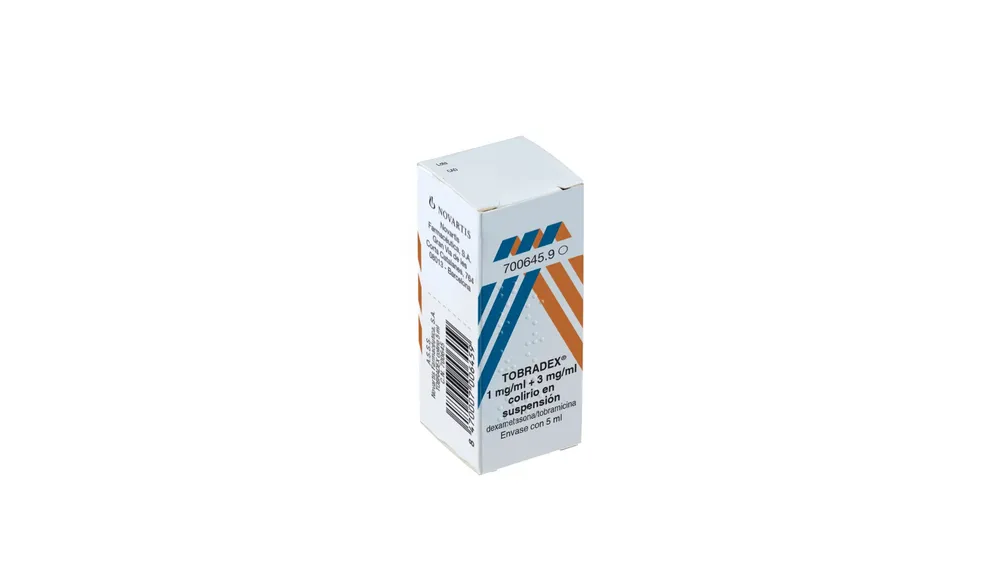
Table of Contents
- Patient Information Leaflet
- Introduction
- 1. What TOBRADEX is and what it is used for
- 2. What you need to know before using TOBRADEX
- 3. How to use TOBRADEX
- 4. Possible adverse effects
- 5. Storage of TOBRADEX
- 6. Contents of the package and other information
- **Marketing Authorization Holder**
- Novartis Farmacéutica, S.A.
- Gran Via de les Corts Catalanes, 764
- 08013 Barcelona, Spain
- **Manufacturer**
Patient Information Leaflet
Introduction
Patient Information Leaflet
TOBRADEX 1 mg/ml + 3 mg/ml eye drops suspension
Dexamethasone / Tobramycin
Read the entire leaflet carefully before you start using this medicine, because it contains important information for you.
- Keep this leaflet, as you may need to read it again.
- If you have any questions, ask your doctor or pharmacist.
- This medicine has been prescribed for you only; do not give it to others, even if they have the same symptoms as you, because it may harm them.
- If you experience any adverse effects, consult your doctor or pharmacist, even if they are adverse effects not listed in this leaflet. See section 4.
Leaflet Contents
- What TOBRADEX is and what it is used for
- What you need to know before using TOBRADEX
- How to use TOBRADEX
- Possible side effects
- How to store TOBRADEX
- Contents of the pack and other information
1. What TOBRADEX is and what it is used for
TOBRADEX is an eye drop medicine that contains two active substances (dexamethasone and tobramycin) with anti-inflammatory and antibiotic actions.
One of the active substances in this medicine is an antibiotic. Antibiotics are used to treat bacterial infections and are not effective against viral infections.
It is important that you follow the instructions regarding dose, dosing interval, and duration of treatment as directed by your doctor.
Do not store or reuse this medicine. If you have any antibiotic left over after completing the treatment, return it to the pharmacy for proper disposal. Medicines must not be disposed of via wastewater or household waste.
This medicine is indicated for inflammatory conditions of the eye where there is, or may be, a risk of infection in adults, adolescents (from 12 to less than 18 years of age), and children 2 years of age and older. It is used to prevent and treat inflammation and to prevent a possible eye infection following cataract surgery in adults, adolescents, and children 2 years of age and older.
2. What you need to know before using TOBRADEX
Do not use TOBRADEX
-
If you are allergic to dexamethasone, tobramycin, or any of the other ingredients of this medicine (listed in section 6).
-
If you think you have:
-
Herpes simplex keratitis, vaccinia virus, varicella, or any other viral eye infection.
-
Tuberculosis of the eye.
-
Fungal diseases of the eye or untreated parasitic eye infections.
-
After simple removal of a foreign body from the cornea.
Warnings and precautions
Talk to your doctor or pharmacist before starting to use TOBRADEX.
-
Use this medicine only in your eye(s).
-
If you develop symptoms of an allergic reaction while using this medicine, stop treatment and consult your doctor. Allergic reactions may range from localized itching or skin redness to severe allergic reactions (anaphylactic reaction) or serious skin reactions. These allergic reactions may occur with other topical or systemic antibiotics of the same class (aminoglycosides).
-
If your symptoms worsen or suddenly return, contact your doctor. You may become more susceptible to eye infections with prolonged use of this medicine.
-
If you are using another antibiotic treatment together with this medicine, consult your doctor.
-
Consult your doctor if you have or have ever had conditions such as myasthenia gravis (a neuromuscular disorder causing weakness in skeletal muscles) or Parkinson’s disease (a progressive nervous system disorder affecting movement). Antibiotics of this type may worsen muscle weakness.
-
If you use this medicine for a long time, you may:
-
Become more susceptible to eye infections,
-
Experience increased pressure in your eye(s),
-
Develop cataracts.
-
Develop Cushing's syndrome due to the medicine being absorbed into the bloodstream. Consult your doctor if you experience swelling and weight gain around the trunk and face, as these are usually the first signs of a condition called Cushing's syndrome. Adrenal gland function suppression may occur after stopping intensive or long-term treatment with Tobradex. Consult your doctor before stopping treatment on your own. These risks are particularly important in children and patients treated with a medicine called ritonavir or cobicistat.
-
If you already have glaucoma or high pressure in your eye(s), you should have your eye pressure monitored regularly while using this medicine. Consult your doctor.
Regular monitoring of intraocular pressure is necessary, especially in children under 6 years of age receiving medications containing dexamethasone. Do not administer this medicine to children under 2 years of age, as safety and efficacy have not been established in this population. The risk of elevated intraocular pressure and/or corticosteroid-induced cataract formation is higher in predisposed patients (e.g., diabetes).
-
Ocular steroids may delay healing of eye wounds. Ophthalmic NSAIDs (Non-Steroidal Anti-Inflammatory Drugs) are also known to slow or delay healing. Concomitant use of NSAIDs and ophthalmic steroids may increase the potential for healing problems.
-
Consult your doctor or pharmacist if you have a condition causing thinning of the eye tissues before using this medicine.
-
Contact your doctor if you experience blurred vision or other visual disturbances.
-
If you wear contact lenses:
-
Wearing contact lenses is not recommended during treatment of eye inflammation or infection.
Use of TOBRADEX with other medicines
Tell your doctor or pharmacist if you are taking, have recently taken, or might need to take any other medicines.
Inform your doctor if you are using ophthalmic NSAIDs. Concomitant use of steroids and ophthalmic NSAIDs may increase the risk of corneal healing problems.
Inform your doctor if you are taking ritonavir or cobicistat, as these may cause an increase in the amount of dexamethasone in the blood.
Pregnancy, breastfeeding, and fertility
TOBRADEX should only be used during pregnancy if clearly considered necessary by your doctor.
If you are pregnant or breastfeeding, think you may be pregnant, or are planning to become pregnant, consult your doctor or pharmacist before using this medicine.
Driving and use of machines
You may notice blurred vision for a short time after instilling the eye drops. Do not drive or operate machinery until this effect has passed.
TOBRADEX contains benzalkonium chloride
This medicine contains 0.1 mg of benzalkonium chloride per ml.
Benzalkonium chloride can be absorbed by soft contact lenses and may change the color of contact lenses. Remove contact lenses before using this medicine and wait 15 minutes before reinserting them.
Benzalkonium chloride may cause eye irritation, especially if you have dry eye or other corneal diseases (the transparent layer at the front of the eye). Consult your doctor if you experience a foreign body sensation, stinging, or eye pain after using this medicine.
TOBRADEX contains dexamethasone
Athletes should be aware that this medicine contains dexamethasone, which may lead to a positive analytical finding in doping controls.
3. How to use TOBRADEX
Follow exactly the administration instructions for this medicine as given by your doctor or pharmacist. If in doubt, consult your doctor or pharmacist again.
This medicine is intended for use only as eye drops.
Recommended dose:
Use in adults, including elderly patients
Generally, instill 1 or 2 drops into the affected eye(s) every 4–6 hours. During the first 24–48 hours, the frequency of administration may be increased to 1–2 drops every two hours. The frequency should be gradually reduced as clinical improvement is observed. Avoid stopping treatment prematurely.
A treatment period longer than 14 days is not recommended. The number of daily applications and duration of treatment may be adjusted at the physician's discretion.
After cataract surgery, the recommended dose is 1 drop instilled four times daily, starting the day after surgery and continuing for up to 24 days. Treatment may begin the day before surgery with 1 drop four times daily, continuing with 1 drop after surgery, followed by 1 drop four times daily for up to 23 days. If considered necessary by your doctor, the frequency may be increased to 1 drop every two hours during the first two days of treatment.
Use in children and adolescents
This medicine may be used in adolescents and children aged 2 years and older at the same dose as in adults. The safety and efficacy of this medicine in children under 2 years of age have not been established, and no data are available.
Instructions for use:
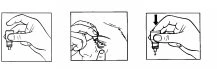
123
- Wash your hands.
- Take the bottle (dropper container).
- Shake well before use.
- After opening the bottle for the first time, remove the loose plastic seal ring.
- Hold the bottle upside down between your fingers (figure 1).
- Tilt your head backward. Gently pull down the eyelid to create a pouch between the eyelid and the eye, where the drop should fall (figure 2).
- Bring the tip of the bottle close to the eye. Using a mirror may be helpful.
- Do not touch the eye, eyelid, nearby areas, or any other surfaces with the dropper tip. The drops could become contaminated.
- Gently squeeze the base of the bottle with your index finger to release one drop at a time (figure 3).
- After administering the medicine, close your eyes and keep them closed while gently pressing with your finger at the inner corner of the eye near the nose. This helps prevent the medicine from draining into the rest of the body.
- If applying drops to both eyes, repeat the above steps for the other eye.
- Close the bottle tightly immediately after use.
If a drop misses the eye, try again.
If you are using other ophthalmic medicines, wait at least 5 minutes between administering this medicine and other eye medications. Ophthalmic ointments should be administered last.
If you use more TOBRADEX than you should, flush the eyes with lukewarm water to remove the excess. Do not administer additional drops until the next scheduled dose.
In case of overdose or accidental ingestion, contact your doctor or pharmacist immediately or call the Toxicology Information Service at 91 562 04 20, indicating the medicine and the amount ingested.
If you forget to use TOBRADEX, apply a single dose as soon as you remember and then continue with your next scheduled dose. However, if it is almost time for your next dose, do not take the missed dose and continue with your regular dosing schedule. Do not apply a double dose to make up for a missed dose.
If you have any further questions about the use of this medicine, ask your doctor or pharmacist.
4. Possible adverse effects
Like all medicines, this medicine can cause adverse effects, although not everyone will experience them.
The following adverse effects have been reported with this medicine:
Uncommon adverse effects (may affect up to 1 in 100 people)
Eye effects: increased pressure in the eye(s), eye pain, eye itching, eye discomfort, eye irritation.
Rare adverse effects (may affect up to 1 in 1,000 people)
Eye effects: inflammation of the surface of the eye, eye allergy, blurred vision, dryness, redness.
General effects: bad taste.
Frequency not known (cannot be estimated from available data)
Eye effects: eyelid swelling, redness of the eyelid, increase in pupil size, increased tear production.
General effects: severe allergic reaction (hypersensitivity), dizziness, headache, nausea, abdominal discomfort, serious skin reactions (erythema multiforme), facial swelling, skin itching.
Hormonal problems: excessive growth of body hair (particularly in women), muscle weakness and wasting, purple stretch marks on the skin, increased blood pressure, irregular or absent menstruation, changes in body protein and calcium levels, growth delay in children and adolescents, and swelling with weight gain in the body and face (Cushing's syndrome) (see section 2, "Warnings and precautions").
Reporting of adverse effects
If you experience any type of adverse effect, consult your doctor or pharmacist, even if it is a possible adverse effect not listed in this leaflet. You may also report them directly via the Spanish System for Pharmacovigilance of Human Medicines: https://www.notificaRAM.es. By reporting adverse effects, you can help provide more information on the safety of this medicine.
5. Storage of TOBRADEX
Keep this medicine out of the sight and reach of children.
Do not use this medicine after the expiry date stated on the bottle and carton after "EXP". The expiry date refers to the last day of the month indicated.
Do not store above 25°C. Do not freeze.
To avoid infection, discard the bottle 4 weeks after first opening.
Record the date of first opening of the bottle in the space provided for this purpose on the carton.
Medicines must not be disposed of via wastewater or household waste. Dispose of unused medicines and their containers at the SIGRE Point in your pharmacy. If you are in doubt, ask your pharmacist how to dispose of medicines and containers you no longer need. This will help protect the environment.
6. Contents of the package and other information
Composition of TOBRADEX
- The active substances are dexamethasone and tobramycin. Each ml of suspension contains 1 mg of dexamethasone and 3 mg of tobramycin.
- The other components are benzalkonium chloride, disodium edetate, sodium chloride, anhydrous sodium sulphate, tiloxapol, hydroxyethylcellulose, sulphuric acid and/or sodium hydroxide, and purified water.
Appearance of the product and contents of the pack
TOBRADEX is a liquid (white or almost white) supplied in a carton containing one 5-ml plastic bottle with a screw cap.
Marketing Authorization Holder
Novartis Farmacéutica, S.A.
Gran Via de les Corts Catalanes, 764
08013 Barcelona, Spain
Manufacturer
Novartis Manufacturing NV
Rijksweg 14
2870 Puurs-Sint-Amands
Belgium
or
Novartis Farmacéutica, S.A.
Gran Via de les Corts Catalanes, 764
08013 Barcelona, Spain
Date of the most recent review of this leaflet: November 2023.
Detailed information on this medicinal product is available on the website of the Spanish Agency for Medicines and Health Products (AEMPS): http://www.aemps.gob.es/