Tisseel solutions for tissue adhesive
Spain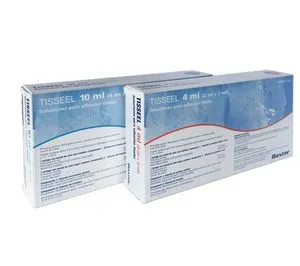
Table of Contents
- Package leaflet: Information for the user
- Introduction
- 1. What TISSEEL is and what it is used for
- 2. What you need to know before using TISSEEL
- **Tisseel contains polysorbate 80**
- 3. How to use TISSEEL
- 4. Possible adverse effects
- 5. Storage of TISSEEL
- 6. Contents of the pack and other information
- **General**
- **Administration with PRIMA syringe:**
Package leaflet: Information for the user
Introduction
Package leaflet: information for the user
TISSEEL Fibrin Sealant Solutions
Human fibrinogen, human thrombin, synthetic aprotinin, calcium chloride dihydrate
Read the entire leaflet carefully before you start using this medicine, because it contains important information for you.
- Keep this leaflet, as you may need to read it again.
- If you have any questions, consult your doctor or pharmacist.
- If you experience any adverse reactions, consult your doctor, pharmacist, or nurse, even if they are adverse reactions not listed in this leaflet. See section 4.
Leaflet contents
- What TISSEEL is and what it is used for
- What you need to know before using TISSEEL
- How to use TISSEEL
- Possible adverse effects
- How to store TISSEEL
- Contents of the pack and other information
1. What TISSEEL is and what it is used for
What TISSEEL is
TISSEEL is a two-component tissue adhesive consisting of two solutions: the sealing protein solution and the thrombin solution. TISSEEL contains fibrinogen and thrombin, two blood proteins essential for blood coagulation. When these proteins are mixed during application, they form a clot at the application site.
The clot formed by TISSEEL is very similar to a naturally occurring clot. It is degraded in the same way as an endogenous (body's own) clot and leaves no residue. A synthetic protein (synthetic aprotinin) is added to prolong the clot's durability and prevent its premature degradation.
What TISSEEL is used for
TISSEEL is used as an adjunctive treatment when conventional surgical techniques appear insufficient:
- to improve hemostasis
- as a tissue sealant, to enhance wound healing or seal sutures in vascular surgery and gastrointestinal tract surgery
- to adhere tissues, e.g., to secure skin grafts.
TISSEEL is also effective in patients receiving treatment with the anticoagulant heparin.
2. What you need to know before using TISSEEL
Do not use TISSEEL:
- if you are allergic to the active substances or to any of the other components of this medicine (listed in section 6).
- in cases of severe arterial or venous bleeding. Single administration of TISSEEL is not indicated in this situation.
- TISSEEL must not be injected into blood vessels (veins or arteries). Since TISSEEL forms a clot at the site of application, injection into a blood vessel may cause blood clot formation. If these clots enter the bloodstream, they may lead to potentially life-threatening complications.
- TISSEEL is not indicated to replace skin sutures placed to close a surgical wound.
Warnings and precautions
Talk to your doctor, pharmacist, or nurse before starting to use TISSEEL.
Use special caution with TISSEEL because allergic hypersensitivity reactions may occur.
Early symptoms of an allergic reaction may include:
- transient skin redness
- itching
- hives
- nausea, vomiting
- general malaise
- chills
- chest tightness
- swelling of lips and tongue
- difficulty breathing/dyspnea
- drop in blood pressure
- increase or decrease in pulse rate
If these symptoms occur, application must be stopped immediately. Severe symptoms require immediate emergency treatment.
- TISSEEL contains a synthetic protein known as aprotinin. Although this protein is applied only in small amounts and only on the wound surface, there is a risk of severe allergic reaction. The risk appears to increase in patients who have previously received TISSEEL or aprotinin, even if it was well tolerated during prior administration. Therefore, any use of aprotinin or products containing aprotinin must be recorded in your medical history. Because synthetic aprotinin is structurally identical to bovine aprotinin, the use of TISSEEL in patients with allergy to bovine proteins should be carefully evaluated.
- Potentially life-threatening complications may occur if blood clots enter the bloodstream due to accidental injection into a blood vessel.
- Intravascular application may increase the likelihood and severity of acute hypersensitivity reactions in susceptible patients. In particular, during coronary surgery, the physician must take special care not to inject TISSEEL into a blood vessel. It is equally important to avoid injection into nasal mucosa, as blood clots may form in the region of the ophthalmic artery.
- When injected into tissue, there is a risk of local tissue damage.
- To prevent sealing of tissues in unintended areas, care must be taken before administration to cover all body parts not intended for treatment.
- Formation of an excessively thick fibrin clot may negatively affect product efficacy and wound healing. Therefore, TISSEEL should be applied in a thin layer.
Caution is required when applying a fibrin tissue adhesive using pressurized gas.
Very rare cases of gas embolism (air or gas) (introduction of air into the bloodstream, which may be serious or life-threatening) have been reported as a result of using spray devices with pressure regulators to apply fibrin tissue adhesives. These cases appear to be related to the use of spray equipment at pressures higher than recommended and/or at very close distance to the tissue surface. The risk appears to be greater when fibrin tissue adhesives are sprayed with air, compared to CO2, and therefore cannot be excluded with TISSEEL when sprayed during surgical intervention on an open wound.
The spray devices and application tips come with instructions for use that recommend pressure ranges and the distance from which spraying should be performed relative to the tissue surface.
TISSEEL must be administered exactly as specified in the instructions and only with equipment recommended for this product.
Whenever TISSEEL is sprayed, changes in blood pressure, pulse, oxygen saturation, and end-tidal CO2 levels should be monitored to detect possible gas embolism.
When medicines derived from human plasma or blood are administered, certain measures must be taken to prevent transmission of infections to patients. These measures include:
- careful donor selection to ensure exclusion of those at risk of carrying infectious diseases
- testing for specific markers of infection/virus in individual donations and plasma pools
- inclusion of manufacturing steps capable of inactivating or eliminating viruses.
Despite these measures, when medicines derived from human blood or plasma are administered, the possibility of transmitting infection cannot be completely ruled out. This also applies to emerging or unknown viruses and other types of infections.
These measures are considered effective against enveloped viruses such as human immunodeficiency virus (HIV), hepatitis B virus, and hepatitis C virus, as well as against the non-enveloped hepatitis A virus. However, measures may have limited effectiveness against non-enveloped viruses, such as parvovirus B19. Parvovirus B19 infection may be severe in pregnant women (fetal infection), immunocompromised individuals, or patients with certain types of anemia (e.g., sickle cell disease or hemolytic anemia).
Your doctor may recommend that you consider vaccination against hepatitis A and B if you are receiving repeated or regular administration of human plasma-derived fibrin sealants.
It is strongly recommended that each time a dose of TISSEEL is administered, the name of the medicine and the batch number used should be recorded to maintain a record of batches used.
Other medicines and TISSEEL
Inform your doctor or pharmacist if you are taking, have recently taken, or might need to take any other medicines, including those obtained without a prescription.
No interactions with other medicines are known.
As with similar products or thrombin solutions, the product may be inactivated if it comes into contact with solutions containing alcohol, iodine, or heavy metals (e.g., antiseptic solutions). Care should be taken to remove such substances as thoroughly as possible before applying the product.
For information on preparations containing oxidized cellulose, see Instructions for handling and preparation.
Use of TISSEEL with food and drink
Ask your doctor. Your doctor will decide whether you may eat or drink before TISSEEL application.
Pregnancy, breastfeeding, and fertility
If you are pregnant or breastfeeding, think you may be pregnant, or are planning to become pregnant, consult your doctor or pharmacist before using this medicine. Your doctor will decide whether you may use TISSEEL during pregnancy or breastfeeding.
Driving and using machines
TISSEEL does not affect your ability to drive or operate machinery.
Tisseel contains polysorbate 80
Polysorbate 80 may cause localized skin irritations such as contact dermatitis.
3. How to use TISSEEL
The use of TISSEEL is restricted to experienced surgeons who have been properly trained in the use of TISSEEL.
Before applying TISSEEL, the wound surface must be dried using standard techniques (e.g., intermittent application of compresses, swabs, or use of suction devices).
Do not use pressurized air or gas to dry the area.
TISSEEL should only be sprayed onto areas of application that are clearly visible.
When applying TISSEEL with a spray device, ensure that both the pressure and the distance to the tissue are within the range recommended by the manufacturer as follows:
Pressure, distance, and recommended equipment for TISSEEL spray application | |||||
Surgical procedure | Spray applicator to be used | Applicator tips to be used | Pressure regulator to be used | Recommended distance from target tissue | Recommended spray pressure |
Open wound | TISSEEL/Artiss spray applicator | n.a. | EasySpray | 10–15 cm | 1.5–2.0 bar (21.5–28.5 psi) |
TISSEEL/Artiss spray applicator, 10 mL container | n.a. | EasySpray | |||
Laparoscopic or minimally invasive procedures | n.a. | Duplospray MIS 20 cm applicator | Duplospray MIS regulator | 2–5 cm | 1.2–1.5 bar |
Duplospray MIS 30 cm applicator | |||||
Duplospray MIS 40 cm applicator | |||||
Endoscopic applicator Spray Set 360 with Snaplock | |||||
Endoscopic applicator Spray Set 360 with anchoring | |||||
Replaceable tip |
Whenever TISSEEL is sprayed, and because there is a possibility of a gaseous (air or gas) embolism occurring, changes in blood pressure, pulse, oxygen saturation, and end-tidal CO2 levels should be monitored (see section 2).
The dose to be administered will always depend on your individual requirements.
The dose depends on several factors such as the type of surgical procedure, the size of the affected surface area, the application method, and the number of applications. Your doctor will determine the appropriate amount and will apply enough to form a thin layer over the lesion. If the amount appears insufficient, the application may be repeated.
When applying TISSEEL, coagulation occurs rapidly. Applying a new layer over an existing TISSEEL layer should be avoided, as the new layer will not adhere properly to the existing one.
Separate application of the sealant protein component and the thrombin component must be avoided.
In clinical trials, individual doses of 4 to 20 ml were administered. Larger volumes may be necessary in certain procedures (e.g., liver injuries or sealing of large burned surfaces).
As a guideline for surface sealing, one 2-ml TISSEEL kit (1 ml of sealant protein solution plus 1 ml of thrombin solution) will be sufficient, at minimum, for a surface area of 10 cm².
When applying TISSEEL with a spray device, the same amount will be sufficient to cover considerably larger areas.
To avoid excessive granulation tissue formation and to ensure gradual degradation of the fibrin tissue adhesive, only the thinnest possible layer of TISSEEL should be applied.
To ensure proper mixing of the sealant protein component and the thrombin component, the first drops of the product should be expelled and discarded from the application cannula immediately before use.
If you use more TISSEEL than you should
TISSEEL is only applied during surgical procedures. The required amount will be determined by the physician. Cases of overdose are not known.
If you have any further questions about the use of this medicine, ask your doctor or pharmacist.
Children
The safety and efficacy of the product in children have not been established.
4. Possible adverse effects
Like all medicines, this medicine may cause adverse effects, although not everyone experiences them. If you consider any of the adverse effects you experience to be severe, or if you notice any adverse effect not listed in this leaflet, inform your doctor or pharmacist.
In patients treated with fibrin tissue adhesive, hypersensitivity reactions or allergic reactions may occur. Although rare, these reactions may be serious.
The initial symptoms of an allergic reaction may include:
- transient skin redness ("flushing")
- itching
- hives
- nausea, vomiting
- headache
- numbness
- restlessness
- burning and itching at the application site
- tingling
- chills
- chest tightness
- swelling of lips, tongue, throat (which may result in difficulty breathing and/or swallowing)
- difficulty breathing
- low blood pressure
- increased or decreased pulse rate
- loss of consciousness due to a drop in blood pressure
In isolated cases, these reactions may progress to severe allergic reactions (anaphylaxis). These reactions may occur especially if the product is applied repeatedly or administered to patients who have previously shown hypersensitivity to aprotinin or to any other component of the product.
Even if a repeated treatment with TISSEEL was well tolerated, a subsequent administration of TISSEEL or an infusion of aprotinin may lead to severe allergic (anaphylactic) reactions.
The medical staff treating you will be aware of the risk of such reactions and will stop the administration of TISSEEL immediately if the first signs of hypersensitivity occur. In case of severe symptoms, emergency measures may be necessary.
Injection of TISSEEL into soft tissues may cause local tissue damage.
Injection of TISSEEL into blood vessels (veins or arteries) may cause blood clot formation (thrombosis).
Since TISSEEL is manufactured from plasma derived from blood donations, the risk of transmission of infectious agents cannot be completely excluded. However, manufacturers take numerous measures to reduce this risk (see section 2).
Rarely, antibodies against components of the fibrin tissue adhesive may develop.
The following adverse effects have been observed during treatment with TISSEEL:
Adverse effects have been classified using the following frequency categories:
Very common: may affect more than 1 in 10 people
Common: may affect up to 1 in 10 people
Uncommon: may affect up to 1 in 100 people
Rare: may affect up to 1 in 1,000 people
Very rare: may affect up to 1 in 10,000 people
Frequency not known: cannot be estimated from the available data.
General disorders | Adverse effect | Frequency |
Infections and parasitic diseases | Post-surgical wound infection | Frequent |
Disorders of the blood and lymphatic system | Increase in fibrin degradation products | Uncommon |
Immune system disorders | Hypersensitivity reactions | Uncommon |
Allergic (anaphylactic) reactions | Uncommon | |
Chest tightness | Uncommon | |
Difficulty breathing | Uncommon | |
Itching | Uncommon | |
Redness of the skin | Uncommon | |
Neurological disorders | Sensory disturbances | Frequent |
Cardiac disorders | Increased or decreased pulse rate | Uncommon |
Vascular disorders | Axillary venous thrombosis | Frequent |
Drop in blood pressure | Rare | |
Contusions | Uncommon | |
Air bubbles in the vascular system* | Frequency not known | |
Blood clot in blood vessels | Uncommon | |
Occlusion of a cerebral artery | Uncommon | |
Respiratory, thoracic disorders | Dyspnea | Uncommon |
Gastrointestinal disorders | Nausea | Uncommon |
Intestinal obstruction | Uncommon | |
Skin and subcutaneous tissue disorders | Rash | Frequent |
Hives | Uncommon | |
Impaired wound healing | Uncommon | |
Musculoskeletal and connective tissue disorders | Limb pain | Frequent |
General disorders and administration site conditions | Pain | Frequent |
Increased body temperature | Frequent | |
Redness of the skin | Uncommon | |
Swelling due to fluid accumulation in body tissues (edema) | Uncommon | |
Injury, poisoning and procedural complications | Pain caused by the procedure | Uncommon |
Accumulation of lymph or other clear body fluids near the surgical site (seroma) | Very frequent | |
Rapid swelling of the dermis, subcutaneous tissue, mucosa and submucosa (angioedema) | Uncommon |
*Gas or air bubbles have been introduced into the vascular system when fibrin sealants are applied using spray devices that use pressurized gas or air; this effect is believed to be caused by improper use of the spraying equipment (e.g., at pressures higher than recommended and at too close a distance to the tissue surface).
Reporting of adverse reactions
If you experience any type of adverse reaction, consult your doctor or nurse, even if it is a possible adverse reaction not listed in this leaflet. You may also report them directly through the Spanish Pharmacovigilance System for Human Medicinal Products: www.notificaram.es.
By reporting adverse reactions, you can help provide more information on the safety of this medicine.
5. Storage of TISSEEL
Keep this medicine out of sight and reach of children.
Do not use this medicine after the expiry date stated on the packaging after "EXP".
Store and transport frozen (< -20 °C) continuously until use.
Keep the syringe in the outer packaging to protect it from light.
Storage after thawing:
The unopened product, thawed at room temperature, may be stored for up to 72 hours at controlled room temperature (not exceeding 25 °C).
!Once thawed, the solution must not be refrozen or refrigerated!
Medicines must not be disposed of via wastewater or household waste. Ask your pharmacist how to dispose of medicines no longer required. These measures will help protect the environment.
6. Contents of the pack and other information
Composition of TISSEEL
TISSEEL contains two components:
Component 1: Sealing protein solution
The active substances in 1 ml of sealing protein solution are: human fibrinogen, 91 mg/ml; synthetic aprotinin, 3000 IU C/ml.
The other components are: human albumin, L-histidine, niacinamide, polysorbate 80 (Tween 80), sodium citrate dihydrate, water for injections.
Component 2: Thrombin solution
The active substances in 1 ml of thrombin solution are: human thrombin 500 IU/ml; calcium chloride dihydrate 40 μmol/ml.
The other components are: human albumin, sodium chloride, water for injections.
After mixing | 1 ml | 2 ml | 4 ml | 10 ml |
Component 1: Sealing protein solution Human fibrinogen (as coagulable protein) Synthetic aprotinin | 45.5 mg 1500 IU | 91 mg 3000 IU | 182 mg 6000 IU | 455 mg 15,000 IU |
Component 2: Thrombin solution Human thrombin Calcium chloride dihydrate | 250 IU 20 μmol | 500 IU 40 μmol | 1000 IU 80 μmol | 2500 IU 200 μmol |
TISSEEL contains 0.6–5 IU/ml of human factor XIII, which is isolated from plasma together with human fibrinogen.
Nature of the product and contents of the container
Solutions for tissue adhesive.
The sealant protein solution and the thrombin solution are supplied in a single-use plastic syringe.
The frozen solutions are colourless to pale yellow and opalescent.
After thawing: the liquids are colourless to pale yellow.
TISSEEL is supplied in the following packaging:
Contents of the package with PRIMA Syringe:
- 1 ml, 2 ml or 5 ml of sealant protein solution and 1 ml, 2 ml or 5 ml of thrombin solution contained in a dual-chamber prefilled syringe (polypropylene) closed with a screw cap, packed in two pouches and supplied with a two-part connector device and 4 application cannulae.
Contents of the package with AST Syringe:
- 1 ml, 2 ml or 5 ml of sealant protein solution and 1 ml, 2 ml or 5 ml of thrombin solution contained in a dual-chamber prefilled syringe (polypropylene) closed with a screw cap, packed in two pouches and supplied with a two-part connector device, 4 application cannulae and a double piston plunger.
Pack sizes:
TISSEEL is available in the following pack sizes: 1 x 2 ml (1 ml + 1 ml), 1 x 4 ml (2 ml + 2 ml) and 1 x 10 ml (5 ml + 5 ml).
The solutions are frozen.
Only certain pack sizes may be marketed.
Marketing Authorization Holder and Manufacturer:
Marketing Authorization Holder:
BAXTER, S.L.
Pouet de Camilo, 2
46394 Ribarroja del Turia (Valencia)
Manufacturer:
Takeda Manufacturing Austria AG,
Industriestrasse 67,
1221 Vienna, Austria
This medicinal product is authorized in the Member States of the European Economic Area under the following names:
Austria: TISSEEL - Lösungen für einen Gewebekleber
Bulgaria: T???? - ???????? ?? ??????? ??????
Czech Republic: TISSEEL - roztoky pro lepidlo
France: TISSEEL – solutions pour colle
Germany: TISSEEL 2ml
TISSEEL 4ml
TISSEEL 10ml
Greece: TISSEEL - Διαλ?ματα για στεγανοποιητικ?
Malta: TISSEEL – Solutions for sealant
Norway: TISSEEL
Poland: TISSEEL - klej tkankowy
Slovak Republic: TISSEEL – fibrinové lepidlo
Spain: TISSEEL – soluciones para adhesivo tisular
Date of the most recent review of this summary: August 2020
Detailed information on this medicinal product is available on the website of the Spanish Agency of Medicines and Health Products (AEMPS) (http://www.aemps.gob.es/)
This information is intended for healthcare professionals only (final packaging: PRIMA syringe):
General
-
Prior to administration of TISSEEL, all body parts outside the area to be treated should be covered to prevent adhesion of tissues to unintended areas.
-
To prevent TISSEEL from adhering to gloves and surgical instruments, moisten them with a sodium chloride solution before contact with TISSEEL.
-
The guideline for sealing surfaces is: one vial of TISSEEL 2 ml (1 ml of sealing protein solution plus 1 ml of thrombin solution) is sufficient for a surface area of at least 10 cm².
-
The required dose will depend on the size of the surface to be sealed.
-
DO NOT apply the two components of TISSEEL separately. Both components must be applied together.
-
DO NOT expose TISSEEL to temperatures above 37 °C and DO NOT heat in a microwave.
-
DO NOT thaw the product by holding it in hands.
-
DO NOT use TISSEEL until it has been completely thawed and warmed to 33 °C–37 °C.
-
The protective caps on the syringe should only be removed after thawing and warming are complete. To facilitate removal of the syringe cap, gently rock it back and forth, then remove the protective cap from the syringe.
-
Expel all air from the syringe and attach the connecting tip and application cannula.
Handling and Preparation Instructions
Both the sealing protein solution and the thrombin solution are contained in a ready-to-use syringe. The product is packaged in two sterile pouches under aseptic conditions. The inner pouch and its contents are sterile as long as the outer pouch remains intact. Using aseptic technique, transfer the sterile inner pouch and its contents to the sterile field.
The ready-to-use syringe may be thawed and warmed by one of the following methods:
-
Rapid thawing/warming (sterile water bath), recommended method
-
Thawing/warming in a non-sterile water bath
-
Thawing/warming in an incubator
-
The ready-to-use syringe may also be thawed and stored at room temperature (not exceeding 25 °C) for up to 72 hours. It must be warmed prior to use.
-
Rapid thawing/warming (sterile water bath), recommended method
It is recommended to thaw and warm both components of the tissue adhesive using a sterile water bath at a temperature of 33–37 °C.
- The water bath temperature must not exceed 37 °C. To maintain the specified temperature range, monitor the water temperature with a thermometer and change the water when necessary.
- If a sterile water bath is used for thawing and warming, remove the pre-filled syringe from the pouches before placing it into the sterile water bath.
Instructions:
Place the inner pouch in the sterile field, remove the ready-to-use syringe from the inner pouch, and place it directly into the sterile water bath. Ensure that the contents of the ready-to-use syringe are completely submerged in the water.
Table 1: PRIMA Syringe: Minimum thawing and warming times using a sterile water bath
Container size | Minimum thawing/heating times |
2 ml | 5 minutes |
4 ml | 5 minutes |
10 ml | 10 minutes |
- Thawing/heating in a non-sterile water bath
Instructions:
Leave the ready-to-use syringe inside both bags and place it in a water bath outside the sterile field for an appropriate period of time (see Table 2). Ensure that the bags remain submerged in water throughout the entire thawing period. After thawing, remove the bags from the water bath, dry the outer bag, and place the inner bag containing the ready-to-use syringe into the sterile field.
Table 2: PRIMA syringe: Minimum thawing and warming times using a non-sterile water bath
Container size | Minimum thawing/heating times Non-sterile water bath at 33 °C to 37 °C |
2 ml | 15 minutes |
4 ml | 20 minutes |
10 ml | 35 minutes |
- Thawing/heating in an incubator
Instructions:
Leave the ready-to-use syringe inside both bags and place it in an incubator outside the sterile field for an appropriate period of time (see Table 3). Once thawed/heated, remove the bags from the incubator, remove the outer bag, and place the inner bag containing the ready-to-use syringe into the sterile field.
Table 3: PRIMA syringe: Minimum thawing and heating times in incubator
Package size | Minimum thawing/warming times from 33 °C to 37 °C in incubator, product in bags |
2 ml | 40 minutes |
4 ml | 50 minutes |
10 ml | 90 minutes |
- Thawing at room temperature (not above 25 °C) BEFORE heating
Instructions:
Leave the ready-to-use syringe inside both bags and thaw at room temperature outside the sterile field for an appropriate period of time (see Table 4). Once thawed, heat the syringe in the outer bag using an incubator to warm the product prior to use.
Table 4: PRIMA Syringe: Minimum thawing times at room temperature outside the sterile field and additional warming times in an incubator at 33 °C to 37 °C
Container size | Minimum thawing times at room temperature (not exceeding 25 °C). Product in bags | Pre-warming times before use at 33 °C up to a maximum of 37 °C in incubator after thawing at room temperature. Product in bags |
2 ml | 80 minutes + 11 minutes | |
4 ml | 90 minutes + 13 minutes | |
10 ml | 160 minutes + 25 minutes |
After thawing at room temperature, the product must be used within a maximum of 72 hours after removal from the refrigerator.
Stability after thawing
After thawing and warming (at temperatures between 33°C and 37°C, methods 1, 2 and 3), chemical and physical stability of the product has been demonstrated for 12 hours at 33–37°C.
For the product thawed at room temperature in the unopened bag (method 4), chemical and physical stability of the product has been demonstrated for 72 hours at temperatures not exceeding 25°C. Warm to 33–37°C immediately before use.
From a microbiological standpoint, unless the method of opening/thawing excludes the risk of microbial contamination, the product should be used immediately after warming to 33–37°C.
If not used immediately, the times and conditions of storage during use are the responsibility of the user.
Do not refreeze or refrigerate once thawing has begun.
Handling after thawing/before application
To achieve optimal mixing of the two solutions and optimal fibrin tissue adhesive solidification, keep both components of the tissue adhesive at 33–37°C until application.
The sealing protein solution and thrombin solution should be clear or slightly opalescent. Do not use solutions that are cloudy or contain deposits. The thawed product should be inspected visually before use to exclude the presence of particles, discoloration, or any change in appearance. If any of these conditions are observed, the solutions must be discarded.
The thawed sealing protein solution should be a slightly viscous liquid. If the solution has the consistency of a solidified gel, it should be assumed that denaturation has occurred (possibly due to interruption of the cold chain or excessive heat during warming). In such cases, TISSEEL must under no circumstances be used.
-
Remove the syringe from the bags shortly before use.
-
Use TISSEEL only when fully thawed and warmed (liquid consistency).
-
Remove the protective cap from the syringe immediately before application.
To facilitate removal of the syringe cap, gently rock the cap forward and backward, then remove the protective cap from the syringe.
Administration with PRIMA syringe:
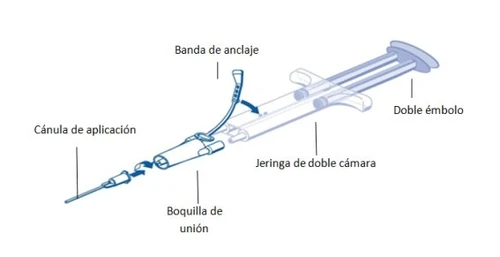
For application, the ready-to-use dual-chamber syringe containing the fibrin sealant protein solution and thrombin solution must be connected to a connecting tip and an application cannula provided in the application device kit. The plunger connector at the end of the ready-to-use dual-chamber syringe ensures that equal volumes of the two components of the tissue adhesive are expelled through the connecting tip into the application cannula, where they will mix prior to application.
Instructions for operating the PRIMA syringe:
-
Expel all air from the syringe before connecting any application device.
-
Align the connecting tip and lock it laterally onto the syringe at the anchoring band slot.
-
Connect the dual-chamber ready-to-use syringe nozzles to the connecting tip, ensuring both are securely attached.
-
Secure the connecting tip by fastening the anchoring band to the ready-to-use dual-chamber syringe.
-
If the anchoring band tears, use the spare connecting tip provided in the kit.
-
If no spare connecting tip is available, the system may still be used, provided care is taken to ensure the connection is secure and leak-proof.
-
DO NOT expel any air remaining inside the connecting tip.
-
Attach an application cannula to the connecting tip.
-
DO NOT expel the air remaining inside the connecting tip and application cannula until application is initiated, as this may clog the cannula opening.
Administration
Before applying TISSEEL, dry the wound surface using standard techniques (e.g., intermittent use of sponges or swabs, suction devices). Do not use air or pressurized gas to dry the area.
- Apply the mixture of fibrin sealant protein solution and thrombin solution onto the surface or surfaces to be sealed by slowly pressing the back of the common plunger.
- For surgical procedures requiring minimal volumes of fibrin tissue adhesive, it is advisable to expel and discard the first drops of the product.
- After applying TISSEEL, wait at least 2 minutes to achieve sufficient polymerization.
Note: If the application of the fibrin tissue adhesive components is interrupted, clots may form in the cannula. In such cases, immediately replace the application cannula with a new one before resuming application. If the openings in the connecting tip become blocked, use the additional connecting tip provided in the package.
After mixing the components of the tissue adhesive, the fibrin tissue adhesive begins to set within seconds due to the high thrombin concentration (500 IU/mL).
The fibrin tissue adhesive can also be applied using other accessories supplied by BAXTER that are specifically suitable for, e.g., endoscopic use, minimally invasive surgery, or application over large or hard-to-reach areas. When using such application devices, their instructions for use must be carefully followed.
Preparations containing oxidized cellulose must not be used with TISSEEL, as the low pH interferes with thrombin activity.
In certain applications, biocompatible materials such as collagen sheets may be used as a supporting material or for reinforcement.
Spray Application
When applying TISSEEL with a spray device, ensure that the pressure and distance to the tissue are within the ranges recommended by the manufacturer, as specified below:
Pressure, distance, and recommended equipment for TISSEEL spray application | |||||
Surgical procedure | Spray applicator to be used | Applicator tips to be used | Pressure regulator to be used | Recommended distance from target tissue | Recommended spray pressure |
Open wound | TISSEEL/Artiss spray applicator | n.a. | EasySpray | 10–15 cm | 1.5–2.0 bar (21.5–28.5 psi) |
TISSEEL/Artiss spray applicator, 10 mL container | n.a. | EasySpray | |||
Laparoscopic or minimally invasive procedures | n.a. | Duplospray MIS 20 cm applicator | Duplospray MIS 1.5 bar pressure regulator | 2–5 cm | 1.2–1.5 bar (18–22 psi) |
Duplospray MIS 30 cm applicator | |||||
Duplospray MIS 40 cm applicator | |||||
Endoscopic Spray Set 360 with Snaplock applicator | |||||
Endoscopic Spray Set 360 with anchoring applicator | |||||
Replaceable tip |
Whenever TISSEEL is sprayed, and because there is a possibility of gaseous embolism (air or gas) occurring, changes in blood pressure, pulse, oxygen saturation, and end-tidal CO2 levels should be monitored (see section 2).
For application of TISSEEL in closed thoracic and abdominal cavities, the DuploSpray MIS spray applicator and regulator system is recommended. Refer to the instructions for use of the DuploSpray MIS device.
Disposal
Disposal of unused medication and waste materials must be carried out in accordance with local regulations.