Timoglobulina 5 mg/ml powder for solution for infusion
Spain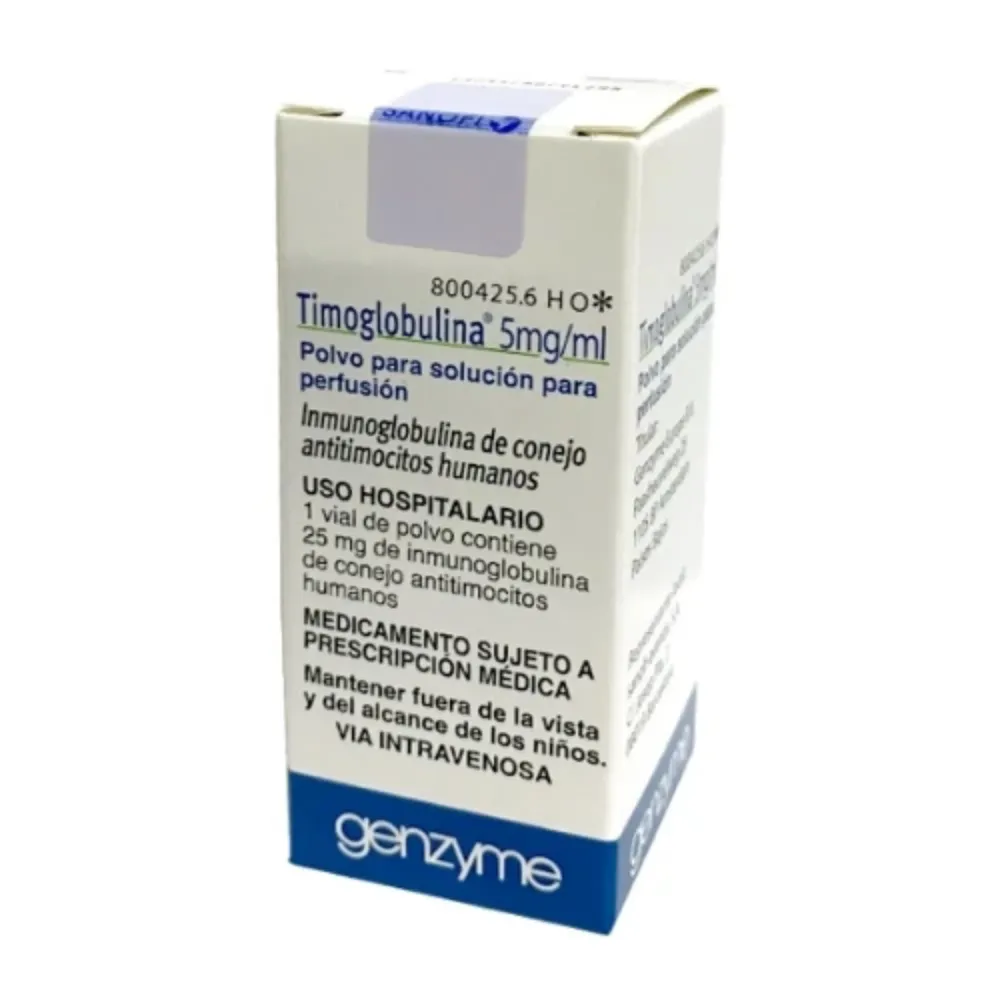
Table of Contents
- Package leaflet: Information for the user
- Introduction
- 1. What Timoglobulina is and what it is used for
- 2. What you need to know before using Timoglobulina
- **Use of Timoglobulina with other medicines**
- It is unlikely that consuming food or drinks will affect the medicine.
- **Pregnancy and lactation**
- 3. How to use Timoglobulina
- 4. Possible adverse effects
- 5. Storage of Timoglobulina
- 6. Contents of the pack and other information
Package leaflet: Information for the user
Introduction
Package leaflet: information for the patient
TIMOGLOBULINA 5mg/ml, powder for solution for infusion.
Human anti-thymocyte immunoglobulin (rabbit).
Read the entire leaflet carefully before you start using this medicine, as it contains important information for you.
- Keep this leaflet, as you may need to read it again.
- If you have any questions, consult your doctor, pharmacist, or nurse.
- This medicine will be administered by a doctor or nurse in a hospital setting.
- If you experience any adverse effects, consult your doctor, pharmacist, or nurse, even if they are effects not listed in this leaflet. See section 4.
Contents of the leaflet:
- What Timoglobulina is and what it is used for
- What you need to know before using Timoglobulina
- How to use Timoglobulina
- Possible adverse effects
- How to store Timoglobulina
- Contents of the pack and other information
1. What Timoglobulina is and what it is used for
Timoglobulina belongs to a group of medicines called immunosuppressants (anti-rejection medicines).
Timoglobulina is obtained from the blood of rabbits that have been injected with human thymus gland cells. The immunoglobulins it contains bind to and destroy certain types of cells in your immune system. These cells play a role in organ transplant rejection processes, such as in kidney transplantation, or are involved in other unwanted immunological reactions.
It is used in:
Kidney transplantation.
For the prevention and treatment of transplant rejection.
Hematology.
Immunosuppressive treatment of severe aplastic anemia in patients who have not responded to previous immunosuppressive therapy with equine antithymocyte immunoglobulin.
Aplastic anemia is a type of blood disorder in which the body does not produce a sufficient number of blood cells.
Hematopoietic progenitor cell transplantation.
Prophylaxis of rejection episodes in unrelated donor hematopoietic progenitor cell transplantation.
Timoglobulina is used in patients who have received hematopoietic progenitor cell transplants in order to prevent rejection of the transplanted cells.
2. What you need to know before using Timoglobulina
Do not use Timoglobulina
- If you are allergic to the active substance of Timoglobulina (Human anti-thymocyte rabbit immunoglobulin) or to any of the other components of this medicine (listed in section 6).
- If you have an infection, because Timoglobulina reduces the body's ability to fight infections.
Warnings and precautions
Talk to your doctor, pharmacist, or nurse before starting to use Timoglobulina if:
- You have ever had an allergic reaction to animals or to other medicines. Your doctor will monitor you closely during administration of the medicine and will stop treatment if signs of an allergic reaction to Timoglobulina occur. Serious allergic reactions (anaphylaxis) or cytokine release syndrome may occur with the use of this medicine.
- You have a blood disorder, such as a lower-than-normal number of platelets in the blood (thrombocytopenia) or a lower-than-normal number of white blood cells in the blood (leukopenia). Your dose will depend on your white blood cell or platelet count, which will be checked before, during, and after treatment.
During treatment with Timoglobulina, your doctor may regularly perform blood tests or other examinations to monitor your condition. Because of the way this medicine works, it may affect your blood or other organs.
Infections (bacterial, fungal, viral, and protozoal) and reactivation of infections (especially cytomegalovirus [CMV]), sepsis (blood infection), and febrile neutropenia (fever associated with abnormally low levels of certain white blood cells) have been reported when Timoglobulina is used in combination with various immunosuppressants.
To manage certain adverse reactions, your doctor may administer other medications before Timoglobulina, such as antipyretics (medications to prevent fever), corticosteroids, and/or antihistamines.
Your blood will be tested to monitor your laboratory parameters (white blood cell and platelet counts) during treatment with Timoglobulina and after treatment has ended.
The use of immunosuppressants, including Timoglobulina, may increase the incidence of malignant neoplasms such as lymphoma or lymphoproliferative disorders.
Risk of transmission of infectious agents
Timoglobulina is manufactured using components from human blood (formaldehyde-treated erythrocytes) as well as thymic cells. When medicines derived from human plasma or blood are administered, certain measures are taken to prevent transmission of infections to patients. These measures include careful selection of donors to exclude those at risk of carrying infectious diseases, testing for specific markers of infection in individual donations and plasma pools, and inclusion of manufacturing steps designed to inactivate or remove viruses. Nevertheless, when medicines derived from human blood or plasma are administered, the possibility of transmitting infectious agents cannot be completely ruled out. This also applies to emerging or unknown viruses and other types of infections.
The measures taken are considered effective against enveloped viruses such as HIV, HBV, and HCV, and against non-enveloped viruses such as HAV and parvovirus B19.
Use of Timoglobulina with other medicines
Tell your doctor if you are taking or have recently taken any other medicines, including medicines you can get without a prescription. This is especially important if you are taking or have taken:
- Any other anti-rejection (immunosuppressive) medicine such as cyclosporine, azathioprine, or corticosteroids. The reason is that if the body's immune system is greatly reduced, serious infections may occur. There may also be an increased chance of developing cancer in the future.
- If you have received blood transfusions or blood-derived medicines.
Vaccinations
Do not receive any vaccination during or shortly after treatment with Timoglobulina without first talking to your doctor, as side effects could occur (especially if it is a vaccine made with live microorganisms) or the vaccine may not work because your immune system cannot respond to it.
Administration of this medicine may interfere with the results of certain tests known as immunoassays using rabbit antibodies.
Use of Timoglobulina with food and drinks
It is unlikely that consuming food or drinks will affect the medicine.
Pregnancy and lactation
If you are pregnant or breastfeeding, think you may be pregnant, or are planning to become pregnant, consult your doctor or pharmacist before using this medicine, as Timoglobulina should not be used in pregnant women unless absolutely necessary, due to unknown potential effects.
Do not breastfeed while being treated with Timoglobulina, as it may pass into breast milk and affect the baby.
Driving and use of machines
Do not drive or operate tools or machinery while undergoing treatment with Timoglobulina.
Timoglobulina contains sodium
This medicine contains 4 mg of sodium (the main component of table/cooking salt) per vial. This corresponds to 0.2% of the maximum daily sodium intake recommended for an adult.
3. How to use Timoglobulina
Your medicine will be administered by a doctor or nurse in the hospital. Timoglobulina is given through a plastic tube (catheter) directly into the bloodstream (intravenous infusion) over a period of at least 4 hours. The first dose may be given over a longer period of time.
The dose administered is variable and depends on your body weight, the medical condition being treated, and whether you are receiving other medications at the same time.
Prevention of kidney transplant rejection
1 to 1.5 mg of Timoglobulina per kilogram of body weight, daily for 3 to 9 days following a kidney transplant.
Treatment of kidney transplant rejection
1.5 mg of Timoglobulina per kilogram of body weight, daily for 7 to 14 days.
Treatment of aplastic anaemia
3.75 mg of Timoglobulina per kilogram of body weight, daily for 5 consecutive days.
Prevention of haematopoietic progenitor cell transplant rejection
2.5 mg of Timoglobulina per kilogram of body weight, daily starting 4 days before transplant and ending 2 or 1 day before transplant.
Your doctor or nurse will monitor you regularly while you are receiving the first dose, as this is when side effects are most likely to occur. They will check for rashes and monitor your pulse, blood pressure, and breathing. Occasionally, your doctor may also wish to perform a blood test to monitor your blood cell counts.
Your doctor may adjust your Timoglobulina dose if you experience any side effects.
Use in children and adolescents
Available data indicate that paediatric patients do not require a different dosage regimen compared to adult patients.
Other medications your doctor may administer
Your doctor may give you other medications before or together with Timoglobulina. These are used to prevent or treat possible side effects and may include:
- Antipyretics (such as paracetamol) to reduce fever
- Corticosteroids (e.g. hydrocortisone) to prevent organ rejection and side effects
- Antihistamines (e.g. cetirizine) to prevent allergic reactions
- Heparin to reduce the risk of blood clots
If you are given more Timoglobulina than you should
It is unlikely that you will be given more Timoglobulina than intended, as your doctor or nurse will closely monitor you during treatment. If this does occur, you may develop a lower than normal platelet count (thrombocytopenia) or a lower than normal white blood cell count (leucopenia). This may cause fever, chills, sore throat, mouth ulcers, and increased tendency to bleed or bruise. These effects are usually temporary and resolve upon dose reduction or discontinuation of Timoglobulina treatment.
4. Possible adverse effects
Like all medicines, this medicine may cause adverse effects, although not everyone will experience them. Some side effects, such as fever, rash, and headache, as well as others affecting your pulse, blood pressure, and breathing, along with some allergic reactions, are more likely with the first or second dose of Timoglobulina than with subsequent doses. Serious allergic reactions have been reported, and in very rare cases (at least 1 in 10,000 people), they have led to death.
Reactions at the infusion site, including pain, swelling, and erythema, have been reported.
Immediately inform your doctor if you experience any of the following symptoms, as they could be potentially life-threatening signs of an allergic reaction:
- A rash with itching
- Difficulty breathing
- Stomach pain
- Swelling of the face, tongue, or throat
Sometimes, receiving a Timoglobulina infusion may cause the following additional adverse effects. You should tell your doctor as soon as possible if you experience any of these symptoms:
-
Difficulty breathing, wheezing, or cough
-
Feeling nauseous or nausea
-
Dizziness or feeling faint
-
Fatigue
-
Joint pain
-
Headache
-
Bleeding or bruising more easily than usual
-
Irregular or rapid heartbeat
-
Signs of infection such as fever, chills, sore throat, or mouth ulcers
During or after treatment with Timoglobulina, some patients have shown abnormalities in certain liver function tests. Usually, there are no symptoms, and liver function returns to normal without the need for treatment.
The following adverse effects were recorded during a clinical trial, but this does not necessarily mean that they were all caused by Timoglobulina.
Very common adverse effects (affects at least 1 in 10 patients):
- Low white blood cell count; low platelet count
- Fever
- Infection
- Low red blood cell count (anemia)
Common adverse effects (affects at least 1 in 100 but less than 1 in 10 patients):
- Increased liver enzymes in blood
- Diarrhea, difficulty swallowing, nausea, vomiting
- Chills
- Serum sickness, a condition caused by antibodies against Timoglobulina, causing rash, itching, urticaria (red, itchy welts), joint pain, kidney problems, and swollen lymph nodes, occurring 5 to 15 days after administration. Serum sickness is usually mild and resolves without treatment or with a short course of steroids
- Muscle pain
- Malignant neoplasms, cysts
- Shortness of breath
- Itching, rash
- Low blood pressure
Uncommon adverse effects (may affect more than 1 in 1,000 people):
- Liver damage (hepatic failure)
These adverse effects may be mild and resolve with treatment using other medications. They may also be reduced by adjusting the dose of Timoglobulina or by extending the duration of the infusion.
Frequency not known (cannot be estimated from available data)
- Increased bilirubin in blood (elevation of laboratory parameter)
Sometimes, adverse effects may occur several months later. These delayed adverse effects include an increased risk of infections and certain types of cancer. In some cases, these effects have been associated with mortality.
If you receive Timoglobulina with other immunosuppressive medicines, you may be more susceptible to infections.
Other adverse effects in children and adolescents
Available data indicate that the adverse effects of Timoglobulina in children and adolescents are not fundamentally different from those observed in adults.
Reporting of adverse effects
If you experience any type of adverse effect, consult your doctor or pharmacist, even if they are possible side effects not listed in this leaflet. You may also report them directly via the Spanish Pharmacovigilance System for Human Medicines: https://www.notificaram.es. By reporting adverse effects, you can help provide more information on the safety of this medicine.
5. Storage of Timoglobulina
Keep this medicine out of the reach and sight of children.
Do not use this medicine after the expiry date stated on the container. The expiry date refers to the last day of the month indicated.
Unopened vials of Timoglobulina should be stored in a refrigerator (2-8ºC). Do not freeze.
It is recommended to use it immediately after dilution to avoid microbial contamination.
6. Contents of the pack and other information
Composition of Timoglobulina
Timoglobulina contains 25 mg of the active substance, rabbit antihuman thymocyte immunoglobulin. It also contains mannitol, glycine and sodium chloride (salt).
Appearance of the product and contents of the pack
Timoglobulina is supplied in a glass vial containing a white-cream coloured powder. Before use, it is mixed with 5 millilitres (ml) of sterile water to form a liquid. Each millilitre (ml) contains 5 mg of rabbit antihuman thymocyte immunoglobulin. This liquid is then mixed with a sodium chloride or glucose solution so that it can be slowly administered (by infusion) into the bloodstream through a plastic tube (catheter) in a large vein.
Marketing Authorisation Holder and Manufacturer
Marketing Authorisation Holder:
Sanofi Europe B.V.
Paasheuvelweg 25
1105 BP Amsterdam, The Netherlands
Manufacturer:
Genzyme Polyclonals S.A.S
23 boulevard Chambaud de la Bruyère
69007 Lyon, France
Genzyme Ireland Ltd
IDA Industrial Park
Old Kilmeaden Road
Waterford, Ireland
Local representative:
sanofi-aventis, S.A.
C/ Roselló i Porcel, 21
08016 Barcelona
Spain
Medicine Registration Number: 62650
For any information about Timoglobulina, contact the Local Representative or the Marketing Authorisation Holder.
This leaflet has been approved in July 2021
This information is intended for healthcare professionals only:
Each vial of Timoglobulina is for single use only.
Depending on the daily dose, it may be necessary to reconstitute several vials of Timoglobulina. Determine the number of vials required and round up to the nearest whole vial.
Using an aseptic technique, reconstitute the powder with 5 ml of sterile water for injection to obtain a solution containing 5 mg of protein per ml. The solution should be clear or slightly opalescent. The reconstituted product should be inspected visually for particulate matter or discoloration. Do not use vials that contain particles or show discoloration.
Immediate use after reconstitution is recommended.
If not used immediately, the user is responsible for the storage times and conditions prior to administration, and storage should normally not exceed 24 hours at 2–8°C, unless reconstitution and dilution have taken place under controlled and validated aseptic conditions.
Preparation of Timoglobulina infusion (use of aseptic technique)
Withdraw the required volume from the reconstituted solution in the Timoglobulina vials. Add the daily dose to an infusion solution (0.9% sodium chloride solution for injection or 5% glucose solution) to obtain a total infusion volume between 50 and 500 ml (typically 50 ml/vial).
The product should be administered on the same day. Use of an in-line 0.22 µm filter is recommended.
Disposal of unused medicine and of all materials that have been in contact with it must be carried out in accordance with local regulations.
Detailed and up-to-date information on this medicine is available on the website of the Spanish Agency of Medicines and Health Products (AEMPS) http://www.aemps.gob.es