Ticlopidine Cinfa 250 mg film-coated tablets EFG
Spain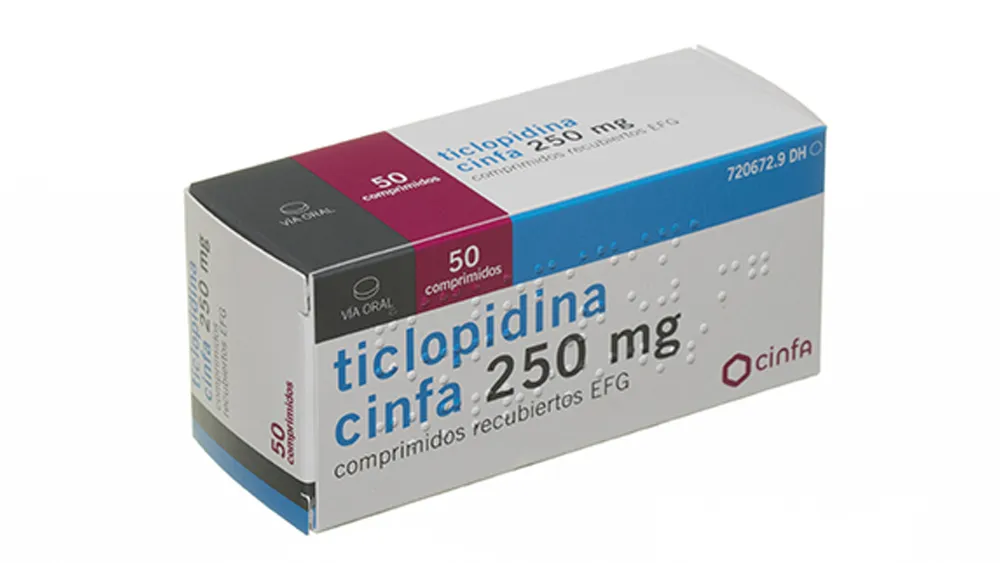
Table of Contents
- Package leaflet: Information for the user
- Introduction
- 1. What ticlopidine cinfa is and what it is used for
- 2. What you need to know before starting to take ticlopidine cinfa
- 3. How to take ticlopidine cinfa
- 4. Possible adverse effects
- 5. Storage of ticlopidine cinfa
- 6. Contents of the pack and other information
Package leaflet: Information for the user
Introduction
Package leaflet: information for the user
ticlopidine cinfa 250 mg film-coated tablets EFG
ticlopidine hydrochloride
Read the entire leaflet carefully before you start taking this medicine, because it contains important information for you.
- Keep this leaflet, as you may need to read it again.
- If you have any questions, ask your doctor or pharmacist.
- This medicine has been prescribed for you only, and you should not give it to other people, even if they have the same symptoms as you, because it could harm them.
- If you experience any adverse effects, consult your doctor or pharmacist, even if they are adverse effects not listed in this leaflet. See section 4.
Leaflet contents
- What ticlopidine cinfa is and what it is used for.
- What you need to know before taking ticlopidine cinfa.
- How to take ticlopidine cinfa.
- Possible adverse effects.
- How to store ticlopidine cinfa.
- Contents of the pack and other information.
1. What ticlopidine cinfa is and what it is used for
Ticlopidine belongs to a group of medicines called antiplatelet agents (which prevent blood clotting), thereby reducing the likelihood of clot formation.
Ticlopidine is indicated in adults for:
- Prevention of recurrent strokes when treatment with acetylsalicylic acid is not tolerated or considered inappropriate.
- Prevention of thromboembolic events, especially coronary ones, in patients with arterial circulation disorders in the legs.
- Prevention and correction of platelet disorders during surgery with extracorporeal circulation or during hemodialysis (artificial kidney).
- Prevention of progression of the number of microaneurysms in insulin-dependent diabetic patients with early-stage retinal disorders.
- Prevention of occlusions following coronary surgical procedures (types of heart surgery):
- in aortocoronary bypass surgery,
- in percutaneous transluminal coronary angioplasty with placement of an intravascular prosthesis (stent).
2. What you need to know before starting to take ticlopidine cinfa
Always remember to inform your prescribing doctor about all current or previous medical conditions you have.
Do not take ticlopidine cinfa
- If you are allergic to ticlopidine or any of the other components of this medicine (listed in section 6).
- If you have a tendency to bleed.
- If you have lesions prone to bleeding, such as gastric or duodenal ulcer, acute cerebral hemorrhage, etc.
- If you have blood disorders leading to prolonged bleeding time, such as hemophilia, etc.
- If you have previously experienced blood disorders such as decreased white blood cells, granulocytes, or platelets (cells involved in blood clotting).
Warnings and precautions
Consult your doctor or pharmacist before starting to take ticlopidine cinfa, as undesirable effects may occur during treatment:
Hematological and hemorrhagic adverse effects may occur. Cases of blood component disorders have been reported, including agranulocytosis, pancytopenia, neutropenia, thrombotic thrombocytopenic purpura, and rarely, leukemia.
Serious and sometimes fatal hematological and hemorrhagic adverse effects may occur, particularly associated with:
- Inadequate monitoring, delayed diagnosis, and inappropriate therapeutic measures in response to adverse effects.
- Concomitant administration of anticoagulants or antiplatelet agents such as acetylsalicylic acid and NSAIDs. However, in the case of stent implantation, ticlopidine should be combined with acetylsalicylic acid at low doses for approximately one month after implantation.
To detect any blood abnormalities, your doctor will perform a blood test before starting treatment, and then every 2 weeks during the first 3 months of treatment. For patients who discontinue treatment within the first 90 days, an additional blood test should be performed 2 weeks after stopping the medication.
One of these adverse effects, called neutropenia (a significant decrease in white blood cells characterized by fever, sore throat, and mouth ulcers), can be dangerous because it impairs the patient's ability to fight infections. It may occur in a small percentage of patients, mainly during the first 3 months of treatment.
Other undesirable effects that may occur include mainly thrombocytopenia (decreased platelet count) and/or hemostasis problems (prolonged or unexpected bleeding, bruising or skin spots, bloody stools). You must immediately stop taking the medicine and consult your doctor if any of these symptoms appear.
In some patients taking ticlopidine, a condition called thrombotic thrombocytopenic purpura may develop, which can sometimes lead to serious consequences. It is characterized by a marked decrease in platelet count, anemia, neurological changes, kidney dysfunction, and fever. It usually occurs within the first 8 weeks of treatment.
Due to the risk of fatal outcome in suspected cases of thrombotic thrombocytopenic purpura, consultation with a specialist is recommended.
This medicine should be used with caution in patients with liver disorders. If hepatic dysfunction is suspected, liver function tests should be performed, especially during the first months of treatment. Inform your doctor if symptoms of hepatitis occur, such as jaundice (yellowing of the skin and mucous membranes), pale stools, or dark urine.
In patients with kidney disorders, the dose of ticlopidine may need to be reduced or treatment discontinued if hemorrhagic or hematopoietic problems occur.
Patients should be evaluated for a history of hypersensitivity to other thienopyridines (such as clopidogrel, prasugrel) due to the risk of cross-reactivity between thienopyridines (see section 4 Possible side effects). Thienopyridines may cause allergic reactions ranging from moderate to severe, such as skin rash, angioedema, or hematological reactions.
This medicine should be used with caution in patients at risk of bleeding. Although concomitant use with heparins, oral anticoagulants, and antiplatelet agents is not recommended (see section Other medicines and ticlopidine cinfa), in exceptional cases where such combination is necessary, close patient monitoring should be maintained.
You must stop taking ticlopidine and consult your doctor immediately if any of the following occur:
- Bleeding, hemorrhages, or bruising, or black stools.
- Fever, chills, sore throat, or mouth ulcers.
- Jaundice (yellowing of the skin and mucous membranes), dark urine, or pale stools.
- Combination of yellowing of the skin and mucous membranes, skin rash, paleness, fever, weakness on one side of the body, and dark urine.
Bleeding may last longer than usual while under treatment with ticlopidine.
It is important to inform your doctor that you are taking this medicine before any surgical procedure or dental extraction, as your doctor may recommend temporarily stopping treatment. All patients should be carefully monitored for signs and symptoms of adverse reactions, especially during the first 3 months of treatment.
If in doubt, consult your doctor or pharmacist.
Children and adolescents
The safety and efficacy of ticlopidine in children have not yet been established.
Other medicines and ticlopidine cinfa
To avoid potential interactions between medicines, inform your doctor or pharmacist if you are taking, have recently taken, or might need to take any other medicine, particularly if it is:
- a selective serotonin reuptake inhibitor (including but not limited to fluoxetine or fluvoxamine), medicines commonly used to treat depression,
- pentoxifylline, a medicine used for poor circulation in arms and legs,
- medicines that increase the risk of bleeding,
- anticoagulants (heparin, vitamin K antagonists),
- antiplatelet agents (medicines used to prevent blood clots),
- acetylsalicylic acid (except in the case of stent implantation, where ticlopidine may be combined with acetylsalicylic acid; follow your doctor's instructions strictly) and its derivatives,
- non-steroidal anti-inflammatory drugs (NSAIDs),
- theophylline (a medicine used to treat asthma),
- digoxin (a medicine used for heart failure),
- phenobarbital (a medicine used to treat epilepsy),
- phenytoin (a medicine used to treat epilepsy),
- phenazone (a medicine used to treat pain and fever),
- cyclosporine (a medicine used to prevent transplant rejection),
- antacids and cimetidine (medicines used to treat gastrointestinal ulcers),
- S-ketamine (a medicine used as an anesthetic).
Pregnancy and breastfeeding
If you are pregnant or breastfeeding, think you might be pregnant, or plan to become pregnant, consult your doctor or pharmacist before using this medicine.
Pregnancy:
Treatment with this medicine should be avoided during pregnancy.
Breastfeeding:
Treatment with this medicine should be avoided during breastfeeding.
Driving and use of machines
The possible adverse effects of ticlopidine, such as dizziness, may affect your ability to drive vehicles or operate machinery.
ticlopidine cinfa contains sodium
This medicine contains less than 23 mg of sodium (1 mmol) per tablet; hence, it is essentially "sodium-free".
3. How to take ticlopidine cinfa
Follow exactly the instructions for use of this medicine given by your doctor or pharmacist. If in doubt, consult your doctor or pharmacist again.
Remember to take your medicine.
This medicine has been prescribed specifically for you for a particular condition:
- It should not be taken for any other condition.
- Do not interrupt or prolong the treatment without medical advice.
- Do not recommend it to another person.
It may not be dispensed again unless your doctor expressly indicates so on the prescription or unless a new prescription is presented.
If you think that the effect of this medicine is too strong or too weak, inform your doctor or pharmacist.
The route of administration of ticlopidine is oral.
The recommended daily dose is 2 tablets per day, corresponding to a maximum daily dose of 500 mg of ticlopidine.
It is recommended to take one tablet with a meal and another with the evening meal.
Your doctor will indicate how long your treatment with ticlopidine should last. Do not stop the treatment without first consulting your doctor.
If you take more ticlopidine cinfa than you should
If you take more ticlopidine than you should, contact your doctor or pharmacist immediately.
In case of overdose or accidental ingestion, contact your doctor or pharmacist immediately or call the Toxicology Information Service at telephone number 91 562 04 20, stating the medicine and the amount ingested.
It has been shown that overdose may cause an increased risk of bleeding. In case of poisoning, gastric lavage is recommended, along with general supportive measures.
If urgent correction of bleeding time is needed, platelet transfusion may reverse the effects of ticlopidine.
If you forget to take ticlopidine cinfa
Do not take a double dose to make up for missed doses.
If you have any further questions about the use of this medicine, ask your doctor or pharmacist.
4. Possible adverse effects
Like all medicines, this medicine can cause adverse effects, although not everyone will experience them.
The possible adverse effects are listed below:
Very common (may affect more than 1 in 10 people).
Common (may affect up to 1 in 10 people).
Uncommon (may affect up to 1 in 100 people).
Rare (may affect up to 1 in 1,000 people).
Very rare (may affect up to 1 in 10,000 people).
Frequency not known (cannot be estimated from available data).
Blood and lymphatic system disorders:
- Common: neutropenia, including severe neutropenia (see section Warnings and precautions), agranulocytosis.
- Uncommon: isolated thrombocytopenia or, exceptionally, accompanied by haemolytic anaemia, sepsis and septic shock, which may be fatal complications of agranulocytosis.
- Rare: cases of thrombotic thrombocytopenic purpura (combination of yellowing of skin and mucous membranes, skin rash, pallor, fever, weakness on one side of the body and dark urine; thrombocytosis, pancytopenia, bone marrow aplasia and leukaemia (see section “Warnings and precautions”).
Vascular disorders:
- Uncommon: bruising, ecchymosis, epistaxis, haematuria, conjunctival haemorrhage, peri- and postoperative bleeding, haemorrhages which may be severe and sometimes have been associated with fatal outcomes.
- Rare: intracranial bleeding.
Gastrointestinal disorders:
- Common: diarrhoea, nausea (usually occurring during the first 3 months of treatment).
- Uncommon: gastroduodenal ulcer.
- Very rare: severe diarrhoea with colitis (including lymphocytic colitis).
Hepatobiliary disorders:
- Common: increased liver enzymes, increased alkaline phosphatase and transaminases (see section Warnings and precautions).
- Uncommon: increased bilirubin.
- Rare: hepatitis (cytolytic and/or cholestatic).
- Very rare: fulminant hepatitis, hepatitis with fatal outcome.
Skin and subcutaneous tissue disorders:
- Common: skin rash, particularly maculopapular or urticarial, accompanied by pruritus; these skin rashes may be generalized.
- Uncommon: exfoliative dermatitis.
- Very rare: skin conditions with desquamative lesions (cases of erythema multiforme, Stevens-Johnson syndrome and Lyell syndrome).
- Frequency not known: eczema/dermatitis.
Immune system disorders:
- Very rare: immunological reactions with various manifestations such as allergic reactions, angioedema (generalized urticaria accompanied by swelling of feet, hands, throat, lips and airways), joint pain, allergic inflammation of veins, lupus-like syndrome (a serious skin and mucous membrane disease of unknown origin, which sometimes causes fatigue and weight loss, fever, arthritis, kidney involvement, seizures, psychosis and gastrointestinal disorders), kidney problems (hypersensitivity nephropathy sometimes with renal failure and eosinophilia (increase in a specific group of white blood cells)), anaphylaxis, Quincke's oedema.
- Frequency not known: hypersensitivity due to cross-reactivity between thienopyridines (such as clopidogrel, prasugrel) (see section Warnings and precautions).
Nervous system disorders:
- Common: headache, dizziness.
- Uncommon: sensory disorders (peripheral neuropathy).
- Rare: tinnitus (ringing in the ears).
Respiratory, thoracic and mediastinal disorders:
- Frequency not known: lung inflammation.
General disorders and administration site conditions:
- Very rare: fever.
Investigations:
- Common: increased serum levels of cholesterol and triglycerides.
Reporting of adverse effects
If you experience any type of adverse effect, consult your doctor or pharmacist, even if it is a possible adverse effect not listed in this leaflet. You may also report them directly via the Spanish Pharmacovigilance System for Human Medicines: https://www.notificaram.es By reporting adverse effects, you can help provide more information on the safety of this medicine.
5. Storage of ticlopidine cinfa
This medicine does not require any special storage conditions.
Keep this medicine out of the sight and reach of children.
Do not use this medicine after the expiry date stated on the packaging after EXP. The expiry date is the last day of the month indicated.
Medicines must not be disposed of via wastewater or household waste. Unused containers and medicines should be returned to the SIGRE collection point at your pharmacy. If you have any doubts, ask your pharmacist how to dispose of containers and medicines you no longer need. This will help protect the environment.
6. Contents of the pack and other information
Composition of ticlopidine cinfa:
The active substance is ticlopidine hydrochloride. Each tablet contains 250 mg of ticlopidine hydrochloride.
The other components are:
- Tablet core: microcrystalline cellulose, corn starch, povidone, citric acid, magnesium stearate, stearic acid, anhydrous colloidal silica, and sodium carboxymethylstarch (type A) (from potato).
- Tablet coating: titanium dioxide (E-171), hypromellose, and macrogol 400.
Appearance of the product and contents of the pack
ticlopidine cinfa is presented as white, cylindrical, coated, biconvex tablets, smooth on one side and marked with the code “T250C” on the other.
It is available in PVC-PVDC/aluminum blisters. Each pack contains 20 or 50 tablets.
Only certain pack sizes may be marketed.
Marketing Authorization Holder and Manufacturer
Laboratorios Cinfa, S.A.
Carretera Olaz-Chipi, 10. Polígono Industrial Areta.
31620 Huarte (Navarra) - Spain.
Date of the most recent review of this leaflet: May 2021
Detailed information about this medicinal product is available on the website of the Spanish Agency for Medicines and Health Products (AEMPS) http://www.aemps.gob.es
You can access detailed and up-to-date information about this medicine by scanning the QR code included in the leaflet and packaging with your mobile phone (smartphone). You may also access this information at the following internet address: https://cima.aemps.es/cima/dochtml/p/63680/P_63680.html
QR code a: https://cima.aemps.es/cima/dochtml/p/63680/P_63680.html