Tibsovo 250 mg film-coated tablets
Spain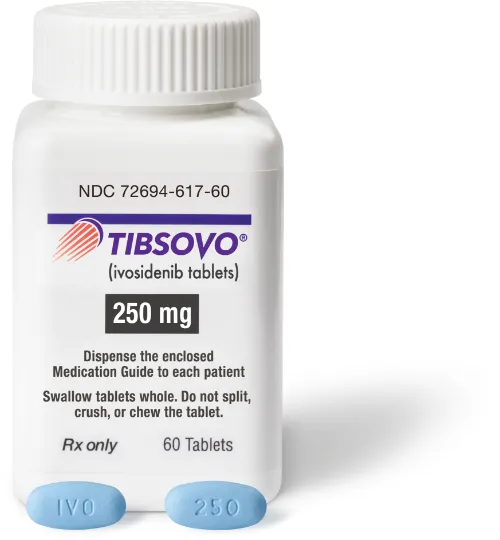
Table of Contents
Package leaflet: Information for the user
Introduction
Package leaflet: information for the patient
Tibsovo 250 mg film-coated tablets
ivosidenib
This medicine is subject to additional monitoring, which will allow quicker detection of new safety information. You can help by reporting any side effects you may experience. Information on how to report side effects is included at the end of section 4.
Read the entire leaflet carefully before starting to take this medicine, as it contains important information for you.
- Keep this leaflet, as you may need to read it again.
- If you have any questions, ask your doctor or nurse.
- This medicine has been prescribed for you only, and you should not give it to others, even if they have the same symptoms as you, since it may harm them.
- If you experience any side effects, consult your doctor or nurse, even if they are side effects not listed in this leaflet. See section 4.
Contents of the leaflet
- What Tibsovo is and what it is used for
- What you need to know before taking Tibsovo
- How to take Tibsovo
- Possible side effects
- How to store Tibsovo
- Contents of the pack and other information
1. What Tibsovo is and what it is used for
What Tibsovo is
Tibsovo contains the active substance ivosidenib. It is a medicine used to treat certain types of cancer that have a mutated (altered) gene producing a protein known as IDH1, which plays an important role in energy production for cells. When the IDH1 enzyme is mutated, metabolic changes within the cell can lead to cancer development.
Tibsovo blocks the mutated form of the IDH1 protein and helps slow down or stop cancer growth.
What Tibsovo is used for
Tibsovo is used to treat adults with:
- acute myeloid leukaemia (AML). When used in patients with AML, Tibsovo will be given in combination with another anticancer medicine called "azacitidine".
- biliary tract cancer (also known as "cholangiocarcinoma"). Tibsovo is used as monotherapy to treat patients whose biliary tract cancer has spread to other parts of the body and who have received at least one prior treatment.
Tibsovo is only used in patients with AML or biliary tract cancer associated with a change (mutation) in the IDH1 protein.
2. What you need to know before starting to take Tibsovo
Your doctor will perform a test to check whether you have a mutation in the IDH1 protein before deciding if this medicine is the appropriate treatment for you.
Do not take Tibsovo
- if you are allergic to ivosidenib or to any of the other components of this medicine (listed in section 6);
- if you are already taking medicines such as dabigatran (a medicine used to prevent blood clots), St. John’s wort (a herbal remedy used for depression and anxiety), rifampicin (a medicine used to treat bacterial infections), or certain medicines used to treat epilepsy (e.g., carbamazepine, phenobarbital, phenytoin);
- if you have a congenital heart condition called "congenital long QTc syndrome";
- if you have a family history of sudden death or abnormal or irregular heartbeats in the lower chambers of the heart;
- if you have a serious electrical conduction abnormality of the heart affecting its rhythm, known as "QTc interval prolongation".
Do not take Tibsovo if any of the above apply to you. If you are unsure, speak with your doctor or nurse.
Warnings and precautions
Differentiation syndrome in patients with AML Tibsovo can cause a serious condition known as differentiation syndrome in patients with AML. This is a condition that affects your blood cells and can be potentially fatal if not treated. Seek urgent medical attention if you experience any of the following symptoms after taking Tibsovo:
These may be signs of differentiation syndrome. The packaging contains a patient information card to carry with you at all times. It includes important information for you and your healthcare professionals about what to do if you experience any symptoms of differentiation syndrome (see section 4). |
QTc intervalve prolongation:
Tibsovo may cause a serious condition known as QTc interval prolongation, which can lead to irregular heartbeats and potentially life-threatening arrhythmias (abnormal electrical activity of the heart affecting its rhythm). Your doctor should check your heart's electrical conduction system before and during treatment with Tibsovo (see 'Periodic tests').
Seek urgent medical attention if you experience dizziness, lightheadedness, palpitations, or fainting (see also section 4) after taking Tibsovo.
During treatment, inform your doctors that you are taking Tibsovo before starting any new medication, as this may increase the risk of abnormal heart rhythm.
If you experience any of the serious adverse reactions listed above, your doctor may give you other medications to treat them and may instruct you to temporarily or permanently stop treatment with Tibsovo.
Talk to your doctor before taking Tibsovo if:
- you have heart problems or abnormal electrolyte levels (such as sodium, potassium, calcium, or magnesium);
- you are taking certain medications that may affect the heart (e.g., those used to prevent arrhythmias, called antiarrhythmics, some antibiotics, some antifungals, and those used to prevent nausea and vomiting; see "Other medicines and Tibsovo");
- you have kidney problems;
- you have liver problems.
Periodic tests
Your doctor will closely monitor you before and during treatment with Tibsovo. You will need periodic electrocardiograms (ECG; a recording of your heart's electrical activity) to monitor your heart rhythm. You will have an ECG before starting Tibsovo, once weekly during the first three weeks of treatment, and then monthly. Additional ECGs may be performed as directed by your doctor. If you start taking certain medications that may affect your heart, you will have an ECG before starting and during treatment with the new medication, as needed.
You will also have a blood test before starting Tibsovo and regularly thereafter.
If necessary, your doctor may reduce your dose of Tibsovo, temporarily interrupt treatment, or stop it completely.
Children and adolescents
Do not administer this medicine to children and adolescents under 18 years of age, as there is no information available on its use in this age group.
Other medicines and Tibsovo
Inform your doctor if you are taking, have recently taken, or might need to take any other medicines. This is because they may reduce the effectiveness of Tibsovo or increase the risk of adverse effects, or Tibsovo may affect how these other medicines work.
In particular, you must inform your doctor if you are taking any of the following medicines so they can decide whether any changes to your treatment are needed:
- antibiotics used for bacterial infections (e.g., erythromycin, clarithromycin, benzylpenicillin, ciprofloxacin, levofloxacin);
- warfarin (used to prevent blood clots);
- medicines used for fungal infections (e.g., itraconazole, ketoconazole, fluconazole, isavuconazole, posaconazole, voriconazole);
- medicines that affect heart rhythm, known as antiarrhythmics (e.g., diltiazem, verapamil, quinidine);
- medicines used to prevent nausea and vomiting, known as antiemetics (e.g., aprepitant, ondansetron, tropisetron, granisetron);
- medicines used after organ transplants, known as immunosuppressants (e.g., cyclosporine, everolimus, sirolimus, tacrolimus);
- medicines used for HIV (e.g., raltegravir, ritonavir);
- alfentanil (used for anesthesia during surgery);
- fentanyl (used for severe pain);
- pimozide (used for schizophrenia);
- medicines used for cancer (e.g., cyclophosphamide, ifosfamide, paclitaxel);
- methadone (used for morphine or heroin addiction, or for severe pain);
- medicines used for type 2 diabetes (e.g., pioglitazone, repaglinide);
- omeprazole (used for stomach ulcers and acid reflux);
- furosemide (used for fluid buildup known as edema);
- medicines used for high cholesterol, known as statins (e.g., atorvastatin, pravastatin, rosuvastatin);
- lamotrigine (used for epilepsy).
Taking Tibsovo with food and drink
- Do not consume grapefruit or grapefruit juice during treatment with Tibsovo, as it may affect how this medicine works.
Pregnancy, breastfeeding, and fertility
Use of Tibsovo during pregnancy is not recommended, as it may harm the unborn baby. Women of childbearing potential should have a pregnancy test before starting treatment with Tibsovo and must avoid becoming pregnant during treatment.
If you are pregnant, think you may be pregnant, or plan to become pregnant, consult your doctor before taking this medicine. Contact your doctor or nurse immediately if you become pregnant while taking Tibsovo.
Contraception
Tibsovo must not be used during pregnancy as it may harm the unborn baby. Women who may become pregnant or men whose partners may become pregnant must use effective contraception to prevent pregnancy during treatment with Tibsovo and for at least 1 month after the last dose.
Tibsovo may interfere with the effectiveness of hormonal contraceptives. If you or your partner use hormonal contraception (e.g., contraceptive pills, contraceptive patches, or implants), you must also use a barrier method (e.g., condoms or a diaphragm) to prevent pregnancy. Consult your doctor or nurse about the appropriate contraceptive method for you.
Breastfeeding
It is unknown whether Tibsovo passes into breast milk. Do not breastfeed during treatment with Tibsovo and for at least 1 month after the last dose.
Fertility
It is unknown whether Tibsovo affects fertility. If you have concerns about your fertility while taking Tibsovo, talk to your doctor.
Driving and use of machines
This medicine has minor influence on your ability to drive or use tools or machines. If you feel unwell after taking Tibsovo, do not drive or use tools or machines until you feel well again.
Tibsovo contains lactose and sodium
If your doctor has informed you that you have an intolerance to certain sugars, consult with them before taking this medicine.
This medicine contains less than 1 mmol of sodium (23 mg) per tablet; essentially, it is “sodium-free”.
3. How to take Tibsovo
Follow exactly the instructions for using this medicine as given by your doctor.
If in doubt, consult your doctor or nurse again.
The recommended dose is 2 tablets (500 mg of ivosidenib), which should be taken once daily at approximately the same time each day.
Your doctor may instruct you to take 1 tablet (250 mg of ivosidenib) if you are taking other medicines or to help you better tolerate certain possible side effects.
- Take the tablets on an empty stomach. Do not eat for 2 hours before and 1 hour after taking the tablets.
- Swallow the tablets whole with water.
- Do not swallow the desiccant contained in the bottle. The desiccant helps protect the tablets from moisture (see section 5 and section 6).
- If you vomit after taking your regular dose, do not take additional tablets. Take your next dose as usual the following day.
If you take more Tibsovo than you should
If you accidentally take more tablets than prescribed by your doctor, seek urgent medical attention and bring the medicine bottle with you.
If you forget to take Tibsovo
If you miss a dose or do not take it at the usual time, take the tablets as soon as possible, unless the next dose is due within 12 hours. Do not take two doses within 12 hours. Take the next dose as usual the following day.
How long you should take Tibsovo
You should continue taking this medicine until your doctor tells you to stop. Do not stop taking the tablets without first consulting your doctor.
If you have any further questions about the use of this medicine, ask your doctor or nurse.
4. Possible adverse effects
Like all medicines, this medicine may cause adverse effects, although not everyone will experience them.
Serious adverse effects
Seek urgent medical attention if you experience any of the following adverse effects. The symptoms listed below could be due to serious conditions known as differentiation syndrome or QTc interval prolongation, both of which can be potentially fatal:
Contact your doctor immediately if you experience any of the following symptoms:
Some or all of these symptoms may be signs of a condition called differentiation syndrome (may affect more than 1 in 10 people). Differentiation syndrome in patients with AML occurred up to 46 days after starting Tibsovo. |
- Heart rhythm problems (QTc interval prolongation)
Contact your doctor immediately if you experience a change in your heartbeat, or if you feel: dizzy, lightheaded, or weak. These may be signs of a heart problem called QT prolongation (may affect more than 1 in 10 people).
Other adverse effects
Inform your doctor if you notice any of the following adverse effects:
For patients with AML
Very common (may affect more than 1 in 10 people):
- vomiting;
- neutropenia (low levels of neutrophils, a type of white blood cell that fights infections);
- thrombocytopenia (low platelet levels in the blood which may cause bleeding and bruising);
- leukocytosis (high levels of white blood cells);
- insomnia (difficulty sleeping);
- limb pain, joint pain;
- headache;
- dizziness;
- back pain.
Common (may affect more than 1 in 100 people):
- mouth or throat pain;
- peripheral neuropathy (nerve damage in arms and legs causing pain or numbness, burning sensation or tingling);
- leukopenia (low levels of white blood cells).
For patients with biliary tract cancer
Very common (may affect more than 1 in 10 people):
- fatigue;
- nausea;
- abdominal pain;
- diarrhea;
- decreased appetite;
- ascites (fluid accumulation in the abdomen);
- vomiting;
- anemia (low levels of red blood cells);
- changes in liver function tests (increased aspartate aminotransferase);
- peripheral neuropathy (nerve damage in arms and legs causing pain or numbness, burning sensation or tingling);
- skin rash;
- increased bilirubin in blood (a breakdown product of red blood cells) which may cause yellowing of the skin and eyes.
Common (may affect more than 1 in 100 people):
- decrease in white blood cell count;
- decrease in platelet count;
- changes in liver function tests (increased alanine aminotransferase);
- fall;
- hyperbilirubinemia (high levels of bilirubin in blood);
- cholestatic jaundice (bile accumulation causing yellowing of the skin or eyes).
Reporting of adverse effects
If you experience any adverse effects, consult your doctor or nurse, even if they are possible adverse effects not listed in this leaflet. You may also report them directly through the national reporting system included in Appendix V. By reporting adverse effects, you can help provide more information on the safety of this medicine.
5. Storage of Tibsovo
Keep this medicine out of sight and reach of children.
Do not use this medicine after the expiry date stated on the label of the bottle and on the outer carton following EXP. The expiry date refers to the last day of the month indicated.
This medicine does not require any special storage temperature. Keep the bottle tightly closed to protect it from moisture. Keep the desiccant inside the bottle (see section 6).
Medicines should not be disposed of via wastewater or household waste. Ask your pharmacist how to dispose of any unused medicine and its packaging. This will help protect the environment.
6. Contents of the pack and other information
Composition of Tibsovo
- The active substance is ivosidenib. Each tablet contains 250 milligrams of ivosidenib.
- The other components are microcrystalline cellulose, sodium croscarmellose, hypromellose acetate succinate, anhydrous colloidal silica, magnesium stearate, sodium lauryl sulfate (E487), hypromellose, titanium dioxide (E171), lactose monohydrate, triacetin, and indigo carmine aluminium lake (E132) (see section 2 "Tibsovo contains lactose and sodium").
Nature and contents of the container
- The film-coated tablets are blue, oval-shaped, engraved with "IVO" on one side and "250" on the other.
- Tibsovo is available in plastic bottles containing 60 film-coated tablets and a desiccant. The bottles are presented in a cardboard box; each box contains 1 bottle.
Marketing Authorisation Holder
Les Laboratoires Servier
50 rue Carnot
92284 Suresnes Cedex
France
Manufacturer
Les Laboratoires Servier Industrie
905, route de Saran
45520 Gidy
France
For further information regarding this medicinal product, please contact the local representative of the Marketing Authorisation Holder:
Belgium/Belgium/Belgium S.A. Servier Benelux N.V. Tel: +32 (0)2 529 43 11 | Lithuania UAB “SERVIER PHARMA” Tel: +370 (5) 2 63 86 28 |
| Luxembourg/Luxembourg S.A. Servier Benelux N.V. Tel: +32 (0)2 529 43 11 |
Czech Republic Servier s.r.o. Tel: +420 222 118 111 | Hungary Servier Hungaria Kft. Tel: +36 1 238 7799 |
Denmark Servier Danmark A/S Tlf: +45 36 44 22 60 | Malta V.J. Salomone Pharma Ltd Tel: + 356 21 22 01 74 |
Germany Servier Deutschland GmbH Tel: +49 (0)89 57095 01 | Netherlands Servier Nederland Farma B.V. Tel: +31 (0)71 5246700 |
Estonia Servier Laboratories OÜ Tel:+ 372 664 5040 | Norway Servier Danmark A/S Tlf: +45 36 44 22 60 |
Greece SERBIE ELLAS PHARMACEUTICALS EPE Tel: +30 210 939 1000 | Austria Servier Austria GmbH Tel: +43 (1) 524 39 99 |
Spain Laboratorios Servier S.L. Tel: +34 91 748 96 30 | Poland Servier Polska Sp. z o.o. Tel: +48 (0) 22 594 90 00 |
France Les Laboratoires Servier Tel: +33 (0)1 55 72 60 00 | Portugal Servier Portugal, Lda Tel.: +351 21 312 20 00 |
Croatia Servier Pharma, d. o. o. Tel.: +385 (0)1 3016 222 | Romania Servier Pharma SRL Tel: +4 021 528 52 80 |
Ireland Servier Laboratories (Ireland) Ltd. Tel: +353 (0)1 663 8110 | Slovenia Servier Pharma d. o. o. Tel.: +386 (0)1 563 48 11 |
Iceland Servier Laboratories c/o Icepharma hf Sími: +354 540 8000 | Slovakia Servier Slovensko spol. s r.o. Tel.: +421 (0) 2 5920 41 11 |
Italy Servier Italia S.p.A. Tel: +39 06 669081 | Finland/Finland Servier Finland Oy
|
Cyprus C.A. Papaellinas Ltd. Tel: +357 22741741 | Sweden Servier Sverige AB Tel : +46 (0)8 522 508 00 |
Latvia SIA Servier Latvia Tel: +371 67502039 |
Date of the most recent review of this leaflet:
Other sources of information
Detailed information on this medicinal product is available on the website of the European Medicines Agency: http://www.ema.europa.eu, and on the website of the Spanish Agency of Medicines and Medical Devices (AEMPS) (http://www.aemps.gob.es/)
This leaflet is available in all EU/EEA languages on the website of the European Medicines Agency.