Tibolone Aristo 2.5 mg tablets EFG
Spain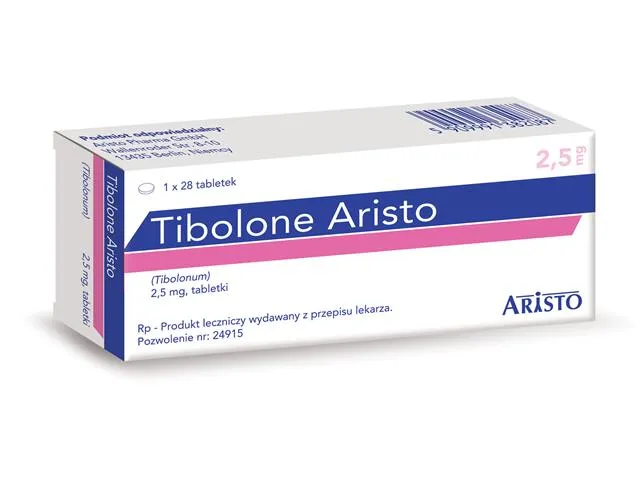
Table of Contents
- Package leaflet: Information for the user
- Introduction
- 1. What Tibolona Aristo is and what it is used for
- 2. What you need to know before starting to take Tibolone Aristo
- 3. How to take Tibolone Aristo
- 4. Possible adverse effects
- 5. Storage of Tibolone Aristo
- 6. Contents of the pack and other information
Package leaflet: Information for the user
Introduction
Package leaflet: information for the user
Tibolone Aristo 2.5 mg tablets EFG
Read the entire leaflet carefully before you start taking this medicine, because it contains important information for you.
- Keep this leaflet. You may need to read it again.
- If you have any questions, ask your doctor or pharmacist.
- This medicine has been prescribed for you only and must not be given to other people, even if they have the same symptoms as you, because it may harm them.
- If you experience any adverse reactions, consult your doctor or pharmacist, even if they are adverse reactions not listed in this leaflet. See section 4.
Leaflet contents
- What Tibolone Aristo is and what it is used for
- What you need to know before taking Tibolone Aristo
- How to take Tibolone Aristo
- Possible side effects
- How to store Tibolone Aristo
- Contents of the pack and other information
1. What Tibolona Aristo is and what it is used for
Tibolona belongs to the group of medicines used for Hormone Replacement Therapy (HRT). It contains tibolone, a synthetic sex hormone. Tibolona Aristo is indicated in postmenopausal women who have been at least 12 months since their last natural menstrual period.
Tibolone is used for:
Relief of symptoms occurring after menopause.
During menopause, the amount of estrogens produced by a woman's body decreases. This may cause symptoms such as sweating and hot flushes. Tibolone relieves these postmenopausal symptoms. Tibolone will only be prescribed if the patient's symptoms seriously impair her daily life.
2. What you need to know before starting to take Tibolone Aristo
Medical history and periodic check-ups
The use of HRT or tibolone carries risks that need to be considered when deciding whether to start or continue treatment.
Experience with treatment in women with premature menopause (due to ovarian failure or surgery) is limited. If you have premature menopause, the risk of using HRT or tibolone may be different. Consult your doctor.
Before starting (or restarting) HRT or tibolone, your doctor will ask about your personal and family medical history and may decide to perform a physical examination, including a breast examination and/or internal pelvic exam if considered necessary.
Once you have started treatment with tibolone, you should visit your doctor for periodic medical check-ups (at least once a year). During these check-ups, the benefits and risks of continuing tibolone treatment will be evaluated.
Attend regular breast examinations as recommended by your doctor.
Additionally, participation in early detection screening programs using mammography is recommended. It is important that you inform the healthcare professional performing the mammogram that you are receiving HRT, as this medication can increase breast density and may affect the test results. When breast density is increased, mammography may fail to detect lumps.
Do not take Tibolone Aristo
If you have any of the following conditions. If you have any doubts, consult your doctor before taking tibolone.
- if you have or have had breast cancer, or suspect you may have it.
- if you have estrogen-sensitive cancer, such as cancer of the lining of the uterus (endometrium), or suspect you may have it.
- if you have vaginal bleeding of unknown origin.
- if you have abnormal growth of the uterine lining (endometrial hyperplasia) and are not receiving treatment for it.
- if you have or have ever had a blood clot (thrombosis) in your legs (deep vein thrombosis) or lungs (pulmonary embolism).
- if you have a blood clotting disorder (such as protein C or protein S deficiency, or antithrombin deficiency).
- if you have or have recently had a disease caused by blood clots in the arteries, such as heart attack, stroke, or angina pectoris.
- if you have or have had liver disease and liver function has not returned to normal.
- if you have a rare inherited blood disorder called “porphyria” passed from parent to child (hereditary).
- if you are allergic (hypersensitive) to tibolone or any of the other ingredients of this medicine (listed in section 6).
- if you are pregnant or suspect you may be pregnant.
- if you are breastfeeding.
If any of the above conditions occurs for the first time while you are taking tibolone, stop taking it immediately and consult your doctor.
Warnings and precautions
Consult your doctor before starting to take tibolone.
Before starting treatment, consult your doctor if you have or have had any of the following conditions, as they may reappear or worsen during treatment with tibolone. If so, you should have medical check-ups more frequently:
- uterine fibroids.
- abnormal growth of the uterine lining (endometriosis) or history of abnormal growth of the uterine lining (endometrial hyperplasia).
- increased risk of developing blood clots (see “Blood clots in a vein (thrombosis)”).
- increased risk of estrogen-dependent cancer (or if you have had a mother, sister, or grandmother with breast cancer).
- high blood pressure.
- liver disease, such as benign liver tumor.
- diabetes.
- gallstones.
- migraine or severe headache.
- an autoimmune disease affecting multiple body organs (systemic lupus erythematosus, SLE).
- epilepsy.
- asthma.
- a hearing disorder (otosclerosis).
- very high levels of fat in the blood (triglycerides).
- fluid retention due to heart or kidney problems.
Stop taking Tibolone Aristo and consult your doctor immediately
If you experience any of the following symptoms while taking HRT or tibolone:
- any of the conditions listed in the section “Do not take Tibolone Aristo”.
- yellowing of the skin or whites of the eyes (jaundice). These could be signs of liver disorder.
- significant increase in blood pressure (symptoms may include headache, fatigue, dizziness).
- new onset of unexplained migraine-type headaches.
- if you become pregnant.
- if you notice symptoms of a blood clot such as:
-
- painful swelling and redness in the legs
-
- sudden chest pain
-
- difficulty breathing
For more information, see “Blood clots in a vein (thrombosis)”.
Note: Tibolone is not a contraceptive. If less than 12 months have passed since your last natural menstrual period or if you are under 50 years of age, you may need to use additional contraceptive measures to prevent pregnancy. Consult your doctor for advice.
HRT and Cancer
Excessive thickening of the inner lining of the uterus (endometrial hyperplasia) and endometrial cancer
Observational studies have consistently shown that users of tibolone have an increased risk of developing endometrial cancer. This risk increases with longer duration of treatment.
Irregular bleeding
You may experience irregular bleeding or spotting during the first 3 to 6 months of treatment with Tibolone. If the bleeding or spotting:
- Lasts beyond the first six months
- Begins after having taken tibolone for more than six months
- Continues after stopping tibolone
consult your doctor immediately.
Breast cancer
Available data show that the use of tibolone increases the risk of breast cancer. The additional risk depends on how long you use tibolone. In HRT studies, after stopping HRT, the additional risk decreased over time, but the risk may persist for 10 years or more in women who have used HRT for more than 5 years. Data on risk persistence after stopping tibolone are not available, but a similar pattern cannot be ruled out.
Comparison:
Women taking tibolone have a lower risk than women using combined HRT and a similar risk to women using estrogen-only HRT.
Examine your breasts regularly. Consult your doctor if you notice any changes such as:
- Dimpling of the skin
- Changes in the nipple
- Any lump you can see or feel
Ovarian cancer
Ovarian cancer is rare – it occurs less frequently than breast cancer. The use of HRT with estrogen alone or combined estrogen-progestogen has been associated with a slightly increased risk of ovarian cancer.
The risk of ovarian cancer varies with age. For example, in women aged 50 to 54 years not using HRT, about 2 cases of ovarian cancer occur per 2,000 women over a 5-year period. In women who have taken HRT for 5 years, about 3 cases per 2,000 women are observed (i.e., about 1 additional case).
The increased risk of ovarian cancer with tibolone use is similar to the risk with other types of HRT.
Effects of HRT on the heart and circulation
Blood clots in a vein (thrombosis)
The risk of developing blood clots in veins is 1.3 to 3 times higher in women using Hormone Replacement Therapy (HRT) than in non-users, especially during the first year of treatment.
Blood clots can be serious, and if a clot travels to the lungs, it can cause chest pain, difficulty breathing, fainting, or even death.
The likelihood of developing a blood clot increases with age and if you are in any of the following situations, in which case you should inform your doctor:
- if you are using estrogens.
- if you are unable to walk for a prolonged period due to major surgery, injury, or illness (see also section 3, If you need surgery). The risk of thromboembolic disease may temporarily increase due to prolonged immobilization (e.g., bed rest, leg in a cast), severe injury, or long surgeries. In patients using HRT, as with all patients, preventive measures should be carefully followed after surgery to avoid venous thromboembolic disease.
- if you have significant overweight (BMI >30 kg/m²).
- if you have a clotting disorder requiring long-term anticoagulant treatment.
- if any of your close relatives has ever had a blood clot in the leg, lung, or another organ.
- if you have systemic lupus erythematosus (SLE).
- if you have cancer.
If you experience symptoms of a blood clot, see “Stop taking Tibolone Aristo and consult your doctor immediately”.
Comparison:
Among 4 to 7 out of 1,000 women, with an average age of 50 years not using HRT, a blood clot may occur over a period of 5 years or more.
Among 9 to 12 out of 1,000 women, around 50 years of age, who have been taking combined estrogen-progestogen HRT for 5 years or more, a blood clot may occur.
The increase in risk of developing a blood clot with tibolone use is lower than with other types of HRT.
Heart disease (heart attack)
There is no evidence that hormone replacement therapy (HRT) or tibolone can prevent a heart attack.
Women over 60 years of age using combined estrogen-progestogen HRT are slightly more likely to develop heart disease than those not using any HRT. Since the risk of heart disease largely depends on age, the number of additional cases of heart disease due to combined estrogen-progestogen HRT is very low in healthy women near menopause, but increases with advancing age.
There is no evidence suggesting that the risk of myocardial infarction with tibolone differs from that with other HRT.
Stroke
The risk of stroke is 1.5 times higher in HRT users than in non-users. The risk due to HRT use increases with age.
Comparison:
Three out of 1,000 women with an average age of 50 years, not using tibolone, may suffer a stroke over a 5-year period. The figure would be 7 out of 1,000 women using tibolone, also aged around 50 years, over the same time period.
In the case of women aged 60 to 69 years not taking tibolone, it can be expected that 11 out of 1,000 women will suffer a stroke. Among those taking tibolone, 24 out of 1,000 women may suffer a stroke.
Other diseases
- Hormone Replacement Therapy (HRT) does not prevent memory loss. Evidence suggests an increased risk of memory loss in women who start HRT after age 65. Consult your doctor.
- Treatment with tibolone causes changes in cholesterol levels.
- Patients with heart or kidney dysfunction: Estrogens may cause fluid retention; therefore, patients with heart or kidney dysfunction should be carefully monitored.
- Patients with dyslipidemia (hypertriglyceridemia): Women with pre-existing hypertriglyceridemia should be closely monitored during tibolone treatment, as rare cases of significant increases in plasma triglycerides have been reported, leading to pancreatitis with estrogen therapy in this condition.
Other medicines and Tibolone Aristo
Some medicines may alter the effects of tibolone and cause irregular bleeding. The following medicines may cause this effect:
- Medicines for blood clots (such as warfarin)
- Medicines for epilepsy (such as phenobarbital, phenytoin, and carbamazepine)
- Medicines for tuberculosis (such as rifampicin or rifabutin)
- Herbal products containing St. John’s wort (Hypericum perforatum).
HRT may affect how other medicines work:
Concomitant use with tibolone may increase the effect of anticoagulants (medicines against blood clotting).
Concomitant use with tibolone may influence medicines containing active substances (e.g., midazolam) that are metabolized by certain enzymes (so-called cytochrome-P450 enzymes).
Inform your doctor or pharmacist if you are taking, have recently taken, or might need to take any other medicines, including over-the-counter medicines, herbal remedies, or other natural products.
Your doctor will advise you.
Clinical tests
If you need a blood test, inform your doctor or laboratory staff that you are taking tibolone, as this medicine may affect the results of certain tests.
Pregnancy and breastfeeding
Do not take tibolone if you are pregnant or breastfeeding.
Tibolone is indicated only for postmenopausal women. If you become pregnant, stop taking tibolone and consult your doctor.
Driving and using machines
Tibolone does not affect the ability to drive or use machines.
Tibolone Aristo contains lactose monohydrate
If your doctor has informed you that you have an intolerance to certain sugars, consult him before taking this medicine.
3. How to take Tibolone Aristo
Follow exactly the instructions for using this medicine as given by your doctor. If in doubt, consult your doctor or pharmacist again.
How much Tibolone Aristo should you take and for how long
Your doctor will prescribe the lowest possible dose to treat your symptoms for the shortest possible time. Consult your doctor if you think the dose is too high or too low.
Unless your doctor has prescribed a different dose, the usual dose is: one tablet daily after a meal, preferably at the same time each day.
Do not take a progestogen preparation in addition to tibolone.
How to take Tibolone Aristo
Take the tablets with a little water or other drink, preferably at the same time each day.
What to consider when starting treatment with Tibolone Aristo
If you have undergone natural menopause, you should start taking tibolone one year after your last menstrual bleeding. If your ovaries have been surgically removed, you may start taking tibolone immediately.
If you are considering taking tibolone and have experienced irregular or unexpected vaginal bleeding, please consult your doctor before starting treatment with tibolone so that any malignant disease can be ruled out.
If you wish to switch from another medication to tibolone and were previously taking a medicine containing estrogens and progestogens, please consult your doctor about what you need to consider.
How long should you take Tibolone Aristo
Your doctor will aim for the treatment duration to be as short as possible.
Generally, an improvement in symptoms is achieved within a few weeks.
If you take more Tibolone Aristo than you should
If you have taken more tibolone, contact your doctor or pharmacist immediately.
Symptoms of poisoning are unlikely even if several tablets are taken at the same time. In case of acute overdose, nausea, vomiting, and intermenstrual bleeding may occur. Consult your doctor for symptom management.
In case of overdose or accidental ingestion, contact your doctor or pharmacist immediately or call the Toxicology Information Service at: 91 562 04 20, indicating the medicine and the amount ingested.
If you forget to take Tibolone Aristo
If you forget to take a tablet at your usual time, take it as soon as possible unless more than 12 hours have passed since the time you should have taken it. If more than 12 hours have passed, do not take the missed tablet and take the next tablet at your usual time.
Do not take a double dose to make up for a missed dose.
If you need surgery
If you are undergoing surgery, inform the surgeon that you are taking tibolone. You may need to stop taking tibolone between 4 and 6 weeks before surgery to reduce the risk of blood clots (see section 2, "Blood clots in the veins (thrombosis)"). Ask your doctor when you can start taking tibolone again.
If you have any doubts about using tibolone, consult your doctor or pharmacist.
4. Possible adverse effects
The following conditions occur more frequently in women receiving HRT (Hormone Replacement Therapy) compared to those not receiving it:
- Breast cancer
- Abnormal growth or cancer of the uterine lining (endometrial hyperplasia or cancer)
- Ovarian cancer
- Blood clots in the leg or lung veins (venous thromboembolism)
- Heart disease
- Stroke
- Possible memory loss if HRT is started after the age of 65.
For further information on adverse effects, see section 2 “What you need to know before taking Tibolone Aristo”.
Like all medicines, tibolone may cause adverse effects, although not everyone experiences them.
Consult your doctor or pharmacist if you are concerned about any adverse effects you think may be caused by tibolone. See also section 2 “Stop taking Tibolone Aristo and contact your doctor immediately”.
Common (may affect up to 1 in 10 women):
- Vaginal bleeding or spotting
- Stomach pain
- Weight gain
- Breast pain
- Unusual hair growth
- Vaginal problems such as increased discharge, itching, and irritation
- Thickening of the uterine lining
- Vaginal fungal infection (e.g., candidiasis)
- Pelvic pain
- Changes in cervical tissue
- Inflammation of the lips and vagina (called vulvovaginitis)
- Abnormalities in cervical smear test
Uncommon (may affect up to 1 in 100 women):
- Acne
- Pain in nipples or breasts
- Fungal infections
Other adverse reactions reported with Tibolone Aristo since marketing:
- Dizziness, headache, migraine
- Depression
- Skin problems such as rashes
- Loss of vision or blurred vision
- Stomach or intestinal discomfort
- Fluid retention
- Joint or muscle pain
- Changes in liver function laboratory tests
Cases of cancer of the uterine lining, breast cancer, and stroke have been reported in women taking tibolone (see section 2 “Warnings and precautions”).
With other Hormone Replacement Therapies, the following adverse effects have been reported:
- Gallbladder disease
- Skin disorders:
- Skin discoloration, especially on the face and neck, known as “pregnancy mask” (chloasma)
- Painful red nodules on the skin (erythema nodosum)
- Rash with redness or ulcers (erythema multiforme)
- Skin bleeding (purpura)
Speak with your doctor if you experience irregular vaginal bleeding or spotting, or if you develop any of the above-mentioned side effects or if they worsen.
Reporting of adverse effects
If you experience any adverse effect, consult your doctor or pharmacist, even if it is a possible adverse effect not listed in this leaflet. You may also report them directly via the Spanish Pharmacovigilance System for Human Medicinal Products: www.notificaram.es. By reporting adverse effects, you can help provide more information on the safety of this medicine.
5. Storage of Tibolone Aristo
Keep this medicine out of the sight and reach of children.
Do not use this medicine after the expiry date stated on the container bottle after EXP. The expiry date refers to the last day of the month indicated.
No special storage conditions are required.
Do not use this medicine if you notice that the blister pack is damaged.
Medicines must not be disposed of via wastewater or household waste. Dispose of unused medicines and their containers at the SIGRE point located at the pharmacy. Ask your pharmacist how to dispose of medicines and containers you no longer need. This way, you will help protect the environment.
6. Contents of the pack and other information
Composition of Tibolone Aristo
- The active substance is Tibolone.
Each tablet contains 2.5 mg of tibolone.
- The other components are:
potato starch, magnesium stearate (vegetable origin), ascorbyl palmitate and monohydrate lactose.
Appearance of the medicine and contents of the pack
Tibolone Aristo is available as white or almost white, round tablets, approximately 6 mm in diameter.
Tibolone Aristo is available in packs of 1x28 tablets, 1x30 tablets and 3x28 tablets.
Not all pack sizes may be marketed.
Marketing Authorization Holder and Manufacturer
Marketing Authorization Holder
Aristo Pharma GmbH
Wallenroder Str. 8-10
13435 Berlin, Germany
Manufacturer
Aristo Pharma GmbH
Wallenroder Str. 8-10
13435 Berlin, Germany
Further information about this medicine can be requested from the local representative of the Marketing Authorization Holder:
Aristo Pharma Iberia, S.L.
C/ Solana, 26
28850 Torrejón de Ardoz
Madrid, Spain
Date of the most recent revision of this leaflet: August 2025.
Detailed information on this medicine is available on the website of the Spanish Agency for Medicines and Health Products (AEMPS): http://www.aemps.es/