Theo-Dur 300 mg prolonged-release tablets
Spain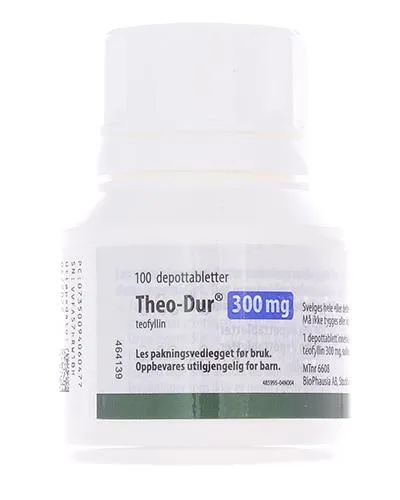
Table of Contents
Package leaflet: Information for the user
Introduction
Package leaflet: information for the user
THEO-DUR 300mg prolonged-release tablets
Theophylline
Read all of this leaflet carefully before you start taking this medicine because it contains important information for you.
- Keep this leaflet as you may need to read it again. If you have any further questions, ask your doctor or pharmacist.
- This medicine has been prescribed for you only and must not be given to other people, even if they have the same symptoms as you, because it may harm them.
- If you experience any side effects, talk to your doctor or pharmacist, even if the side effects are not listed in this leaflet. See section 4.
Contents of the leaflet
- What Theo-Dur is and what it is used for
- What you need to know before taking Theo-Dur
- How to take Theo-Dur
- Possible side effects
- How to store Theo-Dur
- Contents of the pack and other information
1. What Theo-Dur is and what it is used for
This medicine belongs to a group of medicines called bronchodilators, which means they dilate the bronchi and make breathing easier.
It is indicated for the prevention and treatment of asthma or bronchospasm associated with pulmonary diseases such as chronic bronchitis or emphysema.
2. What you need to know before taking Theo-Dur
Do not take Theo-Dur
- If you are allergic to the active substance or to any other medicine in the same group, or to any of the other ingredients of this medicine (listed in section 6).
- If you have a heart rhythm disorder (acute tachyarrhythmia).
- If you have recently had a myocardial infarction.
Warnings and precautions
Talk to your doctor or pharmacist before taking Theo-Dur if:
- you have any heart disease,
- you have high blood pressure (hypertension),
- you have overactive thyroid gland (hyperthyroidism),
- you have seizure disorders (epilepsy),
- you have a stomach or duodenal ulcer (peptic ulcer),
- you have disorders in hemoglobin production (porphyria),
- you have liver and/or kidney problems (hepatic and/or renal insufficiency),
- you know that you do not properly eliminate theophylline.
Children
The use of theophylline is not recommended in children under one year of age.
Taking Theo-Dur with other medicines
Tell your doctor or pharmacist if you are taking, have recently taken, or might need to take any other medicines.
Theophylline may decrease or increase the effect of other drugs, and likewise, the effect of theophylline may be decreased or increased by other drugs when taken concomitantly. For this reason, it is important to inform your doctor if you are taking:
- other preparations containing theophylline or other xanthines (such as caffeine and similar substances),
- beta2-adrenergic receptor agonists (beta2-agonists, commonly used to treat asthma),
- barbiturates, especially phenobarbital, pentobarbital and primidone (used to produce sedation and relaxation),
- carbamazepine (an anticonvulsant used for epilepsy),
- phenytoin and fosphenytoin (used for epilepsy),
- rifampicin and rifapentine (antibiotics),
- sulfinpyrazone (used to treat gout),
- products containing St. John's wort (Hypericum perforatum),
- oral contraceptives,
- macrolide antibiotics (especially erythromycin, troleandomycin, clarithromycin, josamycin, and spiramycin),
- quinolone-type antibiotics (gyrase inhibitors, especially ciprofloxacin, enoxacin, and pefloxacin; see below),
- the antibiotic imipenem (especially central nervous system adverse effects such as seizures),
- isoniazid (treatment of tuberculosis),
- thiabendazole (treatment of fungal infections),
- calcium channel antagonists (e.g.: verapamil and diltiazem) used for heart diseases,
- propranolol (treatment of hypertension or high blood pressure),
- mexiletine (treatment of heart problems),
- propafenone (treatment of heart problems),
- ticlopidine (prevention of blood clotting),
- cimetidine, ranitidine, etintidine (reduce stomach acid production),
- allopurinol, febuxostat (treatment of gout),
- fluvoxamine (treatment of mental disorders),
- alpha interferon and pegylated interferon alfa-2 (treatment of immunological disorders),
- zafirlukast (treatment of asthma),
- influenza vaccines,
- idrocilamide (muscle treatments),
- zileuton (treatment of asthma),
- diuretics (furosemide),
- halothane (general anesthetic),
- digitalis glycosides (treatment of heart problems),
- benzodiazepines (used to produce sedation and relaxation).
If you are a smoker, inform your doctor, as your dose may need to be adjusted.
Interaction with diagnostic tests
If you are scheduled to undergo any diagnostic tests (including blood and urine tests, skin tests using allergens), inform your doctor that you are taking this medicine, as it may alter test results.
Taking Theo-Dur with food and drinks
You should avoid consuming large amounts of caffeine-containing beverages such as tea, coffee, cocoa, cola, and large quantities of chocolate. These products may increase the side effects of this medicine.
Pregnancy and breastfeeding
If you are pregnant or breastfeeding, think you may be pregnant, or are planning to become pregnant, consult your doctor before using this medicine.
Pregnancy
The use of theophylline during pregnancy is not recommended.
Breastfeeding
The use of theophylline during breastfeeding is not recommended.
Elderly patients
Do not use in patients over 65 years of age without consulting a doctor.
Driving and using machines
This type of medicine may affect reaction speed; therefore, caution is advised if you are driving and/or operating machinery, especially at the beginning of treatment, when adjusting the dose, or when taking it together with other medicines.
Theo-Dur contains lactose
If your doctor has informed you that you have an intolerance to certain sugars, consult with him before taking this medicine.
Theo-Dur contains sucrose
If your doctor has informed you that you have an intolerance to certain sugars, consult with him before taking this medicine.
3. How to take Theo-Dur
Follow exactly the instructions for use of this medicine as given by your doctor or pharmacist. If in doubt, consult your doctor or pharmacist again.
Your doctor will determine the exact dose you should take. Doses should be taken at regular 12-hour intervals. It is important to strictly adhere to the prescribed dosing schedule, especially regarding the timing of doses.
As a general guide, the following dosage may be followed, but remember that the dose must be the one recommended by your doctor.
Adults and adolescents over 16 years of age
The recommended dose for adults is 300 mg (1 tablet) every 12 hours. Your doctor may increase the dose depending on your response to treatment.
Paediatric population (between 1 and 16 years of age)
The recommended dose is 4 mg per kg of body weight per day. This amount should be divided into two doses, each taken every 12 hours.
Elderly patients
In elderly patients, your doctor will evaluate the appropriate dose to be administered.
Method of administration
The tablets must be taken undissolved, without chewing or biting, swallowed whole with sufficient liquid.
It is advisable to take the dose at night, before going to bed.
If you take more Theo-Dur than you should
Contact your doctor or nearest emergency department immediately or call the Toxicology Information Service at telephone number 915 620 420, stating the name of the medicine and the amount taken. Take the packaging and any remaining tablets with you.
If you forget to take Theo-Dur
Do not take a double dose to make up for the missed dose. Take the next dose as instructed by your doctor, at the usual time.
If you stop taking Theo-Dur
If you discontinue your treatment with Theo-Dur, your condition may worsen. Do not stop taking the medicine unless instructed to do so by your doctor.
If you have any further questions about the use of this medicine, ask your doctor or pharmacist.
4. Possible adverse effects
Like all medicines, this medicine may cause adverse effects, although not everyone experiences them.
The possible adverse effects are listed below:
- Tachycardia and arrhythmia (changes in heart rhythm), palpitations, drop in blood pressure.
- Gastrointestinal problems, nausea, vomiting, diarrhea, stomach problems (reduced muscle tone in the lower esophageal sphincter) which may increase nocturnal esophageal reflux if you already have it.
- Allergic reactions (hypersensitivity).
- Blood abnormalities such as: decreased potassium (hypokalemia), increased calcium (hypercalcemia), increased blood sugar (hyperglycemia), increased creatinine, increased uric acid (hyperuricemia), and electrolyte imbalances.
- Headache, states of excitement, tremor of limbs, nervousness, insomnia, seizures.
- Increased urine production (diuresis).
Reporting of adverse effects
If you experience any type of adverse effect, consult your doctor or pharmacist, even if it involves possible adverse effects not listed in this leaflet. You may also report them directly through the Spanish Pharmacovigilance System for Human Medicinal Products (website: www.notificaRAM.es).
By reporting adverse effects, you can help provide more information on the safety of this medicine.
5. Storage of Theo-Dur
Keep this medicine out of the sight and reach of children.
No special storage conditions are required.
Do not use this medicine after the expiry date stated on the packaging after EXP. The expiry date is the last day of the month indicated.
Medicines must not be disposed of via wastewater or household waste. Dispose of containers and unused medicines at the SIGRE collection point at your pharmacy. If you are unsure, ask your pharmacist how to dispose of containers and unused medicines. This helps protect the environment.
6. Contents of the pack and other information
Composition of Theo-Dur
- The active substance is theophylline. Each tablet contains 300 mg of anhydrous theophylline.
- The other components are: cellulose acetophthalate, cetyl alcohol, myristyl alcohol, white wax, diethyl phthalate, magnesium stearate, hydroxypropylmethylcellulose, anhydrous lactose, glycerol monostearate, neutral pellets (corn starch and sugar spheres [sucrose and corn starch]).
Appearance of the product and contents of the pack
Theo-Dur 300 mg prolonged-release tablets are presented as white, cylindrical tablets, scored on one side. Packs contain 40 tablets.
Marketing Authorization Holder and Manufacturer
Marketing Authorization Holder
VEGAL FARMACEUTICA, S.L.
Vía de las Dos Castillas 9C, portal 2, 2º C
28224 Pozuelo de Alarcón – Madrid, Spain.
Manufacturer
GENERIS FARMACÊUTICA, S.A.
Rua João de Deus, 19, Venda Nova, 2700-487 Amadora – Portugal
or
COVEX, S.A.
Calle Acero 25, Polígono Industrial Sur
28770 Colmenar Viejo - Madrid, Spain
Other presentations
Theo-Dur 100 mg prolonged-release tablets: Pack containing 40 tablets.
Theo-Dur 200 mg prolonged-release tablets: Pack containing 40 tablets.
Date of the most recent revision of this summary: September 2013
Detailed and up-to-date information on this medicine is available on the website of the Spanish Agency of Medicines and Medical Devices (AEMPS) http://www.aemps.gob.es/