Tevimbra 100 mg concentrate for solution for infusion
Spain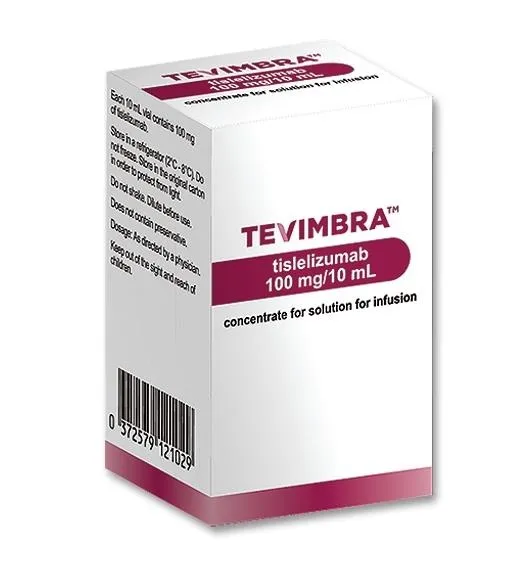
Table of Contents
Package leaflet: Information for the user
Introduction
Package leaflet: information for the patient
Tevimbra 100 mg concentrate for solution for infusion
tislelizumab
This medicinal product is subject to additional monitoring, which will enable rapid identification of new safety information. You can help by reporting any side effects you may experience. Section 4 at the end of this leaflet includes information on how to report side effects.
Read this entire leaflet carefully before you are given this medicine, as it contains important information for you.
- Keep this leaflet, as you may need to read it again.
- It is important that you keep the Patient Information Card throughout your treatment.
- If you have any questions, consult your doctor.
- If you experience any side effects, consult your doctor, even if they are side effects not listed in this leaflet. See section 4.
Contents of this leaflet
- What Tevimbra is and what it is used for
- What you need to know before you are given Tevimbra
- How Tevimbra is administered
- Possible side effects
- How to store Tevimbra
- Contents of the pack and other information
1. What Tevimbra is and what it is used for
Tevimbra is a cancer medicine that contains the active substance tislelizumab. It is a monoclonal antibody, a type of protein designed to recognise and bind to a specific target in the body called programmed death receptor-1 (PD-1), which is found on the surface of T and B cells (types of white blood cells that are part of the immune system, the body's natural defences). When cancer cells activate PD-1, it can switch off the activity of T cells. By blocking PD-1, Tevimbra prevents T cells from being switched off, helping your immune system fight cancer.
Tevimbra is used in adults to treat:
- a type of lung cancer called non-small cell lung cancer
- a type of lung cancer called extensive-stage small cell lung cancer
- a type of stomach cancer called gastric adenocarcinoma or gastroesophageal junction adenocarcinoma
- a type of oesophageal cancer called oesophageal squamous cell carcinoma
- a type of head and neck cancer called nasopharyngeal carcinoma
People receive Tevimbra when their cancer has spread or cannot be removed by surgery.
People receive Tevimbra before surgery (neoadjuvant treatment) for non-small cell lung cancer and continue receiving it after surgery (adjuvant treatment) to help prevent their cancer from returning.
If you have any questions about how Tevimbra works or why this medicine has been prescribed for you, speak with your doctor.
Tevimbra may be given in combination with other cancer medicines. It is important that you also read the patient leaflet for these other medicines. If you have any questions about these medicines, speak with your doctor.
2. What you need to know before you are given Tevimbra
Do not be given Tevimbra
- if you are allergic to tislelizumab or to any of the other components of this medicine (listed in section 6). Please discuss with your doctor if you are unsure.
Warnings and precautions
Talk to your doctor before you are given Tevimbra if you have or have had:
- autoimmune disease (a condition in which the body's own defense system attacks normal cells)
- liver inflammation (hepatitis) or other liver problems
- kidney inflammation (nephritis)
- pneumonia or lung inflammation (pneumonitis)
- intestinal inflammation (colitis)
- severe rash
- problems with glands that produce hormones (including adrenal, pituitary, and thyroid glands)
- type 1 diabetes mellitus
- solid organ transplant
- infusion-related reaction
a rare condition in which the immune system produces an excessive number of infection-fighting cells called histiocytes and lymphocytes, which are otherwise normal. This may cause enlargement of the liver and/or spleen, heart problems, and kidney abnormalities. Symptoms may include fever, rash, swollen lymph nodes, difficulty breathing, and easy bruising. Inform your doctor immediately if you experience these symptoms together (hemophagocytic lymphohistiocytosis).
Tevimbra acts on your immune system. It may cause inflammation in certain parts of your body. The risk of experiencing these adverse effects may be higher if you already have an autoimmune disease (a condition in which the body attacks its own cells). You may also experience frequent flare-ups of your autoimmune disease, which in most cases are mild.
If you are in any of these situations, or if you are unsure, consult your doctor before being given Tevimbra.
Serious adverse effects
Tevimbra may cause serious adverse effects, which in some cases can be fatal and may lead to death. Inform your doctor immediately if you experience any of the following serious adverse effects during treatment with Tevimbra:
-
liver inflammation (hepatitis) or other liver problems
-
kidney inflammation (nephritis)
-
lung inflammation (pneumonitis)
-
intestinal inflammation (colitis)
-
severe skin reactions (such as Stevens-Johnson syndrome [SJS] or toxic epidermal necrolysis [TEN]): symptoms may include fever, flu-like symptoms, rash, itching, skin blisters, or mouth or other mucosal surface ulcers
-
problems with hormone-producing glands (especially adrenal, pituitary, or thyroid glands): symptoms may include increased heart rate, extreme fatigue, weight gain or weight loss, dizziness or fainting, hair loss, feeling cold, constipation, persistent or unusual headache
-
type 1 diabetes mellitus
-
infusion-related reaction
-
muscle inflammation (myositis)
-
heart muscle inflammation (myocarditis)
-
inflammation of the membrane surrounding the heart (pericarditis)
-
joint inflammation (arthritis)
-
inflammatory disorders causing muscle pain and stiffness, especially in the shoulders and hips (polymyalgia rheumatica): symptoms may include pain in the shoulders, neck, upper arms, buttocks, hips, or thighs; stiffness in the affected areas; pain or numbness in the wrists, elbows, or knees
-
nerve inflammation: symptoms may include pain, weakness, and paralysis in the limbs (Guillain-Barré syndrome)
-
For further information on symptoms of any of the conditions described above, see section 4 (“Possible side effects”). Speak to your doctor if you have any questions or concerns.
Patient Information Card
Important information from this patient leaflet is also included in the Patient Information Card provided by your doctor. It is important that you carry the Patient Information Card with you at all times and show it to a healthcare professional if you develop signs or symptoms that may indicate an immune-related adverse reaction (described above under “Serious adverse effects”) so that you can receive prompt diagnosis and appropriate treatment.
Monitoring during treatment with Tevimbra
Your doctor will perform regular checks (liver function monitoring, kidney function monitoring, X-rays) before and during treatment.
Your doctor will also perform regular blood tests before and during treatment with Tevimbra to monitor your blood sugar and hormone levels. This is because blood sugar and hormone levels may be affected by Tevimbra.
Children and adolescents
Tevimbra must not be used in children and adolescents under 18 years of age.
Other medicines and Tevimbra
Inform your doctor if you are taking, have recently taken, or might need to take any other medicines. This includes herbal medicines and over-the-counter medications.
In particular, inform your doctor if you are taking any medicine that suppresses the immune system, including corticosteroids (such as prednisone), as these medicines may interfere with the effect of Tevimbra. However, once you have started treatment with Tevimbra, your doctor may give you corticosteroids to reduce any adverse effects you may experience.
Pregnancy and breastfeeding
If you are pregnant or breastfeeding, think you may be pregnant, or plan to become pregnant, consult your doctor before you are given this medicine.
Do not be given Tevimbra if you are pregnant unless prescribed by your doctor. The effects of Tevimbra in pregnant women are unknown, but the active substance, tislelizumab, may harm the unborn baby.
- If you are a woman of childbearing potential, you must use effective contraception during treatment with Tevimbra and for at least 4 months after the last dose of Tevimbra.
- If you are pregnant, think you may be pregnant, or plan to become pregnant, speak with your doctor.
It is unknown whether Tevimbra passes into breast milk. A risk to the breastfed infant cannot be ruled out. If you are breastfeeding, inform your doctor. You must not breastfeed during treatment with Tevimbra and for at least 4 months after the last dose of Tevimbra.
Driving and using machines
Tevimbra has a minor effect on the ability to drive or use machines.
Possible adverse effects of Tevimbra include feeling tired or weak. Do not drive or operate machinery after receiving Tevimbra unless you are certain you feel well.
Tevimbra contains sodium
Inform your doctor if you are on a low-sodium (low-salt) diet before you are given Tevimbra. This medicine contains 1.6 mg of sodium (the main component of table/cooking salt) per ml of concentrate. A single infusion of Tevimbra contains 32 mg of sodium in two 10 ml vials before dilution. This corresponds to 1.6% of the maximum daily sodium intake recommended by the WHO for an adult. Tevimbra must be diluted in sodium chloride infusion solution. This should be considered in patients on a sodium-controlled diet.
Tevimbra contains polysorbate
This medicine contains 0.2 mg of polysorbate 20 per ml of concentrate, equivalent to 4.0 mg in two 10 ml vials of a single infusion of Tevimbra. Polysorbates may cause allergic reactions. Inform your doctor if you have known allergies.
3. How Tevimbra is administered
Tevimbra will be administered to you in a hospital or clinic under the supervision of a physician experienced in the use of cancer therapies.
- The dose of Tevimbra is 200 mg given every 3 weeks or 400 mg given every 6 weeks as an intravenous infusion (through a drip into a vein).
- For the 200 mg Tevimbra regimen, the first Tevimbra dose will be administered as an infusion over a period of 60 minutes. If you tolerate the first dose well, subsequent infusions into the vein may be given over 30 minutes.
- The infusion of an initial 400 mg dose of Tevimbra should be administered over 120 minutes (90 minutes if used as follow-up treatment after the 200 mg dose). If well tolerated, the second infusion may be administered over 60 minutes. If the second infusion is well tolerated, subsequent infusions may be administered over 30 minutes.
- When Tevimbra is given in combination with chemotherapy, Tevimbra will be administered first, followed by chemotherapy.
- Refer to the package leaflet of the other cancer medicines to understand the use of these medications. If you have any questions, ask your doctor.
- Your doctor will decide how many infusions you will need.
If you miss a dose of Tevimbra
- Contact your doctor immediately to reschedule your appointment.
- It is very important that you do not miss a dose of this medicine.
If you interrupt treatment with Tevimbra
Interrupting treatment may disrupt the medicine's effect. Do not interrupt treatment with Tevimbra unless you have discussed it with your doctor.
If you have any further questions about your treatment or the use of this medicine, please consult your doctor.
4. Possible adverse effects
Like all medicines, this medicine can cause adverse effects, although not everyone will experience them.
Some adverse effects of Tevimbra may be serious (see the list in “Serious adverse effects” in section 2 of this leaflet). If you experience any of these serious adverse effects, inform your doctor immediately.
The following adverse effects have been reported with Tevimbra alone:
Very common (may affect more than 1 in 10 people)
- Weakness, rapid heart rate, difficulty breathing (anemia)
- Spontaneous bleeding or bruising (thrombocytopenia)
- Underactive thyroid gland, which may cause tiredness, weight gain, changes in skin and hair (hypothyroidism)
- Cough
- Nausea
- Diarrhea
- Rash
- Itching (pruritus)
- Tiredness (fatigue)
- Fever
- Decreased appetite
- Increased blood levels of the liver enzyme aspartate aminotransferase
- Increased blood levels of the liver enzyme alanine aminotransferase
- Increased blood levels of bilirubin, a breakdown product of red blood cells, which may cause yellowing of the skin and eyes, indicating liver problems
Common (may affect up to 1 in 10 people)
- Pneumonia
- Frequent infections, fever, chills, sore throat, or mouth ulcers due to infections (neutropenia or lymphopenia)
- Overactive thyroid gland, which may cause hyperactivity, sweating, weight loss, and thirst (hyperthyroidism)
- Fatigue, swelling at the base of the neck, pain in the front of the throat – possible symptoms of thyroid problems (thyroiditis)
- Increased blood sugar levels, thirst, dry mouth, increased need to urinate, tiredness, increased appetite with weight loss, confusion, nausea, vomiting, fruity-smelling breath, difficulty breathing, dry or red skin – possible symptoms of hyperglycemia
- Weakness, confusion, muscle twitching, seizures (hyponatremia)
- Muscle weakness, muscle spasms, irregular heart rate (hypokalemia)
- Increased blood pressure (hypertension)
- Difficulty breathing (dyspnea)
- Difficulty breathing, cough, or chest pain – possible symptoms of lung problems (pneumonitis)
- Sores or ulcers in the mouth with inflamed gums (stomatitis)
- Feeling sick (nausea), vomiting, loss of appetite, pain in the right side of the stomach, yellowing of the skin or whites of the eyes, dizziness, dark-colored urine, bleeding or bruising more easily than normal – possible symptoms of liver problems (hepatitis)
- Joint pain (arthralgia)
- Muscle pain (mialgia)
- Increased blood levels of the liver enzyme alkaline phosphatase
- Increased blood creatinine levels
- Chills or shivering, itching or rash, flushing, difficulty breathing or wheezing, dizziness or fever, which may occur during infusion or up to 24 hours afterwards – possible symptoms of infusion-related reaction
- Low blood levels of hemoglobin
- Low blood levels of the following blood cells: lymphocytes, neutrophils, and platelets
- High blood levels of the following enzymes: alanine aminotransferase, alkaline phosphatase, aspartate aminotransferase, and creatine kinase
- High blood levels of alkaline phosphatase
- High blood levels of bilirubin
- High blood levels of creatinine
- High blood levels of glucose
- Low blood levels of potassium and sodium
Uncommon (may affect up to 1 in 100 people)
- Disorder in which the adrenal glands do not produce enough of certain hormones (adrenal insufficiency)
- Frequent headaches, vision changes (with reduced vision or double vision), fatigue or weakness, confusion, low blood pressure – possible symptoms of pituitary gland problems (hypophysitis)
- High blood sugar, increased hunger or thirst, urinating more frequently than normal – possible symptoms of diabetes mellitus
- Eye redness, pain, and swelling – possible symptoms of problems affecting the uvea, the layer beneath the white of the eye (uveitis)
- Chest pain, rapid or irregular heartbeat, difficulty breathing at rest or during activity, fluid retention with swelling in legs, ankles, and feet, tiredness – possible symptoms of heart muscle problems (myocarditis)
- Chest pain, fever, cough, palpitations – possible symptoms of problems affecting the membrane around the heart (pericarditis)
- Severe pain in the upper abdomen, nausea, vomiting, fever, abdominal tenderness – possible symptoms of pancreas problems (pancreatitis)
- Diarrhea or more frequent bowel movements than normal, black sticky stools, presence of blood or mucus in stools, severe pain or tenderness in the stomach – possible symptoms of intestinal problems (colitis)
- Skin color changes (vitiligo)
- Itching or peeling of the skin, skin sores – possible symptoms of severe skin reactions
- Muscle pain, stiffness, weakness, chest pain, or severe tiredness – possible symptoms of muscle problems (myositis)
- Joint pain, stiffness, swelling or redness, reduced range of motion in joints – possible symptoms of joint problems (arthritis)
- Change in amount or color of urine, pain when urinating, kidney area pain – possible symptoms of kidney problems (nephritis)
- High blood levels of hemoglobin
- Low blood levels of white blood cells
- High blood levels of lymphocytes
- Low blood levels of albumin
- Low blood levels of glucose
- High blood levels of potassium and sodium
Rare (may affect up to 1 in 1,000 people)
- Severe nerve problems, which may cause difficulty breathing, tingling sensation in fingers, toes, ankles, or wrists, leg weakness spreading to the upper body, unsteady gait or inability to walk or climb stairs, difficulty with facial movements including speaking, chewing, or swallowing, double vision or inability to move eyes, difficulty controlling bladder or bowels, rapid heartbeat, and paralysis – possible symptoms of Guillain-Barré syndrome
- Coeliac disease (characterized by symptoms such as stomach pain, diarrhea, and bloating after consuming foods containing gluten)
- Severe rash and redness of the skin on the upper body rapidly spreading to other parts of the body, blistering of lips, eyes, or mouth, skin peeling, sometimes with flu-like symptoms such as fever, sore throat, cough, and joint pain (Stevens-Johnson syndrome)
- Inflammation of the bladder. Signs and symptoms may include frequent and/or painful urination, urgent need to urinate, blood in the urine, pain or pressure in the lower abdomen (non-infectious cystitis)
Other adverse effects reported (frequency not known):
- A condition in which the immune system produces an excessive number of infection-fighting cells called histiocytes and lymphocytes, which are otherwise normal. Symptoms may include fever, skin rash, swollen lymph nodes, breathing problems, and easy bruising (hemophagocytic lymphohistiocytosis)
- Absence or reduction of digestive enzymes produced by the pancreas (exocrine pancreatic insufficiency)
The following adverse effects have been observed when Tevimbra is administered together with other cancer medicines
Please note that it is important to also read the leaflets of the other cancer medicines you are receiving, as they may also cause adverse effects.
Very common (may affect more than 1 in 10 patients)
- Pneumonia
- Weakness, rapid heart rate, difficulty breathing (anemia)
- Spontaneous bleeding or bruising (thrombocytopenia)
- Frequent infections, fever, chills, sore throat, or mouth ulcers due to infections (neutropenia or lymphopenia)
- Underactive thyroid gland, which may cause tiredness, weight gain, changes in skin and hair (hypothyroidism)
- Increased blood sugar levels, thirst, dry mouth, increased need to urinate, tiredness, increased appetite with weight loss, confusion, nausea, vomiting, fruity-smelling breath, difficulty breathing, and dry or red skin – possible symptoms of hyperglycemia
- Tiredness, confusion, muscle twitching, seizures (hyponatremia)
- Muscle weakness, muscle spasms, irregular heartbeat (hypokalemia)
- Cough
- Nausea
- Diarrhea
- Rash
- Itching (pruritus)
- Joint pain (arthralgia)
- Tiredness (fatigue)
- Fever
- Decreased appetite
- Increased blood levels of the liver enzyme aspartate aminotransferase
- Increased blood levels of the liver enzyme alanine aminotransferase
- Increased blood levels of bilirubin, a breakdown product of red blood cells, which may cause yellowing of the skin and eyes, indicating liver problems
- Increased blood creatinine levels, a substance normally eliminated by the kidneys in urine. This may indicate impaired kidney function
- Low blood levels of hemoglobin
- Low blood levels of the following blood cells: white blood cells, lymphocytes, neutrophils, and platelets
- Low blood levels of sodium
Common (may affect up to 1 in 10 people)
- Overactive thyroid gland, which may cause hyperactivity, sweating, weight loss, and thirst (hyperthyroidism)
- High blood sugar, increased hunger and thirst, urinating more frequently than normal – possible symptoms of diabetes mellitus
- Chest pain, rapid or irregular heartbeat, difficulty breathing at rest or during activity, fluid retention with swelling in legs, ankles, and feet, tiredness – possible symptoms of heart muscle problems (myocarditis)
- Increased blood pressure (hypertension)
- Difficulty breathing (dyspnea)
- Difficulty breathing, cough, or chest pain – possible symptoms of lung problems (pneumonitis)
- Severe pain in the upper abdomen, nausea, vomiting, fever, abdominal tenderness – possible symptoms of pancreas problems (pancreatitis)
- Sores or ulcers in the mouth with inflamed gums (stomatitis)
- Diarrhea or more frequent bowel movements than normal, black sticky stools, presence of blood or mucus in stools, severe pain or tenderness in the stomach – possible symptoms of intestinal problems (colitis)
- Nausea, vomiting, loss of appetite, pain in the right side of the stomach, yellowing of the skin or whites of the eyes, drowsiness, dark-colored urine, bleeding or bruising more easily than normal – possible symptoms of liver problems (hepatitis)
- Muscle pain (mialgia)
- Joint pain, stiffness, swelling or redness, reduced range of motion in joints – possible symptoms of joint problems (arthritis)
- Increased blood levels of the liver enzyme alkaline phosphatase
- Chills or shivering, itching or rash, flushing, difficulty breathing or wheezing, dizziness or fever occurring during infusion or up to 24 hours after – possible symptoms of an infusion-related reaction
- High blood levels of the following enzymes: alanine aminotransferase and aspartate aminotransferase
- High blood levels of bilirubin
- High blood levels of creatine kinase and creatinine
- High blood levels of glucose
- High blood levels of potassium
- Low blood levels of potassium
Uncommon (may affect up to 1 in 100 people)
- Condition in which the immune system attacks cells that produce moisture for the body, such as tears and saliva (Sjögren's syndrome)
- Fatigue, swelling at the base of the neck, pain in the front of the throat – possible symptoms of thyroid problems (thyroiditis)
- Adrenal insufficiency (condition in which adrenal glands do not produce enough of certain hormones)
- Frequent headaches, vision changes (either reduced vision or double vision), fatigue and/or weakness, confusion, low blood pressure, dizziness – possible symptoms of pituitary gland problems (hypophysitis)
- Eye redness, eye pain, and swelling – possible symptoms of problems affecting the uvea, the layer behind the white of the eyes (uveitis)
- Changes in amount or color of urine, pain when urinating, kidney area pain – possible symptoms of kidney problems (nephritis)
- Muscle pain, stiffness, weakness, chest pain, or severe tiredness – possible symptoms of muscle problems (myositis)
- Skin color changes (vitiligo)
- High blood levels of lymphocytes
- Low blood levels of albumin
- High blood levels of alkaline phosphatase
- Low blood levels of glucose
- High blood levels of sodium
Rare (may affect up to 1 in 1,000 people)
- A condition in which the immune system produces an excessive number of infection-fighting cells called histiocytes and lymphocytes, which are otherwise normal. Symptoms may include fever, skin rash, swollen lymph nodes, breathing problems, and easy bruising (hemophagocytic lymphohistiocytosis)
- Inflammation of the brain, which may cause confusion, fever, memory problems, or seizures (encephalitis)
- Severe nerve problems, which may cause difficulty breathing, tingling sensation in fingers, feet, ankles, or wrists, leg weakness spreading to the upper body, unsteady gait or inability to walk or climb stairs, difficulty with facial movements including speaking, chewing, or swallowing, double vision or inability to move eyes, difficulty controlling bladder or bowels, rapid heartbeat, and paralysis – possible symptoms of Guillain-Barré syndrome
- Muscle weakness and tiredness (myasthenia gravis)
- Chest pain, fever, cough, palpitations – possible symptoms of problems affecting the membrane surrounding the heart (pericarditis)
- Itching or peeling of the skin, skin sores – possible symptoms of severe skin reactions
Inform your doctor immediately if you experience any of the adverse effects listed above.
You must stop using Tevimbra and seek immediate medical attention if you notice any of the following symptoms:
Frequency not known (cannot be estimated from available data)
- Non-elevated red, target-shaped or circular spots on the trunk, often with central blisters, skin peeling, ulcers in mouth, throat, nose, genitals, and eyes. These severe skin rashes may be preceded by fever and flu-like symptoms (TEN).
Reporting of adverse effects
If you experience any type of adverse effect, consult your doctor, even if they are possible adverse effects not listed in this leaflet. You may also report them directly through the national reporting system included in Appendix V. By reporting adverse effects, you can help provide more information on the safety of this medicine.
5. Storage of Tevimbra
Your doctor, pharmacist, or nurse is responsible for storing this medicine and properly disposing of any unused portion. The following information is intended for healthcare professionals.
Keep this medicine out of the sight and reach of children.
Do not use this medicine after the expiry date stated on the carton and vial after EXP and CAD. The expiry date refers to the last day of the month indicated.
Store in a refrigerator (between 2 °C and 8 °C).
Do not freeze.
Keep the vial in the outer packaging to protect it from light.
Tevimbra does not contain a preservative. Chemical and physical stability in use has been demonstrated for 10 days (240 hours) at 2 °C to 8 °C. The 10-day period (240 hours) includes storage of the diluted solution under refrigeration (2 °C to 8 °C), the time required for the solution to reach room temperature (25 °C or less), and the time needed to complete the infusion within 4 hours.
From a microbiological standpoint, once diluted, the product should be used immediately.
If not used immediately, the duration and conditions of in-use storage are the responsibility of the user. The diluted solution must not be frozen.
Do not store any portion of the solution for reuse. Any unused medicine or waste material must be disposed of in accordance with local requirements.
6. Contents of the container and other information
Composition of Tevimbra
- The active substance is tislelizumab. Each ml of concentrate for solution for infusion contains 10 mg of tislelizumab.
- Each vial contains 100 mg of tislelizumab in 10 ml of concentrate.
The other components are sodium citrate dihydrate (see section 2, “Tevimbra contains sodium”), monohydrate citric acid, L-histidine hydrochloride monohydrate, L-histidine, trehalose dihydrate, polysorbate 20, and water for injections.
Appearance of Tevimbra and contents of the container
Tevimbra concentrate for solution for infusion (sterile concentrate) is a transparent to slightly opalescent, colourless to slightly yellowish solution.
Tevimbra is available in packs containing 1 vial and multiple packs containing 2 vials (2 packs of 1).
Marketing Authorisation Holder
BeOne Medicines Ireland Limited
10 Earlsfort Terrace
Dublin 2
D02 T380
Ireland
Tel. +353 1 566 7660
Email: [email protected]
Manufacturer
BeOne Medicines I GmbH, Dutch Branch
Evert Van De Beekstraat 1/104
Schiphol
1118 CL
The Netherlands
Date of the most recent review of this summary:
Other sources of information
Detailed information on this medicine is available on the European Medicines Agency website: https://www.ema.europa.eu
This information is intended for healthcare professionals only:
Tevimbra vials are for single use only. Each vial contains 100 mg of tislelizumab.
The diluted solution for infusion must be prepared by a healthcare professional using an aseptic technique.
Preparation of the infusion solution
-
Remove the required number of vials from the refrigerator, taking care not to shake them.
-
Visually inspect each vial for particles or discoloration before administration. The concentrate is a transparent to slightly opalescent, colourless to slightly yellowish solution. Do not use the vial if the solution is cloudy or if visible particles or discoloration are observed.
-
Gently invert the vials without shaking. Withdraw the required volume from the vial(s) into a syringe and transfer it to an intravenous infusion bag containing 9 mg/ml (0.9%) sodium chloride injection solution to prepare a diluted solution with a final concentration of 2 to 5 mg/ml. Mix the diluted solution by gentle inversion to avoid foaming or excessive shear stress.
Administration
-
Administer the diluted Tevimbra solution as an intravenous infusion through an intravenous line using a sterile, non-pyrogenic, low-protein-binding 0.2-micron or 0.22-micron in-line filter, or an additional filter with a surface area of approximately 10 cm².
-
For 200 mg once every 3 weeks, the first infusion should be administered over 60 minutes. If well tolerated, subsequent infusions may be administered over 30 minutes.
The infusion of an initial dose of 400 mg of Tevimbra should be administered over 120 minutes (90 minutes if used as follow-up treatment after the 200 mg dose). If well tolerated, the second infusion may be administered over 60 minutes. If the second infusion is well tolerated, subsequent infusions may be administered over 30 minutes.
-
Do not administer other medications through the same infusion line.
-
Tevimbra must not be administered as a rapid infusion or as a single bolus injection.
-
Tevimbra does not contain preservatives. Chemical and physical in-use stability has been demonstrated for 10 days (240 hours) at 2 °C to 8 °C. The 10 days (240 hours) include refrigerated storage (2 °C to 8 °C), the time required to return to room temperature (≤25 °C), and the time to complete the infusion within 4 hours. From a microbiological standpoint, the product should be used immediately after dilution. If not used immediately, the storage times and conditions of use are the responsibility of the user.
-
The diluted solution must not be frozen.
-
Discard any unused portion remaining in the vial.
-
The intravenous line should be flushed at the end of the infusion.
-
Tevimbra vials are for single use only.