Tetrabenazine Aristo 25 mg tablets EFG
Spain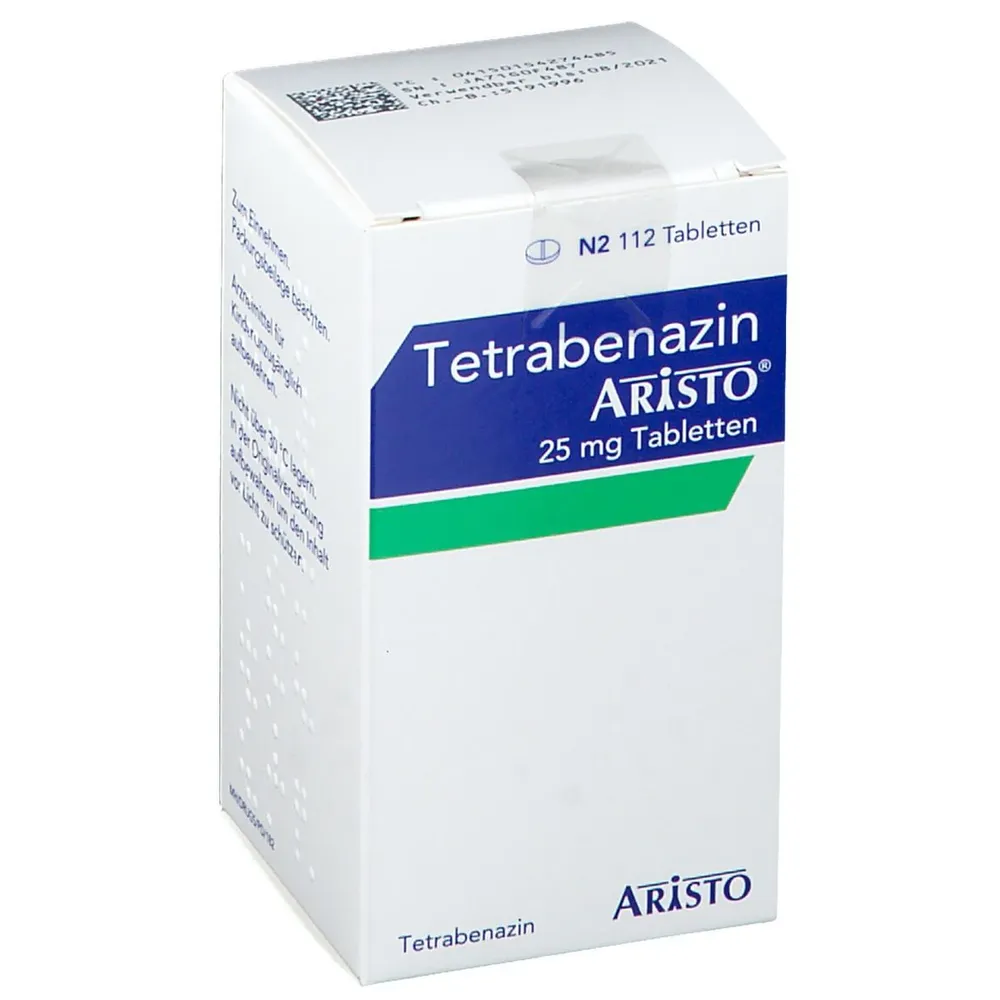
Table of Contents
- Package leaflet: Information for the user
- Introduction
- 1. What Tetrabenazina Aristo is and what it is used for
- 2. What you need to know before starting to take Tetrabenazina Aristo
- 3. How to take Tetrabenazina Aristo
- 4. Possible adverse effects
- 5. Storage of Tetrabenazine Aristo
- 6. Contents of the pack and other information
Package leaflet: Information for the user
Introduction
Package leaflet: information for the user
Tetrabenazina Aristo 25 mg tablets EFG
tetrabenazine
Read the entire leaflet carefully before you start taking this medicine, because it contains important information for you.
- Keep this leaflet. You may need to read it again.
- If you have any questions, ask your doctor or pharmacist.
- This medicine has been prescribed for you only. Do not pass it on to other people, even if they have the same symptoms as you, because it may harm them.
- If you experience any adverse effects, consult your doctor or pharmacist, even if they are adverse effects not listed in this leaflet. See section 4.
Leaflet contents
- What Tetrabenazina Aristo is and what it is used for
- What you need to know before taking Tetrabenazina Aristo
- How to take Tetrabenazina Aristo
- Possible side effects
- How to store Tetrabenazina Aristo
- Contents of the pack and other information
1. What Tetrabenazina Aristo is and what it is used for
Tetrabenazina Aristo are oral tablets. The active substance in Tetrabenazina Aristo is tetrabenazine.
Tetrabenazine inhibits the storage of specific neurotransmitters in the brain. This reduces the transmission of impulses in nerve cells within certain brain regions involved in regulating individual movement sequences. As a result, excessive and/or involuntary movements (hyperkinesia) can be better controlled. These excessive and/or involuntary movements may have an organic (physical) origin (such as Huntington's disease, for example). However, they can also be caused by medications, for instance, following prolonged use of neuroleptics (medications used to treat mental disorders). In such cases, the condition is known as tardive dyskinesia (late-onset movement disorders).
Tetrabenazine is used to treat the following conditions:
- Excessive and/or involuntary movements (hyperkinesia) in Huntington's disease.
- Moderate to severe tardive dyskinesia (late-onset movement disorder); tetrabenazine may only be used for this movement disorder if other treatment options have failed.
2. What you need to know before starting to take Tetrabenazina Aristo
Do not take Tetrabenazina Aristo
- if you are allergic to tetrabenazine or to any of the other ingredients of this medicine (listed in section 6);
- if you have thoughts of self-harm or suicide;
- if you suffer from depression or if your symptoms persist despite antidepressant treatment;
- if you have tumors dependent on the hormone prolactin (e.g., pituitary tumor or breast cancer);
- if you have a tumor of the adrenal medulla (pheochromocytoma);
- if you are breastfeeding;
- if you are taking a monoamine oxidase inhibitor (a type of antidepressant medicine) or have taken one within the last 14 days;
- if your liver function is impaired;
- if you are taking medicines containing reserpine as the active substance;
- if you have Parkinson’s disease or parkinsonism.
Warnings and precautions
Talk to your doctor or pharmacist before starting to take this medicine.
-
If you are a poor or intermediate metabolizer of an enzyme called CYP2D6, as you may require a different dose;
-
if you have been diagnosed with depression or have had thoughts of or attempted suicide;
-
if you have ever had depression.
Treatment of tardive dyskinesia (delayed movement disorders)
Ask your doctor whether you could be considered for treatment with tetrabenazine. He/she will advise you accordingly. However, tetrabenazine is a centrally acting substance, which may cause extrapyramidal symptoms and theoretically induce tardive dyskinesia in humans.
Onset of depression (depressed mood)/suicidal tendencies (suicidal thoughts or behaviors)
Tetrabenazine may cause depression or worsen pre-existing depression.
If you develop depression, this may possibly be managed by reducing the dose. Cases have been reported in which patients taking tetrabenazine developed suicidal thoughts or exhibited suicidal behavior.
If depression or suicidal thoughts are severe, discontinuation of tetrabenazine treatment and initiation of antidepressant therapy should be considered.
If you notice depression during treatment with tetrabenazine, inform your doctor. He/she will take the necessary steps.
Irritability and aggressive behavior
In patients with depression or a history of other psychiatric disorders taking tetrabenazine, there is a potential risk of developing or worsening irritability and aggressive behavior.
Development of Parkinsonism symptoms
Tetrabenazine may induce parkinsonism and worsen pre-existing symptoms of Parkinson’s disease. If this occurs, inform your doctor. He/she will take the necessary steps.
Dysphagia
Dysphagia is a component of Huntington’s disease. However, medicines that reduce dopaminergic transmission have been associated with esophageal dysmotility (a disorder of esophageal motility) and dysphagia (swallowing disorder). Dysphagia may be associated with aspiration pneumonia (a type of pneumonia caused by aspiration of foreign bodies or liquids). If you have difficulty swallowing, consult your doctor.
Onset of Neuroleptic Malignant Syndrome
Some patients may develop the so-called Neuroleptic Malignant Syndrome (NMS) during treatment with tetrabenazine, although rarely. This is a life-threatening condition in rare cases, characterized by high fever, sweating, blood pressure fluctuations, irregular or rapid pulse, cardiac arrhythmias, muscle rigidity, and loss of consciousness.
If you experience one or more of these symptoms, you must inform your doctor or go to the nearest hospital immediately.
Patients with a history of tumors
If tetrabenazine is taken for a prolonged period, prolactin (a hormone) levels in the blood may increase. This higher concentration may, in rare cases, promote the growth of cells in breast tumors. For this reason, inform your doctor before taking tetrabenazine if you have a history of any tumor.
Patients with prolonged QTc interval
Tetrabenazine causes a slight prolongation of the QT interval on the ECG. Therefore, caution is advised in patients with congenital long QT syndrome, a history of cardiac arrhythmias, or in patients taking other medicines that may prolong the QT interval.
Heart disease
Inform your doctor if you have recently had heart problems such as myocardial infarction or unstable heart disease.
Akathisia and restlessness
Inform your doctor if you have difficulty remaining seated or standing for prolonged periods (inability to stay still) or if you experience restlessness or increased restlessness. Your dose may need to be reduced if you experience these side effects.
Sedation and somnolence
Tetrabenazine may cause sedation (a calming effect) or somnolence (drowsiness or abnormal tiredness). In this case, you should refrain from activities requiring special alertness (e.g., driving or operating dangerous machinery).
Orthostatic hypotension
A drop in blood pressure, with symptoms such as dizziness upon standing or loss of consciousness (syncope), may occur under certain conditions in patients treated with tetrabenazine (e.g., upon standing after lying down). Inform your doctor if you have been told that you have low blood pressure (associated with symptoms such as dizziness, headache, rapid heartbeat, or collapse).
Binding to tissue melanin
Tetrabenazine and its metabolites may bind to melanin present in tissues and may accumulate in these tissues for a long time. Therefore, tetrabenazine could potentially cause damage to these tissues with prolonged use. Although there are no specific recommendations for regular eye examinations, physicians should consider the possible long-term effects of tetrabenazine on the eyes.
Laboratory tests
No clinically significant changes in laboratory parameters have been reported in clinical trials with tetrabenazine. In controlled trials, tetrabenazine caused a small mean increase in laboratory values of alanine aminotransferase (ALT) and aspartate aminotransferase (AST) compared to placebo.
Other medicines and Tetrabenazina Aristo
Inform your doctor or pharmacist if you are taking, have recently taken, or might need to take any other medicines.
The following medicines may interact with tetrabenazine when taken simultaneously:
- Levodopa, a medicine for Parkinson’s disease.
- Medicines with a sedative effect on the brain, e.g., neuroleptics, hypnotics, and opioids.
- Medicines for treating high blood pressure (antihypertensives) and beta-blockers (medicines that reduce heart rate and blood pressure).
- Certain medicines that slow down the breakdown of tetrabenazine, e.g., fluoxetine, paroxetine, quinidine, duloxetine, terbinafine, amiodarone, sertraline.
- Medicines that prolong the QT interval on the ECG, e.g., neuroleptics, certain antibiotics (gatifloxacin, moxifloxacin), certain antiarrhythmics (quinidine, procainamide, amiodarone, sotalol).
- MAO inhibitors (certain antidepressants): to avoid the risk of a potentially serious interaction leading to hypertensive crisis, at least 14 days must elapse between discontinuation of tetrabenazine treatment and initiation of MAO inhibitor therapy, as well as between stopping the MAO inhibitor and starting tetrabenazine treatment.
- Medicines metabolized by CYP2D6 (e.g., metoprolol, amitriptyline, imipramine, haloperidol, and risperidone): the effects of these medicines may be increased. Concurrent use of medicines that inhibit CYP2D6 (e.g., fluoxetine, paroxetine, quinidine, duloxetine, terbinafine, amiodarone, or sertraline) may also increase this effect.
- Reserpine: tetrabenazine must not be taken at the same time as reserpine. Caution is required when switching a patient from reserpine to tetrabenazine, with a sufficient interval of several days.
Tetrabenazina Aristo and alcohol
If you take alcohol together with tetrabenazine, the sedative effect may be enhanced.
Fertility, pregnancy, and breastfeeding
If you are pregnant or breastfeeding, think you may be pregnant, or are planning to become pregnant, consult your doctor or pharmacist before using this medicine.
Pregnancy
There are insufficient data on the safety of tetrabenazine in pregnant women; therefore, the use of tetrabenazine during pregnancy is not recommended unless your doctor considers it absolutely necessary.
The use of tetrabenazine during pregnancy or in women of childbearing potential without adequate contraceptive measures is not recommended.
It is essential to inform your doctor if you are pregnant, think you may be pregnant, or are planning to become pregnant. Your doctor will decide whether or not you can take Tetrabenazina Aristo.
Breastfeeding
You must not breastfeed while taking this medicine.
Fertility
Animal studies with tetrabenazine have shown no effect on pregnancy or intrauterine survival. Female menstrual cycles were prolonged and a delay in the fertile phase was observed.
Driving and use of machines
Do not drive or operate tools or machines, as tetrabenazine may cause drowsiness and thus affect your ability to perform specific tasks.
Tetrabenazina Aristo contains lactose.
Each tablet contains 63.4 mg of lactose (as monohydrate). If your doctor has informed you that you have an intolerance to certain sugars, consult with him before taking this medicine.
3. How to take Tetrabenazina Aristo
Follow exactly the instructions for administering this medicine as given by your doctor or pharmacist. If in doubt, consult your doctor or pharmacist again.
When first prescribing the medication, your doctor will gradually increase the dose of tetrabenazine over several weeks until finding a dose that reduces your symptoms and is well tolerated.
Note
The dose will depend on the symptoms of the disease and on the response to treatment.
The required dose may vary from patient to patient. Therefore, the following dosage recommendations are only a guide. Always follow your doctor's instructions regarding dosage. Your doctor will review the dose at regular intervals.
If you have liver or kidney problems, your doctor may prescribe you a different dose.
Dosing for uncontrollable movements caused by Huntington's chorea
Unless your doctor tells you otherwise, the usual initial dose is one tablet of tetrabenazine three times a day.
This dose may be increased by one tablet per day every three or four days until optimal efficacy is achieved.
The maximum daily dose must not exceed 8 tetrabenazine tablets.
Dosing for tardive dyskinesia (late-onset movement disorders)
Adults
Unless your doctor tells you otherwise, the usual initial dose is half a tablet per day.
If you respond favorably to treatment, your doctor will gradually increase the dose. Your doctor may discontinue treatment with Tetrabenazina Aristo if:
- There is no improvement in clinical symptoms after increasing the dose;
- Severe side effects occur
Resumption of treatment
If your treatment was interrupted for more than 5 days, or if the interruption of your treatment was necessary due to a medical condition or due to concomitant use of other medications, your therapy with tetrabenazine must be reinitiated with dose titration. Depending on your doctor's assessment, the dose should be started at 12.5 mg twice daily, wait 7 days, and then increase by 12.5 mg per day.
If you notice adverse effects such as inability to sit still (akathisia), restlessness, parkinsonism, impaired balance, tremors, increased salivation, depression, insomnia, anxiety, or intolerable sedation, contact your doctor.
Your doctor will decide whether to discontinue your medication or reduce the dose.
Special populations
Elderly and pediatric populations
No specific studies have been conducted in either of these age groups. Your doctor will decide the appropriate dose.
Elderly patients generally receive the recommended adult dose.
Children usually start with half the adult daily dose. This dose may then be slowly and carefully adjusted depending on individual tolerance and response.
Talk to your doctor or pharmacist if you feel that the effect of tetrabenazine is too strong or too weak.
Patients with hepatic or renal impairment If you have liver or kidney problems, your doctor may prescribe a different dosing regimen and/or a different dose. Before starting tetrabenazine, consult your doctor if you are a poor or intermediate metabolizer of an enzyme called CYP2D6, as in such cases you may need to receive a different dose.
Method of administration Tetrabenazine is for oral use. Take the tablets with sufficient liquid (water or other non-alcoholic beverages. Do not take the tablets with alcohol) and do not chew them. The tablets have a score line and can be divided into equal doses. This allows for the administration of half tablets.
If you take more Tetrabenazina Aristo than you should
If you take too many tablets or if someone else accidentally takes your medication, contact your doctor, pharmacist, or nearest hospital, or call the Toxicology Information Service at telephone number: 91 562 04 20, indicating the medication and the amount ingested.
Symptoms of overdose include uncontrollable muscle spasms affecting the eyes, head, neck, and body, rapid and uncontrollable eye movements, excessive eye blinking, nausea, vomiting, diarrhea, sweating, dizziness, feeling cold, confusion, hallucinations, drowsiness, flushing/inflammation, and tremors.
If you forget to take Tetrabenazina Aristo
Do not take a double dose to make up for missed doses. Continue taking your next dose at the usual time.
If you stop taking Tetrabenazina Aristo
Do not change the dose of tetrabenazine without first consulting your doctor. If you wish to stop taking tetrabenazine, you must also consult your doctor first.
If you have any further questions about the use of this medicine, ask your doctor or pharmacist.
4. Possible adverse effects
Like all medicines, this medicine can cause adverse effects, although not everyone experiences them.
Important side effects or signs to watch for, and actions to take if affected
If you experience muscle stiffness, fever, or altered consciousness (such as confusion or hallucinations), stop taking tetrabenazine Aristo immediately. Contact your doctor or go to the nearest hospital as soon as possible (see also section 2 “Warnings and precautions”).
Contact your doctor immediately or go to hospital if you experience any of the following adverse effects:
- If you experience muscle stiffness, fever, or worsening of consciousness (e.g., confusion or hallucinations), stop taking tetrabenazine. Contact your doctor or nearest hospital as soon as possible (see also section 2 "Warnings and precautions").
- Very common (may affect more than 1 in 10 people): Tetrabenazine Aristo may cause depression, which in some people may lead to suicidal thoughts. If you feel depressed or very sad, you may be developing depression and should inform your doctor of this change.
- Very rare (may affect up to 1 in 10,000 people): if you have attempted suicide, intentionally self-harmed, or started thinking about intentionally harming yourself.
Other possible adverse effects
Very common (may affect more than 1 in 10 people)
-
Depression (feeling of sadness), which has been reported in association with suicidal thoughts and behaviors. If you feel down or very sad, or think you may be becoming depressed, you should inform your doctor of this change.
-
somnolence
-
Parkinson-like symptoms such as loss of balance, tremors, or increased salivation
Common (may affect up to 1 in 10 people)
- agitation
- confusion
- feeling of anxiety
- insomnia
- decreased appetite
Very rare (may affect up to 1 in 10,000 people)
- pneumonia
- reduction in the number of white blood cells (leucopenia)
- uncontrolled, rapid eye movements (oculogyric crisis)
- light sensitivity (photophobia)
- dehydration
- aggression, anger
- suicidal thoughts, intention to harm oneself, or thoughts of self-harm
- neuroleptic malignant syndrome (a condition characterized by high fever, sweating, fluctuations in blood pressure, muscle rigidity, and altered consciousness) – see section 2 "Warnings and precautions"
- rash, itching, urticaria
- weight loss
- risk of falls
Frequency not known (cannot be estimated from available data)
- impaired balance and uncoordinated movements (ataxia)
- feeling that you cannot stay still (akathisia)
- uncontrolled muscle spasms (dystonia)
- memory loss
- dizziness
- disorientation
- nervousness
- restlessness
- sleep disorders
- slow heartbeat (bradycardia)
- drop in blood pressure with dizziness upon standing (orthostatic hypotension)
- hypertensive crisis
- difficulty swallowing
- nausea (feeling unwell)
- vomiting
- stomach pain
- diarrhea
- constipation
- dry mouth
- sweating
- irregular menstrual periods
- fatigue
- weakness
- reduced body temperature (hypothermia)
- increased appetite
- weight gain
To avoid the risk of a potentially serious reaction leading to hypertensive crisis, at least 14 days must elapse between discontinuation of tetrabenazine Aristo and the start of treatment with a monoamine oxidase inhibitor (MAO inhibitor), as well as between discontinuation of treatment with an MAO inhibitor and the start of treatment with tetrabenazine Aristo.
If you take tetrabenazine for prolonged periods, the blood concentration of prolactin (a hormone produced by the pituitary gland) may increase. This returns to normal after stopping treatment. As a result, abnormal milk secretion (galactorrhea), absent or irregular menstrual periods, enlargement of male breasts (gynecomastia), breast pain, breast enlargement, pituitary tumors (prolactinomas), orgasmic disorders, and impotence may occur.
Reporting of adverse effects
If you experience any adverse effect, talk to your doctor, pharmacist, or nurse, even if it is a possible adverse effect not listed in this leaflet. You can also report them directly via the Spanish Pharmacovigilance System for Human Medicines: http://www.notificaram.es. By reporting adverse effects, you can help provide more information on the safety of this medicine.
5. Storage of Tetrabenazine Aristo
Keep this medicine out of the sight and reach of children.
Do not use this medicine after the expiry date stated on the packaging after EXP. The expiry date refers to the last day of the month indicated.
Do not store above 30°C. Keep in the original packaging to protect from light.
Medicines must not be disposed of via wastewater or household waste. Dispose of empty containers and unused medicines at the SIGRE collection point at your pharmacy. Ask your pharmacist how to properly dispose of containers and medicines you no longer need. This will help protect the environment.
6. Contents of the pack and other information
Composition of Tetrabenazine Aristo 25 mg tablets
The active substance is tetrabenazine.
The other components are: monohydrate lactose (see section 2, “What you need to know before you take Tetrabenazine Aristo”), corn starch, microcrystalline cellulose, talc, magnesium stearate and yellow iron oxide (E172).
Appearance of the product and contents of the pack
Light yellow, round tablets with a break line on one side and an approximate diameter of 7 mm ± 0.2 mm.
The tablets can be divided into equal doses.
This medicine is available in bottles containing 112 tablets.
Marketing Authorization Holder and Manufacturer
Aristo Pharma GmbH
Wallenroder Str. 8-10,
13435 Berlin, Germany
For further information about this medicine, please contact the local representative of the Marketing Authorization Holder:
Aristo Pharma Iberia, S.L.
C/ Solana, 26
28850 Torrejón de Ardoz
Madrid, Spain
This medicine is authorized in the Member States of the European Economic Area under the following names:
Germany: Tetrabenazin Aristo 25 mg Tabletten
Austria: Tetrabenazin Aristo 25 mg Tabletten
Spain: Tetrabenazina Aristo 25 mg comprimidos EFG
Italy: Tetrabenazina Aristo 25 mg compresse
Portugal: Tetrabenazina Aristo 25 mg comprimidos
United Kingdom: Tetrabenazine Aristo 25 mg tablets
Date of the most recent review of this leaflet: December 2024
Detailed and up-to-date information on this medicine is available on the website of the Spanish Agency of Medicines and Health Products (AEMPS) http://www.aemps.gob.es/