Testogel 50 mg transdermal gel in sachets
Spain
Table of Contents
Package leaflet: Information for the user
Introduction
Testogel 50 mg transdermal gel in sachets
Testosterone
Read all of this leaflet carefully before you start using this medicine, because it contains important information for you.
|
Testogel 50 mg transdermal gel in sachets will be referred to as "this medicine" throughout this leaflet.
Contents of the leaflet
- What Testogel is and what it is used for
- What you need to know before using Testogel
- How to use Testogel
- Possible side effects
- How to store Testogel
- Contents of the pack and other information
1. What Testogel is and what it is used for
This medicine contains testosterone, a male hormone naturally produced by the body.
This medicine is used in adult men for testosterone replacement therapy to treat various health problems caused by a lack of testosterone (male hypogonadism). This should be confirmed by two separate blood testosterone measurements, together with the presence of clinical symptoms such as:
- impotence
- infertility
- low sex drive
- fatigue
- depressive mood states
- bone loss due to low hormone levels
- regression of male characteristics
- changes in body composition
- inability to achieve/maintain an erection
2. What you need to know before using Testogel
Who can use this medicine
- Only men can use this medicine.
- Men under 18 years of age should not use this medicine.
- Women of any age should not use this medicine.
- Women (especially pregnant or breastfeeding women) or children must not come into contact with this medicine or with the areas of skin where this medicine has been applied.
Do not use this medicine
- If you are allergic to testosterone or any of the other ingredients of this medicine (listed in section 6),
- If you have prostate cancer,
- If you have breast cancer.
Warnings and precautions
Talk to your doctor before using this medicine:
Before starting any treatment with this medicine, your testosterone deficiency must be clearly demonstrated by clinical signs (regression of male characteristics, reduced lean body mass, weakness or fatigue, decreased sexual desire/impulse, inability to achieve/maintain an erection, etc.) and confirmed by laboratory tests. Your doctor will perform the necessary tests before you can use this medicine and will carry out follow-up monitoring through periodic blood tests.
If you are in any of the following situations (or are unsure), consult your doctor before using this medicine, as its use may worsen these conditions:
- you have difficulty urinating due to an enlarged prostate
- you have bone cancer – your doctor will check your calcium levels
- you have high blood pressure or are being treated for high blood pressure, as testosterone may cause an increase in blood pressure
- you have severe heart, liver, or kidney disease; treatment with this medicine may lead to serious complications such as fluid retention in the body, sometimes accompanied by congestive heart failure (fluid overload in the heart)
- you have ischemic heart disease (a condition affecting blood supply to the heart)
- blood clotting disorders:
- thrombophilia (a blood clotting abnormality that increases the risk of thrombosis: blood clots in blood vessels)
- factors that increase the risk of blood clots in a vein: previous blood clots in a vein; smoking; obesity; cancer; immobility; if a close family member has had a blood clot in the leg, lung, or another organ at an early age (e.g., under 50 years); or as you age
How to recognize a blood clot: painful swelling of one leg or sudden change in skin color, for example paleness, redness, or blueness; sudden shortness of breath; sudden and unexplained cough that may produce blood; or sudden chest pain, severe dizziness or fainting, severe stomach pain, sudden loss of vision. Seek urgent medical attention if you experience any of these symptoms.
- you have epilepsy
- you have migraines
- you have breathing problems during sleep – especially if you are overweight or have long-term lung problems
Androgens may increase the risk of enlargement of the prostate gland (benign prostatic hyperplasia) or prostate cancer. Regular examinations of the prostate gland should be performed before starting treatment and during treatment, as recommended by your doctor.
If you have diabetes and use insulin to control your blood sugar levels, testosterone treatment may affect your response to insulin, and adjustment of your antidiabetic medication may be necessary.
In case of severe skin reactions, treatment should be reviewed and discontinued if necessary.
Women must not use this medicine due to its possible virilizing effects (such as growth of facial or body hair, voice changes to a deeper tone, or changes in menstrual cycle).
Information on additional monitoring
Before starting treatment and during treatment, your doctor will check the following parameters in your blood tests: testosterone levels and full blood count.
You will have periodic check-ups (at least once a year, and twice a year if you are elderly or considered by your doctor to be a high-risk patient) during treatment.
If you receive long-term testosterone replacement therapy, you may develop an abnormal increase in the number of red blood cells in the blood (polycythaemia). You will need periodic blood tests to ensure this does not occur.
Children and adolescents
This medicine is not recommended for children, as there is no available clinical information for children under 18 years of age.
Possible transfer of testosterone
During repeated or prolonged physical contact, this medicine may be transferred to another person. This may cause side effects such as growth of facial or body hair, deeper voice, or changes in menstrual cycle in women, or accelerated growth, genital enlargement, and early puberty (including pubic hair development) in children.
The following precautions are recommended to prevent transfer:
For the patient:
- wash your hands thoroughly with soap and water after applying the gel.
- once the gel is dry, cover the application site with clothing. After applying this medicine, wait at least 1 hour before showering or bathing.
- shower and wash the application site(s) well with water and soap to remove any residual testosterone before any situation involving close contact; if this is not possible, wear clothing such as a shirt or T-shirt covering the application site during the period of contact.
Patients using this product who may have close physical contact with children should take special care, as testosterone can pass through clothing. Be sure to follow the application instructions (see section 3 of this leaflet) when in physical contact with children, including covering the application site with clean clothing once the gel has dried. In addition, please wash the application site with soap after the recommended time (at least 1 hour) has passed and cover again with clean clothing before physical contact with children.
If you suspect that testosterone has been transferred to another person (man, woman, or child), that person should:
-
immediately wash the potentially affected skin area with water and soap
-
contact a doctor if symptoms such as acne, changes in body or facial hair growth or pattern, deeper voice, or changes in menstrual cycle occur.
-
in children, be alert for signs of early puberty and genital enlargement.
Ideally, you should wait at least 1 hour before showering or bathing after applying this medicine.
Other medicines and this medicine
Inform your doctor or pharmacist if you are taking, have recently taken, or might need to take any other medicines, particularly the following:
- oral anticoagulants (medicines used to thin the blood)
- corticosteroids (medicines used to reduce inflammation)
- insulin (medicines used to control blood sugar levels in diabetes). You may need to reduce your insulin dose when using this medicine.
If any of the above situations apply to you (or you are unsure), consult your doctor or pharmacist before using this medicine. These medicines in particular may require adjustment of your dose of this medicine.
Pregnancy and breastfeeding
This medicine must not be used by women.
Sperm production may be reversibly suppressed with this medicine.
If your partner is pregnant, becomes pregnant, or you are planning to have a baby, you must follow the advice on how to avoid transferring testosterone gel (see "Possible transfer of testosterone" above).
Women who are pregnant or breastfeeding must not use this medicine.
Pregnant women must avoid any contact with this medicine because it may have adverse virilizing effects on the fetus. In case of accidental skin-to-skin contact, your partner should wash the contact area thoroughly with soap and water as soon as possible.
If your partner becomes pregnant, you must follow the advice to avoid transferring testosterone gel.
Driving and using machines
This medicine has no influence on the ability to drive or use machines.
Athletes
Athletes should be aware that this medicine contains an active substance (testosterone) that may result in a positive doping test.
This medicine contains alcohol (ethanol)
This medicine contains 3.6 g of alcohol (ethanol) in each sachet.
It may cause a burning sensation on damaged skin.
Care should be taken to avoid sources of heat/open flames when first applying the product, as ethanol is flammable until the gel has dried on the skin.
3. How to use Testogel
This medicine is for use in adult males only.
Follow exactly the instructions for use of this medicine as given by your doctor. If in doubt, consult your doctor.
The recommended dose is 5 g of gel (equivalent to 50 mg of testosterone), applied once daily at approximately the same time each day, preferably in the morning.
Your doctor may adjust the daily dose individually for each patient, without exceeding 10 g of gel per day.
How to apply this gel:
- The gel should be applied by the patient himself.
- After opening the sachet, the entire contents should be removed and applied immediately to the skin.
- The gel should be gently spread over clean, dry, and intact skin.
- Apply in a thin layer on both shoulders, or both arms, or the abdomen. Do not rub into the skin.
- Allow the gel to dry for at least 3–5 minutes before dressing.
- Wash your hands thoroughly with water and soap after application.
Do not apply to genital areas (penis and testicles), as the high alcohol content may cause local irritation.
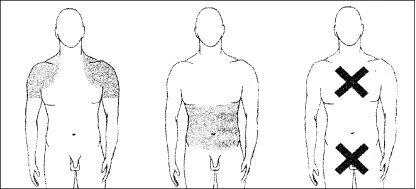
Patients must be informed that other people (adults or children) should not come into contact with the area of the body where the testosterone gel has been applied.
Once the gel has dried, cover the application site with clean clothing (such as a T-shirt).
Before engaging in close physical contact with another person (adult or child), wash the application site with water and soap after the recommended time has passed (at least 1 hour), and cover again with clean clothing.
If you use more of this medicine than you should
Seek advice from your doctor or pharmacist. They may recommend that you immediately wash off the applied gel and that your doctor advises you to discontinue treatment.
The following signs may indicate that you are receiving too much medicine, and you should contact your doctor:
- Irritability
- Nervousness
- Weight gain
- Frequent or prolonged erections
These symptoms may mean that your dose of this medicine is too high, and your doctor may need to adjust your dose (see Warnings and precautions, section 2).
If you forget to use this medicine
Do not use a double dose to make up for the missed dose. Apply the next dose at the usual time.
If you stop using this medicine
Do not discontinue treatment with this medicine unless instructed by your doctor.
If you have any further questions about the use of this medicine, ask your doctor or pharmacist.
4. Possible adverse effects
Like all medicines, this medicine can cause adverse effects, although not everyone experiences them:
Common adverse effects (may affect up to 1 in 10 people)
- mood disorders
- emotional symptoms (mood swings, affective disorder, anger, aggression, impatience, insomnia, abnormal dreams, increased libido)
- dizziness
- paresthesia
- amnesia
- hyperesthesia
- headache
- hypertension
- diarrhea
- alopecia
- urticaria
- gynecomastia
- application site reaction
- changes in laboratory tests (polycythemia, lipids)
- increased hematocrit
- increased hemoglobin
- increased red blood cell count
Uncommon adverse effects (may affect up to 1 in 100 people)
This medicine may cause:
- malignant hypertension
- hot flushes/flushing
- phlebitis
- mouth pain
- abdominal distension
- acne
- hirsutism
- skin rash
- dry skin
- seborrhea
- skin lesions
- contact dermatitis
- changes in hair color
- hypersensitivity at the application site
- pruritus at the application site
- nipple disorders
- prostate abnormalities
- testicular pain
- increased frequency of erections
- pitting edema
- increased PSA
Rare (may affect up to 1 in 1,000 people)
This medicine may cause:
- priapism
- hepatic neoplasia
Very rare (may affect up to 1 in 10,000 people)
This medicine may cause:
- jaundice
- urinary tract obstruction
Frequency not known (cannot be estimated from available data)
This medicine may cause:
- prostate cancer
- asthenia
- nervousness
- depression
- hostility
- sleep apnea
- urinary tract obstruction
- muscle cramps
- changes in libido
- treatment with high doses of testosterone preparations reversibly interrupts or reduces spermatogenesis, thereby reducing testicular size
- malaise
- edema
- hypersensitivity reactions
- weight gain
- electrolyte changes (retention of sodium, chloride, potassium, calcium, inorganic phosphate, and water) during treatment with high doses and/or prolonged use
- skin reactions (due to the alcohol contained in the product, frequent applications to the skin may cause irritation and dryness)
- increased incidence of fluid retention and edema
Due to the alcohol content of this medicine, frequent applications to the skin may cause irritation and dryness of the skin.
Reporting of adverse effects
If you experience any type of adverse effects, consult your doctor or pharmacist, even if they are possible adverse effects not listed in this leaflet. You may also report them directly via the Spanish Pharmacovigilance System for Human Medicinal Products: www.notificaram.es. By reporting adverse effects, you can help provide more information on the safety of this medicine.
5. Storage of Testogel
This medicine does not require special storage conditions.
Keep this medicine out of the sight and reach of children.
Do not use this medicine after the expiry date stated on the carton and sachet. The expiry date is the last day of the month indicated.
Medicines should not be disposed of via wastewater or household waste. Ask your pharmacist how to dispose of medicines and packaging that you no longer need. This will help protect the environment.
6. Contents of the pack and other information
Composition of Testogel
- The active substance is testosterone. Each 5 g sachet contains 50 mg of testosterone.
- The other ingredients are Carbomer 980, isopropyl myristate, 96% ethanol, sodium hydroxide, distilled water.
What Testogel looks like and contents of the pack
Colorless gel contained in a 5 g sachet.
Available in packs of 1, 2, 7, 10, 14, 28, 30, 50, 60, 90 or 100 sachets (some pack sizes may not be marketed).
Marketing Authorization Holder
Laboratoires Besins International
3, rue du Bourg l’Abbé
75003 Paris
France
Manufacturers
Laboratoires Besins International
13, rue Périer
92120 Montrouge
France
Besins Manufacturing Belgium
Groot Bijgaardenstraat, 128
1620 Drogenbos
Belgium
Local Representative of the Marketing Authorization Holder:
LABORATORIOS RUBIO, S.A.
Industria 29 - Pol. Ind. Comte de Sert.
08755 Castellbisbal (Barcelona)
Spain
This medicinal product is authorized in the European Economic Area Member States under the following name:
Germany, Austria, Belgium, Cyprus, Denmark, Spain, Finland, France, Greece, Ireland, Iceland, Italy, Luxembourg, Norway, Netherlands, Portugal, Sweden: TESTOGEL.
Date of latest revision of this leaflet: November 2025.
Detailed information on this medicinal product is available on the website of the Spanish Agency of Medicines and Medical Devices (AEMPS) http://www.aemps.gob.es/