Termalgin Resfriado 500 mg/30 mg powder for oral solution
Spain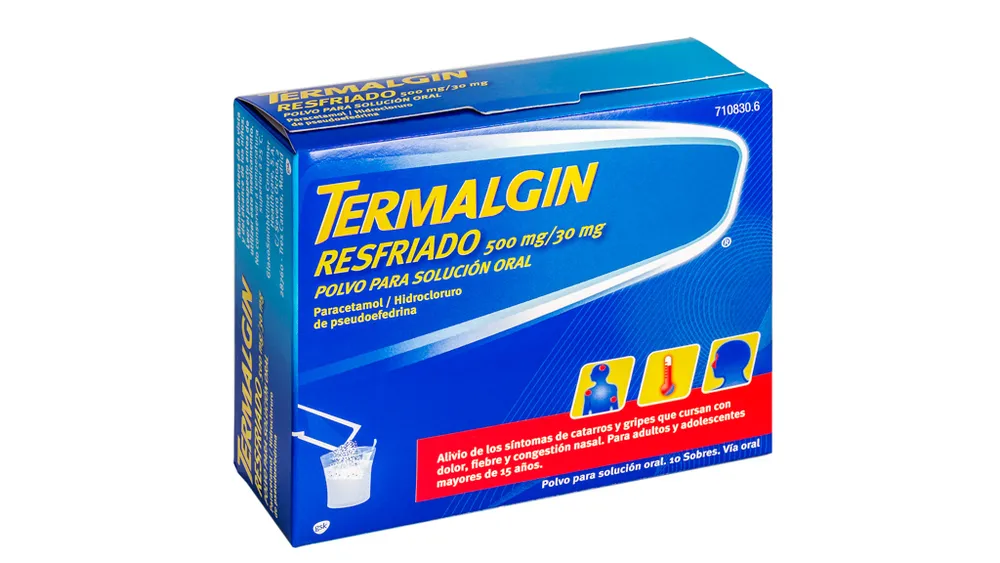
Table of Contents
- Package leaflet: Information for the user
- Introduction
- 1. What Termalgin Cold is and what it is used for
- 2. What you need to know before taking Termalgin Cold
- 3. How to take Termalgin Resfriado
- 4. Possible adverse effects
- 5. Storage of Termalgin Resfriado
- 6. Contents of the pack and other information
Package leaflet: Information for the user
Introduction
Package leaflet: information for the patient
Termalgin Cold 500 mg/30 mg effervescent powder for oral solution
For adults and adolescents from 15 years of age
Paracetamol / Pseudoephedrine hydrochloride
Read the entire leaflet carefully before you start taking this medicine, because it contains important information for you.
Always follow exactly the instructions for use provided in this leaflet or as directed by your doctor or pharmacist.
-
Keep this leaflet, as you may need to read it again.
-
If you need advice or further information, consult your pharmacist.
-
If you experience any adverse effects, consult your doctor or pharmacist, even if they are effects not listed in this leaflet. See section 4.
-
You should consult a doctor if you worsen or do not improve after 3 days of treatment.
Contents of the leaflet
- What Termalgin Cold is and what it is used for
- What you need to know before taking Termalgin Cold
- How to take Termalgin Cold
- Possible side effects
- How to store Termalgin Cold
- Contents of the pack and other information
1. What Termalgin Cold is and what it is used for
Termalgin Cold contains 2 active substances:
- Paracetamol, which is an analgesic that reduces pain and fever.
- Pseudoephedrine hydrochloride, which is a nasal decongestant. It relieves nasal congestion and helps you breathe more easily by reducing inflammation in the nasal passages. It also relieves sinus pressure.
Termalgin Cold is indicated for the relief of symptoms of colds and flu associated with pain, fever, and nasal congestion in adults and adolescents aged 15 years and older.
Do not take it for more than 3 days without consulting your doctor.
If you have only one of the symptoms mentioned above, it would be more appropriate to take a medicine containing only one of the active substances.
2. What you need to know before taking Termalgin Cold
Do not take Termalgin Cold:
- if you are allergic to paracetamol, pseudoephedrine hydrochloride, menthol, or any of the other ingredients of this medicine (listed in section 6);
- if you are allergic to peanuts or soy, as this medicine contains soy lecithin (E322);
- if you have kidney impairment, unless directed by your doctor;
- if you have severe, acute (sudden) or chronic (long-term) kidney disease, or kidney failure;
- if you have a serious heart or arterial disease such as coronary artery disease or high blood pressure (hypertension);
- if you have very high blood pressure (severe hypertension) or uncontrolled hypertension;
- if you have hyperthyroidism;
- if you have closed-angle glaucoma (increased eye pressure);
- if you have urinary retention;
- if you have phaeochromocytoma (a type of tumor of the adrenal glands near the kidneys);
- if you are taking or have taken monoamine oxidase inhibitors (MAOIs) (medicines used to treat depression or Parkinson's disease) within the last 2 weeks;
- if you are being treated with tricyclic antidepressants;
- if you are being treated with beta-blockers (medicines used to treat hypertension or heart problems);
- if you are being treated with other sympathomimetic medicines such as decongestants, appetite suppressants, or amphetamine-type psychostimulants;
- if you are taking antibiotics called furazolidone or linezolid;
- if you are in the first three months of pregnancy.
Warnings and precautions
Contains paracetamol. Do not administer with other medicines containing paracetamol. Do not exceed the recommended dose, as it may cause severe liver damage.
There is a potential for abuse of one of the active ingredients in Termalgin Cold, pseudoephedrine. High doses of pseudoephedrine can be toxic. Prolonged use may lead to tolerance, prompting increased intake beyond the recommended dose to achieve the desired effect, which increases the risk of overdose. Do not exceed the maximum recommended dose or duration of treatment (see section 3).
Sudden abdominal pain or rectal bleeding may occur with the use of Termalgin Cold due to inflammation of the colon (ischemic colitis). If these gastrointestinal symptoms occur, stop taking Termalgin Cold and contact your doctor or seek immediate medical attention. See section 4.
Pseudoephedrine causes narrowing of blood vessels (vasoconstriction). This action may be associated with the sudden onset of the following medical conditions, which require immediate medical attention:
Acute Coronary Syndrome (ACS): This includes conditions such as heart attack or unstable angina. Both are associated with severe chest pain caused by blocked blood supply to parts of the heart. Sudden chest pain or discomfort (a sensation of pressure or tightness) may radiate from your chest to your arms, jaw, neck, back, or abdomen. You may also feel dizzy or lightheaded, sweat excessively, or experience shortness of breath while at rest. Stop using Termalgin Cold immediately and seek immediate medical assistance if you develop symptoms that may indicate ACS.
Cases of reversible posterior encephalopathy syndrome (RPES) and reversible cerebral vasoconstriction syndrome (RCVS) have been reported after using medicines containing pseudoephedrine. RPES and RCVS are rare conditions that may involve reduced blood flow to the brain. Stop using Termalgin Cold immediately and seek immediate medical attention if you experience symptoms that may indicate RPES or RCVS (see section 4, "Possible side effects," for symptoms).
Incorrect use, high doses, and prolonged use of painkillers may cause headaches that should never be treated with higher doses of analgesics.
In general, regular use of analgesics, particularly combinations of multiple analgesic substances, may trigger permanent kidney damage with risk of liver failure.
If you develop a generalized febrile rash with pustules, stop taking Termalgin Cold and contact your doctor or seek immediate medical attention. See section 4.
Termalgin Cold may reduce blood flow to the optic nerve. If you experience sudden vision loss, stop taking Termalgin Cold and contact your doctor or seek immediate medical attention. See section 4.
Sudden discontinuation of analgesics after long-term treatment, high-dose use, or misuse may trigger headaches, fatigue, muscle pain, nervousness, or autonomic symptoms. These withdrawal symptoms resolve within a few days. Until then, avoid further intake of analgesics and do not restart treatment without medical advice.
It is recommended to discontinue treatment at least 24 hours before undergoing surgery.
Do not take this medicine with other medicines used to treat flu, colds, or congestion.
Do not consume alcoholic beverages while using this medicine.
Consult your doctor or pharmacist before taking Termalgin Cold if:
- you have kidney problems;
- you have a severe infection, severe malnutrition, are significantly underweight, or are a chronic heavy alcohol consumer, as this may increase the risk of metabolic acidosis;
- you have liver problems;
- you have diabetes;
- you have prostate problems, as you may experience urinary retention;
- you have circulatory problems (such as Raynaud's syndrome);
- you have mild jaundice (Gilbert's syndrome);
- you are dehydrated;
- you have psychosis;
- you are over 60 years old.
During treatment with TERMALGIN COLD, inform your doctor immediately if:
You have serious conditions such as severe kidney failure or sepsis (when bacteria and their toxins circulate in the blood, causing organ damage), or if you have malnutrition, chronic alcoholism, or are also taking flucloxacillin (an antibiotic). A serious condition called metabolic acidosis (an abnormality in blood and body fluids) has been reported in patients in these situations when paracetamol is used regularly over a prolonged period or when paracetamol is taken with flucloxacillin. Symptoms of metabolic acidosis may include: severe difficulty breathing with deep and rapid breathing, drowsiness, feeling unwell (nausea), and vomiting.
Children and adolescents
Do not give this medicine to children and adolescents under 15 years of age.
Elderly patients
These patients may be particularly sensitive to the effects of pseudoephedrine.
Doping control warning
Pseudoephedrine may cause positive analytical results in doping controls.
Taking Termalgin Cold with other medicines
Tell your doctor or pharmacist if you are taking, have recently taken, or might need to take any other medicines, especially:
- monoamine oxidase inhibitors (MAOIs), used to treat depression and Parkinson’s disease: do not use Termalgin Cold if you are taking or have taken MAOIs within the last 14 days;
- tricyclic antidepressants used to treat depression;
- medicines used to treat high blood pressure (hypertension), such as beta-blockers;
- medicines used to treat heart failure or irregular heartbeat (digoxin and other cardiac glycosides);
- medicines to prevent blood clots (anticoagulants, such as warfarin and other coumarins);
- medicines to prevent nausea and vomiting, such as metoclopramide or domperidone;
- medicines to treat tuberculosis (rifampicin and isoniazid), bacterial infections (chloramphenicol, furazolidone, linezolid);
- medicines to treat seizures, such as lamotrigine, phenytoin, phenobarbital, and carbamazepine;
- colestyramine, used to lower blood cholesterol levels;
- zidovudine (AZT), used to treat HIV infections (AIDS);
- probenecid, used to treat gout;
- ergotamine and methysergide, used to treat migraine;
- medicines containing paracetamol or decongestants for colds and flu;
- medicines used to treat fever or moderate pain (acetylsalicylic acid, salicylates);
- halogenated anesthetics used in preoperative anesthesia;
- flucloxacillin (antibiotic), due to a serious risk of blood and fluid abnormalities (called metabolic acidosis) requiring urgent treatment (see section 2).
Inform your doctor that you are taking this medicine if you are scheduled for blood or urine glucose testing.
Taking Termalgin Cold with food, drinks, and alcohol
Do not consume alcoholic beverages while taking this medicine.
This medicine may be taken with or without food.
Pregnancy and breastfeeding
If you are pregnant or breastfeeding, think you may be pregnant, or plan to become pregnant, consult your doctor or pharmacist before using this medicine.
Do not take this medicine during the first three months of pregnancy.
Use of this medicine is not recommended during the last six months of pregnancy.
You should avoid using this medicine during breastfeeding.
Driving and using machines
This medicine may cause dizziness. If you feel dizzy during treatment, avoid driving or operating machinery.
Termalgin Cold contains sucrose, aspartame (E951), sodium, Allura Red (E-129), and Orange Yellow S
- This medicine contains sucrose. If your doctor has informed you that you have an intolerance to certain sugars, consult with him before taking this medicine.
Patients with diabetes mellitus should note that this medicine contains 6.9 g of sucrose per sachet.
It may cause dental caries.
- This medicine contains 38 mg of aspartame per sachet. Aspartame is a source of phenylalanine, which may be harmful if you have phenylketonuria (PKU), a rare genetic disorder in which phenylalanine accumulates because the body cannot properly eliminate it.
- This medicine contains 35 mg of sodium (a main component of table/cooking salt) per sachet. This corresponds to 0.7% of the maximum daily sodium intake recommended for an adult.
- This medicine may cause allergic reactions because it contains Allura Red AC (E129) and Orange Yellow S (E110), azo dyes.
It may cause asthma, especially in patients allergic to acetylsalicylic acid.
3. How to take Termalgin Resfriado
Follow exactly the instructions for use provided in this leaflet or as directed by your doctor or pharmacist. If in doubt, consult your doctor or pharmacist.
The recommended dose is:
Adults and adolescents aged 15 years and older:
1 sachet every 4 to 6 hours, as needed. Do not take more than 4 sachets in 24 hours (corresponding to 2 g of paracetamol and 120 mg of pseudoephedrine). Do not take more frequently than every four hours. Use the smallest dose needed to relieve symptoms and use the medicine for the shortest duration necessary.
Do not exceed the recommended dose.
Patients with hepatic impairment
In patients with liver disease, the dose should be reduced or the dosing interval increased. Consult your doctor before taking this medicine.
Use in children and adolescents
Do not administer to children under 15 years of age.
How to take Termalgin Resfriado
For oral use.
Dissolve the contents of one sachet in a standard-sized cup (approximately 250 ml) containing hot water, not boiling. Drink once cooled to a comfortable temperature.
Do not take for more than 3 days without consulting your doctor.
If you take more Termalgin Resfriado than you should
If you accidentally take more Termalgin Resfriado than recommended, seek immediate medical attention (consult a doctor) even if you feel well, due to the risk of delayed severe liver damage. Symptoms of overdose include irritability, restlessness, excitement, tremors, seizures, palpitations, and difficulty urinating.
In case of overdose or accidental ingestion, go to a medical center or contact the Toxicology Information Service, Telephone 91 562 04 20, indicating the medicine and the amount taken.
If you forget to take Termalgin Resfriado
Do not take a double dose to make up for missed doses.
If you forget to take a dose, take it as soon as you remember, unless it is almost time for the next dose. Then continue with your regular dosing schedule. Always leave at least a 4-hour interval between doses.
If you have any questions about the use of this medicine, consult your doctor or pharmacist.
4. Possible adverse effects
Like all medicines, this medicine can cause adverse effects, although not everyone experiences them.
Possible adverse effects of paracetamol:
Stop taking this medicine and consult your doctor or pharmacist immediately if you experience:
- allergic reactions, including shortness of breath, difficulty breathing, swelling of the face or mouth, lips, tongue, throat, or eyes;
- skin rash (including rash, itching), redness of the skin;
- skin peeling, blisters, sores, mouth ulcers;
- blood disorders, including unusual bleeding or bruising.
The above side effects are rare (may affect up to 1 in 1,000 people) or very rare (may affect up to 1 in 10,000 people). In particular, severe skin reactions are very rare (may affect up to 1 in 10,000 people).
Other adverse effects may occur rarely (may affect up to 1 in 1,000 people). If you experience any of the following adverse effects, consult your doctor:
- liver problems (hepatic disorders). In rare cases, abnormal results in liver function tests may occur;
- sudden stomach pain or discomfort (diarrhea, nausea, and vomiting) or blood in your stools;
- sudden and severe headache accompanied by nausea or vision disturbances.
Frequency not known (cannot be estimated from the available data): A serious condition that may cause the blood to become more acidic (called metabolic acidosis) in patients with serious illness who are taking paracetamol (see section 2).
Possible adverse effects of pseudoephedrine:
Frequency not known: cannot be estimated from the available data
- serious conditions affecting the blood vessels in the brain known as reversible posterior encephalopathy syndrome (RPES) and reversible cerebral vasoconstriction syndrome (RCVS)
Stop using Termalgin Resfriado immediately and seek urgent medical attention if you develop symptoms that could be signs of reversible posterior encephalopathy syndrome (RPES) or reversible cerebral vasoconstriction syndrome (RCVS). These include:
- sudden, severe headache
- malaise
- vomiting
- confusion
- seizures
- changes in vision
Stop taking this medicine and consult your doctor or pharmacist immediately if you experience:
- high blood pressure, palpitations (rapid heartbeat);
- sleep disturbances, agitation, restlessness, nervousness, irritability, confusion, perception of unreal things (hallucinations), especially in children;
- skin rash (including rash, itching), redness of the skin;
- difficulty urinating. This is more likely to occur in men with an enlarged prostate.
Other side effects may occur rarely (may affect up to 1 in 1,000 people). If you experience any of the following side effects, consult your doctor:
- dry mouth.
Frequency “not known”
- sudden onset of fever, skin redness, or numerous small pustules (possible symptoms of acute generalized exanthematous pustulosis - AGEP) that may occur within the first 2 days of treatment with Termalgin Resfriado. See section 2;
- inflammation of the colon due to insufficient blood supply (ischemic colitis);
- anxiety;
- headache, tremor;
- reduced blood flow to the optic nerve (ischemic optic neuropathy).
Stop taking Termalgin Resfriado if these symptoms appear and contact your doctor or seek immediate medical attention. See section 2.
Reporting of adverse effects
If you experience any type of adverse effect, talk to your doctor or pharmacist, even if it is a possible adverse effect not listed in this leaflet. You can also report them directly via the Spanish Pharmacovigilance System for Human Medicinal Products: https://www.notificaram.es/. By reporting adverse effects, you can help provide more information on the safety of this medicine.
5. Storage of Termalgin Resfriado
Keep this medicine out of the sight and reach of children.
Do not use this medicine after the expiry date stated on the sachet and the carton after EXP. The expiry date refers to the last day of the month indicated.
Do not store above 25°C.
Medicines should not be disposed of via wastewater or household waste. Ask your pharmacist how to dispose of any unused medicines and their packaging. This will help protect the environment.
6. Contents of the pack and other information
Composition of Termalgin Cold
The active substances are: paracetamol and pseudoephedrine hydrochloride.
Each sachet contains 500 mg of paracetamol and 30 mg of pseudoephedrine hydrochloride.
The other components (excipients) are: sucrose, aspartame (E951), blueberry flavour (contains soya lecithin), raspberry flavour (contains soya lecithin), red cranberry flavour (contains soya lecithin), menthol flavour (contains soya lecithin), green tea flavour (contains soya lecithin), anhydrous citric acid, sodium citrate (E331), edetate disodium, potassium acesulfame, maltodextrin, colloidal hydrated silica, orange yellow S (E110), Allura red AC (E129) and brilliant blue FCF (E133).
Nature of the product and contents of the pack
Termalgin Cold is a granular powder for oral solution consisting of a white or almost white free-flowing powder which may contain brown granules, packed in individual sachets containing 9.2 grams of medicine.
Termalgin Cold powder for oral solution is marketed in packs of 6, 8, 10, 12 and 14 sachets.
Only certain pack sizes may be commercially available.
Marketing Authorisation Holder
Haleon Spain, S.A.
Paseo de la Castellana, 259D, planta 32,
28046 Madrid, Spain
Manufacturer
Delpharm Orleans
5, avenue de Concyr
45071 Orleans cedex 2, France
Or
Haleon Germany GmbH
Barthstrasse, 4 - 80339
Munich, Germany
This medicinal product is authorised in the Member States of the European Economic Area under the following names:
Estonia | TheraFlu SN |
Germany | Theraflu Cold Hot Drink 500 mg / 30 mg Powder for Oral Solution |
Greece | Comtrex Cold Day powder for oral solution (500+30) mg/sachet |
Hungary | Neo Citran Cold and Sinus for oral solution powder |
Latvia | Theraflu SN 500 mg/30 mg powder for oral solution |
Lithuania | Theraflu SN 500 mg/30 mg powder for oral solution |
Spain | Termalgin Cold 500 mg/30 mg powder for oral solution |
Date of the last review of this leaflet: February 2025
Detailed information about this medicine is available on the website of the Spanish Agency for Medicines and Health Products (AEMPS) http://www.aemps.gob.es/.