Tepkinly 48 mg solution for injection
Spain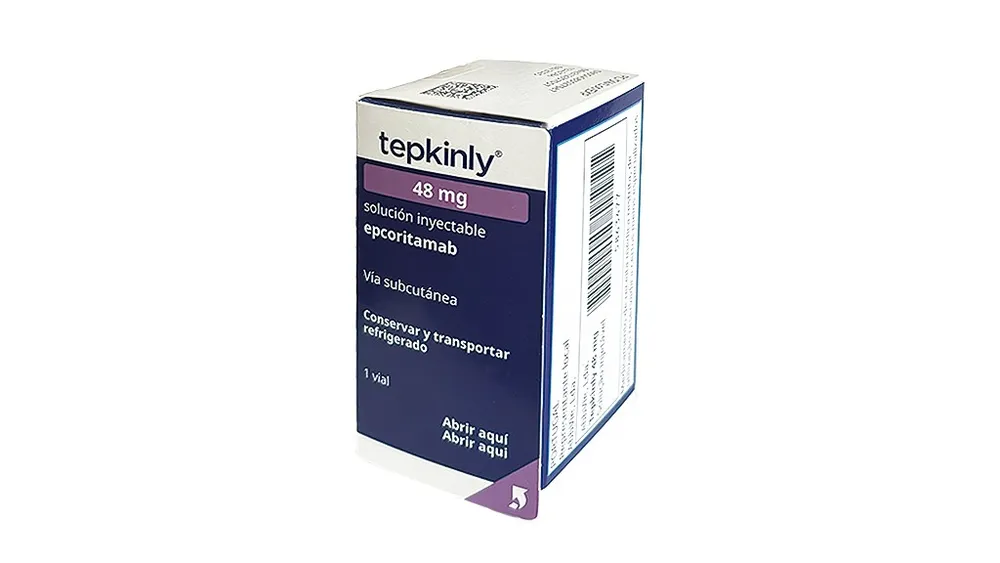
Table of Contents
Package Leaflet: Information for the User
Introduction
Package Leaflet: Information for the Patient
Tepkinly 48 mg Injection Solution
epcoritamab
This medicinal product is subject to additional monitoring, which will allow rapid identification of new safety information. You can help by reporting any adverse reactions you may experience. Information on how to report adverse reactions is included at the end of section 4.
Read this entire leaflet carefully before you start using this medicine, as it contains important information for you.
- Keep this leaflet, as you may need to read it again.
- Your doctor will provide you with a patient information card. Read it carefully and follow the instructions contained therein. Always carry this patient information card with you.
- Always show the patient information card to your doctor, nurse, or if you go to the hospital.
- If you have any questions, consult your doctor, pharmacist, or nurse.
- If you experience any adverse reactions, consult your doctor, pharmacist, or nurse, even if they are possible adverse reactions not listed in this leaflet. See section 4.
Leaflet Contents
- What Tepkinly is and what it is used for
- What you need to know before using Tepkinly
- How to use Tepkinly
- Possible adverse reactions
- How to store Tepkinly
- Contents of the pack and other information
1. What Tepkinly is and what it is used for
What Tepkinly is
Tepkinly is a cancer medicine that contains the active substance epcoritamab. Tepkinly is used alone (monotherapy) to treat adult patients who have a type of blood cancer called diffuse large B-cell lymphoma (DLBCL) or follicular lymphoma (FL) when the disease has returned or did not respond to prior treatment after at least two previous treatments.
How Tepkinly works
Epcoritamab is specifically designed to help your own immune system attack cancer cells (lymphoma). Epcoritamab works by binding to both the immune cells and the cancer cells in your body, bringing them together so that your immune system can destroy the cancer cells.
2. What you need to know before using Tepkinly
Do not use Tepkinly
If you are allergic to epcoritamab or to any of the other ingredients of this medicine (listed in section 6).
If in doubt, consult your doctor or nurse before receiving Tepkinly.
Warnings and precautions
Talk to your doctor, pharmacist, or nurse before starting Tepkinly if:
- you have or have had problems with your nervous system, such as seizures
- you have an infection
- you are due to receive a vaccine or know you will need one in the near future.
If any of the above apply to you (or you are unsure), consult your doctor or nurse before receiving Tepkinly.
Your doctor or nurse will perform blood tests before and during treatment with epcoritamab to monitor your antibody levels and assess your risk of infection, as well as determine whether you need specific treatment.
Inform your doctor if you experience symptoms of any of the following adverse effects listed below, during or after treatment with Tepkinly. You may require additional medical treatment.
-
Cytokine release syndrome (CRS): a potentially life-threatening condition causing fever, vomiting, difficulty breathing/shortness of breath, chills, rapid heartbeat, headache, and dizziness or mild lightheadedness, associated with medicines that stimulate T-cells.
-
Prior to each subcutaneous injection, you may be given medications to help reduce the risk of cytokine release syndrome.
-
Hemophagocytic lymphohistiocytosis (HLH): a rare condition in which the immune system produces excessive numbers of otherwise normal cells that fight infections, called histiocytes and lymphocytes. This may cause enlargement of the liver and/or spleen, heart problems, and kidney abnormalities. Symptoms may include fever, rash, swollen lymph nodes, breathing difficulties, and easy bruising. Inform your doctor immediately if you experience these symptoms simultaneously.
-
ICANS (Immune Effector Cell-Associated Neurotoxicity Syndrome): symptoms may include problems with language (including speaking, understanding, writing, and reading), drowsiness, confusion/disorientation, muscle weakness, seizures, brain swelling, and memory loss.
-
Infections: you may experience signs of infection such as fever of 38 °C or higher, chills, cough, or pain when urinating, which may vary depending on the site of infection.
-
Progressive multifocal leukoencephalopathy (PML): symptoms of this serious and potentially fatal brain condition may include blurred vision, loss of vision, or double vision, difficulty speaking, weakness or clumsiness in an arm or leg, changes in walking or problems with balance, personality changes, and disturbances in thinking, memory, and orientation leading to confusion. These symptoms may begin several months after treatment has ended and usually develop slowly and progressively over weeks or months. It is important that your family members or caregivers are also aware of these symptoms, as they may notice signs you do not.
-
Tumor lysis syndrome (TLS): some people may develop abnormal levels of certain salts in the blood due to the rapid breakdown of cancer cells during treatment. This is known as tumor lysis syndrome (TLS).
-
Your doctor or nurse will perform blood tests to check for this condition. Before each subcutaneous injection, you must be well hydrated, and you may be given other medications to help reduce elevated uric acid levels and minimize the risk of tumor lysis syndrome.
-
Tumor flare reaction: as your cancer cells are destroyed, your condition may temporarily appear to worsen—this is known as a "tumor flare reaction."
Children and adolescents
Tepkinly is not recommended for children and adolescents under 18 years of age, as there is no information on its use in this age group.
Other medicines and Tepkinly
Tell your doctor or pharmacist if you are taking, have recently taken, or might need to take or use any other medicines. This includes medicines obtained without a prescription and herbal medicines.
Pregnancy
If you are pregnant, think you may be pregnant, or plan to become pregnant, consult your doctor or pharmacist before using this medicine. Do not use Tepkinly during pregnancy as it may harm the fetus. Your doctor may ask you to take a pregnancy test before starting treatment.
Contraception
If you are a woman of childbearing potential, you must use effective contraception to prevent pregnancy while receiving Tepkinly and for at least 4 months after the last dose of Tepkinly. If you become pregnant during this time, contact your doctor immediately.
Discuss appropriate contraceptive methods with your doctor or nurse.
Breast-feeding
You must not breast-feed during treatment with Tepkinly and for at least 4 months after the last dose. It is not known whether Tepkinly passes into breast milk or could affect your baby.
Fertility
The effect of Tepkinly on fertility in men and women is unknown.
Driving and using machines
Due to the potential symptoms of ICANS, you should exercise caution when driving, riding a bicycle, or operating heavy or potentially dangerous machinery. If you currently have such symptoms, avoid these activities and contact your doctor, nurse, or pharmacist. See section 4 for more information on adverse effects.
Tepkinly contains sodium
This medicine contains less than 1 mmol of sodium (23 mg) per vial; hence, it is essentially "sodium-free."
Tepkinly contains sorbitol
This medicine contains 28.8 mg of sorbitol per vial, equivalent to 27.33 mg/ml.
Tepkinly contains polysorbate
This medicine contains 0.42 mg of polysorbate 80 per vial, equivalent to 0.4 mg/ml. Polysorbates may cause allergic reactions. Inform your doctor if you have any known allergies.
3. How to use Tepkinly
A doctor experienced in cancer treatment will manage your therapy. Follow the treatment schedule explained to you by your doctor.
Tepkinly will be administered to you by a doctor or nurse as a subcutaneous injection. Tepkinly will be given in 28-day cycles, according to a dosing schedule provided by your doctor.
Tepkinly will be administered according to the following schedule:
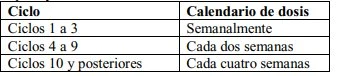
You may be given other medications before Tepkinly is administered. This is to help prevent reactions such as cytokine release syndrome and fever during Cycle 1 (and potentially in future cycles).
These medications may include:
- Corticosteroids: such as dexamethasone, prednisolone, or equivalent
- An antihistamine: such as diphenhydramine
- Paracetamol
During the first month (Cycle 1) when Tepkinly is administered:
- It is important that you stay well hydrated. Therefore, your doctor may ask you to drink plenty of water the day before and the day after receiving Tepkinly. On the day of Tepkinly administration, your doctor may give you fluids through an intravenous needle (intravenous infusion).
- If you are taking any medication for high blood pressure, your doctor may ask you to stop taking it for a short period while you are being treated with Tepkinly.
If you have diffuse large B-cell lymphoma (DLBCL):
The first full dose (48 mg) of Tepkinly will be administered on day 15 of Cycle 1.
If you have follicular lymphoma (FL):
The first full dose (48 mg) of Tepkinly will be administered on day 22 of Cycle 1.
Your doctor will monitor how well your treatment is working. You will continue to receive Tepkinly as long as your doctor considers that you are benefiting from the treatment.
Your doctor may delay or completely stop treatment with Tepkinly if you experience certain adverse effects.
If you forget to use Tepkinly
If you miss or skip a medical appointment, reschedule it immediately. To ensure the treatment is fully effective, it is very important not to miss any doses.
If you interrupt treatment with Tepkinly
Do not interrupt treatment with Tepkinly unless you have discussed it with your doctor. This is because interrupting treatment may cause your condition to worsen.
If you have any further questions about the use of this medicine, ask your doctor, pharmacist, or nurse.
4. Possible adverse effects
Like all medicines, this medicine can cause adverse effects, although not everyone will experience them.
Serious adverse effects
Inform your doctor immediately if you notice any of the symptoms listed below under serious adverse effects. You may experience only one or some of these symptoms.
Cytokine release syndrome (CRS) (Very common: may affect more than 1 in 10 people)
Symptoms may include
- fever
- vomiting
- dizziness or mild lightheadedness
- chills
- rapid heartbeat
- difficulty or problems breathing/shortness of breath
- headache
Immune effector cell-associated neurotoxicity syndrome (ICANS) (Common: may affect up to 1 in 10 people)
- effects on the nervous system, whose symptoms may occur days or even weeks after receiving the injection, and may initially be subtle. Some of these symptoms may be signs of a serious immune reaction called "immune effector cell-associated neurotoxicity syndrome" (ICANS). Symptoms may include
- difficulty speaking or writing
- drowsiness
- confusion/disorientation
- muscle weakness
- seizures
- memory loss
Tumour lysis syndrome (TLS) (Common: may affect up to 1 in 10 people)
Symptoms may include
- fever
- chills
- vomiting
- confusion/disorientation
- difficulty breathing
- seizures
- irregular heartbeat
- dark or cloudy urine
- unusual tiredness
- muscle or joint pain
Hemophagocytic lymphohistiocytosis (HLH) (Uncommon: may affect up to 1 in 100 people)
- a condition in which the immune system produces an excessive number of cells that normally fight infections, called histiocytes and lymphocytes
Symptoms may include
- fever
- skin rash
- swollen lymph nodes
- breathing problems
- easy bruising
Other adverse effects
Inform your doctor or nurse immediately if you notice any of the following adverse effects or if they worsen.
Very common: may affect more than 1 in 10 people
- Viral infection
- pneumonia (lung infection)
- upper respiratory tract infections (infections of the airways)
- decreased appetite
- pain in bones, joints, ligaments, and muscles
- abdominal pain
- headache
- nausea
- diarrhea
- rash
- fatigue
- injection site reactions
- fever
- swelling
Shown in blood tests:
- low levels of a type of white blood cell that fights infections (neutropenia)
- low levels of red blood cells, which may cause tiredness, paleness, and shortness of breath (anemia)
- low levels of platelets, which may lead to bleeding and bruising (thrombocytopenia)
- decrease in a type of white blood cell called lymphocyte, which may affect the body's ability to fight infections (lymphopenia)
- low levels of immunoglobulins, which may lead to infections
Common: may affect up to 1 in 10 people
- fever due to infection when white blood cell levels are low (febrile neutropenia)
- painful swelling of lymph nodes, chest pain, cough or difficulty breathing, pain in the tumour area (tumour flare)
- fungal infections (caused by a type of fungus called Candida)
- skin infections
- body's reaction to an infection (sepsis)
- rapid breakdown of tumour cells in the blood leading to chemical changes in the blood and organ damage, including to the kidneys, heart, and liver (tumour lysis syndrome)
- irregular heartbeat
- excess fluid around the lungs which may make breathing difficult (pleural effusion)
- vomiting
- itching (pruritus)
Shown in blood tests:
- low levels of phosphate, potassium, magnesium, or sodium
- increased levels of creatinine in blood, a waste product from muscle tissue
- increased blood levels of liver proteins, which may indicate liver problems
Reporting of adverse effects
If you experience any adverse effects, talk to your doctor, pharmacist, or nurse, even if they are possible adverse effects not listed in this leaflet. You can also report them directly through the national reporting system included in Appendix V. By reporting adverse effects, you can help provide more information on the safety of this medicine.
5. Storage of Tepkinly
Your doctor, nurse, or pharmacist will store Tepkinly at the hospital or medical center. To properly store Tepkinly:
- Keep this medicine out of the sight and reach of children.
- Do not use this medicine after the expiry date stated on the vial label and packaging following EXP. The expiry date refers to the last day of the month indicated.
- Store and transport refrigerated (between 2 °C and 8 °C).
- Do not freeze.
- Keep the vial in its outer packaging to protect it from light.
- If not used immediately, the prepared solution can be stored at between 2 °C and 8 °C for up to 24 hours from the time of preparation.
- Within these 24 hours, the prepared solution may be kept for a maximum of 12 hours at room temperature (20 °C–25 °C) from the start of preparation until administration.
- Allow the solution to reach room temperature before use.
Your doctor, nurse, or pharmacist will dispose of any unused medicine according to local regulations. This helps protect the environment.
6. Pack contents and other information
Composition of Tepkinly
- The active substance is epcoritamab. Each 0.8 ml vial contains 48 mg of epcoritamab at a concentration of 60 mg/ml.
- The other ingredients are sodium acetate trihydrate, acetic acid, sorbitol (E420), polysorbate 80, water for injections (see section 2 “Tepkinly contains sodium”, “Tepkinly contains sorbitol” and “Tepkinly contains polysorbate 80”).
Appearance of Tepkinly and contents of the pack
Tepkinly is an injectable solution. It is a solution ranging from colourless to slightly yellow, supplied in a glass vial.
Each pack contains 1 vial.
Marketing Authorisation Holder
AbbVie Deutschland GmbH & Co. KG
Knollstrasse
67061 Ludwigshafen
Germany
Manufacturer
AbbVie S.r.l.
S.R. 148 Pontina, km 52 SNC
04011 Campoverde di Aprilia (LT)
Italy
Further information about this medicine can be obtained by contacting the local representative of the Marketing Authorisation Holder:
Belgium/Belgium/Belgium AbbVie SA Tel/Tel: +32 10 477811 | Lithuania AbbVie UAB Tel: +370 5 205 3023 |
| Luxembourg/Luxembourg AbbVie SA Belgium/Belgium Tel/Tel: +32 10 477811 |
Czech Republic AbbVie s.r.o. Tel: +420 233 098 111 | Hungary AbbVie Kft. Tel: +36 1 455 8600 |
Denmark AbbVie A/S Tlf: +45 72 30-20-28 | Malta V.J.Salomone Pharma Limited Tel: +356 21220174 |
Germany AbbVie Deutschland GmbH & Co. KG Tel: 00800 222843 33 (toll-free) Tel: +49 (0) 611 / 1720-0 | Netherlands AbbVie B.V. Tel: +31 (0)88 322 2843 |
Estonia AbbVie OÜ Tel: +372 623 1011 | Norway AbbVie AS Tlf: +47 67 81 80 00 |
Greece AbbVie PHARMACEUTICALS LTD Tel: +30 214 4165 555 | Austria AbbVie GmbH Tel: +43 1 20589-0 |
Spain AbbVie Spain, S.L.U. Tel: +34 91 384 09 10 | Poland AbbVie Sp. z o.o. Tel: +48 22 372 78 00 |
France AbbVie Tél: +33 (0) 1 45 60 13 00 | Portugal AbbVie, Lda. Tel: +351 (0)21 1908400 |
Croatia AbbVie d.o.o. Tel: +385 (0)1 5625 501 | Romania AbbVie S.R.L. Tel: +40 21 529 30 35 |
Ireland AbbVie Limited Tel: +353 (0)1 4287900 | Slovenia AbbVie Biofarmacevtska družba d.o.o. Tel: +386 (1)32 08 060 |
Iceland Vistor. Tel: +354 535 7000 | Slovakia AbbVie s.r.o. Tel: +421 2 5050 0777 |
Italy AbbVie S.r.l. Tel: +39 06 928921 | Finland AbbVie Oy Puh/Tel: +358 (0)10 2411 200 |
Cyprus Lifepharma (Z.A.M.) Ltd Tel: +357 22 34 74 40 | Sweden AbbVie AB Tel: +46 (0)8 684 44 600 |
Latvia AbbVie SIA Tel: +371 67605000 |

Date of the most recent review of this leaflet
This medicinal product has been authorised under a "conditional approval". This type of approval means that further information on this medicinal product is expected.
The European Medicines Agency will review new information on this medicinal product at least once a year, and this leaflet will be updated as necessary.
Other sources of information
Detailed information on this medicinal product is available on the European Medicines Agency website: http://www.ema.europa.eu.
The most recent and approved package leaflet and patient information card for this medicinal product can be accessed by scanning the QR code included in this leaflet and on the outer packaging with a smartphone. The same information is also available at the following URL: www.tepkinly.eu
QR code to be included
To listen to or request a copy of this leaflet in
This leaflet can be found on the European Medicines Agency website in all languages of the European Union/European Economic Area.
This information is intended for healthcare professionals only:
Epcoritamab is prepared and administered as a subcutaneous injection.
Each vial of epcoritamab is for single use only.
Each vial contains an overfill to allow for the withdrawal of the specified volume.
Epcoritamab must be prepared and administered by a healthcare professional using aseptic technique – dilution is not required.
The Tepkinly 48 mg vial is supplied as a ready-to-use solution that does not require dilution prior to administration. Filtration of the solution is not necessary.
Epcoritamab should be inspected visually for particles and discoloration prior to administration. The concentrate should be a colourless to slightly yellow solution. Do not use if the solution shows discoloration, is cloudy, or contains foreign particles.
DO NOT vortex or shake vigorously. |
Withdraw 0.8 mL of Tepkinly using a syringe. |
Label the syringe with the product name, dose concentration (48 mg), date, and time of day. |
|
Storage of prepared Tepkinly
- Use the Tepkinly solution immediately or store it in a refrigerator protected from light at between 2 °C and 8 °C for a maximum of 24 hours from the time of preparation.
- Within these 24 hours, the Tepkinly solution may be kept for a maximum of 12 hours at room temperature from the start of preparation until administration.
- Minimize exposure to natural light.
- Allow the Tepkinly solution to reach room temperature before administration.
- Discard any unused Tepkinly solution after the permitted storage time.
Traceability
In order to improve the traceability of biological medicines, the name and batch number of the administered medicine should be clearly recorded.