Telmisartan/hydrochlorothiazide Stada 40 mg/12.5 mg tablets EFG
Spain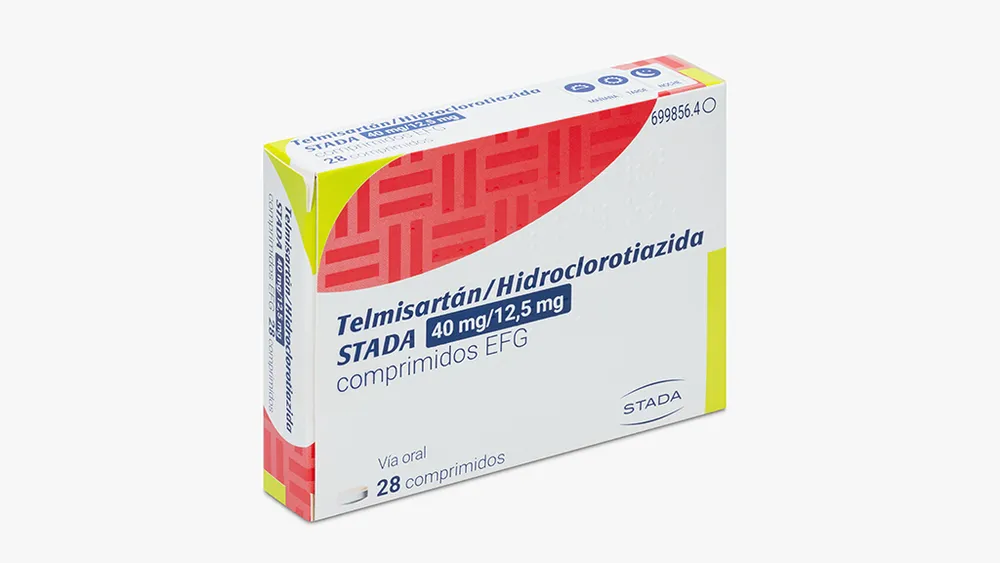
Table of Contents
- Package leaflet: Information for the user
- Introduction
- 1. What Telmisartán/Hidroclorotiazida Stada is and what it is used for
- 2. What you need to know before starting to take Telmisartan/Hydrochlorothiazide Stada
- Do not take Telmisartan/Hydrochlorothiazide Stada
- 3. How to take Telmisartan/Hydrochlorothiazide Stada
- 4. Possible adverse effects
- 5. Storage of Telmisartan/Hydrochlorothiazide Stada
- 6. Contents of the pack and other information
Package leaflet: Information for the user
Introduction
Package leaflet: information for the user
Telmisartan/Hydrochlorothiazide Stada 40 mg/12.5 mg tablets EFG
Read the entire leaflet carefully before you start taking this medicine, because it contains important information for you.
- Keep this leaflet, as you may need to read it again.
- If you have any questions, ask your doctor or pharmacist.
- This medicine has been prescribed for you only, and you should not give it to other people, even if they have the same symptoms as you, because it may harm them.
- If you experience any adverse effects, consult your doctor or pharmacist, even if they are adverse effects not listed in this leaflet. See section 4.
Contents of the leaflet
-
What Telmisartan/Hydrochlorothiazide Stada is and what it is used for.
-
What you need to know before taking Telmisartan/Hydrochlorothiazide Stada.
-
How to take Telmisartan/Hydrochlorothiazide Stada.
-
Possible side effects.
-
How to store Telmisartan/Hydrochlorothiazide Stada.
-
Contents of the pack and other information.
1. What Telmisartán/Hidroclorotiazida Stada is and what it is used for
Telmisartán/Hidroclorotiazida Stada is a combination of two active substances, telmisartan and hydrochlorothiazide, in one tablet. Both active substances help control high blood pressure.
-
Telmisartan belongs to a group of medicines known as angiotensin II receptor blockers. Angiotensin II is a substance produced in your body that causes your blood vessels to narrow, thereby increasing your blood pressure. Telmisartan blocks the effect of angiotensin II, causing your blood vessels to relax and thereby reducing your blood pressure.
-
Hydrochlorothiazide belongs to a group of medicines known as thiazide diuretics, which increase your urine output, resulting in a reduction of your blood pressure.
If left untreated, high blood pressure can damage the blood vessels of various organs and may eventually lead to heart attack, heart or kidney failure, stroke or blindness. High blood pressure usually does not cause symptoms before damage occurs. Therefore, it is important to have your blood pressure checked regularly to ensure it remains within the normal range.
Telmisartán/Hidroclorotiazida is used for the treatment of high blood pressure (essential hypertension) in adults whose blood pressure is not adequately controlled with telmisartan alone.
2. What you need to know before starting to take Telmisartan/Hydrochlorothiazide Stada
Do not take Telmisartan/Hydrochlorothiazide Stada
- if you are allergic to telmisartan or any of the other components of this medicine (listed in section 6).
- if you are allergic to hydrochlorothiazide or to other sulfonamide-derived medicines.
- if you are more than 3 months pregnant. (In any case, it is better to avoid taking this medicine also during early pregnancy – see Pregnancy section).
- if you have severe liver problems such as cholestasis or biliary obstruction (problems with bile drainage from the liver and gallbladder) or any other serious liver disease.
- if you have severe kidney disease or anuria (less than 100 ml of urine per day).
- if your doctor has determined that you have low blood potassium levels or high blood calcium levels that do not improve with treatment.
- if you have diabetes or kidney failure and are being treated with a blood pressure-lowering medicine containing aliskiren.
If any of the above apply to you, inform your doctor or pharmacist before using telmisartan/hydrochlorothiazide.
Warnings and precautions
Talk to your doctor before starting to take telmisartan/hydrochlorothiazide if you have or have had any of the following conditions or diseases:
-
Low blood pressure (hypotension), which may occur if you are dehydrated (excessive loss of body water) or have salt deficiency due to treatment with diuretics, a low-sodium diet, diarrhea, vomiting, or hemofiltration.
-
Kidney disease or kidney transplant.
-
Renal artery stenosis (narrowing of the blood vessels to one or both kidneys).
-
Liver disease.
-
Heart problems.
-
Diabetes.
-
Gout.
-
High levels of aldosterone (water and salt retention in the body along with imbalance of various blood minerals).
- Systemic lupus erythematosus (also called “lupus” or “SLE”), a disease in which the body's immune system attacks the body itself.
- The active ingredient hydrochlorothiazide may cause a rare reaction, leading to vision loss and eye pain. These symptoms may indicate fluid accumulation in the vascular layer of the eye (choroidal effusion) or increased eye pressure and may appear from hours to weeks after taking Telmisartan/Hydrochlorothiazide. If untreated, this may lead to permanent vision loss.
-
If you have had skin cancer or if you develop an unexpected skin lesion during treatment. Treatment with hydrochlorothiazide, particularly long-term use at high doses, may increase the risk of certain types of skin and lip cancer (non-melanoma skin cancer). Protect your skin from sun exposure and UV rays while taking telmisartan/hydrochlorothiazide.
Talk to your doctor if you experience abdominal pain, nausea, vomiting, or diarrhea after taking telmisartan/hydrochlorothiazide. Your doctor will decide whether to continue treatment. Do not stop taking telmisartan/hydrochlorothiazide on your own.
Consult your doctor before starting to take telmisartan/hydrochlorothiazide
- if you are taking any of the following medicines used to treat high blood pressure (hypertension):
- an angiotensin-converting enzyme inhibitor (ACE inhibitor) (e.g., enalapril, lisinopril, ramipril), particularly if you have kidney problems related to diabetes.
- aliskiren.
Your doctor may monitor your kidney function, blood pressure, and blood electrolyte levels (e.g., potassium) at regular intervals. See also the information under the heading “Do not take Telmisartan/Hydrochlorothiazide Stada”.
- if you are taking digoxin
- if you have previously experienced breathing or lung problems (such as inflammation or fluid in the lungs) after taking hydrochlorothiazide. If you develop shortness of breath or severe difficulty breathing after taking telmisartan/hydrochlorothiazide, seek medical attention immediately.
If you are pregnant, suspect you may be pregnant, or plan to become pregnant, inform your doctor. Use of telmisartan/hydrochlorothiazide is not recommended during early pregnancy (first 3 months) and must not be used from the third month of pregnancy onward, as it may cause serious harm to your baby (see Pregnancy section).
Treatment with hydrochlorothiazide may cause an electrolyte imbalance in your body. Typical symptoms of fluid or electrolyte imbalance include dry mouth, weakness, lethargy, drowsiness, restlessness, muscle pain or cramps, nausea (feeling unwell), vomiting, muscle fatigue, and abnormally rapid heartbeat (more than 100 beats per minute). If you experience any of these symptoms, inform your doctor.
You should also inform your doctor if you experience increased skin sensitivity to sunlight, with symptoms of sunburn (such as redness, itching, swelling, or blistering) appearing more quickly than usual.
If you are scheduled for surgery or anesthesia, inform your doctor that you are taking telmisartan/hydrochlorothiazide.
Telmisartan/hydrochlorothiazide may be less effective in lowering blood pressure in black patients.
Children and adolescents
The use of telmisartan/hydrochlorothiazide is not recommended in children and adolescents under 18 years of age.
Use in athletes
Athletes should be aware that this medicine contains a component that may result in a positive doping test.
Other medicines and Telmisartan/Hydrochlorothiazide Stada
Inform your doctor or pharmacist if you are taking, have recently taken, or might need to take any other medicines. Your doctor may need to adjust the dose of these other medicines or take other precautions. In some cases, you may need to stop taking one of these medicines, especially if you are using any of the following together with telmisartan/hydrochlorothiazide:
-
Medicines containing lithium used to treat certain types of depression.
-
Medicines associated with low blood potassium levels (hypokalemia), such as other diuretics, laxatives (e.g., castor oil), corticosteroids (e.g., prednisone), ACTH (adrenocorticotropic hormone), amphotericin (an antifungal medicine), carbenoxolone (used to treat mouth ulcers), sodium penicillin G (an antibiotic), and acetylsalicylic acid and its derivatives.
-
Iodinated contrast agents used during imaging procedures.
-
Medicines that may increase blood potassium levels, such as potassium-sparing diuretics, potassium supplements, potassium-containing salt substitutes, ACE inhibitors, cyclosporine (an immunosuppressant), and other medicines such as sodium heparin (an anticoagulant).
-
Medicines affected by changes in blood potassium levels, such as heart medicines (e.g., digoxin) or medicines to control your heart rhythm (e.g., quinidine, disopyramide, amiodarone, sotalol), medicines used for mental disorders (e.g., thioridazine, chlorpromazine, levomepromazine), and other medicines such as certain antibiotics (e.g., sparfloxacin, pentamidine) or certain medicines for allergic reactions (e.g., terfenadine).
-
Medicines for the treatment of diabetes (insulins or oral agents such as metformin).
-
Cholestyramine and colestipol, medicines used to reduce blood fat levels.
-
Medicines to increase blood pressure, such as noradrenaline.
-
Muscle relaxants, such as tubocurarine.
-
Calcium and/or vitamin D supplements.
-
Anticholinergic medicines (used to treat various disorders such as gastrointestinal spasms, urinary spasms, asthma, motion sickness, muscle spasms, Parkinson’s disease, and as an aid in anesthesia), such as atropine and biperiden.
-
Amantadine (a medicine used to treat Parkinson’s disease and also to treat or prevent certain viral diseases).
-
Other medicines used to treat high blood pressure, corticosteroids, analgesics (such as non-steroidal anti-inflammatory drugs [NSAIDs]), cancer treatments, gout, or arthritis.
-
If you are taking an angiotensin-converting enzyme inhibitor (ACE inhibitor) or aliskiren (see also the information under the headings “Do not take Telmisartan/Hydrochlorothiazide Stada” and “Warnings and precautions”).
-
Digoxin.
Telmisartan/hydrochlorothiazide may enhance the blood pressure-lowering effect of other medicines or of medicines that may potentially lower blood pressure (e.g., baclofen, amifostine).
In addition, blood pressure reduction may be worsened by alcohol, barbiturates, narcotics, or antidepressants. You may notice this effect as dizziness upon standing. Inform your doctor, as dose adjustments of your other medicines may be needed while using telmisartan/hydrochlorothiazide.
The effect of telmisartan/hydrochlorothiazide may be reduced when used with NSAIDs (non-steroidal anti-inflammatory drugs, e.g., aspirin or ibuprofen).
Taking Telmisartan/Hydrochlorothiazide Stada with food and alcohol
You may take this medicine with or without food.
Avoid drinking alcohol until you have spoken with your doctor. Alcohol may further lower your blood pressure and/or increase the risk of dizziness or weakness.
Pregnancy and breastfeeding
Pregnancy
Inform your doctor if you are pregnant, suspect you may be pregnant, or plan to become pregnant. Your doctor will usually advise you to stop taking telmisartan/hydrochlorothiazide before becoming pregnant or as soon as pregnancy is confirmed, and will recommend an alternative antihypertensive medicine. Telmisartan/hydrochlorothiazide is not recommended during pregnancy and must not be used from the third month of pregnancy onward, as it may cause serious harm to your baby when used from that time.
Breastfeeding
Inform your doctor if you are planning to breastfeed or are currently breastfeeding, as telmisartan/hydrochlorothiazide is not recommended for women during this period. Your doctor may choose a more suitable treatment if you intend to breastfeed.
Driving and using machines
Some patients may feel dizzy, faint, or experience vertigo (a sensation that everything is spinning) when taking telmisartan/hydrochlorothiazide. If you experience any of these effects, do not drive or operate machinery.
Telmisartan/Hydrochlorothiazide Stada contains lactose and sodium
If your doctor has informed you that you have an intolerance to certain sugars, consult with him before using this medicine.
This medicine contains less than 1 mmol of sodium (23 mg) per tablet; hence, it is essentially “sodium-free”.
3. How to take Telmisartan/Hydrochlorothiazide Stada
Follow exactly the instructions for use of this medicine as provided by your doctor. If in doubt, consult your doctor or pharmacist again.
The recommended dose of telmisartan/hydrochlorothiazide is one tablet daily. Try to take one tablet at the same time each day. You may take telmisartan/hydrochlorothiazide with or without food. The tablets should be swallowed whole with a little water or other non-alcoholic drink. It is important that you take telmisartan/hydrochlorothiazide every day until your doctor tells you otherwise.
If your liver is not functioning properly, the usual dose should not exceed 40 mg of telmisartan once daily.
If you take more Telmisartan/Hydrochlorothiazide Stada than you should
If you accidentally take too many tablets, you may experience symptoms such as low blood pressure and rapid heartbeat. Slow heartbeat, dizziness, vomiting, and reduced kidney function including kidney failure have also been reported. Due to the hydrochlorothiazide component, markedly low blood pressure and low blood potassium levels may also occur, which could lead to nausea, drowsiness, muscle cramps, and/or irregular heartbeat, particularly when used concomitantly with medications such as digitalis or certain antiarrhythmic treatments. Contact your doctor or pharmacist immediately or go to the nearest hospital emergency department.
You may also call the Toxicology Information Service at telephone number 91 562 04 20, stating the medication and the amount ingested.
If you forget to take Telmisartan/Hydrochlorothiazide Stada
If you forget to take your medicine, do not worry. Take the dose as soon as you remember and then continue as before. If you miss a dose one day, take your normal dose the next day. Do not take a double dose to make up for missed doses.
If you have any further questions about the use of this medicine, ask your doctor or pharmacist.
4. Possible adverse effects
Like all medicines, this medicine can cause adverse effects, although not everyone experiences them.
Some adverse effects may be serious and require immediate medical attention:
If you experience any of the following symptoms, you must see your doctor immediately:
Sepsis* (commonly called “blood infection”), a severe infection involving a systemic inflammatory response, rapid swelling of the skin and mucous membranes (angioedema including fatal outcome), blistering and peeling of the outer layer of skin (toxic epidermal necrolysis); these adverse effects are rare (may affect up to 1 in 1,000 people) or very rare (toxic epidermal necrolysis; may affect up to 1 in 10,000 people), but are extremely serious, and patients must stop taking the medicine and see their doctor immediately. If these adverse effects are not treated, they may be fatal. An increased incidence of sepsis has been observed with telmisartan alone; however, it cannot be ruled out for telmisartan/hydrochlorothiazide.
Possible adverse effects of Telmisartán/HidroclorotiazidaStada:
Common adverse effects (may affect up to 1 in 10 people)
Dizziness.
Uncommon adverse effects (may affect up to 1 in 100 people)
Decreased blood potassium levels, anxiety, fainting (syncope), tingling sensation, pins and needles (paresthesia), dizziness (vertigo), rapid heartbeat (tachycardia), heart rhythm disturbances, low blood pressure, sudden drop in blood pressure upon standing, shortness of breath (dyspnea), diarrhea, dry mouth, flatulence, back pain, muscle spasms, muscle pain, erectile dysfunction (inability to achieve or maintain an erection), chest pain, and increased blood uric acid levels.
Rare adverse effects (may affect up to 1 in 1,000 people)
Inflammation of the airways to the lungs (bronchitis), sore throat, sinusitis, increased uric acid levels, low sodium levels, feeling of sadness (depression), difficulty sleeping (insomnia), sleep disorders, vision disturbances, blurred vision, difficulty breathing, abdominal pain, constipation, abdominal bloating (dyspepsia), general malaise (vomiting), stomach inflammation (gastritis), liver function abnormalities (Japanese patients show a greater tendency to experience this adverse effect), skin redness (erythema), allergic reactions such as itching or rash, increased sweating, hives (urticaria), joint pain (arthralgia), limb pain, muscle cramps, activation or worsening of systemic lupus erythematosus (a disease in which the body's immune system attacks the body itself, causing joint pain, skin rashes, and fever), flu-like illness, pain, increased levels of creatinine, liver enzymes, or creatine phosphokinase in blood.
Adverse reactions reported for one of the individual components may be potential adverse reactions of telmisartan/hydrochlorothiazide, even if they have not been observed in clinical trials with this product.
Telmisartan
The following additional adverse effects have been described in patients taking telmisartan alone:
Uncommon adverse effects (may affect up to 1 in 100 people)
Upper respiratory tract infection (e.g., sore throat, sinus inflammation, common cold), urinary tract infections, bladder infection, deficiency of red blood cells (anemia), high potassium levels, slow heart rate (bradycardia), cough, kidney function impairment including acute renal failure, weakness.
Rare adverse effects (may affect up to 1 in 1,000 people)
Low platelet count (thrombocytopenia), increase in certain white blood cells (eosinophilia), severe allergic reactions (e.g., hypersensitivity, anaphylactic reactions), low blood sugar levels (in diabetic patients), drowsiness, stomach discomfort, eczema (a skin disorder), drug rash, toxic skin eruption, tendon pain (symptoms of pseudotendinitis), decreased hemoglobin (a blood protein).
Very rare adverse effects (may affect up to 1 in 10,000 people)
Progressive fibrosis of lung tissue (interstitial lung disease) **
Frequency not known (frequency cannot be estimated from available data)
Intestinal angioedema: intestinal swelling has been reported with symptoms such as abdominal pain, nausea, vomiting, and diarrhea following the use of similar products.
- This may have been an incidental finding or related to a mechanism currently unknown.
** Cases of progressive fibrosis of lung tissue have been reported during telmisartan treatment. However, it is unknown whether telmisartan was the cause.
Hydrochlorothiazide
The following additional adverse effects have been reported in patients taking hydrochlorothiazide alone:
Very common adverse effects (may affect more than 1 in 10 people)
Elevated blood fat levels.
Common adverse effects (may affect up to 1 in 10 people)
Nausea, low blood magnesium levels, decreased appetite.
Uncommon adverse effects (may affect up to 1 in 100 people)
Acute renal failure.
Rare adverse effects (may affect up to 1 in 1,000 people)
Low platelet count (thrombocytopenia), which increases the risk of bleeding and bruising (small purple-red marks on the skin or other tissues caused by bleeding), high blood calcium levels, high blood sugar levels, headache, abdominal discomfort, yellowing of the skin or eyes (jaundice), excess bile substances in the blood (cholestasis), photosensitivity reaction, uncontrolled blood glucose levels in patients diagnosed with diabetes mellitus, sugar in the urine (glucosuria).
Very rare adverse effects (may affect up to 1 in 10,000 people)
Abnormal breakdown of red blood cells (hemolytic anemia), inability of the bone marrow to function properly, reduction in white blood cells (leukopenia, agranulocytosis), severe allergic reactions (e.g., hypersensitivity), increased pH due to low chloride levels in the blood (acid-base imbalance, hypochloremic alkalosis), acute breathing difficulty (signs include severe shortness of breath, fever, weakness, and confusion), inflammation of the pancreas, pseudolupus syndrome (a disorder resembling systemic lupus erythematosus, in which the body's immune system attacks itself), inflammation of blood vessels (necrotizing vasculitis).
Frequency not known (cannot be estimated from available data)
Skin and lip cancer (non-melanocytic skin cancer), deficiency of blood cells (aplastic anemia), vision loss and eye pain (possible signs of fluid accumulation in the vascular layer of the eye [choroidal effusion] or acute angle-closure glaucoma), skin disorders such as inflammation of blood vessels in the skin, increased sensitivity to sunlight, skin rash, redness of the skin, blistering of the lips, eyes, or mouth, skin peeling, fever (possible signs of erythema multiforme), weakness, kidney dysfunction.
In isolated cases, low sodium levels accompanied by symptoms related to the brain or nerves (nausea, progressive disorientation, lack of interest or energy) may occur.
Reporting of adverse effects
If you experience any adverse effects, consult your doctor or pharmacist, even if they are possible adverse effects not listed in this leaflet. You may also report them via the Spanish Pharmacovigilance System for Human Medicines: https://www.notificaram.es. By reporting adverse effects, you can help provide more information on the safety of this medicine.
5. Storage of Telmisartan/Hydrochlorothiazide Stada
Keep this medicine out of the sight and reach of children.
Do not use this medicine after the expiry date which is stated on the packaging after “EXP”. The expiry date refers to the last day of the month indicated.
This medicine does not require any special storage temperature. Store in the original packaging to protect it from light and moisture. Remove your telmisartan/hydrochlorothiazide tablet just before taking it.
Medicines must not be disposed of via wastewater or household waste. Unwanted medicines and their containers should be taken to the SIGRE point at your pharmacy. Ask your pharmacist how to dispose of medicines and containers you no longer need. This will help protect the environment.
6. Contents of the pack and other information
Composition of Telmisartán/Hydrochlorothiazide Stada
- The active substances are telmisartan and hydrochlorothiazide. Each tablet contains 40 mg of telmisartan and 12.5 mg of hydrochlorothiazide.
- The other components are mannitol (E421), povidone (povidone K 25) (E1201), crospovidone (E1202), magnesium stearate (E470b), meglumine, sodium hydroxide (E524), lactose monohydrate, microcrystalline cellulose (E460), hypromellose (hydroxypropylmethylcellulose) (E464), sodium carboxymethyl potato starch (Type A), and yellow iron oxide (E172).
Nature of the product and contents of the pack
Telmisartán/Hydrochlorothiazide Stada 40 mg/12.5 mg tablets are round, two-layered tablets, white and yellow in color.
Telmisartán/Hydrochlorothiazide Stada is available in blister packs containing 7, 10, 14, 28, 28x1, 30, 30x1, 50, 56, 84, 90, 90x1, 98, 100, 112, 126, 140, 154, 168, 182 or 196 tablets.
Not all pack sizes may be marketed in your country.
Marketing Authorization Holder and Manufacturer
Marketing Authorization Holder
Laboratorio STADA, S.L.
Frederic Mompou, 5
08960 Sant Just Desvern (Barcelona)
Spain
Manufacturer
Liconsa, S.A.
Avda. Miralcampo, nº7,
Polígono Industrial Miralcampo
19200 Azuqueca de Henares (Guadalajara)
Spain
or
Medical Valley Invest AB
Bradgardsvagen 28 2 Tr
236 32 Ilolviken
Sweden
This medicinal product is authorized in the European Economic Area member states under the following names:
Netherlands: Telmisartan/Hydrocloorthiazide Chemo Ibérica 40 mg/12.5 mg tabletten
Austria: Telmisartan/HCT +pharma 40 mg/12.5 mg Tabletten
Belgium: Telmisartan/Hydrochlorothiazide Chemo Ibérica 40 mg/12.5 mg comprimés
Germany: Telmisartan/Hydrochlorothiazid Axiromed 40 mg/12.5 mg Tabletten
Spain: Telmisartán / Hidroclorotiazida Stada 40 mg/12.5 mg comprimidos EFG
Ireland: Telmisartan/Hydrochlorothiazid Chemo Ibérica 40 mg/12.5 mg tablets
Portugal: Telmisartan + Hidroclorotiazida Bluepharma 40 mg + 12.5 mg comprimidos
Date of the most recent review of this leaflet: December 2025.
Other sources of information
Detailed information on this medicinal product is available on the website of the Spanish Agency of Medicines and Health Products (AEMPS) (http://www.aemps.gob.es/).