Tecartus 0.4 - 2 x 10^8 cells dispersion for infusion
Spain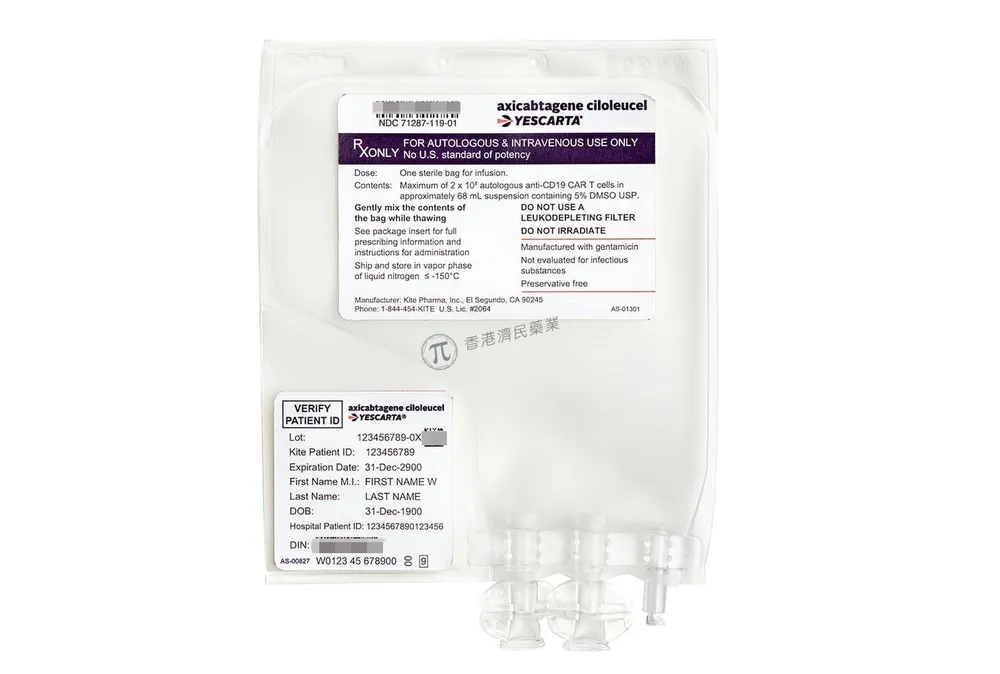
Table of Contents
- Package Leaflet: Information for the Patient
- Introduction
- 1. What Tecartus is and what it is used for
- 2. What you need to know before Tecartus is administered to you
- 3. How Tecartus is administered
- Tecartus will always be administered by a healthcare professional.
- 4. Possible adverse effects
- 5. Conservation of Tecartus
- **This information is intended for healthcare professionals only.**
- 6. Contents of the pack and other information
Package Leaflet: Information for the Patient
Introduction
Package Leaflet: Information for the Patient
Tecartus 0.4 – 2 × 10⁸ cells infusion dispersion
anti-CD19 transduced autologous CD3+ cells (viable CAR+ T cells)
This medicinal product is subject to additional monitoring, which will allow rapid identification of new safety information. You can help by reporting any side effects you may experience. Information on how to report side effects is included at the end of section 4.
Read all of this leaflet carefully before you start receiving this medicine, because it contains important information for you.
- Keep this leaflet as you may need to read it again.
- Your doctor will give you a patient alert card. Read it carefully and follow the instructions.
- Always show your patient alert card to any doctor or nurse treating you, or if you go to hospital.
- If you have any questions, ask your doctor or nurse.
- If you experience any side effects, talk to your doctor or nurse, even if they are not listed in this leaflet. See section 4.
Leaflet Contents
-
What Tecartus is and what it is used for
-
What you need to know before you are given Tecartus
-
How Tecartus is given
-
Possible side effects
-
How to store Tecartus
-
Contents of the pack and other information
1. What Tecartus is and what it is used for
Tecartus is a gene therapy medicine used to treat mantle cell lymphoma in adults. It is used when other medicines are no longer effective in treating your condition (refractory or relapsed mantle cell lymphoma). This medicine is specifically prepared for you using your own modified white blood cells, known as anti-CD19 transduced autologous CD3+ cells.
Mantle cell lymphoma is a cancer that affects part of the immune system (the body's defenses). This cancer affects a type of white blood cells called B-lymphocytes. In mantle cell lymphoma, B-lymphocytes grow uncontrollably and accumulate in lymphatic tissue, bone marrow, or blood.
How Tecartus works
White blood cells are collected from your blood and genetically modified so that they can target cancer cells in your body. When you are given the Tecartus infusion into your blood, the modified white blood cells will destroy the cancer cells.
2. What you need to know before Tecartus is administered to you
Tecartus will not be given to you if:
- You are allergic to any of the other components of this medicine (listed in section 6). If you think you may be allergic, consult your doctor for advice.
- You are unable to receive the medicine used to reduce the number of white blood cells in your blood (lymphodepleting chemotherapy). (See also section 3, "How Tecartus is administered.")
Warnings and precautions
Tecartus is made from your own white blood cells and should only be given to you (autologous use).
Tests and checks
Before Tecartus is administered, your doctor will:
-
Examine your lungs, heart, and kidneys and check your blood pressure.
-
Look for signs of infection or inflammation and decide whether you need treatment before receiving Tecartus.
-
Assess whether your cancer is worsening.
-
Check for signs of graft-versus-host disease, which may occur after a transplant. This happens when transplanted cells attack your body, causing symptoms such as rash, nausea, vomiting, diarrhea, and bloody stools.
-
Check your uric acid levels and the number of cancer cells in your blood. This will show whether you are likely to develop a complication called tumor lysis syndrome. You may be given medicines to help prevent this complication.
-
Test you for hepatitis B, hepatitis C, or HIV infection.
-
Check whether you received a vaccine within the past 6 weeks or if vaccination is planned in the coming months.
-
Check whether you previously received a treatment targeting the protein called CD19.
Sometimes, it may not be possible to administer the planned Tecartus treatment. If the Tecartus infusion is delayed for more than 2 weeks after you received lymphodepleting chemotherapy, you may need additional chemotherapy. (See also section 3, "How Tecartus is administered.")
After Tecartus is administered
If you experience any of the following symptoms, inform your doctor or nurse immediately or seek urgent medical attention right away:
-
Chills, extreme fatigue, weakness, dizziness, headache, cough, difficulty breathing, rapid or irregular heartbeat, severe nausea, vomiting, or diarrhea; these may be symptoms of a complication called cytokine release syndrome. Take your temperature twice daily for 3 to 4 weeks after Tecartus treatment. If your temperature is high, contact your doctor immediately.
-
Seizures, tremors, difficulty speaking or changes in speech, loss of consciousness or decreased level of consciousness, confusion and disorientation, loss of balance or coordination.
-
Fever (e.g., temperature above 38°C), which may be a sign of infection.
-
Extreme fatigue, weakness, and difficulty breathing, which may be symptoms of low red blood cell levels.
-
Bleeding or bruising easily, which may be symptoms of low levels of a type of blood cell called platelets.
If any of the above apply to you (or you are unsure), consult your doctor or nurse.
Your doctor will frequently monitor your blood counts, as the number of blood cells and other blood components may decrease.
You will be asked to enroll in a registry for at least 15 years to help better understand the long-term effects of Tecartus.
Do not donate blood, organs, tissues, or cells for transplantation.
Children and adolescents
Tecartus must not be given to children and adolescents under 18 years of age.
Other medicines and Tecartus
Inform your doctor or nurse if you are taking, have recently taken, or might need to take any other medicines.
Before receiving Tecartus, inform your doctor or nurse if you are taking any medicine that suppresses the immune system, such as corticosteroids, as these medicines may interfere with the effect of Tecartus.
You must not receive certain vaccines known as live virus vaccines, particularly:
-
During the 6 weeks before you receive the short course of lymphodepleting chemotherapy to prepare your body for Tecartus cells.
-
During treatment with Tecartus.
-
After treatment while your immune system is recovering.
Consult your doctor if you need any vaccination.
Pregnancy and breastfeeding
If you are pregnant or breastfeeding, think you may be pregnant, or plan to become pregnant, consult your doctor before receiving this medicine. This is because the effects of Tecartus in pregnant or breastfeeding women are unknown, and it may harm the fetus or breastfed infant.
- If you become pregnant or think you may be pregnant after Tecartus treatment, consult your doctor immediately.
- You will be tested for pregnancy before starting treatment. Tecartus should only be administered if test results confirm you are not pregnant.
Talk to your doctor about pregnancy if you have received Tecartus.
Driving and use of machines
Tecartus may cause problems such as altered level of consciousness or decreased level of consciousness, confusion, and seizures (convulsions) within 8 weeks of administration.
Do not drive, operate machinery, or engage in activities requiring intense concentration for at least 8 weeks after Tecartus treatment or until your doctor confirms you have fully recovered.
Tecartus contains sodium, dimethyl sulfoxide (DMSO), and gentamicin
This medicine contains 300 mg of sodium (a main component of table/cooking salt) per infusion. This corresponds to 15% of the maximum recommended daily sodium intake for an adult. It also contains DMSO and gentamicin, which may cause severe hypersensitivity reactions.
3. How Tecartus is administered
Tecartus will always be administered by a healthcare professional.
-
Since Tecartus is prepared using your own white blood cells, your cells will be collected to prepare your medicine. Your doctor will collect some of your blood through a catheter placed in a vein (a procedure called leukapheresis). Some white blood cells are separated from the blood, and the rest of the blood is returned to the vein. This may take from 3 to 6 hours and may need to be repeated.
-
Your white blood cells will be sent to a manufacturing center to produce Tecartus. It usually takes 2 to 3 weeks to manufacture Tecartus, but the time may vary.
Medications administered before treatment with Tecartus
A few days before receiving Tecartus, you will be given lymphodepleting chemotherapy. This helps the modified white blood cells in Tecartus multiply in your body once the medicine is administered.
During the 30 to 60 minutes before Tecartus is administered, you may be given other medications. These are intended to help prevent infusion reactions and fever. These other medications may include:
-
Paracetamol.
-
An antihistamine such as diphenhydramine.
How Tecartus is administered
Tecartus will always be administered by a physician at a qualified medical center.
- Tecartus is given as a single dose.
- Your doctor or nurse will administer a single infusion of Tecartus through a catheter placed in a vein (intravenous infusion) over approximately 30 minutes.
- Tecartus is the version of your genetically modified white blood cells. Therefore, the healthcare professional handling the treatment will take necessary precautions (wearing gloves and goggles) to avoid potential transmission of infectious diseases and will follow local guidelines for handling waste materials of human origin regarding cleaning and disposal of any materials that have come into contact with the treatment.
After Tecartus administration
- You must remain near the hospital where you were treated for at least 4 weeks after receiving Tecartus. Your doctor will recommend that you return to the hospital daily for at least 10 days or remain hospitalized for the first 10 days after treatment with Tecartus. This is so your doctor can monitor whether the treatment is working and assist you if you experience any adverse effects.
If you are unable to attend an appointment, contact your doctor or treatment center as soon as possible to reschedule.
4. Possible adverse effects
Like all medicines, this medicine can cause adverse effects, although not everyone will experience them. Do not attempt to treat adverse effects on your own.
Tecartus may cause adverse effects that can be serious or potentially fatal. Seek urgent medical attention if you experience any of the following adverse effects after Tecartus infusion.
Very common: may affect more than 1 in 10 people
-
Fever, chills, low blood pressure that may lead to symptoms such as dizziness, lightheadedness, fluid accumulation in the lungs that may be severe and life-threatening (all of these are symptoms of a complication known as cytokine release syndrome).
-
Loss of consciousness or reduced level of consciousness, confusion or memory loss due to disturbances in brain function, difficulty speaking or altered speech, involuntary shaking (tremors), seizures (convulsions), sudden confusion with agitation, disorientation, hallucinations, or irritability (delirium).
-
Fever, chills, which may be signs of infection.
Other possible adverse effects
The following is a list of other adverse effects. Inform your doctor immediately if these adverse effects become severe or intense.
Very common: may affect more than 1 in 10 people
-
Abnormally low white blood cell count, which may increase the risk of infection.
-
Low number of cells that help blood to clot (thrombocytopenia), impaired blood clotting ability: symptoms may include excessive or prolonged bleeding or bruising.
-
High blood pressure.
-
Decreased number of red blood cells (cells that carry oxygen): symptoms may include extreme tiredness and lack of energy.
-
Extreme tiredness.
-
Fast or slow heart rate.
-
Reduced oxygen levels reaching body tissues: symptoms may include changes in skin color, confusion, and rapid breathing.
-
Difficulty breathing, cough.
-
Nausea, constipation, diarrhea, abdominal pain, vomiting, difficulty swallowing.
-
Muscle pain, joint pain, bone pain, pain in limbs.
-
Lack of energy or strength, muscle weakness, difficulty moving, muscle spasms.
-
Headache.
-
Kidney problems causing fluid buildup in the body, fluid accumulation in tissues (edema) that may lead to weight gain, difficulty breathing, and reduced urine output.
-
Elevated levels of uric acid in blood tests.
-
Low levels of sodium, phosphate, potassium, or calcium in blood tests.
-
Decreased appetite, mouth pain.
-
Difficulty sleeping, anxiety.
-
Swelling in limbs, fluid accumulation around the lungs (pleural effusion).
-
Skin rash.
-
Low levels of immunoglobulins in blood tests, which may lead to infections.
-
Increased levels of liver enzymes in blood tests.
-
Blood clots: symptoms may include chest or upper back pain, difficulty breathing, coughing up blood, or pain with cramping, swelling in only one leg, dark and warm skin around the painful area.
-
Nerve pain.
Common: may affect up to 1 in 10 people
-
Low levels of albumin in blood tests.
-
Excessive bleeding.
-
Irregular heart rate (arrhythmia).
-
Loss of control over body movements.
-
Dry mouth, dehydration.
-
Shortness of breath (respiratory insufficiency).
-
Difficulty breathing that prevents speaking in full sentences and cough due to fluid accumulation in the lungs.
-
Increased intracranial pressure.
Reporting of adverse effects
If you experience any type of adverse effect, consult your doctor or nurse, even if it is a possible adverse effect not listed in this leaflet. You may also report them directly through the national reporting system listed in Appendix V. By reporting adverse effects, you can help provide more information on the safety of this medicine.
5. Conservation of Tecartus
This information is intended for healthcare professionals only.
Keep this medicine out of the sight and reach of children.
Do not use this medicine after the expiry date stated on the label of the container and the infusion bag after EXP.
Store frozen in the vapor phase of liquid nitrogen at ≤ -150°C until the time of thawing for use.
Do not refreeze.
This medicine contains genetically modified human blood cells. Local guidelines for the handling of waste material of human origin must be followed regarding unused medicine or waste. This medicine will be administered by qualified healthcare professionals who are responsible for the proper disposal of the product. This will help protect the environment.
6. Contents of the pack and other information
Composition of Tecartus
The active substance is autologous CD3+ cells transduced with anti-CD19. Each individual patient-specific infusion bag contains approximately 68 ml of an anti-CD19 CAR T-cell suspension, with a target dose of 2 x 10⁶ viable anti-CD19 CAR-positive T-cells/kg. The other components (excipients) are: Cryostor CS10, sodium chloride, human albumin. See section 2 “Tecartus contains sodium”.
Appearance of the product and contents of the pack
Tecartus is an infusion suspension ranging from transparent to opaque, white to red in colour, supplied in an individual infusion bag contained within a metal container. One infusion bag contains approximately 68 ml of cellular suspension.
Marketing Authorisation Holder
Kite Pharma EU B.V.
Tufsteen 1
2132 NT Hoofddorp
The Netherlands
Manufacturer
Kite Pharma EU B.V.
Tufsteen 1
2132 NT Hoofddorp
The Netherlands
Further information on this medicinal product is available upon request to the local representative of the Marketing Authorisation Holder:
Belgium/Belgium/Belgium Gilead Sciences Belgium SRL-BV Tel/Tel: + 32 (0) 24 01 35 50 | Lithuania Gilead Sciences Poland Sp. z o.o. Tel: + 48 22 262 8702 |
Ireland Gilead Sciences Ireland UC Tel: + 353 (0) 1 686 1888 | Luxembourg/Luxembourg Gilead Sciences Belgium SRL-BV Tel/Tel: + 32 (0) 24 01 35 50 |
Czech Republic Gilead Sciences s.r.o. Tel: + 420 910 871 986 | Hungary Gilead Sciences Ireland UC Tel: + 353 (0) 1 686 1888 |
Denmark Gilead Sciences Sweden AB Tlf: + 46 (0) 8 5057 1849 | Malta Gilead Sciences Ireland UC Tel: + 353 (0) 1 686 1888 |
Germany Gilead Sciences GmbH Tel: + 49 (0) 89 899890-0 | Netherlands Gilead Sciences Netherlands B.V. Tel: + 31 (0) 20 718 36 98 |
Estonia Gilead Sciences Poland Sp. z o.o. Tel: + 48 22 262 8702 | Norway Gilead Sciences Sweden AB Tlf: + 46 (0) 8 5057 1849 |
Greece Gilead Sciences Hellas MEPE Tel: + 30 210 8930 100 | Austria Gilead Sciences GesmbH Tel: + 43 1 260 830 |
Spain Gilead Sciences, S.L. Tel: + 34 91 378 98 30 | Poland Gilead Sciences Poland Sp. z o.o. Tel: + 48 22 262 8702 |
France Gilead Sciences Tel: + 33 (0) 1 46 09 41 00 | Portugal Gilead Sciences, Lda. Tel: + 351 21 7928790 |
Croatia Gilead Sciences Ireland UC Tel: + 353 (0) 1 686 1888 | Romania Gilead Sciences Ireland UC Tel: + 353 (0) 1 686 1888 |
Ireland Gilead Sciences Ireland UC Tel: + 353 (0) 214 825 999 | Slovenia Gilead Sciences Ireland UC Tel: + 353 (0) 1 686 1888 |
Iceland Gilead Sciences Sweden AB Sími: + 46 (0) 8 5057 1849 | Slovakia Gilead Sciences Slovakia s.r.o. Tel: + 421 232 121 210 |
Italy Gilead Sciences S.r.l. Tel: + 39 02 439201 | Finland Gilead Sciences Sweden AB Puh/Tel: + 46 (0) 8 5057 1849 |
Cyprus Gilead Sciences Hellas MEPE Tel: + 30 210 8930 100 | Sweden Gilead Sciences Sweden AB Tel: + 46 (0) 8 5057 1849 |
Latvia Gilead Sciences Poland Sp. z o.o. Tel: + 48 22 262 8702 | United Kingdom Gilead Sciences Ltd Tel: + 44 (0) 8000 113700 |
Date of last review of this leaflet:
This medicinal product has been authorised under a "conditional approval".
This type of approval means that further information on this medicinal product is expected. The European Medicines Agency will review new information on this medicinal product at least once a year, and this leaflet will be updated as necessary.
Other sources of information
Detailed information on this medicinal product is available on the European Medicines Agency website: http://www.ema.europa.eu. Links to other websites on rare diseases and orphan medicinal products are also available.
This leaflet can be found on the European Medicines Agency website in all languages of the European Union/European Economic Area.
<------------------------------------------------------------------------------------------------------------------------>
This information is intended for healthcare professionals only:
It is important to read all information relating to this procedure before administering Tecartus.
Precautions to be taken before handling or administering the medicinal product
-
Tecartus contains genetically modified cells. Applicable local guidelines for handling human-derived material must be followed with respect to such medicinal products.
-
At the administration site, Tecartus must be transported in sealed, leak-proof and break-resistant containers.
-
Tecartus is prepared from autologous blood collected from the patient by leukapheresis. The patient's leukapheresis material and Tecartus may pose a risk of transmission of infectious viruses to healthcare professionals (HCPs) handling the product. Therefore, healthcare professionals handling the leukapheresis material or Tecartus must take appropriate precautions (wearing gloves and eye protection) to avoid potential transmission of infectious diseases.
Preparation of infusion
-
Verify that the patient identification (ID) matches the patient identifiers on the Tecartus metal container label.
-
Do not remove the Tecartus infusion bag from the metal container if the patient-specific label information does not match the patient to be treated.
-
Once patient ID has been confirmed, remove the infusion bag from the metal container.
-
Confirm that the patient information on the metal container label matches that on the infusion bag label.
-
Inspect the infusion bag for container integrity before thawing. If the bag is damaged, follow local guidelines for disposal of human-derived material (or contact Kite immediately).
-
Place the infusion bag into a second bag.
-
Thaw Tecartus at approximately 37 °C, using a water bath or dry thawing method, until no ice is visible in the infusion bag. Gently mix the bag contents to disperse cellular aggregates. If visible cellular aggregates persist, continue gentle mixing. Small cellular aggregates should be dispersed by gentle manual mixing. Tecartus must not be washed, centrifuged, and/or resuspended in a new medium prior to infusion. Thawing will take approximately 3 to 5 minutes.
-
Once thawed, Tecartus is stable at room temperature (20 °C–25 °C) for up to 3 hours. However, infusion should be initiated within 30 minutes of complete thawing.
DO NOT use a leucodepletion filter.
Administration
-
This medicinal product must be administered in a qualified medical centre by one or more physicians experienced in the treatment of haematological malignant neoplasms and who have been trained in the administration and management of patients treated with Tecartus.
-
Ensure that at least one dose of tocilizumab per patient and emergency equipment are available prior to infusion and throughout the recovery period. Hospitals and affiliated centres must have access to an additional dose of tocilizumab within 8 hours of each previous dose.
-
Confirm that the patient identity matches the patient identifiers on the infusion bag.
-
Tecartus is intended for autologous use only.
-
Tecartus must be administered as an intravenous infusion using latex-free intravenous lines without a leucodepletion filter over a period of 30 minutes, either by gravity or using a peristaltic pump.
-
Gently agitate the bag during infusion to prevent formation of cellular aggregates. The entire contents of the infusion bag must be administered.
-
Prior to infusion, a sterile 9 mg/ml (0.9%) sodium chloride solution (0.154 mmol sodium per ml) for injection must be used to prime the infusion lines, and also to flush the lines after infusion. After the total volume of Tecartus has been infused, the infusion bag must be flushed with 10 to 30 ml of 9 mg/ml (0.9%) sodium chloride solution for injection using reverse priming to ensure delivery of the maximum number of cells possible to the patient.
Disposal of Tecartus
- All unused medicinal product or waste materials that have come into contact with Tecartus (solid and liquid waste) must be treated and disposed of in accordance with local guidelines for handling human-derived waste. Work surfaces and materials that may have come into contact with Tecartus must be decontaminated with an appropriate disinfectant.
Accidental exposure
- Accidental exposure to Tecartus must be avoided. In the event of accidental exposure, follow local guidelines for handling human-derived material, which may include washing contaminated skin and removing contaminated clothing.