Tarka 180 mg/2 mg modified-release capsules
Spain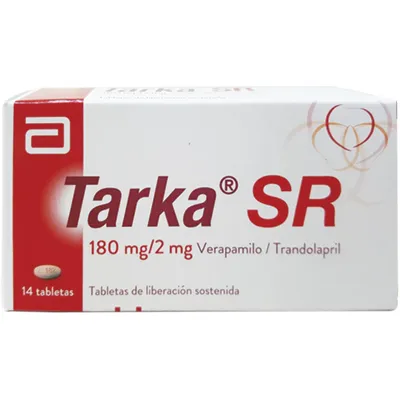
Table of Contents
- Package leaflet: Information for the user
- Introduction
- 1. What Tarka is and what it is used for
- 2. What you need to know before taking Tarka
- Your ability to safely drive or operate heavy machinery may be affected. You may feel tired or dizzy. Alcohol can increase these effects.
- Do not drive a vehicle or operate dangerous tools or heavy machinery until you are certain how Tarka affects you.
- 3. How to take Tarka
- **If treatment with Tarka is interrupted**
- 4. Possible adverse effects
- 5. Storage of Tarka
- 6. Contents of the pack and other information.
- **Composition of Tarka:**
- **Appearance of the product and contents of the pack:**
- **Marketing Authorization Holder and Manufacturing Responsibility:**
Package leaflet: Information for the user
Introduction
Package leaflet: information for the user
Tarka 180 mg/2 mg modified-release capsules
verapamil hydrochloride / trandolapril
Read the entire leaflet carefully before you start taking this medicine, as it contains important information for you.
-
Keep this leaflet, as you may need to read it again.
-
If you have any questions, ask your doctor or pharmacist.
-
This medicine has been prescribed for you only and must not be given to other people, even if they have the same symptoms as you, because it may harm them.
-
If you experience any adverse effects, consult your doctor or pharmacist, even if they are adverse effects not listed in this leaflet. See section 4.
Contents of the leaflet
-
What Tarka is and what it is used for
-
What you need to know before taking Tarka
-
How to take Tarka
-
Possible side effects
-
How to store Tarka
-
Contents of the pack and other information
1. What Tarka is and what it is used for
Tarka 180 mg/2 mg capsules are "modified release," which means the capsules release the medication slowly over several hours.
Tarka is indicated for the treatment of hypertension in patients whose blood pressure has been controlled with the combination of verapamil 180 mg and trandolapril 2 mg.
Tarka belongs to a group of medicines that reduce blood pressure (also known as antihypertensives).
Tarka contains two medicines in a single formulation:
-
A calcium channel blocker (verapamil).
-
An Angiotensin-Converting Enzyme (ACE) inhibitor (trandolapril).
2. What you need to know before taking Tarka
Do not take Tarka if:
- You are allergic to trandolapril or other ACE inhibitors, to verapamil, or to any of the other components of this medicine (listed in section 6).
- You (or a family member) have ever had a severe allergic reaction to any other ACE inhibitor, such as swelling of the face, tongue, or throat (angioedema).
- Your blood pressure is extremely low due to serious heart problems (e.g., during shock).
- You have recently suffered a severe heart attack.
- Your doctor has told you that you have heart failure or second- or third-degree heart block (impaired cardiac electrical conduction causing a very slow heartbeat), or an abnormal heart electrical signal causing episodes of very rapid heartbeat (Wolff-Parkinson-White syndrome, Lown-Ganong-Levine syndrome).
- You have heart valve problems or suffer from sick sinus syndrome (irregular heartbeat) and do not have a pacemaker.
- You have hypertrophic obstructive cardiomyopathy (thickening of the heart muscles).
- You have liver problems, including conditions with fluid accumulation in the abdomen (ascites).
- You have kidney failure or require dialysis.
- You have diabetes or kidney disease and are being treated with a blood pressure-lowering medicine containing aliskiren.
- You suffer from a condition in which the adrenal gland produces excessive hormones (primary hyperaldosteronism).
- You are taking a medicine containing ivabradine for the treatment of certain heart conditions.
- You are more than three months pregnant. (It is even better to avoid Tarka in early pregnancy – see Pregnancy section.)
- You are under 18 years of age.
- You are being treated with injectable beta-blockers (except in intensive care units).
If you have taken or are currently taking sacubitril/valsartan, a medicine used to treat chronic heart failure in adults, because the risk of angioedema (rapid swelling beneath the skin, e.g., in the throat) is high.
Consult your doctor or pharmacist if you have any doubts or are unsure about any of the situations listed above.
Warnings and precautions
Talk to your doctor or pharmacist before taking Tarka, as they may wish to closely monitor your blood pressure or take blood samples at the beginning of treatment and during dose adjustments if:
-
You are an elderly patient.
-
You are diabetic.
-
You have impaired liver or kidney function, or have recently undergone a kidney transplant.
-
You have had or are at risk of having a heart attack.
-
You are taking lithium (a medicine used in the treatment of mania).
-
You are taking digoxin (a medicine that controls your heart rate).
-
You are taking a "statin" (a medicine that lowers your cholesterol or blood fat levels).
-
You are taking beta-blockers, including eye drops containing timolol (a medicine that lowers eye pressure to treat glaucoma).
-
You are taking any of the following medicines for high blood pressure (hypertension):
- An angiotensin II receptor blocker (ARB) (also known as "sartans" – e.g., valsartan, telmisartan, irbesartan), particularly if you have kidney problems related to diabetes.
- Aliskiren.
-
You are taking any of the following medicines, as the risk of angioedema may increase:
- Racecadotril, a medicine used to treat diarrhea.
- Medicines used to prevent organ transplant rejection and for cancer (e.g., temsirolimus, sirolimus, everolimus).
- Vildagliptin, a medicine used to treat diabetes.
Your doctor may monitor your kidney function, blood pressure, and blood electrolyte levels (e.g., potassium) at regular intervals. See also the information under the heading “Do not take Tarka”.
- You are on a strict salt-free diet, are dehydrated, have diarrhea or vomiting, or are being treated with diuretics or other medicines that may alter your potassium levels.
Tell your doctor if you are in any of the following situations:
Heart conditions:
- Slow or irregular heartbeat.
- Your doctor has diagnosed you with first-degree heart block (an electrical conduction block in the heart causing a very slow heartbeat) or left ventricular dysfunction (inadequate pumping of the left side of your heart).
Other situations:
- You are taking Tarka with other medicines that affect the immune system (e.g., cyclosporine), or suffer from an immune system disease such as systemic lupus erythematosus (a condition causing joint pain, skin rashes, and fever) or scleroderma (a condition characterized by hardening and thickening of the skin with possible hair loss), as this increases the risk of reduced white blood cell counts.
- You suffer from neuromuscular disorders such as myasthenia gravis (chronic fatigue and muscle weakness), Lambert-Eaton syndrome, or advanced Duchenne muscular dystrophy.
- You are receiving injections to prevent allergic reactions to bee stings (desensitization therapy).
- You think you are (or might be) pregnant. It is not advisable to use Tarka during early pregnancy, and you must not take it if you are more than three months pregnant, as it may cause serious harm to your baby (see Pregnancy section).
- You are breastfeeding (see section Pregnancy and Breastfeeding).
- You are undergoing LDL apheresis (removal of cholesterol from the blood using a machine).
Allergic reactions:
- In very rare cases, some patients have experienced severe allergic reactions after taking ACE inhibitors such as Tarka. These reactions are more common in Black populations and may cause irritation, rash, and/or swelling of the face, lips, tongue, and throat (angioedema). Severe allergic reactions could also affect the intestines and cause abdominal pain (with or without nausea and vomiting) (intestinal angioedema). If any of these symptoms occur, stop taking Tarka and seek immediate medical attention.
Children and adolescents
Do not give this medicine to children or adolescents under 18 years of age.
Other medicines and Tarka
Some medicines may cause adverse reactions when taken with Tarka. Inform your doctor or pharmacist if you are taking, have recently taken, or might need to take any other medicine, including over-the-counter medicines or herbal remedies.
In particular, inform your doctor if you are taking any of the following medicines:
NEP inhibitors, such as sacubitril (available in fixed-dose combination with valsartan) and racecadotril: the risk of angioedema (rapid swelling beneath the skin, e.g., in the throat) may increase.
Medicines for preventing heart problems or high blood pressure: any medicine used to control heart rate (such as beta-blockers, digoxin, or other medicines for irregular heartbeat) or blood pressure. These may cause your blood pressure to drop too low or your heart rate to become very slow.
Your doctor may need to adjust your dose and/or take other precautions: if you are taking an angiotensin II receptor antagonist (ARB) or aliskiren (see also information under the headings “Do not take Tarka” and “Warnings and precautions”).
Medicines for treating psychological conditions: any medicine for treating depression or psychosis, such as imipramine, lithium, midazolam, buspirone, or other tranquilizers.
Medicines for treating HIV: such as the antiviral agent ritonavir.
Medicines used to prevent organ transplant rejection: such as cyclosporine, tacrolimus, and other medicines belonging to the mTOR inhibitor group (e.g., everolimus, sirolimus, and others). See section Warnings and precautions.
Medicines for treating pain or reducing inflammation such as:
- Steroids (e.g., cortisone or prednisone).
- Certain anti-inflammatory and pain-relieving medicines (e.g., naproxen, ibuprofen, aspirin, or opioids such as morphine).
Medicines for lowering cholesterol or blood fat levels: such as statins (e.g., simvastatin, atorvastatin).
Medicines for treating diabetes: such as insulin or oral diabetes tablets. Verapamil may reduce the hypoglycemic effect of metformin.
Medicines for treating epileptic seizures or epilepsy: such as phenytoin, carbamazepine, and phenobarbital.
Medicines for treating indigestion or stomach ulcers: such as antacids and cimetidine.
Other medicines that may interact with Tarka:
- Medicines for treating asthma, such as theophylline.
- Medicines for treating infections or tuberculosis, such as rifampicin, clarithromycin, or erythromycin.
- Medicines for treating cancer, such as doxorubicin.
- Direct oral anticoagulants (DOACs) (medicines to prevent blood clot formation), such as dabigatran and rivaroxaban.
- Medicines for treating or preventing gout, such as allopurinol and colchicine.
- Medicines for treating rheumatoid arthritis: injectable gold salts.
- Potassium supplements (including salt substitutes), potassium-sparing diuretics, and other medicines that may increase blood potassium levels (e.g., trimethoprim and cotrimoxazole for bacterial infections; cyclosporine, an immunosuppressive medicine used to prevent organ transplant rejection; and heparin, a medicine used to thin the blood to prevent clots).
- Medicines used in surgery: inform your surgeon if you are taking Tarka before any surgical procedure, as Tarka may interfere with anesthetic gases, muscle relaxants, or other medications used during surgery such as dantrolene.
This is not a complete list of medicines that may interact with Tarka. Ask your doctor or pharmacist before taking any medicine with Tarka.
Taking Tarka with food, drinks, and alcohol
- Avoid drinking alcohol while taking Tarka. You may experience a stronger than usual drop in blood pressure.
- Do not drink grapefruit juice while taking Tarka.
- Grapefruit juice may increase the amount of verapamil absorbed, which could increase the risk of adverse reactions to Tarka.
Pregnancy and breastfeeding
Pregnancy
Tell your doctor if you think you are pregnant (or might be). Your doctor will usually advise you to stop taking Tarka before becoming pregnant or as soon as you know you are pregnant, and will recommend an alternative medicine. Tarka is not recommended during early pregnancy, and you must not take it if you are more than three months pregnant, as it may cause serious harm to your baby if used after the first three months of pregnancy.
Breastfeeding
Inform your doctor if you are breastfeeding or planning to breastfeed. Tarka is not recommended for breastfeeding mothers, and your doctor may choose an alternative treatment if you wish to breastfeed, especially if your baby is a newborn or was born prematurely.
If you are pregnant or breastfeeding, think you may be pregnant, or plan to become pregnant, consult your doctor or pharmacist before using this medicine.
Driving and using machines
Your ability to safely drive or operate heavy machinery may be affected. You may feel tired or dizzy. Alcohol can increase these effects.
Do not drive a vehicle or operate dangerous tools or heavy machinery until you are certain how Tarka affects you.
Tarka contains:
Sodium:
This medicine contains 27.9 mg of sodium (the main component of table/cooking salt) per capsule. This corresponds to 1.4% of the maximum daily intake of sodium recommended for an adult.
Lactose:
This medicine contains lactose. If your doctor has informed you of an intolerance to certain sugars, consult with him before taking this medicine.
3. How to take Tarka
Follow exactly the instructions for use of this medicine as given by your doctor. If in doubt, consult your doctor or pharmacist again.
The recommended dose is one modified-release capsule of Tarka once daily, taken at the same time each morning, before, with, or after breakfast. The capsule must be swallowed whole with a glass of water, without sucking, chewing, or crushing it.
If you take more Tarka than you should
If you think you have taken too much Tarka, contact your doctor or pharmacist immediately; some situations may require emergency medical treatment.
If you take too much Tarka, you may feel dizzy due to low blood pressure and reduced heart rate. Other symptoms that may occur if you take too much Tarka include: shock (sudden drop in blood pressure or heart rate), stupor, kidney failure, hyperventilation, tachycardia, palpitations, anxiety, and cough.
In case of overdose or accidental ingestion, contact the Toxicology Information Service at telephone number 91.562.04.20, indicating the medicine and the amount ingested.
If you forget to take Tarka
Take Tarka at the same time every day to avoid missing a dose.
If you forget to take a dose, take the missed dose as soon as you remember, but only if it is still the same day on which the dose was missed.
Do not take a double dose to make up for missed doses.
If treatment with Tarka is interrupted
Do not stop treatment with Tarka unless your doctor advises you to do so.
If you stop taking Tarka, you may experience an increase in your blood pressure.
If you have any further questions about the use of this medicine, ask your doctor or pharmacist.
4. Possible adverse effects
Like all medicines, this medicine can cause adverse effects, although not everyone will experience them. The following are adverse effects that have been reported for Tarka.
Tell your doctor immediately and stop taking Tarka if you experience a severe allergic reaction causing a rash with itching and/or swelling of the face, lips, eyelids, tongue, or throat. Although this is very rare (may affect up to 1 in 10,000 people), it may require urgent medical attention.
The following are common adverse effects (may affect up to 1 in 10 people):
- Cough.
- Dizziness, headache, vertigo.
- Constipation.
- Sudden sensation of warmth with redness of the body.
- Rapid or slow heartbeat (atrioventricular block).
- Sudden drop in blood flow throughout the body, which may be fatal.
- Very low blood pressure.
- Low blood pressure when standing up or sitting down.
The following adverse effects are uncommon (may affect up to 1 in 100 people):
- Allergic reactions (such as rash and itching).
- Drowsiness.
- Tremors.
- Awareness of heartbeat (palpitations).
- Chest pain.
- Nausea, abdominal pain.
- Stomach and intestinal problems.
- Diarrhea.
- Sweating.
- Frequent urination.
- Abnormal liver function tests.
- Increased levels of lipids in the blood (hyperlipidemia).
- Facial edema.
The following adverse effects are rare (may affect up to 1 in 1,000 people):
- Loss of appetite.
- Fainting.
- Hair loss.
- Cold sores (Herpes simplex).
- Increase in the amount of bile pigment in the blood causing yellowing of the skin or whites of the eyes (hyperbilirubinemia).
- Increase in nitrogen-containing compounds such as urea, creatinine (azotemia).
- Certain skin problems.
The following adverse effects are very rare (may affect up to 1 in 10,000 people):
- Bronchitis (inflammation of the upper airways).
- Sinusitis (nasal congestion).
- Hypoventilation/chest pressure.
- Fatigue.
- Weakness.
- Aggression, anxiety, depression, restlessness.
- Problems with balance.
- Difficulty sleeping.
- Skin tingling, sensation of heat/cold.
- Taste disturbances.
- Vision problems (e.g., blurred vision).
- Yellowing of the skin or whites of the eyes (jaundice).
- Inflammation of the pancreas or liver.
- Vomiting.
- Blockage of the bile ducts.
- Dry mouth and throat.
- Changes in red or white blood cell counts that could lead to bruising, bleeding, or reduced resistance to infection.
- Skin reactions such as allergic reactions causing hives, irritation, skin inflammation, itchy rash, increased red spots, scaly or blistering rash.
- Muscle or joint pain, muscle weakness.
- Erectile dysfunction.
- Enlargement of the breasts (in men).
- Irregular rapid contractions of the upper chambers of the heart due to problems in electrical impulse conduction (atrial fibrillation), chest, jaw, and back pain triggered by physical exertion, due to problems with heart blood flow (angina pectoris)/heart attack/rapid or slow heartbeats.
- Stroke.
- Sudden reduction in kidney function.
- Swelling caused by fluid accumulation.
- Changes in blood potassium levels.
- Changes in blood pressure.
- Loss of consciousness.
The following adverse effects have unknown frequency (frequency cannot be estimated from available data):
- A potentially life-threatening allergic reaction causing painful red or purple rash and blisters on the skin and mucous membranes of the mouth.
- Skin redness, acne, dry skin.
- Urinary tract infection.
- Increased appetite.
- Increased blood cholesterol levels, elevated blood sugar, decreased blood sodium levels, increased blood uric acid levels.
- Hallucinations.
- Decreased libido.
- Muscle spasms.
- Migraine.
- Eye disorders, e.g., eyelid inflammation, inflammation of the eyelid mucosa.
- Abnormal heart rhythm, abnormal ECG.
- Twisted veins on the skin surface.
- High blood pressure.
- Upper respiratory tract inflammation, congestion of upper airways, productive cough, throat and mouth inflammation, sore throat, nosebleeds, difficulty breathing.
- Vomiting blood, flatulence.
- Back pain, pain in the arms or legs, bone pain, joint pain, joint stiffness, muscle spasms.
- Fever, feeling unwell, general malaise.
Some adverse reactions have not been seen with Tarka or its components, but have been observed with other medicines similar to Tarka:
- Increased breakdown of red blood cells, which may cause fatigue.
- Confusion.
- Ringing in the ears.
- A brief interruption in blood supply to part of the brain, which may cause temporary problems with vision, speech, or movement.
- Sinus infection or redness and swelling of the sinuses.
- Redness and inflammation of the nasal mucosa.
- Tongue infection or redness and swelling of the tongue.
- Temporary narrowing of the airways in the lungs, making breathing difficult.
- Severe allergic reactions that may affect the intestine and cause abdominal pain (with or without nausea and vomiting) (intestinal angioedema).
- Abnormal intestinal movements, which may cause bloating, stomach pain, and constipation.
- Abnormal bile flow in the liver, causing yellowing of the whites of the eyes.
- A potentially life-threatening allergic reaction causing blisters and skin peeling.
- Abnormal kidney function tests.
- Movement disorders such as extreme restlessness, involuntary movements, and disturbance of voluntary movements.
- Breast milk secretion, abnormally high levels of prolactin (a female hormone) in the blood that stimulates milk production.
- Gum overgrowth covering the teeth.
- Worsening of certain neurological and muscular disorders (such as myasthenia gravis, Lambert-Eaton syndrome, Duchenne muscular dystrophy).
- Painful redness of the skin on the arms and legs.
This is not a complete list of adverse reactions. Some effects may only be detected through blood tests and other medical examinations.
Reporting of adverse effects
If you experience any adverse effect, talk to your doctor, pharmacist, or nurse, even if it is a possible adverse effect not listed in this leaflet. You can also report them directly via the Spanish Pharmacovigilance System for Human Medicines: https://www.notificaram.es. By reporting adverse effects, you can help provide more information on the safety of this medicine.
5. Storage of Tarka
Keep Tarka out of the sight and reach of children.
Do not use this medicine after the expiry date stated on the packaging.
The expiry date refers to the last day of the month indicated.
Do not store above 25°C.
Medicines must not be disposed of via wastewater or household waste. Dispose of unused containers and medicines at the SIGRE collection point at your pharmacy. If you have any doubts, ask your pharmacist how to properly dispose of unused medicines and their containers. This will help protect the environment.
6. Contents of the pack and other information.
Composition of Tarka:
The active substances are: trandolapril and verapamil hydrochloride.
Each capsule contains:
180 mg of verapamil hydrochloride.
2 mg of trandolapril.
The other components are:
Ingredients of the verapamil coated tablet:
Povidone, microcrystalline cellulose, sodium alginate, hypromellose (hydroxypropylmethylcellulose), magnesium stearate, hydroxypropylcellulose, macrogol 400, macrogol 6000, talc, colloidal anhydrous silica, sodium docusate, titanium dioxide (E 171).
Ingredients of the trandolapril granule:
Corn starch, lactose monohydrate, povidone, sodium stearyl fumarate.
Ingredients of the hard gelatin capsule:
Titanium dioxide (E 171), iron oxide red (E 172), gelatin, sodium lauryl sulfate.
Appearance of the product and contents of the pack:
Tarka is presented as modified-release capsules, opaque light pink in colour.
Tarka 180 mg/2 mg is available in calendarised blister packs containing 14, 20, 28, 30, 50, 56, 98, 100, 280 and 300 modified-release capsules.
Only certain pack sizes may be marketed.
Marketing Authorization Holder and Manufacturing Responsibility:
Viatris Healthcare Limited
Damastown Industrial Park
Mulhuddart, Dublin 15
Dublin
Ireland
Manufacturer:
Famar A.V.E Anthoussa Plant
Anthoussa Avenue 7
Anthoussa Attiki, 15349
Greece
For further information about this medicinal product, please contact the local representative of the Marketing Authorization Holder:
Viatris Pharmaceuticals, S.L.
C/ General Aranaz, 86
28027 Madrid
Spain
This medicinal product is authorized in the Member States of the European Economic Area under the following names:
Greece: Tarka 180 mg/2 mg Kaψ?κιa eλeγχ?µeνης αποδ?σμευσης
Netherlands: Tarka 180/2 mg, capsule with controlled release
Spain: Tarka 180 mg /2 mg modified release capsules
Date of the most recent review of this leaflet: January 2021
Detailed information on this medicinal product is available on the website of the Spanish Agency of Medicines and Medical Devices (AEMPS): https://www.aemps.gob.es/