Tamoxifen Cinfa 10 mg tablets EFG
Spain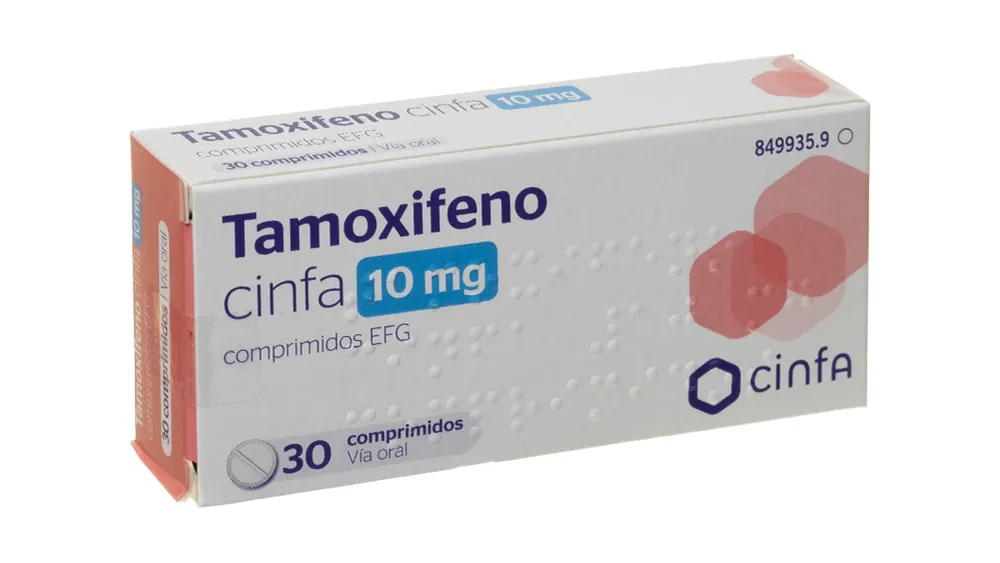
Table of Contents
Package leaflet: Information for the user
Introduction
Package leaflet: information for the user
tamoxifeno cinfa 10 mg tablets EFG
tamoxifen citrate
Read the entire leaflet carefully before you start taking this medicine.
- Keep this leaflet, as you may need to read it again.
- If you have any questions, ask your doctor or pharmacist.
- This medicine has been prescribed for you only and must not be given to other people, even if they have the same symptoms as you, because it could harm them.
- If you experience any adverse effects, consult your doctor or pharmacist, even if they are adverse effects not listed in this leaflet. See section 4.
Leaflet contents
- What tamoxifeno cinfa is and what it is used for
- What you need to know before taking tamoxifeno cinfa
- How to take tamoxifeno cinfa
- Possible side effects
- How to store tamoxifeno cinfa
- Contents of the pack and other information
1. What tamoxifeno cinfa is and what it is used for
tamoxifeno cinfa belongs to a group of medicines called anti-oestrogens.
tamoxifeno cinfa is indicated in certain breast conditions.
2. What you need to know before taking tamoxifeno cinfa
Do not take tamoxifeno cinfa
- Tamoxifeno should not be administered to pediatric populations, as its safety and efficacy have not been established in this age group.
- These tablets are for your personal use only and must not be given to anyone else.
- If you are allergic to tamoxifeno or to any of the other ingredients of this medicine (listed in section 6).
- If you are pregnant.
Warnings and precautions
Talk to your doctor or pharmacist before starting to take tamoxifeno cinfa.
- Never take any other medicine on your own initiative without the recommendation of your doctor, as certain combinations should be avoided.
- Consult your doctor about the contraceptive methods you should use, as some may be affected by this medicine.
- Studies conducted in premenopausal women who took tamoxifeno to reduce the risk of breast cancer or to treat breast cancer have reported decreases in bone density. If you are a premenopausal woman receiving treatment with tamoxifeno cinfa, consult your doctor for advice on maintaining bone health.
- It is important that you inform your doctor immediately if you experience any unusual vaginal bleeding or other gynecological symptoms (such as pelvic pain or pressure) during treatment with tamoxifeno or at any time thereafter. This is because certain changes in the lining of the uterus (endometrium) may occur, some of which may be serious.
- Concomitant use with the following medicines should be avoided, as a reduction in the effects of tamoxifeno cannot be ruled out: paroxetine, fluoxetine (e.g., antidepressants), bupropion (antidepressant or used to stop smoking), quinidine (used in the treatment of cardiac arrhythmia), and cinacalcet (for the treatment of parathyroid gland disorders).
- Before starting treatment with this medicine, it is important that you inform your doctor if you or a family member have a history of blood clots or any known hereditary condition that increases the risk of developing blood clots.
- If you are admitted to hospital, inform healthcare staff that you are taking tamoxifeno cinfa.
- Serious skin reactions, including Stevens-Johnson syndrome and toxic epidermal necrolysis, have been reported in association with tamoxifeno treatment. If you notice any of the symptoms related to these serious skin reactions described in section 4, stop using tamoxifeno and seek immediate medical attention.
- If you have heart disease, including heart rhythm problems (arrhythmias), such as a condition called long QT syndrome (prolongation of the QT interval), the risk of developing heart rhythm problems may increase if you take tamoxifeno cinfa.
- If you have a history of hereditary angioedema, as tamoxifeno may trigger or worsen symptoms of hereditary angioedema. If you experience symptoms such as swelling of the face, lips, tongue, and/or throat with difficulty swallowing or breathing, contact a doctor immediately.
Other medicines and tamoxifeno cinfa
Inform your doctor or pharmacist if you are currently using, or have recently used, any other medicines, including those obtained without a prescription.
In particular, you should inform your doctor if you are taking anticoagulants such as warfarin (to prevent blood clots), paroxetine, fluoxetine (antidepressants), bupropion (antidepressant or used to stop smoking), quinidine (used in the treatment of cardiac arrhythmia), cinacalcet (for the treatment of parathyroid gland disorders), or medicines known to affect heart rhythm.
Tamoxifeno cinfa must not be used with aromatase inhibitors such as anastrozole, letrozole, or exemestane.
Pregnancy, breastfeeding, and fertility
If you are pregnant or breastfeeding, think you may be pregnant, or are planning to become pregnant, consult your doctor or pharmacist before using this medicine.
Pregnant women or women who may be pregnant, and breastfeeding mothers, must not use this medicine during the two months following discontinuation of treatment.
Do not take tamoxifeno while breastfeeding unless your doctor has evaluated the risks and benefits involved. It is not known whether tamoxifeno passes into human milk.
Children and adolescents
Tamoxifeno must not be administered to children/adolescents, as its safety and efficacy have not been established in this age group.
Driving and using machines
This medicine is unlikely to affect your ability to drive vehicles or operate machinery.
tamoxifeno cinfa contains sodium
This medicine contains less than 1 mmol of sodium (23 mg) per tablet; i.e., essentially "sodium-free".
3. How to take tamoxifeno cinfa
Follow exactly the instructions for use of this medicine given by your doctor or pharmacist. If in doubt, consult your doctor or pharmacist again.
Remember to take your medicine.
Recommended dose for adults
- The recommended dose is 20 mg to 40 mg daily.
- Usually, this medicine is taken once or twice a day.
Method of administration
- Swallow the tablets whole with water.
- Try to take the tablet at the same time every day.
- Do not stop taking your tablets even if you feel well, unless your doctor tells you otherwise.
If you take more tamoxifeno cinfa than you should
If you take more tamoxifeno than you should, contact a doctor or the nearest hospital immediately.
In case of overdose or accidental ingestion, contact your doctor or pharmacist immediately or call the Toxicology Information Service at telephone number 91 562 04 20, indicating the medicine and the amount ingested.
If you forget to take tamoxifeno cinfa
Do not take a double dose to make up for forgotten doses.
If you forget a dose, take it as soon as you remember.
If you have any further questions about the use of this medicine, ask your doctor or pharmacist.
If you stop treatment with tamoxifeno
Your doctor will tell you how long you should take tamoxifeno. Do not stop treatment before your doctor tells you to do so.
4. Possible adverse effects
Like all medicines, this medicine can cause adverse effects, although not everyone will experience them.
Very common adverse effects (may affect more than 1 in 10 patients)
- Vascular disorders: Hot flushes.
Common adverse effects (may affect up to 1 in 10 patients)
- Vascular disorders: Sudden onset of weakness or paralysis in arms or legs, sudden difficulty speaking, walking, holding objects, or thinking (any of these may occur due to reduced blood flow to the brain and these symptoms may be signs of a stroke), blockage in blood vessels.
- Reproductive system and breast disorders: Vaginal bleeding, vaginal discharge, vaginal irritation, endometrial changes (lining of the uterus), menstrual irregularities.
- Gastrointestinal disorders: Gastrointestinal discomfort.
- Skin disorders: Hair loss, rash.
- Nervous system disorders: Headache, dizziness.
- General disorders: Symptoms related to your disease, fluid retention.
- Muscle disorders: Leg cramps.
Uncommon adverse effects (may affect up to 1 in 100 patients)
- Eye disorders: Cataracts, changes in the retina.
- Reproductive system and breast disorders: Uterine fibroids, endometrial tumour (lining of the uterus).
- General disorders: Hypersensitivity reactions.
- Laboratory test abnormalities: Decreased platelet count, decreased white blood cell count, decreased neutrophil count, anaemia, changes in liver enzymes, increased blood lipid levels.
Rare adverse effects (may affect up to 1 in 1,000 patients)
- Eye disorders: Changes in the cornea, optic nerve disorders, optic neuritis, and in a small number of cases, loss of vision (caused by optic nerve disorders/inflammation).
- Reproductive system and breast disorders: Uterine tumour, disorders of the tissue inside the uterus, ovarian cysts.
- Gastrointestinal disorders: Pancreatitis.
- Hepatobiliary disorders: Fatty liver infiltration, cholestasis, hepatitis.
- Laboratory test abnormalities: Increased blood calcium levels.
Very rare adverse effects (may affect up to 1 in 10,000 patients)
- Lung disorders: Pulmonary inflammation.
- Skin disorders: Severe skin reactions with lesions, ulcers, or blisters.
Adverse effects of unknown frequency (may affect up to 1 in 10,000 patients)
- Decrease in bone mineral density in premenopausal women.
- Changes in the electrical activity of the heart (ECG showing QT interval prolongation).
Stop taking this medicine and contact your doctor immediately if you experience any of the following:
- Symptoms suggesting blood clot formation such as swelling in the calf or leg, chest pain, shortness of breath, or sudden weakness.
- Flat, non-elevated, target-shaped or circular red spots on the trunk, often with central blisters, skin peeling, or ulcers in the mouth, throat, nose, genitals, and eyes. These severe skin rashes may be preceded by fever and flu-like symptoms [Stevens-Johnson syndrome, toxic epidermal necrolysis] – these adverse effects occur rarely.
- Swelling of the face, lips, tongue, or throat, difficulty swallowing or breathing (angioedema). Tamoxifen may cause or worsen symptoms of hereditary angioedema.
Reporting of adverse effects
If you experience any adverse effect, talk to your doctor or pharmacist, even if it is a possible adverse effect not listed in this leaflet. You can also report them directly via the Spanish Pharmacovigilance System for Human Medicinal Products: https://www.notificaram.es. By reporting adverse effects, you can help provide more information on the safety of this medicine.
5. Tamoxifen cinfa Storage
Keep this medicine out of the sight and reach of children.
This medicine does not require any special storage conditions.
Do not use this medicine after the expiry date stated on the packaging after EXP. The expiry date is the last day of the month indicated.
Medicines should not be disposed of via wastewater or household waste. Dispose of unused containers and medicines at the SIGRE collection point at your pharmacy. If you have any doubts, ask your pharmacist how to dispose of containers and medicines you no longer need. This will help protect the environment.
6. Contents of the pack and other information
Composition of tamoxifeno cinfa
The active substance is tamoxifeno. Each tablet contains 10 mg of tamoxifeno (as citrate).
The other components are: calcium hydrogen phosphate dihydrate, microcrystalline cellulose, sodium carboxymethylstarch (type A) (from potato), povidone, magnesium stearate and anhydrous colloidal silica.
Appearance of the medicine and contents of the pack
tamoxifeno cinfa is presented as white, cylindrical biconvex tablets, with one side scored and marked with the number "10" and the other side smooth.
It is packaged in PVC/ALU blisters. Each pack contains 30 or 100 tablets.
Marketing Authorization Holder
Laboratorios Cinfa, S.A.
Carretera Olaz-Chipi, 10. Polígono Industrial Areta
31620 Huarte (Navarra) – Spain
Manufacturer:
Laboratorios Cinfa, S.A.
Carretera Olaz-Chipi, 10. Polígono Industrial Areta
31620 Huarte (Navarra) – Spain
Or
Laboratorios Cinfa, S.A.
Avda. Roncesvalles, s/n - Olloqui (Navarra) Spain
Or
Cyndea Pharma
Polígono Industrial Emiliano Revilla Sanz,
Av. Ágreda, 31, 42110 Ólvega, Soria. Spain.
Date of the most recent revision of this leaflet: April 2026
Detailed and up-to-date information on this medicine is available on the website of the Spanish Agency of Medicines and Health Products (AEMPS) http://www.aemps.gob.es/
You can access detailed and up-to-date information about this medicine by scanning with your mobile phone (smartphone) the QR code included in the package leaflet and outer packaging. You can also access this information at the following internet address: https://cima.aemps.es/cima/dochtml/p/63754/P_63754.html
QR code to: https://cima.aemps.es/cima/dochtml/p/63754/P_63754.html