Suvexx 85 mg/500 mg film-coated tablets
Spain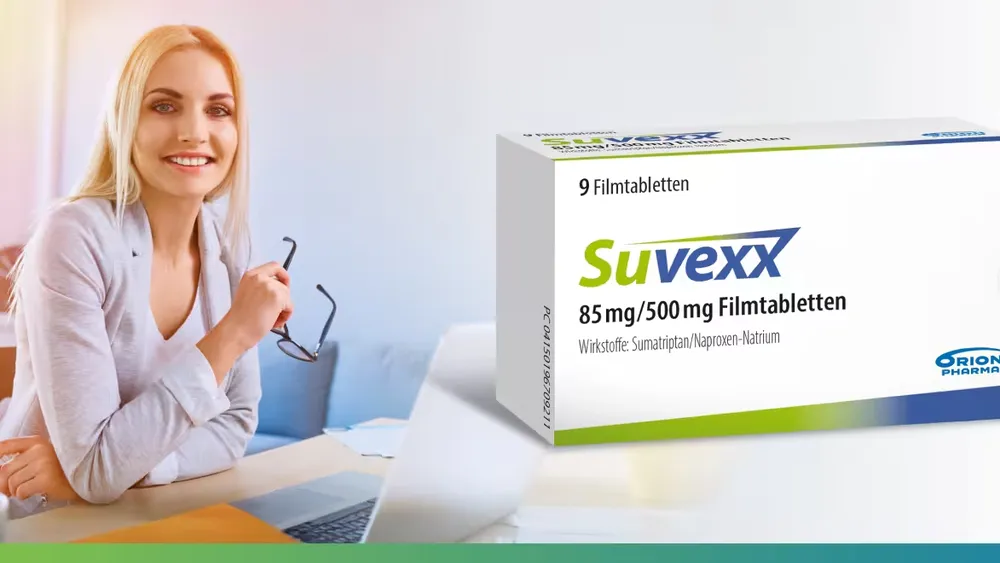
Instructions for Use
Package leaflet: Information for the user
Introduction
Package leaflet: information for the user
Suvexx 85mg/500mg film-coated tablets
sumatriptan and sodium naproxen
Read the entire leaflet carefully before starting to take this medicine, because it contains important information for you.
-
Keep this leaflet, as you may need to read it again.
-
If you have any questions, ask your doctor or pharmacist.
-
This medicine has been prescribed for you only, and you should not give it to others, even if they have the same symptoms as you, because it may harm them.
-
If you experience any adverse effects, consult your doctor or pharmacist, even if they are adverse effects not listed in this leaflet. See section 4.
Leaflet contents
- What Suvexx is and what it is used for
- What you need to know before taking Suvexx
- How to take Suvexx
- Possible side effects
- How to store Suvexx
- Contents of the pack and other information
1. What Suvexx is and what it is used for
Suvexx contains two active substances, sumatriptan and sodium naproxen. Sumatriptan belongs to a group of medicines called triptans (also known as serotonin (5-HT1) receptor agonists), and sodium naproxen belongs to a group of medicines known as non-steroidal anti-inflammatory drugs (NSAIDs).
Suvexx is used to treat the headache phase of migraine attacks in adult patients when treatment with either single component has been insufficient. This medicine can be used to treat migraine headache with or without aura (aura is a warning symptom usually involving flashes of light, zigzag lines, stars, or waves).
Migraines are believed to be caused by the dilation of blood vessels in the head. Sumatriptan reduces the dilation of these blood vessels, thereby relieving migraine, while naproxen reduces pain.
2. What you need to know before using Suvexx
Do not take Suvexx
- if you are allergic to sumatriptan, naproxen, or any of the other components of this medicine (listed in section 6),
- if you are allergic or have previously had allergic reactions (itching or skin rash) or asthma symptoms (wheezing) to acetylsalicylic acid or other NSAIDs such as ibuprofen, diclofenac, or meloxicam,
- if you have or have had heart disease such as severe heart failure, narrowed arteries (ischaemic heart disease), or chest pain (angina) or myocardial infarction,
- if you have high blood pressure. If your doctor decides, you may be able to use this medicine if your high blood pressure is mild and is being treated,
- if you have had a stroke or a mini-stroke (also called transient ischaemic attack or TIA), as you may be at higher risk of stroke,
- if you have circulation problems in your legs causing cramp-like pain when walking (peripheral vascular disease),
- if you have or have had a gastric or duodenal ulcer,
- if you have experienced or previously had stomach or intestinal bleeding while taking NSAIDs,
- if you have severely reduced kidney function,
- if you have moderate or severely reduced liver function,
- if you are taking other migraine medications, including those containing ergotamine or similar medicines such as methysergide maleate or any triptan or 5HT1 agonist (such as naratriptan or zolmitriptan),
- if you are taking or have taken within the last 2 weeks the so-called MAO inhibitors (e.g., moclobemide for treatment of depression or selegiline for treatment of Parkinson's disease),
- if you are in the third trimester of pregnancy.
Warnings and precautions
This medicine should only be used in cases of a clear diagnosis of migraine. If your headache is different from your usual headaches, do not take it without first consulting your doctor.
Consult your doctor or pharmacist before starting to take this medicine if you have any of the following conditions:
- if you have circulation disorders in hands, feet, or brain.
- if you experience short-term chest pain or tightness shortly after using this medicine. These effects may be intense and radiate to the throat. In very rare cases, they may be due to effects on the heart. Therefore, if symptoms do not resolve, contact your doctor.
- if you are at risk of developing heart disease; if you are a heavy smoker or are undergoing nicotine replacement therapy (patches or gum), and especially if you are:
- a woman who has gone through menopause.
- a man over 40 years of age.
In very rare cases, serious heart conditions have developed after using this medicine, even in the absence of prior signs of heart disease. Contact your doctor if you have any concerns.
- if you have coronary artery disease.
- if you have unexplained stomach pain or anaemia (low haemoglobin) or if you notice blood in your stools or your stools are black.
- if you have gastrointestinal disease, such as ulcerative colitis or Crohn's disease.
- if you have asthma or allergies or a history of swelling of the face, lips, eyes, or tongue.
- if you have rhinitis or a history of nasal polyps.
- if you have a blood clotting disorder or bleeding disorder.
- if you have epilepsy or any other condition that lowers your seizure threshold.
- if you are hypersensitive to certain antibiotics (sulfonamides).
- if you have reduced cardiac, renal, or hepatic function.
- if you are elderly.
- if you have an autoimmune disease, such as systemic lupus erythematosus (SLE).
Serious skin reactions, including Stevens-Johnson Syndrome (SJS), toxic epidermal necrolysis, and drug reaction with eosinophilia and systemic symptoms (DRESS), have been reported in association with naproxen. Stop taking Suvexx and contact your doctor immediately if you notice any symptoms related to serious skin reactions described in section 4.
Children and adolescents
Do not give this medicine to children under 18 years of age, as the efficacy and safety of Suvexx have not been established in this age group.
Other medicines and Suvexx
Tell your doctor or pharmacist if you are taking, have recently taken, or might need to take any other medicine. This includes medicines purchased without a prescription and herbal medicines. It is important that you inform your doctor if you are taking any of the following medicines:
- other migraine medicines containing ergotamine and triptans/5-HT1 receptor agonists. Do not take Suvexx at the same time as these medicines (see section "Do not take Suvexx"). Allow at least 24 hours between taking these medicines and Suvexx.
- MAO inhibitors (such as moclobemide for depression or selegiline for Parkinson's disease). Do not take Suvexx if you have taken these MAO inhibitors within the last two weeks.
- SSRIs (selective serotonin reuptake inhibitors) or SNRIs (serotonin and noradrenaline reuptake inhibitors) used to treat depression. Using Suvexx with these medicines may cause serotonin syndrome (a group of symptoms that may include restlessness, confusion, sweating, hallucinations, increased reflexes, muscle spasms, chills, increased heart rate, and tremors). Inform your doctor immediately if you experience any of these symptoms.
- acetylsalicylic acid (aspirin) and other anti-inflammatory painkillers.
- medicines that prevent blood clotting and formation of blood clots (such as warfarin, heparin, or clopidogrel), as concomitant use increases the risk of bleeding. Their combined use should be avoided.
- methotrexate (for rheumatic and oncological diseases).
- digoxin (for heart conditions).
- lithium (for bipolar disorder). Concomitant use of this medicine with lithium may cause serotonin syndrome.
- certain immunosuppressants (such as cyclosporine and tacrolimus).
- herbal medicines containing St. John’s wort (Hypericum perforatum). Adverse effects may occur more frequently.
Pregnancy, breastfeeding, and fertility
If you are pregnant or breastfeeding, think you may be pregnant, or are planning to become pregnant, consult your doctor or pharmacist before using this medicine.
Pregnancy
Do not take Suvexx during the last 3 months of pregnancy, as it could harm the fetus or cause problems during delivery. It may cause kidney and heart problems in your fetus. It may affect your tendency to bleed and that of your baby, potentially causing delayed or prolonged labour.
You should not take Suvexx during the first 6 months of pregnancy unless absolutely necessary and advised by your doctor. If treatment is needed during this period or while trying to become pregnant, you should take the lowest possible dose for the shortest possible time. From week 20 of pregnancy, this medicine may cause kidney problems in your fetus if taken for more than a few days, which could lead to low levels of amniotic fluid surrounding the baby (oligohydramnios). If treatment for longer than a few days is needed, your doctor may recommend additional monitoring.
Breastfeeding
Both sumatriptan and naproxen are excreted in breast milk. Therefore, this medicine should not be used during breastfeeding.
Do not breastfeed for at least 12 hours after taking this medicine. If you express milk during this time, discard it and do not give it to your baby.
Fertility
This medicine may impair fertility. You should inform your doctor if you are planning to become pregnant or if you have difficulty becoming pregnant. Taking this medicine is not recommended if you are planning to have a baby.
Driving and use of machines
Suvexx or migraine symptoms may cause drowsiness or dizziness. If you experience these effects, avoid driving or operating machinery.
Suvexx contains sodium
This medicine contains 60 mg of sodium (main component of table/cooking salt) per tablet. This corresponds to 3% of the maximum daily sodium intake recommended for an adult.
3. How to take Suvexx
Always take this medicine exactly as your doctor or pharmacist has told you. Consult your doctor or pharmacist if you are unsure. Do not use this medicine to prevent an attack; it should only be used after the onset of migraine symptoms.
Adults
The recommended dose for adults is 1 tablet as soon as possible after the onset of a migraine.
If symptoms improve after the first dose but the headache returns, you may take a second dose 2 hours after the first dose. Do not take more than two doses of this medicine within a 24-hour period.
If you experience no relief after the first dose, do not take the second dose. Speak with your doctor or pharmacist first.
Patients with liver or kidney problems
If you have mild liver or kidney problems and need to take this medicine, you should take only one tablet within a 24-hour period.
Use in elderly patients (over 65 years of age)
This medicine is not recommended for patients over 65 years of age.
Use in children and adolescents
This medicine is not recommended for children and adolescents under 18 years of age.
Method of administration
Oral use. Tablets should be swallowed whole with water. Do not chew or crush the tablets, as this may affect the optimal absorption rate of the medicine. Tablets may be taken with or without food. Food does not have a significant effect on the medicine's efficacy.
If you take more Suvexx than you should
Do not take more than two doses of this medicine within a 24-hour period.
In case of overdose or accidental ingestion, contact your doctor or pharmacist immediately or call the Toxicology Information Service at 91 562 04 20, indicating the medicine and the amount ingested.
Symptoms of overdose are the same as those listed in section 4, "Possible side effects". If you have taken more medicine than you should, or if children have taken the medicine by accident, contact your doctor or hospital so they can assess the risk and advise you on necessary measures.
If you have any further questions about the use of this medicine, consult your doctor or pharmacist.
4. Possible adverse effects
Like all medicines, this medicine can cause adverse effects, although not everyone experiences them. Some of the reported adverse effects may be caused by migraine itself.
Important adverse effects to be aware of:
Stop taking this medicine and contact your doctor immediately if any of the following adverse effects occur. You may require urgent medical treatment.
Severe stomach or intestinal problems, signs include:
Uncommon (may affect up to 1 in 100 people):
- Stomach bleeding, presenting as vomiting blood or material resembling coffee grounds.
- Rectal bleeding, presenting as black, sticky stools or bloody diarrhoea.
- Formation of ulcers or perforations in the stomach or intestine. Symptoms include stomach discomfort, stomach pain, fever, or malaise.
- Worsening of ulcerative colitis or Crohn's disease, presenting as pain, diarrhoea, vomiting, and weight loss.
Very rare (may affect up to 1 in 10,000 people):
- Problems with the pancreas. Symptoms are severe stomach pain spreading to the back.
Frequency not known (frequency cannot be estimated from the available data):
- Widespread skin rash, elevated body temperature, high levels of liver enzymes, blood abnormalities (eosinophilia), swollen lymph nodes, and involvement of other organs in the body (Drug Reaction with Eosinophilia and Systemic Symptoms, also known as DRESS). See also section 2.
- A characteristic skin allergic reaction known as fixed drug eruption, which usually recurs in the same spot or spots upon re-exposure to the medicine and may appear as round or oval-shaped red and swollen patches of skin, blisters (urticaria), and itching.
Allergic reactions, signs include:
Rare (may affect up to 1 in 1,000 people):
- Severe, rapidly occurring allergic reaction causing difficulty breathing or dizziness (anaphylactic reaction).
- Swelling of the face, tongue, or throat, difficulty swallowing, hives, and difficulty breathing (angioneurotic oedema).
Liver problems, signs include:
Rare (may affect up to 1 in 1,000 people):
- Feeling of tiredness, loss of appetite, malaise (nausea, vomiting), pain or swelling in the upper right part of the abdomen, dark urine, pale stools, and yellowing of the skin or whites of the eyes (toxic hepatitis).
Severe skin rashes, signs include:
Very rare (may affect up to 1 in 10,000 people):
- Usually begins with flu-like symptoms (malaise, fever, headache, cough, joint pain), followed by a rapidly developing red or purple rash, painful blisters, skin peeling, and possibly blisters in the mouth, throat, eyes, and genital tract (Stevens-Johnson syndrome/toxic epidermal necrolysis).
Heart attack, signs include:
Frequency not known (cannot be estimated from the available data):
- Chest pain that may spread to the neck and shoulders and radiate down the left arm.
Stroke, signs include:
Frequency not known (cannot be estimated from the available data):
- Muscle weakness and numbness. This may occur on only one side of the body.
- Sudden changes in sense of smell, taste, hearing, or vision, confusion.
Meningitis, signs include:
Very rare (may affect up to 1 in 10,000 people):
- Fever, feeling unwell, neck stiffness, headache, sensitivity to bright light, and confusion (most likely in people with autoimmune diseases such as systemic lupus erythematosus).
Other possible adverse effects:
Very common (may affect more than 1 in 10 people):
- Upper abdominal pain.
- Feeling unwell (nausea), heartburn, constipation.
Common (may affect up to 1 in 10 people):
- Dizziness, tingling, drowsiness, sensory disturbances, headache, lightheadedness.
- Visual disturbances.
- Ringing in the ears, hearing disorders.
- Worsening of heart failure (oedema, difficulty breathing), temporary increase in blood pressure (occurring shortly after treatment), flushing.
- Difficulty breathing.
- Nausea, vomiting, digestive disorders, diarrhoea, inflammation of the mucous membranes in the mouth.
- Skin symptoms (e.g. itching, rash, red spots), bruising, increased sweating.
- Muscle pain.
- Feeling of pain, cold or heat sensation, pressure, tightness or heaviness, feeling of weakness, fatigue.
Uncommon (may affect up to 1 in 100 people):
- Increased potassium levels, fluid accumulation (oedema).
- Mood changes, depression, reduced ability to concentrate, memory difficulties, difficulty sleeping or changes in sleep patterns.
- Seizures/epileptic fits (convulsions).
- Irregular heartbeat (palpitations).
- Increased liver enzyme and bilirubin levels (jaundice).
- Menstrual disorders.
- Thirst.
Rare (may affect up to 1 in 1,000 people):
- Loss of hearing.
- Fluid accumulation in the lungs.
- Worsening of asthma.
- Hair loss.
- Increased skin sensitivity to sunlight, blisters, and skin changes (pseudoporphyria).
- Muscle weakness, muscle pain.
- Breast pain.
Very rare (may affect up to 1 in 10,000 people):
- Blood disorders, such as anaemia, changes in white blood cell count, low platelet count, abnormalities in blood count.
- Worsening of Parkinson's disease.
- Inflammation of blood vessels.
- Pneumonia.
- Swelling of the salivary glands.
- Minor abnormalities in liver function tests.
- Skin disorder with itchy red spots typically on the palms of the hands, soles of the feet, and face (erythema multiforme), exacerbation of skin diseases (e.g. lichen planus, erythema nodosum, systemic lupus erythematosus (SLE)).
- Blood or protein in urine, reduced kidney function, kidney inflammation (nephritis), other kidney disorders.
Frequency not known (cannot be estimated from the available data):
- Anxiety.
- Involuntary movements (dystonia), tremor, nystagmus.
- Heart problems where heartbeats may speed up, slow down, or change rhythm, chest pain (angina pectoris).
- Low blood pressure, Raynaud's phenomenon (a condition in which fingers and toes become pale and numb).
- Difficulty swallowing.
- Excessive sweating.
- Neck stiffness, joint pain.
- Pain or worsening pain at the site of injury or inflammation, fever.
Reporting of adverse effects
If you experience any adverse effect, consult your doctor or pharmacist, even if they are possible adverse effects not listed in this leaflet. You may also report them directly via the Spanish Pharmacovigilance System for Human Medicines: www.notificaram.es. By reporting adverse effects, you can help provide more information on the safety of this medicine.
5. Storage of Suvexx
Keep this medicine out of the sight and reach of children.
Do not use this medicine after the expiry date which is stated on the packaging after EXP. The expiry date refers to the last day of the month indicated.
This medicine does not require any special storage conditions.
Medicines must not be disposed of via wastewater or household waste. Dispose of unused medicines and their containers at the SIGRE Point in your pharmacy. Ask your pharmacist how to dispose of medicines and containers you no longer need. This will help protect the environment.
6. Contents of the pack and other information
Composition of Suvexx
- The active substances are sumatriptan (as sumatriptan succinate) and sodium naproxen. Each tablet contains 119 mg of sumatriptan succinate, equivalent to 85 mg of sumatriptan, and 500 mg of sodium naproxen, equivalent to 457 mg of naproxen.
- The other components are calcium hydrogen phosphate, microcrystalline cellulose, sodium croscarmellose, sodium hydrogen carbonate, povidone, magnesium stearate, talc, and coating (hypromellose, titanium dioxide (E171), triacetin, indigo carmine aluminium lake (E132)).
Appearance of Suvexx and contents of the pack
Suvexx is a film-coated tablet (tablet) of medium blue color, capsule-shaped, with dimensions of 19 mm x 10 mm x 7 mm, marked with the inscription “85/500” on one side and smooth on the other.
Pack sizes:
Plastic bottle with child-resistant screw cap: 9 tablets.
Each container includes a silica gel desiccant and a PET coil.
Blister packs: 3 and 9 tablets.
Only certain pack sizes may be commercially available.
Marketing Authorization Holder and Manufacturer
Marketing Authorization Holder
Orion Corporation
Orionintie 1
FI-02200 Espoo
Finland
Manufacturer
Orion Corporation Orion Pharma
Orionintie 1
FI-02200 Espoo
Finland
Orion Corporation Orion Pharma
Joensuunkatu 7
FI-24100 Salo
Finland
Further information on this medicinal product is available by contacting the local representative of the Marketing Authorization Holder:
Orion Pharma, S.L.
Avenida Alberto Alcocer 46B
28016 Madrid
Telephone: +349 159 9 86 01
Date of the most recent review of this leaflet: September 2025
Detailed and up-to-date information on this medicinal product is available on the website of the Spanish Agency for Medicines and Health Products (AEMPS) http://www.aemps.gob.es/
This page has been machine-translated and may contain inaccuracies. The original data is available in the manufacturing country's language.
Last data check: May 18, 2026 · Data source: CIMA — AEMPS